Sunday, April 26, 2026
Home Blog Page 8

Civil Disobedience

0

Dr Saheb Sahu

“Power concedes nothing without a demand. It never did and never will”.

Frederick Douglas (American anti-slavery leader)

Civil Disobedience- Nonviolent Resistance-Satyagraha

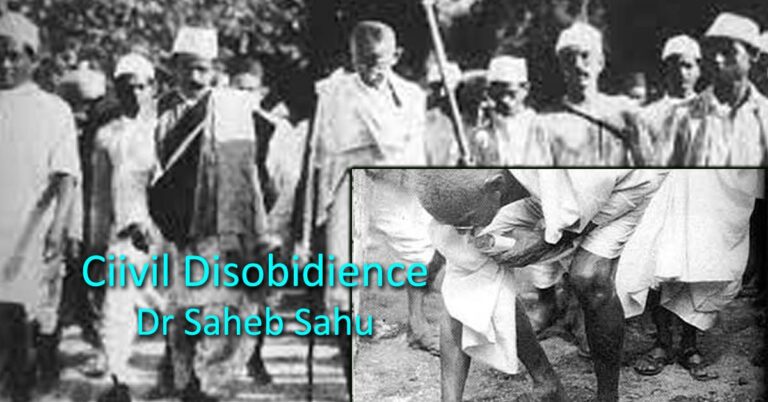
Civil disobedience refers to the active refusal to obey certain law, demands and commands of a government or an occupying power without resorting to violence. The expression was first coined by Henry David Thoreau in his essay “Civil Disobedience”, in 1849, although the concept has been practiced longer before.  In 1907, Gandhi read Civil Disobedience while in South African Jail for protesting for the repeal of the racist Asiatic Registration Laws.  Over the course of seven years, thousands of striking Indians were imprisoned, including Gandhi himself. The law was repealed in 1914, proving to Gandhi that nonviolent resistance could be effective method even for people living under colonial rule. In 1915 Gandhi returned to India and started numerous satyagrahas against the British, culminating in the famous 1930 Salt March, 240 miles from Ahmadabad to the Arabian Sea.

The concept of civil disobedience has inspired leaders as Susan B. Anthony of U.S. women’s suffrage (women rights) movement in the late 1800s, Saad Zaagdoul in the 1910s culminating in the Egyptian Revolution of 1919 against the British occupation and Mahatma Gandhi in 1920s against the British Raj in India, Martin Luther King Jr’s civil rights movement in the 1960s in the United States.

Besides Gandhi and Martin Luther King Jr, other notable advocates of nonviolent resistance are Leo Tolstoy (Gandhi also learned from him) , James Bevel, Vaclav Havel, Andrei Sakharov, Lech Walesa, Gene Sharp, Nelson Mandela, Jose Rizal, (of Philippines) and many others.

Some of the well-known nonviolent resistance movements in History

  1. 1848-1920– Suffrage movement (for women’s rights) in USA led by Susan Anthony and others. Women got voting rights in USA in 1920.
  2. 1917-1947-Indian independence movement against the British Raj, led by Gandhi and Indian National   Congress.  Gandhi had his first civil resistance victory in 1907 in South Africa. He returned to India in 1915 and in 1917 led the Champaran Satyagraha, followed by Kheda Satyagraha in 1918, Dandi Salt march in 1930, and Quit India movement 1942. Gandhi was imprisoned six times in South Africa (1908-1913), and seven times in India (1918-1942).
  3. 1919-1922-Egptian Revolution of 1919. It is considered one of the earliest successful civil-disobedience movements world-wide. It led to the end of British occupation of Egypt in 1922.
  4. American Civil Rights movement was a struggle for justice and equality for African Americans that took place mainly in 1950s and 1960s. It was mostly nonviolent struggle led by Martin Luther King Jr. and others civil rights leaders.
  5. Protests against the Vietnam War took place in the 1960s and 1970s. The antiwar movement began mostly in US college campuses and spread to major cities around the world.
  6. 1968– Prague Spring was a mass nonviolent protest in communist Czechoslovak Socialist Republic from 5Jan, 1968 -21 Aug, 1968. It was crushed by 600,000 Warsaw Pack troops.
  7. The 1974 Bihar Movement was initiated by college students against misrule and corruption of the Congress Government in Bihar. Later on it became an all India movement led by Jayaprakash Narayan against the emergency rule imposed by P.M Indira Gandhi. Indira Gandhi was voted out in 1977 and emergency was over.
  8. 1979 – Iranian Revolution, locally known as Islamic Revolution led to the overthrow of the Shah and brought Ayatollah Khomeini and his followers to power.
  9. 1986 – People Power Movement in Philippines led to the end of Ferdinand Marco’s 20-year dictatorship and restoration of democracy in Philippines.
  10. 1989– Tiananmen Square Protest, Beijing, China, led by students calling for democracy, free speech and free press. The protest was brutally crushed with 250,000 troops, who killed thousands of protestors and arrested more than 10,000 of them.
  11. Rose Revolution, in Georgia from Nov, 3-23, 2003, toppled the duly elected but corrupt government of President Eduard Shevardnadze.
  12. Tunisian Revolution, also called the Jasmine Revolution, was an intensive 28-day campaign of civil resistance, which led to the ousting of long time president/dictator Ben Ali in Jan, 2011.
  13. Egyptian Revolution (Tahir Square) also known as Arab Spring (25th Jan-11Feb 2011), consisted of demonstrations, marches, occupation of plazas and other nonviolent actions that ended the 30 –year Presidency/dictatorship of  Hosni Mubarak.
  14. Umbrella Revolution in Hong Kong was a series of Sit-in Street protests from 26th Sept to –Dec, 15, 2014 demanding “true universal suffrage’ and “semi autonomy” from mainland China. The struggle is ongoing.
  15. 2020- 2021 – Indian farmers’  ongoing protest against three farm acts which were passed by the Parliament in Sept, 2020.The farmers fear that the bills would render the current Minimum Support Price(MSP) procurement system ineffective, leaving them at the mercy of “big farmers”.

Civil Resistance Works

Harvard professor Erica Chenoweth and Maria Stephan, through their extensive research have concluded that civil resistance works. They analyzed success rate of 627 violent and non-violent revolutionary campaigns from around the world between 1900 and 2019. Examining the data set of 627campaigns, they found that non-violent movements worldwide were twice likely to succeed as violent ones (50%vs 26%). They also found that over the previous fifty years, non-violent campaign have grown both more numerous and more successful.

The 3.5% Rule

 Chenoweth and Stephan found a direct correlation between the success of a campaign and the popular involvement it managed to invite. No campaign failed once they achieved the active and sustained participation of just 3.5 percent of the population and lots of them succeeded with less than that. For example, in a country of 100 million people, it will take active involvement of around 3 million people for a movement to succeed. Sometimes it took even less. Active public support consists of at least 3 components: to show up for marches and other events, if there is an election, vote with the movement, and persuade others ( social media etc.) to join.

Methods of Non-Violent Actions

 There are three general classes of non-violent action:

A- Protest and Persuasion

 These methods include vigils, petitions, walkout and picketing. These are largely symbolic in their effect and produce an awareness of existence of dissent.

B- Noncooperation

 These methods include social boycott, labor strike and many forms of political noncooperation.

C- Intervention

 These methods include hunger strikes, sittings nonviolent obstructions, creation of alternative institutions and parallel government. They possess some of the qualities of both previous groups.

 Gene Sharp in his book “The Politics of Nonviolent Action” has described 198 methods of nonviolent action. He stresses that to sustain a long struggle, activists cannot display just one tactic; rather, they need to create a sequence of actions that builds over time. The goal is “escalation of disorder without violence”.

The Discipline

Nonviolent campaign’s discipline consist of two components: (1) adhering to the broader strategic plans for the struggle and (2) refraining from violence. Maintaining the persistent nonviolent discipline is critical to the long term success of the movement. Even limited violence by resistors or their supporters, gives an excuse to the authorities to use brutal methods to suppress the movement. Many times the authorities infiltrate the movement and knowingly provoke violence. Maintaining discipline within the movement is a difficult task but an essential one.

Is there a formula for effective civil disobedience campaigns?

 No universal formula is likely to exist. Every country, every citizenry, every outrage is unique. But there are some striking patterns that seem consistent across successful campaigns. Historically, movements with massive and diverse participation (students, women, farmers, laborers, politicians and others), nonviolent discipline and the ability to withstand repression have been able to force those in power to change. No movements have failed after getting 10% of the nation’s population to be actively involved in their peak event. Most succeed after mobilizing 3.5% of the population. On average, scholars agree that fringe violence does not help civil resistance campaigns succeed in the long term. Most onlookers especially women favor non-violent movements over violent ones. Nonviolent action is also more likely to gain support from across the social, economic, and political spectrum. Violence tends to repel potential allies and hurts a movement’s chance of success.

Conclusion

Social change does not happen without a struggle. Nobody gives up power voluntarily.  According to Saul Alinsky, mankind has been and is divided into three groups. The Haves, the Have-Nots and the Have-a-Little. On top are the Have, with power and wealth, security forces, courts and the bureaucracy with them. They want to keep things as they are and opposed any change. On the bottom are the world’s Have-Nots. They are powerless and poor. In a truly democratic country only power they have is the power to vote. In the middle are the Have-a-little. They want little more. The main reason to fight for social change is to benefit the Have-Not and the Have-a-little.

 What can be done to change the situation? The answer is nonviolent struggle. Professor Chenoweth has shown that nonviolent struggles are twice as likely to succeed as the violent one. To succeed it takes active participation of about three percent of the population. Violent struggle costs lives, properties, and misery and ultimately is likely to fail. It gives an excuse to the authorities to crush the movement using violent means. Bottom lines, if you want any kind of social change, organize and use nonviolent means. It is likely to work. But it will likely to take time.

Now, go and organize and protest in a nonviolent way for change you want!

Sources:

1- Henry D. Thoreau, Walden and Civil Disobedience. New York: Barnes and Noble, 2003

2-Erica Chenoweth and Maria Stephan, Why Civil Resistance Works. New York: Columbia University Press, 2011

3- Erica Chenoweth, Civil Resistance, What Everyone Needs To Know. New York: Oxford University Press, 2021

4-Gene Sharp, Waging Nonviolent Struggle, 20th century practice and 21st century potential. Boston: Porter Sargent Publishers, 2005

5- Wikipedia.Org/ civil disobedience, Nov, 12, 2021

Social Justice and Economic Rights

0

Dr Saheb Sahu

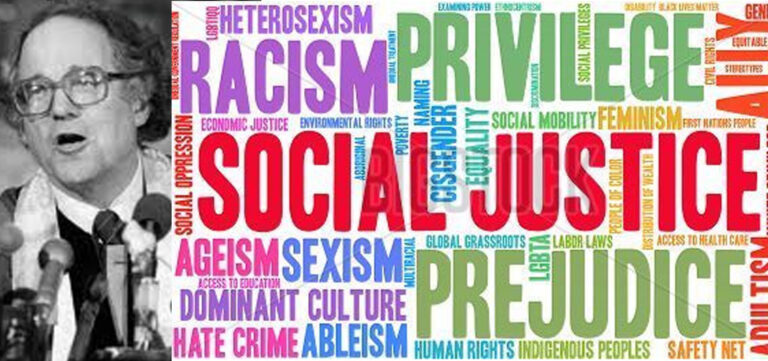
William Sloane Coffin Jr. (June 1, 1924 – April 12, 2006) was an American Christian clergyman and long-time peace activist. In his younger days he was an athlete, a talented pianist, a CIA officer, and later chaplain of Yale University, where the influence of H. Richard Niebuhr‘s social philosophy led him to become a leader in the Civil Rights Movement and peace movements of the 1960s and 1970s. He was the President of SANE/Freeze (now Peace Action), the nation’s largest peace and social justice group, and prominently opposed United States military interventions in conflicts, from the Vietnam War to the Iraq War. He was also an ardent supporter of gay rights.

Some of his sermons (preaching) were published in 2004 under the title-“CREDO”. Credo is a Latin word defined as “a statement of beliefs” or “aims which guide someone’s actions”. Here are some excerpts from the book on the topic of “Social Justice and Economic Rights”:

“We have democracy or we have great wealth concentrated in the hands of the few. We cannot have both.

  • US Supreme Court Justice- Louise Brandeis

 “Public good does not automatically follow from private virtue. A person’s moral character, sterling though it may be, is insufficient to serve the cause of justice, which to challenge the status quo, try to make what is legal more moral, to speak truth to power, and to take personal or concerted action against evil, whether in personal or systemic form.”

“Not to take side is effectively to weigh in on the side of the stronger.”

 “Compassion and justice are companions, not choices”.

 ‘ For evil is not so much the work of a few degenerate people or groups of people as it is the result of the indifference and negligence of the many.”

“Never in the recent history have we had so blatant a plutocracy: a government of the wealthy, by the wealthy, and for the wealthy.”

“When the rich take from the poor, it’s called an economic plan. When the poor take from the rich, it is called class welfare.”

“We may be repelled by materialism, but we are caught up in it. We are troubled by widespread poverty, but overly esteem wealth.”

“Human nature is sinful, and therefore the virtue of the few will never compensate for the inertia of the many. Rich people and rich nations will not voluntarily open their eyes to see the biblical truth that poor have ownership rights on their surplus…. Given human goodness, voluntary contributions are possible, but given human sinfulness, legislation is indispensable. Charity, yes always; but never as a substitute for justice. What we forgetting in this country is that people have rights, basic rights: the right to food, the right to decent housing, the right to medical care, the right to education”.

“There are two ways to get rich: one is to have lot of money; the other to have few needs. Let us remember that Jesus- who influenced history more than any other single person, institution, or nation- when he died, his single possession a robe.”

 “The primary problems of the planet arise not from the poor, for whom education is the answer; they arise from the well-educated, for whom self-interest is the problem”.

 “Let us indeed not delude ourselves: you cannot have a revolt without revolting conditions. Communism has never come to a nation that took care of its poor, its aged, its sick, and its handicapped.”

“Charity is a matter of personal attributes; justice, a matter of public policy. Charity seeks to alleviate the effects of injustice; justice seeks to eliminate the causes of it”

“Handouts to needy individuals are genuine, necessary response to injustice, but they do not necessarily face the reason for the injustice”.

“The prophet did not say, “Let charity roll down like mighty waters”- because giving without receiving is a downward motion. The prophet said, “Let justice rolldown like mighty waters, and righteousness like an over-flowing stream.”… The exodus story tells us that liberation is primarily the work of the oppressed themselves.”

“In the best prophetic tradition Jesus stood for the relief and protection of the poor and the persecuted; for such use of the riches of creation that the world might be freed from famine, poverty, and disaster.And in the best prophetic tradition, he saw that the real troublemakers were not the ignorant and the cruel, but the intelligent and the corrupt. In contrast to so many of today’s pulpiteers (preachers), Jesus knew that “Love your enemies” didn’t mean “Do not make trouble”. 

“Heaven- and Hell- begin here and now, both for individuals and for nations, in what theologians call “realized eschatology”(Eschatology-the part of theology concerned with death, judgment, and the final destination of the soul and of mankind).

 “In his time on earth Jesus “stood tall” but not by making others cringe. He had power but used it solely to empower others. He healed, but with no strings attached. He competed with none, loved all, even when we were least lovable, even to the point of dying for us on the cross”.

 Source:

William Coffin, Credo. Louisville: Westminster John Knox Press, 2004

Disparities in Development in Odisha: Dr Saheb Sahu

0


Definition of Human Development Index (HDI)

HDI is a statistic composite index of life expectancy for health, expected years of schooling, mean years of schooling for education and Gross National Income per capita for the standard of living. It is a better score for overall development than the poverty rate. Every year, United Nations Development Program (UNDP) ranks countries based on the HDI report. The ideal score is 1.

In Dec, 2020, according to UNDP, out of 189 countries, India was ranked 131, with a HDI of 0.645. Norway topped the list with a HDI of 0.957. China was ranked 85.

We do not have a ranking for Odisha for 2020, but as per SBI report on HDI (2017), among the Indian States,Odisha ranked 22 among 25 bigger States. Odisha scored 0.600(HDI was 0.400 in 1990), against the Indian average of 0.647 and 0.779 for the State of Kerala, the best in India.

Odisha Economic Survey 2020-21(Feb 21)

Published by Planning and Convergence Department Government of Odisha.

Disclaimer: This Report does not necessarily reflect the views of the Government of Odisha.

Odisha Economic Survey 2020-21 was released in February 2021. The survey is 447 pages long. Here are some excerpts selected by me.

Rural poverty: The rural poverty in Odisha reduced by 25 percentage points between 2004-05 and 2011-12 (i.e. from 60.8% to 35.69%).

Human Development and Quality of Life: The Life expectancy at birth in Odisha is comparable at the national level 69.3 years. As per SRS Bulletin 2018, the IMR (Infant Mortality Rate) of Odisha is 40 whereas the rate for India is 32.

Children under Five Stunted Growth Rate: (low height for age) is 34.2%. That means 34.2% percent of children under age of five have chronic malnutrition.

Looking Forward – Development Approach for Odisha

  • The state needs to make a long stride in economic growth with much faster pace than the national average over a long period of time.
  • There is need for substantial increase in financial allocation in the health sector through public and private investment.
  • Agriculture and allied sector is the main stay of the economy since more than 60 % of people depend on it for livelihood. In order to make it a vibrant sector the thrust should be on augmentation of irrigation facilities, crop diversification, integrated farming and development of animal husbandry and fisheries.
  • KBK areas and marginalised classes including SC, ST and women need special attention in order to substantially reduce regional, social and gender disparities and to promote human development”.

InterDistricts Disparities in Development

We can divide 30 districts of Odisha based on Human Development Index in to three groups.

  • 10 Districts doing relatively well in descending order are: Khurdha, Jharsuguda, Cuttack, Sundergarh, Deogarh, Angul, Puri, Bhadrak, Mayurbhanj and Kendrapara.
  • 10 Districts doing so-so in descending order are: Kalahandi, Dhenkanal, Sambalpur, Nuapada, Nayagarh, Sonepur, Bargarh, Balasore, Jagatsinghpur and Ganjam.
  • 10 Districts doing badly in descending order are:Balangir, Jajpur, Boudh, Keonjhar, Rayagada, Nabarangpur, Koraput, Gajapati, Kandhamal and Malkangiri.

The last eight underdeveloped districts of Odisha are among the 50 most underdeveloped districts in India. Think about it!

What can be done for Odisha’s endemic poverty?

There is no single or easy solution to poverty eradication. Governments have come and gone but status of Odisha, as one of the poorest states in India has not changed. Do not get me wrong. Things have improved a lot from the time I left Odisha in 1970. But like Odisha, the developmental status of other states has also got better, at a faster rate than that of Odisha.

 If one reads the Government of Odisha’s Economic Survey Report 2021, (one is produced every year) it looks like the government has diagnosed the problem but the treatments prescribed are vague and had not worked in the past. Government of Odisha has multiple yojanas- one for every problem, named after either a Gandhi or Biju Babu but the lives of our tribal and rural poor have not improved that much. While Bhubaneswar is thriving, the other towns farther away from the state capital are not doing so great. Not even Cuttack! Odisha is still at the bottom on HDI ranking in India.

 I am a physician and not an economist. I have grown in a small scale farmer family in non –irrigated part of Bargarh district. Fortunately for us our parents had the foresight to educate all three of their children. With education our family escaped grinding rural poverty.  I have been interested in developmental economic since 1995. I have written one book, two booklets and few articles on the topic of Odisha’s poverty. I have kept up with developmental literature. Based on my present knowledge, following are five of my recommendations to make Odisha one of the middle-rank developed states in India.

1- Direct Cash Transfer

 The government of Odisha should plan to transfer Rs 20,000 to Rs25, 000 to each poor family in Odisha for next 5-10 years. The money should be deposited directly to their bank accounts or postal accounts or to their debit cards, preferably in the name of the women as the heads of the households. This will empower women and give them voice in decision making which is important for many other reasons. This one measure will drop Odisha’s poverty rate relatively quickly. Based on 2011 census Odisha has about 3.5 million poor families. It will cost the government about 13% of 2021-22 budget amounts. The money can be found by stopping many of the poverty eradications schemes (Yojanas) which have not worked so far. Some of the money which is now coming from the center for various poverty schemes can be part of this direct cash transfer. It will be easy to do because of the existing Adhar account system already in place in India and is being used for distributing cash for other programs.

 The direct cash transfer will eliminate all the middle men who siphon off a percentage at various stages of implementation of any scheme. According to many studies only 10-15% developmental money reaches the poor. Think of old KBK districts, how much money has been spent there since Rajiv Gandhi’s time (He visited the area) with so little to show for.

 The direct cash grant concept is not a new or radical idea. It has been implemented in Brazil, Mexico, Turkey, Iran and many other countries under various names. The Brazilian program Bolsa Familia benefited 12 million families and reduced the poverty rate by 28% in six years (Wikipedia.org/bolsafamilia). Six years ago the BJP government at the center was floating the idea of direct cash grant but never implemented it. Rahul Gandhi, during the last general election was advocating the program as a part of Congress manifesto. Andrew Yang campaigned on it during the US Presidential election of 2020. Many of the developmental economists including Indian Nobel laureate Abhijit Banerjee are in favor of it with some stipulations.

2-Facilitate Migration

Migration and education are two of the oldest actions against poverty.  Late Harvard Economist John Galbraith wrote many years ago: “There is nothing great about blue sky and clean air when you are starving.”

Poverty is mainly a rural, phenomenon. Odisha is predominantly a rural state. The educational opportunities, the quality of education and job opportunities in rural areas are not very good. When people migrate to a town, city or to another state or country, they make a better living (even as a domestic worker) than if they would have stayed in their villages with minimal or no work.

 In 1930s to 1960s people from coastal districts migrated to Kolkata mostly as domestic help. But there children got an education and moved up to middle class. People from Northern Odisha and Western Odisha migrated to Jamshedpur for work. In 1960s when I was at AIIMS, almost all the plumbers in Delhi were from Odisha. Now a days Oriya laborers from Southern and Western Odisha are migrating to Andhra Pradesh, Tamil Nadu, Kerala and Chhattisgarh. In one study from Bargarh district, out of total population of 87,000 in 12 villages 47,000 people were seasonal migrants. Educated Oriyas are working in large number in Bangalore, Hyderabad, Chennai, Pune and Delhi.

Odisha should follow the example of Kerala. One person from every three household is working in Middle East countries. Instead of denying or minimizing the issue, the government of Odisha should take the following steps to facilitate migration out of Odisha.

  • Government should open recruitment centers for migrant workers
  • It should give one time grant for transportation and food so that the migrants are not at the mercy of the middle men
  • Provide hostels for their children and provide them BPL health insurance and other benefits.

3- Education (especially girl’s education)

 No country has succeeded in reducing poverty if it has not educated its people. That was one of the main advantage China had over India. China emphasized primary education. India emphasized higher education (IITs) and neglected primary education. In retrospect it was a big mistake. Educating girls is even more important than educating boys. The benefits of girls’ education are many: decrease pregnancy rate, increase productivity, reduction of under-5 mortality, gender equality and many more.

 The government of Odisha should take the following steps to improve education:

  • Compulsory education for all children up to 10th grade.
  • Improve school infrastructures-class rooms, toilets, safe drinking water, computer etc. I have visited many schools and colleges in Western Odisha and many have no toilets.
  • Make sure that teachers attend schools. Teacher absentee rate is 30 to 40 percent in rural government schools.
  • .More than 35% students are under nourished. Provide free nutritious breakfast and lunch to all students at school.
  • Give deworming medicine, vitamin-A (Vitamin A deficiency is main cause of preventable child blindness) and iron tablet (iron deficiency anemia rate is 40 percent or more) at school to all students.
  • Provide vocational education (plumber, electrician, carpenter) for students who cannot attend college.

4-Provision of Basic Healthcare

The relationship between health and poverty is well established. There is also a strong correlation between nutrition, health and learning. Right to education and right to healthcare should be fundamental rights. The government of Odisha should increase its health care budget significantly (it is around 3% now) and not transfer its obligation to private sector. It should take the following steps to provide basic health care to its entire people.

  • Provide safe drinking water and toilets to all households
  • Immunize all children and eligible adults with recommended vaccines
  • With the help from the central government provide health insurance to all, not just the PPL families. Many states are already doing it.

5- Develop other towns in Odisha besides Bhubaneswar

All the ministers, all the senior bureaucrats and the cultural and commercial elites of Odisha reside in Bhubaneswar, not even in Cuttack. They have access to good education, healthcare, transportation, sports and cultural events. I know it because I was there for four years. During my tenure as Managing Director of Kalinga Hospital (2004-05 and 2008-11) and as an appointed expert member of Western Odisha Development Council (2009-2015) I had the opportunities to visit at least 22 of the 30 districts in Odisha. I also learned how the percentage game works. Most of the district headquarter towns have shops both sides of the street and except for few private colleges here and there, there are no institution of importance located in them. There is no good rail or air –transportation connecting them to major cities in India. In January, 2020, for the first time in 50 years, we were able to fly directly from Delhi to Jharsuguda. It was a thrill.

 Based on a quick google search I found that 57 out of 192 engineering colleges, 4 out of 13 Medical colleges, 15 out of 20 National Institutions (like IIT, AIIMS, and Physics institute) of Odisha are in Bhubaneswar. All the major tertiary care hospitals including AIIMS and private universities are in Bhubaneswar. I wonder why AIIMS could not have been located in Balangir or Kalahandi district. People from other parts of Odisha are already resenting this Bhubaneswar centric development.

 Bhubaneswar is a very livable place. But, unless other towns and cities are developed as well, no industry except the one in extracting business like coal or iron ore will like to start a new business there. Without new enterprises there will be no job creation in those districts. Without a job you stay poor from one generation to the next.

 My simple recommendation is to move all the ministries with their secretariat staff to different districts. It will force the babus to move there. If the official and the ministers move with their families, the schools, hospitals and transportation in those towns will improve.  I know they will resist but they will not resign.

Conclusion

“Indeed, there is no such thing as freedom for a man who is starving or for a country who is poor”.-Jawaharlal Nehru, 1950

 Odisha has rich natural resources-minerals and forest, long coast- line, fertile river valley and low population density (270 per sq. km compare to 860 for Kerala). In spite of more than 40 years of stable governments , both under the Congress and BJD, Odisha’s low ranking (22 out of 25) in the Human Development Index has not changed much. There is also quite a bit of developmental disparities among various districts. While coastal districts are doing relatively well, the former KBK districts are doing badly. Things have improved no doubt, but the pace of change is too slow. Most Oriyas are ashamed of Odisha’s low developmental status. In this article, I have suggested five steps; direct cash grant to the poor, facilitating migration, improving education, health care and decentralizing development outside the Bhubaneswar-Cuttack corridor. The direct cash grant to the poor will take Odisha out of the bottom rank to one of the middle rank state in just few years.

Without power you cannot bring about change. Odisha politics and bureaucracy has been dominated by the coastal elites even before Odisha got its independence.  All the Chief Ministers have been from Cuttack – Bhubaneswar belt except for R. N. Singh Deo for 4 years, Hemanada Biswal twice for a total of 269 days and Giridhar Gamang for 291 days. People who have not been poor or not grown up in a village have no real idea how hard it is to make a living as farmer or as a laborer in a village. There are no good schools or colleges in rural areas. Teacher’s absentee rate is high. There are no coaching facilities to give a bright student any chance of competing in all the national tests. Think about the fate of our SC and ST Brothers and sisters. They are even worse off.

 To bring about change, people must organize, get political power and make the necessary changes. Nobody gives off power voluntarily, almost nobody! Without power you cannot make change.

Source- Odisha Economic Survey 2020-21. www.desorissa.nic.in/economic_ survey (2020-21)

 PS Dr Sahu grew up in village Mulbar in Bargarh district.  He graduated from Kamgaon Middle School, C.S. Zila School, G.M. College (Sambalpur) and AIIMS (New Delhi). He migrated to US in 1970. He is a retired pediatrician. He has been promoting education (especially girls’ education), healthcare, and tree planting in areas surrounding his birth village in Bargarh district since 1989 through his family trust (Shakuntala- Bidydhar Trust).


Many Paths to the Same Summit

0

Dr Saheb Sahu

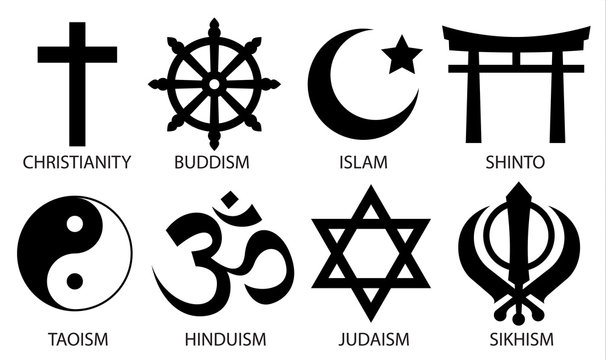
Early on, the Vedas announced Hinduism’s classic contention that the various religions are but different languages through which God speaks to the human heart. “Truth is one; sages call it by different names”. To claim salvation as the monopoly of any one religion is like claiming that God can be found in this room but not the next. Normally, people will follow the path that arises from the plains of their own civilization. One becomes a Hindu, Buddhist, and Taoist, follower of Confucianism, Jew, Christian or a Muslim, because one is born into one. People are converted from one religion to another but their numbers are relatively few. In 2020, among the people of the world, 32.2% were Christian, 24.9% were Muslim, 15.58% were Hindus, 6.9% were Buddhist and 15.58 % were atheists or agnostic (non-believers).The rest belong to 4200 or more other religions.

Different religions adhere to different gods as one true God, claim different creation story, and have different ideas about how to live and how to worship. Each major religion teaches that it is the only right one. When people claim that their religion is the only right one and others’ are the wrong one, it leads to religious and non-religious conflicts. Not one religion on Earth has been spared from having a past which was not filled with religious intolerance- leading to many wars and even genocides.  According to the famous British historian Arnold Toynbee, for a religious establishment to persecute another religion for being “wrong”ironically puts the persecuting religion in the wrong, undermining its own legitimacy. But they all do.  Article 2 of the United Nations’ Universal Declaration of Human Rights forbids discrimination on the religious ground but most countries continue to discriminate their own citizens on the basis of religion.

 Although lots of literature has been produced highlighting the strengths and benefits of religion, there also many problems with them. Problems created by religions are: conflict with science, curtailing freedom, instilling fear, claims of having the exclusive truth, leading to religious conflicts, wars and genocide.

Many Paths to the Same Summit

 Hinduism has shared her land for centuries with Jains, Buddhists, Parsees, Muslims, Sikhs, Jews and Christians. It is possible to climb life’s mountain from many sides, but when the top is reached the trails converge. At base, in the foothills of theology, ritual, and organizational structure, the religions are distinct. It is good. It adds to the richness of human experience. But beyond these differences the same goal beckons.

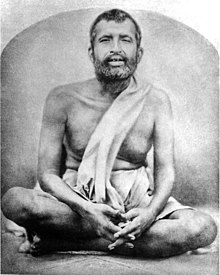
      Ramakrishnan Paramahamsa     

 For evidence of this, one of Hinduism’s nineteenth century saints sought god successively through the practices of a number of the world’s great religions. In turn he sought God through the person of Christ, image less, god –directed teachings of the Koran, and a variety of Hindu God–embodiment. In each instance the result was the same: The same God (he reported) was revealed, now incarnate in Christ, now speaking through the Prophet Muhammad, now in the guise of Vishnu the Preserver or Shiva  the completer. Out of these experiences came a set of teachings on the essential unity of all religions (Smith).

 The saint was Sri Ramakrishnan Paramhamsa (1836-1886). His chief disciple Swami Vivekananda founded the Ramakrishna Math and took Hinduism to the West. This is what Ramakrishna said about various religions.
“God has made different religions to suit different aspirations, times and countries. All doctrines are so many paths; but a path is by no means God Himself. Indeed, one can reach God if one follows any of the paths with whole-hearted devotion. One may eat a cake with icing either straight or sidewise. It will taste sweet either way.

 As one and the same material; water is called by different names by different peoples, one calling it water, another eau, a third aqua, and another pani, so the Everlasting-Intelligent-Bliss is invoked by some as God, by some as Allah, by some as Jehovah, and by other as Brahman.

 As one ascend to the top of a house by means of a ladder, or a bamboo or a staircase or a rope, so diverse is the ways and means to approach God, and every religion in the world shows one of these ways.

So people in ignorance say, “My religion is the only one, my religion is the best”. But when the heart is illuminated by true knowledge, it knows that above all these wars of sects and sectarians presides the one indivisible, eternal, all-knowing bliss.” (Sayings of Ramakrishnan Pramahamsa)

Religious Ethics

Philosopher and mathematician Bertrand Russell defined ethics as “What sort of actions ought men to perform?” and “What sort of actions men to avoid?” Based on this definition of ethics all religions have emphasized ethical behaviors. All of them have promoted proper treatments of others, truth, honesty and charity. A saying by the Chinese Philosopher Lao Tzu summarizes it well:

                                      “The way to heaven has no favorites.

                                        It is always with good man.” (Tao-te Ching)

(A) Treating others as you like to be treated

“What I do not want others to do to me; I do not want to do to them.”- Confucius, Analects

 “Love thy neighbor.”- Thales of Miletus, Greek philosopher (640-540BCE)

 “You shall love your neighbor as yourself”. – The Old Testament (Judaism)

 “Treat others the way you would have them treat you; this sums up the law and the prophets”. The   New Testament (Christianity)

(B) Truth, Honesty, Do not Lie

“From delusion lead me to Truth.

 From darkness lead me to Light.

 From death lead me to Immortality”. –  Upanishads (Hinduism)

 “Speak the truth, yield not to anger, give what you can to him who asks; these three steps lead you to gods.- Dhammapada (Buddhism)

“Confucius said: “One who can practice five things wherever he may be is a man of humanity: Earnestness, liberality, truthfulness, diligence and generosity.”-Analects (Confucianism)

“Do not steal, do not deceive and do not lie to one another”. The Old Testament (Judaism)

“Do not veil the truth in falsehood, nor conceal the truth knowingly”. – The Quran (Islam)

(C) Non-violence

 “The vow is to be free from injury (Ahimsa), falsehood, theft, chastity, and worldly attachment.”- Jainism

“What is the highest duty?

To refrain from violence.”- Mahabharata (Hinduism)

“A man of strength and violence will come to a violent end”. – Lao-Tzu (Tao-te Ching, Taoism))

 “You have heard the commandment “An eye for an eye, tooth for a tooth”. But what I say to you: Offer no resistance to injury. When a person strikes you on the right cheek, turn and offer him the other”.

 The New Testament, (Christianity)

 “Let there be no violence in religion”. The Quran (Islam)

(D) Charity

“The wealthier man should give unto the needy.

 Considering the course of life hereafter;

For riches are like chariot wheels revolving;

Now to one man they come, now to another.”- Rig Veda (Hinduism)

“The more he gives to others, the more he possess of his own”. – Tao-te Ching (Taoism)

“Charity is equal in importance to all other commandments combined”. – The Babylonian Talmud (Judaism)

“It is more blessed to give than to receive”. The New Testament (Christianity)

“They ask you of what they should give in charity. Tell them: “What you can spare of your wealth as should benefit the parents and relatives, the orphans, the needy, the wayfarers, for God is not unaware the good deeds that you do.”- The Quran (Islam)

Conclusion

 Different religions adhere to different gods as the one true God, claim different creation stories, and have different ideas about how to live and how to worship. They also have different concepts of the coming afterlife. Most religions claim their Scriptures (Holy Books) to be divinely revealed. But we know from scientific and archeological evidences that they were written by fallible but wise human beings. They have been edited and reedited to reflect the changing times. All religions also have been corrupted by the priestly class who has tried to control the common men and women. Each major religion (except Hinduism) teaches that it is the only the right one.

 Causes of religious intolerance are many, but the main cause is ignorance. Not one religion on Earth has been spared from having a past which was not filled with religious intolerance – leading to many wars and genocide. According Historian Arnold Toynbee: “There is no one alive today, who knows enough to say with confidence whether one religion has been greater than all others”.

In spite of differences in the name of gods or God, Holy Scriptures, rituals, there is some wisdom in all the religions. What are the specifics of that wisdom? We should avoid murder, thieving, lying and adultery and give to charity. These are the minimum guidelines. Proceeding from the ethical base to the kind of people we should strive to become, we come to virtues. There are three common virtues: humility, charity and veracity. Humility is the capacity to regard oneself in the company of the others as one, but not more than one. That is, we are no more important than others. Charity is what we can do for our neighbors, who are less fortunate than us. Veracity is defined as being honest and telling the truth. Truth telling.

So what we do? We must see that followers of other religions as men and women who face the same daily problems much like our own. The best thing for all of us to do is to listen and learn from other religious traditions different from ours. Follow the Golden Rule-“Treat others as you would like to be treated”. Be kind to all, including plants and animals. Help others when you can. Treat our earth as “Mother Earth” as advocated by many religions. Do not pollute. Plant trees as many as you can.

 I will conclude with two quotations from Epicurus and Buddha.

“Is God willing to prevent evil, but not able? Then he is not omnipotent. Is he able, but not willing? Then he is malevolent. Is he both able and willing? Then whence cometh evil? Is he neither able nor willing? Then why call him God?”- Epicurus (C341-270BCE)

 “Do not accept a statement because it is found in our books, nor because it is in accord with your belief, nor because it is the saying of your teacher… Be the lamps unto yourselves”. – Final words of Buddha to his disciples.

Sources

1-Houston Smith, The World’s Religions. New York: Harper SanFrancisco, 1991

2-The Sayings of Sri Ramakrishna. New York: The Vedanta Society, 1903

How to Encourage Children to be Helpful, Generous and Kind?

0

Dr Saheb Sahu, FAAP

I am a retired pediatrician (children’s doctor). I have some interest in child development and try to keep up with the literature. Few days ago I read a book titled: How to Raise Kids Who Aren’t Assholes by Melinda Wenner Moyer, contributing editor of Scientific Americana. In the book Moyer probes the research on how to encourage children to be generous, honest, helpful and kind. Here are some of her main points.

1- Talk to your children about feelings-yours, theirs, and everybody’s. Tie your children’s actions to their effects on other people.

2- Model kindness and generosity yourself.

3- Encourage your children to try fun, challenging activities. Don’t let them immediately quit.

4-Praise for efforts, not skills or smarts. Use rewards sparingly.

5- Lying and swearing are normal, but it helps to model the behavior you seek. React calmly when your children lie or swear.

6- Tell your children you love them unconditionally and don’t put too much pressure on them to achieve.

7-Let them fail. Failure is an essential part of learning and growing.

8- Educate yourself about race and racism, sexism, gender, religion, class and other biases and reflect upon your own biases. Explicitly talk to children about these issues. Expose them to diverse group of people and ideas.

9- Research suggest that it is better for children, when parents are warm and responsive but set clear limits-espousing a parenting style known as authoritative parenting. This approach differs from authoritarian parenting in which parents discourage negotiation and are quick to punish.

10- Try to treat each child equally, but do not worry too much about making things exactly the same for them. Try not comparing children to each other. Be a mediator and not an arbitrator in sibling fights.

11- Answer questions about sex honestly and clearly and don’t fret if you mess up- you can revisit them later. Talk to them about sexting, pornography, and sexuality and gender stereotypes from young age.

12-Create a family media plan. As much as possible, use screens with your children, and talk to them about what they are doing and seeing. Parents themselves should model healthy screen use. The American Academy of Pediatrics recommends no screen time at all for children until 18 to 24 months, except video chart, and an hour or less of screen time for children 2 to five years of age.

 Conclusion

Raising children is hard. It is mostly an art with some science behind it. It is also constantly changing as it should. A child to grow as a successful adult depends on multiple factors: genetic, education and income of the parents, love and affection of the extended family, teachers and friends and some opportunity at right time (what we call luck) in her or his life. In a survey by the Parents Magazine (USA) in 2020, 75% of the parents wished that their child should grow up to be a kind person rather than a successful one. Being Kind is good!

 Source:

 Melinda Wenner Moyer, How to Raise Kids Who Are Not Assholes. Science –based strategies for better parenting from tots to teens. G. P. Putnam’s Sons, New York, 20121

Issue Notification to Appoint Inquiry Officer without Delay Demands Swami Agnivesh Bichar Manch

A Press Conference is being organised at Jawane-Hind-Club under the banner of ” Swami Agnivesh Bichar Manch”, presided by Swami Sombesh on the topic of “Corona Pandemic & Violation of Fundamental Rights” Guaranteed under Indian Constitution ( Particularly Right to Life, Article-21) on the back drop of recent Order of Hon’ble High Court of Odisha in respect of Public Interest Litigation Case No:- 17152/2021 filed by Gyandatta Chouhan regarding inability, mismanagement, and negligence of health sector in Western Odisha in reaching out to Covid affected people during the ongoing Covid Pandemic. The said Manch welcomes the Order of Hon’ble High Court dated 7th July’2021 in appointing Retired Dist Judge A.B.S Naidu, former Dist Judge as Inquiry Officer for the said purpose to submit the Inquiry Report before 1st Nov’2021 well in advance the next hearing on 8th Nov’2021. The said Manch also loud the exemplary courage of 9 deponents from the districts of Sambalpur,  Bargarh and Jharsuguda for standing by Truth which will inspire others for the same.

                 The High Court itself has observed it was entirely possible that there were lapses & said affidavits raise serious questions involving ” Fundamental Right to Health (In Providing Highest Standard of Care to Everyone) which is inherent part of Article-21 of Constitution & said issues need to be investigated by an Inquiry Officer by providing an opportunity of being heard to all stake holders. The Inquiry Officer will also give suggestions regarding payment of compensation where said negligence or lack of timely treatment is established. The said officer will also in his report give suggestions after consulting with expert witnesses on the steps to be  taken to improve the existing medical infrastructure and standard of medical care provided at VIMSAR, Burla and generally in other Government medical/health care facilities.           

            As per the said Order Govt of Odisha had to issue a notification for the appointment of Inquiry Officer within a week from the date of receipt of said Order, to be followed by intimating the process of Inquiry by issuing a Public Notice within a week of said Notification, as far as our knowledge is concerned, the said Notification is yet to be issued. The Public Notice to be issued by Inquiry Officer subsequent to issuance of Govt Notification inviting other persons (other than those 9 who have already submitted) within a maximum period of 15 days from the date of said notification. The said Manch demands issue of said notification at the earliest without further delay.    

           Further the said Manch questions the role of opposition parties and their elected representatives who failed to stand by the sufferings and woes of distressed during the said pandemic and are now trying to score out a political mileage out of it by targeting the State Govt after several recent observations and orders of High Court in this regard instead of working in cohesion to combat the said pandemic.

        The Manch observes, it was a collective failure of both Central and state governments in anticipating gravity of said human disaster of 21st Century and their dealing with it. It is the result of withdrawal on part of government from health sector over the years. The private health sector has failed miserably in dealing with the said disaster faced by the Nation and the public health sector which lacks investment was the only alternative available for the people despite its limitations. The Manch demands Central and state governments to desist from under reporting of covid cases and deaths by non-adhering ICMR Guidelines in this regard, their gradual withdrawal from health sector and to publish actual figures of covid cases and related deaths and to raise expenditure on health considerably to 5% of GDP by 2025 from 1.6% at present in order to provide highest standard of health care to everyone.

 The said Manch will also send memorandums to Central Government and state government in this regard.

The said Press Conference was attended by Mahesh Sayta, Mahendra Mishra, Bruhaspati Swain, Md Sanaulla, Gyandatta Chouhan, Janmajay Behera, Ganesh Gaigouria, Subham Saswat Mishra, Arnab Babu,Mohammad Yusuf and Md Issaque.

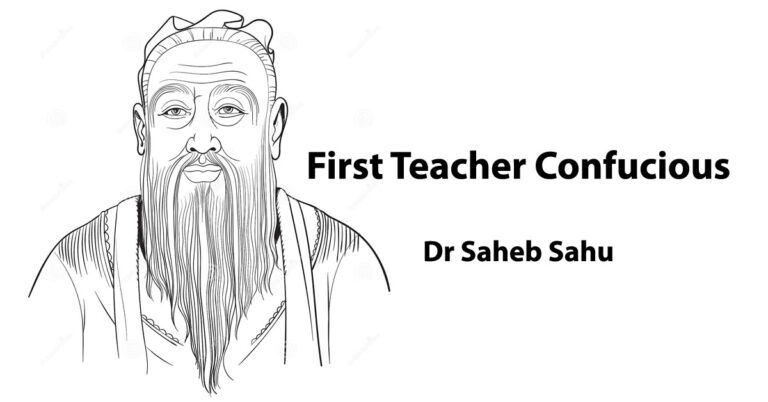
First Teacher: Confucius

0

Dr Saheb Sahu

 If there is one name with which Chinese culture has been associated, it is Confucius- Kung Fu-Tzu or Kung the Master. Chinese reverently speak of him as the First Teacher- not that there were no teachers before him, but he stands first in rank. According Houston Smith, “For though Confucius did not author Chinese culture, he was its editor”.

 Confucius was born around 551 BCE, in the principality of Lu in what is now Shantung province in China. We know nothing for certain about his ancestors, but it is clear that his early home life was modest. His father died when Confucius was probably three years old. He studied under no particular teacher but perhaps became the most learned man of his time. “When young, I was without rank and in humble circumstances”. Financially, he was forced to make his own way, at first through menial works. The hardship of poverty of these early years gave him a tie with the common people, which was to be reflected in the democratic tenor of his entire philosophy.

 Confucius’ career, in terms of his own ambitions, was a failure. His goal was high public office. He had supreme confidence in his ability to reorder society given a chance. He became the Minister of Public Works and was promoted to Minister of Justice by the local ruler. But he wanted to be the Prime Minister of the state to change the society. When his reputation rose, the ruler did not appoint him the prime minister, instead gave him an honorific title. Confucius discovered the ploy and resigned.

 He wondered from state to state offering unsolicited advice to rulers on how to improve their governing and seeking real opportunity to put his ideas into practice. The opportunity never came. He became a great teacher taking on many disciples. He spent his last five years quietly teaching and editing the classics of China’s past. According to historian he had three thousands pupils. In 479 BCE, at the age of seventy-two he died.

 A failure as a politician, Confucius was undoubtedly one of the world’s greatest teacher. He was prepared to instruct in history, poetry, government, mathematics, music, divination, and sports. He was in the manner of Socrates, a one-man university. His method of teaching was like wise Socratic (Buddha did the same). Instead of lecturing, he seemed to have conversed with his students, asking questions. He presented to his students as their fellow traveler. Confident as he was, he was always ready to admit that he might be wrong. He loved to be with people, dine out, to join in the chorus of a good song. His disciples reported that “When at leisure the Master’s manner was informal and cheerful. He was affable, yet firm; dignified yet pleasant.”

The problems Confucius faced

 For the clue to Confucius’ power and influence, we must see both his life and his teaching against the background of the problem he faced. This was the problem of social anarchy of that time in China.

 From the eighth to the third century BCE, China witnessed the collapse of the Chou Dynasty’s ordering power. Rival feudal lords were left to their own devices, creating chaos. There was almost continuous warfare among the rulers.

“Mutual attacks among the states, mutual usurpation among them houses, mutual injuries among the individuals, these are [among] the major calamities in the world. But whence do these calamities arise?” They arise out of want of mutual love preached Mo Tzu (C470-391BCE). He proposed as the solution to China’s social problem not force but love-universal love.

Confucius’ Answer

Confucius was not impressed by Mo Tzu‘s idea of mutual love. He thought it was utopian and not practical. He also rejected the Realists’ answer of force. Confucius was obsessed with tradition. The main outlines of Confucius’ answers can be gathered under five key terms.

1-Jen

It is translated as goodness, benevolence, and love; it is best rendered as human-heartedness. Jen involves simultaneously a feeling of humanity toward others and respect for oneself. Subsidiary attitudes follow automatically: good faith, charity and magnanimity. This leads to what has been called the Silver Rule: “Do not do unto others what you would not want others to do unto you.” Jesus preached the same message five hundred years later and it is called The Golden Rule by the Christians.

2-Chun tzu

 It has been translated as the Superior Person and humanity-at-its-best. The Chun tzu is opposite of petty person, a mean person, a small-spirited person. He does not boast, push himself forward,or in any way display his/her superiority.

3-Li

The word li, originally meant a religious sacrifice, but it has come to mean ceremony, ritual, decorum, rules of propriety, good form, customs etc., and has even been equated with Natural law.  Propriety covers a wide range-but one of them is his teaching of the Doctrineof the Mean.The Chinese words for mean are Chun yung, literally “middle” and “constant”. The mean therefore, is the way that is   “constantly in the middle” between unworkable extremes. Nothing in excess. It is similar to the Middle Path of the Buddha and the Golden Mean of Aristotle. Respect for the Mean brings harmony and balance. It encourages compromise. “Pride, the Book of LI admonishes, “should not be indulged. The will should not be gratified to the full. Pleasure should not be carried to the excess.”

 In the Confucian schemes, Five Constant Relationships constitute the fabrics of social, life: Parents should be loving, children reverential; elder siblings’ gentle, younger siblings respectful; husbands good, wives’ listening; elder friends’ considerate, younger friends deferential; rulers benevolent, subjects loyal. Confucius also developed the concept of “filial piety”. Filial piety is defined as “the attitude of obedience, devotion, and care toward one’s parents and elder family members”. “The duty of children to their parents is the fountain from which virtues spring”. He saw age as deserving veneration by reason of its intrinsic worth.

4-Te

Literally this word meant power, especially the power by which men are ruled. He noted that, the three essentials of government were economic sufficiency, military sufficiency and confidence of its people. “If the people have no confidence in their government, it cannot stand”. “Never forget, scholars, that an oppressive rule is crueler than a tiger.”

5-Wen

The final concept of the Five is Wen. This refers to “the art of peace” as contrast to “the art of war”. Confucius valued the arts tremendously. He felt that victory goes to the state that develops the finest arts, the noblest philosophy, and the grandest poetry.

The Analects (Chinese-Pinyin)

The Analects (Discourses or Dialogue) is a collection of sayings of Confucius and his pupils pertaining of his teachings and deeds. Confucius apparently wrote and edited in his own hands five volumes, known in China as the “Five Ching” or Canonical Books.

Some sayings from the Analects

“Filial piety and brotherly love is the root of humanity”.

“A ruler who governs his state by virtue is like the north star, which remains in place while other stars revolve around it”.

“At fifteen my mind was set on learning. At thirty my character has been formed. At forty I had no more perplexities. At fifty I knew the Mandate of Heaven. At sixty I was ease with whatever I heard. At seventy I could follow my heart’s desire without transgressing moral principles.”

“He who learns but does not think is lost: he who thinks but does not learn is in danger”.

 “The superior man thinks virtue; the inferior man thinks of possessions”.

 “If one’s acts are motivated by profit, he will have many enemies.”

“The superior man is dignified but not proud; the inferior man is proud but not dignified.”

“In education there should be no class distinction.” Confucius was the first one in Chinese history to pronounce this principle.

 Tzu-Kung (one of the disciples) asked: “Is there one word which can serve as the guiding principle for conduct throughout life?” Confucius answered: “It is the wordaltruism (Shu). Do not do to others what you do not want them to do to you.”

Impact on China

Confucius can truly be said to have molded Chinese civilization in general, but he did not develop the Chinese philosophy. He gave Chinese philosophy its humanistic foundation. Most important of all, he evolved the new concept of jen, which was to become central in Chinese philosophy. The system gives s advice on how societies should be run, how people should live their lives and how relationship should be maintained. It stresses hierarchy, social harmony, and respect for elders.

 Confucius did not dominate the world of thought in China in the fifth century BCE. It took several generations of persistent effort to enable Confucian persuasion to prevail. Confucian scholars like Mencius, Yang Chu, Hstzu, Motzu, made it the dominant philosophy in China. Shortly after his death, his followers split into eight distinct schools, each of which claimed to be the legitimate heir to the Confucian legacy.

 For over two thousand years Confucian teachings have profoundly affected more than quarter of the population of the world. In 130 BCE, the Confucian texts were made the basic discipline for the training of government officials, a pattern that continued until the Chinese Empire collapsed in 1905. During the time of the Han Dynasty (200-600 CE) Confucianism became, in effect, China’s state religion. By the seventh and eighth centuries temples were erected as shrines to him. Besides China, Japan, Korea, Taiwan and Singapore, all have been shaped by Confucian ethics.

 Is Confucianism a religion, or is it an ethic? The answer depends on how one defines religion. If religion is taken in its widest sense, as a way of life woven around a people’s ultimate concerns, it clearly qualifies. But China’s ruling Communist Party, whose founder Mao Zedong had denounced the ancient philosopher as “regressive, pedant and feudal”. The present Communist Party in China is reviving the Confucian teachings.

 Sources

1- Houston Smith, The World’s Religions, New York: Harper San Francisco, 1991

2-Arthur Waley’s The Analects of Confucius. New York: Random House.1989 3-Wing-Tsit Chan, A source Book in Chinese Philosophy. Princeton: Princeton University Press, 1963

The Atheist Who Became A God: Dr Saheb Sahu

0

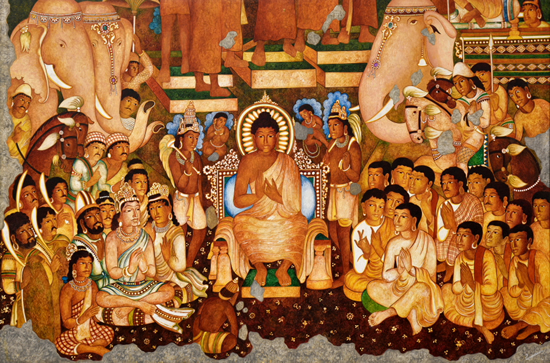
The historical facts about his life are roughly these: He was born around 563 BCE, in what is now Nepal, near the Indian border. His full name was Siddhartha Gautama of the Sakyas. His father was a king, but it would be more accurate to think of him as feudal lord. By the standard of the day his upbringing was luxurious. At sixteen he married a neighboring princess, Yosodhara, who bore him a son whom they called Rahula.

 Despite all this there settled over him in his twenties a discontent, which was to lead to a complete break with his worldly estate. The source of his discontent, according to the legend of The Four Passing Sights: (1) an old man decrepit, crooked, bent body, leaning on a staff trembling (2) a body racked with disease, lying on the road side;(3) a corpse; and (4) a monk with shaven head, ochre (light yellow to brown color) robe, and a bowl. It was the body’s inescapable involvement with decrepitude, disease that made him despair of finding fulfillment on the physical plane.

 Once he had perceived the inevitability of bodily pain and passage, fleshy pleasure lost their charm. One night in his twenty-ninth year he made the break, his Great Going Forth. He made a silent goodbye to his sleeping wife and son, left the palace and rode off toward the forest. At the edge of the forest Gautama changed his clothes, shaved his head and “clothed in ragged cloth” plunged into the forest in search of enlightenment. After six year of extreme ascetic life, he found no satisfactory answer to his quest and realized the futility of asceticism.

Having turned his back on mortification, Gautama devoted the final phase of his quest to a combination rigorous thought and mystic concentration along the lines of raja yoga of the Vedas. He sat down under a peepul tree that has come to be known as the Bo Tree (short for Bodhi or enlightenment). He vowed not to arise until enlightenment was his. After spending 49 days meditating Siddhartha Gautama became Buddha (The Awakened One). He had finally reached enlightenment.

 It is a legend, this story, but like all legends it embodies an important truth. “Life is subject to age and death. Where is the realm of life in which there is neither age nor death?”

 Nearly half a century followed during which the Buddha trudged the dusty path of northern India, until his hair was white, step infirm, and body nothing but a burst drum, preaching his ego-shattering, life –redeeming message. He founded an order of monks and nuns and challenged the deadness of Brahmin society. After an arduous ministry of forty-five years, at the age of eighty, and around 483BCE, the Buddha died of dysentery from eating dried boar meat. Two sentences from his farewell message have echoed through the ages. “All compounded things decay. Workout your own salvation with diligence”.

What was special about Buddha? Perhaps the most striking thing about Buddha was his combination of a cool head and a warm heart. He was undoubtedly one of the great rationalists of all times, resembling in this respect no one as much as Socrates (469-399BCE). Every problem that came his way was automatically subjected to cool, dispassionate analysis. He invented the Socrates method of questioning everything before Socrates did.

It is imperative that we understand Buddhism against the background of Hinduism out of which it grew. Between 800 BCE and 200 BCE, was “a turning point between the Vedic religion and Hindu religions, and a formative period of Hinduism, Jainism and Buddhism”. By the time Buddha came to the scene, Vedic religion was corrupt, degenerate, and burdened with worn-out rituals. In early 6th century BCE, before Buddha, Mahavira had founded Jainism as a reaction against the teaching of orthodox Brahmanism. Jainism rejects the idea of a creator god. Around the same time when Jainism and Buddhism arose in the sixth century BCE, there was also an explicitly atheist school of thought in India called the Charvaka School. The Charvakas were firm atheists who believed that nothing existed beyond the material world. To the Charvakas, there was no life after death, no soul apart from the body, no God, no samsara (rebirth), no karma, no fruit of duty, no sin and no world other than this one. The Mimamsa school of Hindu philosophy also rejected the idea of a creator God.

“There is no world other than this:

There is no heaven no hell: the realm of

Siva and like regions are invented by stupid

Imposters of other school of thought…

The enjoyment of heaven lies in eating delicious food,

Keeping company of young women, using fine clothes,

Perfumes, garland, sandal paste etc.”

                                                                                 Sarvasidhanta Samgraha

 Buddha was not alone, after all! He was a product of his time.

What were Buddha’s teachings that were different from existing Hinduism of his time? They were mainly six:

1- Buddha preached a religion devoid of authority. His attack on authority had two prongs. On the one hand he wanted to break the monopolistic grip of Brahmins on religious teachings and make it accessible to all. His second prong was directed toward individuals. In a time when the multitudes were passively relying on Brahmins to tell them what to do, Buddha challenged each individual to do his own religious seeking. “Do not accept what you hear by report, do not accept tradition, do not accept a statement because it is found in our book, nor because it is in accord with your belief, nor because it is the saying of your teacher. Be lamps unto yourselves. Those who, either now or after I am dead, shall rely upon themselves only and look for assistance to anyone besides themselves, it is they who shall reach the utmost height.” The Greek philosopher Socrates could not have said it any better.

2Buddha preached a religion devoid of rituals.Repeatedly, he ridiculed the lengthy and complicated Brahminic rituals as superstitious petitions to ineffectual gods. He taught that rituals were irrelevant to one’s life.

3- Buddha preached a religion that skirted speculations. “Whether the world is eternal or not, whether the world is finite or not, whether the soul is the same as the body or whether the soul is one thing and the body is another, whether Buddha exists after death or does not exist after death”-these things one of his disciples observed, Buddha did not bother to answer.

4- Buddha preached a religion devoid of tradition.He encouraged his followers, to slip free from the past burden. “Do not go by what is handed down, nor on the authority of your traditional teachings. When you know yourselves: “These teachings are not good: these teachings when followed and put in practice conduce to loss and suffering”- then reject them.

 His most important break from the past was not to preach in Sanskrit and teach in the vernacular of the people.

5-Buddha preached a religion of intense self-effort. During his time many had come to accept the round of birth and rebirth as unending. Those who still clung to the hope of eventual release had resigned themselves to the Brahmin’s sponsored notion that the process would take thousands of lifetimes, during which they would gradually work their way into the Brahmin caste as the only one from which release was possible.

 Buddha taught that each individual must tread his own path himself or herself. “Those who, relying upon themselves only, it is they who shall reach the topmost height”. No god or gods could be counted on, not even the Buddha himself. When I am gone, he told his followers in effect, do not bother to pray to me; for when I am gone I will be really gone. Buddhas only point the way. Work out your salvation with diligence”.

6- Buddha preached a religion devoid of supernatural. He condemned all forms of prophecies, soothsaying, and forecasting as low arts. He refused to allow his monks to play around with those powers. “It is because I perceive danger in the practice of mystic wonders that I strongly discourage it”.

What were the teachings of Buddha?

Buddha’s first formal discourse after his awakening was a declaration of the key discoveries that had come to him as the climax of his six-year quest. They were the Four Noble Truths:

1- The First Noble Truth is that life is dukkha, usually translated as “suffering”. Buddha saw clearly that life as typically lived is unfulfilling and filled with insecurity.

2- The Second Noble Truth- the cause of suffering leading to endless rebirths is desire (ichha), craving (tanha) and, thirst (tisna): the thirst for things, immortality, sensual pleasure, and worldly possession and power.

3- The Third Noble Truth follows logically from the Second. If the cause of life’s dislocation is selfish craving, its cure lies in the overcoming of such cravings.

4-The Fourth Noble Truth prescribes how the cure can be accomplished. The overcoming of tanha, the way out of our captivity, is the Eightfold Path. The eight-fold path is also called The Middle Way which steers clear of the extremes of self-indulgence and self-denial. Three centuries later Greek Philosopher Aristotle (384-322BCE) believed that being morally good meant striking balance between two extremes. He called it The Golden Mean.

The Eight fold Paths are:

. Right view

.Right intention

.Right speech

.Right action

.Right livelihood

.Right effort

.Right mindfulness and

.Right concentration

Buddhist Ethics (Pancasila)

 Buddha also preached Five Precepts for lay people:

1-Abstain from killing (ahimsa);

2-Abstain from stealing;

3-Abstain from sexual misconduct;

4-Abstain from lying;

5-Abstain from drugs and alcohol.

 The precepts are not commandments and transgressions do not invite religious sanctions.

Conclusion

 Buddha founded a religion- without authority, ritual, theology, tradition, grace, and the supernatural. Like the Charvakas and the Jains of his times, (6th Century BCE) he rejected the idea of a creator god. Whether he founded a religion without a God became debatable after his death. After his death all the trappings that the Buddha labored to protect his religion from came tumbling into it. Two schools emerged: the Theravada (the way of the Elders, also known as the Hinayana or the little raft) and the Mahayana (the big raft). The Theravadins revere him as a supreme sage, who through his own efforts awakened to the truth and became an incomparable teacher who laid a path for them to follow. For the Mahayanist, Buddha became a world Savior. Thus, the religion that began as a revolt against rites, speculation, and the supernatural, ends with all of them back in full force and its founder, who was an atheist (non-believer in god), was transformed into such a God.

Buddhism spread rapidly to Southeast Asia and Central Asia rapidly because its teachings were simple and it was taught in the language of the people. The patronage of two great emperors- Ashoka (reigned C268-232 BCE) and Kanishka (C127-150CE ) – made it a world religion. South Asians countries that remain to this day Theravadin- Sri Lanka, Myanmar, Thailand, Cambodia and Laos. The Mahayanists are in Tibet, Mongolia, China, Korea, and Japan.

 In India, Buddhism was not so much defeated by Hinduism as accommodated within it. Up to around the year 1,000 CE, Buddhism persisted in India as a distinct religion. The fact is that in the course of its 1,500 years in India, Buddhism’s differences with Hinduism softened. Hindus admitted the legitimacy of many of the Buddha’s reforms, including renewed emphasis on kindness to all living things and some reduction of caste barriers on religious and social matters. It was from Buddhists and Jains that Hindus acquired their respect for animal life and the notion of ahimsa or non-injury. All in all, the Buddha was reclaimed as “a rebel child of Hinduism”; he was raised to the status of divine incarnation. In the Vaishnava Puranas, the Buddha was adopted as the ninth avatar of god Vishnu.

 In the end Buddha who was an atheist became a god. It is said that Buddha told his disciples from his death bed that they should follow no leader, but to “be your own light.”

Sources:

1-  Houston Smith, The World’s Religions. New York: HarperSanFrancisco, 1991.

2- E.A. Butt, The Teachings of the Compassionate Buddha. New York: Mentor Books, 1955

3-  S. Radhakrishnan and C.A. Moore. A Source Book in Indian Philosophy. Princeton: Princeton University Press, 1957

Living a Longer and Healthier Life

0

Dr Saheb Sahu, FAAP, MPH.

Overview

Fauja Singh is a British centenarian and World’s oldest Marathon runner. He started at age 89 and had finished multiple international marathons. He is 109 now.

Morbidity and mortality are two terms often get confused. Morbidity refresh to a specific illness or condition, while mortality refers to death. Some example of common morbidity is: heart disease, diabetes, and obesity. Mortality measures death. Mortality rate refers to number of deaths per 1,000 populations.

 Ageing or aging is the process of becoming older. In humans, ageing represents the accumulation of changes over time and encompasses physical, psychological and social changes. Reaction time, for example, may slow with age, while knowledge and wisdom may expand. Ageing is among the greatest risk factors for most human diseases. Human body is like a well oil machine but with time there is wear and tear and many parts tend to break down as we age.  But if we take good care of our body, we can delay the ageing process even though we cannot stop it.

 The EPIC (European Prospective Investigation into Cancer) study followed 520,000 older people for more than 15years  and showed that four behaviors alone seemed to prevent 90% of diabetes, 81% of heart attack, 50% of stroke, and 36% of all cancers. These four behaviors are: 1- not smoking, 2-excercising, 3-eating a healthy diet and 4- maintaining a healthy weight.

When it comes to staying healthy, most people have the same motivation: living as long and fulfilling a life as possible. And while science has yet to find a true fountain of youth, researchers have identified certain behaviors that can increase longevity and decrease morbidity.

1-Not Smoking

Smoking of all kinds( cigarette, bidi, hookah) are associated with serious health problems including lung cancer, heart attack, stroke, and mouth and throat cancers, contributing both to morbidity and mortality. Chewing tobacco and tobacco in pan is the most common cause of mouth cancer, which is the most common cancer in India. The best way to reduce your risk, of course, is never to smoke at all- but if you do, quit as soon as possible minimizing threats to your health.

For years, moderate drinking was touted as a harmless — and maybe even healthy — habit. But recently, scientific opinion has begun to shift toward a more cautious stance on alcohol. Hence if you do not drink, do not start now. If you do, do not have more than one drink a day and let the drink be wine and not hard liquor.

2- Exercise and Physical Activity

Exercise and physical activity are considered the corner stone of almost every healthy ageing program. Scientific evidence suggests that people who exercise regularly not only live longer, they live better. And, being physically active – doing everyday activities like gardening, taking the stairs instead of the lift (elevator) and walking the dog-can help you continue to do things you enjoy and stay independent as you age.

 Regular exercise and physical activity can reduce your risk of developing some diseases like- diabetes, high blood pressure, heart disease, stroke, arthritis and many cancers. Exercise may even be an effective treatment for many of these conditions.

Evidence now suggests that people who begin their exercise program in later life, for instance in their 60s and 70s, can also experience improved lung, heart, muscle and brain functions.

How much exercise? US Federal physical activity and WHO (World Health Organization) guidelines recommend aiming for at least 150 minutes of moderate or 75 minutes of vigorous activity each week, plus twice –weekly muscle strengthening exercises, to reap the health and longevity benefits. Many physical activities, such as walking briskly are free and do not need any special equipment except for a pair of good shoes. Walking with a friend is even better, both for physical and mental health. Bottom line, any activity is better than none. The best exercise is the one that you will continue to do.

3-Eating a Healthy Diet

Diet is strongly linked to longevity. Research has long suggested that following a Mediterranean diet — which includes plenty of fruits, vegetables, whole grains, nuts and healthy fats, and not much sugar, red meat or processed food — brings a host of health benefits, including a longer life.

On the other hand, foods including processed snacks and meats, fried foods and sugar- sweetened beverages have been linked to higher risks of chronic diseases and death.

4-Maintaining a Healthy Body Weight

 Ideal body weight is complex issue. Diet and exercise habits help people maintain a healthy body weight, which is defined as a body mass index (BMI) between 18.5 and 24.9. For Indians, the upper limit of BMI is 24. Studies have shown that abdominal fat (bulging tommy) is worse than just being overweight. For Indian men the waist circumference should be less than 90 cm and for women it should be less than 80cm.Increased waist circumference (abdominal fat) and obesity are associated with chronic health conditions including Type 2 diabetes, cardiovascular disease and cancer, all of which can shorten your life. 

Conclusion

When the body is shriveled

Another steps falter;

When the teeth are decayed

And the face is smeared with slobber,

When sight fails

And the figure is no longer trim;

The Kinsfolk find no time for conversation

Even the son despises the man

Overcome by old age, alas!

The Panchatantra c 200BCE?

Longevity depend s on our genes and our lifestyle. We have no control over what good or bad genes we inherit but we have some control over how we live our lives. Scientific studies are quite conclusive that age-related morbidity can be postponed and longevity can be increased if we live a healthier life style. According to National Institute of Aging, USA-“Finding a “fountain of youth” is a captivating story. The truth is that, to date, no ant-aging remedy has been found.” Hence, do what have been proven to work; do not smoke or drink, be physically active, eat a healthy diet and maintain a normal body weight.

It is never too late to start.

Source- National Institute of Aging. nia.nih.gov/health/what-do-we –know-about –healthy-aging

EPIC Study-www.epictrial.com

Heart- Healthy Living

0

Dr Saheb Sahu, FAAP, MPH

Note – 90% of the information provided in this article is from National Institute of Health (NIH-USA) web site. They are the recommendations of experts. I have made some additions and subtractions to make it understandable for non-medical people.

Overview

Heart disease is a leading cause of death for both men and women, both in developed and developing countries. Heart attack (coronary artery disease-CAD) is the most common type of heart disease. Some heart diseases seen in children are from birth and are called congenital heart disease. You have no say on how you get it. It is just bad luck. Heart diseases seen in adults are acquired. Heart is a pump, which supplies blood and nutrition to all the organs of the body via a network of arteries and capillaries. When some part of heart muscle dies because of lack of blood supply to the heart, we have a heart attack. The heart has two coronary arteries-right and left. They supply blood to the heart. When one or both are blocked because of narrowing, heart attack happens. The arteries get blocked because of plaque buildup during one’s life time. The process is called atherosclerosis and it starts in our childhood.

Heart attack, diabetes and stroke are called life-style diseases meaning our day to day living contribute to their causes and we can do something about them.We can do a lot to protect our heart and stay healthy.

Heart –healthy living involves understanding your risks, making choices, and taking steps to reduce your chance of getting heart disease, including coronary artery disease, the most common type. Coronary and other types of heart disease cause heart attacks.

The first step toward heart health is understanding your risk of heart disease. Your risk depends on many factors, some of which are changeable and others that are not. Risk factors are conditions or habits that make a person more likely to develop a disease. These risk factors may be different for each person.

Preventing heart disease starts with knowing what your risks factors are and what you can do to lower them.

Risk factors for heart disease

Your risk of heart disease is higher if you:

  • Have high blood pressure
  • Have high blood cholesterol
  • Are overweight or obese
  • Have prediabetes or diabetes
  • Smoke
  • Do not get regular physical activity
  • Have a family history of early heart disease (your father or brother was diagnosed before age 55, or your mother or sister was diagnosed before age 65)
  • Have a history of preeclampsia (a sudden rise in blood pressure and too much protein in the urine during pregnancy)
  • Have unhealthy eating behaviors
  • Are older (age 55 or older for women or age 45 or older for men)

Each risk factor increases a person’s chance of developing heart disease. The more risks you have, the higher your overall risks.

Some risk factors cannot be changed. These include your age, sex, and a family history of early heart disease. But many others can be modified. For example, being more physically active and eating healthy are important steps for your heart health. You can make the changes gradually, one at a time. But making them is very important.

Women and heart disease

Women generally get heart disease about 10 years later than men do, but it’s still women’s #1 killer. After menopause, women are more likely to get heart disease, in part because estrogen hormone levels drop. Women who have gone through early menopause, either naturally or because they have had a hysterectomy, are twice as likely to develop heart disease as women of the same age who have not gone through menopause. Middle age is also a time when women tend to develop other risk factors for heart disease, such as high blood pressure.

Preeclampsia (high blood pressure during pregnancy) raises your risk of developing coronary heart disease later in life. It is a risk factor that you can’t control. However, if you’ve had the condition, you should take extra care to monitor your blood pressure and try to lower other heart disease risk factors.

Get Your Blood Pressure and Cholesterol Checked

Two of the major risk factors for heart disease are high blood pressure and high blood cholesterol. If either of these numbers is high, work with your doctor to get it to a healthy range.

Choose Heart-Healthy Foods

Heart-healthy eating involves choosing certain foods, such as fruits and vegetables, while limiting others, such as saturated and trans fats and added sugars.

Your doctor may recommend the heart-healthy Dietary Approaches to Stop Hypertension (DASH) eating plan because it has been proven to lower high blood pressure and “bad” LDL cholesterol in the blood.

Foods to eat

The following foods are the foundation of a heart-healthy eating plan.

  • Vegetables such as leafy greens (spinach, collard greens, kale, cabbage), broccoli, and carrots
  • Fruits such as apples, bananas, oranges, pears, grapes, and prunes
  • Whole grains such as plain oatmeal, brown rice, and whole-grain bread or tortillas
  • Fat-free or low-fat dairy foods such as milk, cheese, or yogurt
  • Protein-rich foods:
    • Fish high in omega-3 fatty acids (salmon, tuna, and trout)
    • Lean meats such as 95% lean meat or skinless chicken or turkey
    • Eggs
    • Nuts, seeds, and soy products (tofu)
    • Legumes such as kidney beans, lentils, chickpeas, black-eyed peas, and lima beans
  • Oils and foods high in monounsaturated and polyunsaturated fats:
    • Canola, corn, olive, safflower,  sunflower, and soybean oils, peanut or sesame (not coconut or palm oil)
    • Nuts such as peanuts, walnuts, almonds, and pine nuts
    • Nut and seed butters
    • Salmon and trout
    • Seeds (sesame, sunflower, pumpkin, or flax)
    • Avocados
    • Tofu

Limit sodium (salts)

Adults and children over age 14 should eat less than 2,300 milligrams of sodium a day. Children younger than age 14 may need to eat even less sodium each day based on their sex and age. If you have high blood pressure, you may need to limit sodium even more. Talk to your doctor or healthcare provider about what amount of sodium is right for you or your child.

Limit saturated fats

Saturated or “bad” fats come from animal sources such as butter, cheese, and fatty meats and should make up less than 10% of your daily calories. Read food labels and choose foods that are lower in these fats and higher in unsaturated fat.

A heart-healthy eating plan limits sodium (salt), saturated and trans fats, added sugars, and alcohol. Understanding nutrition labels can help you choose healthier foods.

  • Read food labels and choose products that have less sodium for the same serving size.
  • Choose low-sodium, reduced-sodium, or no-salt-added products.
  • Choose fresh, frozen, or no-salt-added foods instead of pre-seasoned, sauce-marinated, brined, or processed meats, poultry, and vegetables.
  • Eat at home more often so you can cook food from scratch, which will allow you to control the amount of sodium in your meals.
  • Flavor foods with herbs and spices instead of salt.
  • When cooking, limit your use of premade sauces, mixes, and instant products such as rice, noodles, and ready-made pasta.

Limit trans fats

Limit trans fats as much as possible by:

  • Limiting foods high in trans fats. Thisincludes foods made with partially hydrogenated oils such as some desserts, microwave popcorn, frozen pizza, stick margarines, and coffee creamers.
  • Reading the nutrition labels and choosing foods that do not contain trans fats.

Dairy products and meats naturally contain very small amounts of trans fats. You do not need to avoid these foods because they have other important nutrients.

Limit added sugars

You should limit the amount of calories you get each day from added sugars. This will help you choose nutrient-rich foods and stay within your daily calorie limit.

Some foods, such as fruit, contain natural sugars. Added sugars do not occur naturally in foods but instead are used to sweeten foods and drinks. They include brown sugar, corn syrup, dextrose, fructose, glucose, high-fructose corn syrup, raw sugar, and sucrose.

Limit alcohol

Talk to your doctor about how much alcohol you drink. Your doctor may recommend that you reduce the amount of alcohol you drink or that you stop drinking alcohol. Alcohol can:

  • Add calories to your daily diet and possibly cause you to gain weight.
  • Raise your blood pressure and levels of triglyceride fats in your blood.
  • Contribute to or worsen heart failure in some people, such as some people who have cardiomyopathy(weakness of heart muscle).
  • Raise your risk of other diseases such as cancer.

If you do not drink, you should not start. You should not drink if you are pregnant, are under the age of 21, taking certain medicines, or if you have certain medical conditions, including heart failure.

Aim for a Healthy Weight

A healthy weight for adults is usually when the body mass index (BMI) is between 18.5 and 24.9. To figure out your BMI, use our online BMI calculator and compare your BMI with the following table. You can also download the BMI calculator app for iPhoneexternal link and Androidexternal link.

Body mass index (BMI) is used to determine whether you are at a healthy weight. Adults are underweight if their BMI is below 18.5 and are at a healthy weight if their BMI is 18.5 to 24.9. Adults are overweight if their BMI is 25 to 29.9 and have obesity if their BMI is 30 or above.Newer studies show that normal BMI for Asians is up to 23 instead of 24.5.

Always talk to your doctor or healthcare provider about what BMI is right for you. Talk to your child’s doctor to determine whether your growing child has a healthy weight, because his or her BMI should be compared to growth charts specific for your child’s age and sex. Following a heart-healthy eating plan and being physically active are some ways to help you achieve and maintain a healthy weight.

Measuring waist circumference

If most of your fat is around your waist rather than at your hips, you are at a higher risk for heart disease and type 2 diabetes. For Indian men the waist circumstance should be less than 78cm and for women less than 72cm.

To correctly measure your waist circumference, stand and place a tape measure around your middle, just above your hipbones. Measure your waist just after you breathe out.

Get Regular Physical Activity

Regular physical activity can:

  • Help you lose excess weight
  • Improve physical fitness
  • Lower many heart disease risk factors such as “bad” LDL cholesterol levels, increase “good” HDL cholesterol levels, and manage high blood pressure
  • Lower stress and improve your mental health
  • Lower your risk for other conditions such as type 2 diabetes, high blood pressure, dementia, depression and some cancers 

Talk with your doctor before you start a new exercise plan. Discuss how much and what types of physical activity are safe for you. Even modest amounts of physical activity are good for your health.

Aerobic exercise benefits your lungs the most. This is any exercise in which your heart beats faster and you use more oxygen than usual, such as brisk walking, running, biking, and swimming.

The more active you are, the more you will benefit. Participate in aerobic exercise for at least a few minutes at a time throughout the week. The U.S. Department of Health and Human Services’ Physical Activity Guidelines for Americansexternal link recommends that each week, adults get at least:

  • 2 hours and 30 minutes of moderate-intensity aerobic activity (for example, 30 minutes 5 days a week), or
  • 1 hour and 15 minutes of vigorous-intensity aerobic activity (for example, 25 minutes 3 days a week), or
  • A combination of both moderate-intensity and vigorous-intensity activity.

Another way you can begin to increase your activity level is by reducing how long you sit at a given time. Breaking up how long you sit will benefit your overall health.

Quite smoking

If you smoke, quit. Smoking can increase your risk of heart disease, heart attack, lung cancer, pancreatic cancer, kidney cancer and esophageal cancer.

Get Enough Good-Quality Sleep

Sleep plays a vital role in good health and well-being throughout your life. During sleep, your body is working to support healthy brain function and maintain your physical health. Not getting enough sleep or good-quality sleep over time can raise your risk for chronic health problems. The amount of sleep you need each day will change over the course of your life. This table reflects recent American Academy of Sleep Medicine (AASM) recommendations that the American Academy of Pediatrics (AAP) has endorsed.

 
AgeRecommended Hours of Sleep a Day
Babies 4-12 months12-16 (including naps)
Children 1-2 years11-14 (including naps)
Children 3-5 years10-13 (including naps)
Children 6-12 years9-12
Teens 13-18 years8-10
Adults 18 years or older7-9

Manage Stress

Research suggests that an emotionally upsetting event, particularly one involving anger, can serve as a trigger for a heart attack or angina in some people. Stress can contribute to high blood pressure and other heart disease risk factors. Some of the ways people cope with stress—drinking alcohol, using other substances, smoking, or overeating—are not healthy ways to manage stress.

Learning how to manage stress and cope with problems can improve your mental and physical health. Consider healthy stress-reducing activities such as:

  • Practicing meditation
  • Being physically active
  • Trying relaxation techniques
  • Talking with friends, family, and community or religious support systems.

Summary

Type-2 diabetes, high blood pressure, stroke and heart diseases are called life style diseases. That means the risks for them can be reduced by how well we live every day. Do we sit, eat, smoke or drink every day or we change our everyday living style for better health. We cannot change our genes, our age or our sex but we can do something about how we live every day. A healthy life style include- eating a diet of whole grains, lots fruits and vegetables, chicken and fish, low salt ,low sugar, exercising or being physically active,  not being overweight, not smoking or drinking, reducing stress when possible and getting a good night sleep.

Source-National Institute of Health-nhlbi.nih.gov/health-topic/heart-healthy-living Feb 15, 2021