Dr Saheb Sahu
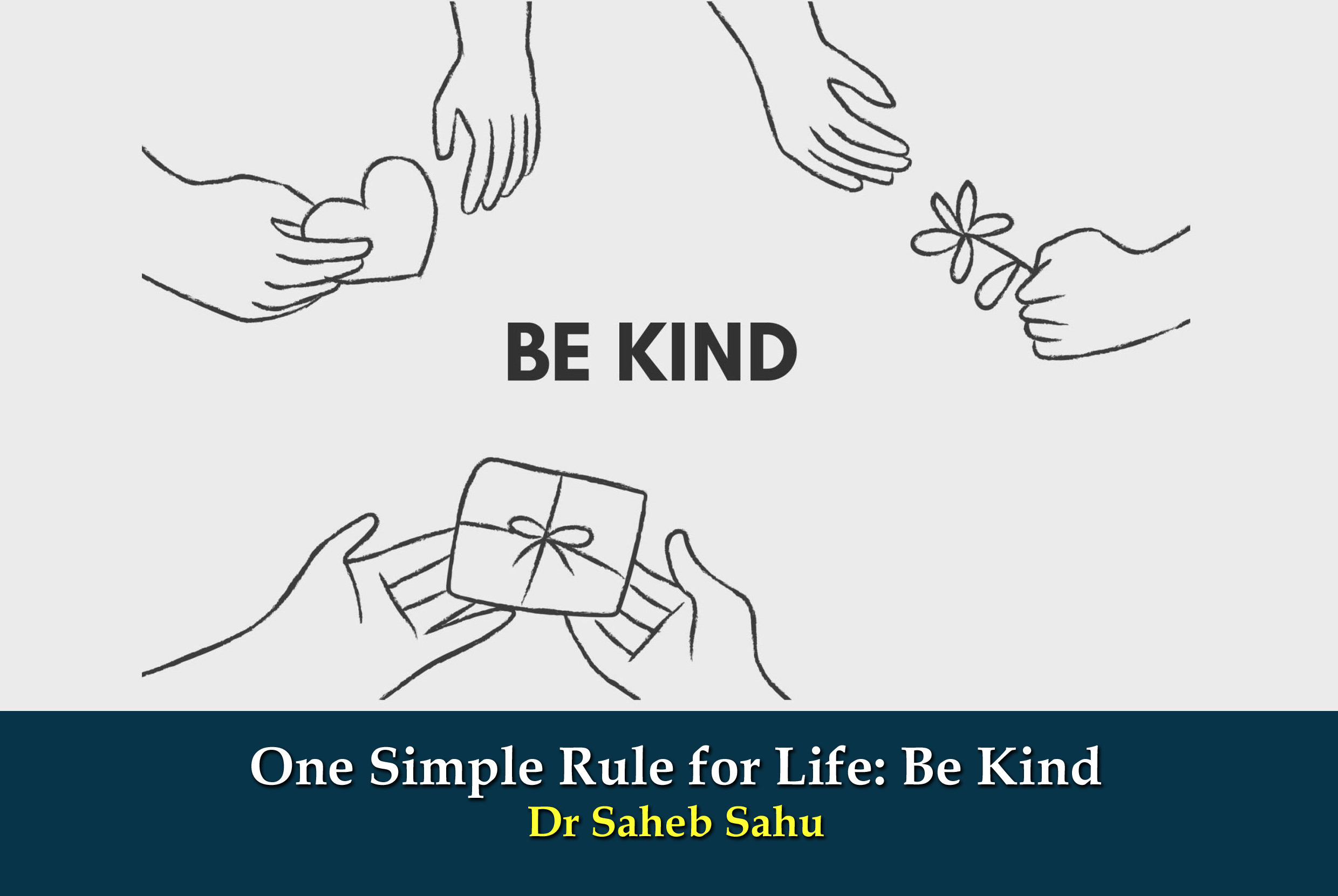
In a world shaped by countless religions, philosophies and moral systems, one simple principle stands above them all: to be kind. Kindness requires no doctrine, no ritual, and no institution. It requires no elaborate belief system. It is accessible to all.
Kindness is the most fundamental expression of our shared humanity. We all respond to warmth, care, and compassion. A gentle touch, a helping hand, or a kind word overcomes barrier of belief system, nationality and race. While religions often differ in theology and practices, they almost always converge on one essential teaching: “treat others how you want to be treated”. It is known as the Golden Rule and is most famously attributed to Jesus of Nazareth. However the concept is universal; including Hinduism, Buddhism, Confucianism, Judaism, Christianity, Islam and other religious traditions. Unlike rigid belief systems that divide people into “us” and “them”, kindness dissolves boundaries.
Kindness also has a transformative power that extends beyond the immediate moment. A small act- a smile, attentive listening, and a small act of generosity- can ripple outward in ways we may never fully see. It softens anger, eases suffering and inspires others to act in the same spirit. Unlike many grand philosophical and religious ideas, kindness is practical and lived. Its simplicity is its strength. It turns morality into action and belief into behavior.
To be kind is a simple principle, but it is not easy. It is a daily choice, and a quiet commitment. And perhaps, it is the only religion we ever truly need.
Here are some examples of “to be kind” teachings from across many religious traditions:
Hinduism
This is the sum of duty; do not do to others what would cause pain if done to you.
- The Mahabharata
Here is the essence of thousands of sacred books; to help others is virtue, to hurt others is sin.
- Bhagavad Gita
Buddhism
Hatred is not cease by hatred, but only by love; this is the eternal law.
Practice living kindness towards all beings.
Jainism
Extend kindness to every living being, even the smallest life forms.
Confucianism
. What I do not want others to do to me; I do not want to do to them
. Kindness is essential for social harmony and good character. – Confucius
Judaism
. You shall love your neighbor as yourself. – Torah (The Old Testament)
. What is hateful to you, do not do to your neighbor. – Rabbi Hillel, the Elder
In Judaism, there is the concept of Tzedakah (google it), often translated as “charity”. Giving or helping other is not just kindness- it is a moral obligation.
Christianity
.The Golden Rule: “Treat others the way you would have them treat you; this sums up the law of the prophets.” – The New Testament, Mathew7:12
Islam
. Allah is kind and loves kindness in all matters.
. Kindness is a sign of true faith and devotion. – The Quran
Taken together, these teachings reveal a profound truth: kindness is not the property of any one religion, culture, or philosophy. It is a shared human inheritance. In a world often divided by belief, identity, and ideology, the simple act of kindness is a common ground- a quiet, enduring bridge between all of us.
Research in Neuroscience shows that the reward regions of the brain are activated by kind actions, even if the actions are small. Research suggests that beyond making you happier, being kind also makes you more successful- healthier, more popular and more productive. Engaging in acts of kindness in the work place also appears to benefit both the workers and their work places. It boosts productivity, efficiency, cooperation, and customer satisfaction.
Some simple everyday example of kindness
At Home
. Listening patiently when a family member wants to talk
. Helping with chores without being asked
. Calling or checking in on an elderly relative.
With Stranger
. Holding the door open for someone
. Smiling and greeting people warmly
. Offering your seat to someone in need
In the community
. Donating food, clothes, books
. Volunteering
At Work or Social Circle
. Giving genuine compliment
. Helping a colleague without expecting anything in return
. Being respectful when you disagree
. Forgiving someone who has wronged you
Toward yourself (often overlooked)
. Practicing self-forgiveness
. Taking time to rest and care for your health
Conclusion
Kindness is the essence of all religions. A gentle word, a patient ear, and a small act of help- these are the ways in which kindness becomes real. Listening to a loved one without distraction, offering sincere ‘thank you’, or simply being present for someone in need are acts that require no wealth, no status, and no special training.
Kindness toward strangers may even be more powerful. In communities, kindness takes the form of service; helping a neighbor, supporting a loyal cause, or giving time to those less fortunate.
Perhaps the most overlooked form of kindness is one we extend to ourselves –to forgive our own mistakes and take care of our health. A person who is kind inward is more capable of being kind to others. A life built on small acts of kindness often has more impact than occasional grand gesture.
Always be kind to all!
1- Sonja Lyubomirsky, Harvey Reis. How to Feel Loved. Harper, New York: 2026
2-Saheb Sahu. Religious Thoughts, Scriptures and Quotations. Self- Published. 1996
3– Chat Gpt
4– Wikepedia.org