Monday, May 18, 2026
Home Blog Page 66

Harvard inviting Dr Anup Pujari

0

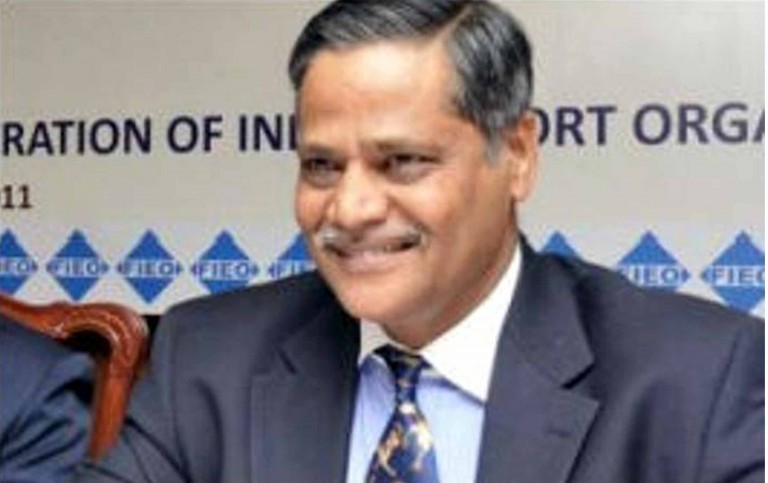
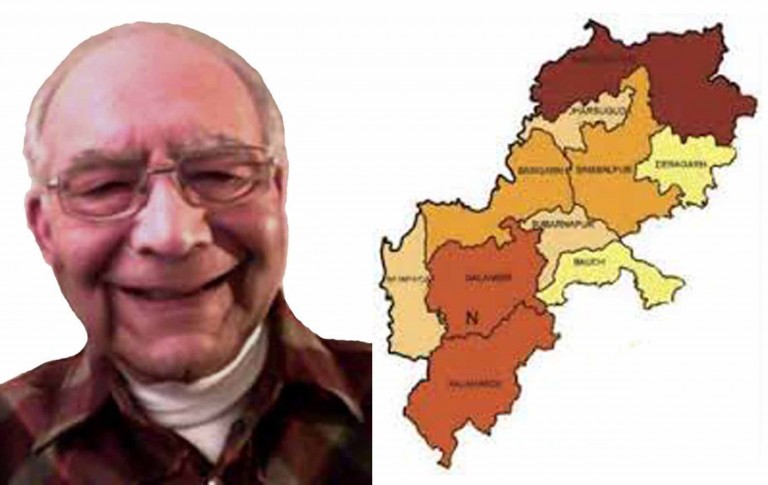
Harvard University has invited retired IAS officer of 1980 batch Dr Anup K Pujari to teach mid-career courses of public administration. Pujari, a post-graduate from the University of Boston and doctorate in economics, had earlier taught in Harvard for short durations while taking sabbatical from IAS. Pujari who retired as union secretary of the ministry of micro, small and medium enterprises (MSME) in January this year, shifted his base to Bengaluru soon after his retirement. Pujari originally hailing from Sambalpur, Odisha, belonged Karnataka cadre IAS. His current teaching assignment will be for about two months, and he is returning to India in August. He will teach in Harvard University’s Kennedy School. Pujari’s understanding of economics, his ability to teach like a top-rated university professor and his taking up of short-duration teaching assignments in the past made BoI to give the following headline — “Prof” Pujari is India’s new DGFT” in an article dated September 2010 when the then appointments committee of the cabinet (ACC) cleared his name as director general of foreign trade (DGFT). The DGFT is a post for a union additional secretary-ranked officer. Earlier, Pujari had worked as joint secretary in the ministry of finance.

He is also an LLB, and holds a second post-graduate degree on defence studies. He also served as union secretary of mines.

As a secretary, he used to call up each and every employee including the one at the rank of a peon on the day of her retirement. He wished each of the retiring employees very best and enquired whether there was any administrative hurdle in getting post-retirement benefits.

His wife and 1980 batch IDES officer Sundari Subramaniam Pujari who retired from the service last month has also accompanied Pujari to Harvard.

Koshli vis-à-vis 8th Schedule (Part: II)

771

Dr Arjun Purohit, Canada

This series was written by Dr Arjun Purohit in response to an article published in published in the ‘Sambad’ on 22nd July 2011 entitled ‘Matrubhasha O Maanak Bhasha’ by Debi Prasanna Patnaik.

Before I wrote this part, I read and reread Dr.Patnaik’s piece, and it seems we are in déjà vu all over again. In later half of 19thcentury, people of Orissa division of Bengal Presidency were fighting for the very survival of Oriya as a language against stiff opposition from a strong Bengali lobby. On March 12, 1869 Rajendra Lal Mitra, an eminent historiographer of Bengal who had come to Cuttack in order to compile a book on the antiquities of Orissa’s art and sculpture, said in a meeting held at Cuttack that as long as Oriya was not removed as a language it was impossible to think in terms of progress of Orissa. About the same time, Uma Charan Halder, the then Deputy Inspector of Schools claimed that Oriya people would stand to benefit if only Oriya were written in Bengali script. Again in 1870, Kantilal Bose, Head Master of Balasore School, brought out a book “Oriya Swatantra Bhasha Nai” and sent it to R. L. Martin, Inspector of Schools. A signature campaign started under the direction of Sibdas Bhattacharya, Deputy Inspector of Schools at Balasore, for continuation of Bengali as the medium of instruction in the schools of Orissa. This was a time when Bengalis dominated in all spheres of civil service including education in Orissa. However, though many Bengalis were supportive of this stand, a good portion of them joined their hands with their Oriya brethren in their demand for Oriya to be the medium of instruction, such as Baikuntha Nath De, Gauri Shankar Ray and Radhanath Roy among others. For an exhaustive summary of the struggle, please read THE RAJ: NATIONALSTS AND REFROMS- LAND, LAW AND GOVERNMENT, ORISSA: 1912-1939 by Amal Kumar Mishra.

Is not the struggle the same between Koshali and Oriya? Now the Oriya pundits are using the unwise tactics against Koshali, and blocking at every turn any chance of getting into 8th Schedule. Probably they are afraid that recognition of Koshali as a separate language somehow diminishes the viability of Oriya in some way. History does not support such fears. After the struggle, Bengali raised from strength to strength, eventually Rabi Tagore getting Nobel Prize in literature. And look at Oriya. Oriya has blossomed when Oriya speaking people had mastery over their own destiny. Oriya writers have embellished their literature in to great heights. Sitakant Mahapatra recently awarded of Padma Vibhusan, the highest award of the nation. Future will tell how Koshali will fare in coming years, but if the record of last few years is any indication, future looks very bright. So Dr. Patnaik need not fear on the account of recognition of Koshali. For blooming and blossoming of Oriya depends on the creative imagination of Oriya writers, and that is where he and other ardent lovers of Oriya should focus rather than indulging in trying to block Koshali from getting recognition as a language. If at all there would be any danger to Oriya as a language, it may come from Oriyas themselves. Just look at your own back yard in Bhubaneswar. Oriya kids are leaving Oriya schools in droves opting for English medium schools even though it costs a king’s ransom for the option.

I am a little intrigued with the tone of the Sambad piece under scrutiny. Perhaps Dr. Patnaik did not mean convey such tone, but it comes across as paternalistic. It is as if Koshalis by asking for recognition of our Matrubhsha, the language we learnt on our mother’s lap, we are somehow are hostile to Oriya as a language. Nothing of the sort. He graciously acknowledged contribution to Oriya literature by quite a few Koshalis. I can name even a dozen more. And I hope Koshalis will continue to do so. During my recent trip to Sambalpur, my friend Uma Shankar Panda presented me his latest anthology of Oriya poems. I presume it is probably his 83rd ! So what we need is not lecture/soliloquy but dialogue, not paternalism but equivalence/partnership, and not indifference/hostility but friendship. This way both Koshali and Oriya will be winners.

Finally, who do you think solved the conflict between Oriya and Bengali? It was T. Ravenshaw ultimately. My sincere plea to Dr. Patanaik and other lovers of Oriya is to rise up to their moral responsibility to do the right thing by unblocking our access to 8th Schedule. This is what brothers do for each other. Longer this impasse festers; more bitter will be the relationship between our two communities. This will be cited as another instance of deliberate blockage of our progress. If this does not happen, then it will serve as a lesson to be learnt for Koshalis. Do not go to Bhubaneswar for getting recognition for Koshali because Oriyas are playing the same game as Bengalis did against Oriya in 19th century, just as an abused child becomes abusive parent. Campaign in New Delhi instead.


Koshali vis-à-vis 8th Schedule (Part: I)

769

Dr Arjun Purohit, Canada

This series was written by Dr Arjun Purohit in response to an article published in the ‘Sambad’ on 22nd July 2011 entitled ‘Matrubhasha O Maanak Bhasha’ by Debi Prasanna Patnaik

Yesterday my young friend Saket Sahu, editor of BENI, the Koshali magazine posted this piece in Sambad. It seems the very possibility of inclusion of Koshali in the 8th Schedule is causing quite a bit of anxiety in the Oriya speaking population. My short posting in Ornet and Orissa Today network has inspired a full scale article in Sambad by an eminent linguist. I am flattered, embarrassed and disappointed in one breath. I do not have access to Dr. Patnaik’s e-mail nor do I remember of having any personal contact with him in good old days, though I remember that my classmate late Dr. Chaudhury Hemakant Mishra talking about him when he was thinking of taking over India Institute of Languages after Dr. Patnaik’s term. I would have loved to discuss the issue with Dr. Patnaik in a veranda with a cup of tea rather than long e-mail exchanges. Since I cannot do that, here is my response through the net. Apparently Dr. Patnaik knew about my posting through Ornet/OTN; so hopefully he will know my response.

Frankly, I would have liked Dr. Patnaik to take the high road to discuss the linguistic aspects of Koshali and I would have learned a lot from him. Instead, the whole piece was sentimentally based, and is a rather a little accusatory as to why we want and hope Koshali to be included in the eighth schedule. Clearly Dr. Patnaik is an ardent lover of Oriya, and one cannot find any fault with such sentiment. Let me make it very clear. Most Koshalis, which certainly includes me, love Oriya and its great literature, but we love Koshali more, not simply as a very vibrant living language but also because we can express and communicate our deepest feelings and sentiments though it like in no other language.

It seems when Dr. Patnaik was at the helm of the Language Institute he was not in favour of any 8th Schedule. However, debating on the soundness of such reasoning is just academic now because, be that as it may, 8th Schedule is still open and recently four new languages, Maithili, Santhali, Dogri and Bodo have been added after Mahapatra Commission was concluded and the final decision was made by the High-Power Committee with thirty eight languages left in the limbo. We do not know the reason why Maithili which has the same population base and the other three with much far smaller base than Koshali were included but Koshali did not get the nod.  Inclusion of Koshali in the 8th schedule is crucial for Koshalis and I will try to give some of the reasons.

  1. For generations, Koshali students through the formative school years had to learn even the non-language courses through Oriya and were punished by the teachers from coastal area (I can vouch from my experience) if students use Koshali in the classroom. Needless to say, it has caused lot of drop outs. Moreover, we had to write answer papers in Oriya. Those with good linguistic aptitude managed it well but for vast majority, it was a handicap. Our overall marks were lower. I know of many bright students failed again and again in both matriculation and I.A./I.Sc because of their poor Oriya. I realise that schooling system in all over India has changed quite a bit since my time but the problem remains essentially the same. Thus we never had or have a level playing field. Hopefully, such situation can be averted through 8th Schedule.
  2. The same situation occurs when recruiting civil servants. Competency in Oriya is a must. This is one of the reasons you will see huge number of minor civil servants in every nook and corner in Koshal area but you will not find as many from Koshal area in non-Koshal area. This of course has caused social disharmony.
  3. One of the advantages of 8th Schedule is availability of funds to enrich the language. Perhaps our brethren in non-Koshali area are not aware that Koshalis are passionately involved to enrich the language. Major classics like Ramayan, Gita, Mahabharat are already in print or are being written up. Currently Nil Madhab Panigrahi, 90 plus years, bed ridden and partially paralysed has already published 6 volumes of Mahabharata. Two more volumes are in the process of publication. He is determined to finish the rest before he passes away. Dictionaries, Grammar, plays, novels, anthology of poems, Granthavalis of major poets like Satya Narayan Bohidar, Koshali Panjikas, several books on history of Koshala, biographies on Koshali heroes, etc. already in print without any funding from the government. BENI is a magnificent monthly literary magazine, full of literary pieces of high quality as well as great art work. Though we have a long way to go, several newspapers in Koshali are coming up. Most Orissans know of artistic genius of Krutartha Acharya for his Sambalpuri Sarees. But few know of another textile design genius Late Jadunath  Supakar, who had to leave Orissa for Varanasi was awarded Padmashree. At least three Koshali language movies have been produced, and one of them has received international acclaim. Old Koshali palm leaf and copper plate documents are to be digitized. Revival of Koshali dances and theatricals are performed in major cities and towns. Recently Sapan Mishra put forth a formidable list of major literary works in Koshali. This is but very inadequate and brief snap shot of cultural activities in Koshal area.  There is a sort of renaissance in all aspects of Koshali culture and heritage. Lot of things remain to be done. In short, all these and much more are accomplished without much help from the Orissa government because Koshali is not included in 8th Schedule. Interestingly, if my memory serves correct, as soon as Santhali came under 8th Schedule, Orissa government announced financial help to promote the language. For Koshali ? None.
  4. Inclusion in 8th Schedule will also facilitate governance in Koshal area. Notices are given now in the villages in Oriya; not very literates do understand the full implications of these notices. Civil servants from non-koshali area who do not even have rudimentary knowledge of Koshali cannot communicate with citizens, thus resulting in miscommunication. In fact Orissa is among the minority of states which claims to have only one language. Out of 28 provinces, 15 have more than one official language. Out of 7 union territories, 6 have more than one recognised language. In a democracy freedom of expression is a fundamental right of the citizen. Good governance requires efficient communication between the citizens and the government. Is it not ironic that Orissa CM does not speak Oriya? He truly symbolises the basic oxymoronic stance of the Orissa government on language issue.
  5. Dr. Patnaik correctly says that language has no barrier. When Koshali speaking tracts were brought in to the fold of Orissa, 6 districts of Koshali speaking population remained with modern Chhattisgarh. Koshalis are going through the same problem in Orissa as they are in Chhattisgarh. Inclusion of Koshali in the 8th Schedule will go a long way to improve governance in both provinces.

6. Because Koshali is not in the 8th Schedule, it is not listed in the list preference for languages in the Census counting. As the 2011 census official statistics shows the whole Orissa speaks nothing but Oriya, which of course is erroneous. We do not even know what is the real figure for both Oriya and Koshali !

Bhatli Police refuse to lodge FIR

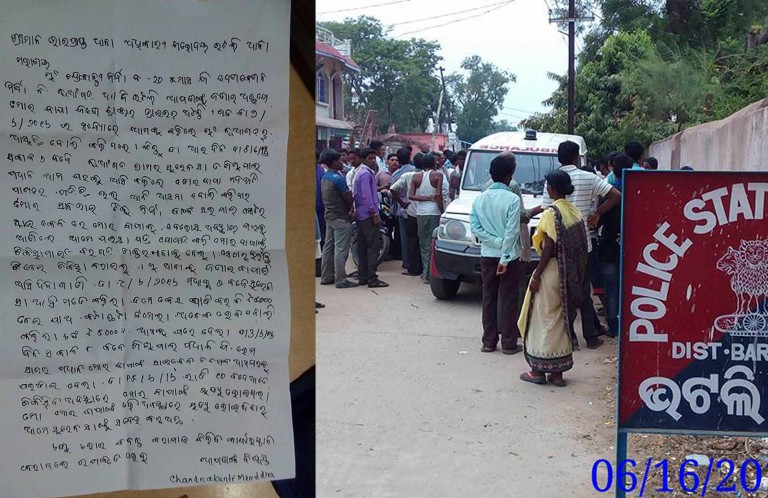
Bhatli Police Station in-charge, has refused to file complaint of one Chandrakanti Mirdha (20).

According to the copy of the complaint, Chandrakanti Mirdha, (20), D/O Deshkeshan Mirdha, Village: Nuangarh under Bhatli police station wanted to file the FIR against one Suren Sa about her father’s death in suspicious circumstances.

According to the report, the deceased Deshkeshan Mirdha was a tractor driver. He left his home in the evening of 2nd June for Nuangarh. He informed his family that he is just going to Nuangarh and will return soon. But he did not returned on that evening.

According to the rejected FIR copy of Chandrakanti Mirdha (20), on the next day, early in the morning around 6 A.M. Suren Sa and Sishupal Padhan of Nuagarh visited the Mirdha. They informed the Mirdha family that Deshakeshan Mirdha is laying near the wine bhatti. Then the younger brother of the complainant, Tiku Mirdha went there and brought their senseless father by motor bike.

On 3rd June around 8 AM in the morning, Sishupal Padhan, S/O: Hemsagar Padhan, brought the bicycle and shoe of Deshakeshan to our house.

Again, the family of Mirdha arranged some money and took Deshkeshan to Bargarh hospital for treatment. From there they took him to Burla for further treatment.

Further, on 9th June 2016, Suren Sa learn that Chandrakanti Mirdha has been to the police station to inform the police about the matter. Around 2 PM of that day, Suren Sa offered the Mirdha family Rs 5000. Suren requested not to drag the matter to the court. He added, unnecessary problems will follow it.  There will be post mortem, police and court. And he gave Rs 5000 to the Mirdha family.

On 15th June 2016 around 10 PM Deshakeshan Mirdha died in the hospital under medication.

The Mirdha family wants investigation and justice of the suspicious death of their bread earner by the police. But the police has denied to file the FIR.

Beneficiaries couldn’t avail pension in Gaisilat

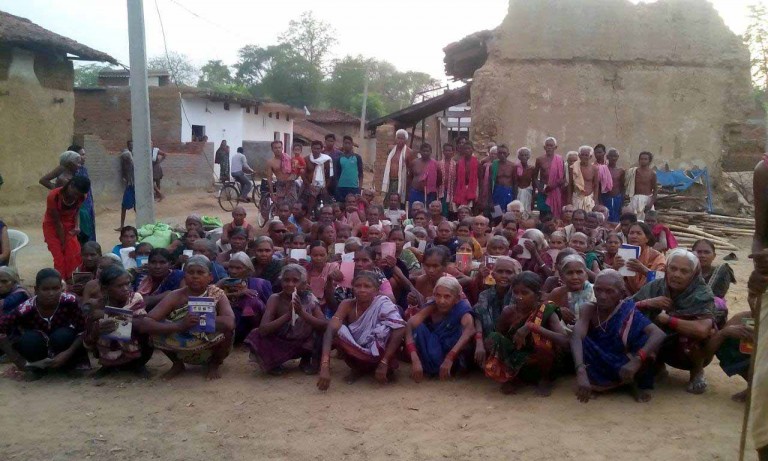
Beneficiaries of pension of different types couldnot avail their pension at Malalmanda village of Ganiapali panchayat and Gaisilat block under Bargarh district. More than 50 beneficiaries were not distributed their due allowances for the current month.

As per the information, the villagers led by Durjyodhan Sahu have complaint to the BDO, Gaisilat regarding the same. That the villagers were getting pensions from different schemes regularly on 15th of every month. But for what reasons the Sarpanch, Shantanu Padhan has stopped the VLW, Madhusudan Pradhan from distributing the pensions to the beneficiaries.

When the Sarpanch, Shantanu Padhan was contacted, he says, he has informed to the BDO that if money will distributed at the Panchayat then some people may create disturbances. He added, earlier some such incidents happened here while the panchayat peon was carrying the Auction Book to Malamanda village. The Auction book  was looted on the way. That matter is pending at the Gaisilat police station.

Now the Sarpanch is saying, till the Auction Book loot matter is did not not resolved, pension should not be distributed to Malmanda villagers. And around 50 beneficiaries were deprived from getting their pensions.

Make Odisha bi-lingual; give Koshali and Odia equal status

0

Dr Arjun Purohit

Make Odisha bi-lingual and give Koshali and Odia equal status urges Dr Arjun Purohit. A momentous event is about to take place which will have very profound and negative impact on our part of Odisha, yet I have not come across any response from anybody from our side. As you know, in 1954 Odisha government passed a bill to make Odia as state language but it not executes it in practice. Now because of relentless campaign by Odia literati, an ordinance is being formulated to declare  Odia to be the state language and all government  practices are to be conducted in Odia throughout the province. An advisory body has been created to advise the government to provide specifics of the way Odia is to be used in the state. From the published materials in public media, it seems that they are proposing to make Odia compulsory in  all schools, public and private, up to  grade 10, and all the legal proceedings  as well as government publications and documentation would be conducted in Odia, with the proviso that if these are adhered to there would be stiff punishment.

Personally speaking, I have profound regard for Odia as a language. But in we in Koshala area must seriously examine how the proposed ordinance is going to impact on us. Here are some of my concerns:
1. What happened to our demand to recognize Koshali/Sambalpuri in the 8th schedule ? Naveen Babu has made in his election manifesto that he would see that our language would be so recognized. What happened to the promise?
2. We have been demanding that Koshali be used as medium of instruction in the primary grades. As you know government has already using several Adivashi languages in that way, but not Koshali. So how does the new ordinance fit with our demand?
3. If all government business will be conducted in Odia, then would Koshali be bi-passed for conducting government affairs? How that would impact administration in our area?
4. What about employment of Koshali speaking applicants whose knowledge of Odia will not be in par with coastal Odishans ?
5. How would it affect the non-Odishan families with school going kids who are working in the industrial sectors temporarily?
6. As you know, to seek employment, the dominant trend in our area is to go west or north rather than to Odia speaking area. Therefore knowledge of Hindi and English is more useful to us. Even in the coastal area, especially in urban area, parents are sending their kids to private English schools rather than Odia schools. So this is not going to add any meaningful value for our folks.
7. What about use of Koshali in the legislature? Will leaders of our area be deprived of their democratic right to participate in the affairs of the state just because their knowledge of Odia is not good enough to debate with it?

These are but some of my concerns, but there are many others. But if we do not seriously examine this ordinance NOW, we will be handcuffed with it by default. My impression is that this is a measure to scuttle our demand for recognition of our language under 8th schedule. Odia literati from coastal Odia keep referring to our language as a dialect of Odia, just as Bengalis were referring to Odia as a kind of Bengali a hundred years ago. It is no secret that well known Odia intellectuals like Dr. Debi Prasanna Patnaik are actively campaigning against Koshali It is no accident that Dr. Patnaik is at the forefront of the campaign to promulgate this ordinance.

Therefore, my urgent request to all the intellectuals of our area irrespective of their political affiliations to get together and have serious debates in all major locations before it is too late. The ordinance is scheduled to be proclaimed in about couple of month’s time.

I know in our area we are going through debates about names for the region as well as language. But there is consensus about the substance. My request to all is to postpone using energy on the symbols for the time being and focus on this urgent thing before us. If we do not, history is not going to forgive us. From what I hear, people who do not have our welfare in their heart are depending on our current controversies. Let us pull all our strength to gather and work on this issue just the way we worked to get IIM. One of the issues we should also examine is making Odisha bi-lingual, giving Koshali and Odia equal status.

Handicapped mother couldn’t avail Janani scheme

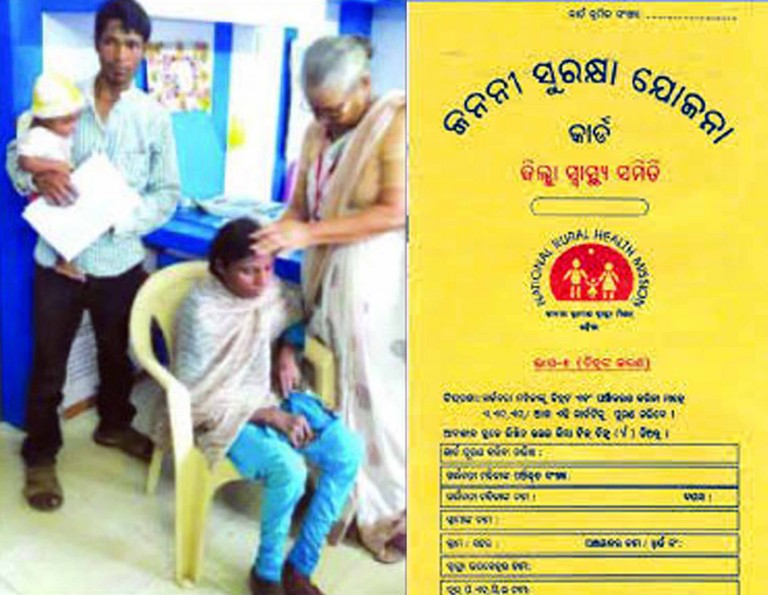
Handicapped mother Jashobanti (27), village Sarlakani, of Sambalpur district could not avail the benefits of Janani Suraksha Scheme.

She is handicapped since last 3 years. Her limbs are not capable of work load. Doctors were saying she is diagnosed with rheumatism. She needs Rs 500 per week for her medicines. But her husband is a daily labour and not capable. She has stopped medicine since last 3 years.

She gave birth to a baby boy on 24th July 2015 in the town hospital. But she could not avail the benefits under government’s Janani Suraksha Yojana yet. She also has not avail Ration Card, or any allowances. She is living with her husband at Sarlakani since last 5 years.

Further, they visited the collector office. There someone suggested them to open bank account and produce handicap certificate. She creeps to move but the government help and scheme has not reached to her yet.

Though someone is needy and helpless but ironically, the government scheme cannot be avail without any identity card.

Sick boy needs support for treatment

459

Sick boy needs support for treatment. All treatments have failed, allopathic, black magic, indigenous methods, they have tried all.  The disease is neither increasing nor decreasing.

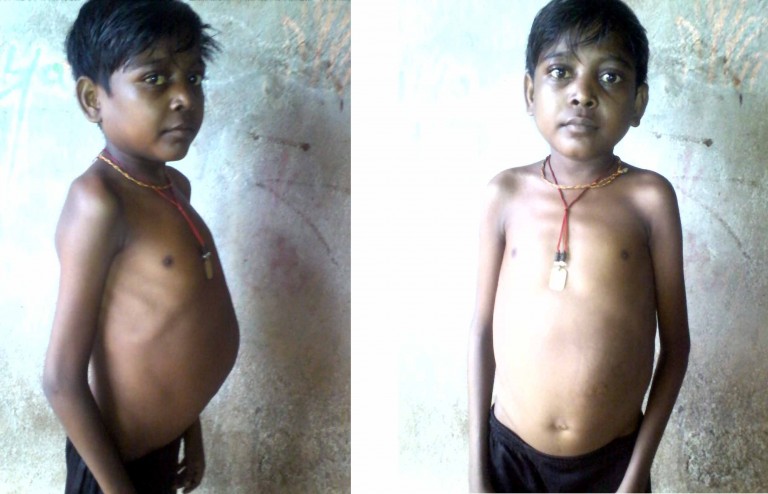
Shyamsundar Siaka, aged around 20, The ill boy born to a poor parent of Lalman Sikka, and Raibari Sikka of village Malmanda under Gaisilat block of Bargarh district.  After 2 years of his birth, his belly swelled. It looks like a pumpkin.

As per the sources, the boy has been taken to different doctors and of Odisha and Chattisgarh.  But the boy is not recuperating from the disease.

Now, the poor parents have spent all their earnings for the boy. The parents are day labourers. The ill boy complains of stomach ache from time to time. And he needs blood too. His hands and legs are shrinking day by day.

Child labour engaged in road works

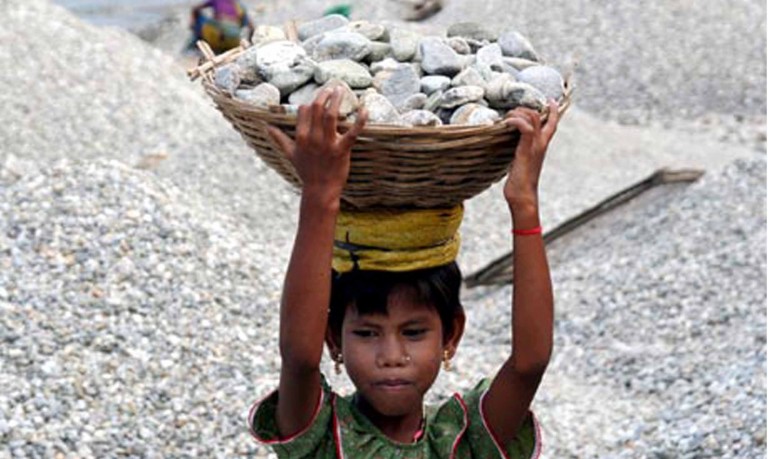
Child labourers are engaged in Pradhan Mantri Gram Sadak Yojana work at Dulkibandh village under Kalampur block of Kalahandi district. The road work is under Dharamgarh Rural Development Department.

The Labour Directorate, Odisha has directed all other departments to not engage child labourers. But child labourers were engaged in the bridge work of Pradhanmantri Sadak Jojana under Rural Development Department Dharamgarh. Both girl and boys under 14 years of age were engaged in the bridge work.  But no officer or involved engineers of the Department stopped the children from the work.

Irregularities in Salekela-Chatiaguda road construction

Irregularities in Salekela-Chatiaguda road construction have been found at Sinapali area under Khadial Division. Regular complaints have been lodged referring to different developmental works in Sinapali area by Rural Welfare Section (RWS) of Khadial Division are of low quality. Now complaint has been received regarding irregularities in road construction.

According to information, low quality metals have been used in the under-construction road between Salekela-Chatiaguda. Apart from this, the construction work is not carried out properly.  Water was not sparged properly on the under construction road. The people of Chatiaguda, Sagunbhadi, Salekela have complaint to the executive engineer of the department. But there is no respond from the authority. They ignored and rejected the complaints of the people. The villagers had complaint when metals collection was going on. The involved contractor did not hear the people nor change the metal. The contractor used the same low quality metal for the road work. Out of the 5 Kilometer long road, 2 kilometre metalling work has been completed. The metal spreading work is going on in the rest of the under construction road. Now, 3 months have passed but no signboard is seen yet. Without signboard it is difficult to know the estimated cost and other details of the project. From a reliable source the cost of the project has been estimated around 2 crore approximately.

When the Executive Engineer Rural Development Department, Samir Kumar Samntaray was contacted, he says, the nature of the work is repairing work so signboard is not there. If all of you are demanding for the sign board then we can fix a sign board there.  When he was asked about the low quality work of the road, he replied, yes, we have received complain regarding that. And we will again assess the work and inform details later on.