Monday, April 27, 2026
Home Blog Page 67

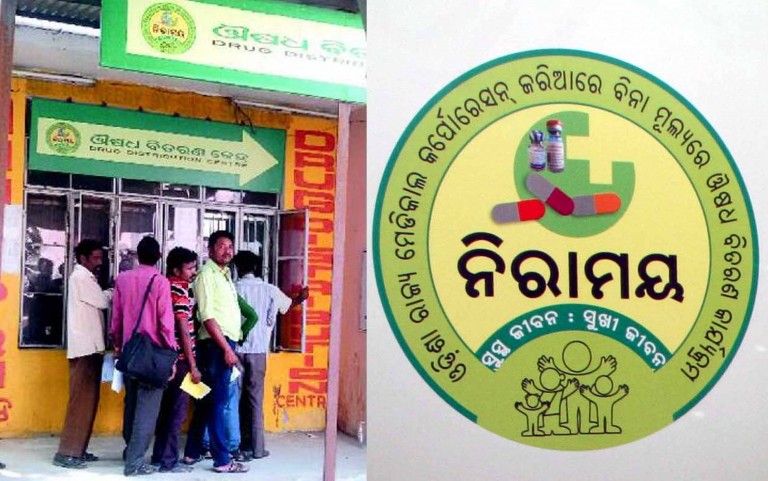
Niramaya scheme has failed in Odisha

0

Niramaya scheme was launched in May 2015. The free medicine distribution scheme was allocated Rs 500 crore to provide free medicine through Odisha State medical Corporation (OSMC).

In the first phase the government declared to provide 720 varieties of medicines.  But the needy patient are not availing the medicine at the right time.

The Niramaya store is located near Outdoor Department at Veer Surendra Sai Institute of Medical Sciences and Research Burla. It is controlled by the central store of VSSIMSR. According to the provisions the store should avail all necessary antibiotics to medicine to the patients freely.  But the poor patients are purchasing medicines from other medicines store. And the patients are paying more to the other stores. Even a saline is not available in the store of the Veer Surendra Sai Institute of Medical Sciences and Research Niramaya store.

The VSSIMSR authority has closed their eyes for it.

Government subsidy policy worrying farmers

536

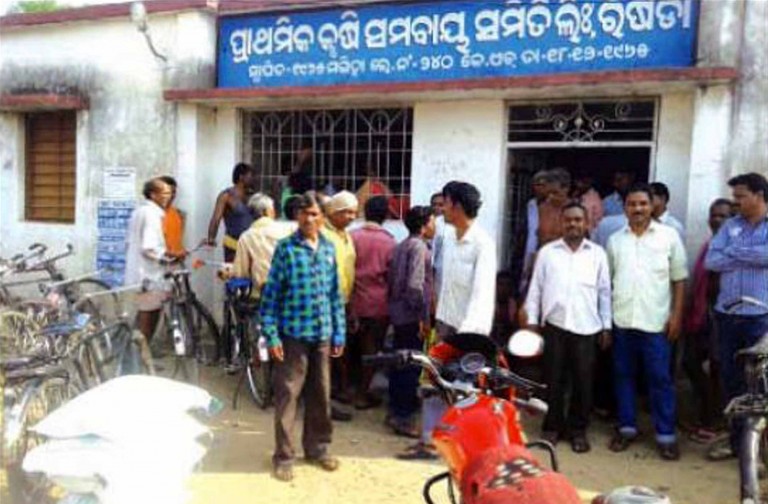
Government has started selling seeds for Kharif season at Primary Farmer Co-operative Society Ltd, Rishida, block Karlamunda district Kalahandi. In the last year the rate of seed was rupees 315 per 20 KG. This year the price is rupees 503 per 20 KG. According to the new subsidy policy of the Government, the excess of rupees 188 from last year will return to the account of the customer as subsidy.

As per sources, last year crop was damaged due to low rainfall in Rishida area.  And the farmers could not stored seeds with them. Now the farmers are frustrated with the new rate and policy at the Cooperative Society.

Now the farmers are demanding to supply seeds with subsidized rate to them.

Lift irrigation department harassing farmer in Nuapara

0

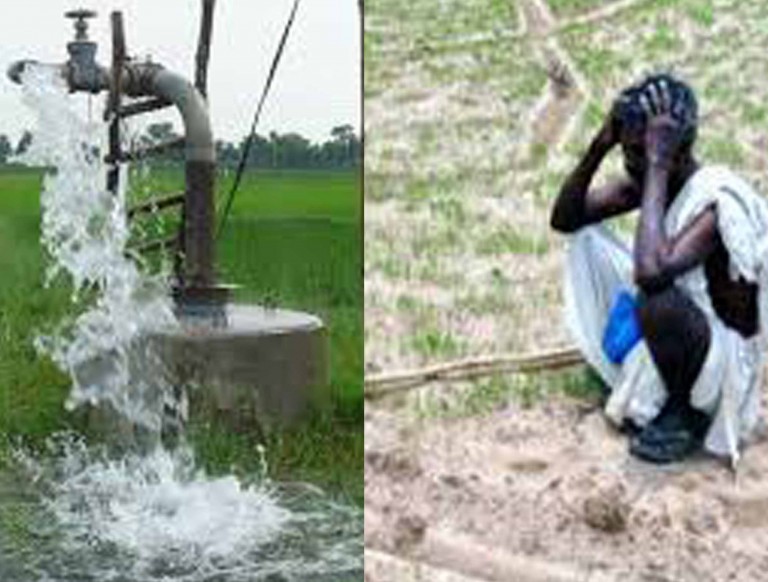
Lift irrigation with deep bore-well project under Biju Krushak Yojana in Nuapara district is working very slowly. Due to this lethargic process, without irrigation, fields are getting dried. The situation is getting worse and moving towards a possible drought.

According to the information provided by the Department, it has received 1400 application online to dug deep bore-well by farmers groups.  But the Department could manage to dig only 400 deep bore-wells.  26 farmers of Boden block had applied for deep bore-wells and rupees 20 thousands were deposited by each since February 2015. Though 15 months have passed yet the lift irrigation Department could not dig deep bore-well for the beneficiaries.

Likewise, in Khadial block 124 farmers and 59 farmers in Sinapali block have applied online for deep bore-well and each have deposited 20 thousands at the Department. But none have availed the benefit of the deep bore-well project yet.

As per the sources, the 400 deep bore-wells were dug in Nuapara assembly constituency only due to political pressure. But at the same time, all the 3 blocks of Khadial constituency are yet to get the benefit of lift irrigation by deep bore-wells.  The farmers of these blocks are complaining at the department that why work has not started yet in the 3 blocks of Khadial constituency.

Further, last year the farmers of the district face total crop loss. This year they were hoping for good harvest with lift irrigation. But as the deep bore-well could not dig in time, their hope to harvest a good crop has disappeared in dust.

Again, the SDO of Khadial Lift Irrigation Department has informed that tender is out to dig 150 numbers of deep bore-well. They have received more than 1000 online application to dig deep bore-well.

The farmers are saying, although they have deposited the money and requisite documents yet the Department is harassing them. If the Department will not diffuse it within one month then they will stage a huge stir.

World Environment Day celebrated in Berhampur

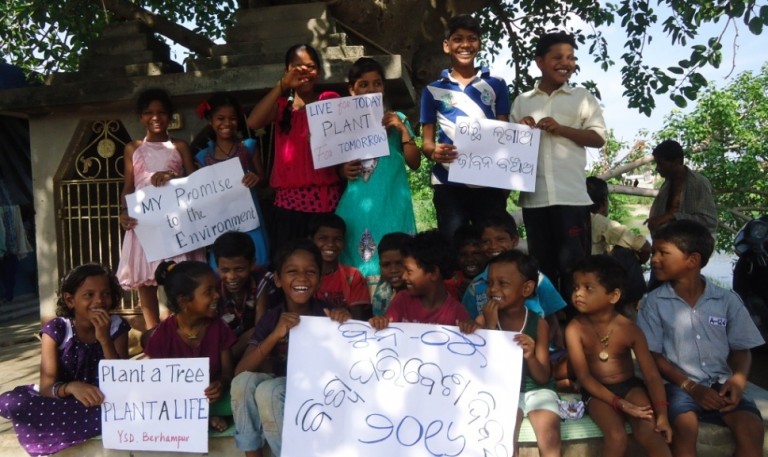
World Environment Day celebrated by Children’s Federation Berhampur today. Members of 25 child clubs (250 children) participated in this day. Children organised rally and demonstrated placard in their respective slums.

Children’s clearly given a message of garbage management, no use of plastic, no to waste water and use of toilets will bring a clean environment to their city. On the other hand many children appeal their parents and community to plant more trees to make Berhampur and green and clean city.

Child leaders also have given a message to the citizens of Berhampur to use public transport and to use energy efficient techniques to save energy.

Youth for Social Development has been working with more than 3000 children in 40 slums in Berhampur city to improve the living condition of children and environment issues since 2012. Team members like Chandan Sahu, Abhiram Kanhar, Susmita Behera, Birajini Devi and youth leader Bala das, Jyoti Das, Banita Nayak and Archana Sahu has coordinated the celebration.

Villager repaired the road at Kharmal, Bargarh

519

Villager of Kharamal, block Paikmal, district Bargarh repaired a road of 2 kilometre distance. The repair work was supported by Krushak Sangha, and Self Help Group (SHG) of the village.

Around 200 men and women rallied on to repair the road between Bharuamunda to Kharamal village.

As per the information, the road was in very bad condition since many years. The folks of the village were repeatedly pleading the government authority for the repair of the mentioned road. But the authority unheard and ignore the plea of the inhabitant of the village.

Further, the villager called on a meeting on 31st May and to propose to build the 2 kilometer road with donating their labour. Finally as per the decision the villager started working on the road from the very next day.  Each household donate labour for the road. Men and women collectively toiled for it.

Jamseth Sarpanch Pramod Ray, Durjyodhan Bishi,member of MASS organisation,  were present at the road work to support the villager.

The road work was led by Sitaram Majhi, Kuluch Majhi, Kartika Majhi, krushnachandra Bariha, Malati Biswal, Debaki Majhi etc.

Word member and villager Gobardhan Bariha says, we were pleading the government since last 20 years but the government unheard, and rejected our plea. We had no option left. We were forced to build the road by ourselves.

Ration card beneficiary locked panchayat office at Petupali, Bargarh

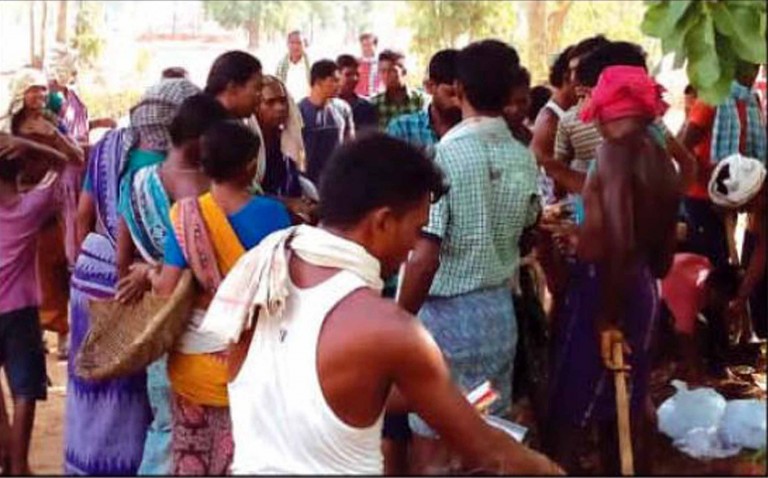
Ration card beneficiaries of Petupali Panchayat, block Sohela, and district Bargarh have locked the panchayat office in protest.

The family members of the beneficiaries are agitating since 30th May and locked the panchayat office in protest.

As per the received information, the families are very poor to poorest class people. They had applied many a time for the ration card but they were not availing the card. But people of above poverty line in the village have got the card. The kith and kin of Panchayat GRS Manoj Meher have got the card. This is illegal.

Mahendra Rohidas, Binod Raoutia, Basanti Patel, Suruchi Bhue, Malati Bishi, Anita Routia, Astami Majhi, Kamala Bhue, Jashobanta Majhi, Alekh Majhi, Premananda Bishi, Chandrama Giri and many families of the village have threatened to continue the agitation till they are not getting their cards. The agitators are also demanding to cancel the illegal cards.

Further, the agitators have informed the Sohela BDO, Biswajit Mahapatra, Supply Assistant, Sarpanch and PEO. But the agitators haven’t got any positive result. They are suspecting dealing under the table.

Aagain, apart from this the BDO, GRS, Sarpanch, Supply Assistant all are throwing the ball to other’s court and engaged in mud-slinging. Indirectly they are distracting the issue.

Now the villagers are demanding that the district collector should look into the matter and avail the cards to real beneficiaries. Also the collector should investigate all the card holders of the village and scrutinize it.

Scarcity of water at Laumunda, Bargarh

Scarcity of water  in Bargarh district has reached its high. Laumunda village, block Bijepur, district Bargarh has been reported as facing scarcity of water. Laumunda is the 2nd largest village in Bijepur block.

All the water resources like pond etc are dried. The village is fulfilling its water need from the bore- well.  But the bore-well at Ranimal chowk is defunct since last 7 months. Laumunda villagers have compliant about it to the authority but no step has been taken by the authority.

In this summer, drinking water supply to the village has not able to fulfill the water needs of the folks.

Hundreads of family in Rahaspur Pada, Malpada, Nuapada, Main Road, Meher Pada, etc area of the village are deprived of drinking water.

The villagers have demanded immediate supply of drinking water and repair of defunct bore-well as well as digging up new bore-well.

PDS Kerosene seized by Kshetrajpur police in Sambalpur

PDS kerosene has been seized by the Sambalpur police. On June 1st an auto-rikshaw numbered OR 15 K 3881 was carrying 840 liter PDS kerosene loaded in 4 containers. It was raided by Kshetrajpur, Sambalpur police in the morning. The auto driver Ajit Nayak and Pramod Mirdha were ferrying the PDS kerosene according to the direction of Premkumar Agrawal of Bareipali from the whole seller Rajkumar Kedia of Kshetrajpur.

The Kshetrajpur IIC Manas Ranjan Pradhan informed the media that police have raided, arrested and forwarded Rajkumar Kedia, Premkumar Agrawal, along with Ajit and Pramod to the court.

According to the IIC Sri Pradhan they have filed a case no 118/2016 at Kshetrajpur station charged with 7 EC and the investigation is continuing.

When the District Supply Officer Pitambar Acharya was contacted, he along with the Kshetrajpur police went to ACSO and inspected the godown of whole seller and stock.  The investigation is under process and if anyone is found guilty then action will be taken against him, says Acharya.

Useless MIP, organized corruption in Gaisilat

Useless and defunct minor irrigation project at Tengnapali village, block Gaisilat, district Bargarh is another example of organized corruption at block level. The villagers complaint to the engineer of the concern department. The concern engineer also admits the irregularities. Now it can be assess what kind of work has been done.

The minor irrigation project at Tengnapali was proposed to irrigate 100 hectare lands in the village.  The project was proposed to construct within 6.50 square kilometer area. The government sanctioned rupees 86.40 lakh grant to build the project.

The villagers compliant about the irregularities to the authority of the department but they didn’t get any success. Finally they meet the collector. The Junior Engineer of the department expressed his helplessness. The contractors are not working according to his technical advice.

Now the villagers are questioning if the contractors are not obeying the guidelines and technical advice of the Junior Engineer then how the bills were cleared for payment?

Though people have drawn the attention of the Executive Engineer of the department yet no action has been taken against anybody. It is very clear that there is illegal agreement between Water Resource Department and the contractors.

Silent Witness_Dr Arjun Purohit

735

I have known for years that there are all kinds of interesting features in the reservoir of Hirakud Dam, among these are some of the submerged temples often creating problems for the boaters but some of them are visible over the water. So when Dr.Tarini Panda, my old student by proxy, suggested to me to have a look at them when I visited Sambalpur couple of years ago, I jumped at the chance.So he took me behind his scooter to the Jamadar Pali Ghat from where we took a boat which took us across the reservoir to the other side, which is known as Lakhan Pur Block. It was a motor boat capable of taking about 40 people but had no roof or no proper seats. I managed to find a place to sit near a little girl of about five years old on the flat bar, one of many along the width of the boat. Tarini had to stand for the whole trip which took about an hour. About fifteen motor cycles and scooters as well about thirty of us boarded the boat. Apparently there was some kind of Adivashi festival going on Gunja Parbat, a rather tall hill with a majestic triangular top which you could see across the water. The crowd was in a festive mood with lots of chatter and laughter in anticipation of lot of merry making in the festivals.

Some twenty minutes after we started, the anticipated temple came to our sight. Suddenly, the chatter and laughter ceased, and the eyes of the whole crowd except the eyes of the five year old on my side were turned on the temple, which I would estimate to be about twenty five feet over the water. The mood was reverent and some folded their hands in Juhar. I simply could not control my tears to the curious amazement of the five year old who kept on staring at me. I must confess that I am given to tears rather easily. I cry at the movies and when I watch mythologies like Ramayan and Mahabharat. When Sita gets abducted I cry. When Duhsasana tries to disrobe Draupadi in front of all the Pandava and Kaurava elders, I cry. But this sight of half submerged temple was something really special and kicked up all kinds of memories which have been lying dormant for years like sediments at the bottom of the lake.

This was the temple of Rampella after all! This is where my cousin Nagara Nani went as a bride. This was where my Badkhama(wife of the elder brother of my father) came from. I knew of a host of my relatives from this large prosperous village. Rampella was one of the 294 villages which went under the water of Hirakud Dam. These were very prosperous villages and were known to be the Bhata Handi(rice bowl) of the district because of the fertility of the land. The old royalties of Sambalpur came from the area. Surendra Sai fought with the British around the area. Though our family never lived in the Budi Anchal(submerged land), we had lands in a village called Basantpur which went under, for which we never got compensated.

The submerged temple began to flood my mind with all kinds of associated memories. First time I was aware of Hirakud Dam was when I was a seventh grader in Borasambar Padampur, where my father was working as a minor civil servant. I saw Harekrushna Mahatab first time ever and probably for the last time, except in photographs. He along with Ranjit Singh Bariha, cousin of the then Jamindar of Padampur and a fresh returnee from England, giving lectures to people of the town on the steps of the local temple regarding good stuff about the future Hirakud Dam. I also saw lot of folks protesting against the dam. When I came back home, I found my house swarming with people from Sambalpur and my mother hastily cooking dinner for all these folks. Couple of months later when I came to my Mamughar in Sambalpur, found the whole town in turmoil. Thousands of people were shouting all kinds of slogans and were marching on the main road. There were large meetings near the Mahanadi bank, and police were everywhere. Later that evening, I learnt that Dr. Janardan Pujari and his wife were arrested and taken to jail. Dr. Janardan Pujari was a revered person of Sambalpur, and was literally worshipped as a saintly figure because of his social service and medical expertise. Next day there was another march; this time ladies including my grandmother joined in. It was an awesome thing to see the ladies in the march because these ladies would not even venture outside unescorted and their heads were always covered with Odhana. And guess what. My grandmother was taken to the jail for a while! For a young boy of my age, this was incomprehensible. I remember of teasing my grandmother for months afterwards about her becoming a kaidi. “What did they feed you in jail, Badkhama ?” I would ask. All I knew was that something really big was happening, and I never knew the full import of the event.

Later when I came to Sambalpur to study in G.M.College, slowly I began to understand the enormity of the issues. We saw huge earth-movers which we never saw before these were manned by Sardarjis, many of them were fresh refugees from Pakistan. We also went on our bikes to see how huge machines were hauling cement to a great height to build the dam. During the summer vacation of 1952, four of us including Rajendra Supakar, who currently lives in Chicago, went on a bike tour to have a look at some of the villages to go under water. Among the villages, we saw Samplahara of Rajendra, where we were treated with PaNA after being thoroughly and lovingly reprimanded by Rajendra’s folks for biking all that distance under hot sun risking heat stroke. I also remembered meeting Ayodhya Khosla, the mani artitect of the Dam and Issac Santra, the local hero, who established a leper colony in Hatibari, who came to our Jharuapara one evening in 1951 looking for Sradhakar Supakar, Rajendra’s father and the M.L.A. from Sambalpur. I did not know the importance of Mr.Khosla but I knew of Dr. Santra but had never seen him before. They asked me to take them to Sradhakar Babu’s house who lived in our gully but we did not find him home. Both of them then tried to impress me on the importance of Hirakud Dam for the next one hour!

So the memories kept flooding in. The little girl beside me looked at me with her big eyes and asked,” Why are you crying? Are you alright?” I wiped my tears and smiled and patted lovingly on her head and gave her a chewing gum. She looked at her mother for permission to accept, and after getting the nod; she took it and smiled back. The boat kept going, and back came all the chatters as the temple receded from our view. After a few more minutes, we saw another temple. It must have been a small one because we could see only the very top, the Chuda. This time, the sight of the temple did not evoke as much emotional response as before.I really do not know what kind of temples were they. Were they Vaishnavite or Saivite? As you can see from the picture, the Chuda of the temple has lost its crown. Saivites have Trishul and Vaishnavites have Chakras as crown. My hunch is that the Rampella one is Saivite judging from experience in other Koshalite villages. Almost always they have a Saivite temple especially near a bathing ghat but we do have Vaishnavite temples as well but not very often, and they are of recent vintage when they occur.

As we approached the other shore, I found lot of thick vegetation through which a path for the boat has been cut out to reach the shore. Tarini explained that this was because of the silt accumulating in the reservoir. Apparently 27% of capacity of the reservoir has been used up by the silt. When we reached the other shore, Tarini took out his scooter and we toured some of the villages including his own Kumharbandh. It was so close to the reservoir that I suggested that ground water would be available only a few feet in well and would be great for agriculture. Tarini told me that there is coal only five feet down, not water. Apparently sponge iron companies are already buying up land for future expansion of their enterprises. On our return trip we went to another spot to catch a boat to go back to Sambalpur via Rengali. While waiting for the boat, I asked Tarini whether Bikram Khol was not very far from that spot since we were in Lakhanpur block as is Bikram Khol, which I visited few years back. He confirmed that indeed it was close but behind the Dugree( hills are called Dungree in Koshali) on our left. In order to go there we had to go to Jharsuguda and then we would have to take the road on the other side of the Dungree to take us to Bikram Khol. That meant going back to Sambalpur by late evening. So we decided not to take the trip to Bikram Khol. Incidentally, Bikram Khol is very interesting site which has large flat stone wall on top of a small hill and has inscriptions in Brahmi and Mahenjodaro scripts. Apparently, it is about 4000 years old, and the writings are yet to be deciphered.

Tarini also told me about another interesting site within the reservoir which our boat did not go by. It was Cattle Island. Apparently, because the confiscated villages were ordered to be vacated at gun point the villagers could not take some of their cattle with them these animals found shelter in an island in the reservoir, and have become wild after a few generations. When the locals try to capture them they become very aggressive, and hence are left alone.

Finally the boat to take us to Rengali came. This time boat trip was much shorter. As we scooted towards Sambalpur on Jharsuguda-Sambalpur road, which is part of very busy National Highway, I noticed the chains of sponge iron factories. One could not but notice the thick haze of smoke coming out of the chimneys of these plants which are made worse by the fly ash coming out of coal fire power plants of Jharsuguda. Apparently, Pollution Control Board has already declared the whole corridor as an ecological disaster. Sitting behind Tarini’s scooter as he drove towards Sambalpur which took us about half an hour, I was still thinking about Rampella Temple. I wondered what this half submerged temple, which still stands as a silent witness, is a symbol of what? Is it a symbol of sacrifice of well settled vibrant community for the protection of coastal area of Odisha from floods? Or of utter callous and contemptuous treatment of the Odisha government towards the ousted families, 7000 of them yet to be compensated even after more than half a century? Or of beginning of industrial age for the region? Or of loss of innocence and simplicity of a bi-gone era? To me it is all of the above.