Monday, April 27, 2026
Home Blog Page 65

Farming affected due to low rain fall in Sambalpur

1

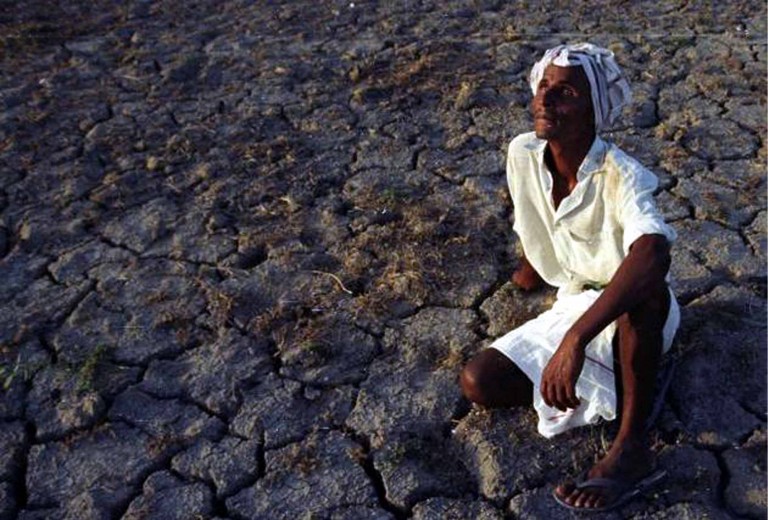
Farming has been affected in Sambalpur district due to low rain fall. Particularly the non-irrigated area of the district is in shortage of water for farming. Due to lack of water, agricultural activities are not proceeding in this kharif season.

The rain feed lands gets prepared by July first week for the preliminary agricultural activities. In the June month in an average, 221 ML rain fall is measured in previous years. But this year 54.27 ML rain fall has been recorded.

The 9 blocks of the districts has recorded rain fall in mili litre as provided: Jujumura 25, Dhankauda 46, Rengali 87, Maneswar 48, Kuchinda 45.20, Jamankira 77.60, Bamra 34.60, Rirakhol 26, and Naktideul 45.

Deogarh water division irregularities

Deogarh water division has been reported with irregularities for false bill, and low quality work. This Deogarh division is also struggling with many vigilance cases.  Due to corruption minded attitude of the authority of the department, the engineer’s irregularities are rampant.

According to the information, huge amount of irregularities in the Harikata development project at Kusumkata village of Dantaribahal panchayat under Barkote block has been reported.

The pond was under development work with MGNREGA. The water division started working from another site. People of the village doubt false bill. In the mean time rainy season has arrived and June 15th has passed, but the work is yet not complete.

The water division project director, Biranchi Narayan ChualSingh was contacted regarding the issue. He said, due to internet failure I don’t have the estimate of the project or the bill.  These bills are now done online so I don’t know about it.

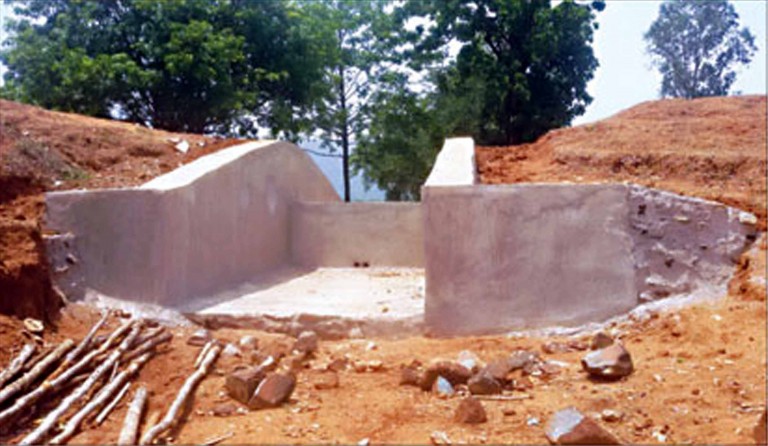
Likewise, irregularities has also been reported in the under construction surplus work on the other site of the pond.

According to the villagers, there was a stone surplus earlier in the pond. It was working properly and construction of any new surplus was not needed. As the stone surplus was dismantled, the villagers were thinking that a better surplus will be constructed. But contrary to it, another stone surplus was constructed again. The quality of the work has been reported of low quality.

Bande Utkala Janani, does not evoke an “Odisha” feeling: Dr Arjun Purohit

0

Bande Utkala Janani, does not evoke an “Odisha” feeling says, Dr Arjun Purohit. Reluctantly I am commenting on the topic in question. Tagore knew about the assertion in press that Jana Gana Mana was written for George V in 1911 yet he commented disassociating with it in 1939. Why did he wait more than a quarter of a century? In 1911, even Indian National Congress did not have independent India as its vision. Tagore was not known to be a patriot in his early days of prominence as has been exemplified in the debates between Gandhi and him. Albeit, there was gradual transformation in his psyche as the independence struggle was more intensified, and independence of India became more probable than mere possible. Poets are great wordsmiths, and can stir feelings and emotions of different kinds always depending on contexts. To ascribe political vision and ideology to them is neither necessary nor fair. Jana Mana Gana is extremely beautifully composed piece of poetry, but I would vote for Bande Mataram. I have similar qualms about Odishan anthem Bande Utkala Janani. Just as Assamese protest against Jana Gana Mana for non-inclusion of their region, Koshalis do not feel enthused about Bande Utkala Janani, which I am afraid is too regional in outlook. It simply does not evoke an “Odisha” feeling.

Have we got a parallel to Tagore in Odisha? It is Gangadhar Meher. If you look at his anthology, you will find great loyalistic poems extolling the majesty of Queen Victoria, but in later years he wrote poems sympathetic to independence movements. Prompted by Radhanath Roy and Nandakishor Bal, he was writing on Odia nationalism and status of Odia as mother tongue. I wonder what he would be championing if he would be alive today now that Koshali movement is gaining strength. Your guess is as good as mine!

Provide equal status to Kosali and Odia

710

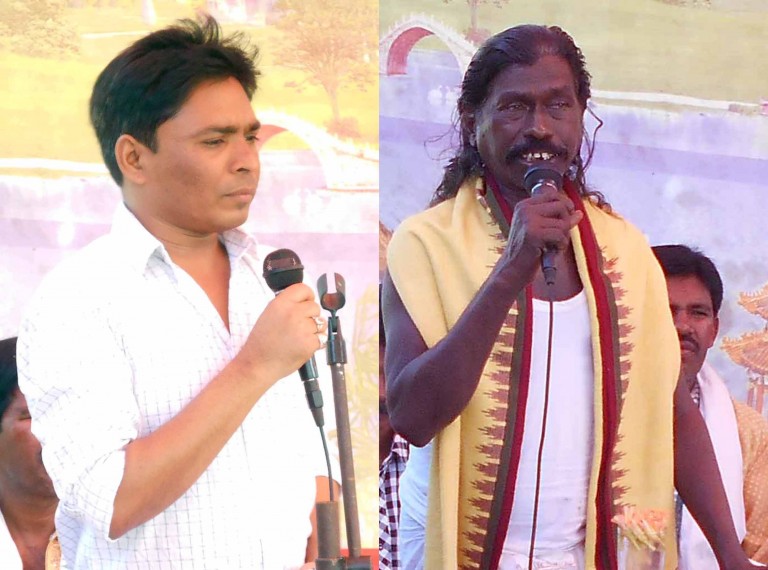
Provide equal status to Kosali and Odia says, noted Kosali language activist Saket Sreebhushan Sahu in a meeting held at Bhangmunda village of Gaisilat block under Bargarh district on 21st June.

The meeting was attended by Padmashree Haldhar Nag as Chief Guest and Saket Sreebhushan Sahu as Chief Speaker. Sri Nag stated that, Kosali literature has bloom in recent years. The Padma awardee added, a time was there, people used to level it as the language of Rasarkeli and Dalkhai but the Padma award from the Union of India to me itself is a certificate that Kosali is a rich language.

Sri Sahu discussed that; The Orissa Offcial Language Act 1954 will be implemented from next August 15th.  Odia language will be mandatory in all communication, from school to court. It may have negative impact on Western Odisha. But our plea is, Odia may be make compulsory in Odia speaking area and Kosali should be the official language of communication in Kosali speaking region. Odia should not be imposed on Kosali speaking area. I fear, the implementation of this Act will widen the gap between coastal and western more than before. The people of western Odisha will be deprived of their rights to mother tongue.

Further, Naveen babu had made promise in election manifesto to include Kosali in 8th Schedule in last general election. Recently they celebrated 2 years completion of their ministry. Two years have been passed but no follow up for the promise.  We are feeling like we have been betrayed. It was a political conspiracy to grab emotion of the people in the election time.

Again, out of 28 states, 15 have more than one official language. Out of 7 union territories, 6 have more than one recognized language. In a democracy, freedom of expression is a fundamental right of the citizen. Good governance requires efficient communication between the citizens and the government.

But Odisha is an exception from all. Here we are noticing people are deprived from their fundamental rights. Politicians make promise and forget.

Complaint filed against unfit beneficiaries

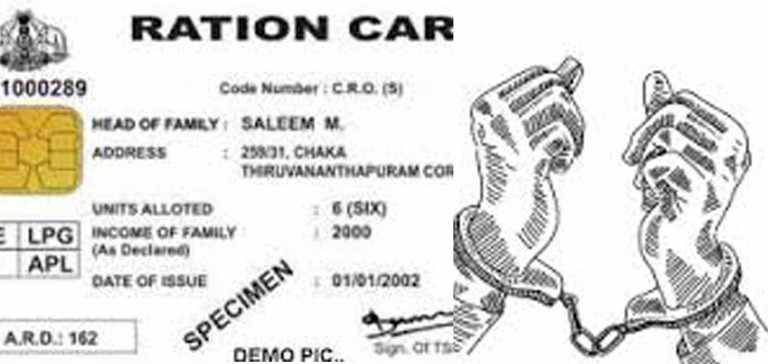
Complaint has been filed against unfit beneficiaries for having ration cards in Sonepur. Tapaswini Guru, the Municipal Council Executive Officer has filed complaint against 10 persons having illegal ration card.   The complaint list includes 3 councilors and 1 former councilor.

As per the information received, Shibaram Nayak, Village Tikarpada Councilor (Word No7) Subashini Pandey, Shantilata Meher of Patabhadi, Basanti Behera, Talpada Coucilor (Word No 6), Subarna Guru, former councilor ( Majhipada), Swagatika Meher councilor Majhipada (Word No 11), Sudeshna Mahapatra of Ghodaghat Pada, Basant Putel of Majhipada, Gitanjali Nayak of Kusthapada, Dhanistha Thanapati of Ghodaghatpada etc are involved in holding illegal ration card.

Likewise, after the complaint of the Sonepur BDO, Aniruddha Pradhan, the Sonepur police have filed case against 11 non eligible ration card holders.

It may be noted that still 7113 are deprived of National Food Security Act. Still poor people not receiving the benefit of the ration card scheme.

Jamutpali mega lift, hope for six villages

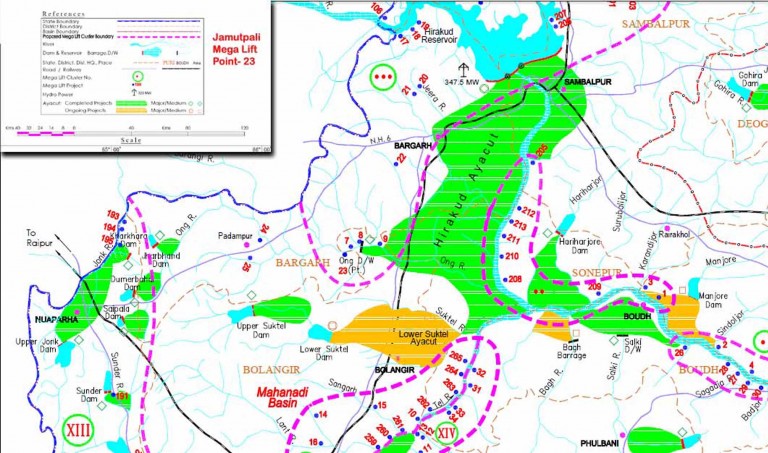
Jamutpali village is under Gaisilat block of Bargarh district. A mega lift irrigation project is underway in this village on Ong River.

A total of 174 numbers of Mega Lift Irrigation Project have been Identified through field visit, across Odisha for Khariff supplementation of 2,14,270 hactare. The Mega Lift Irrigation Projects are divided under 15 clusters. According to the feasibility report, proposed Jamutpali Mega Lift Irrigation project comes under cluster III.

According to the pre feasibility report of proposed Jamutpali Mega Lift Irrigation scheme; it will have 2 motor pumps of 900 Horse Power capacities. It will irrigate 1200 hactare land of Jamutpali, Kendubhata, Halankanasi, Southkhandi, Changhria, and Grindolmal villages. The proposed project will use the water source of Ong River at Jamutpali. According to the inspection report of the proposed Jamutpali Mega Lift Irrigation scheme, the type of soil in the area is sandy clay. Rainfall averages at 1148.86 Mili Metre in the area. Paddy is the main crop in the Khariff season while wheat, groundnut, and vegetables are grown in Ravi season.

According to the feasibility report provided in 2011, the government shown green signal to the project.

Tender was invited for the projects on Ong River, Bheden River, and Hirakud water reservoir. Further it was invited in EPC style. The contractor was needed to complete the project within 30 months from the undertaking of the project. The contractor is also liable for the maintenance of the project for 5 months of the functioning of the project.

The tender for cluster III includes mega lift irrigation projects in Bargarh, Sambalpur, Balangir and Jharsuguda district. Tender was invited for 19 projects for 24,020 hectare lands.

In this tender process Ms. Larsen & Turbo Ltd got the projects with lowest bid of 514 crore  89 lakh.  In the Cabinet meeting of dated 30.01.2015 projects of cluster III were approved and sanctioned Rupees 514 crore 89 lakh for implementation of the same.

The projects are in halfway. Hope it will fulfill the dreams of the local farmers.

Koshali vis-à-vis 8th Schedule (Part: III)

824

Dr Arjun Purohit, Canada

This series was written by Dr Arjun Purohit in response to an article published in published in the ‘Sambad’ on 22nd July 2011 entitled ‘Matrubhasha O Maanak Bhasha’ by Debi Prasanna Patnaik.

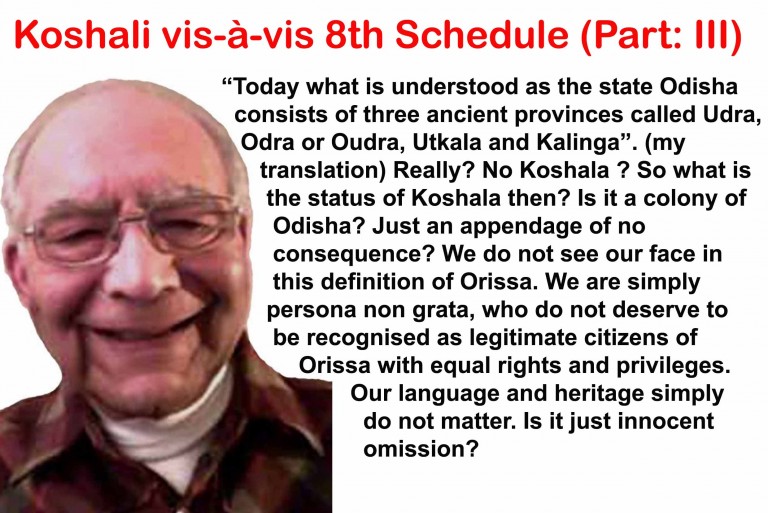
The force of language Dr. Patnaik uses against inclusion of Koshali in 8th Schedule is neither warranted nor necessary because we both in education field know that educating kids through the medium of native language especially in formative years will facilitate learning. So why such denial? A possible explanation may be found the way our history books are written. For instance, Dr. Harekrushna Mahatab who has been lionised in Orissa for his political leadership as well as for his contribution to Orissa history, writes the very first sentence in the first volume of two volume book ODISHA ITIHASA (1948),” Today what is understood as the state Odisha consists of three ancient provinces called Udra, Odra or Oudra, Utkala and Kalinga”. (my translation) Really? No Koshala ? So what is the status of Koshala then? Is it a colony of Odisha? Just an appendage of no consequence? We do not see our face in this definition of Orissa. We are simply persona non grata, who do not deserve to be recognised as legitimate citizens of Orissa with equal rights and privileges. Our language and heritage simply do not matter. Is it just innocent omission? A few years later Siba Prasad Das wrote his classic SAMBALPUR ITIHAS (1962), reprinted in 1969 and I find in it an appreciative note by Dr. Mahatab written on September 16, 1967. However the quoted statement still appears in the third edition of Dr. Mahatab’s book published in 1977. For generations this book has been used as the text book on Orissa history in schools and colleges. It is lot more than just a Freudian slip because this attitude permeates into all the de facto policies and procedures practiced in Orissa which has resulted in the sorry mess in Koshal. The same attitude is reflected in Dr.Patnaik’s essay.

Why it is so difficult to accept us for what we are? Dr. Patnaik wonders whether asking for recognition may lead to aspiration for a separate state. Aspiration for recognition of Koshali in 8th Schedule is an issue which must be judged by its own merit whether or not in future Koshal may get status of separate state. Should we deprive Koshali kids’ access to education so that in future they may aspire for the same rights and privileges of kids in the coastal area or demand for a separate state?  This is akin to the same thinking behind denying education to Sudras to prevent them to aspire the same status Brahmins and Kshatriyas. This is why Rama killed Sambhuka the Sudra when he was found to be studying Vedas. For the same reason Drona demanded that the thumb of right hand of Ekalabya be chopped off because someday he might be challenging Pandava and Kaurava princes. Until a couple of generations ago girls were discouraged to go to school because in future they may not be “ideal” wives. Women in Afganistan must be cooked inside their burqa all the time even in hot weather so that they may not get amorous attention from males. Slaves in U.S. were not allowed to study even private so that they could be as smart as their masters.

Dr. Patnaik acknowledges the abominable attitude and treatment by coastal folks towards Koshalis and folks in South Orissa which has resulted in severe economic deprivation. That is precisely why both Koshalis and folks from South Orissa (Kalinga Pradesh) are looking for separation.

Demand for recognition of Koshali is primarily to facilitate education of the kids, enrichment of our language and literature by accessing resources available assigned to languages in the 8th Schedule and some measure of self respect. Separation of Koshala will depend upon many other variables besides self evident economic disparity. Our neighbours to the west (Chhattisgarh) and to the north (Jharkhand) are already separated. Telengana is about to be separated. Creation of Gorkhaland is already announced though they are working out the actual framework. Language or numerical largeness is no longer the definitive issue in creation of a new state. In the case of Orissa, one notices a steady erosion of trust in provincial government, which is reflected in voting pattern in Koshal area. Governance has deteriorated with steady rising of Naxalism. And there is a host of other factors which are converging towards separation. By the same token, I also want the fellow Koshalis to realise that having Koshali recognised is not going to solve all the problems in Koshal. So depending on the language card alone is just a mirage. In this posting the focus is on language; so I will not digress into other issues here.

Dr. Patnaik pointedly asks whether the demand for such inclusion is aimed at garnering various awards. Great works of literature, music or painting are rarely done for external rewards. These are expressions of artists’ expressions of primordial artistic impulse and rewards are mostly intrinsic. But by denying the modes of expression, both the artists and the public are losers. Great literature can come from even the most primitive language or colloquial language. Julius Axelford and Issac Basevis Singer got Nobel Prize in Literature writing in Yiddish, a dialect spoken in Jewish ghettoes in Poland and Hungary. A Sniti Mishra from Balangir mesmerised whole India recently for her songs. A Mr. Patra from Khariar was one of only three Indians invited to the recent Royal wedding. The Royal family was impressed with his writings in English. A Debasis Rath from Sonepur developed much used Oriya fonts for writing in computer. A Nil Madhab Panda from Sonepur again produces more than fifty movies but not much known in Orissa. Watch his new award winning movie I AM  KALAM scheduled to be released in India. The list is long. What genius might be lurking and dying in the vine in Adivashi population, who constitute nearly fourth of Orissa population, is any body’s guess. Anthropologists tell us that we have sixty different groups of tribals. Their unique experience may be a mine of unique artistic impulses which go undiscovered. Both Koshala and Orissa are losers when we cannot provide any modes of expression. So rewards will come, on its own. Our responsibility is to find stimulate the artistic and literary genius.

The real focus of Orissa as well as Koshal should be as to how to be ready for the 21st century instead of wasting our energy in minor peripheral and often inconsequential issues. When India is emerging as an economic super power, Orissa and Koshal occupy the unenviable position of bottom of the heap in almost every sociological index in spite of their vast natural endowment. Crucial to rise up to our potential is to upgrade our human resource. In Koshal, a thin layer of developed human resource is confined to major urban area, and as you proceed more and more towards less urban area, human resource competency declines steadily. We have a humongous Adivashi population who has not participated in any serious developmental enterprises. No matter how much industrial/mining activity take place in our area, without matching upgrading human resource, Koshal and Orissa will never rise. Ever neglected Adivashi population has been attracting attention for the past decade or so for the wrong reasons: Naxalism, displacement from their habitat or similar reasons. So what language has to do with all these? Plenty. To be able to launch any educational/training programmees, the teachers have to work with them through the medium of communication used by the target population. Simply throwing money in to these projects will not work. In Koshal area we have one advantage. In my experience even the reomotest tribal community has functional capacity to communication in Koshali. This is one of the major reasons I will champion the cause for Koshali to be included in the 8th schedule. Such inclusion will provide at least one stepping stone to bridge the gap between educational endeavour and the readiness of tribal kids. Hopefully, we will develop many more stepping stones.

If you know Bengali, please estimate the similarity and intelligibility between Oriya and Oriya. Then estimate on the same criteria the difference between Oriya and Koshali.

Finally, I thank Dr. Patnaik for bringing this issue even though I disagree with much of his assertions. I also thank the readers for their patience for going through this series.


Case filed against illegal ration card holders

Case filed against illegal ration card holders in Loisingha. Though people are disqualified according to the National Food Security Act 2013 still they are receiving rations by Public Distribution System (PDS).

According to the information from Loisingha, of district Balangir, case has been filed in the name of 8 people under IPC 417, 468, and 471. The Loisingha Police Station incharge Ataryami Behera has started investigation as per the FIR lodged by both Loisingha and Agalpur block authority.

As per the sources, family of Urmila Sahu of Agalpur block have pakka house with 8 rooms, cloth Shop worth of rupees 15 lakh, and the monthly income of the family is more than 30 thousands. The 80 years old Urmila is bed ridden. Her son Yudhisthir has taken all the ration of 4/5 months from the panchayat.

Further, after knowing the whole incident, the BDO Purandar Pujhari directed ABDO Dikshit Behera to lodge complaint against Urmila. Apart from Urmila, the block authority has lodge complaint against Rina Patel, and Tapaswini Suna of Rot Panchayat, Tilottama Mahisal of Guhuriamunda, panchayat Budula, Pinki Sahu of Bharsuja with the same charge.

Likewise, Loisingha BDO Mahindra Padhani has filed complaint against Tarabati Sahu of Ghusuramunda, Subhrakanti Sahu of Hirapur, Sumitra Padhi of Loisingha.

After hearing this news, the affluent ration card holders are in fear.

Harvard inviting Dr Anup Pujari

0

Harvard University has invited retired IAS officer of 1980 batch Dr Anup K Pujari to teach mid-career courses of public administration. Pujari, a post-graduate from the University of Boston and doctorate in economics, had earlier taught in Harvard for short durations while taking sabbatical from IAS. Pujari who retired as union secretary of the ministry of micro, small and medium enterprises (MSME) in January this year, shifted his base to Bengaluru soon after his retirement. Pujari originally hailing from Sambalpur, Odisha, belonged Karnataka cadre IAS. His current teaching assignment will be for about two months, and he is returning to India in August. He will teach in Harvard University’s Kennedy School. Pujari’s understanding of economics, his ability to teach like a top-rated university professor and his taking up of short-duration teaching assignments in the past made BoI to give the following headline — “Prof” Pujari is India’s new DGFT” in an article dated September 2010 when the then appointments committee of the cabinet (ACC) cleared his name as director general of foreign trade (DGFT). The DGFT is a post for a union additional secretary-ranked officer. Earlier, Pujari had worked as joint secretary in the ministry of finance.

He is also an LLB, and holds a second post-graduate degree on defence studies. He also served as union secretary of mines.

As a secretary, he used to call up each and every employee including the one at the rank of a peon on the day of her retirement. He wished each of the retiring employees very best and enquired whether there was any administrative hurdle in getting post-retirement benefits.

His wife and 1980 batch IDES officer Sundari Subramaniam Pujari who retired from the service last month has also accompanied Pujari to Harvard.

Koshli vis-à-vis 8th Schedule (Part: II)

771

Dr Arjun Purohit, Canada

This series was written by Dr Arjun Purohit in response to an article published in published in the ‘Sambad’ on 22nd July 2011 entitled ‘Matrubhasha O Maanak Bhasha’ by Debi Prasanna Patnaik.

Before I wrote this part, I read and reread Dr.Patnaik’s piece, and it seems we are in déjà vu all over again. In later half of 19thcentury, people of Orissa division of Bengal Presidency were fighting for the very survival of Oriya as a language against stiff opposition from a strong Bengali lobby. On March 12, 1869 Rajendra Lal Mitra, an eminent historiographer of Bengal who had come to Cuttack in order to compile a book on the antiquities of Orissa’s art and sculpture, said in a meeting held at Cuttack that as long as Oriya was not removed as a language it was impossible to think in terms of progress of Orissa. About the same time, Uma Charan Halder, the then Deputy Inspector of Schools claimed that Oriya people would stand to benefit if only Oriya were written in Bengali script. Again in 1870, Kantilal Bose, Head Master of Balasore School, brought out a book “Oriya Swatantra Bhasha Nai” and sent it to R. L. Martin, Inspector of Schools. A signature campaign started under the direction of Sibdas Bhattacharya, Deputy Inspector of Schools at Balasore, for continuation of Bengali as the medium of instruction in the schools of Orissa. This was a time when Bengalis dominated in all spheres of civil service including education in Orissa. However, though many Bengalis were supportive of this stand, a good portion of them joined their hands with their Oriya brethren in their demand for Oriya to be the medium of instruction, such as Baikuntha Nath De, Gauri Shankar Ray and Radhanath Roy among others. For an exhaustive summary of the struggle, please read THE RAJ: NATIONALSTS AND REFROMS- LAND, LAW AND GOVERNMENT, ORISSA: 1912-1939 by Amal Kumar Mishra.

Is not the struggle the same between Koshali and Oriya? Now the Oriya pundits are using the unwise tactics against Koshali, and blocking at every turn any chance of getting into 8th Schedule. Probably they are afraid that recognition of Koshali as a separate language somehow diminishes the viability of Oriya in some way. History does not support such fears. After the struggle, Bengali raised from strength to strength, eventually Rabi Tagore getting Nobel Prize in literature. And look at Oriya. Oriya has blossomed when Oriya speaking people had mastery over their own destiny. Oriya writers have embellished their literature in to great heights. Sitakant Mahapatra recently awarded of Padma Vibhusan, the highest award of the nation. Future will tell how Koshali will fare in coming years, but if the record of last few years is any indication, future looks very bright. So Dr. Patnaik need not fear on the account of recognition of Koshali. For blooming and blossoming of Oriya depends on the creative imagination of Oriya writers, and that is where he and other ardent lovers of Oriya should focus rather than indulging in trying to block Koshali from getting recognition as a language. If at all there would be any danger to Oriya as a language, it may come from Oriyas themselves. Just look at your own back yard in Bhubaneswar. Oriya kids are leaving Oriya schools in droves opting for English medium schools even though it costs a king’s ransom for the option.

I am a little intrigued with the tone of the Sambad piece under scrutiny. Perhaps Dr. Patnaik did not mean convey such tone, but it comes across as paternalistic. It is as if Koshalis by asking for recognition of our Matrubhsha, the language we learnt on our mother’s lap, we are somehow are hostile to Oriya as a language. Nothing of the sort. He graciously acknowledged contribution to Oriya literature by quite a few Koshalis. I can name even a dozen more. And I hope Koshalis will continue to do so. During my recent trip to Sambalpur, my friend Uma Shankar Panda presented me his latest anthology of Oriya poems. I presume it is probably his 83rd ! So what we need is not lecture/soliloquy but dialogue, not paternalism but equivalence/partnership, and not indifference/hostility but friendship. This way both Koshali and Oriya will be winners.

Finally, who do you think solved the conflict between Oriya and Bengali? It was T. Ravenshaw ultimately. My sincere plea to Dr. Patanaik and other lovers of Oriya is to rise up to their moral responsibility to do the right thing by unblocking our access to 8th Schedule. This is what brothers do for each other. Longer this impasse festers; more bitter will be the relationship between our two communities. This will be cited as another instance of deliberate blockage of our progress. If this does not happen, then it will serve as a lesson to be learnt for Koshalis. Do not go to Bhubaneswar for getting recognition for Koshali because Oriyas are playing the same game as Bengalis did against Oriya in 19th century, just as an abused child becomes abusive parent. Campaign in New Delhi instead.