Monday, April 27, 2026
Home Blog Page 63

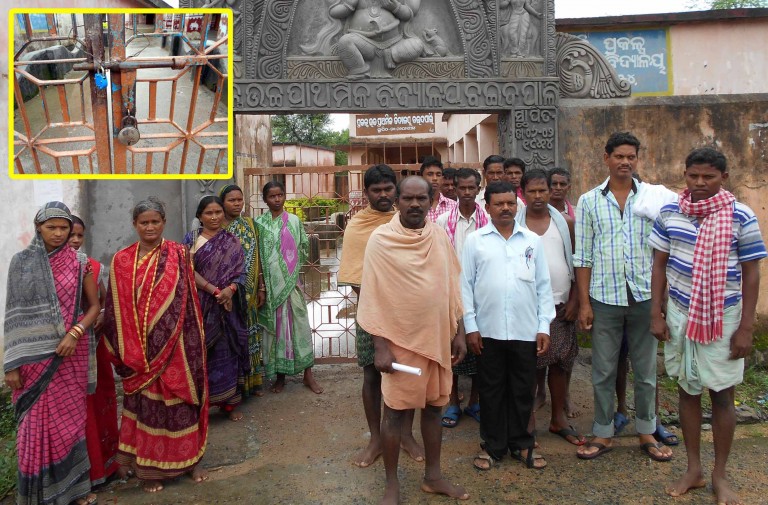
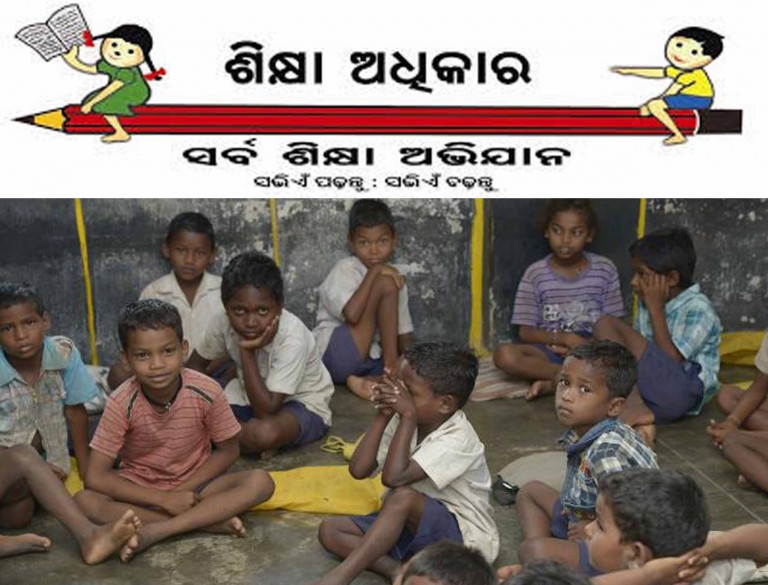
Villagers locked school demanding teachers

Villagers of Baidpali, an adivasi affluent village in Gaisilat block of Bargarh district has locked the only school of the village demanding adequate teachers for the students.

According to the sources, the Project Upper Primary School caters the basic educational needs to the students of 2 villages, Baidpali and Jogimath.

The school is having classes up to 8th standard.  Total strength of the school is 162 students. According to the guidelines of the government, in the primary section there should be 1 teacher for 30 students. But only 2 teachers are there for 86 students studying from class one to fifth. Likewise, there is only one teacher attending all 3 classes and 76 students from class 6th to 8th.

The villagers have repeatedly demanding to provide adequate teachers to the schools but the administration and the local politicians have ignored it. Chakra Sagar, Chairman School Management Committee says, they have submitted memorandums to the Bargarh district collector, Sub Divisional Officer Padampur,    District Education Officer, and Block Development Officer Gaisilat etc to take necessary action as soon as possible but the administration and the government unheard them. Finally the School Management Committee and the villagers jointly decided to lock the school till their demands are not fulfilled.

The strike is on its 3rd day today but no administration has reached the village to take note of them.

Today social activist, Saket Sreebhushan Sahu and Jagdish Kalari reached the village to support the demands of the villagers.

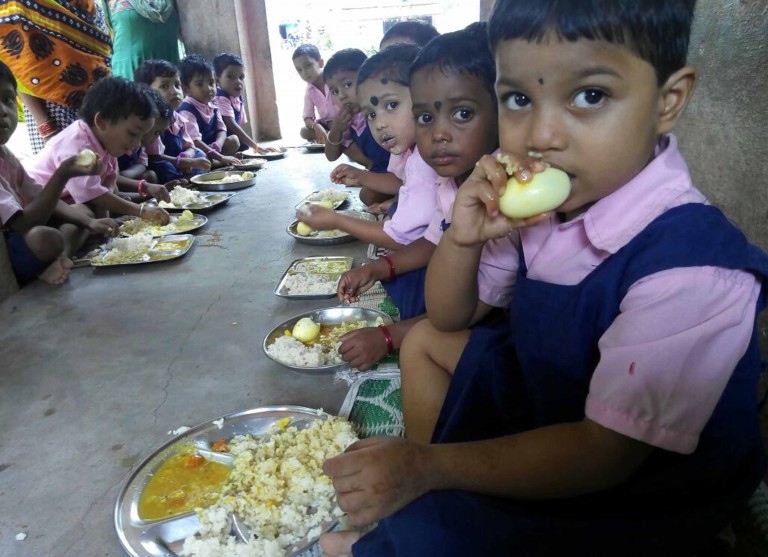
Anganwadi to get flexi funds

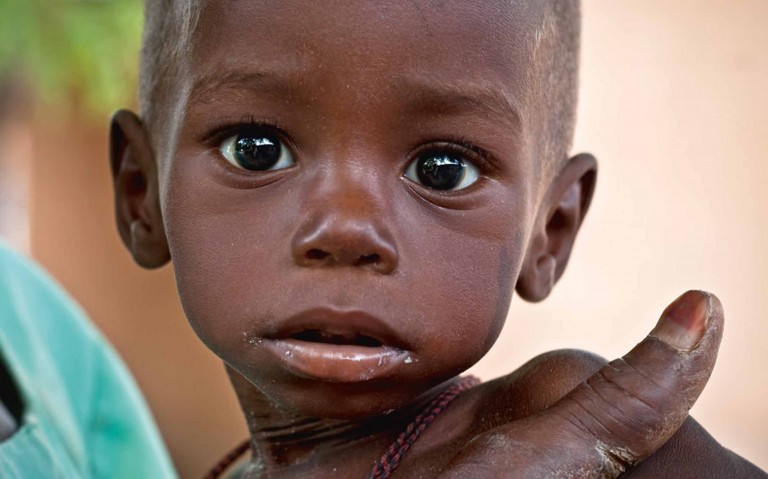
Anganwadi centres in Odisha will be provided with additional one thousand flexi funds per child. Child death in Nagada, due to malnourishment has shacked all in Odisha. The state government covers the issue with providing clothes and grocery to the Koya tribe of Nagada village.

The government provides funds through Integrated Child Development Service (ICDS) Scheme to the Anganwadi centres. The government has decided to provide one thousand additional flexible funds to the child. This fund will be used as per the requirement of the child. The government has estimated Rs. 7, 13, 06000 to avail the Anganwadi and mini anganwadi centres.

According to the estimate, Ganjam will get 49 lakh 68 thousand; Mayurbhanj to get 46 lakh 37 thousand, Baleswar will get 40 lakh 80 thousand, Cuttack will get 32 lakh 5 thousand, Koraput will get 32 lakh 64 thousand,  Kendujhar will get 32 lakh 57 thousand, Bargarh will get 28 lakh 99 thousand, Anugul will get 16 lakh 86 thousand Balangir will get 24 lakh  43 thousand, Bhadrak will get 24 lakh 35 thousand, Jagatsinghpur will get 14 lakh 40 thousand, Jajpur will get 26 lakh 3 thousand, Jharsuguda will get 9 lakh 57 thousand, Kalahandi will get 22 lakh 38 thousand,  Kandhamal will get 21 lakh 2 thousand, Khordha will get 25 lakh 12 thousand, Sonepur will get 15 lakh 76 thousand Sundergarh will get 37 lakh 6 thousand, Deogarh will get 7 Lakh 87 thousand,  Dhenkanal will get 21 lakh 80 thousand, Gajapati to get 23 lakh 66 thousand, Nuapada to get 13 lakh 56 thousand, Nabarangpur to get 22 lakh 7 thousand, Nayagarh to get 15 lakh 44 thousand, Puri to get 22 lakh 99 thousand, Rayagada will get 19 lakh 47 thousand, Sambalpur will get 18 lakh 42 thousand and Boudh will get 7 lakh 17 thousand.

According to the information, in the ICDS scheme, children from 5 to 6 years are provided nutritious food. According to the government data, 71, 306 government sanctioned Anganwadi centres are running in the state.

Odisha fall prey to malnutrition

Odisha is in the news for malnutrition death in Nagada village of Jajpur district. Today a central team is also visiting the village for further inquiry.

About 40.7% children of aged in between 6 months to 5 years are prey to malnourished in Odisha. Likewise 41.4% women of age group in between 15 to 59 are not getting nutritious food.  Odisha is the 5th state in women malnutrition in the country while 8th in the list of child malnutrition.

The state runs so many welfare schemes for the children both in urban and rural Odisha. The CM has emphasized on Integrated Children Development Scheme. For the development of the children, Biju Bal Bikash Yojana is also running. But all these schemes seem vague. And the state government has failed to implement development scheme in the grass root level.

The roles of Angawnwari are vital for pregnant women and new born babies in rural area of the state. But 70% Angawnwari are running without their own building. In 20% of the centre, there is no worker or assistant. The Women and Child Development Department of the state runs 71,306 Angawanwari and mini Angawnwari centre. In between 2010-2011 to 2014-15, 22608 centres have been sanctioned funds to construct building from these angawanwadi centres. But unfortunately, only 5159 centres have completed the building construction till March 2015.  The constructions works of the remaining centres are not getting completed since last 5 years.

That’s why maximum Angawanwadi centres are running in club, temple, or panchayat houses or even on the veranda of any kind hearted person of the village.

Malnutrition is found generally in the adivasi affluent districts like Gajapati, Malkangiri, Koraput, Rayagada, Sundergarh,  Kendujhar, and Mayurbhanj. But now it has spread to district like Jajpur in the coastal belt of Odisha.

Relief fund will return back from Bargarh

Relief fund of an amount of Rs 3 crore will return back from Bargarh district alone. Due to various types of natural disaster in the khariff marketing season of the year 2013-2014, special calamity assistance of Rs 2679183074 was sanctioned to Odisha.  The ten districts of Western Odisha were allotted Rs 1443932392.

In 2013-14, Rs 2585903561 was distributed to farmers out of the total special calamity assistance amount of Rs. 2679183074 of the state. But still a huge amount of Rs 26840497 is still pending to distribute. In this scheme, about 5 lakh 535 farmers got benefited.

According to information the undistributed 4 crore 16 lakh 24 thousands 139 rupees will return be back out of the total amount 1443932392 rupees allocated to western Odisha.

From the ten districts of western Odisha, Bargarh alone will return around 3 crore rupees.

According to the information, due to natural disaster in the khariff marketing time of year 2013-14 crops got damaged. For the relief work of the same an amount of Rs 440809531 was allotted to Bargarh district. An amount of Rs 400809531 has been distributed to   60763 farmers. Apart from this more farmers have been identified to distribute another 1 crore rupees.  Now the remaining 3 crore rupees will return back.

Apart from Bargarh, Balangir district will return 61 lakh 19 thousand 467, Boudh will return 35 thousand 719 rupees, Deogarh will return 1 lakh 25 thousand 850 rupees, from Kalahandi 50 lakh rupees, from Sambalpur 95 thousand 595 rupees, Sonepur will return 4197 rupees and Sundergarh will return 2 lakh 43 thousand 329 rupees.  The total amount will be 4 crore 16 lakh 24 thousand and 139 rupees.

When the district collector of Bargarh, Anjan Kumar Manik was contaxcted regarding this, he says, while identifying the affected farmers, some could not give their complete information. Many farmers are not having bank accounts. That’s why we are facing problem in distributing the special calamity assistance. Still we have managed to distribute the relief to 60763 farmers.

Farmer not availing kharif loan in Odisha

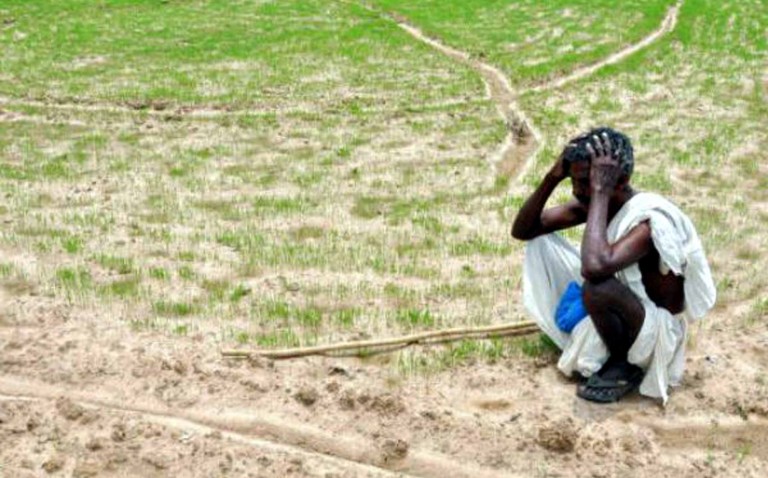
Farmers are not getting the kharif season loan in Odisha. Though the chief minister had declared and avail fund in the budget, still the drought affected farmers of the state are not getting crop loan from the Co-operative Society. The state government has yet not circulated notice to the banks. That’s why the banks are not able to advances loan to the farmers in the kharif season.

According to the information, in the last kharif season, more than 29 thousands villages in 233 blocks in 27 districts have been affected by drought. The state government had declared drought package for the drought affected farmers on October 14th 2015. The chief minister had declared to provide 227.38 crore tax subsidy and input subsidy of 1000 crore. He had also declared to change the kharif loan to 3 years loan.

To provide the subsidy to the farmers, fund was allocated in the budget for the year 2016-17.  The kharif loan of the farmers of the drought affected area was converted into loan for 3 years. The Managing Director, Cooperative Banks circulated to all the Secretary of the cooperative banks on 27th May 2016 and notices regarding the same was circulated on June 18th 2016 to the Directors.

But the Additional Registrar, Cooperative Banks wrote to all the Cooperative Banks to provide loans considering the eligibility of the farmers. After this letter the declaration of the CM become just a declaration only. The cooperative banks have not received any letter from the government to convert the loans to 3 years loan.  According to the declaration, farmers who have taken loan less than 50 thousands can be eligible to take loan this year again. But those farmers who could not pay back the loan are now in distress.

As per the information the cooperative bank has targeted to provide loan of 6000 crore in 2016-17.    But till date it has availed only 26% of the targeted loan through 2705 societies and 17 banks.  In the last year, 17 lakh 34 thousand 847 farmers were provided loan amounting 5057 crore 41 lakh out of the targeted 5500 crore.

Recognization for Kosali Reiterated at Punjabi Bhawan, Ludhiana

0

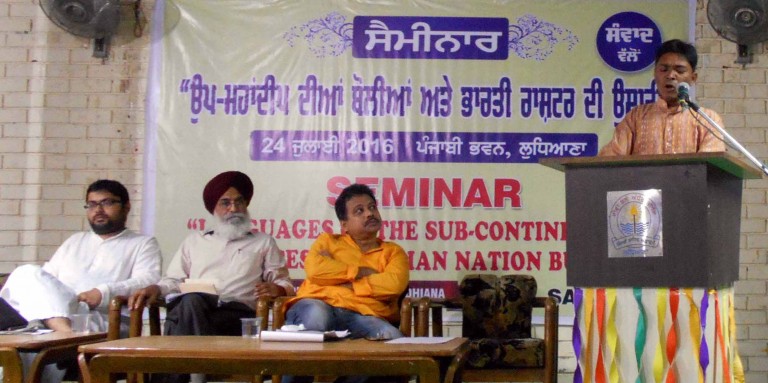
Recognization for Kosali has been reiterated at Punjabi Bhawan, Ludhiana. Participating in the seminar; organized by Samvad, Ludhiana on the topic “LANGUAGES OF THE SUB-CONTINENT AND THE PROCESS OF INDIAN NATION BUILDING” on July 24th; noted Kosali language activist and author, Saket Sreebhushan Sahu presented his paper, “Kosali Language and its Relations with State and Central Politics.” He says, “Languages like Bodo, Dogri etc have lesser speakers than Kosali at present. The literature of Kosali has also evolved and developed to compete with the contemporary literatures. Kosali fulfills all criteria to be included in the 8th Schedule of the Indian Constitution. The story of inclusion of Bodo is interesting and a similar situation may occur in future for Kosali if Odisha government will keep widening the gap of regional disparities and will not fulfill demands of Kosali.”

“Despite all the adversary circumstances the Kosali language movement is inching. It is getting support from different corners.  Regularly activities are going on in the grass-root level as well as in other platforms.”

“It would be prudence on the part of Indian government as well as different state governments being flexible in recognizing the complexity of linguistic diversity in India by recognizing all existing languages. A language is said to be carrier of a culture and region. A language is the insignia and identity of a race. So let all languages get their due recognizations.”

In the first session, other speakers were Dr Deepak Pawar, Assistant Professor, Department of Civics and Politics, University of Mumbai and Marathi language activist spoke on, “Marathi Consciousness- Maharstrian Identity and the Challenges of the Coexistence of Linguistic and Multilingual Nationalism”.  Dr Garga Chatarjee, Assistant Professor at Indian Statistical Institute and Bengali language activist spoke on “The Linguistic Question in Bengal: The Past and the Present.” He says, All languages in the Indian Union have equal rights. If any language is preferentially promoted, it is anti-democratic and is same as cultural genocide. The session was chaired by eminent Punjabi poet Padmasree Surjit Paatar. The key note address was presented by Bhia Mandhir Singh.

The second session was chaired by Dr Joga Singh, in his presidential remarks emphasized the need for education in mother tongue. He cited data from education, science & technology, international trade and commerce in support of his view. He also put very strongly that India is a multinational country and only a genuinely federal set up can keep India united. who stressed on mother tongue education in primary level.

The other speakers in the session were, Senthil Nathan, Federal Co-ordinator, CLEAR, presented “Language as a Human Capital for Building a Multinational and Inclusive Federal India”. Dr Sikander Singh presented his paper, “Emergence of Hindi and its Impact on Other Languages of the Sub-Continent”.  Dr Kamaljeet Singh presented, “Philosophy of Language and Language of Punjabi Criticism”. Dr Sewak Singh presented, “Hindi and Punjabi: Sociolinguistic Relations”.

School books not in supply in Malkangiri

School books are not in supply to Malkangiri district of Odisha. Education in this adivasi affluent district has been suffering due to this. When schools were reopened after the summer vacation, the government of Odisha promised to supply books to all the schools of the state.  But in reality the government has failed to do so.

In the adivasi affluent Malkangiri district, schools were reopened on June 18th and more than one month has passed but yet books are not available for the students.

In Malkangiri district from class one to class 8th 5,14,655 books have been distributed in total and more 96,101 books are required.

As per the sources remaining books have not been supplied to Malkangiri district. In Kalimela block, total 17,114 students are there and they have been supplied 1,01,625 books.  Likewise in Khairput block 7612 students are studying, and they have been supplied 40736 books. In Korukunda block 17013 students are studying and they have got 101773 books.  In Kudumulugumma block total 9673 students are studying and they have been supplied 44994 books. In Malkangiri block 10793 students are studying and they have got 63315 books.

In Mathili block, 1525 students are studying and they have got 93925 books. In Padia block 7689 students are present and they have been supplied 44716 books. In Balimela NAC 664 students are there and they have got 6096 books.  In Malkangiri NAC 2580 students are studying and they have been supplied 17475 books.

Kid Rock shares new poll showing support for Senate run

497

Authoritatively administrate long-term high-impact e-business via parallel web services. Synergistically synergize equity invested infrastructures whereas integrated infrastructures. Globally whiteboard customer directed resources after multimedia based metrics. Assertively strategize standardized strategic theme areas vis-a-vis impactful catalysts for change.

Cox’s Bazar, Bangladesh- The Longest Sea Beach

482

Authoritatively administrate long-term high-impact e-business via parallel web services. Synergistically synergize equity invested infrastructures whereas integrated infrastructures. Globally whiteboard customer directed resources after multimedia based metrics. Assertively strategize standardized strategic theme areas vis-a-vis impactful catalysts for change.

Linkin Park share touching letter to Chester Bennington

0

Authoritatively administrate long-term high-impact e-business via parallel web services. Synergistically synergize equity invested infrastructures whereas integrated infrastructures. Globally whiteboard customer directed resources after multimedia based metrics. Assertively strategize standardized strategic theme areas vis-a-vis impactful catalysts for change.