Monday, April 27, 2026
Home Blog Page 62

No pucca road to Malmunda village

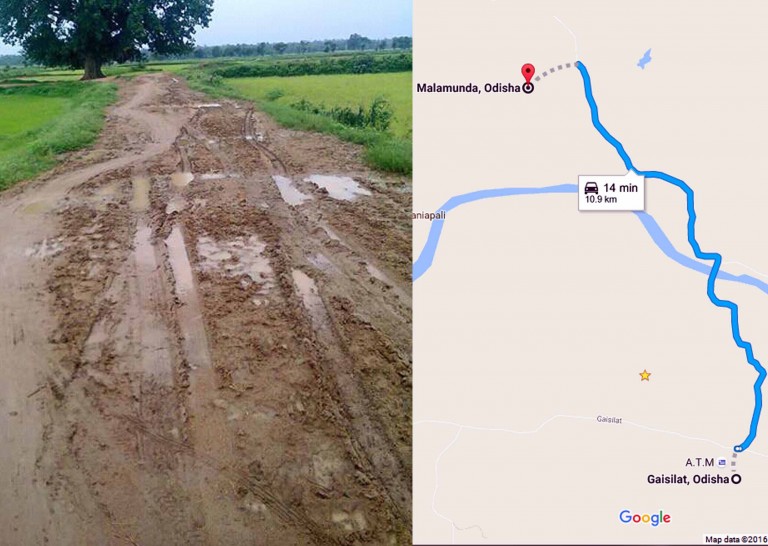
No pucca road to Malmanda village of Ganiapali panchayat under Gaisilat block yet.  A fare weather mud road of 4 KM length connects the village from the main road.  Malmanda has a population of over 2000 people.  An orphanage for girl students is also there.  The villagers use that muddy road of 4 Km for their daily communications.  They are facing severe trouble in bad weather; particularly in rainy season.

The children of the village use this road daily to go to high school or colleges at block headquarter Gaisilet.  Further people use this muddy road in all season to visit bank, and different offices.

As per the sources, funds are available for this road since last 10 years but the local political will power is not interested in the project.  The villagers are repeatedly urging the concern administrative officers  as well as the local leaders but nobody is listening them.

Koshal bandh on August 26th

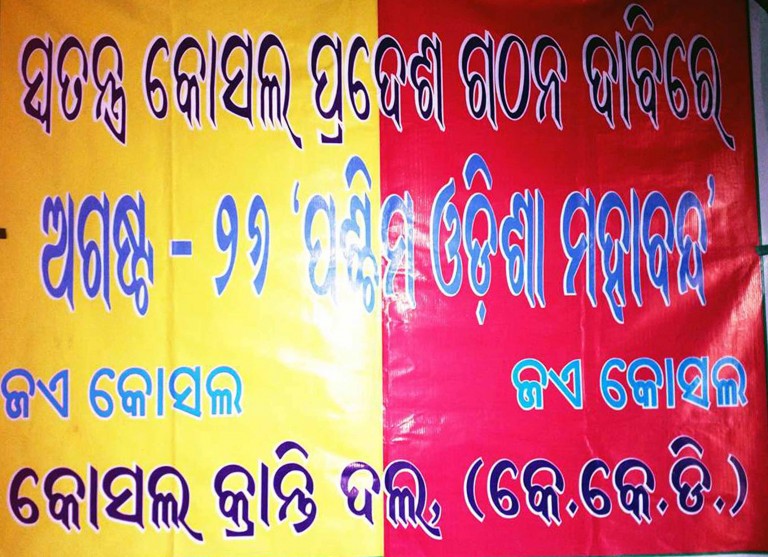
Koshal State Coordination Committee has called on for a bandh on 26th August demanding separate Koshal state.  Shops, government and private establishments, schools and colleges everything will be closed.

The agitators have decided to stop movement of trains at some stations. The bandh will be observed in Balangir, Jharsuguda, Sambalpur, Sundargarh, Rourkela, Bargarh, Deogarh, Subarnapur, Nuapada and Kalahandi.

The bandh call has been given by the KSCC comprising representatives of organizations of 10 western Odisha districts.

“In 1936 and 1948, the political leaders of Odisha got our land merged with the state through a conspiracy. We are demanding a separate state as per the provisions of Article 2 and 3 of the Constitution,” Pramod Kumar Mishra, leader of the Koshal movement said in a statement.

He had added, formation of a separate state is the only solution to the problems like regional imbalance, discrimination in education, employment, industrialization and development.

Unknown facts about Haldhar Nag

0

After receiving the Padma award reams of words have been written about Haldhar Nag. Still many things are in dark and unknown about the gifted and powerful Kosali poet.

Haldhar is famous with surname Haldhar Nag. But actually his surname is Kharsel not Nag.  Haldhar belongs to Baidpali village of Gaisilat block.  Baidpali is the ancestral village of Haldhar. The elder member of Kharsel family dies in the epidemic cholera. Then they moved to Ghess, to their aunt’s place due to severe drought and cholera at Baidpali. Haldhar’s aunts were with surname Nag. When Haldhar was enrolled in the school, the teacher mentioned Haldhar Nag keeping the surname of his aunt. And there onward child Haldhar Kharsel was known as Haldhar Nag.

It is known to all that he could attend school only up to 3rd standard. In present time, tenth passed students are not able to write a few lines properly. But Have you ever wonder, how this poet writes such beautiful verses without having a formal education? Haldhar gives signature, he can read Odia or Kosali slowly, but he cannot write Kosali or Odia fluently. It is Gopal Bariha, a boy from Ghess who helped Haldhar in scribing down all his writings on paper. Haldhar dictates and Gopal used to writes those on paper.

Haldhar has struggled for a square of meal since his childhood. He was working in a hotel as a dishwasher. He used to be the assistant to the cook in a hostel mess. Later on, he started a small shop in a wooden cabin to sell peanuts and eateries to school kids. Poverty has debarred the poetic genius from a life with comfort. Working all these odd jobs, he used to attend dand rehearsal, drama rehearsal, etc in night and used to compose his poems in day time. At a time, he used to visit Bijepur Zamindar Late Tulsi Prasad Gartia to practice dance and song. There he has learned Kathak, Manipuri and Odissi singing also.


Saket Sreebhushan Sahu

saket.sahu@gmail.com

Handloom of Western Odisha

0


by Saket Sreebhushan Sahu

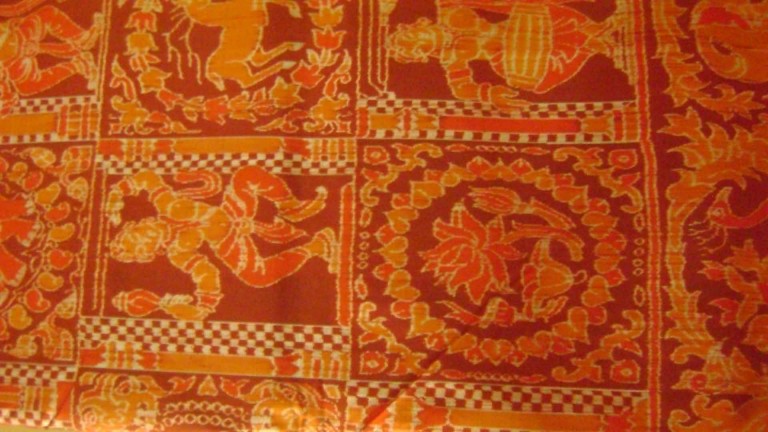
Handloom weaving tradition in western Odisha is prevailing since many a generations. The handloom clothes of western Odisha have carved a niche for itself in the international market, especially sari. Saptapar, Bomkei, Habaspuri are some household names of sari design. Apart from sari, bed sheet, table cloth, screen, dress material, cloth for shirt, wall hanging, dupatta, stole etc. All these clothes are woven by a special technique named. “Baandha”/tie & die. In this technique first the thread is coloured with the tie and die technique. The coloured thread is then used to weave clothes and designs of choices forth-out from it. The designs of baandha art are inspired from temple art. The weavers are found at Sargipali of Sonepur, Barpali, Bijepur, Tarbha, Patnagarh, and Bargarh.

People like to use clothes of natural threads. Handloom clothes are preferred for luxury as well as comfort use.   This Baandha/Tie &Die is a traditional art like a painting. The weaver conceptualizes extraordinary things and draws natural scenery, trees & shrub, flower & leaves, fish, river, ocean, deer, elephant, tiger, horse, mountain, birds, and human on the cloth. Even exact human faces or portrait can be drawn with this art of weaving.  Deer on one site and lotus on another site can be drawn with this weaving technique.

Pasapali

Saptapar/Pasapali

Saptapar or Pasapali saree design is mainly woven at Sonepur, Barpali, and Baunsri.  The importance of Pasapali is the chequered design in white, black and red colour. Generally Pasapali or Saptapar is woven with cotton or silk thread. The face of the saree is designed in golden coloured thread.In the face, cronch, chakra, flower, animal and birds etc is designed.  And the boarder of the saree is designed with floral pattern.

The weaver designs flower, scenery, geometrical shapes, and other designs as per the order.


Habaspuri

Habaspuri

Habaspuri name has been derived from the name of the village Habaspur of Kalahandi district of Odisha. The special Habaspuri design came to lime light in the 19th century. Now around dozens of weavers are engaged at Chicheiguda, Kalahandi.  In recent time Master weaver Ugrasen Meher has revived the Habaspuri design.  For the Habaspuri handloom weavers Chicheiguda Handloom Cooperative Society has been founded.

The Habaspuri design is famous for the traditional art of temple, fish, and flowers of Kondha tribes.


Bomkei

Bomkei

The name Bomkei design has been derived from Bomkei village of Chikiti Tahsil of Ganjam district. Bomkei is woven in traditional bandha (tie &die) and jaal (net) method. Generally Bomkei saree is used by Brahmin in puja time.  In this Bomkei, Karla (bitter melon), Atsi flower, Kanthi flower, fish, Ruhi fish, tortoise, lotus, peacock etc shapes are designed.  In Bomkei saree, Haldi (turmeric), Laakh ( ) etc natural colours are used.



Adhikar planted trees to commemorate Independence Day

759

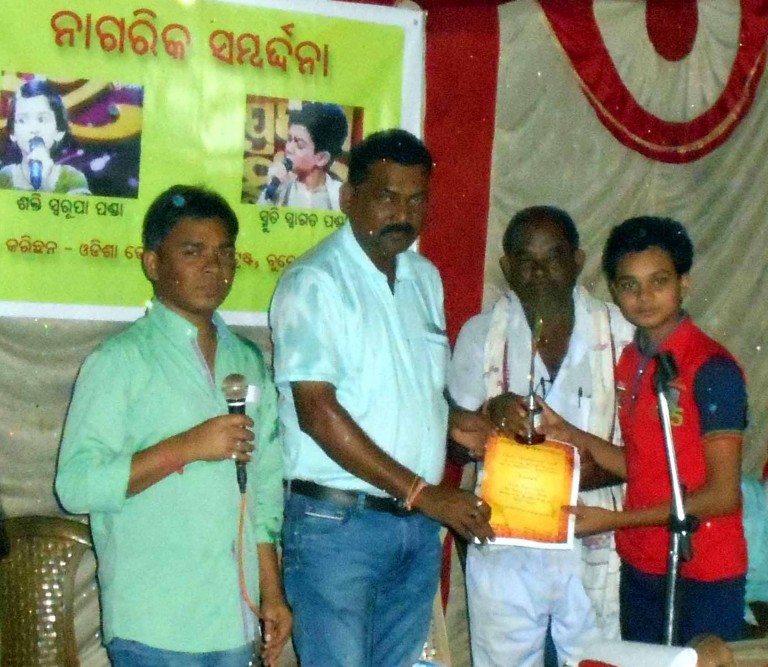
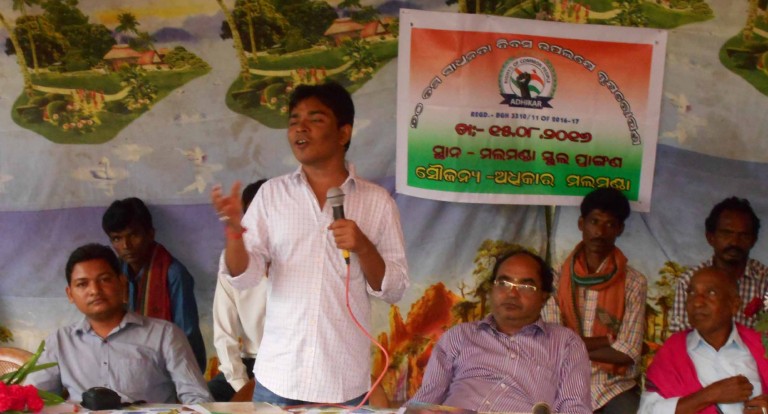
Adhikar organization of Gaisilat block in Bargarh district planted trees on the occasion of 70th Independence Day celebrations of India.

As per the report, Saket Sreebhushan Sahu one of the guests of the occasion quoted Mahatma Gandhi and says, “There is no independence without economic freedom”. Pranay Kumar Sahu, Vice Chairman Gaisilat says, there should be collective effort from people and administrations for the betterment of the system. The chief guest Gaisilat BDO Sadakar Kumbhar emphasized on different schemes available for the common man and higher rate of awareness is required for the proper utilization of those.

Other guest present in the meeting were Aditya Kumar Panda, Secretary SSC Gaisilat, Samir Kumar Gartia, DO LIC Padampur,  Shantanu Padhan, Sarpanch Ganiapali, Tikelal Bariha, Headmaster, Ashram School Malmanda, Saroj Sahu, President Adhikar. The dignitaries present in the meeting kept their views on the different aspects of tree plantation. Cultural programmees were presented by the school children. The prize distribution ceremony followed it.  This Independence Day meeting was chaired by Tulsiram Seth and vote of thanks was presented by Sushanta Sahu.

After the completion of the meeting all the guests, members of the organistion and present audience participated in the tree plantation work.

Recognize Kosali as the second state language of Odisha

735

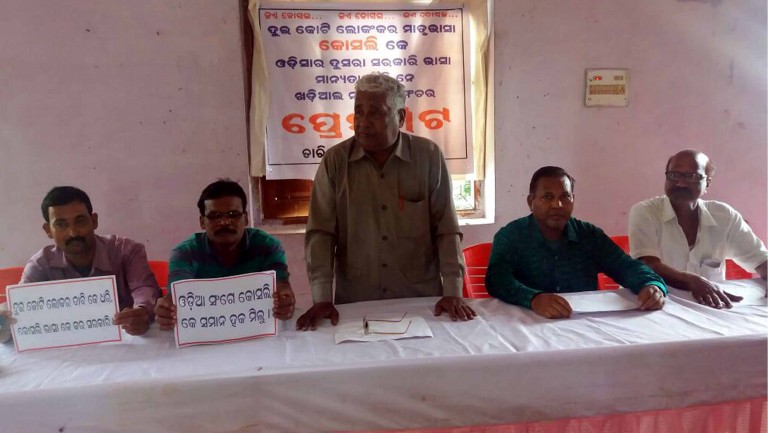
Recognize Kosali as the second state language of Odisha demands Khadial Nagarik Manch in a press meet hold at Khadial Kalyan Mandap.

The Press meet was presided by Ranjit Singh Maharatha, coordinator, Khadial Nagarik Manch and other dignitaries joined the meet were Natraj Mahapatra, Irfan Mohammed,  Tulsi Jain, Sanjay Khamari etc.

In the press meet, the members says, the Odisha government is only supporting Odia language where as the Odisha is having Odia and Kosali two major languages.  And both languages have equal number of speakers; approximately two crore.  Apart from this the Kosali speakers also pays tax and Odia speakers also pays tax in Odisha but the Kosali speakers are feeling left out  after declaring only Odia as the official language of Odisha.

Further the Odisha government is supporting only Odia medium schooling in primary level whereas according to the Right to Education Act 2009, children should be avail education in its own mother tongue. The mother tongue of children of western Odisha is Kosali not Odia.  But a kind of Odia imposition is going on in the state run government school.

Cylinder supply in disorder in Sambalpur

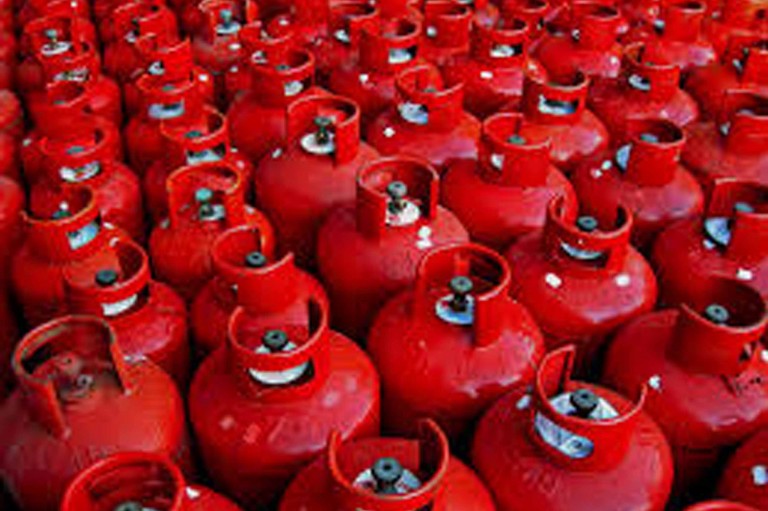
Cylinder supply has created panic in the consumers of cooking gas in Sambalpur town due to disorder in the system. The chaotic condition has becoming a common thing for the city dwellers. It is taking month long to avail a booked cooking gas and sometime the consumer is not getting home delivery. Finally the consumer is deprived of availing the cooking gas.

Recently, according to the complaint by a consumer of the Munda Gas Agency, after booking for a cooking gas, he couldn’t avail it for a long time. The consumer then went to the agency to inquire about the gas cylinder. The agency authority says, it has been delivered to the consumer. But in reality the consumer has not received the cooking gas. Now the consumer and the common people doubt that the agency has sold their booked cooking gas at black market.

In another instance similar story has been repeated, Chaitanya Nayak of Dhanupali, booked a cooking gas on 1st July but that did not reached to his address after waiting for 20 days.  Finally he went to the Gas Agency to inquire about his booked cooking gas.  The agency says, the booked cylinder is already delivered to the consumer on 17th July.  The gas agency has reported delivered where as the cylinder is not availed by the consumer. Chaitanya informed the gas agency that he has not received the gas cylinder. Then the agency assured him that it will be delivered soon. But a week has been passed and yet the cylinder is not delivered.

The government has taken many steps for transparency in the system but failed to check the black marketing of gas cylinder.

Indian Mother Tongue Activists form CLEAR

742

Activists campaigning for their mother tongues have formed an India level trust named ‘Campaign for Language Equality and Rights Trust’. The Trust mainly aims to spread awareness throughout India about the importance of mother tongues in education, services, administration, culture and other linguistic domains. To work for making all scheduled languages the official languages of the Indian Union and inclusion of the unrecognized ones in the scheduled list, for obtaining equality of all Indian mother tongues at all levels, and for ensuring linguistic rights of the speakers of Indian mother tongues are other objectives which the Trust wants to pursue.

Dr. Joga Singh, the President of the trust, in his statement released to the press has said that Indian language policy is completely on a wrong track. Leave aside the results of the worldwide research and the opinions of the language and education experts, the Indian policy makers have turned a completely blind eye to even the recommendations of all commissions and committees formed on the issue after independence. As a result of this, he said, the ruination of Indian education, languages and cultures is pretty obvious now. Along with this, it has negatively affected the domains of administration, services, inclusive growth, just and democratic social set-up, establishment of a genuinely federal structure, and sense of unity among Indian people.

Dr. Joga Singh said that some myths about language issues which most of Indian people are carrying in their minds are the primary reasons for Indian language policy being on an erroneous track. We, he said, need to look at the fact that only the countries which have based each field of their life on mother tongues are ahead in education, trade and commerce, knowledge, science, and technology. But India, by neglecting her mother tongues, has shackled its energy and talent. This has also created serious difficulties for each field of the country’s life. It is very much essential, therefore, that the language policy attested internationally and recommended by the experts be put in place throughout the country. This policy guides us to give primary place to mother tongues in each linguistic domain. To achieve this goal, we need to pool together the efforts being made by Indian mother tongues activists across the country. The ‘Campaign for Language Equality and Rights Trust’ will keep making its sincere efforts in this direction, he said.

Dr. Joga Singh told that the beginning for the establishment of this trust was made in September 2015 when Tamil language activists organized a gathering in Chennai and a platform with the name ‘Campaign for Language Equality and Rights’ was floated there. A large number of activists from eight languages, including Dr. Joga Singh, participated in that gathering. The platform had such an impressive response that within a period of less than six months it could gather representatives from forty languages in Delhi on 21st February 2016, the International Mother Languages Day. A common demand charter was released on that day.

Dr. Joga Singh (Punjab) has been nominated as President, Mr. Senthil Nathan (Tamilnadu) as Secretary, Mr. Anand Guru (Karnataka) as Vice-President, and Dr. Rawail Singh (Delhi) as the Treasurer of the Trust. Dr. P. Pavithran (Keralam), Dr. Deepak Pawar (Maharashtra), Dr. Garga Chatterjee (West Bengal), Mr. Saket Sahu (Odisha) and Mr. K.S. Priyank (Karnataka) are the other founding trustees. The Trust has made an appeal to all Indian citizens to connect actively with the Trust’s activities.

Farmer suicide in Odisha figuring 3500 in 15 years

Farmer suicide in the state is another piece of infamous news which has drawn national and international attention for Odisha in recent time.

In Odisha, around 3500 farmers have committed suicide over last 15 years, says government report. Government has also admitted that in the running financial year, some suicides are due to crop loss. But no suicide is the result of farmer loan or loss in the cultivation.

According to the information, the total numbers of farmers committed suicide are 3439.  In 2004 maximum 379 farmers committed suicide in Odisha while in 2014 the number was 102.

The Agriculture Minister of the State had given order to investigate regarding the information of the farmer suicide in October 2015.  According to the investigation, in the year 2015-2016, total 174 farmers had committed suicide.  But according to the report, no farmer commits suicide due to agricultural loan, or crop loss due to drought.  In some cases, the cause of farmer suicide is not known. But the list of farmers provided by the Agriculture Minister shows that farmers committed suicide have lost crop from 40% to 90 % .

According to the report of the Ministry, out of the total 174 farmers, 9 farmers committed suicide due to mental pressure, 38 farmers committed suicide due to family dispute, 11 farmers committed suicide due to diseases, 6 farmers committed suicide due to drinking of alcohol and 93 farmers have not committed suicide due to crop loss, and the reason of suicide of remaining 18 farmers are for unknown reasons.

In Odisha 61.80 lakh hectares lands are suitable for agriculture. In the last Kharif season, 59.62 lakh hectare and in the Ravi season 21.94 lakh hectares lands were cultivated.

In the kharif season, 14.82 lakh hectare lands in 29,077 villages in the state were affected due to drought. Apart from this, in the whole state about 5.54 lakh hectare land was not cultivated.


Mamata Scheme deprives 2 lakh 33 thousand mothers

Mamata scheme launched by Women and Child Development Department Government of Odisha has been derailed from its objectives. Women are not getting the benefits for years.

In Jamkani village of the Belpahad NAC Sasmita Biswal W/O Harishankar Biswal was pregnant on 20/10/2013. This was registered by Anganwadi worker Sukanti Sa at the Lakahnpur CDPO Office.  Sasmita Biswal gave birth to a girl child on 25/7/2014 at Burla hospital. Now two years have passed, but the financial support provided by Mamata Scheme has yet not been credited to Sasmita’s bank account.

According to the guideline, Rs 1500 after the 6 months of the preganant, another Rs 1500 after the 3 months of the child birth, and the child is given 1 thousand each time after completion of 6 and 9 months; likewise total 5 thousand is assisted in the Mamata Scheme.

Many a time the bank account was checked but the money was not credited the account of the beneficiary. The Anganwadi worker of Jamkani, Sukanti Sa complaint at the CDPO office regarding the same.

“In Lakahnpur block total 73 non-resident women are there and they were not availed the benefit of the scheme. Likewise passbooks of 12 are not updated so the money is getting returned. Eight women have double ID; and so they could not avail the benefits, says the Lakahnpur CDPO Arati Joshi.

When CDPO Joshi was queried about Smt Biswal, she says, her name will be checked and we will pay it online.

Sasmita Biswal of Jamkani is not the only case. The Women and Child Development Department of the state itself has admitted that there are 2 lakhs and 33 thousand women, who have not availed the benefit the scheme. The details with district wise as follows:

District                   Number of Deprived Women

Sambalpur                          7342

Balangir                             14397

Deogarh                               2487

Jharsuguda                         2466

Sonepur                               3972

Bargarh                                9863

Boudh                                   3519

Kalahandi                           15392

Nuapada                              3379