Monday, April 27, 2026
Home Blog Page 58

Upsurging Kosali (1)

0

INTRODUCTION

Ancient Period

Since ancient time a huge land area has been mentioned Kosal. It spreads from the foothill of Himalaya to North Godavari in the South, and up to the west boarder of Utkal in the east and upto Benganga (Benu) or Vidarva in the west; has been found mentioned from different sources. In Valmiki’s Ramayana; the ancient epic of India; also two Kosal has been mentioned. One is Uttar (North)Kosal  and the other is Dakshin (South) Kosal. Though in ancient and medieval India’s Puran and literature are providing many facts and information about king of South Kosal, Kingship, geography, culture and language etc and even it has original dignity and independent status, our historian and researchers could not have given error free accounts on its original culture and language. The main reason is unbiased study on folk culture and language of Dakshin Kosal. The Kosal region was spread up to such a vast area that further it was divided into seven parts for better administration. The name of the seven parts has been described from stanza 129 to 132 of Bayupurana as below:

  • Mekal Kosal
  • Kranti Kosal
  • Chedi Kosal
  • Dakshin Kosal
  • Kashi Kosal
  • Purba Kosal
  • Kalinga Kosal

But Kosal was mainly known as North Kosal and South Kosal. That’s why Valmiki Ramayana also describes about two Kosal; Uttar Kosal and Dakshin Kosal. Uttar Kosal was spread in the geographical boundaries of Sarayu River where as Dakshin Kosal was spread encompassing the huge land lock of Vindhya Hill Range. The King of Uttar Kosal was known as Uttar Kosaleswar and Dakshin Kosal as Dakshin Kosaleswar. But sometime Dakshin Kosal has been mentioned as Kosal. The derivation of name  Kousalya; the princes of this state and chief-queen of King Dashrath and mother of lord Ramachandra;  according to Deshanusari Sutra (name given after the land) also implies it. After marrying to Kousalya, the princes of Kosal, the state of Dashrath and Kosal (Dakshin Kosal) was merged.

In the later period, due to political instability, the state was broken and went into the hands of different kings. Uttar Kosal was known as “Awadh”, Mekal Kosal was acquired by Baghel Rajput and named as Baghelkhandi, southern part of Dakshin Kosal was known as Chattisgarh and eastern part remained as Kosal. And other parts of original Kosal merged with different states. Due to many historical reasons different parts of Kosal were known by different names but this part of the Kosal is still known as Kosal.  Along with Kosali Prakrit the original Kosali culture and beat of feelings is found here.

Modern Period

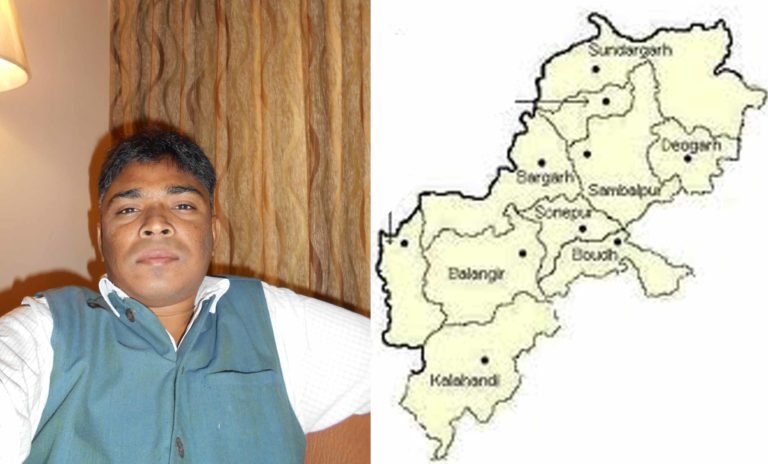
Due to historical blunders, though the region is broken into pieces and scattered but in the present time according to the culture and language perspective, the western part of Odisha comprising ten districts Balangir, Bargarh, Boudh, Deogarh, Jharsuguda, Kalahandi, Nuapada, Sambalpur, Sonepur, Sundargarh, and Athmallik subdivision. In addition, a large population of Chattisgarh state encompassing Bhatri region of Bastar district, and from eastern part of Debhog, Phuljhar, Raigarh, Sarangarh to Jashipur consist it. And the language of this huge region is Kosali in actual.

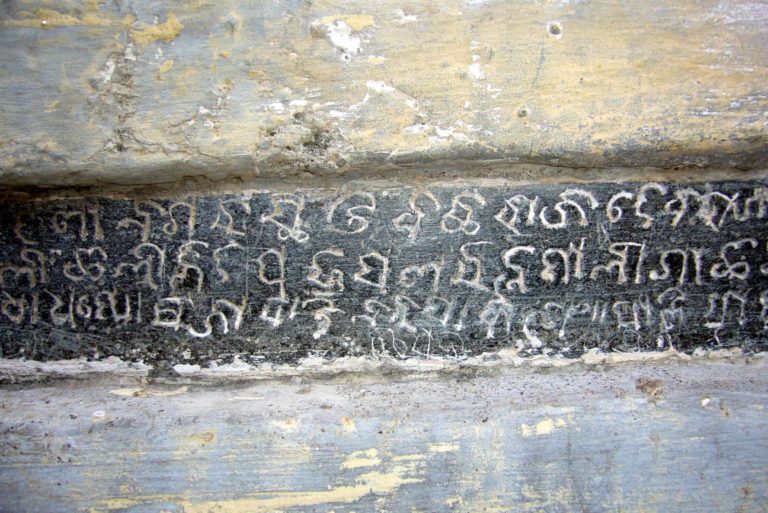
Taking notes from ancient literature, it can be state that this Kosal exist before 7th Century BC. The great grammarian Panini has written rules on Kalinga and Kosal.  According to linguistics this reference of Kosal meant Dakshin Kosal. In 3rd Century BC symbol of Kosal state has been found in Brahmi script.  The cultural tradition of Kosal spread circling up to 2000 miles rooted and covered with so many years of historical elements. Evidences have been found South Kosal has appeased the world with donating religion, culture, diamond etc. When Buddhism was in its depleting period, a few new concept of religion was born and this land of Kosal was the birth place of those new religions. Kosal is known as the land of Vajrajan, Sahajjan, Kalachakrajan, Tantrajan, and Sambartantra etc and also the grazing land for Shivaism, Shakta cult, Vhairab worshiping, Nath cult, Mahima cult, and Vaishnabaism.

The great Chinese pilgrim Huentsang has mentioned in his travelogue that people of Madhya Desh used to sell diamond in Kalinga.  The mentioned Madhya Desh is present Sambalpur situated in the bank of river Mahanadi. He has also mentioned that a port named Kosal was there in the east seashore. Possibly the port with the help of Kosali boat of Kosal state used to do business of diamond, clothes, etc. and that port was named as Kosal port.

Maharanya-Mahakantara, Mayaguha and Maghababana (Indrabana) etc associated with the ancient history of Kosal are also associated with the ancient history of Kalahandi. The jewel full land of Kosal is today’s Kalahandi and Karunda and Mahakantara. Land of Tantra, land of Indrabana,  were parts of this land. Mayaguha is today’s Maraguda.  The Somabansi rulers used to Known as Sakal Kosaladhipati and Chouhan kings also used to known as Kosaleswar.  This is strongly supported by Kosalananda Mahakavya by Pt Gangadhar Mishra and Jaya Chandrika authored by Prahllad Dubey of Saranggarh. Prahllad Dubey was the court poet of Jait Sai of Sambalpur. Jaya Chandrika is a historical poetry. In that poem he has written about the situation of Sambalpur and Kosal state. A few lines from the descriptions:

Kosal mukhya Sambalpur deshaa

yahaan basata Chouhan nareshaa

base nagra pur nadi simahi

jaha upuje mani kanchana hiraa

sastra sasatra purak purabasi

bidya mein manu chahare kasha”

 Historian BC Mazumdar has also mentioned this area as Kosal in his book “Chauhan Rulers of Sonepur” (pg3)

“Balarjuna’s successors made the Sambalpur tract their Kingdom and always designated this tract by the name of “ Kosala” though the trunk of Kosala consisting of Chhathisgarh fell in the hands of other rulers. The term Kosala occurring in the records of successors of Balarjuna signifies the Sambalpur tract defined above.”

Perhaps this eastern part is possibly was known as East-Kosal from time to time. An ancient book “Kapil Samhita” also designates this area as Kosal.  Like the holy places Puri, Konark and Bhubaneswar of Utkal, holy places of Kosal have also been mentioned:

punya swarnapuri proktaa, punya chitrotpalaa nadi

kosalesu traya punya, punyo marjara keshari

Upto 18th century authored have referred this land as Kosal. In Vikram Bilash of Babu Rewaram Kayasth, it is mentioned that:

paawan dacchina kosala deshaa

jahin hari otu keshari beshaa

Up to modern period, all the intellectuals, and historians like Ramachandra Mallick, Purnachandra Rath etc have written as the history of this land as history of Kosal.  From political point of view King Rajendra Narayan Singhdeo was a supporter of Kosal sentiments. Still today so many things are named after Kosal like, Kosali Danga, Kosal Gour, Kosal Mali, Kosal Bhaji, Kosaleswar Mahadev, Kosali Babhan, and the temple architect of this region is also known as Kosal architect.


Saket Sreebhushan Sahu

saket.sahu@gmail.com

Juga Das: The First Poet of Kosali

0

Around 16th century writing system all over India was in Sanskrit. Sanskrit was the language of court, poetry and shastras and Prakrit languages of the locality was the lingua franca. But an exception occurred for Kosali literature. Tribal poet Juga Das was an exception. In an unknown time of 16th century Juga Das wrote “Nrusingha Carita” which was in prakrit of the region. And that prakrit was Kosali prakrit. He cites in Nrusingha Carita describing about the language:

paraakruta bhaasare mu karai lekhana

bho saadhu sugyan jane dosa mo na ghena (page 136)


parakruta bhaasaa re mu karai parakaasha (page 141)


The forefather of Juga Das were the tribal priest of Narsinghnath temple. The writing time of this epic has been found in between 1550 to 1650. The Kosali of 16th century was different from today’s Kosali. But so many words have been found in Nrusingha Carita which is still in use today. For example, Nuni, Mardi, dhuni, gaha gaha, khedi, nisat , chinu chinu, madiaa, hansa hunsi, khujamaari, haade, khal khal, alaar dhua, luti churi, etc. In this poetry some words like dhaamanta, juna, somendra, rahasi, nibhaakale, thokaye, ranchana, jethe, bharjana, mayesa, paaruse, anchebana, simashthane etc have been used which are also found in Sarala Das Mahabharat, so it proves that Juga Das and Sarala Das were contemporary. Here are a few lines from Nrusingha Carita where today’s Kosali words are found:


tate kole dhari bharijaa tor kandu (pg 23)


***                 ***                 ***

bhumire paari bibasra kalaa aabharana (pg 23)


***                 ***                 ***

chaadare paapistha mudha muhn tor pudu (pg 24)


***                 ***                 ***

belabudi andhara hoila nisi puni (24)


***                 ***                 ***

dekhili tahankar bhabisa je rupa ( 29)


***                 ***                 ***

Aade trisi dirgha tara sarira badhilaa  (32)


***                 ***                 ***

Suni debataye je durgaku kale tusti ( 33)


***                 ***                 ***

jibajantu dekhi maye jaanti aada hoi (36)


***                 ***                 ***

dia ki na dia tate kahilire baai (37)


***                 ***                 ***

daibara joga muje tate bhetilai ( 37)


***                 ***                 ***

dekhina asura je hela achabuhaa (41)


***                 ***                 ***

durgadvi boilere nuni mane jaao ( 41)


***                 ***                 ***

kehi devi dhaina je galaare ulumile (42)


***                 ***                 ***

kehu tate kala je ye bhabisa rupa ( 49)


***                 ***                 ***

devi maanku bahana chalalo baile ( 49)


***                 ***                 ***

dhika tor jibana re muhn tor pudu ( 53)


***                 ***                 ***

gomaataa bandeni ki ishwara nele khedi

kataar gheni munda pakaile chedi (63)


***                 ***                 ***

kshetrinkara putra hoi nisat ki hoi

maariba asuranku je bege chala bhai (64)


***                 ***                 ***

paasara rajya rajyaa palaile chaadi (67)


***                 ***                 ***

baahubale peli pakailaa nishachara (68)


***                 ***                 ***

suni kari giribara helaa achabuhaa (71)

***                 ***                 ***

apaalana guru jebe labhai ramana(78)

***                 ***                 ***

dhara chinu chinu je sakala paapa gala(87)

***                 ***                 ***

sityahing bolanti jaithili hatagoada dhoi (92)

***                 ***                 ***

mina sange mina hoi paunruchi tale (93)


***                 ***                 ***

duinki duijana hoile hansaahansi (94)


***                 ***                 ***

nrunsigha debataku je bilaai manilu (96)


***                 ***                 ***

benigoti rama dekhi hele achaabuhaa (96)


***                 ***                 ***

daahuka panasa se je naanaa brukshya gota (98)


***                 ***                 ***

sitayaa sundari je hulaahuli dele (98)


***                 ***                 ***

godaavari  kulare rahile jaaikari (99)

***                 ***                 ***

somendra bhaaiki rajyu baahara karidele (99)


***                 ***                 ***

bhimaraaba dei gangaa bahile khala khala (101)


***                 ***                 ***

kandaa kandamula bhine sijhaai khaaibi (101)


***                 ***                 ***

haaimaari bikodara uthina basilaa (103)

***                 ***                 ***

taambire naapile heba nausasra pudaa (106)


***                 ***                 ***

puni patharaku kala mahula bhaja chatu (106)


***                 ***                 ***

sira luaina bhima bhitare pasai (108)


***                 ***                 ***

haabudaa haabudi hoile beni jana (108)


***                 ***                 ***

ulutaai asuraku basilaa bege maadi (109)


***                 ***                 ***

bhima daabara maati  gheni judhyaku se jiba (110)


***                 ***                 ***

ariture aamba jebe baulina hela gaja (114)


***                 ***                 ***

bhimara  rupilaa brukshya helaa parbatara (114)


***                 ***                 ***

dekhikari aasrij hoile  brahmachari  (117)


***                 ***                 ***

khala khala hoi dudha hoila baahari (120)


***                 ***                 ***

madiaa pare nei devataa ulaaile  (123)


***                 ***                 ***

phalahaara bihana tu rupibu bahana (124)


***                 ***                 ***

rajara mukha chahina se ulugi hoilaa (125)

***                 ***                 ***


deulaku padistaa je karina raajana (126)


***                 ***                 ***

ghurun ghurun madiaa gunda helaa barakhandi (128)


***                 ***                 ***

kichu kichu dhanaratna dele raanimaane (137)


***                 ***                 ***

ranimaane basile udhunaa mana dei (138)


***                 ***                 ***

baatare khunta pitina lutijuri nyanti (139)


***                 ***                 ***

khuta kaati taasa kari kandara maatikale (139)


***                 ***                 ***

ke bolai tohara maaku nie muhi (140)


Saket Sreebhushan Sahu

saket.sahu@gmail.com

Charyapada: First Written Literature of Kosali

It is very difficult to say when exactly the writing tradition of Kosali started and literature was created. But it is a startling fact that when we read Kosali, we found so many words as it is which are used in Charyagiti/Charyapada. Charyapada literature was found by Bengali Pandit Haraprasad Shastri in 1917 in Nepal. Research is saying that Doha and Bodhjnan of Charyagiti have been written in between 7 to 8th century. In present western Odisha at many places like Nrusinghnath, and Ganiapali (Gaisilat Block, Bargarh District) Buddisht relics have been found.  The Buddhist “siddhas” used to write Charyapada with a metaphor called “saandhyabhaasaa”(twilight language). It used to be written for oral recitation. Charyapada describes the society of that time. Many characters like hunter, ferryman, potter, waiver; wood cutter etc has been mentioned in Charyapada. About prostitutes has been written but there is no mention of farmer. In charyapada literature name of poet or siddhas are written in first stanza and the piece used to be named according to the name of the poet like Kanhupada, Bhuskupada, Luipada, Sabarpada, Damapada etc are different charya literature. The language of Charyapada was local prakrit.  Let us examine a few stanzas from different poets:

ekuso padumo chousathi paakhudi

tahin chadhi naacho dombi baapudi

Kanhupa


Charyapada             Kosali               English

Ekuso                        Ekus                  twenty one

Padumo                     Padam               Lotus flower

Chousathi                  Chousathi          sixty four

paakhudi                   paakhudaa          petals

tahin                          tehin                   there

cadhi                         cadhi                   climbing

naacho                       nach                    dance

dombi                        dom                     lower caste female

baapudi                     bupri                    poor fellow


hali dombi tate puchhami sadbhaabe

esisi jasi dombi nabe

                                                           Kanhupa


Puchhami – Pachrami (will ask), Sadbhabe – sudbhabe (politely)


nagar baahaare dombi tohari kudiaa

choi choi jaha so brahmana naadiaa

                                                           Kanhupa


baahaare – baahaare (outside), so – se (he), jaha – jae (goes)


anghana gharapana suna bhi biaati

kaanet chore nila adharaati  

 Kukripaada


biaati – bihaari maaheji (maried lady)

heri se kanhi niaadai jinbhar battai

bhanai kanhu mohi ahi n paisai

Kanhupa

heri- dungi /dungbaar ( peeping)


unchaa unchaa paabata tahin basai sabari baali

Sarhapa

unchaa – unchaa (high)


chia dhaau khaata paadili sabaro mahasukha seji chaaili

sabaro bhujanga taairamani daari pekkhi raati pohaili

Sarhapa


khaata -khat (cort), chaaili – chianbaar (to cover), daari -besyaa (prostitute)


baama daahina chapi mili mili maanga

baata ta milila mahasukha sanga

Kambalamar


maanga – maagbar (begging/asking for), baat – baat (way)


naadi shakti didha dharia khatte

anahaa damaru baajai bira naade

 Kanhupa


didha – barkash (strong), anaha-dekh (look), damru -damru (small drum )


baama dahina jo khaala bikhaala

saraha bhanai bapaa uja baata bhaila

Sarhapa


jo-jen (which), khal -khal (pit), uja – unjhyaa (other), bhailaa- fablaa,


kula laukhar sonte ujaao

sarah unhei ganne samaao

Sarhapa


lai – lahankibaar (to cros), ujao – ajei heba (prop up), samaao – pasa (insert)


As per the discussion above, so many Kosali words have been found in Charyapada which are even used today.


Saket Sreebhushan Sahu

saket.sahu@gmail.com

Chait Jatra

0

Bargaon is a village under Bargaon Panchayat Samiti of Sundargarh district in Odisha. It is a tribal dominated Block, where more than 75 per cent people belong to different tribal communities. But Bargaon village itself is not a tribal dominated village. This village has got a special place in the cultural map of Sundargarh district because it celebrates Chait Yatra in the Hindu month of Chaitra (March-April).

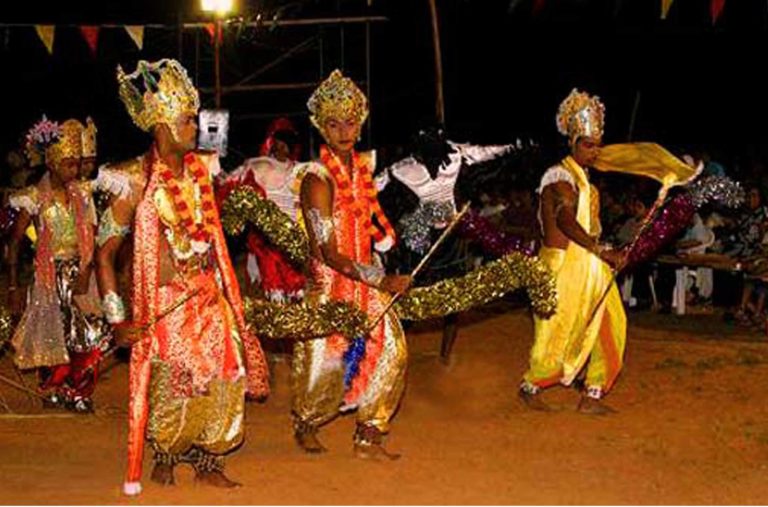
The main attraction of Chait Yatra is performance of Ram-Lila during this period. It starts on birthday of Lord Ramachandra i.e. Rama-Navami Tithi. It means, it begins on Chaitra Sukla Navami Tithi i.e. ninth day of bright fortnight in the Hindu month of Chaitra and ends on Purnima i.e. full-moon day of Chaitra. Thus, it continues for seven days. Popularity of Ram-Leela in a tribal dominated area during Chait Yatra reveals influence of Hindu culture and tradition. The organizers should be thanked for their commendable job of promoting this tradition.

Chait Yatra is not performed purely for public entertainment. One finds a myth-ritual performance relationship in this form of folk Yatra. This gives us an idea that, folk worship and cult of Rama are associated with ritualistic theatre form. Its basic function is religious and the event is normally festival and fair organized by the village community to propitiate Lord Rama, Lord Laxmana and Goddess Sita. Thus, we may say that traditional performing art in Bargaon is woven in the lives of rural population of Bargaon. Their subject matter is normally from the Indian mythology like the Ramayana. The incidents narrated or sung are from the lives of Rama, Laxmana, Sita, Hanumana and such other deities. Though, this is not a historical or social theme, it affects the social life very much.

It is difficult to ascertain when exactly this tradition has started in Bargaon. However, people of this area think that it began some three to four hundred years back. Time is all-powerful and invincible. Nothing escapes from its command and control. It lifts up anything to the peak of glory and grandeur. Also, it throws away anything into the dark of oblivion again. One and all are a mere puppet in the hands of time. Chait Yatra is also not above this universal truth.

Today, Chai Yatra of Bargaon has become a unique folk drama form with harmonious blend of folk and classical elements. In course of time, the lyrical grace has embraced this dance form. Many unknown poets have composed songs in different period of time. Consequently, the entire composition has taken the shape of a GitiNatya i.e. lyrical dance drama. In other words, the entire Ram-Lila is enacted in lyrical form. Time has, however, thrown these lyricists into the dark of oblivion. This is in fact the characteristic of a folk and tribal tradition where poet, writer and lyricist do not get personal recognition.

During Chait Jatra, there is a group of singers who recite and narrate these compositions. The main singer is a Brahmin by caste who observes certain rituals during Chait Yatra. Similarly, the character of Ramachandra is carried out by one Brahmin. He also observes certain rituals during the period of his performance. Female characters are executed by male members. This is also the nature of a folk tradition in West Odisha, where male members perform the roles of females. It has gained wider recognition as a folk drama and become one of the important regional folk traditions in West Odisha. Apparently, Chait Yatra is organized with the coming together of professionals with its mission of liberating the human spirit for a better tomorrow.

The popularity of Chait Yatra has grown over the years. One finds tremendous enthusiasm in Bargaon during this period. The fame of Chait Yatra attracts people from nearby villages and towns as well. Amazing eagerness and passion are noticed amongst the people residing in the villages within ten to twelve kilometers radius of Bargaon to witness this enchanting folk drama form.

This folk tradition has helped in preserving and disseminating our ancient Pouranic Hindu tradition and heritage among the tribal people in this area. Downward devolution of cultural elements of Ramayana Tradition (Great Tradition) and subsequent integration with the local tradition (Little Tradition) has taken place in Bargaon Chait Yatra. Constant interaction between the tribal and non-tribal people has occurred at the grass root level. In other words, Ramayana has been localized at Bargaon.

Chait Yatra begins at night and continues till the sun rise. Everybody enjoys the Yatra whole night. Frequently, people start approaching the village Bargaon from evening. One finds several males, females and children from neighbouring villages walking down on the serpentine roads leading towards Bargaon. Eagerness to reach the spot of Yatra is clearly noticeable on their faces. Excitement is more visible on the faces of children and young unmarried ladies. Besides Chait Yatra, it is the hat which attracts them more.

Chait Jatra of Bargaon bubbles with commercial activities. Various skills are used by the organizers to raise income. Village lands are auctioned to vendors who in turn do their business throughout the Jatra period. Under the veil of Chait Jatra, some people are found running tea stall, pan shop and the hotel business encroaching upon village and government lands. The typical rural hat or bazaar comes up on this occasion adds to the colour and glamour of Chait Yatra in Bargaon.

The cheap Sari, Dhuti, Lungi and Gamuchha, different colours and designs of Chudi (bangles), Sindur (vermilion), various kinds of inexpensive ornaments made up of brass, aluminium etc, low-priced child garments, plastic chappal and shoes, low-cost household utensils and such other items generally required in day to day life of the common people in the villages add to the colour and glamour of this rural hat. Piquantly, the biggest gainer of this Jatra so far has been this class of petty traders and businessmen. Several ancillary business also take profit on the occasion of this Jatra, like Pheriwala who sale ribbon, thread and the like, not to mention the Gudia i.e. singda, pakodi, bara, piaji, gulgula and bundi makers, publicity and make up materials manufacturers.

This is an occasion when young girls meet young boys. They select one another leading to marriage. This is an event when the villagers of Bargaon receive guests and relatives gladly. Wounded relationships are repaired and social ties are renewed. Old friends and relatives meet one another after a long time. Thus, this serves a social platform for unity. Though the origin of this lyrical folk drama is yet to be discovered, one point is clear that Ramayana cult has tremendous influence on this dance drama.

Dr. Chitrasen Pasayat lives at 152-Vijay Vihar, Nuagaon Road, Sishupalgarh, Bhubaneswar, Odisha-751002. E-mail: pasayatc@gmail.com

Letter to CM: Start single window system for paddy procurement

0

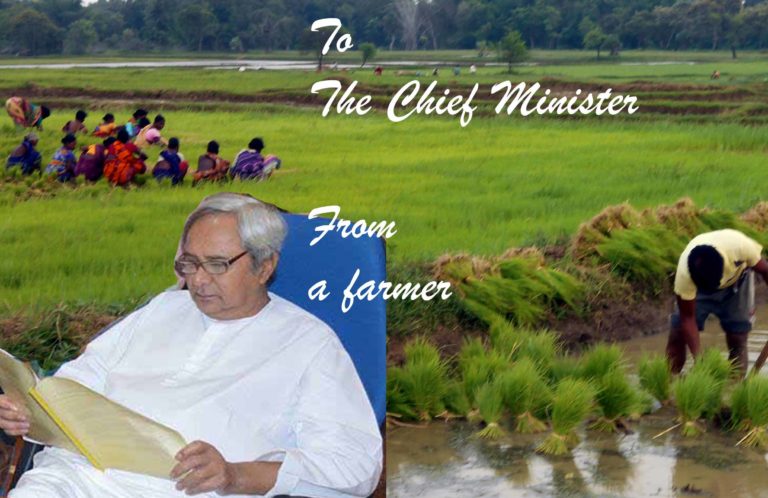
Dear Chief Minister,

Recently your government declared to procure 30 lakh metric tonnes of rice in the 2016-17 Kharif season beginning from November 1. And the farmers would get Rs 1,470 per quintal for common variety of paddy, as per the minimum support price fixed by the Centre. The rate of Grade-A variety of paddy is fixed at Rs 1,510 per quintal.

But, the question arises; will this move solve the problems of the farmers? It is a big NO. I understand, the cabinet met for the poll bound state eying the panchayat election in February next year. If you are really honest and interested in the development and welfare of the state then you need a huge reform to address the issues particularly of the paddy farmers. Do you have?

First of all, your government needs to have courage and intentions to take the reformative steps. The government should try to clad itself with the attire of the farmer once to realize his problems. A farmer engaged himself in his field since June/July to December to harvest the paddy crop. If we will calculate approximately, how much a farmer is investing in his field and what he is getting in terms, then the remnant is nothing but absolute loss. Still a farmer cultivate paddy without bothering whether he will face drought or cyclone.

Now, the government has declared Rs 1,470 per quintal. Does exactly he get the same amount of money per quintal of paddy? NO. Why?  The Odisha government, its minister, and the whole government machinery works against the farmer in such a way that, it is really a horrible situation!

The government declares a date to open Mandi, for example this year it is November 1st. But the farmer will not found Mandi on the fixed date. Farmer’s paddy will be lying on the harvesting ground under the open sky. He would fear of rain. He would be trying to sell it as soon as possible to the Mandi. He would be willing to have the money as early as possible to dispose off his loans and liabilities.

But knowingly there will be delay. Delay of one week to 10 days. Again there are many paper works and formalities which create opportunity for the officers for corruption. Name registration, P Pass, etc. These formalities are hurdles for the farmer to sell his paddy.

Now in desperate situation the farmer sells his paddy to the local middleman/businessman/or people of miller in very cheap rate in between Rs 700 to 800 per quintal. The purchasing officer of the Mandi, the Cooperative Society, miller, and minister of the concern departments all are collectively in a conspiracy against the farmers. They are just showcasing in newspapers and media. But in real sense a huge gap is there in implementation and declaration.

If the government has honest intention for the paddy farmers then I just have some suggestions:

  • Abolish all these critical machinery to procure paddy
  • Abolish interference of the miller
  • Start single window system
  • Farmer should be paid for his paddy instantly by cash/cheque
  • Farmer should not be asked to collect his payment from the miller
  • No need of Mandi. Panchayt can purchase/procure paddy
  • Panchayat employees can be given extra responsibilities of procuring paddy
  • Paddy procurement should go on throughout the year.
  • Panchayat godown can be used as the temporary storage house for paddy


This suggestive system will benefit the farmer as well as to the government. A farmer carry and travel the block headquarter to sell his paddy, which may range from 15/20 K. M. from his village. But the Panchayat headquarter can be located within 2/3 kilometre. It is easy and convenient.

Hoping for implementation.


Sincerely yours,

A drought-hit farmer

Youth met collector for toilets in Berhampur

0

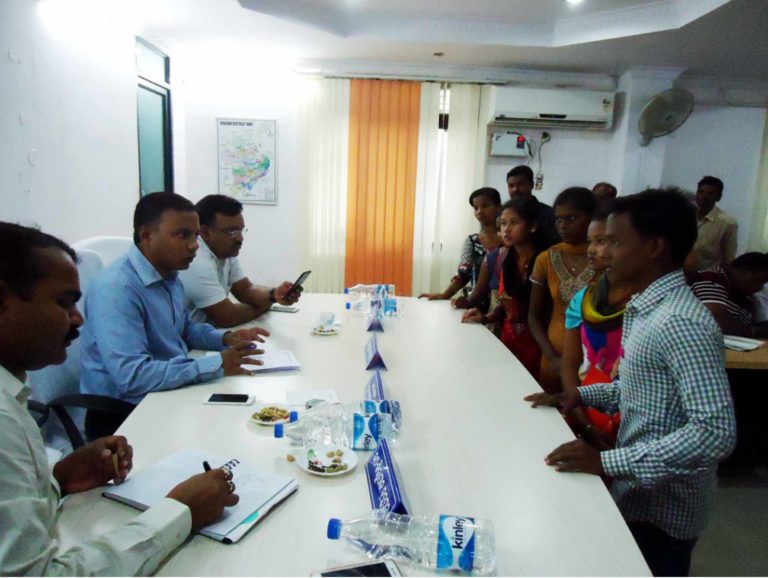
Berhampur, Youth Club members in slums like Raghupati Nagar, Lanjipalli Goudabandha, Dhimira Street and Phulasundari Street meet and submitted a memorandum to the district collector at the joint grievance to immediately provision toilets to the households under the Swachha Bharata Mission-Urban.

They highlighted the delay in approval for the sanction of toilets under SBM-U by BeMC, which were submitted since last 4-6 months. No action has been taken to speed up the process to construct toilets under this scheme.

As per the city sanitation plan, 2011 prepared by BeMC nearly 59.9% people in slums in Berhampur city defecate in open areas due to lack of household  and community toilets. As a result this creates an unhealthy and unhygienic situation in slums and reasons for many diseases for the children, adolescent and women in slums. There are only 24 numbers of public toilets and 10 of them are dysfunctional due to poor maintenance and unhygienic condition. Among the 117541 slums population only 3% households use community toilets. There is immense delay in construction of new public toilets make the city dwellers to defecate in open areas.

Young people in slums come forward to creating public awareness and engage with the city government officials to resolve the issues and to make slums open defecation free (ODF). District collector assured to resolve these issues within seven days.

Budha Dangar Jatra

0

by Chitrasen Pasayat

I have seen my friends in the JNU campus struggling to make a mark in life. I have seen persons appearing UPSC examinations to be IAS, IPS, IFS and other such officers. I have seen individuals appearing OPSC examinations to become OAS and OFS officers. I was not an exception. From the very beginning, I wanted to be an academician. So, I took my Ph. D. work seriously as a research scholar. It was an opportunity for me to visit many places. Of course, all the time, there is attraction about wandering all through the research work. It is alluring in the wilderness. It is more appealing in the undulating terrain. It is additional pleasing in the hilly areas. It is extra fascinating in the tribal areas. The researcher may have a fixed programme of visiting places. But the free air of the forest, profound stillness of mountains, attractiveness of landscape, pleasing sound of stream and jor (Small River) make the researcher thinks to go out of his scheduled plan.

Visit to the village Arda during Budha-dangar jatra was such an unexpected and surprising incident. On my way to this village by road, I took a break at a roadside dhaba to have a cup of ‘cha’ where a mini truck unexpectedly arrived. This surely was a local vehicle; a bit crowded as it was y people who mostly looked like villagers, going to Arga. Some of them got out to stretch their hands up and yanked. Some from the vehicle – ostensibly children – spoke aloud about what they imagined to be a great jatra ahead. The frenzy soon proved infectious and I too began thinking about the same thing.

Nature has ensured that the raison d’etre to Arda-Jarasingha remains enchantingly mysterious. I arrived at Arda to observe the Budha-dangar jatra during my research work on Patakhanda jatra in Jarasingha area. After a cup of tea in a tea-stall, which had come up on the occasion of jatra, I set out on a walk through the village road in the evening. The stone-shrewn path that snakes from the village to the shrine is not very noticeable. Yes, this way goes straight – an old man confirmed. At first glance, though the dusty street does not seem to take you to anything, but the ubiquitous hill and jungle.

‘Juhar Babu’, I heard a voice call out from an empty field where some old men were sitting. Soon I had a group of them walking with me, posing for photographs and narrating how divinities bringing social harmony. We ambled up the road and walked to the sacred space. They showed me the shrine of Budha danger. Everyone, from old to young boys and girls took a hand in trying to minimize my unawareness, vast as it was. In fact, entire village participated in the education of one so-called Delhi-educated and urban-grown adult. The cool mountain air, the setting sun glimmering in gold at the peak of Budha-dangar (mountain), the enthusiastic voices of the lovely children and beautiful ladies are among my happiest memories of this jatra. I felt as if I belonged there my home.

It may be noted here that, we are witnessing a kind of culture globalization. We watch the same news, hear the same music and sing the same song… In fact, we learn the same thing what we are taught through most powerful and all pervasive audio-video media of these days. When one’s cultural liberties are being stomped, it not only affects everybody but also affects the entire society. However, it is a matter of great satisfaction that, Budha-dangar jatra continues even today. There is the joy and thrill of watching this captivating tribal folk jatra in a lush environment.

The word Budha-Dangar is derived from two words namely ‘budha’ and ‘dangar’. ‘Budha’ means ‘an old man’ and ‘dangar’ means ‘a small hill’. Here, ‘budha’ refers to the deity and ‘budha dangar’ refers to ‘the deity residing in the hill’. Budha-dangar jatra is a ritual folk festival observed in honour of the deity called Budha-dangar.  The deity is a tribal deity. The ritual practices connected with the jatra are shared and owned by the villagers. Hence, it is a collective enterprise. Though tribal in origin, the deity is also worshipped by the non-tribal people of this area. This indicates ‘tribal – non-tribal interaction’. This suggests peaceful coexistence of tribal and non-tribal people in this area as well. Without any hesitation it may be said that, Budha-Dangar devta is the mark of unity and integration.

Common people believe that, Budha-dangar devta cures the mentally retarded persons and blesses the issueless couples to have children. Just like Pata-Khanda devta, this devta also symbolizes “growth”. In the first case, it means growth of mind as well as intellect. In the second case, it denotes growth of society. It is also believed that, when a person under the influence of any dahani, bhuta and preta comes in touch with the iron sikuli i.e. chain and the kurda or chabuka (made up of grass) of the deity, he becomes free from all these evil influences. Budha Dangar devta tries to express in his own way, for which a medium i.e. a barua / dehelia is required so that the message of the deity is given an intelligible form. It has taken hundreds and thousands of years for the people of Arda and this region to establish a communication system between human being and power superior to the human being. ‘Ulu ulu’, one from the crowd hollered when the barua appeared. The echo apparently expected came from the crowd. That did not stop some women besides me to parrot.

Budha-Dangar devta is so accepted and admired in this area that, he generates a center of attention. The deity draws people from the neighbouring villages and towns. Even people from the adjacent Chhattisgarh state visit this place on this occasion. Remarkably, this is also the time of Patakhanda jatra in the nearby Jarasingha village. The word Patakhanda is derived from two words namely ‘pata’ and ‘khanda’. ‘Pata’ means ‘chief’ or ‘main’ and ‘khanda’ means ‘sword’. Here, Pata-khanda refers to a deity. Consequently, people in general come with twin objectives to have a darsan of Patkhanda devta in Jarasingha village as well as Budha-Dangar devta in Arda village. However, this jatra is a bright example of tribal-non-tribal interaction in this part of West Odisha. It is a case in point to establish and show the social interaction and social integration.

Budha-Dangar jatra is an annual festival observed in the village Arda, which is under Deogaon Block in Bolangir district. Arda is situated five kilometers on Bolangir-Bandhpada road. There is a dangar i.e. a small hill named Budha-dangar near the village Arda. The literary meaning of budha is ‘old man’ and dangar refers to ‘a small hill’. The deity of this dangar is also known as Budha Dangar. Probably, the dangar is named after the deity, who is worshipped by the common people of this area. Previously, the annual festival of the deity was celebrated under the aid and patronage of the Jarasingha Zamindar. At the present time, it is celebrated by the villagers of the villages namely Arda, Kudasingha, Sirish and Kuturla on Aswina Purnami night i.e. at night of full moon day in the Hindu month of Aswina (September-October).

The image of the deity is a big stone, which points toward nature worship of the people of this area. Anthropologist and Sociologist may term it ‘animism’ and ‘Naturism’. The stone like image of the deity is situated near the foothill. For caste Hindus, it represents Lord Siva. Thus, the deity is sanskritised. It was essential because without which the caste Hindus would have not accepted the deity. It was also essential to maintain social harmony among them in order to avoid any kind of instability in the society on the ground of communal feelings. Jadha-jadhen, Kandhen-budhi, Jangal-chaprasi, Gram-devi and Mauli are the subsidiary or subordinate deities worshipped here. The deities are worshipped as per the Saiva and Sakta rituals. Budha Dangar is regarded as Lord Siva and he is offered belapatra, sindura, flower, duba, dayanamala, mandara flower, milk and coconut. Besides, he is also offered cake prepared by the dehelia i.e. sevayat or sevaka of the deity.

Among the subsidiary deities, Kandhen-budhi is offered animal sacrifice like kukuda, hansa, chheli, podh and para. Jadha-Jadhen also receives animal sacrifice like podh. It may be noted here that, the image of the deity Jadha-Jadhen is made up of Sal tree. Besides these two deities, the Chaurasi puja of the other subsidiary deities is performed under the nearby sahada tree. There is something about the silence of tribal and hilly areas. One does not wish to upset this atmosphere with any unpleasant sound like shouting or chattering without purpose. But music seems acceptable in during Budha-dangar jatra. On this occasion, a number of traditional musical instruments are played. These are dhol, nisan, muhuri, birkahali, and ghanti.

Would Budha-dangar jatra have worked if these musical instruments had been played by Brahmins? Would it have worked if the Brahmin priests uttered sanskritic mantras in the puja? Of course, it would not have. For a jatra of this type to seem authentic it must have people who seem like they belong to the environment. It may be noted here that, these instruments are played by specified caste people traditionally meant for this purpose. These castes were considered among the outcastes living outside the frame of the Varna system. Traditionally, they are treated as panchama varna or untouchables. I was reminded of this social reality during my study.

There is a myth associated with the origin of Budha-dangar devta. As per the oral tradition, there was a fight between Bastar and Patnagarh. Deities like Pata-Khanda, Biru-pani, Jena-budha, Dangar-budha etc participated in this war against Bastar to support the Patnagarh. Finally, Patnagarh won the battle. Budha-dangar was returning to Patnagarh carrying the PataKhanda (sword) on his shoulder. Since Budha-dangar was very old, it was difficult on his part to carry the Pata-khanda (sword) for such a long distance. So, he handed over the Pata-Khanda (sword) to the Pata-Khanda devta, who carried the sword to Jarasingha Zamindari. Thereafter, Budha-Dangar deity remained at a distance at a solitary place on the foothill of Budha-Dangar and guarded the fasal i.e. crops and jungles of this area.

It is evident that, this myth-narrative is shared and owned by the villagers of Arda and nearby villages and hence it is a collective activity. Since, such myth-narrative is a collective device it is anonymous. It is orally transmitted and passed on from one generation to the other. Its author or original narrator is unknown. Perhaps this is why; this myth-narrative has live beyond a single life time and is inherited as a traditional narrative. This myth-narrative is, thus, an end product but also a part of complex cultural process that are reflected in their expression. The community internalizes such narrative and it becomes a device to symbolically represent the community that owns it.

In this perspective, we may add one more point. The myth of Budha-dangar and Pata-khanda are similar to some extent. But, the myth of Budha-dangar has something of its own. It is similar in the sense that, both refer to the same historical war between Patna and Bastar. But, participation of local and indigenous deities like Pata-khanda, Biru-pani, Jena-budha, Dangar-budha in the battle is an added attraction of the myth associated with Budha-dangar. It may be said that, folk narrative like myth acquires two basic features namely ‘version’ and ‘variation’. Version is repeated retelling of an oral narrative or text. Due to repeated retelling in different times and different places and by different persons, automatically it creates variations in the text. It reflects the milieu under which the text is shaped, transmitted and accepted.

Alexander Cunningham (1884:64) has also mentioned about such an anecdote as follows. “The states of Patna and Bastar being coterminous, their chiefs were on hostile terms. Balram Deo, one of the Patna chiefs, having laid siege to the fort of Bastar, found that he was unable to take it. In this dilemma the chief began to worship Mauli, the tutelary goddess of the fort, who became propitiated, and said to the Raja that she would ensure his success if he would take her to Patna and worship her. The Raja agreed, and shortly after took the fort. On his way home, he established images of the goddess at various places. As she was brought from Bastar, the goddess is now generally known in Patna by the name of Bastarin Mauli”. Nevertheless, the war between Bastar and Patnagarh is a historical event.

Budha-dangar guards the fasal i.e. crops and jungles of this area as per the oral narrative narrated above. It means that, Dangar-budha is meant to maintain a harmony between the animal, forest and climate of the region. Such scientific knowledge is woven in Budha-dangar jatra. Perhaps this jatra, besides being providing amusement, has been used by the religious heads to spread this message. But this jatra has failed to convey such a noble message. So, Budha-dangar jatra has to re-orient itself essentially to educate the common people about this aspect of life. Thus, Jungle and climate have though played a significant role in settling the pattern of religious life of the people in this rural and tribal area and accordingly, there are fairs and festivals all round the year, people are unaware of this noble and scientific aspect of life. We cannot ignore the fact that, Budha-dangar jatra is an effective media of communication.

During such occasions, people sing and dance and celebrate their joys in different ways. Dangar-budha is such a traditional ritual festival which besides providing entertainment, has been used to spread religious message and message of harmony between the society and environment. It is woven in the lives of people in this part of West Odisha like the wraps and wools in a cloth. It may be noted here that, rising temperature and deforestation in the vast region threatens to destroy and imperil the livelihoods of tribal and rural people depending on jungles, forcing many to move from jungle to town. This jatra alone cannot save the forests. If we do not do anything, then the forests are going to be gone by the end of next decade and the impact of food security and livelihoods will be very significant.

There is a beautiful myth regarding emergence of Budha-dangar deity and origin of Budha-dangar jatra in Arda village. Previously, Arda area was full of jungles and wild animals. It was under the Jarasingha Zamindari and was within the jurisdiction of Patna kingdom. Pataneswari was the reigning deity of this kingdom. Budha-dangar was the samanta deity of Pataneswari. When Pata-khanda deity came to Jarasingha from San-Khemundi and wanted to settle there, then Patakhanda devta first served Pataneswari Devi and pleased her. After that, he requested Pataneswari Devi to give him a piece of jungle in Jarasingha to live. Also, he asked her patasindura and sripata. Pataneswari devi fulfilled his demands. Since then, sindura of the Pataneswari devi of Patnagarh and sripata or patakana of Samaleswari devi of Patnagarh are brought to Jarasingha village to mark the beginning of jatra of Patakhanda devta. After the completion of Pata-khanda jatra before the departure of Pata-Khanda devta to his abode at de-jhar, pata and sindura come for Budha-Dangar jatra. These are carefully kept in the Pata-khanda temple of Kudasingha village. In the evening, these are brought to the village Sirish and finally taken to the ‘Pitha’ of the deity near the Budha-dangar hill.

This reveals how local traditions are blended with each other. In fact, the local rulers and religious leaders have brought these two local traditions of Arda and Jarasingha together and united them which otherwise reflect the coexistence of two traditions and two communities in a larger society. While this is not to suggest that people concern for such jatra has increased, it must necessarily be acknowledged that participation of tribal and rural folk – be it in Budhadangar jatra or in Patakhanda jatra – now increase more than it could have imagined possible earlier.

It is a tribal festival of Kandha people. The Kandha priest is known as dehelia. This is a one night festival observed at night of Aswina purnami as discussed earlier. Before completion of this festival, patasindura is taken to the village Antarla where Kandul-budha jatra is observed. Thus, one finds a religious connection among the Pataneswari jatra of Patnagarh, Pata-khanda jatra of Jarasingha, Budha-dangar jatra of Arda and Kandul jatra of Antarla. patasindura of Pataneswari devi travels from Patnagarh to Jarasingha via Kudasingha, Sirish and Deogaon. This is an important characteristic of folk festival in West Odisha. Different deities and pithas are associated on such occasions. This helps peoples of different villages to have social and cultural interaction. This provides a common platform to diverse caste and tribal people, which fosters social interaction and social integration among them.

REFERENCES

Cunningham, Alexander (1884, reprint 2000), Report of a Tour in the Central Provinces and Lower Gangetic Doab in 1881-82, New Delhi: Archaeological Survey of India.

Dr. Chitrasen Pasayat lives at 152-Vijay Vihar, Nuagaon Road, Sishupalgarh Post Office, Bhubaneswar-751002, Odisha. Email: pasayatc@gmail.com


Children demand ‘toddler friendly’ amusement parks in Berhampur

0

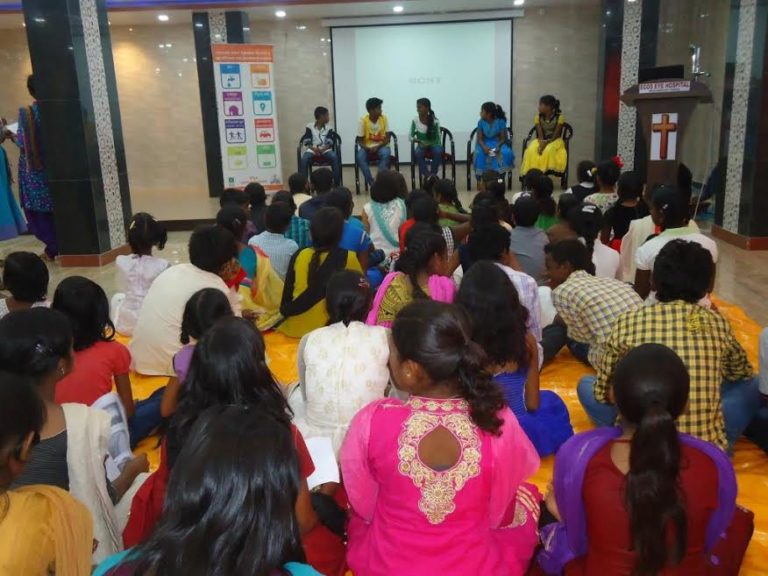
More than 100 children from 30 slums participated in the 25th Berhampur Children Federation meeting today held in conference hall at Ecos eye hospital in Berhampur. Focusing on the children’s park and the space available in the city for the young children living in slums, child leaders highlighted major issues, their right to play as per the United Nations Convention of Rights of the Child (UNCRC), condition of the children’s park in the city (child friendliness audited by child clubs) and also recommended to make all the upcoming children’s park ‘toddler friendly’ under the AMRUT scsheme of Berhampur Municipal Corporation.

Child leaders Shibani Behera of Lanjipalli Telegu Street Sruti Sahu of Raghupati Nagar anchored the child federation meeting and expressed their gratitude to the Commissioner of Berhampur Municipal Corporation and Secretary, Berhampur development Authority to listen to their demands to make necessary changes/development to the existing children’s parks child friendly in the city.

On the other hand they appreciate the steps taken by the BeMC, BeDA and the state and central government for the upcoming six new children parks under the AMRUT scheme in Berhampur city. They also recommended to make these amusement parks ‘toddler friendly’ and suggested the following points to be consider for the benefit of the young children in the city.

  • Take children’s views and respect their opinion before planning and during the construction of parks for children
  • To make children’s parks safe, healthy and hygiene (regular cleaning, cover open drains, boundary wall, clean toilets regularly, safe electricity and transformer, keep parks from crowded places, industries and hazardous places)
  • Avail clean and safe drinking water for children
  • Provision more and safe play equipments in the park for children
  • Make toilets and play equipments toddler friendly and create separate space for the toddlers for safe play
  • Make entry free for the poor and backward children and urban poverty
  • Provision of extra lights in the evening for safety of children
  • Berhampur Municipal Corporation and Berhampur Development Authority should allocate more budget for the maintenance of the parks.

Children’s resolved to meet various officers and planning department at BeMC and BeDA to convey their requirements and make the parks child friendly.

In this meeting Smurti Kumari Sahu, Mamali Das, K. Dipu, Puja Das, Papun Das and others members of Children’s federation presented and share their opinion.

Bali Jatra of Sonepur_Chitrasen Pasayat

0

Everybody has been shedding crocodile tears for the heritage locations in Odisha. Forget about individuals. Despite all the hype and hoopla by the Government over the development of heritage sites and tourism spots, most popular destinations of Odisha are gradually losing popularity. Temple town Sonepur is such a place. Like Varanasi and Bhubaneswar, Sonepur is celebrated for its temples. It is known for the river Mahanadi, its water and boat. It is recognized for fish, for Matha, for Malli flower and handloom textile. The declined trend is more likely associated with the intrinsic problems like poor infrastructure, marketing, bad condition of connecting roads and inability to gauge the need of tourists. Even the local people are not showing any concern to protect their heritage. Architectural treasures in Sonepur get vandalized.

Sonepur is situated on the confluence of two rivers namely the Mahanadi and the Tel. It is the headquarter town of Sonepur district, created in 1993. It is situated about 279 kilometers away from the state capital Bhubaneswar via Nayagarh and about 310 kilometers via Redhakhol. Sambalpur is about 80 kilometers, Bolangir is 50 kilometers and Boudh is 50 kilometers away from Sonepur. It is on the National Highway No 224.

One may find persons who do not believe in supernatural power. But, one cannot ignore the fact that, a ‘belief system’ on power superior to human being has always played a vital role in society’s survival and growth since time immemorial. One finds some visual ritual performances in Sonepur through which the idea or message of this power superior to human being is spread to others. During my research work an old lady said, “I wish for my children to visit Sonepur on this occasion and be a part of this tradition. The idea behind my desire is very simple. It is as simple as to bring back my children to the path of spirituality and repose their faith in religious beliefs”.

Sonepur has been the land of Shakti worship since time immemorial. Bali Yatra is an annual festival of Sonepur related to Shakti worship. It is celebrated in the Hindu month of Aswina (September-October) from Amavasya Tithi or Mahalaya (New moon day) to Purnami Tithi (Full moon day). It continues for 16 days. It is a folk religious festival where various nitis are properly planned and prescribed for different Tithis (days). On this occasion, the Barua represents the deity to whom the people worship. He moves from temple to temple and from place to place dancing vigorously with the beating of Dhol, Nisan and Ghant.

The literary meaning of Yatra is traveling. Different deities leave their temples during Bali Yatra and make journey to various places to be worshipped by the people as per the prevailing tradition. This is the reason that this festival is called Yatra. Our subsequent analysis reveals the fact that, Bali or animal sacrifice is the essential part of this ritual. Hence, this festival is known as Bali Yatra. Bali means sacrifice, which is as old as human race. The essence of sacrifice emerges from the belief that, the sacrifice brings gain to the sacrificers and their community. What is sacrificed losses itself by being slain. The loss of the sacrificed victim is somehow seen as bringing gain to the sacrificers. Every year, common people believe it a proud privilege to be linked with this significant traditional event of Sonepur. Nowadays, this yearly Bali Yatra has not only established itself as an accepted folk festival in its native land but also known as one of the appealing and attractive festivals in the neighbouring areas including Sambalpur, Bolangir and Boudh.

Bali Yatra is replete with stories of persons whose work has created and established Bali Yatra as an institution and furthered the growth and popularity of this Yatra. It is said that Bali Yatra started in Sonepur during the reign of Raja Madan Gopal Singh Deo (1635-1660), who was the first Chauhan Raja of Sonepur. He received Sonepur as his Bhai-Bhaga i.e. shares. Accordingly, Sonepur was created as a separate kingdom. When Madan Gopal left Sambalpur for Sonepur, he brought with him PataKhanda, DolaKhanda, PataMaheswari, Bhubaneswari and Bahuta Chhatra and initiated Bali Yatra in Samaleswari, Khambeswari and Sureswari temples of Sonepur. But as per the oral tradition, human sacrifice was prevalent during Bali Yatra in olden days. This reminds us the Meriah sacrifice of Kandhas of this area.

Prior to Chauhan rule in Sonepur, this area was under the Bhanja of Baudh. There were tribal chiefs of Kandha origin in Sonepur region. Sambalpur Raja Balaram Dev (1605-1630) defeated the king Siddha Bhanja of Baudh. As a result, Bhanja surrendered the Sonepur region, which was annexed to Sambalpur kingdom. Subsequently, his second grand-son Madangopal was made the Chief of this newly acquired territory of Sonepur (Senapati and Mahanti, 1971: 62; Sahu, 1985: 14).  In view of this, it may be suggested that, Bali Yatra was prevalent even earlier. However, Madan Gopal was the first Raja of Sonepur where he established a new chain of Chauhan dynasty.

It is pertinent to mention that worship of Khambeswari is believed to be the earliest form of Sakti worship in West Odisha. It is prevalent since fourth century. It is difficult to ascertain the exact time of worship of Khambeswari in Sonepur, which is considered to be an earliest seat of Khambeswari. Nevertheless, according to the noted historian B. C. Majumdar, the wife of Raja Rajsingh Deo had initiated this festival in Sonepur. Raja Rajsingh Deo had married the princess of Khemendi. The newly married wife of the king had brought with her the wooden image of Khambeswari and started the worship of the deity in Sonepur. Subsequently, Raja Rajsingh Deo had constructed the present Khambeswari temple in honour of the deity.

As it has been noted above, these three Sakti Pithas are the main centres of Bali Yatra in Sonepur. Role of Brahmin priest during Bali Yatra is insignificant and unimportant. On the other hand, function and meaning of non-Brahmin priests in this Yatra is noteworthy and worth mentioning. Yatra begins from Samaleswari temple on the night of Amabasya i.e. new moon day in the Hindu month of Aswina (September-October). The deity ascended through two non-Brahmin human beings i.e. Thanapati Barua Dangua and Keunt Barua.

The traditional musical instrument namely Dhol plays an important role. It is the Bharni-Par which is played at the time of ascending the deity through the Barua. The ritual continues amidst the high sounding beat of Dhol, Muhuri and Ghanta. The literary meaning of Bharni is pouring or transferring. Barua is the person who holds the deity in his body. The Barua becomes Bali after the deity appears in his body. In other words, the deity or the unseen celestial power is transferred to the body of Barua. Here the meaning of Bharni-Par lies. It causes to flow the divine power to the human body of the Barua. In other words, the deity ascends through him. When the deity appears in the body of Barua, at that time he loses his sense and acts according to the direction of the unseen force. Here he is addressed as Maa. People worship him (deity in the body of the Barua), ask him various questions to solve their problems and the deity replies them accordingly. It is said that Bali can foretell the past, present and future of the devotees on prayer.

The Brahmin priest hands over the KalaBauti Chhatar to the Keunt Barua, who carries it and leaves the temple. Thereafter, Thanapati Barua leaves the temple. It is believed that, if at that time the Thanapati Barua pulls the Chhatra carried by the Keunt Barua then the death of Keunt Barua is imminent. Such situation also indicates that Sonepur has to fact a lot of tragedies and misfortunes that year. When the Keunt Barua arrives at the palace, the deity leaves his body. Thanapati Barua sits near the Budharaja temple situated in front of the Sonepur palace. Samaleswari ascends him. One or two Buka (he-goat) are offered to the deity (Barua). In other words, the ritual of animal sacrifice is performed there and the blood is offered to him (deity). It is most surprising to see that the Bali drinks the fresh blood of the Buka i.e. he-goat just after its sacrifice. After that, the Barua returns to Samaleswari temple and the deity leaves his body at the twin poles (Juda Khamba) near the temple.

It is not out of place to mention that, the neighbouring districts of Boudh and Phulbani are Kandha dominated areas. Before 1993 i.e. the year of partition, Boudh and Phulbani were under one district administration named Kandhamal i.e. the highland of Kandhas. Kandha people worship a deity called Chhatar Bauti. She is portrayed as a terrified deity of Kandha society. If incited and provoked, she is supposed to be the cause of death in the Kandha community. Use of Kala (Black)-Bauti Chhatar and Dhala (White) Chhatar during Bali Yatra points out that, Bali Yatra is influenced by the tribal culture and tradition in Sonepur.

After the Amabasya ritual, Bali Yatra of Pratipada (first day), Dwitiya Tithi (second day) and Trutiya Tithi (third day) is called Nisa-Bali, because it is performed at mid-night. Nisha implies mid-night. In these three days, Samaleswari ascends the body of the Barua and visits the palace to be worshipped and returns thereafter at mid-night. At this time, a lot of curd is poured over the head of the Barua, who is found in the state of ecstasy.

Chaturthi Tithi is a significant day of Bali Yatra. On this day, the Barua collects sacred soil from the Khaul-Gad, situated near Sureswari temple. This niti is called Khaul-Phita. This Khaul-Gad is located under a tree near the pond of the temple. At night, animal is sacrificed here. This is known as Khaul-Bali. It is a Gupta-Niti of Bali Yatra in Sonepur. It is performed in secret and very confidentially. General public are not allowed to witness this ritual. Only the non-Brahmin priest called Khambeswaria Purohit and Khaul-Phita Dangua are present on the spot when this niti is performed. When the Khaul-Phita Dangua completed the ritual, he shouted three times. Hearing his shout, his wife sacrificed a Boda (he-goat) in her house at once. It is believed that, any deviation in this ritual might cause death of the Barua. However, Barua collects the soil in three earthen Kundi and takes to Sureswari temple. In the temple he becomes senseless and the deity leaves her body. Then animals are sacrificed and Kundi-Puja is performed. It may be noted here that this soil is used during next year’s Bali Yatra.

As it has been mentioned above, rituals are performed at Khaul-Gad. Animals are sacrificed there. Blood sacrifice is the integral part of this ritual. The literary meaning of Gad is hole. Khaul-Gad represents female sex organ. As Linga represents Lord Siva in its uniconic form in various Saiva Pithas Khaul-Gad represents Sakti at this place. In other words, Sakti in this form is worshipped at Khaul-Gad. It is pertinent to mention that, in Sindhekela of Titilagarh sub-division and in Khariar the deity Duarseni is worshipped in such form i.e. hole. Similarly, in Jena-Khal during Chhatar Yatra of Bhawanipatna Manikeswari is worshipped in this form. So, it may be said that, in some parts of West Odisha Sakti worship in the form of Yoni worship is prevalent.

There are numerous myths and legends associated with Khaul-Gad. Sonepur is viewed as the land of Parasuram. The Khaul-Gad under study is supposed to be the Entudisala i.e. birth place of Parasuram. It is also said that, Parasuram killed his mother Renuka on the instruction of his father. Later on, he repented a lot and performed a Yajna. Khaul-Gad is understood to be that YajnaKunda. There is a stone image of Abalokiteswara near the Khaul-Gad. People identify and recognize it with Parasuram. It is also believed that, Parasuram raised his war against the Kshatriyas because they became very unkind and cruel. He fought 21 times and annihilated the Kshatriyas from the earth. Thereafter, he threw all his Pothi in the Khaul-Gad. As per the other oral narrative, Parasuram performed a Yajna here and on his mother’s instruction he installed Sureswari Devi here. So also, this is famous as RenukaPitha.

The ritual of Panchami Tithi is important in the sense that it is known as Ghoda-Panchami. Previously, Sonepur Raja used to perform puja in his Ghoda-sala, because horse was not only an important war instrument but also an imperial mode of transport. So, for the safety as well as growth of this wealth, Sonepur Raja used to offer ritual to the deity on this occasion. As per the tradition, the Barua leaves Samaleswari temple and visits the palace at night. After the ritual of animal sacrifice, the deity i.e. the Barua returns to the temple. The ritual of Sasthi Tithi is also very significant when the Barua goes to the palace at night and the ritual of animal sacrifice is performed. Sodasa Puja begins on Saptami Tithi. Earlier, Bhubaneswari and Bana-Durga were also propitiated by Sonepur Raja. Consequently, as per the tradition the ritual of animal sacrifice is performed at the palace before Bhubaneswari and BanaDurga at night of Saptami Tithi.

Rituals of Astami Tithi are imperative. The ritual of animal sacrifice is performed in the temples of AstaChandi (Sureswari, Narayani, Bhagavati, Samaleswari, Khambeswari, Ramachandi, Dasamati and Bimalakshi) of Sonepur. Also, the ritual of animal sacrifice is performed at ChariNala (SashiSena Tikra, RanaRahu Tikra, HulBhita Tikra and Sulia Tikra), ChariKhala or Gada (ManeiGad, DaneiGad, MahiGad and Kanhei-Gad), Chari-Bata (Khambeswari Bata, Kulipada Bata, Budharaja Bata and Samalei Bata) and Chari-Ghata (Raj Ghat, Gouri Ghat, Kadamb Ghat and Samalei Ghat) of Sonepur. Sonepur Raja used to perform the ritual of animal sacrifice in these places for the safety of Sonepur.

Rituals of Navami Tithi are also very important. Mahakali Devi spends this day with Samaleswari Devi in Samaleswari temple and returns thereafter. Bali Yatra of this night is known as Maha-Bali or Khambeswari Bali. Khambeswari temple is the main attraction of this ritual. At night, Khambeswari Devi ascends the Barua. The ritual of animal sacrifice is performed and then the deity (Barua) visits the town. At the door of almost every household, the owner greets and washes the feet of the deity and offer puja, even animal sacrifice. Then the deity returns to her temple where the Barua loses his sense and the deity leaves his body. After sometime, the deity ascends the Barua again and the ritual of animal sacrifice is performed. There from, the deity goes to the temple of Sureswari where the ritual of animal sacrifice is performed. Then the deity goes to Samaleswari temple where also the ritual of animal sacrifice is performed. From there, the deity goes to the palace where her feet are washed at BaliChaunra and the ritual of animal sacrifice is performed. Then the Barua returns to Samaleswari temple where he becomes senseless and the deity leaves the body of the Barua or Dangua.

On Dasami Tithi, Dasahara Bali is organized in the temple of Samaleswari. This is known as Maidhania Bali because it is performed in the noon. On this day also, Barua visits the palace with the two Kala-Chhatras final ritual is performed on Aswina Purnima i.e. on the full moon day. At night, Puni Bali otherwise known as Jaunli Bali or Nisha Bali is organized. Mahakali is worshipped on this occasion. As per the tradition, the deity i.e. the Barua visits the palace where Podh or Mahisi Bali i.e. buffalo sacrifice was once prevalent.

Once upon a time, the Gauntia i.e. the headman of the village Sakma and his family members were performing the role of Barua on the occasion of Bali Yatra in Sonepur. At that time, he was greeted in the Samaleswari temple and taken to the palace with a grand procession. Traditionally, they were also enjoying free lands of the village Sakma. However, time has changed. People have recorded the religious property in their names. The people of Sakma are also reluctant to perform the role of Barua now-a-days.

In this context Dr. P. K. Chaulia, former Collector of Sonepur once told me that, when he was the Collector of Sonepur in 2005 the traditional Baruas of Sonepur did not want to perform the role of Baruas on the ground that, they did not want to drink the blood of animals anymore. So, they were reluctant to act as Baruas. It clearly shows the sign of change from inside.

However, in course of time, the management of the temples in Sonepur is taken over by the Endowment Commissioner. Limited funds provided by the Government on this occasion are not sufficient to meet the expenditure of such a grand festival. There is no denying the fact that, today it is simply difficult to organize Bali Yatra in Sonepur without public support and their patronage.

Barua is an important character of Bali Yatra in Sonepur. His most impressive feat is perhaps his balancing act. Besides being the hero of Bali Yatra, he is also the mouth-piece of the deity. He represents the deity. In other words, Barua symbolizes the deity. So, Barua though male by sex is addressed as Maa when the deity appears in his body. Thus, different deities in the human form known as Barua or Kalisi come out of the temple once in a year and travel to different places like Sonepur palace and temples of other deities where certain rituals are performed. Notably, Chhatars are also carried with Baruas. Thereafter, the deities in the appearance of Barua return to their respective temples. The literary meaning of Yatra is traveling. For this reason, this annual festival is called Bali Yatra.

Once, Buddhism spread in this area. The Queen of Sonepur Lakshmikara propounded SahajaYana and popularized this stream of Buddhism in this area during ninth century. She is regarded as one of the traditional 84 Siddhas of India. Subsequently, during the Hindu revival movement Saivism with Saktism flourished in medieval period. Perhaps, Tantrik Buddhism and Tantrik Saivism with Saktism have influenced the activities of Baruas of Bali Yatra of Sonepur. Means i.e. Sadhana of doing this are called Tantras. By pronouncing the right formula i.e. Mantra in the correct manner or by drawing the correct magical symbol i.e. Yantra, one may force the deity or superior power to appear in his body.

It appears that, the Barua of Bali Yatra hypnotizes himself. It appears to be a magical mysticism. For some, this is a higher form of Yoga, when the Barua is completely anaesthetized. It is believed that, Bharni Paar of Dhol and devotional songs with a tantric overtone in Malashree Rag on this occasion takes the Barua from a state of consciousness to the state of meditation and finally that of Samadhi. Here lies the meaning of the word ‘Bharni Paar’ of Dhol. ‘Bharni Paar’ is a specific beat of Dhol (drum) which pours or transfers the deity into the human body i.e. Barua. The chorus creates a breathtaking and thrilling sensation among the devotees who congregate from different areas. But it had generated a sense of fear in me.

It is interesting how the elite of the society mock and scorn the Bali Yatra tradition, because it does not fall inside their acceptance parameters. This is not to eulogize and praise Bali Yatra as the best form of ritual dance. Or even to criticize that, it is a cruel and heartless form of ritual practice. This is to say that, Bali Yatra is as good as a ritual dance incorporated with the traditional ideas of Tantra, Mantra and Yantra when the Barua does not feel any pain and physical exhaustion during his performance.

Hundreds of people assemble near the Sureswari, Khambeswari and Samaleswari temples and near the Sonepur palace on different events of Bali Yatra and witness this rich folk festival of Sonepur. In fact, the entire Sonepur feels the vibration of Bali Yatra right from the beginning of Aswina. Notably, Sureswari is the reigning deity of Sonepur and Samaleswari is the presiding deity of Sambalpur. Khambeswari is the most popular deity of neighbouring Kalahandi, Boudh and Phulbani. Their participation in Bali Yatra indicates that since long, Bali Yatra has not only entertained the people of these areas but also acted as an emotional bond of unity among them. It is an instrument of social harmony in a bigger and larger society. Bali Yatra creates an environment by facilitating people of all caste and tribe to develop emotional attachment. It creates a greater place to work and foster better social awareness.

It is said that, once upon a time human sacrifice was prevalent during Bali Yatra. As per the tradition, when the ex-state was under the tribal rulers human blood was offered to the deity. Every year, the Barua sacrificed during Bali Yatra. It reminds us the famous Meriah sacrifice a long time ago prevalent among the Kandhas of neighbouring areas. As per the Meriah custom, the Kandhas never sacrificed a Kandha. They used to kidnap a non-Kandha boy from the plains. The boy lived in the Kandha village as a very honoured guest. He used to get plenty of wine, whatever food he wanted and even had the company of any Kandha girl he required. Naturally, he did not try to run away from the place. On the day of the sacrifice he was so drunk that he was completely anaesthetized. Portions of his body could be cut away without feeling any pain.

Time has changed. In due course of time, severe form of blood sacrifice i.e. human sacrifice has been stopped and animal sacrifice has been replaced. It is believed that this transformation has come during the British Raj when the practice of Meriah sacrifice i.e. human sacrifice was ruthlessly suppressed and curbed by John Campbell during December 1837 and January 1842 in the adjacent Boudh-Kondhmal areas. In order to expedite the suppression of human sacrifice, the Governor General in Council also decided to establish a cohesive agency including all Kandha areas under an agent directly responsible to the Central Government. It was known as Meriah Agency which was established in July 1845. Captain S. C. Macpherson was the first Agent for the Meriah Agency, who took over the charges in December 1845.

As mentioned earlier, the traditional Baruas of Bali Jatra have also expressed their dissatisfaction over this bloody ritual. Even once a group of activists campaigned against animal sacrifice during Bali Yatra. These people believe that, many people are mute spectators to this bleeding ritual practice. They think that, even the social organizations and Government agencies working against such rituals do not seem to bother. So, conscious citizens should take up this issue. But wait, let us stop here and think. In every Sakti Pitha it is happening in the month of Aswina and Chaitra. This happens every day simply because these innocent creatures are not claiming their right to live. They do not have voice and strength to do so.

Let us, however, not wonder who is innocent and who is guilty, for the law professes to be doing that already. Let us not pronounce Bali Yatra is a sick tradition because it makes little sense and brings us no closer to any concrete conclusion at the end of it. What we want to say is how naked this tradition is in front of us. It is truthfully a real show, a reality show for the masses. We cannot help it, simply because it is an essential ingredient of human nature and, we believe, at least in this case, that we are human. We are physically superior to these animals and they are helpless even to save their lives. Minus this part of animal sacrifice, every thing seems to be all right.

During my research trip to Sonepur on the occasion of Bali Jatra one Pasrawali told me, “Festival is for celebrations, not only spiritually but also materially. It is the time to enjoy things and acquire things. There is no denying that, the intensity of celebration is unparalleled particularly during Bali Jatra in Sonepur. What you are talking about ‘commercialization’ is absolutely correct. But, it is not a new phenomenon; it was there earlier too. We cannot say that, this is only the age of ‘commercialization’. Yes, such event always and certainly brings me an opportunity to earn more”.

One of the great disasters of post independent India has been the absence of royal patronage to Bali Yatra. However, there is no denying the fact that, common people extend their patronage and support this festival once a year. Unquestionably, the inheritance of celebrating Bali Yatra and making this festival more popular are the sacred responsibilities of the general people of Sonepur at large. Bali Yatra is organized under the guidance of the District Administration. The number of animal sacrifice has been reduced to a great extent. Common people have left no stone unturned to achieve this feet. They have been devoting themselves to keep this century long tradition alive.

It is pertinent to mention that, Sonepur is a temple town just like Bhubaneswar, the capital city of Odisha. The Kosalanandam Kavya, a work of seventeenth century declares Sonepur as another Varanasi with its numerous sacred shrines of Siva and Parbati. Regrettably, the spirit of heritage tourism has not reached to Sonepur till date. Sonepur is finding it tough to lure travelers partly due to accommodation problem. However, if one wants to take family on a holiday, please spend some quality time while traveling in this place.

REFERENCES

Barik, Sarmistha (2009), “Bali Yatra of Sonepur”, Odisha Review, Vol. LXVI, No.2, September, pp 160-162.

Pasayat, C. (1998), Tribe, Caste and Folk Culture, Jaipur: Rawat Publications.

Pasayat, C. (2006), “Sonpurara Bali Jatra” (in Oriya), Souvenir, Subarna Utsav-2006, Subarnapur: District Council of Culture, pp.71-76.

Pasayat, C. (2008), “Bali Jatra” (in Oriya), Souvenir, Lok-Mahotsav-2008, Sambalpur: District Council of Culture.

Sahu, N. K. (1985), Veer Surendra Sai, Department of Culture, Government of Odisha.

Senapati, N. and B. Mahanti (1971), Sambalpur District Gazetteer, Cuttack: Odisha Government Press.

Senapati, N. and N. K. Sahu (1968), Bolangir District Gazetteer, Cuttack: Odisha Government Press.

Senapati, N. and D. C. Kuanr (1983), Boudh-Khondmals District Gazetteer, Cuttack: Odisha Government Press.


Container seized carrying cattle

0

Bargarh police has seized a container truck No HR 38N 7340. The truck was traveling from Saraipali, Chattisgarh to Bhadrak. It was carrying 5 dead cattle and 29 living cattle illegally.  The Bargarh police have detained two people, Munir Sheikh and Nawab Ali in this connection.