Tuesday, April 28, 2026
Home Blog Page 57

Corruption in Rajiv Bhawan in Buromunda, Gaisilat

0

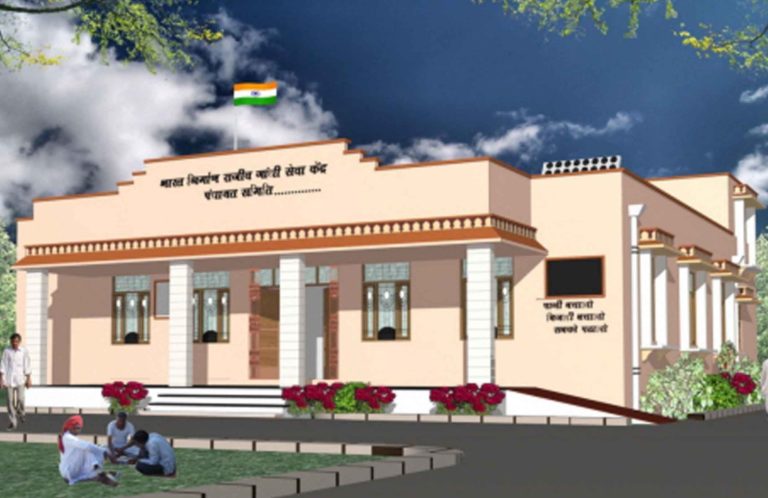
The Rajiv Gandhi Seva Kendra of Buromunda panchayat under Gaisilat block in Bargarh district was handed over in 2012 February. When the building was handed over, it was partially completed. Only the rooms and building portion was complete. Two rooms with a veranda and a toilet was complete. Fans and electrification wearing is complete. Exterior Colour paint is complete but still so many things were not complete while the building was inaugurated and opened for public.

It is been 5 years now and one term of the elected Sarpanch, Samiti members, and Chairman etc are going to end. But according to the project proposal the Rajiv Bhawan is incomplete with toilet, over-head water-tank, Air conditioner (AC), Boundary wall, electric connection, etc.

As per the sources approximately 7 lakh 90 thousands have been used out of the total allotted budget.

Mining rejected in public hearing at Putka

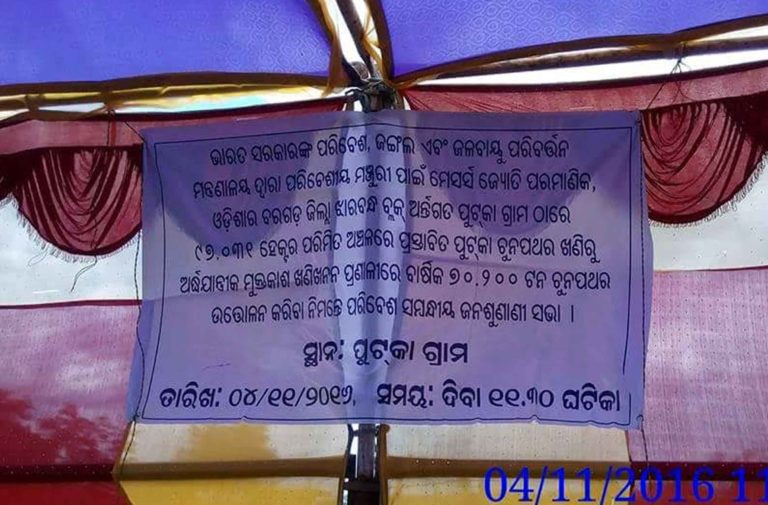
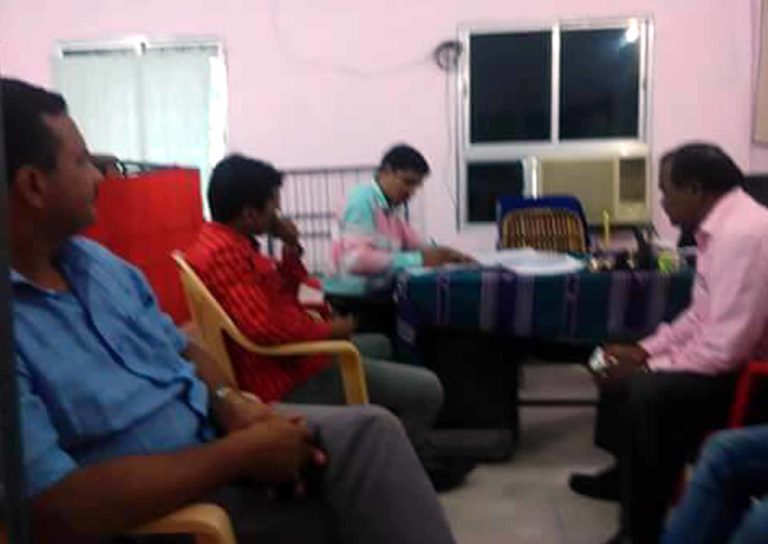
A public hearing meeting was held at Putka village of Jharbandh block in Bargarh district on 4th November 2016 at 11.30 AM. The public hearing was aimed to achieve environmental permission by M/S Jyoti Parmanik from Ministry of Environment, Forest and Climate Change, Government of India.

According to the report the local villagers of Putka rejected the offer and denied the company to extract lime stone from an area spread over 97.031 Hactre. The company was aiming to extract by the half mechanical open sky mining method with an annual target of 70.200 ton lime stone.

Opera shows in Kendubhata of banned Bargarh district

Though a ban ordered has been imposed throughout Bargarh district to stage opera. Still posters of Baneswari Opera were found in walls and local buses. According to the poster, Baneswari opera will perform from 10th of October to 14th of October at Kendubhata village of Gaisilat block.

A ban order has been issued for staging opera in Bargarh district. Staging opera for week long for professional reasons are not allowed in the district. This ban was imposed because Bargarh district often face crisis like farmer suicide and drought. And Bargarh has registered highest numbers of farmer suicide in last session. Considering all these factors the ban has been imposed.

Generally a small opera group of low grade charges around 1 lakh 50 thousands per night and it generates approximately 3-4 lakhs per show.

As the sole source of revenue of the people are paddy and cultivation. And more than 60% people lives below poverty lines. So it is not a good idea that opera should take away money from such poor people. Opera shows will hampr the economic conditions of the people. The locals are against it.

Immediately the administrations and local political will powers and informed intelligentsia should act on it.

Vigilance raid Paikmal tehsiladar

0

The vigilance of Bhubaneswar division has raided at the residence of Paikmal tehsildar Jankinanth Mishra. The vigilance has found assets of approximately about 1 crore 40 Lakh 97 thousands. The vigilance has file a case in the name of Jankinath for keeping assets more than his income. The vigilance has started further investigation regarding it.

Kalasi Yatra

0

Kalasi Yatra is observed annually on Kartika Sukla Ekadasi Tithi i.e. eleventh day of bright fortnight in the Hindu month of Kartika (October-November). In this month, the talk is more about the Kalasi Yatra in different parts of Boudh. The emotional interest is clearly visible on this subject. Dhol, Muhuri, Nisan vibrate the occasion. People start feeling the beat and throb of these traditional musical instruments right from the beginning of Kartika. Deities in the form of Barua or Kalasi dance to the tune of these traditional musical instruments of West Odisha. Deities are invited in the Abahani / Gauni songs of Dhunkel.

Kalasi Yatra of Boudh is one of the attractive Yatra of West Odisha. It is observed in the month of Kartik as mentioned above. Different deities ascend in the bodies of human beings, who are called Barua or Kalisi. The literary meaning of Barua is the person who bears the unseen power in his body. When the deity appears through human beings, it is also called Kalisi. Since the Kalisi participates in this Yatra, it is perhaps known as Kalisi or Kalasi Yatra.

On previous night i.e. at night of Dasami Tithi (tenth day), the Barua with an empty “Kalasi” (earthen pot) first goes to the nearby river or pond (Pokhari), take bath and purifies himself. Then he fills up the Kalasi and proceeds to the nearby Siva temple to perform the ritual of Deul-Bari. When the Barua as Kalisi advances to Siva temple dancing on the way, this is called “Debta-Madi”. It means the Devta or deity is going. The non-Brahmin priest known as Deheri or Dehuri and others accompany the Barua with Chhatra and Bairakh.

The word “Deul-Bari” is derived from two words namely “Deul” and “Bari”. Deul refers to temple and Bari means Barana i.e. greetings. In other words, the meaning of this ritual is invitation to the temple. The Barua goes to the Siva temple and bathe the Siva Linga or pour water of the Kalasa over the Linga. It means that, Lord Siva takes bath. Next, he collects Paduka in that Kalasi and seeks the permission of Lord Siva to carry out the Kalasi Yatra. The Kalasi or Barua returns with the Paduka-filled Kalasi to the Kalasi-Kuthi and keeps it near the Asthana or seat of the deity. Here Kuthi refers to a chamber where the deity resides. This Kalasi is worshipped. In some places, Baruas go to the Siva temple for Devta-Bari ritual with a grand procession. Dhol, Nishan and Muhuri are played in the tune of Malashree Rag and Dalkhai Rag to make the Kalisi dance all through the way to Siva temple. Since the deity travels in human form, it is known as Yatra.

This Kalasa or Kalasi is understood to be the Garbhasaya (womb). In other words, Kalasa is the symbol of Garva and the Paduka of Lord Siva is considered as Reta. As per the folk faith and belief, village deity is regarded as Mata (mother) or the form of Sakti, whereas Siva Linga is considered as Pita (father) or Purusa i.e. the symbol of male. Due to the significance of Kalasa in this Yatra, it is perhaps known as Kalasi Yatra. It is also said that Suva Kalasa is the Manasi Kanya (dream daughter) of Goddess Parvati. The word Kalasi is supposed to be derived from the word Kalasa.

Next day evening i.e. in the evening of Ekadasi, the main Yatra begins. Dhunkeli is played in the Kalasi-Kuthi. Dhunkeli is a musical instrument made up of one empty earthen pot (Handi), covered with one Kula and bamboo made bow (Dhanu). It is played with the help of an iron rod. Dhunkeli is significant in the sense that, it is played to invite the deity. On this occasion, birth episode of the deity (mother goddess) is recited in a special tune. It is composed in Saptama Swara. In this way, different deities namely Bana-Durga, Hanumana, Durga, Bahuti and the like are invited through Abahana songs and these deities appear through Baruas. They come out to the streets and dance throughout the night in the tune of Dhol, Nishan, Muhuri, Timkidi and Luhuti.

There is a myth prevalent about the origin of Dhunkel music and Kalasi Yatra. Once, a king drove out a notorious (Kutila) Brahmin from his kingdom. The Brahmin left the kingdom for an unknown destination begging on his way. One evening, he arrived in a jungle area. He borrowed a Patli (small earthen pot), one bamboo made “Kula” and fire from a Kandha family. He cooked the rice. Thereafter, he went to sleep in the veranda of the house of the Kandha. But he could not sleep. So, he took the coal from the hearth and made figures of some deities like Bana-Durga, Durga, Bahuti, Hanumana, Maheswari etc. on the mud wall of the house of the Kandha. After that he kept the Kula over the Patli (small earthen pot) and then kept the Dhanu (bow) over it and started playing it with the help of a Chatu (stick like cooking utensil made up of iron) and started singing.

After sometimes, interestingly, the deities painted on the wall appeared before the Brahmin and blessed him. It was Kartika Sukla Dasami Tithi. It means, the next morning was Kartika Sukla Ekadasi Tithi. Brahmin returned to his kingdom and propagated the Mahima (glory) of the deities every where. Since then, people have been celebrating this Yatra on Kartika Sukla Dasami and Ekadasi Tithi in different villages of Phulbani, Boudh, Sonepur and Bolangir and other parts of West Odisha. In the evening of Kalasi Tithi, a number of Baruas or Kalasis come out from the Kalasi-Kuthi and dance to the tune of Sulah-Bharni music.

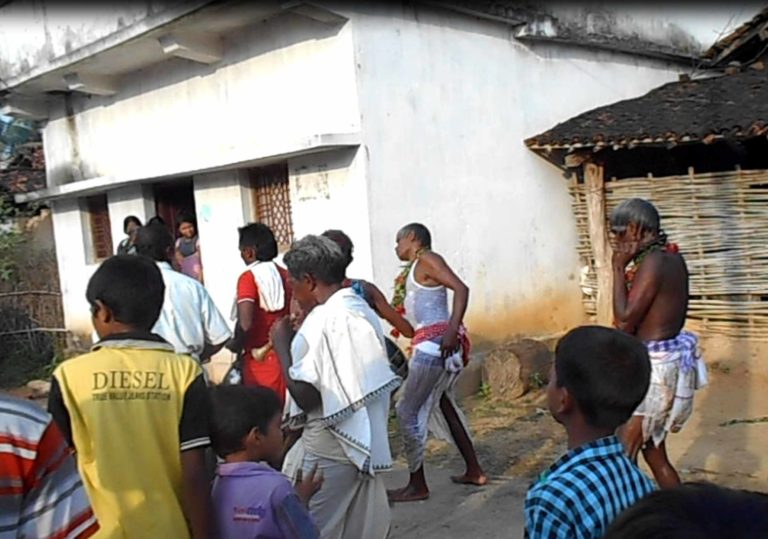
On the occasion of this Yatra, the Baruas or the Kalisis perform different activities to prove the existence and power of the deities. They jump into the river or pond and collect Baula (mango flowers), Amba-Kasi (unripe mango), Tala etc., which are generally not available in the winter season or in the month of Kartika. In some places, the Baruas or Kalisis walk on fire, sit on the thorns or iron nails, and rub his body with Bichhuati with Mandara flowers and Dahana. These activities are beyond the capacity and power of ordinary and normal human beings. In some places, they beat themselves with iron rod. Generally, they are decorated with Ghagdi, (Ghul-Ghula), Ghungura, Kajala, Sindura to make them more attractive and eye-catching. All these dramas are performed by the Baruas and Kalisis just to justify the power of different deities placed in the Kalasi-Kuthi and to create faith among the common people.

Next day i.e. on Ekadasi Tithi, this Yatra is accomplished. These Devtas or Kalisis travel on the village streets dancing from door to door of the village. People lit Jagara after ritual with flower, arua-chaul (sun-dried rice) and pour curd over the heads of these Baruas. From the activities of these Kalisis one can identifies a deity. For example, the Kalisi with Hanuman deity is found jumping here and there. Even this Kalisi climbs to the trees in the courtyard of different households. Small children enjoy this scene very much. Then they go to the pond or river, take bath there and return to the Kalasi-Kuthi. Dehuri or Jhankar make them pure throwing some water from the Kalasi over their bodies. Then they are supposed to be free from the influence of the deities. Though the significance of Lord Siva and his Paduka are realized in Kalasi Yatra, Lord Siva does not appear through the Barua or Kalisi.

Palsaguda, Junani, Charbhati, Gudvelipadar, Manamunda, Malik-kud, Sirmal, Tentelkhunti, Charichhak, villages near Puruna-Katak, Janhapank, Girasingha and villages near Baunsuni are some important places where Kalasi Yatra is still celebrated in a grand and impressive way. In fact, the meaning of Kalasi Yatra lies in Kalasa and Kalasi.

Dr. Chitrasen Pasayat lives at 152-Vijay Vihar, Nuagaon Road, Sishupalgarh, Bhubaneswar-751002, Odisha. E-mail: pasayatc@gmail.com


Indira Awas sold at Rs 15,000 in Gaisilat, Bargarh

0

Gaisilat block of Bargarh district is considered as the one of the most corrupt block of Odisha. The Bargarh collector often cites it as the false bill block.

As per the sources, Indira Awas are distributed to unfit people with Rs 15,000/- by the vice chairman of Gaisilat. The Vice Chairman distribute it to his own people as if like selling with a meager Rs15,000/- each. Whereas the real beneficiaries are not getting the benefits of the government scheme. Indira Awas Yojana is basically meant for rural poor who are living below poverty line. Many people who are not BPL (below Poverty Lines) have houses in the Indira Awas scheme. Even in the constructed houses, the owners have not installed any board so that people could not recognize it. But according to close sources many such constructions have been identified as houses under Indira Awas scheme. An RTI has revealed that one such example is the house of Sudhir Behera aged 35 S/O Shakti Prasad Behera of village Buromunda under Gaisilat block.

Benefits of Sex

0

Improved sense of smell: After sex, production of the hormone prolactin surges. This in turn causes stem cells in the brain to develop new neurons in the brain’s olfactory bulb, its smell center.

Reduced risk of heart disease: That by having sex three or more times a week, men reduced their risk of heart attack or stroke by half.

Weight loss, overall fitness: Sex, if nothing else, is exercise. A vigorous bout burns some 200 calories.

Muscular contractions during intercourse work the pelvis, thighs, buttocks, arms, neck and thorax. Sex also boosts production of testosterone, which leads to stronger bones and muscles.

Reduced depression: Sexually active participants whose male partners did not use condoms were less subject to depression than those whose partners did.

Pain relief: Immediately before orgasm, levels of the hormone oxytocin surge to five times their normal level. This in turn releases endorphins, which alleviate the pain of everything from headache to arthritis to even migraine. In women, sex also prompts production of estrogen, which can reduce the pain of PMS.

Less frequent colds and flu: Individuals who have sex once or twice a week show 30 percent higher levels of an antibody called immunoglobulin A, which is known to boost the immune system.

Children show the way for a safe Deewali in Berhampur

0

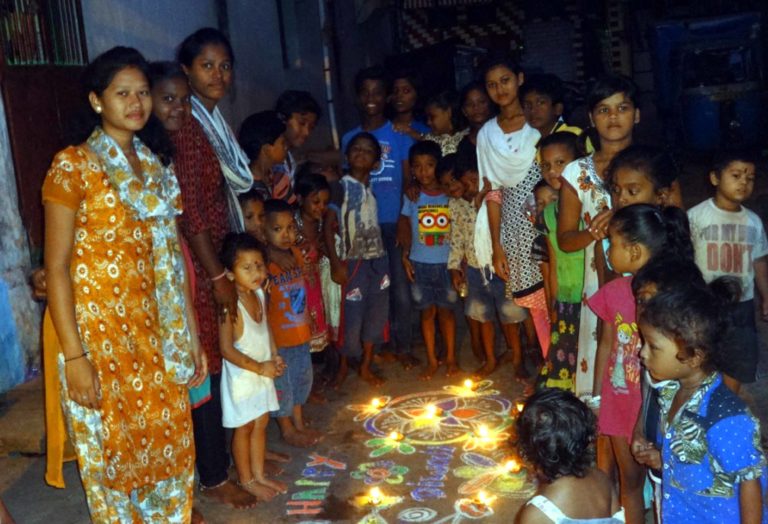
Children in slums started celebrating Deewali in a different way and spirit. They celebrated this with various other interesting things like rangoli competition, lightening candle in their slums. Looking at the harmful impacts of crackers and other fire products on humans and environment people use during deepawali they use safe and healthy activities to celebrate the festival of peace and prosperity added Sruti Sahu of Raghupati Nagar. Every year many people injured and our environment become pollute due to the a large number of people use harmful fire products. So they decided to celebrate this in a peaceful manner and spread the message across the mass that celebrates this Deewali in a safe and healthy manner so that happiness not becomes sorrowful.  This also saves a lot of money that can be used for other important purposes Subhasree Das added.

Through the media and other medium they appealed people make this festive of peace and prosperity making it safe and healthy without fire and crackers.

The Children’s federation members decorated the streets with colourful rangolis. Rangolis were drawn with interest among them and in the evening they lighted up candles in and around these rangolis  in Dhimira Bauri Street, Raghupati Nagar Canal Street, Phulosundari Street, Lajipalli Goudabandha Street and Gramdevati Bauri Street, children’s federation members organized different programs to celebrate this Deewali.

YSD has been working to ‘make Berhampur a child friendly smart city’ and to ensure government should provision basic services to the children living in urban poverty and ensure children participation in city planning, governance and development. Child club members such as Liza Das, Smurti Kumari Sahu, Amit Das and Puja Das took active participate and from YSD Chandan Sahu, Abhiram Kanhar Susmita Behera, Bala Das, Pinki Das Kanya Kumari Das facilitate child federation members.

Dating tips for women

0

Be relaxed. Make yourself free out of worry and stress. And get ready for your next adventure.

Donot leave your past life suddenly meeting a new guy. Maintain and balance your sense of self, friendships.

If something isn’t right about the seemingly cool guy you just met. Listen to your inner self and keep your eyes open.

If you just can’t accept some trait or habit in your partner, it’s time to think about whether this is the right person for you.

The great thing is to be comfortable, confident and happy on your own before you embark on a relationship.

Ask him what your status is and don’t be afraid to express what you are looking for.

Hold out for the one who is right for you.

Learn why your last relationship didn’t work out before you moving into the next. Is there a common pattern or reason why you struggled? Understanding ourselves, and what is good and bad for us, is key to a better dating future.

Bargarh MP found involved in plagiarism

Bargarh Lok Sabha MP Prabhas Kumar Singh has been found involved in a plagiarism case.  According to the report published by Times of India, Aug 21, 2012 Sri Singh has got his PhD fraudulently. Please click the link to read the detail report:

http://timesofindia.indiatimes.com/city/bhubaneswar/Copycat-degrees-Universities-need-to-do-serious-introspection/articleshow/15582330.cms