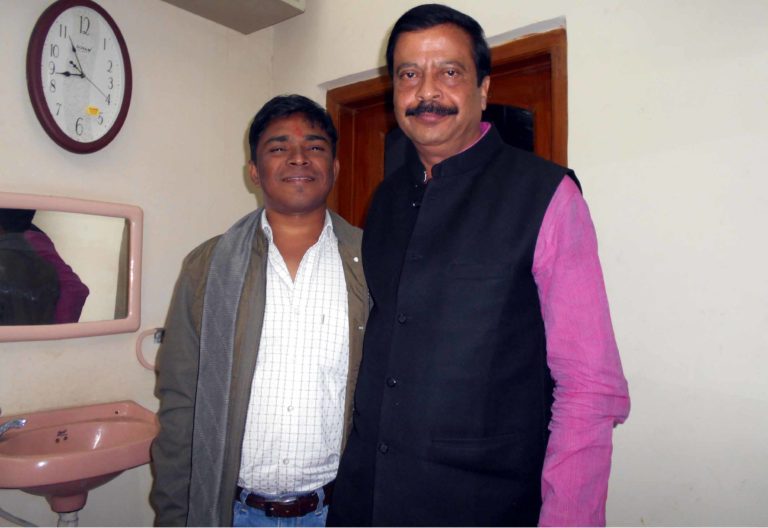
Saket Sreebhushan Sahu, Coordinator, Kosali Kriyanusthan Committee met Sri Suresh Pujari, National Secretary, BJP at his Sambalpur office and discussed about the inclusion of Kosali/Sambalpuri in 8th Schedule of the constitution. Sri Pujari said, we the Sambalpuri/Kosali speaking people need to fight unitedly for this cause. Our language is rich, vibrant, and sweet and it deserves to be enlisted. Sri Pujari also expressed his discontent about the minor conflicts which sometime resurface creating hurdles in achieving the goal. The inclusion of Sambalpuri/Kosali in the 8th Schedule is more important than the name issue. All political will power should support the cause of mother tongue of western Odisha. It is high time we need to realize the urgency in including it.
Children Federation spread the message for ODF on World Toilets Day
Swachha Bharat Mission (clean India campaign) has a target to make India Open Defecation Free by 2019. But the irony here in Berhampur Municipal Corporation is that only 8 (eight) household toilets has been constructed under the SBM-U out of the total 1125 work order has been granted, till date. On the other hand there are only six (6) new community toilets has been constructed by BeMC. Out of 30 community toilets only 20 are functional and 10 still remains defunct due to poor maintenance and unhygienic condition.
Among the 26,270 slum households and 117541 slums population only 3% households use community toilets. 59.9% of the slum dwellers openly defecate[1] due to unavailability of household and public toilets. This creates an unhealthy and unhygienic situation in slums and reasons for many diseases for the children, adolescent and women. There is immense delay in construction of new public toilets make the city dwellers to defecate in open areas.
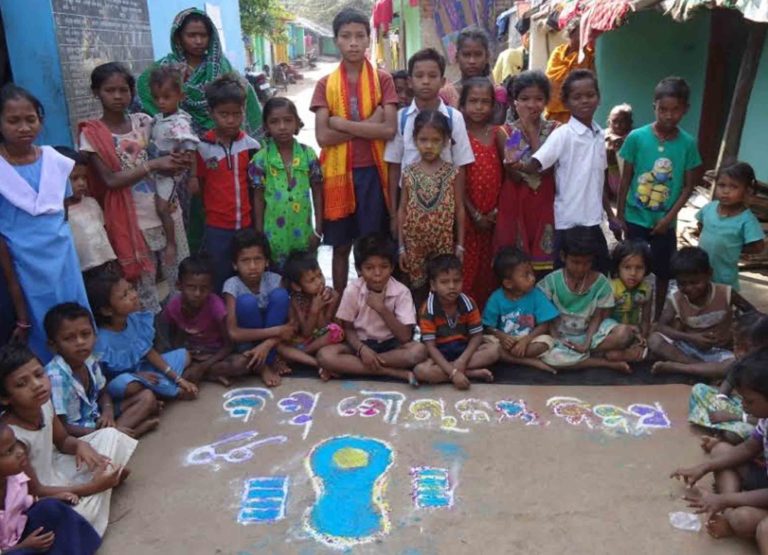
Berhampur Children’s Federation today celebrated the ‘World Toilet Day’ in 25 slums. 250 children from 25 child clubs participated to spread the message of not for open defecation and advocated to the city government to make the city Open Defecation Free (ODF). Children organised rally, meeting, drawing on open defecation free, use of toilet, demonstrated pla card and discussed on issues related to community toilets and household toilets (SBM-U) in their slums.
[1] City Sanitation Plan, 2011, BeMC
Historical village Debrigarh to relocate
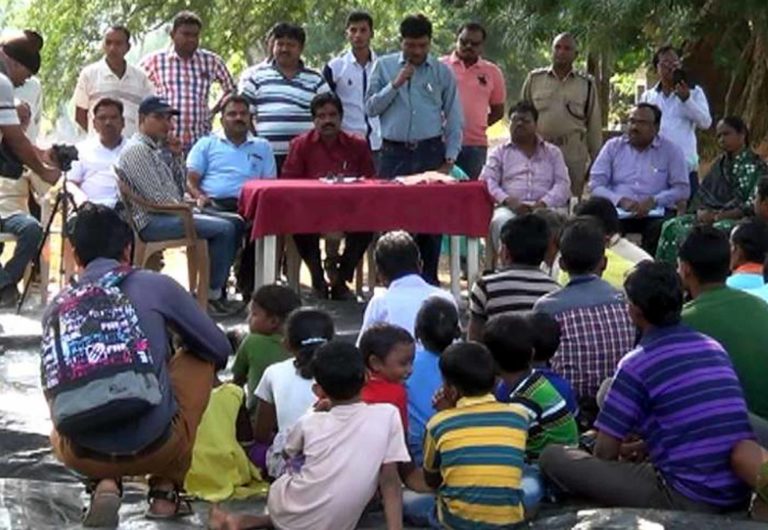
Debrigarh village under the Debrigarh Wildlife Sanctury will relocate. The villagers agreed to the proposal of the government in a pallisabha held at the village.

Each family will be provided a compensation of Rs 10 lakh because the government was facing problem in providing basic facilities to the natives. The village is located inside the Debrigarh Wildlife Sanctury so government was facing problem in providing facilities or executing any government schemes. Now the villagers will migrate leaving their paternal place.

Debrigarh wildlife sanctuary located at Ambabhona block of Bargarh district. This village was established by freedom fighter Veer Surendra Sai. Village is a silent witness of the freedom struggle. The villager uses the jungle for their livelihood. The villagers repeatedly pleading the government to provide basic facilities but the government was failing as it was inside the jungle.

Finally the villagers considering the future of their new generation agreed to relocate. The Pallisabha was organized in the presence of the R.I., B.D.O, local Sarpanch and ward members along with the officers of forest department.
Still mandis not opened, farmers in panic
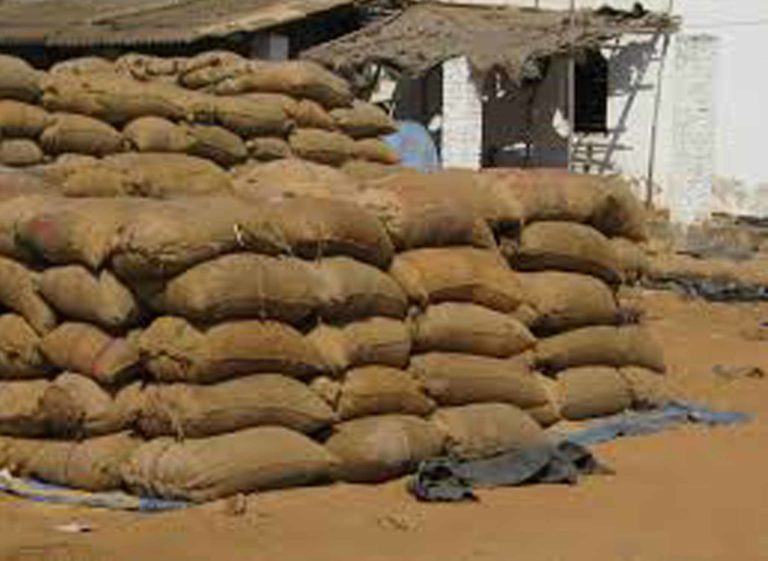
The Naveen Patnaik led BJD govt had declared to open mandis on 16th in western Odisha. But today is 17th and no mandi is opened for the farmers. Earlier the government had declared to open the mandi on November 1st, again on 16th and now on 23rd. A question with doubt and anger is raising in the public, why this delay? The public is discussing that like in the last Rabi crop the government is delaying to open mandis to facilitate the businessman and the millers. It is certainly creating opportunity for the businessman and millers.
The delay in procurement of paddy will certainly creating panic among the farmers. The farmer is always wants to sale his paddy as soon possible and payoff the loans etc. But the planned delayed for the millers from the administrations and political will power is causing unwanted panic for the farmer. The farmer is hastily selling his paddy in the local market or to the businessman in low price. The farmer is selling paddy with a meager Rs 600/-Rs 700/- per quintal which is less than half of the declared price by the government.
The common man is cursing the administration and the government for its conspiracy against the farmer and agriculture. The farmers are already in distress due to drought.
Means and End_Dr Saheb Sahu
Life and how we live it, is the story of means and ends. The end is what we want and the means is how we get it. Whatever we think of any changes, especially social change, the question of means and ends arises. “Does this particular end justify this particular means?”
There is no easy and clear answer. Philosophers and political thinkers have debated this issue for centuries. The Haves wants to maintain the status quo and the Haves-Not want to change it. The Haves develop their own morality to justify their means of repression. The Haves usually establish laws and appoint their own kind to judge it. The Haves-Nots, from the beginning of time, have been compelled to appeal to “law of higher than man-made law” (God’s Law).
When the Have-Nots achieve success and become the Haves, their morality changes. Nehru sided with Gandhi to use non-violent means to kick the Britishers out of India, but he did not hesitate to use force to kick the Portugese out of Goa. Rousseau noted in his Social Contract that “Law is very good thing for men with property and very bad thing for men without property.”
What means one applies to achieve the end, does not depend on the end, but depends on what means one has at his disposal? Gandhi employed the non-violent tactic because he had no military means to kick out the British. Israel as a nation is small, but has a strong military; hence it uses its military to occupy extra Palestinian territories in spite of multiple U.N. Resolutions forbidding it. India did the same thing against Pakistan during the Bangladesh War. Martin Luther King Jr. used Gandhian type of non-violence means to achieve civil rights for American blacks because he had no military or economic power. In case of South Africa, trade boycotts (use of economic power) by other nations brought an end to the Apartheid system.
All great leaders, Jefferson, Lincoln, Gandhi and Churchil have invoked “moral principles” to cover naked self-interest in the clothing of “freedom”, “equality of mankind”, “a law higher than man-made law” and so on. This even held under circumstances of national crises when it was universally assumed that the end justify any means.
According to Saul Alinsky, “means and ends are so qualitatively inter related that, the true question has never been proverbial one, does the End justify the Means?” but always has been “Does this particular means?”
Villages are running smooth amidst demonetization
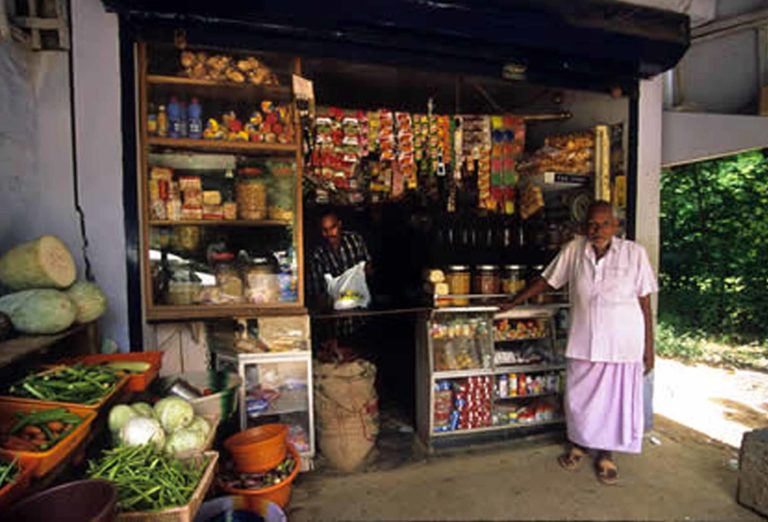
Demonetization has affected everyone. People from all sector; urban to rural. It has affected many people and business and day-to-day transaction of the country. Largely the business community has been affected greatly. People have temporarily lost buying capacity. After the declaration of the prime minister on 8th Novemeber, ATMs and banks were closed for 2 days to vacate the old notes and filled new notes. Startling reports are coming all around the country regarding it. Somewhere marriages have been postponed. Some have postponed their travel etc.
We visited few villages, to learn about the situation. In villages generally people knows each other very well. They share a relation with everyone like uncle, aunty, brother, sister etc. irrespective of caste and community. In villages generally people know others status very well. Usually the village folks transact all months by credit from all the shops and necessary places. And they payoff when they get the money. The shopkeepers or the person who is selling or lending credit know the reputation and credibility of the loaner. So the shopkeeper or lender advances loan and credit accordingly.
The same system prevails in while the shopkeeper purchases groceries or things from his wholesaler. The wholesaler also gives credit to the retailer as they are doing regular business. And the chain of the system goes on.
In villages people are normally doing their work, going to the field and works. Normally arranging family functions and celebrating festivals.
It is true, cash flow is checked. But not created any big hurdles. We can say it is normal.
Petrol Pumps and LPG distributors to accept 500/1000 notes till 24 Nov
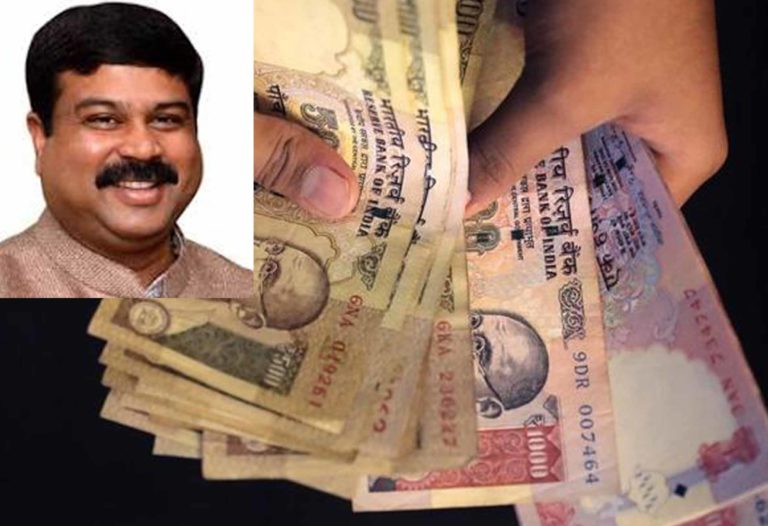
Today Shri Dharmendra Ptradhan, Minister of Petroleum and Natural Gas has informed that Rs 500 notes and Rs 1000 will be accepted at petrol pumps, and LPG distributors till 24th of November. He has also twitted about it that the petrol pumps and LPG distributors have been instructed accordingly.

Dand: An early literature of Kosali
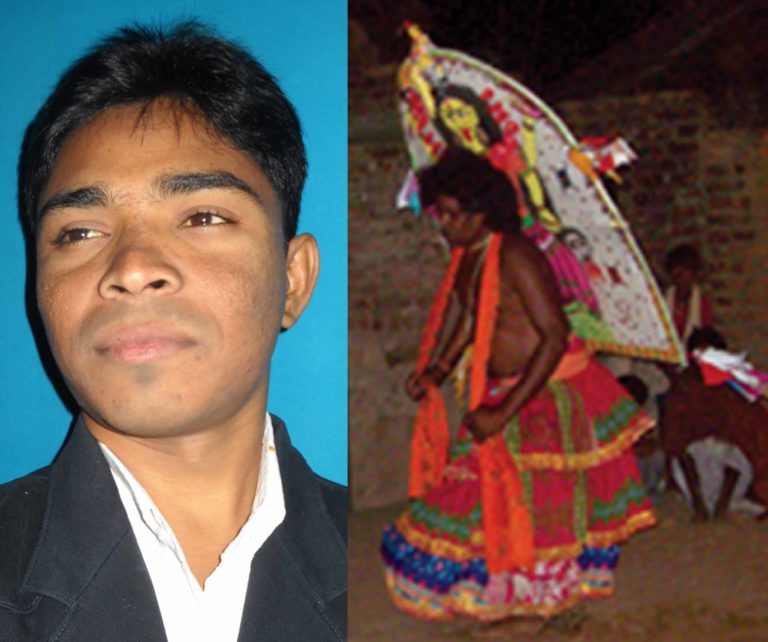
Around 8th to 9th century, Buddhism was strongly spreading over many places of present western Odisha. The Sahajtantra of tantric Buddhism practiced by Laksminkara was wooing the common people. Lakshminkara was the daughter-in-law of the King Jalendra of Sonepur then. The Somvansi rulers who were worshipers of Shaivasm wanted to spread Shaivaism. They started Dand. Dand is performed by dance drama form.
The Dand groups started performing in the villages of Sonepur state. They moved from village to village and used to perform. In the dand, they used to worship Shiva-Parvati and perform the dand drama. The first form of dand was in “Sulha suanga” format. The dand group amalgamated Sahajatantra too in that form. Because the tantra part of Sahajatantra was already familiar among the masses.
The dand groups start their journey in the Hindu month of Chaitra. The dand performer visits from Mina Sankranti to Bishuva Sankranti. The temperature high and environment is hot. They carry on Chattar-Bairakh (colourfull Umbrella), Shiva-Parvati, and Dakshin Kali along with them. In the dand traditions, 3 types of dands are performed: 1) Dhuel (sand) Dand 2) Paen (water) Dand, 3) Dand.
In the dand, mainly emphasis is given on (a) protection of religion, (b) cultural awareness, (c) man and nature, (d) abstinence, (e) devotion, and (f) entertainment.
Here are few links of different types of dand dance:
Criminal cases against MLA Subal Sahu
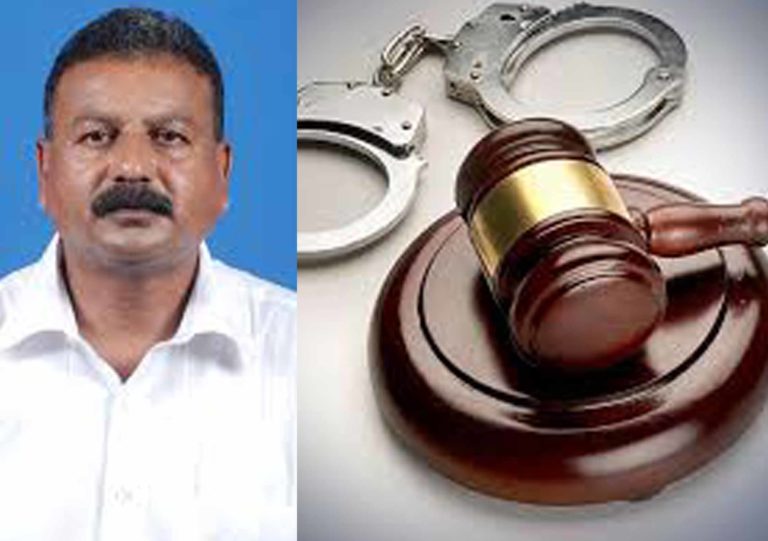
According to the declaration before the election commission, present Bijepur MLA Sri Subal Sahu, is associated with the following cases. Sri Sahu has been elected for 3rd consecutive term from Bijepur constituency of Bargarh district from 2004 to present.
According to the declaration, he has completed LLB from Balangir Law College and owned assets approximately 1 crore and 13 lakhs. The native of Kansari Para, Barpali has disclosed the following records via an affidavit before the election commission:
Cases where Cognizance taken
Cases where convicted
|
Brief Details of IPCs
4 charges related to Obscene acts and songs (IPC Section-294)
4 charges related to criminal intimidation (IPC Section-506)
3 charges related to wrongful restraint (IPC Section-341)
3 charges related to Mischief causing damage to the amount of fifty rupees (IPC Section-427)
2 charges related to Every member of unlawful assembly guilty of offence committed in prosecution of common object (IPC Section-149)
2 charges related to Punishment for Rioting (IPC Section-147)
2 charges related to Act endangering life or personal safety of others (IPC Section-336)
1 charges related to Acts done by several persons in furtherance of common intention (IPC Section-34)
1 charges related to Punishment (IPC Section-143)
1 charges related to Assault or criminal force to deter public servant from discharge of his duty (IPC Section-353)
1 charges related to Danger or obstruction in public way or line of navigation (IPC Section-283)
1 charges related to Rioting, armed with deadly weapon (IPC Section-148)
1 charges related to Causing hurt by act endangering life or personal safety of others (IPC Section-337)
The details has been taken from:
http://www.myneta.info/odisha2014/candidate.php?candidate_id=86
Evolution of Kosali Language
Kosali is considered as an ancient language by researchers and it is one of the five Prakrit languages existing since Vedic era along with Sanskrit. But the Kosali speaking region is affluent with adivasis. And they must be using a language to communicate before Sanskrit era. It seems, after the invasion of the Aryan, the adivasis of the region may have adopted the language of the mainstream. Even many other caste and tribe have been migrated to this region in the course of time. All have brought their own culture and language and amalgamated it into the language of the present Kosali speaking region.
Further, the Kosali speaking region was ruled by Nala, Naga, Sarabhapuriya, Chola, Ganga, Somavansi, Kalachuri, Chouhan, Maratha, and Britishers. Even after the acquisition by Britishers, this region like a football has been once in Bengal, once in Madhya Paradesh (Central Province) again with Bengal and then Bihar and finally settled with Odisha. And in the course of time the present form of Kosali may have evolved with an influence of all these transition. The degree of influence might be varying for each factor; insignificant to significant.
At present Kosali is an Indo-Aryan language. It is been categorized under the languages of Purvi Hindi Language Group. The languages of this group are, Awadhi, Baghelkhandi, Chattisgarhi and Kosali.