Tuesday, April 28, 2026
Home Blog Page 55

Rescued from supari killer

0

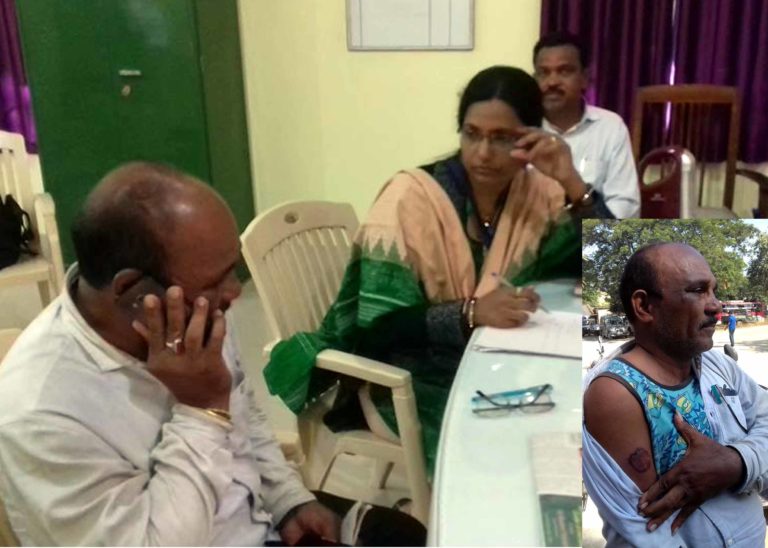
Antaryami Pradhan, husband of Bheden Block chairperson Sujata Pradhan has been rescued from kidnappers today. he was rescued by the Bargarh police from Knatabanji.  he was kidnapped on 24.11.2016 while he was going to school. He is a teacher at Jhilminda school. The victim says 25 lakhs was given to the supari killer by a political source.


Courtesy : Rajesh Sarap, Facebook


Advocates started for Delhi for HC bench demand

0

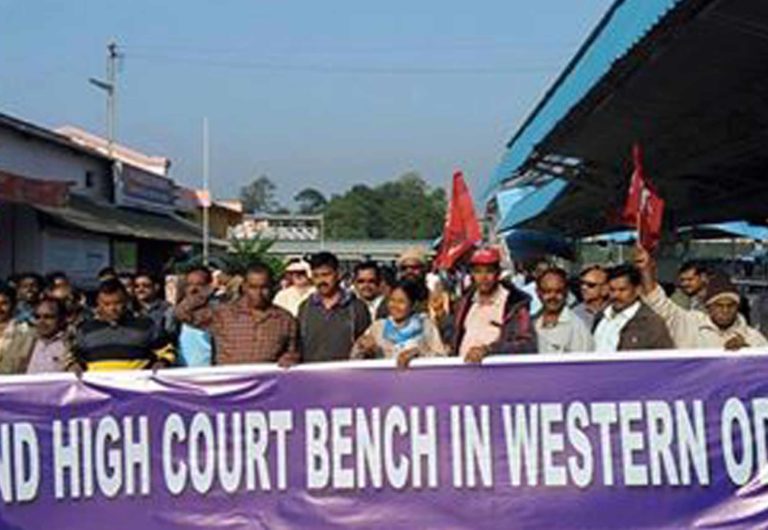
Advocates started their journey today morning for Delhi to seat in Dharma at Jantar Mantar on the demand to establish permanent bench of the Odisha High Court in West Odisha. More than 200 from different organisations of Sambalpur were present to say good bye and to wish the advocates numbering more than 100, who are going to Delhi.


Photo & write up courtsey: Deepak Panda , Facebook timeline

Why Kosal should be separated from Odisha?

0

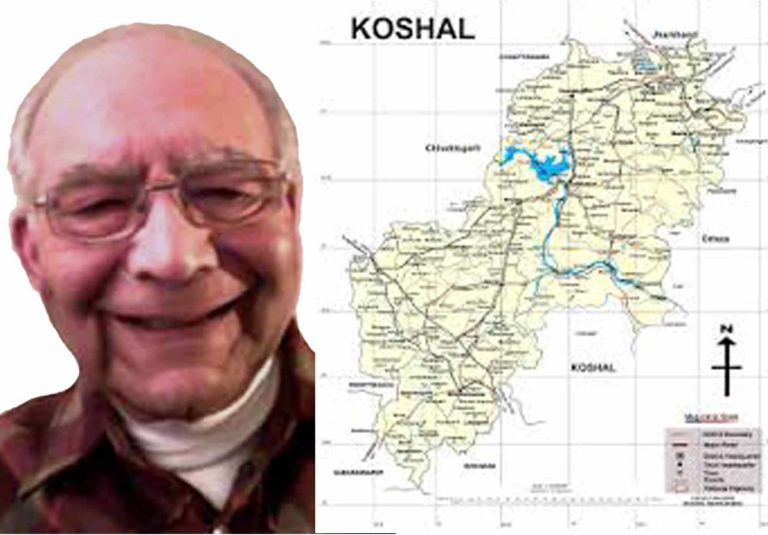
Koshal state is inevitable because of variety of reasons but primarily because it is in accord with emerging trends. It is beginning to be evident bigger states do not necessarily better management of resources, especially human resource. Fears that Koshal and Orissa will be further disadvantaged once separated simply do not hold water. Both MP and Chhattisgarh are better off after separation. Bihar is on mend under Nitish Kumar after separating from Jharkhand; it is concentrating on overall development of the state, particularly on human resource now that it cannot depend on easy money obtained from mining operations in Jharkhand. Even Uttaranchal is beginning to show progress concentrating on its own resources which remained untapped when it remained with UP. Sure they are going through teething problems, but on the whole all these new entities are on the mend.

In the case of Orissa and Koshal, several studies done since its inception suggest that inter regional variance is increasing, and the gaps are getting bigger with no sign of abetting. There is no sense of urgency or inclination to reverse this trend.More recently, the state sponsored a study to examine this self evident problem; It took four and half year and cost thirty five lakhs; and was produced two years ago. Mr.A.U.Singhdeo, the minister in charge said in Orissa assembly that the government is still studying it !! In the mean time, there has been utter failure of governance. Much of Koshal area is coming under the sway of Naxalites. Koshal is emerging as the most polluted part of Orissa. KBK area is languishing for decades even after alarm bell had been sounded decades ago.

Orissa government has no mining policy yet mining is going on in full spate for much of the last century. Even if humongous amount of mineral resources is known to be stolen away, and is being stolen away, Orissa government steadfastly opposing any CBI enquiry even though its own government apparatus is incapable in stopping the loot. The irony is that proceeds from these operations did not improve the lots of Orissa and it is locked in the bottom of literacy and wealth ladder.We have been in the resource trap all these decades, and unfortunately lives of people who are affected by these mining operations is degrading in all measures. Not that all areas of Orissa are languishing. It is as if the sixty mile zone surrounding Bhubaneswar is where all the proceeds of Orissa is being dumped with Koshal and South Orissa remaining in the rain shadow area. Worst part of it all is that a nexus has developed in that sixty mile zone which thinks that that area alone needs to be developed. Ironically, that nexus consisting primarily of senior bureaucrats (working and retired) and academics of coastal area, is unofficially determining the shape of destiny of Orissa, and is immune from political engagement.

Orissa government has lost touch with people beyond this sixty mile zone. Our Adivashi population, who constitute nearly a fourth of population, have been singularly impacted from such deliberate neglect. More recently, the government has turned hostile towards this population. Unfortunately, both Koshal and South Orissa contain the bulk of this population. Protests from this group have not been heard, they have been replied with lathi charge, and even gun shots. And thus it is creating a fertile ground for Naxalites. We are watching in living colour the upheavals in Arab countries graphically demonstrating what happens when the governments are disconnected with people. We too in Orissa witnessing something similar albeit in a minor scale.

But Koshal should not be a separate state because of a protest movement. The daunting task of Koshal state will be how to prepare the state for twenty first century, and align itself to overall growth and main stream of India. Key to this is single minded focus on human resource development and creates an ambiance of trust between people and the government. We have to learn from the blunders of Orissa, which made it dysfunctional. All state resources must be equitably distributed across the regions. Overcentrilisation of state institutions and deployment of resources in a small part have been the main fault lines of Orissa; these must be avoided. Policies and procedures must be established to institute decentrilisation based upon proximity, accessibility and pragmatics. We simply cannot afford to marginalize a huge chunk of population and expect progress. The Adivashi population is integral part of the state, and is a source of our strength. All social scientists will tell you that geniuses are produced in all clusters of population; therefore as it stands, by ignoring this population we are depriving ourselves major source potential enhancers of the society. We must also develop better methods of conflict resolutions. In Orissa, we are locked into unnecessary battles between mining industries and Adivashis, farmers and industries, mineral exploitation and environmental concerns, etc.. We all have a stake in the upliftment of the state. Many of these conflicts are soluble, but we do not have in Orissa proper mechanisms to defuse these issues. Koshal can be a model state if we play our cards right from the beginning. All these can be achieved without violence. And I believe Orissa will too will be better off without Koshal.


The author is a retired Professor in Psychology and Psychiatry of Queen’s University and retired Chief Psychologist of a University based children’s centre.

Structure and Movement_Dr Saheb Sahu

0

Two schools stand at opposite poles of thinking about how grass root forces can promote social change- structure and movement.

Structure (Organisation)

Saul Alinsky, is widely recognized as the founding father of community organizing in USA. Saul Alinsky died in 1972, but his landmark book “Rules for Radicals (1971)” has influenced generation on community based activists since. Alinsky strongly believe in first building the organization. His advice “don’t talk ideology, just issues…build organization not movement …focus on neighborhoods, and concrete winnable goals.”

The examples of a structure or organization are labour unions, political parties and local community organization. They are hierarchical with president, secretary, members, regional and national offices.

Francis Fox Piven, the eighty-two year old distinguished professor of political science and sociology at the City University of New York believes in people’s movement.  Her studies and experience showed that poor people could achieve little through routines of conventional and interest group politics. What was important was not the organizational structure, but willingness of participants to interrupt business as usual, protest movement, she explains, “gain real leverage on by causing commotion among bureaucrats excitement in the media dismay among influential segments of the community and strain for political readers.”

The divide between structure and mass movement or between long term organization and disruption uprising is by no means a matter of two individuals. But truth, in truth it runs deep through socio moment history, in different groups of grassroots activists in diverse countries and time periods.

It is apparent that structure based organization and mass protest movement each have their strengths and weaknesses. The structure based organization like the labour union and political parties are hierarchical, inflexible, slow to change and long term result oriented. They are more interested in fighting for their members. Mass movements on the other hand are flatter, undisciplined short term, goal oriented, with unpredictable outcome. They tend to lose their energy after failure.

A hybrid organization is a mixture of both, to succeed you needs both- some structure and more movement.

Strategy and Tactic

Many people make a difference between strategy and tactic. The concept of strategy has been borrowed from military.  Strategy is a term that comes from the Greek, stratēgia, meaning generalship. In military strategy often refers to maneuvering troops into position before the enemy is actually engaged. In this sense strategy refers to the deployment of troops once the enemy has been engaged, attention shift to tactics. Strategy is a perspective vision and direction, Tactic is the execution of that vision.

There is no single strategy applicable to the use of non violent struggle on all occasions. No single blue print exists or can be developed to serve all conflicts. The organizers have to fashion their own to fit their situation.  For our purpose tactic means doing what you can with what you have.

A movement to succeed, one needs both a grand strategy and operational tactics.

VSSIMSR Burla has become a referral institute

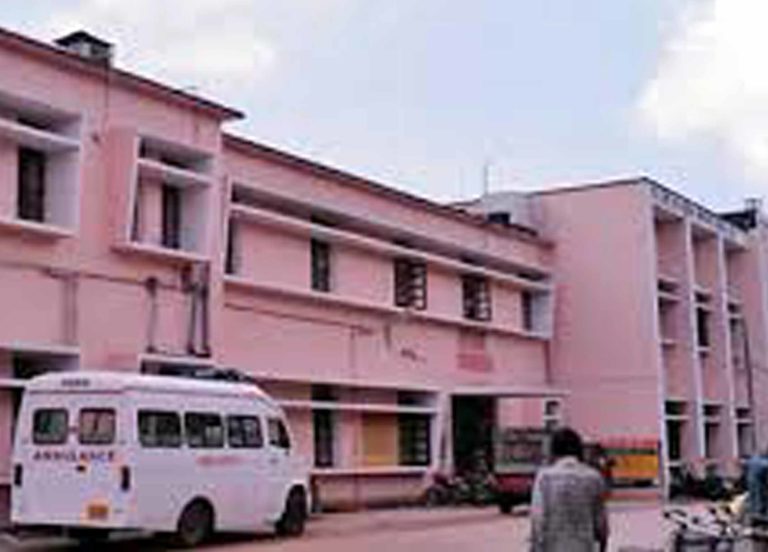
According to the guideline of Medical Council of India the numbers of bed of central ICU of Veer Surendra Sai Institute of Medical Sciences and Research, Burla has been increased to 20 beds. But according to the number of bed, ventilator has not been facilitated.  Till now ventilator added beds are limited to 14. Due to the shortage of beds, critical patients are getting admitted at nursing homes. Apart from this special ICU are not available in other departments also.

The government opened various departments to make it a super specialty hospital to provide better health service. But it has become a referral hospital only. Departments are there but doctors are not available. Vacant posts are not filled up. Equipments are not available. Available equipments are defunct.

The number of bed in the central ICU has been increased to 20 from 4 only in paper. Further as beds are not available in the central ICU, urgent operations are carrying out outside. Again poor patient are paying around Rs 20,000/- as ICU ambulance is not available.

Women rallied on for liquor ban in Odisha

0

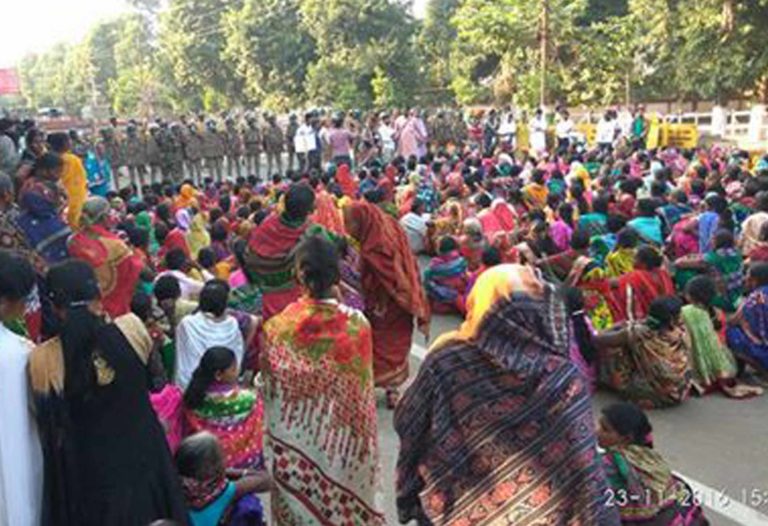
Women from all walks of life gathered today at lower PMG, Bhubaneswar demanding  liquor ban in Odisha.

Slum youth trained on Leadership and Active Citizenship

0

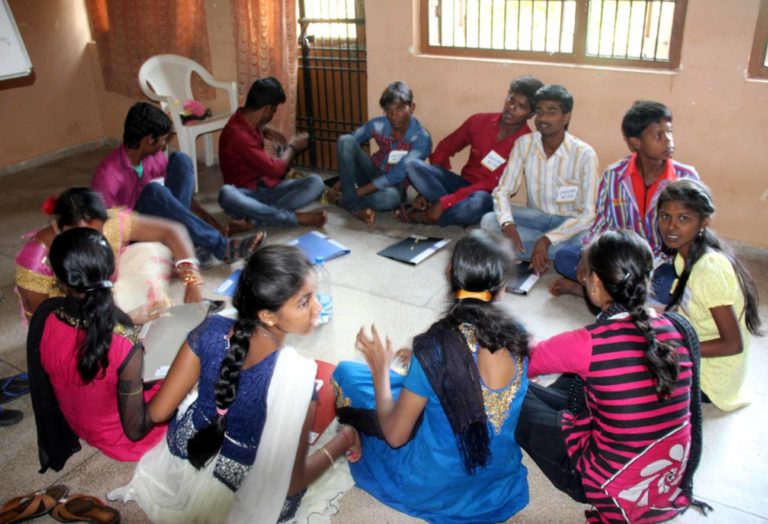
Gopalpur, 65 youth (man and women) has been participated the tow day long residential training on leadership and active citizenship under the Youth and urban government initiative under taken by Youth For Social Development (YSD) with the support from Asian Development Bank (ADB) and Assist-Asia. This initiative is a part of an award winning project by YSD on Youth Participation in Governance and Accountability in Berhampur from ADB.

Young people trained on good governance, social accountability and leadership and active citizenship by eminent state level expert trainers like Mr. Sri Som, Mr.PruthwiRaj and Mr. Rashmi Ranjan from Sports and Youth Services department, Govt. of Odisha and human rights activist Mr. Pradeep Pradhan trained young people how to engage with govt. to improve the living condition of slum dwellers and local governance and accountability in Berhampur city.

YSD team Chandan, Abhiram, Susmita, Pragati,Laxmi, Bala and Kanya Kumari supported the smooth implementation   of the training programme. YSD has been working more than 500 young men and women in 20 slums in Berhamur city on issues related to youth participation in governance and development of slums in the city.

KKC meet BJP National Secretary Suresh Pujari

0

Saket Sreebhushan Sahu, Coordinator, Kosali Kriyanusthan Committee met Sri Suresh Pujari, National Secretary, BJP at his Sambalpur office and discussed about the inclusion of Kosali/Sambalpuri in 8th Schedule of the constitution. Sri Pujari said, we the Sambalpuri/Kosali speaking people need to fight unitedly for this cause. Our language is rich, vibrant, and sweet and it deserves to be enlisted. Sri Pujari also expressed his discontent about the minor conflicts which sometime resurface creating hurdles in achieving the goal. The inclusion of Sambalpuri/Kosali in the 8th Schedule is more important than the name issue. All political will power should support the cause of mother tongue of western Odisha. It is high time we need to realize the urgency in including it.

Children Federation spread the message for ODF on World Toilets Day

0

Swachha Bharat Mission (clean India campaign) has a target to make India Open Defecation Free by 2019. But the irony here in Berhampur Municipal Corporation is that only 8 (eight) household toilets has been constructed under the SBM-U out of the total 1125 work order has been granted, till date. On the other hand there are only six (6) new community toilets has been constructed by BeMC. Out of 30 community toilets only 20 are functional and 10 still remains defunct due to poor maintenance and unhygienic condition.

Among the 26,270 slum households and 117541 slums population only 3% households use community toilets. 59.9% of the slum dwellers openly defecate[1] due to unavailability of household and public toilets. This creates an unhealthy and unhygienic situation in slums and reasons for many diseases for the children, adolescent and women. There is immense delay in construction of new public toilets make the city dwellers to defecate in open areas.

Berhampur Children’s Federation today celebrated the ‘World Toilet Day’ in 25 slums. 250 children from 25 child clubs participated to spread the message of not for open defecation and advocated to the city government to make the city Open Defecation Free (ODF). Children organised rally, meeting, drawing on open defecation free, use of toilet, demonstrated pla card and discussed on issues related to community toilets and household toilets (SBM-U) in their slums.

[1] City Sanitation Plan, 2011, BeMC