Tuesday, April 28, 2026
Home Blog Page 49

Communalising Population Growth: Understanding Demographic Data

0

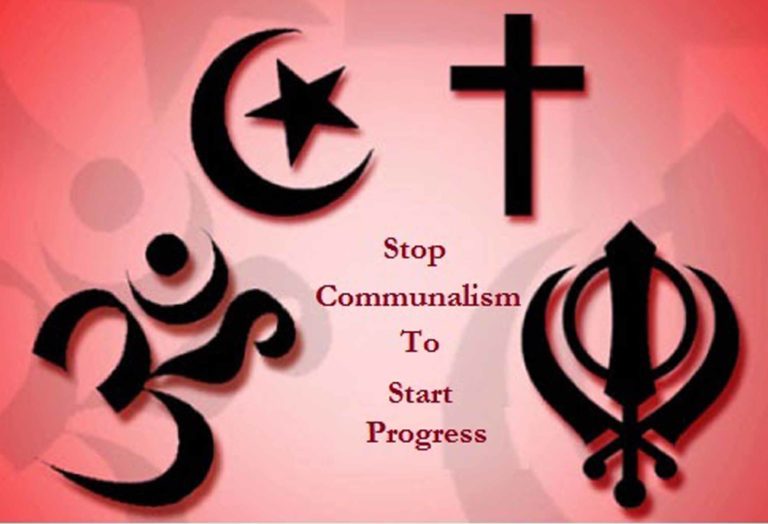
The biases and misconceptions about conversions and population growth have been used by communal forces to divide the society. This became apparent once again when Minister of state of Home, Kiren Rijuju tweeted that that Hindu population is decreasing in the country as Hindus don’t convert and that minorities in India are flourishing unlike in the neighbouring countries.

Threat of decline in Hindu population and increase in population of minorities is being propagated time and over again. As per the data of 2011 census figures, Hindu population now stands at 79.8 % and Muslim population at 14.23%. “The data on Population by Religious Communities of Census 2011 show that between 2001 and 2011, Hindu population grew by 16.76 per cent, while that of Muslims by 24.6 per cent. The population of both communities grew faster during the previous decade, at 19.92 per cent and 29.52 per cent, respectively. As a long-term trend, say demographers, the communities’ growth rates are converging.” This means that the decadal rates of growth of both communities is declining and converging closer to each other.

This is pointer to the fact that while charting out the future projections it is important to keep in mind that the rate of growth of Muslim population will be falling and will stabilise closer to that of rate of rise Hindu population. In the total population Muslims will remain a religious minority for the times to come. Interestingly the population increase of Hindus during the period of 2001 to 2011 has been 133 millions, which is close to the total population of Muslims in 2001.The scare being spread through word of mouth campaign and through social media about Muslim population taking over the Hindu population holds no water, as there are clear trends of decline in the decadal rate of growth of Muslim population as well.

The demographers point out that the higher rates of fertility are due to lack of education and poor health facilities. Muslims in Kerala have a lower fertility rate than many Hindu communities in North India and even in Kerala. The economic profile of Kerala Muslims is much different than the Muslims in Assam, West Bengal, UP and Maharashtra for example. If we broaden this point we will see that the rise in population among Dalits (Schedule castes) and Adivasis (Scheduled Tribes) is much higher as such . As per the 2011 census STs are 8.6% while they were 6.23 % according to 1951 census. SCs now are 16.6%, while as per 1951 they were around 15%.

As such the whole truth will show us that the propaganda of communal forces has nothing to do with reality of society and deeper causes of the same. It is in this background that the likes of Praveen Toagadia said that two child norm should be imposed, while the likes of Sakshi Maharaj and Sadhvi Prachi have been extolling the Hindus to produce more children.

BJP President has called for the ‘Look North East’ to raise the scare about the Christian population in the North East. This primarily Tribal area saw the increase in percentage of Christians in the decades of 1931-1951. The rise in percentage of Christian population has a lot to do with the spread of Civil Administration with Independence and also with the spread of education in the region. Country wide we can see that the percentage of Christians is static from last few decades. If at all it has declined and stabilised. If we see from 1971, we see that Christian population was 2.60% (1971), 2.44 (1981), 2.34 (1991), 2.30 (2001) and 2.30 (2011). In the meanwhile the propaganda of Missionary activities and increase in the number of Christians has dominated the scene. The anti Christian violence came to the public attention with the ghastly murder of Graham Stewarts Stains (1999). Dara Singh of Bajrang Dal, which is affiliated to RSS, incited the local people that the Pastor is doing conversions which is against Hindus. Wadhwa Commission, which investigated Pastor Stains murder, concluded that he was not involved in the work of conversion and that in Keonjhar, Manoharpur Orrisa where the Pastor was working, there was no increase in the percentage of Christian population. Similarly Kandhmal anti-Christian violence was unleashed on the pretext of murder of Swami Laxmananand. Gujarat also saw anti Christian activities again due to propaganda that the Missionaries are converting. At the same time we see that the national population of Christians remains static. Some people do allege that conversions to Christianity are there but the converts are hiding their religion, this is again a matter of conjuncture and nothing definite can be said. Any way it cannot be a large number in any case.

As such conversions have been a part of the agenda of Hindu nationalism times and over again. During freedom movement two parallel processes of conversions were going on. One was Tanzeem, which was to convert the people to Islam, the other was Shuddhi which was aimed at those who were supposed to have left their ‘religion-home’ and were converted to alien religions. The premise was that conversion to other religions has made them impure so they need to be brought back through a process of purification. Last several decades RSS-VHP-Vanvasi Kalyan Ashram have been active in what is called Ghar Wapasi (return Home) to bring back the Dalits and Adivasis who it is alleged have been converted through force (to Islam) and allurement or fraud (to Christianity). This Ghar Wapasi campaign has been undertaken through many newly devised rituals like bath in hot spring or rituals around fire. This has been rampant in Adivasi areas and in slums-villages.

Adivasis are animists, while RSS claims they are Hindus. To Hinduize them Vanvasi Kalyan Ashram, now runs a growing network of schools and hostels in large numbers in North East. Such assertions and accompanying activities have more to with politics rather than social welfare as such. The attempt of RSS combine is to link religion with Nationalism.

Ram Puniyani

Success and Failure _Dr Saheb Sahu

0

“TAHRIR BROUGHT TEARS to any eyes”, says Ahmed Salah.

Salah, a veteran of youth organizers, had worked for years to drum up resistance to the autocratic thirty-year regime of Hosni Mubarak, the eighty-two-year-old president of Egypt. What actually happened in February 2011, in Cairo’s Tahrir Square into a global sensation? On the heels of a revolution in neighbouring Tunisia, Egyptian responded in huge numbers to January 25 calls to action, and they kept warming out on the days that follows. In Cairo alone, there were 5-6 millions protesters on the streets.  May be in Alexandria a million or two, and all over the country hundreads of thousands in every city.

Just a few weeks later, Mubarak was gone on February 11, 2011.   Mubarak’s ouster was one of the high moments of the Arab Spring. And yet within a few short years, the euphoria of these times evaporated. In Egypt’s first free election, disorganization among secular democratic opposition resulted in the election of Mohamed Morsi, a leader of the Muslim Brotherhood. Muslim Brotherhood is on Islamic group. They had joined the movement late. They had good ground organization for many years, and they own the election, then in summer of 2013, Egypt’s military, under the command of General al-Sisi, took power overthrowing Morsi. Back to square one. “The streets are empty. The prisons are full.” reported Amnesty International in 2015.

Egypt shows that widespread results can do amazing thing but uprising alone is not enough from Gandhi to the Civil Right Movement, organizers using nonviolent campaigns have grappled with how to put in place lasting mechanics that can sustain the progress generated by the campaign. This is the challenge of institutionalization.

Social movements progress through different stages. They contain actors who can play distinct roles. At different times they need different actor with different skill sets. Mass mobilizations alter the forms of political debate and create new possibilities for progress. Structure based organising help to protect that gain.

Momentum-driven groups bring on broad demands that can inspire support from the general public. But they are not good at governing.

Politics is not the same a revolution. If you want to play politics, you have to compromise; you have to have an organization structure with some hierarchy in place. Most large scale mass campaigns do not have that but structure based organizing and momentum-driven movements are not inherently in conflict. Ideally the two can complement one another. Established groups that share the goals of mass uprising can benefit from the burst of energy and the increase in interest in their cause that comes with high-profile mobilization. In town, the more established organizations (structure organisation) like the labour unions and political parties can lend their prestige and resources to the mass mobilization, and established organizations see themselves as complementary, both benefit.

“No one should believe that with the downfall of the dictatorship an ideal society will immediately appear.” Gene Sharp wrote a decade before the mass protest in Tahrir Square. “The disintegration of the dictatorship simply provides the beginning point. Careful precautions must be taken to prevent the rise of a new oppressive region out of the confusion following the collapse of the old one.”

No one doubts, this is easier said than done. For social movements in democratic countries, the challenge takes a different form but it is no less relevant.  They do not typically have to deal with the complexities of setting up a new ruling order after a revolution. But they must still work to see that the changes they win are safeguarded after the momentous upheavals subside. They must retain the capacity to launch new mobilizations after the goals of earlier efforts are met.

Structured organizations are usually unwilling to embrace disruptive uprising. There is an opposite danger for campaign driven groups. Group that have no institutionalized structure can find themselves at the dead-end when the energy of a revolt runs out or an initial demand is full filled (Engler and Engler) Example: Tahrir Square.

Gandhi and his associates built a mass movement in India for its independence but it was the Indian National Congress which kept democracy alive in India, after the departure of the British Raj. Bottom line: for any social change, you need both protest and organization.

GMA urges to stop construction of barrages on Ganga between Allahabad and Haldia

0

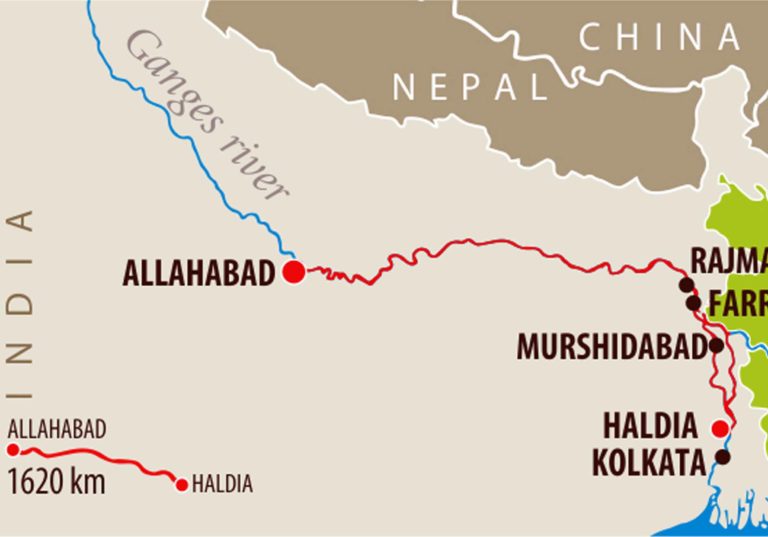
In a letter to West Bengal Chief Minister Ms. Mamta Banerji, Convener, Ganga Mukti Aandolan, Anil Prakash urges and seeks support to the cause of saving the Ganga basin which will give immense strength and momentum to protect the life of millions of people who depend on it for their survival. That Government of Bihar has announced to oppose the Central Governments scheme of construction of series of barrages on Ganga between Allahabad and Haldia. Since the river ultimately culminates in Bengal and the Scheme is likely to adversely affect Bengal, Gnga Mukti Andolan expects similar stand from the Government of West Bengal. Therefore this letter with the following details, facilitating the state Government to take a firm stands:

In this age of Free Trade Agreements, the Government of India is taking many decisions, without consulting the concerned states and without providing any information to the people affected by these decisions. The present case is the proposed scheme of Ganga basin. From the reports it is gathered that the Government of India is planning to build a cascade of barrages on the Ganga from Allahabad to Haldia, reportedly enabling movement of large cargo and tourist ships, which is likely to convert the Ganga into a number of reservoirs. The upstream migration of fish to their spawning areas will also be prevented. Moreover, huge deposition of sediments will take place and will raise the riverbed, leading to an increase in bank erosion and floods. The one-point release of water from the barrages for flushing will lead to erosion of downstream lands.

It appears that no lesson has been learnt from the effects of Farakka, which was modeled on the lines of the Damodar Valley Corporation (DVC). Both of them have already caused irreparable damage to the ecology of the region. By the late 1950s evidence was mounting that the projections made by the planners of the DVC had got it all wrong. The greatest demerit in the DVC was the sharp decline in the discharge capacity of Damodar River. By 1959, the depth of Calcutta port had declined considerably after the construction of the Maithon and Panchet dams. The discharge capacity of several other rivers in the region like Jalonshi, Churni, Mayurakshi, Ajai and Roopnarayan also declined greatly, contributing further to rise of the Hooghly bed. The situation reached to the point by the late 1950s that large ships stopped coming to Calcutta port and instead opted for Diamond Harbor.

Farraka barrage commissioned in 1975 was built primarily to regulate flow of Ganga water to Bangladesh and to provide more water to Hoogly. However, an alarming development has been the steady decline in the depth of Ganga, resulting in the rise of river bed, which continues to increase every year in Malda and Murshidabad districts. Obstructions in the natural flushing of the sediment, due to Farakka barrage has led to untold misery to the people of Gangetic region of West Bengal, Bihar and Eastern UP, as the river bed of all tributaries of Ganga has risen steadily. Thousands of Chaurs (lowlands) which previously remained flooded only during the monsoons now remain submerged up to ten months in a year; alarmingly increasing infectious disease and turning fertile soil into alkaline. Lacs of acres of once fertile land in Bihar have already turned into barren land.

Overall 80 per cent decline in the fish population has been noted in the upstream of Farakka Barrage. Large fishes, once found in abundance in the Ganga and its tributaries are no longer available. Millions of traditional fishermen are facing the brunt. Resultantly, the close relationship between fishermen and local customers have now been replaced by air-conditioned trucks and ice-laden crates of fish brought in by large companies from other states such as Andhra Pradesh.

The Farakka Barrage has adversely affected the ecology and economy of Bangladesh too. Before 1975 Ganga used to flush out into the Padma basin in Bangladesh and would spread alluvial soil in agricultural fields. The barrage has disrupted this natural process. Now tides of the sea fill sand in the bed of Padma and also the fields around it. Lakes and ponds are filled with saline water. Fall in the ground water level has resulted in drying up the shallow tube wells and dug wells. The Barrage has caused serious damage to land and populace, both upstream and downstream and has portents of much greater havoc.

Chain of barrages will worsen the situation. 

Ganga is not merely conduit carrying water from the catchment area to the sea. It also transports sediment, forms and sculpts land, builds the estuary, provides water and nutrients to the sea and marine life, controls the incursion of salinity from sea, supports wildlife and aquatic life, sustains biodiversity, provides livelihoods to people along the banks, influences the micro-climate, recharges aquifers, and copes with pollution and purifies and regenerates itself. It may also act as a conveyor of commerce, but that is only one of its multiple functions.

Since 1982 fisher-folk and peasants of Ganga region are contending that river projects like dams, barrages and embankments are leading to economic downfall on account of fish depletion, submergence and fertile tracts turning alkaline. The movement now questions the very model of development which is destroying Ganga and also those dependent on it for their livelihood.

In view the danger involved in the Central Government scheme, a two day seminar cum congregation of the representatives of the society, thinkers, writers, artists, citizen scientists, engineers and social scientists, cultural activists, people concerned with and affected by the devastation of our rivers, held at Muzaffarpur on 25th. and 26th. September, 2014, at the end of which a declaration, entitled “Muzaffarpur Consensus” was adopted, the copy of which is enclosed herewith for your perusal. Following that Minister of Water Resources of the Government of Bihar had immediately issued a statement opposing the Central Government scheme. We expect the Government of Bengal also to rise to the occasion and take a firm stand on the issue. It can also be demanded that the state Government should through the state.

KOSALI LANGUAGE AND ITS RELATIONS WITH STATE AND CENTRAL POLITICS

Presented by Saket Sreebhushan Sahu, at a seminar organised by SAMVAD,  Date: July 24th 2016, Place: Punjabi Bhawan, Ludhiana, Punjab

Introduction

Kosali is an ancient language and it is one of the five Prakrit languages existing since Vedic era along with Sanskrit. It has been put to writing since 8th-9th century.[1] However, some recent research done at Sambalpur University claims Kosali as a distinct language as a result of which the University has introduced a One year Diploma course.[2] A few schools are also teaching in Kosali medium in primary level.[3] A large number of book and magazines are published regularly in Kosali. The All India Radio and television channels are broadcasting their news and entertainment programmees in Kosali language.

Origin and Evolvement

Kosali is an Indo-Aryan language. It is been categorized under the languages of Purvi Hindi/Kosali Language Group. The languages of this group are, Awadhi, Baghelkhandi, Chattisgarhi and Kosali.[4]

Area where Kosali is used

Kosali language is the mother tongue of about 2 crores people spread over 10 contiguous districts of western Odisha and uses in their day-to-day life. A large area encompassing the western part of Odisha popularly known as Kosal region; Sundargarh, Jharsuguda, Sambalpur, Bargarh, Deogarh, Balangir, Sonepur, Kalahandi, Nuapada, Boud, Phulbani and Northern Koraput regions; parts of Chattisgarh; Bhatri region of Bastar district, and from eastern part of Debhog, Phuljhar, Raigarh, Sarangarh to Jashpur uses Kosali as its mother tongue.[5]

The Official Status of Kosali Language

In this context we would like to mention in brief about the official status of Kosali language as below:

  1. In 2003 Sitakanta Mohapatra Committee constituted by the Government of India has recommended a list of 38 languages to be included in the 8th Schedule of the Constitution of India which is under active consideration and Kosali is one of them.
  2. In 2012 RNI (Registrar of Newspapers for India) an autonomous institution of central government enlisted Kosali in its language list. Earlier there was a tag, Ori-Koshli (http://rni.nic.in/rni_search_statelang.asp)
  3. In 2013 The Ministry of Home Affairs has constituted an inter-ministerial committee to make an in-depth study of the entire gamut of the issue.
  4. On 1/3/2014 the CM urged the Ministry of Home Affairs to include Kosali in the 8th Schedule vide letter No UM-5/2014.[6] Again the Chief Minister of Odisha urged the Union Home Minister, Shri Rajnath Singh to include Kosali in the 8th Schedule as the Government in the centre got changed. Sri Pattnaik stated, “I would request you once again to consider the proposal expeditiously to fulfill a long standing demand of people speaking these languages”.[7]

Kosali language is the identity and insignia of the people of western Odisha. But it is facing serious neglect in development and recognization, particularly evident in giving recognization to it in Odisha. Though it is an ancient language with a vast and rich literature yet it is vulnerable to extinction without government support for development and preservation. At present Kosali speakers are demanding:

  1. The inclusion of Kosali in 8th Schedule of the Indian Constitution. So many Indian languages which are used by less population than Kosali are already enjoying the 8th Schedule status. But Kosali is still pending along with 38 other languages to get included.
  2. Affiliation of Kosali with Kendra Sahitya Academy. If English and Rajasthani can be affiliated with Kendra Sahitya Academy without inclusion in 8th Schedule of the Indian Constitution then why Kosali is not there after repeated demands ?
  3. Education in Kosali Medium. If the state Govt. can start education in as many as 19 Adivasi languages of the state then what is the problem with Kosali, the second largest language of the state?
  4. Formation of Kosali Sahitya Academy. If Odisha can have Urdu language academy why not Kosali?

Getting recognization in the context of Kosali, depend upon several factors at policy, implementation, and governance level as well as civil society and community levels in their ability to demand for this constitutional mandate of the government. Unless clarity and conscious recognition of the extent of problems and the complexities involved with giving recognization to Kosali by the state and institutions are brought out for a national debate and planning and utilizing the available resources to strengthen the movement for achieving the recognization would remain unfulfilled. The present paper, “Kosali Language and its Relations with State and Central Politics” is written to further this national dialogue on behalf of Kosali language speakers.

BENI and Kosali Kriyanusthan Committee led by Saket Sreebhushan Sahu works for Kosali language and literature, particularly development, propagation, protection of rights of Kosali. As an editor of a Kosali magazine, organisor and activist we have witnessed several gaps in terms of policy and practice of the state and its institution. However, to build a concrete argument on these gaps and to lobby for focused interventions and policy by the State, the broader picture of Kosali with an analysis across States on giving recogization to Kosali was seen as a way forward to facilitate such a dialogue.

Primary Objectives of the Study

This paper will discuss to understand the present status, vulnerability, threats and gaps in fulfillment of demand for recognization of Kosali in Odisha. The study will progress with the following objectives:

  • To understand the current status and delivery to give recognization to Kosali by the State
  • To identify the gaps and challenges which currently exist for the state in giving recognization
  • To enable to strengthening of a dialogue between the civil society and the state institution on policy and implementation with respect to providing recognization to Kosali.

RELATION WITH THE STATE

In Odisha, Kosali and Odia are the two major languages. Odia is getting all the patronization of the government but Kosali is not getting its due though people of western Odisha are paying tax.  Rather in the history of language movement of Odisha a deliberate attempt to demolish Kosali is going on. Odia institutions and linguist are leveling Kosali as a dialect. This tradition is going on since many years even from the pre-independence era.

“Sambalpur Hiteishani” edited by Pt Nilamani Bidyaratna and patronized by the then Bamanda King, Sir Basudev Sudhal Dev, published a poem in 1891 by Madhusudan and the editor wrote a note that Though the mother tongue of Sambalpur section is Odia but in very bad shape. At present the language of civil society has developed a bit true. But the language of lower class people is still in bad condition as before.[8]

Many a Kosali writers have been found writing in the pre-independence era. Though there were not plenty of platforms to publications and propagations. In the pre independence era, so many Odia Magazines like Jijnansu, Paarijaat, Patna Deepika, Sankha etc have published Kosali writings. In 1944 “Sankha” edited by Dr Mayadhar Mansingh published a Kosali poem of Nakaphudi Panda titiling “Paasri Debu Kaen Na” and he was heavily criticized for that. He was criticized that a secret attempt to publish spoken language of Sambalpur region is going on.[9]

We can examine the original paper which was later on published as book titling “Kosali Bhasara Samkhipta Parichaya” by Pt. Prayagdutta Joshi. Originally it was a paper written to present at a seminar organized by Odisha Lekhak Sammukhya, at Bhubaneswar. But when Pt Joshi was presenting his paper a well known Odia writer present in the meeting stopped Pt Joshi from reading the paper and he leveled him separatist.[10]

In this book Pt Joshi has elaborately given accounts proving Kosali as an ancient, independent and rich language. He has proved that it is not a dialect of Odia and also cited instances of how Odia lobby is continuously opposing Kosali as a separate language and even he has narrated about the helplessness of leaders of western Odisha.

Institution like Odisha Sahitya Akademi also commissioning to write and publish books like “Odia Upabhasa” by Satyanarayan Rajguru (1982), “Paschim Odishara Kathita Odia Bhasa” by Gopabandhu Rath (1988), “Sambalpuri Odia Sabdakosh” by Prafulla Tripathy etc which are trying to describe Kosali as a dialect of Odia.

The geographical condition of Kosal is responsible for the torture it is receiving many a times. With an unavoidable historical situation the western part of South Kosal accepted Hindi and the eastern part accepted Odia as their medium of culture and literature. The situation was worst. Even after the acquisition by Britishers this region like a football has been once in Bengal, once in Madhya Paradesh again with Bengal and then Bihar-Odisha and finally settled with Odisha. And in this transaction what this region has beard has known to all. This happened only because we could not keep the independency of our language. And till today it is going on.

When “Koshli Bhasa Sundri” a grammar book of Kosali language was written and published by Dr Dolagobind Bishi in 1984 exhibiting the independency of Kosali language, it was opposed by Odia Journal Jhankar:

“If they will try other than this, Kosali language gets recognized as an independent language, then it is unreal and separatist mentality there is no doubt.” xxx xxx xxx  “We cannot support the cause of Kosali language as an independent language.” (Jhankar Editorial July 1985)

In his book Pt Joshi has demonstrated that Kosali is not a dialect of Odia rather it is an independent language.

Kosali is a direct derivative of Sanskrit. Each and every word is enriched with deep meaning and full of life. The soulful representation of its culture and environment is its insignia and represents its independency. For example, let discuss the origin of few Kosali words:

  1. karlA (Bitter Melon)

The formation of the word ‘karlA’ is a very strong example to prove that the claim of Odia scholars is vague that Kosali is not a dialect of Odia and words of Kosali are not formed simply by deforming Odia words rather it supports in favour of formations of Odia from Kosali.

kArbell (Sanskrit) > kArell (Prakrit) > karelA (Hindi) > karlA (Kosali) > kaLarA (Odia)

Genealogical analysis shows two different sources of origin of the two languages; Odia and Kosali. One is from the Magadhi Prakrit and another from Ardha-Magadhi Prakrit. So there are remarkable differences between the two in the sphere of phonology, morphology, semantics and syntax.

On July 7th 2011 Dr Arjun Purohit, a non resident Kosali language lover called on Odia poet Sitakanta Mohapatra, the language commissioner, to know whether he has listed Kosali in the probable list of languages to be included in the 8th schedule which are still pending and when Dr Purohit got confirmation from him, he wrote it in ORNET Google groups expressing his delight:

I’m pleased to let you know that I was confirmed today that Koshali/Sambalpuri language has been recommended by language commission headed by Sitakanta Mohapatra to be included in the 8th Schedule.  The central government has taken it under active consideration.  XXX XXX XXX So it seems quite soon Odisha will have two recognized languages. About time reality is recognized!

This piece of news spread like a fire and sensitized the whole intelligentsia of western Odisha. This incident gave birth to the present Kosali language movement and to carry it forward vigorously.

On 22/7/2011 noted Odia linguist Dr Devi Prasanna Pattnaik wrote an OPED in Sambad opposing it in all aspects. His write up was more emotional than logical. If it is translated then it will be as follows:

“Why this happiness? To succeed in connecting Koshali-Sambalpuri at one place. To get recognization for Koshli-Sambalpuri as mother tongue? If recognized as an independent language to get the opportunity to create separate state. For separate literary awards?”  

Further Dr Arjun Purohit wrote a rebuttal to Dr Pattnaik in series in around 3500 words. We contacted Sambad, odia daily to publish the rebuttal of Dr Purohit but they did not responded and finally, I translated the whole text of Dr Arjun Purohit into Kosali and published in BENI magazine and distributed throughout western Odisha.

Today Kosali language is enriched with many great literatures like Ramayan, Mahabharata, Srimad Bhagabat Gita, Meghduta etc. About 5 thousands authors are regularly writing in different genre of prose, poetry, drama etc. Every day, regional radio stations and private television channels are broadcasting different Kosali programmees. From 2012 the Registrar of Newspapers for India also included Kosali in its language list (earlier it was Ori-Koshli). Around 80 unregistered and 6 registered magazines and periodicals have been published in last 3 decades in Kosali. Sambalpur University is providing a PG Diploma Course in Kosali and Haldhar Avasik Vanabidyalaya, Kudopali has included 2 Kosali primers since 2012 in its curriculum.

RELATION WITH THE CENTRE

The Constitutional provisions relating to the Eighth Schedule occur in articles 344(1) and 351 of the Constitution.

Article 351 of the Constitution provides that it shall be the duty of the Union to promote the spread of the Hindi language to develop it so that it may serve as a medium of expression for all the elements of the composite culture of India and to secure its enrichment by assimilating without interfering with its genius, the forms, style and expressions used in Hindustani and in the other languages of India specified in the Eighth Schedule, and by drawing, wherever necessary or desirable, for its vocabulary, primarily, on Sanskrit and secondarily on other languages. It would thus appear that the Eighth Schedule was intended to promote the progressing use of Hindi and for the enrichment and promotion of that language.

Kosali language is categoriesed under Purvi Hindi group. And it is one of the 38 languages which have been recommended by the Mohapatra Committee in 2004.

Whenever we have tried to communicate with the Union government through letter or by parliament we have got the reply that:

“The report of the Committee is under consideration in consultation with the concerned Minorities/Departments of the Central Government. A decision on the pending demand for inclusion of languages in the Eighth Schedule will be taken, inter-alia, in the light of the recommendations of the Committee and Government’s decision thereon. However, no time frame can be fixed for consideration of the demands for inclusion of more languages in Eighth Schedule to the Constitution of India.”

Activities for Kosali Language

Though the Kosali language movement is going on since many decades, but the movement was revived again in 2009 by a group of likeminded people including me. Since then its initiation, it is involved in submitting online memorandum to the state as well as to the centre government demanding inclusion of Kosali in 8th schedule.

Magazines were released online and offline to create the network and provide platform for Kosali movement. It becomes the mouthpiece of the Kosali language movement.

On 20/9/2011 we again wrote letter to PMO to include Kosali in 8th schedule

In 4th September 2012 Two Kosali primers for Haldhar Avasik Banbidyalaya was released and there onwards both books are included in the curriculum of the same school. The books were written by me.

In 20th January 2013 Swabhiman Divas was organized, where language lovers and writers gathered from all district of western Odisha and set the tone for the 8th schedule demand of Kosali.

On 21st Feb 2013 Matrubhasa Divas was celebrated by BENI

In September 6th 2013 Kosali Kriyanusthan Committee was formed and only a coordinator post was created and Saket Sreebhushan Sahu was appointed as the coordinator unanimously.

In September 17th to 19th2013 Kosali Kriyanusthan Committee met MPs of western Odisha at New Delhi demanding inclusion of Kosali in 8th schedule

On 5th October 2013 Saket Sreebhushan Sahu received reply letter from PMO stating an inter-ministerial committee has been constituted by the Centre Govt to look in to the gamut of the issue of languages of 8th schedule.

On December 8th 2013 Sambalpuri-Kosali  Bhasa Parishad met the Governor of Odisha Sri HC Zamir regarding recognization of Kosali under the leadership of Late Shriballabha Panigrahi.

On December 27th 2013 Kosali Kriyanusthan Committee met the Chief Minister Shri Navin Pattnaik regarding Kosali.

On 21st February 2014 Matrubhasa Divas was celebrated by BENI

On 1/3/2014 the CM urged the Ministry of Home Affairs to include Kosali in the 8th Schedule vide letter No UM-5/2014

On 7th July 2014 Satrted Ghar Ghar Kosali Abhijan, a mass awareness programme by Kosali Kriyanusthan Committee for Kosali primary education

On July 11th 2014 – Kosali Kriyanusthan Committee met CM demanding Primary education in Kosali and formation of Kosali Sahitya Academy

In September and October 2014 All the MPs and MLAs wrote letter to Center government demanding affiliation of Kosali to Kendra Sahitya Academy

In August 2015 Kosali Kriyanusthan Committee submitted memorandum to Chief Minister demanding second language status to Kosali

In October 10th 2015 Kosali Kriyanusthan Committee launched signature campaign demanding primary education in Kosali

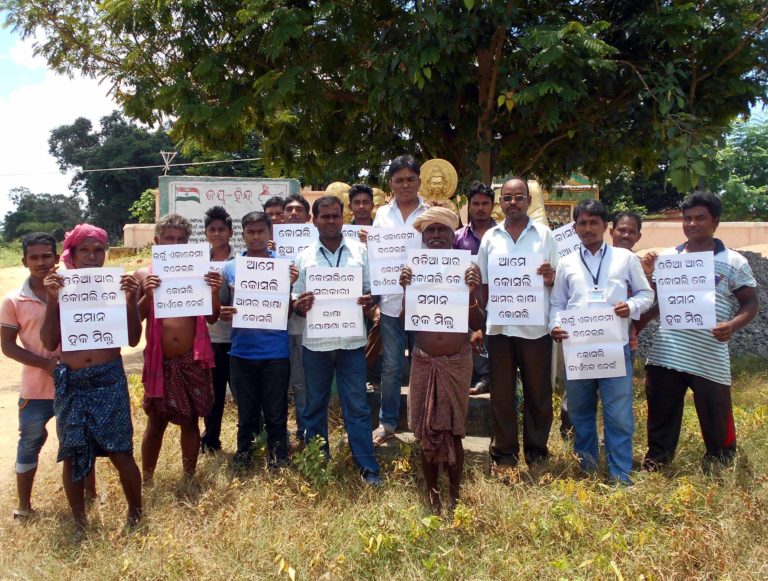
In 2016 & 2017 the movement is continuing in meetings and awareness campaign in different parts of western Odisha through magazine publication, meetings and even protest are been launched a few times.

Kosali in Parliament

The able political representatives of the region have carried the movement forward to the apex house of law making in India and raised it in the parliament. Member of Parliaments like Late Sriballabh Panigrahi for the first time discussed it in parliament. Prasanna Acharya (2008 Dec 15), Bhakta Charan Das (2009, Zero Hour), Amarnath Pradhan (2013, Oct-Nov), and Prabhas Singh(2015, Zero Hour) etc of the region have raised the issue of Kosali language in the parliament from time to time in Question Hours as well as in Zero Hours.

CONCLUSION AND POLICY SUGGESTIONS

Conclusion

After the reawakening of Kosali language in western Odisha since 2010, a kind of awareness has been found amongst the language lovers. A sense of self pride in the mass and intelligentsia have been noted. People in the region have started relating themselves to the movement and identifying themselves. Especially writers of the young age group have increased. Despite of aggressive Odianization, Kosali youths are relating themselves more to their mother tongue Kosali. Meetings, seminar and conferences have been organized and awareness programmes for mass are going on. The numbers of writers in Kosali have been increased to around 5000. Odia Media houses have started Kosali tabloids. And Kosali poetry recitations have taken centre stage for propagating Kosali movement. Now days every cultural and private government functions are keeping a special recitation session for Kosali poems.

Languages like Bodo, Dogri etc have lesser speakers than Kosali at present. The literature of Kosali has also evolved and developed to compete with the contemporary literatures. Kosali fulfills all criteria to be included in the 8th Schedule of the Indian Constitution. The story of inclusion of Bodo is interesting and a similar situation may occur in future for Kosali if Odisha government will keep widening the gap of regional disparities and will not fulfill demands of Kosali.

But a few things may be noted that the coastal Odisha lobby and government are only supporting Odia. Whenever there is a move in western Odisha for Kosali, the government has tried to sabotage it. From a reliable source we learned that the Odisha government was instrumental in funding the Odia as Classical Language movement where as for Kosali it has written a letter only and since then it is silent.  Although repeatedly we are demanding for rights of Kosali but the State government is inactive. Apart from this whenever a movement for Kosali has been pitched, a parallel movement for Odia is carried on to overshadow the Kosali movement in media. Odia media is also reluctant to broadcast the movement though the local newspapers publish the news. The government and its instrument like The Culture Department are instrumental in sabotaging the movement. For instance in 2014 Kosali poet Haldhar Nag was awarded Odisha Sahitya Akademy award and in the felicitation certificate instead of “Kosali” it was mentioned he was awarded for the contribution to “Odia” literature whereas Sri Nag is an uneducated poet and never written any Odia poetry. A protest was staged and finally the Depratment of Culture admits the mistake and replaced the certificate of Sri Nag. The State government is hatching such kind of mean strategy to leveled Kosali as the dialect of Odia. Further a group of writers and intellectuals are working behind the scene and supporting the State government for Odia just for a few awards and money. When Support of the local political will powers or representatives have been asked they have limited themselves to “oral promise”, “paper statement”, and maximum to “writing letters”.

Despite all these circumstances the Kosali language movement is inching. It is getting support from different corners.  Regularly activities are going on in the grass-root level as well as in other platforms.

SUGGESTIONS

After studying the Kosali language movement thoroughly we can suggest that it would be prudence on the part of Indian government as well as different state governments being flexible in recognizing the complexity of linguistic diversity in India by recognizing all existing languages. A language is said to be carrier of a culture and region. A language is the insignia and identity of a race. So let all languages get their due recognizations. Kosali language movement need more support as suggested below:

  • More awareness programme need to be organized for the common mass and the mass need to be sensitized about the benefits of recognization of Kosali
  • Publications of more journal and books are needed teaching about the benefits of Kosali recognizations
  • The lukewarm responding intelligentsia need to be reunited and sensitized over the issue
  • A feeling of pride need to be inculcate in the opportunist political will powers and representatives of the region about their mother tongue Kosali
  • The movement need more organized, more active to gain the desire goal

 Suggestions to State

The state should grant the much required recognisation to Kosali and support it. The fear of separate Kosal state demand of western odisha people has hardly relevance today with language though Odisha is the first state in India created basing language. We apprehend that economic viability is more important today rather than linguistic identity of a region to bifurcate a new state.  

Suggestions to Centre

The languages which are wrongly labeled as dialects (such as Kosali, Bhojpuri, Avadhi, Kumaoni, Garhwali, etc.) need to be paid more attention than the scheduled ones because due to modern education system they face an immediate threat of virtual extinction.

Kosali is not an isolated case. Majority of Indian languages are facing the same fate. Only a small minority of Indian languages is included in the 8th schedule. Therefore, all language activists across India need to come together to become a strong force.

We have founded an Organisation, CLEAR which is working for the cause of all categories of languages. And all likeminded people and groups may join us.

REFERENCES

[1]https://koslisahitya.wordpress.com/2016/06/07/charyagiti-first-literature-of-kosali/

Chrjyagiti:Kosali Ra Pahela Likhit Sahitya, Saket Sreebhushan Sahu, Mahak (Samaj), 14 November 2014

[2] http://suniv.ac.in/page.php?page=post-graduate [Diploma in Sambalpuri Studies]

[3] https://kddfonline.com/2012/09/04/kosli-books-released-for-school/

[4] Koshali Bhasa Ra Samkhipta Parichaya, Pt Prayagdutta Joshi, Page 26

[5] Koshali Bhasa Ra Samkhipta Parichaya, Pt Prayagdutta Joshi, Page 2

[6] http://www.newindianexpress.com/states/odisha/Naveen-Wants-Ho-Kosali-in-8th-Schedule/2014/03/02/article2086087.ece

[7] http://www.business-standard.com/article/pti-stories/cm-asks-centre-to-include-sambalpuri-kosali-in-8th-schedule-115071401463_1.html

[8] Sambalpur Hiteishani edited by Pt Nilamani Bidyaratna Issue: 3rd Vol: 1500

[9] Paschim Odisha Ra Geeti Kabita, Shasanka Sekhar Panda, Grantha Prabesh

[10] Koshali Bhasa Ra Samkhipta Parichaya, Pt Prayagdutta Joshi, Prakkathan

BMC election thrown up unpleasant yet interesting challenges

0

The result of Brihanmumbai Municipal Corporation (BMC) elections has thrown up unpleasant yet interesting challenges at the Congress and Shiv Sena. Congress in particular is in a big dilemma whether to support the Sena in the Mayoral elections or abstain from voting. The possibility for it to vote against the Sena looks very remote. Congress has now the historic opportunity to keep the BJP at a bay and help the Sena hold on to the post of Mayor. However, in doing so, it runs the risk of being labelled as a party which has nothing to do with secularism and that it can brazenly compromise with its basic ideals as and when it is convenient to its electoral fortunes. It can ill afford to abstain in the mayoral election because the fledging party in Maharashtra is not expected to be suicidal and it certainly can’t risk being wiped out from the political map of Maharashtra in the event BJP is able to effect defections from it and cobble together a working majority.
For Shiv Sena, the euphoria of becoming the leading party in BMC is only non-existent and the celebration is guarded. BJP came tantalisingly close to it despite contesting in fewer seats than the Sena. BJP improved upon its 2012 tally handsomely and won a third seats more than it was actually offered to by the estranged ally before the alliance broke. It is now in a position to wrest control of BMC from the Sena with the aid of some smaller parties like NCP and also if the Congress decides to abstain from voting. These are very likely propositions. Sena to get Congress support has to severe its ties with its oldest ally BJP and has a lot of explaining to do in the coming months. Sena under Uddhab Thakrey has been viewed as highly mercurial and its mass appeal as the principal regional party in the state is declining at a very faster rate.
The BJP couldn’t have asked for a better turn of events. From 31 seats in the last BMC, it made a three-fold rise in its seats in this BMC election. Besides, it has emerged as the single largest party in 8 out of 10 municipal bodies where it is in a position to rule. The Zilla Parishad and Samiti elections have also given it status of the largest party in the state. In the event of a fresh election to the Assembly, it is very likely that other parties will stare at decimation. A Congress-Shiv Sena alliance at the electoral hustings may be a statistician’s delight but unless the parties lack ability to transfer their votes, it will be an electoral debacle for them.

Pramod Kumar Sahu

OFS

ON DEVIPRASANNAS by Prof Kesha Ranjan Pradhan

I am obliged to write about the recent statement made by Deviprasanna Pattnaik, noted linguistic and diehard enemy of Sambalpuri/Kosali language in a seminar in New Delhi. He is for the unity of Odisha and considers recognition to this language a huge threat to it.

While I appreciate his concern for Odisha’s unity, I feel his comments on Sambalpuri/Kosali as uncalled for as it is out of place.

My point rests on simple logic.

If recognition to Sambalpuri/Kosali language is a potential danger to Odisha’s solidarity, Deviprasannas would always like to keep the language and the people under developed and would be happy if the language is not spoken at all by the people. The Govt. has in the past adopted similar policies to subordinate this language and kept it away from the offices, officers and official purposes. Had the language spoken in western Odisha gone extinct as a result of such dubious policy it would have been a different matter.

But languages are known to survive amidst apathy and hostility as many have become extinct despite all possible patronage. Sambalpuri or Kosli or Sambalpuri Kosli or Kosli Sambalpuri, as you may like to call it, showing great tenacity, is alive and kicking, as the speakers of this language feel strongly about it.

When the Government of Odisha recommended the language for inclusion in the 8th schedule of the constitution it was amending its language policy. It was a laudable step to ensure the all round development of the state. It was a positive step towards keeping the state united and thwart attempts to divide it on grounds of regional disparities.

Deviprasannas fail to see that Odisha has reasons to be proud of Sambalpuri/Kosali language, literature and its culture. I am sorry for his inability to accept the truth that the people here have a positive attitude towards their language and by denying the language its constitutional rights YOU are only paving ways for a separate state.

So the few Deviprasannas Odisha has must realize that they are doing a great disservice to the unity of Odisha by opposing just policies of the Government in the name of solidarity.

Make Odisha bi-lingual

0

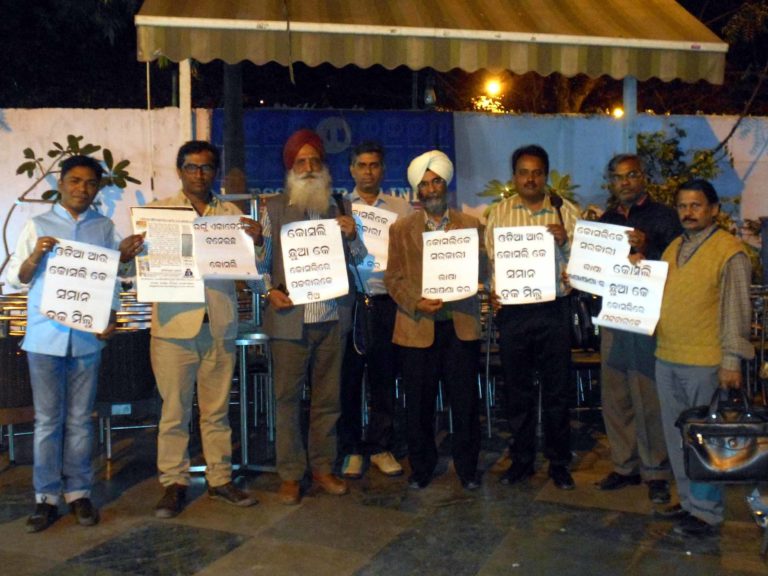
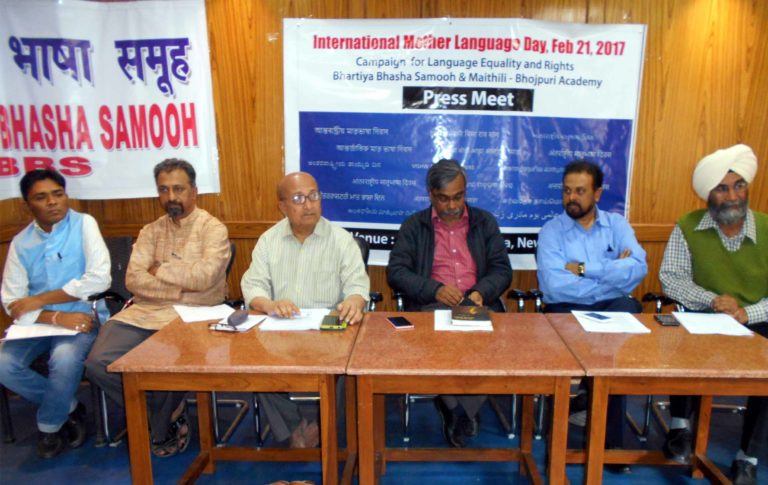
Recognize Kosali as official language of Odisha stateand make Odisha bi-lingual, demands Kosali Kriyanusthan Committee on the occasion of International Mother Language Day jointly celebrated by Campaign for Language Equality and Rights (CLEAR), Bharatiya Bhasa Samooh and Maithili-Bhojpuri Academy Delhi at Press Club of India, New Delhi.

Noted Kosali language activist and Co-ordinator Kosali Kriyanusthan Committee Saket Sreebhushan Sahu said, currently, notices are given in the villages of western Odisha in Odia. Not very literates understand the full implications of these notices. Civil servants from other areas who do not even have rudimentary knowledge of Kosali language cannot communicate with citizens, thus resulting in miscommunication. Out of 29 states, 15 have more than one official language. Out of 7 union territories, 6 have more than one recognized language. In a democracy, freedom of expression is a fundamental right of the citizen. Good governance requires efficient communication between the citizens and the government. In this context, Kosali language should be recognized as the official language of Odisha along with Odia. This will facilitate governance in western Odisha which is educationally backward and affluent with adivasis.

He added, in Odisha, Kosali language speakers and Odia language speakers pays equal taxes but Kosali language speakers are not enjoying equal rights that with Odia. The government is showing disparities to Kosali.

Language activists focus on constitutional rights of the ‘non-scheduled’ languages

We, the representatives of Campaign for Language Equality and Rights (CLEAR), Bhartiya Bhasha Samooh and Maithili-Bhojpuri Academy, collectively uphold the demands of various language communities in India to provide their languages the much-needed constitutional status and strongly oppose to reducing status of national languages to local languages which recent example is shifting of national languages news bulletin to regional centre of AIR.

Language activists from around India today, on International Mother Language Day, demand the Union government to recognize 38 languages recommended by Sitakanta Mohapatra Committee in 2004, by including them in the 8 th Schedule of the Constitution of India with any further delay.

In the past few years the central government has included different Indian languages in the 8th Schedule of the Constitution by the recommendation of various committees. However, it isn’t following any yardstick in doing so. It shows prudence on the part of Indian government in being flexible in recognizing the complexity of linguistic diversity in India.

The language activists from CLEAR (Campaign for Language Equality and Rights), Bharatiya Bhasha Samhooh and Maithili Bhojpuri Academy and others, today expressed their hope that all the 38 languages recommended by Sitakanta Mohapatra Committee in 2004, pending under active consideration of the Union Government to be
included in the 8 th Schedule of the Constitution. The current list of languages recommended by the Sitakanta Mohapatra committee includes: Angika, Banjara, Bazika, Bhojpuri, Bhoti, Bhotia, Bundelkhandi, Chhattisgarhi, Dhatki, English, Garhwali (Pahari), Gondi, Gujjar or Gujjari, Ho, Kaachachhi, Kamtapuri, Karbi, Khasi, Kodava (Coorg), Kok Barak, Kumaoni (Pahari), Kurak, Kosali, Lepcha, Limbu, Mizo (Lushai), Magahi, Mundari, Nagpuri, Nicobarese, Pahari (Himachali), Pali, Rajasthani, Shaurseni (Prakrit), Siraiki, Tenyidi and Tulu.

The activists also emphasized the need of updating the recommended list for any new demands from any language community since the submitting of the report.

It is said that the right of a mother tongue is a basic cultural right of the people which link them with their economy, socio-cultural system, and political right. UNESCO has recognized that the concept of language equality among all languages is important irrespective of whether the languages have a script or not. Furthermore, the union government claimed that it would promote the mother tongue based multilingual education to reduce the school drop-out rates. In this regard, we appeal it to include all the 38 languages in the 8 th schedule of the Constitution of India to make that initiative to succeed uniformly for all language communities.

The language activists under CLEAR, a pan-Indian organization comprising the representatives of more than 40 languages in India, are engaging with various Union and state governments to sensitize them on language issues and express the demands of various language communities.

Bharatiya Bhasah Samooh to fight closing down of language bulletins in national telecast of All India Radio

Bharatiya Bhasha Samooh, announcing its inauguration today, will focus the rights of languages in India. It brings to the notice of the people how the recent decision of Prasar Bharati to move its language news broadcasts ostensibly arguing that they are regional languages and they could very well be managed regionally.

However, calling national languages as regional languages is what language activists won’t agree with. BBS points out the speakers of the languages could live across the country and, in fact, languages like Sindhi, Bengali, Punjabi and Tamil are even international languages.

The press meet is attended by Dr. Joga Singh (President, CLEAR, 9915709682), Mr. Deepak Dholakiya (BBS, 9818848753 (BBS), Mr. Anil Chamadia (BBS, 9868456745), Mr Kumar Sanjoya Singh (MBA, 9311135050), Mr. Anand Guru (Vice President, CLEAR, 9844611098), Mr Senthil Nathan (Secretary, CLEAR, 9884155289), Mr. Saket Sreebhushan Sahu (Member, CLEAR, 9937822442) and representatives of various languages.

The Discipline_ Dr Saheb Sahu

0

Nonviolent campaign’s discipline consists of two components: (1) adhering to the broader strategic plans for the struggle and (2) refraining from violence. Maintaining persistent nonviolence discipline is critical to the long term success of the movement. Even limited violence by resistant or on their behalf including in response to brutalities can be counterproductive. Violence by the resisters reinforces the oppressor ability to use repression on the resistors.

Knowing that violence can cause harm to movements and provide an ideal pretext for repression, governments and reactionary groups have actively tried to encourage it. Highlighting this tendency, Gandhi put forth a willfully counter intuitive proposition. For a member of a mass protest movement to resort to violence he argued “was to cooperate with the government in the most active manner.”

In many cases when activists do not initiate violence, governments have worked to provoke them. Across a wide range of countries and time periods, authorities have sent infiltrators into activist organizations to serve as agent provocateurs to instigate violence.

Creating discipline within a movement is at once a difficult task but an essential one. Where structured- base organizations such as labour unions and political parties operate through clearly defined hierarchies, mass mobilizations rely on activating loose broad networks of supporters. This creates a unique challenge for the momentum based organizations. Hybrid organization offers some solution to this dilemma. They can maintain discipline by mass training in advance of the protest and having local leaders maintaining the discipline of nonviolence. If needed they can kick out the trouble makers. If the resisters create even small violence incident, the authorities can and most of the time they do brutally repress the movement in the name of maintaining “peace and order”.

Hence sticking to nonviolence action is the key to the success of the campaign.

Sorrow of a teacher trainee in Odisha

The salary of a primary teacher in Odisha is Rs 5200/-. To become a primary teacher you have to go through the journey of a painful road. First one has to appear the CT entrance test. After qualifying the CT entrance examination, they will undergo the CT training for 2 years and 6 months. After passing the CT training, there is no job. Again you have to appear the OTET eligibility test. But again there is no immediate job after the eligibility test. You have to wait for 2-3 more years to get the job vacancy. Further when the advertisement will be published for job vacancy it will cover a few districts only.

Recently the government published advertisement to recruit SS teacher for 22 districts only. The recent recruitment advertisement will employ only half of the eligible unemployed. The remaining halves of the eligible teachers are unaware about their future. Apart from this, after going through such a difficult phase one cannot get a job in his own district. He has to travel to some 400 KM to get Rs 5200/- monthly.

But just calculate the benefit of the government from it. Every year more than 300000 candidates appear for CT entrance test. Rs 200/- is charged for examination fees. (Total Rs 60000000/-) Secondly the government conduct OTET examination twice and more than 90000 candidates appear every time. Each candidate pays Rs 500/- as examination fees.  (90000X500= Total Rs 450,000,00/-)