Tuesday, April 28, 2026
Home Blog Page 48

Can Madarassas be compared with RSS run Schools?

Ram Puniyani

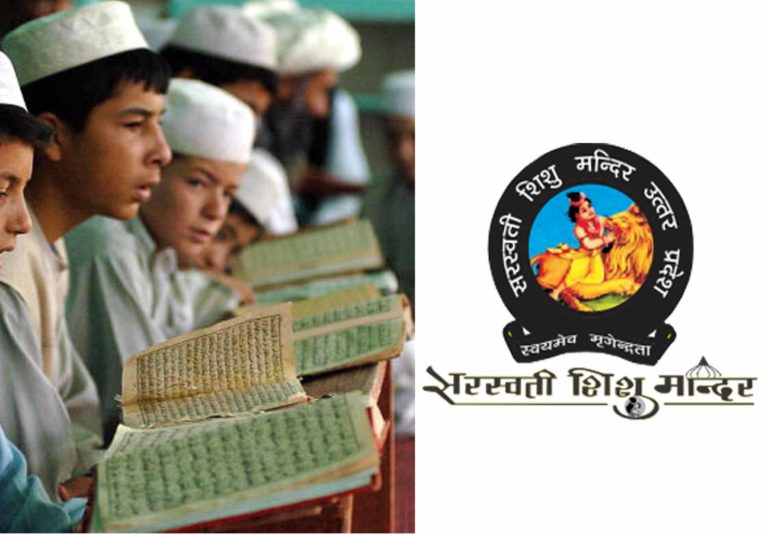
Digvijay Singh’s tweet ‘Madrassas and Sarswati Shishu mandirs (SSM), both spread hate’ (Feb 23 2017) has evoked lot of response from diverse sections. On one hand Muslim groups have taken him on for demonization of Madrassas, and on the other, RSS supporters have come out attesting the utility of SSM and criticizing him for comparing SSM with Madrassas which are ‘dens of terror’ according them.

The demonization of Madrassas Worldwide began particularly after the 9/11 2001, when US media propagated the phrase ‘Islamic Terrorism’. This was the time when the role of Taliban-Al Qaeda, trained in Madrassas of Pakistan came to the fore. The type of education given in these few Madarssas became synonym with ‘Madrassas’ as such. This is far away from truth as the Madrassas in Pakistan where the indoctrination for terror took place were few in number and are not representative of Madarssaa education and its system in any way.

As such Madrassas education in India has been fairly old. It was mainly sticking to recitation of Koran in particular, ‘learning it by rote’ method. There is a long history of religious and secular education among Muslims, in India. The Muslim religious education focusing on Islam and training of Ulema culminated in establishment of many well known seminaries like Deoband and Barelvi. Muslim secular education began with the efforts of Sir Syed, who contributed massively in introduction of modern, rational and scientific education among Muslim. Interestingly Maulanas of most seminaries were against British rule, supportive of freedom movement and opposed to partition of the country.

Today Madrassa education in India is restricted to hardly 2-3% of Muslim children. Mostly poor, un-affording Muslims send their children there. These schools are also in the areas where the reach of public schooling system is not high. Some Madrassas also support the food and lodge for the children which become an additional incentive for poor Muslims to send their children, away from the mainstream system which is inaccessible to them anyway. While not totally keeping pace with the Modern education, at places these Madrassas have tried to introduce subjects like English, Mathematics and other secular subjects.

In contrast in Pakistan few Madarassas, where Al Qaeda and its clones had been given training, were part of the US plan to raise fanatic groups which could be marshaled to join the battle against Soviet Forces which had occupied Afghanistan towards the end of cold war. These Pakistan based madrassas adopted a distorted version of Islam, totally intolerant to dissent; promoting violence against infidels (kafirs) in the name of Jihad. These madrassas were supported by the US goals of control of oil resources of West Asia. Their syllabus was planned from Washington. Their genesis and growth had three pillars: US planning and funding, distorted version of Islam from Saudi Arabia and their location in Pakistan. The generalization that all Madarassas are dens of terror; came up through vested propaganda. Few Madarassas which played the negative role are being equated to whole Madrassa system, so to say. This generalization prevalent in society has gone far and deep and this is what gets manifested in the tweet by Digvijay Singh, which says “Is there a difference between Madrassas and Sarswati Shishu Mandir Schools run by RSS? I don’t think so. Both spread Hatred.” Similarly earlier Buddhadeb Bhattachrya, the CM of West Bengal had also commented on Madrassas in the negative tone.

On a totally different wavelength RSS combine, who are working for the goal of Hindu Rashtra, has set up Sarswati Shishu Mandirs, which along with other institutions set up by this combine are schools propagating the World view of Hindu nationalism. They have been making news off and on for the content of their curriculum. The demonization of Muslim kings, glorification of Hindu kings, spread of Islam by sword, the conspiracy of Christian missionaries, the unsuitability of secularism for our country, the folly of Gandhi-Nehru in imposing western secularism on India are the regular part of the syllabus of these schools. Additionally caste gender-biases and glorification of nationalism of Hitler and Mussolini are the ground on which these children are raised. It is this combination which makes the students of these schools to look at Muslim and Christians differently. It is due to this that Gandhi and Nehru are looked down by the products of these schools.

Their curriculum distorts the history to create dislike for religious minorities and also, undermines rational thinking and scientific temper and promotes the mythology of ‘We have been the World teachers, equipped with all the wisdom and scientific achievements like plastic surgery, aviation science or stem cell technology.’ These notions are being made to seep in the society very subtly and deeply; adding to the foundation of sectarianism which have be part of RSS propaganda. It is not a religious education so to say; it is motivated by the political agenda of sectarian nationalism.

The need for differentiating wheat from chaff is urgent and great. While some Madrassas, based in Pakistan, surely sowed seeds of hatred for those differing from their own rigid interpretation of Islam to the extent of doing violence against those differing from them, most madarassas are centers for Islamic education. SSM’s on the contrary are the ones disseminating education along with Hindutva political views.

Leaving aside the Madarassas where Al Qaeda clones were groomed, the whole Madarassa system is very diverse. They cannot all be put in the same category of spreading Hate, the way Mr. Singh is doing. Such expression are superficial, non factual and also show that leaders like Mr. Singh are unwilling to do their home work to understand the genesis of terrorism in West Asia, its etiology being in the politics of oil control masquerading as Islam. It is an unfounded generalization which demonizes the minorities and sows the seeds of suspicion against them which is not in the interest of our country.

Water supply project failed in Ganiapali Panchayat

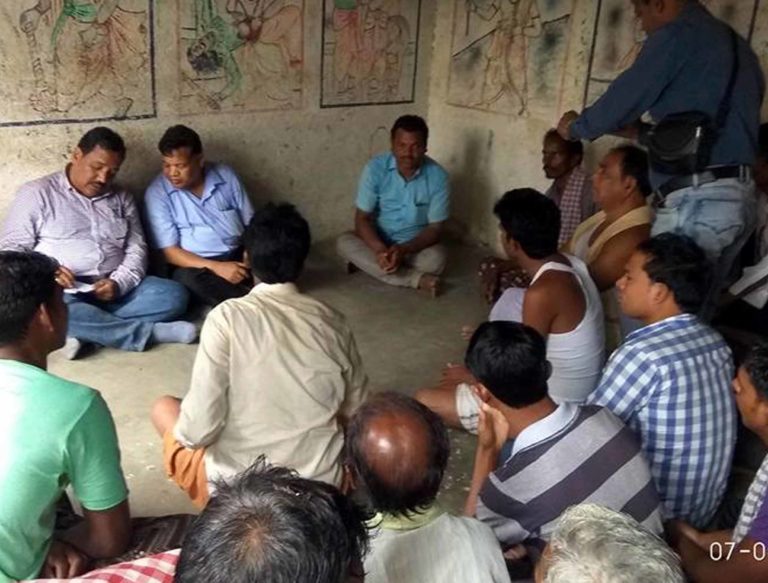
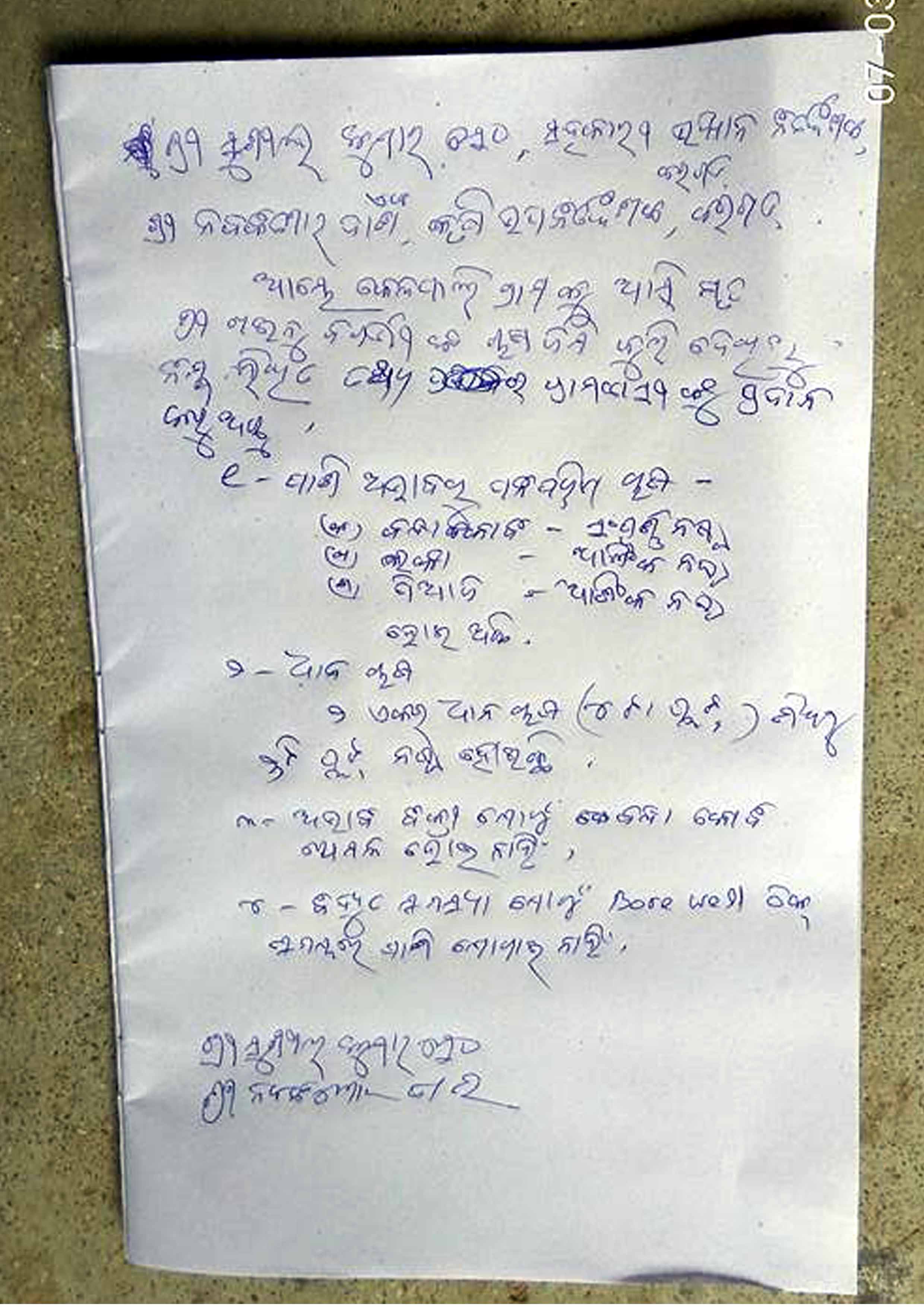
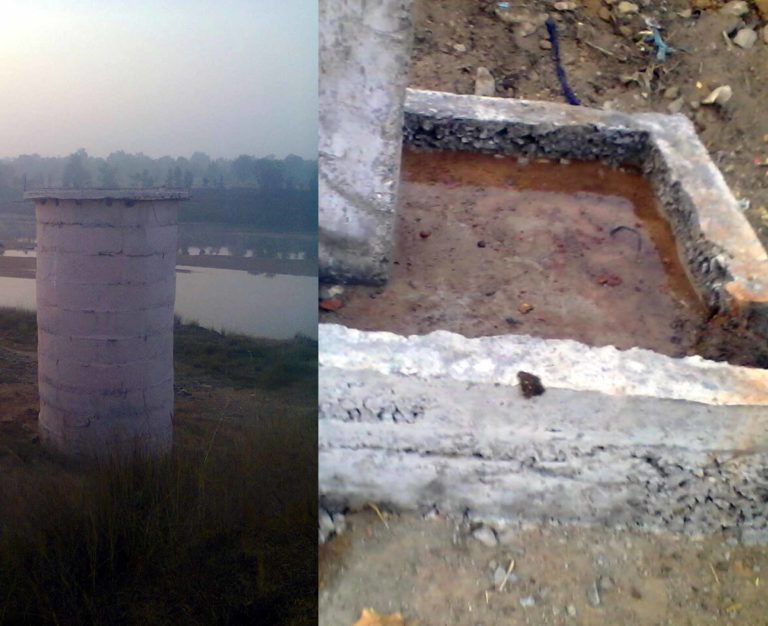
The water supply project started by Rural Water Supply Section is in incomplete situation.   The project was initiated since last 2 years but yet it is not complete.

Summer season is about to arrive. But the administration is sleeping. The other two villages, Ganiapali and Jugibandhli of the panchayat are getting supply water where as Malmanda village is yet to get.

The villagers are threatening for strike if water supply is not connected in due time.

Farmer suicide row: wife denied anyone’s visit

The Agriculture Minister of the state stated that the cause of farmer suicide is due to family dispute. The district collector also reported in the same line.

Now we met the farmer’s wife. We further queried her whether anyone from the government side has turnout to them for any help, she denied.  Neither the minister nor the collector has visited us.

We further asked her how they manage the family. She replied, they have 2 sons and younger one is under medical treatment since last 2 years.

The family has become economically unstable due to medical expenses. Even now they are unable to feed milk to their younger one. The farmer, Khainu Bagarty was the sole bread earner in the family. And he is no more with them. Since last few years they are not getting better harvest. Crop loss took his life. Shortage of electricity in the village and area is frequent. Hardly they get electricity; in the early morning around 6 AM and then around 1 PM in the afternoon. Again it is available in the night around 9 PM. Rest of the time the village is deprived of electricity. In these circumstances the farmer could not irrigate his crop and got loss.

Now the family has no food grain to manage their coming days. They are clueless. The sole bread earner is left and government is playing politics.

BJP to stage protest on 7th condemning minister’s statement

The state BJP unit has decided burn effigy of the Agriculture Minister on 7th March 2017 and stage protest in every district headquarter to  condemn the statement of the Agruculture Minister on farmer suicide of Bargarh.

As per the report, the Agriculture Minister stated that farmer Khainu Bagarty of Bargarh committed suicide due to family dispute not due to crop loss.

Farmer Khainu Bagarty suicide in Bargarh district has once again created a huge discontent and raised questions on the Naveen Patnaik led BJD Govt’s policy on farmers.  The statement of the Agriculture Minister is irresponsible and the report of the district collector of Bargarh has been submitted under pressure, says BJP, Odisha.

As per the information, farmer Khainu Bagarty committed suicide due to crop loss caused by failure of irrigation which was further caused due to shortage of electricity.

Now the state BJP unit has decided to protest in every district headquarter and burn the effigy of the Agriculture Minister on 7th March 2017.

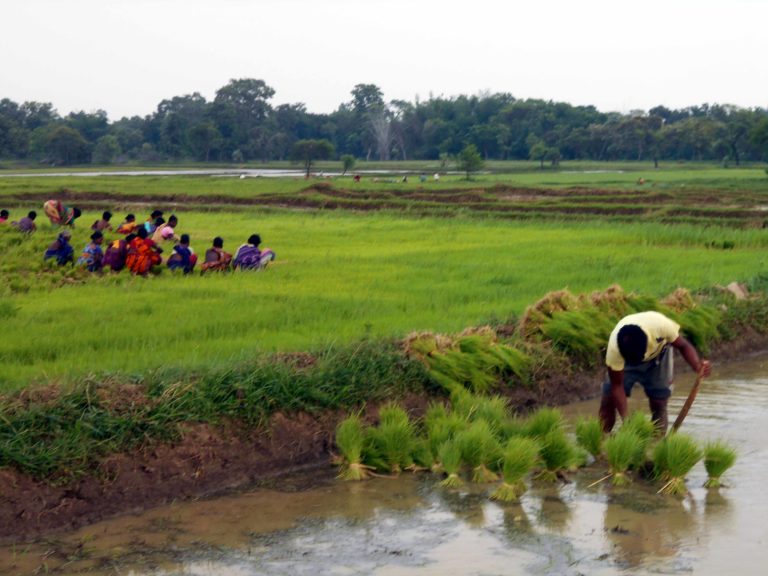
Disparity in Agricultural Productivity in Western Odisha

0

Rabindra Mishra
(Lecturer in Economics, Sohela Degree College, Sohela, Bargarh, Odisha, India, Email Id: mishra.rabindrakumar@gmail.com)

Introduction
The agricultural productivity in India epitomizes solicitous way out to the problem of food crisis. In recent years it has been observed that the production and productivity of rice is growing and accomplishing self reliance, household food security as well as serving as a means to tone down the age old problem relating to hunger and poverty in under developed Asian countries including India.. But regardless of the remarkable performance of agricultural sector, the disparity in the food grain production among the states and districts during post-green revolution period is seen. It is only due to the disparity in the rate of productivity i.e. rate of yield.
Agricultural development has been a primary goal of India’s effort to ensure food security and reduce poverty (Joshi and Kumar, 2014).Among other factors, the production of food grains depends upon rain fall and its temporal and spatial distribution. Food grains production in Odisha has shown a secular increasing trend since 2002-03 with some year to year variations. In 2012-13, the production of food grains was 10,210 thousand metric tons (TMT) showing an increase of 61.6% over 2011-12.This is due to bumper production of rice and pulses. Rice production of the state has increased by 63.5% over the production of 5807 thousand metric tons (TMT) during 2011-12(Odisha economic survey, 2012-13).The average yield rates of rice has increased from 14.50 quintals per hectare in 2011-12 to 23.61 quintals per hectare in 2012-13(Odisha economic survey).In India food grain production is 218.1 million tonnes as indicated by the agricultural statistics of 2010 of ministry of agriculture. However, the production of rice is 89 million tonnes which is 21.6 percent of global rice production. Thus, in order to increase the production of rice per hectare and solve the problem relating to the disparity in productivity, there is an imperative requirement to support the farmers technologically as well as financially.

Literature Review

In the process of agricultural development disparity in agricultural productivity has bothered economists for a long period of time. Because agriculture in general and food grains in particular occupy an important place in Indian economy. For proper food planning, it becomes significant to make reliable demand and supply projections which form a long and short term policies and strategies for meeting the future food grains needs of the people of the nation (Pandey and Sarup, 1996). In order to raise productivity of agriculture, there should be an improvement of institutional agricultural credit (Parida,1998). That means the formal agricultural credit is very much essential for improving agricultural productivity and welfare of the farmers (Chaudhuri,2001).Besides, the increase in the production as the major challenge lies ahead to achieve the future increase in production essentially through increase in productivity, as area under agriculture is likely to reduce with increasing urbanization (Verma,2006). Accordingly, in a predominantly rural and agricultural country like India, agricultural progress will be the most effective social safety against hunger and poverty (Hazra,2009).

Food security remains a global challenge today and famine still threatens several parts of the globe. So, it is necessary to develop agricultural technologies to increase yields and eliminate crop failures and famines (Mahanty, 2010).Mere distribution of land to the poor people was not enough to increase productivity, the transformation of backward agricultural system is very much dependent on the availability of inputs.(Tiwari,2011).In the development process of a country, agriculture serves as a provider of initial surpluses for other sectors of the economy and wage goods to the industrial sector. Accordingly it acts as the promoter of growth through forward and backward linkages (Sekhar, 2014).Moreover, agricultural production depends on land, labour and capital availability. Latter factors are only effective, if land is suitable for cultivation. To overcome this problem there is an vital need of land and water management (Panwar, 2015).

All the earlier studies have highlighted the significance of food grain production in agricultural sector for the development of Indian economy. But, distinctively the study on the disparity in yield rate of rice (yield in Ka/ha) in the nation is found to be lacking. So, in this paper an endeavor has been made to study and discuss the disparity in yield rate of rice (yield in Ka/ha).

Analysis

The productivity (yield) of rice depends on the inputs. Inputs determine the quality and quantity of outputs in an agricultural farm. As there is difference in the use of inputs like quality seeds, fertilizers, pesticides, implements, technology, availability of finance and technical guidance, so there is disparity in the yield rate. The farmers of the study districts of different climatic zones of western Odisha use quality seeds, fertilizers, pesticides, implements, technology to increase production and productivity of rice.

It is observed that there is disparity in the rate of yield in rice (Kg/Ha) between the districts as well as the climatic zones. In North-Western Platue the yield rate of rice in 2008-09 is more in Sundargarh district in comparison to Deogarh district. The same scenario is observed again in 2011-12.However,in 2009-10,2010-11 and 2012-13 the yield rate of rice is more in Deogarh district than the Sundargarh district. In Western Undulating Zone the yield rate of rice in 2009-10, 2010-11 and 2012-13 is more in Kalahandi district in comparison to Nuapara district. But, in 2008-09 and 2011-12 and 2012-13 the yield rate of rice is more in Nuapara district than the Kalahandi district.However, the yield rate of rice, except year 2008-09 in Western Central Table Land in 2009-10, 2010-11, 2011-12 and 2012-13 is more in Subarnapur district in comparison to Baragarh district.
Similarly, the disparity in productivity, specifically the yield rate can better be appraised from the growth rate as well as the percentage growth rate of yield rate (kg/ha) in the period of study. In North western platue the growth of yield rate of rice in Deogarh districts is more than the Sundargarh district. Similarly in Western undulating zone the growth of yield rate of rice is more in Kalahandi district in comparision to Nuapara district. Like the North western platue and Western undulating zone, in Western central table land the growth of yield rate is more in Subarnapur district as compared to Bargarh district. However, the percentage of the growth of yield rate of rice is different from district to district. In North-Western Platue the percentage of growth of yield rate of rice (Kg/Ha) is more in Deogarh district in comparision to Sundargarh district. Similarly, in Western Undulating Zone, the percentage of growth of yield rate of rice (Kg/Ha) is more in Kalahandi district in comparision to Nuapara district. In the same way, in Western Central Table Land, the percentage of growth of yield rate of rice (Kg/Ha) is more in Subarnapur district in comparision to Bargarh district. Though there is disparity in the growth rate of yield of rice(Kg/Ha) among the districts of western Odisha, still in all districts irrespective of climatic zones there is rising trend in the productivity of rice of in study period (2008-09 to 2012-13). This result analysis is supported by the testing of hypothesis, tested as follows based on the result of the K-W (H) TEST. The K-W (H) TEST shows that the difference in the yield rate of rice (Kg/Ha) in the study period across the climatic zones as well as districts is found statistically insignificant.
Major Findings
It is found that the yield rate of rice (Kg/Ha) has increased irrespective of climatic zones and districts of western Odisha in the period of the study. But there is disparity in it among the districts as well as climatic zones. The disparity in the productivity of rice in western Odisha in the period under study is due to the difference in several compounding factors including the difference in prudent management of high potential land, continuation and supplementation of soil fertility through a number of integrated practices, a mix of technologies that are generously utilized the advances in the progressive of science and enhanced the proper utilisation of credit dispensed by banks.

Conclusion
Thus, it is concluded that the yield rate of rice (Kg/Ha) has grown appreciably in the period of study but not same in all districts and climatic zones. This spells out the difference in the use of high yielding seeds, machine labour, hired labour and application of fertiliser, pesticides and insecticides, etc. It is true that the yield rate of rice has grown but whether it is gainful for the farmers of entire area under study or not, is really a matter of great apprehension. Accordingly, it is very important to assess the productivity in entire area to determine the true growth and success of the use of modern agricultural practices. So, it is the very important for the researchers to study in this line and policy makers to take required attention and necessary measures to solve the problem relating to disparity in the yield rate of rice.
References
Chaudhuri S.( 2001), Interaction of Formal and Informal Credit Markets in Backward Agriculture : A Theoretical Analysis, Indian Economic Review, vol.-XXXVI, No.-2,.31-37.
Hazra,A.(2009), Poverty in rural India:Jeopardizing the future growth, Kurukshetra, 58(1), November, 32-36.
Joshi,P.K and Kumar,A.(2014),Agricultural growth in India:Performance and prospects,YojanaJune(58),50-56.
Mishra, RK.(2011), Impact of short term credit on mechanization of agriculture, International journal of development studies. Jan-June,2(1) 308-315.
Mishra, RK.(2012), Agricultural development through commercial banks in post reform
period,Indian journal of development research. July-December,1-11.
Mishra, RK.(2013), Disbursement of agricultural loan by the banks in post reform
period,Indian iournal of commerce and management studies. May, IV, 2(1), 52-55.
Mishra, RK.(2015), Growing scenario of yield rate of rice in Odisha,Indian journal of development research. July-December,52-55.
Mohanty,B.K.(2010), Agricultural growth-it is time for gene revolution, Kurukshetra, 58(9), July, 3-7.
Odisha agricultural statistics, 2012-13.
Odisha economic survey, 2013-14.
Pandey,R.K and Sarup,S.(1995), Supply prospects of food grains production in India,Yojana,40(5),October, 24-26.
Panwar P( 2015), Land and water conservation: Need of the hour,, Kurukshetra, September, Vol-63 No-11.p.31-34.
Parida R.S. Meeting New Challenges in Food Production, Yojana August, 1998.
Sekhar,C.S.C.(2014), Indian agriculture-A review of policy and performance, Yojana,June, 32-37.
Twari,P.K.(2011), An overview of state initiatives in agriculture, Kurukshetra, 60(2), December,21-23.
Verma,P.(2006), Agriculture as an Industry, Kurukshetra, 50, September,20-22.


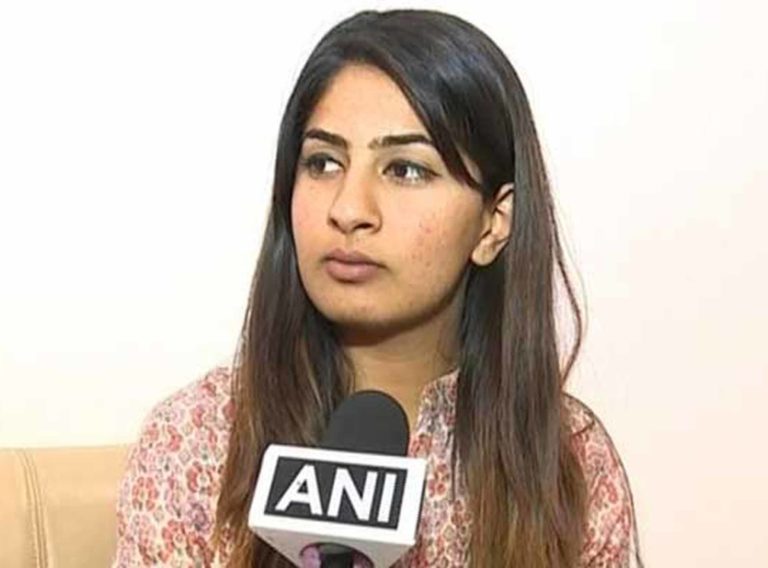
Pakistan India Peoples’ Forum for Peace and Democracy on Gurmehar

Pakistan-India Peoples’ Forum for Peace and Democracy (PIPFPD) expresses its solidarity with a 20 year old Gurmehar Kaur and condemn ABVP and other forces that have targeted brave girl. She is a daughter of a Kargil martyr while ABVP’s parent organization RSS, did not even participate in the freedom struggle.

Gurmehar Kaur is being targeted for saying,” I am not afraid of ABVP. I am not alone. Every student of India is with me”. She is a student of Delhi University and watching the hooliganism of ABVP in Ramjas College, Gurmehar raised her voice against enemies of freedom of expression. Shamelessly, Minister of state for Home Kiran Rijiju, instead of acting against ABVP, said leftists are polluting her mind.

Earlier she had said,” Pakistan did not kill my dad. War killed him”. One needs to understand her sentiment and rationale behind the statement. By that statement she emphasized the futility of war. Young Gurmehar clearly indicated that it is basically war which causes death of soldiers. The reality is war and hostile relations kill people and lakhs of people suffer. India and Pakistan along with other super powers needs to make a move towards living in a peace. There is no alternate to peaceful co-existence. War creates hysteria and creates feeling of super nationalism. Soldiers and people suffer and get killed.

The ruling alliance is openly supporting ABVP and hounding a young girl. It can be seen in a statement of BJP’s member of Parliament Pratap Simha, who compared Gurmehar to fugitive Dawood Ibrahim.

We want to assure Gurmehar that the saner voices of the country are with you.

For further details contact: Email- pipfpd.india@gmail.com | Phone- 09869077718

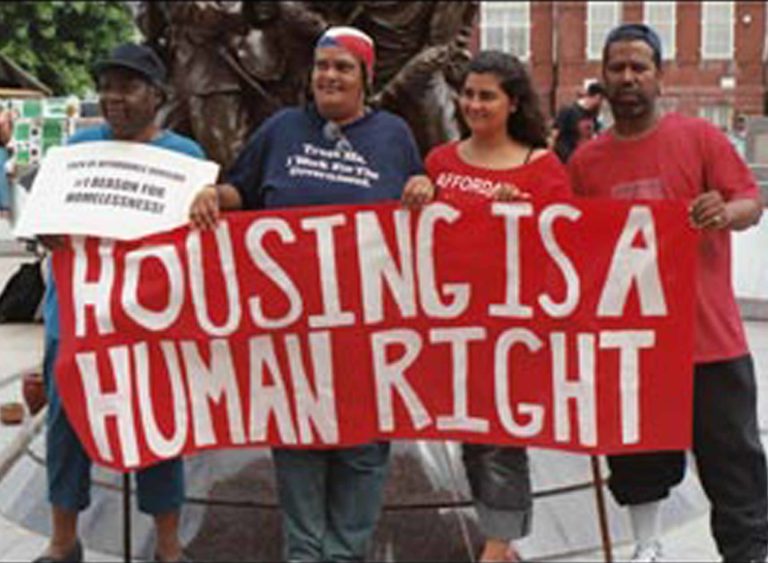
India needs a law to ensure ‘Right to Housing’

0

The Report prepared by Special Rapporteur on adequate housing United Nations which is to be presented today in UN Human Rights Council, highlights the extreme scarcity in availability of proper housing to 58.6 million households. A deeper study of the report brings out that among this large community, schedule castes and schedule tribes, homeless people, Muslims and manual scavengers are the worst hit. Access to housing is abysmally below the national average for this segment.

Around the same time when the Report was being prepared, housing rights activists comprising of 70 representatives from 9 different states of India had gathered to share experiences and evolve strategies to solve the housing problem, in a meeting called by National Alliance of People’s Movements and Ghar Bachao Ghar Banao Andolan on 8thJanuary this year.

Major point of discussion of this Coalition of Housing Rights Groups that met on January 8th, was addressing the challenges posed by rampant evictions, denial of land rights, livelihood opportunities and basic services to poor communities living in informal settlements which goes unchecked in the absence of any legal prudence.

The UN Report and the deliberation of the Coalition, both seeks to build upon the orders of the Supreme Court of India in the matter of ‘right to housing’. The Supreme Court of India in 1995 in the Chameli Singh Vs. State of UP matter, emphasised the centrality of the right to housing as precursor to all rights. Successive judgements on similar matters in the Supreme Court, reiterate the similar concerns.

The proof that very little has been done in over two decades by various governments, is borne out from the fact that the need for housing has more than doubled to 58.6 million units (Special Rapporteur report 2017) from 23.90 million in 1991 (Government of India – National Buildings Organisation, Ministry of Urban Affairs & Employment). It also proves that all the governments over the decades had ignored the order and sentiments of the highest court of India.

The UN report as well as the deliberation of the Coalition also concluded that the ‘Pradhan Mantari Awas Yojana’ under the ‘Housing for All Mission’ of the central government of India, will only cater to the demand of one particular section and recognized the possibility of discrimination in implementing the policy.

One important thing that emerged from the experiences shared by the Coalition was that what very often is overlooked while estimating the shortage of housing is the connection between housing and livelihood. Livelihood is a key factor which defines the need, affordability and character of housing.  So, any solution that seeks to protect housing right should consider livelihood as the integral part of the problem.

As far as ‘Smart Cities Mission’ of the central government in the ambit of housing is concerned, the inference of the Coalition was that the mission is highly exclusionary in its approach which will give minimum space to the poor, reduce citizenship into consumers, highly expensive and the principle of democracy will be compromised at every level of planning and implementation of the mission.

One of the strongest recommendations of the Report is a need for a national legislation that will address problems relating to housing rights. This very recommendation in the Report is in resonance with the demand that was raised by the Coalition at the end of the deliberation. The Coalition finally concluded that a campaign would be chalked out at a national level in near future to demand a law which would protect the housing rights keeping livelihood as its integral part.

Medha Patkar, Rajendra Ravi, Bilal Khan, Amitava Mitra, Mahendra Yadav, Sunita Rani, Amit Kumar, Madhuresh Kumar, Himshi Singh, Meera Sanghamitra  


For details contact Bilal Khan 9958660556

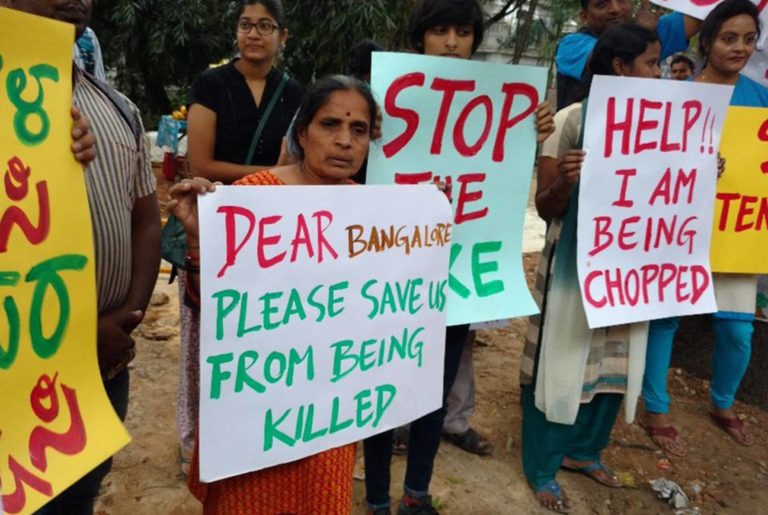
Karnataka government must freeze mass tree felling

0

It has been confirmed by the Tree Officer of Bruhat Bengaluru Mahanagara Palike (BBMP) that over 30,000 objections have been received in response to the Public Notice issued by BBMP on 07 February 2017, proposing to fell 112 trees for the widening of Jayamahal Road, Bangalore. This notice, declared on the basis of an “on spot inspection” carried out by the Tree Officer, presumed that the only way forward for relieving traffic congestion is to fell these age-old trees and widen the road. This appears to a pattern in the BBMP: claim mass tree felling is essential to relieving traffic congestion, without in any public, transparent and accountable manner addressing various intelligent and rational solutions.

Clearly perturbed by the massive public opposition to this proposal, generated in large part by the efforts of the Citizens for Bengaluru campaign, the Tree Officer is now taking shelter under the claim that the public has not offered “practical working solutions”. In fact, he has questionably argued that the only solution to relieving traffic congestion is to fell trees and widen the road. It is not the business of the Tree Officer to so justify mass tree felling per law and judicial directives.

Such reckless enthusiasm to fell trees by the Tree Officer is in clear violation of the decisions of the High Court of Karnataka in WP 7288/2011 (Suo Moto v. Government of Karnataka and Ors.) read with WP 13241/2009 (Environment Support Group and Ors. v. Bangalore Metro Rail Corporation Limited and Ors.). In these directions, the Court has held that the Tree Officer must ascertain if BBMP has conformed with the Karnataka Town and Country Planning Act, 1961 (KTCPA, 1961) provisions , involving several public review and accountability procedures, prior to reviewing applications seeking felling of trees, be they for road widening, Metro or any other infrastructure projects, as per the Karnataka Preservation of Trees Act, 1976 (KPTA 1976).

It is an undeniable fact that in the case of Jayamahal road widening, BBMP has not taken any steps to conform with various provisions of the KTCPA, 1961, which demands a series of public reviews. Consequently, no application can be made by BBMP seeking permission to fell trees under KPTA, 1976. In fact, the Tree Officer should have rejected such applications requesting mass felling of trees as illegal. In WP 7288/2011, the High Court held that the Tree Officer is to examine if various alternatives have been considered to limit the damage to the living heritage of Bangalore: its avenue trees. Clearly, a “spot inspection” in no manner conforms with the demands of careful appraisal made by the Court. Yet, in clear contempt of the Court’s directive, the Tree Officer is now in an unseemly rush to accord permission to fell trees.

Leo F. Saldanha and Harsh Vardhan Bhati of Environment Support Group sent a legal representation on 9th February 2017 to the Tree Officer of BBMP highlighting that the Public Notice he had issued was without legal mandate and that the Jayamahal Road widening project is illegal for other reasons as well. The representation highlighted that the State Government had taken a stand in the Supreme Court in the Bangalore Mysore Infrastructure Corridor Case that unless the KTCPA, 1961 was fully complied with, no infrastructure project could proceed to secure consequent legal permissions, such as under the KPTA, 1976, as is the case with Jayamahal Road. In stark contrast to this stand taken in the Supreme Court, the same State Government seems to overlook the fact that BBMP and Bangalore Metro projects are comprehensively violating the KTCPA, 1961. A copy this representation was marked to the Chief Minister, elected representatives and various authorities highlighting this duplicitous stand. In response, on 16th February 2017, the Chief Minister’s Secretariat has forwarded ESG’s legal representation to the Department of Urban Development for further action (No. CN/9326 REP-GEN/2017).

In a follow up representation, ESG has communicated on 27th February 2017 to Mr. Mahendra Jain, IAS, Addl. Chief Secretary and Principal Secretary, Karnataka Department of Urban Development, that he should that ensure no tree felling is allowed in any urban infrastructure project unless they are comprehensively approved under the KTCPA, 1961, and only after due public consultation. In addition, the Secretary has been urged to direct civic agencies to institute procedures to protect trees as directed by the Karnataka High Court in WP 7288/2011. This would entail the establishment of appropriate Tree Protection Committee with clear working procedures and guidelines. In addition, the State Government must institute necessary procedures to guide the Tree Officer to elicit public opinion and formulate a reasoned decision in any project, be it involving the felling of a small number or the mass felling of trees. Environment Support Group has urged that until these procedures are in place, no project involving mass felling of trees must be allowed.

This press release has been issued by Suguna Sridhar and Pushpalatha on behalf of Environment Support Group.

Farmer suicide again in Bargarh

0

A farmer from Sohela block under Bargarh district has committed suicide on 28/2/2017.

As per the report the farmer commit suicide due to crop loss. There was no adequate power supply to the motor points in his field resultantly failed to irrigate the field and thus there was crop loss.

Last year also they faced the same problem. That hampered their economy. The locals have blocked the AH 56 (old NH6) Mumbai-Kolkata Highway for over 5 hours demanding due compensation.

Conclusions_Dr Saheb Sahu

0

Social change does not happen without struggle. As pointed out by Saul Alinsky, The haves want to keep and the have-not wants to take. Nobody gives up power and privileges voluntarily. Nobody. The Haves have the courts, the police, the military and the bureaucracy with them. The Haves-Nots have only number. The main reason to fight for social change is to benefit the Have-Nots.

Seven decades after the independence of India, Indian society is still quite inequitable. Inequality exists in many sphere of Indian life. People of lower caste are treated badly by people of upper castes. Poor people are treated not so well by the people of means. Rural poor are treated the worst of all. They have no access to or minimal access to healthcare, education and culture. Their children go to inferior school, are under nourished, under grown, suffer from preventable diseases and die young in larger number than the urban poor. The total quality of life of the rural poor is much inferior to the quality of life of the urban rich. Discrimination based on religion, sex, caste and colour is also common in India.

What can be done to change this situation? The answer is nonviolent campaign for social change.

Erica Chenoweth and Maria Stephen after analyzing 323 campaigns (100 violent, 223 non violent) have shown that nonviolent movement worldwide were twice as likely to succeed as the violent one. They have also shown that over the last fifty years, non violent campaigns  had grown both numerous and most successful. Violent insurgencies meanwhile had grown “increasingly rare and unsuccessful”.  They have also shown that, a nonviolent campaign to succeed, it needs the involvement of around 3.5% of the population. They called the “3.5 per cent rule”.

At present there are at least 198 methods of nonviolent campaign to succeed. It must maintain the discipline of not engaging in any kind of violent action. Violent action by the resistors  provides pretext to the authorities to use all kinds of repressive measures (beating to jailing), in the name of” law and order” to silence the protestors  and crush the movement.

Large campaigns are much more likely to succeed than the small ones. But the diversity of participants is also quite important. The more diverse the participation in terms of gender, age occupation, religion, and socio- economic status better the success.

The Egyptian (2011) uprising (Tahrir Square) stands out as a particularly stunning example of why civil resistance works. Participants in this campaign were generally well organized, extremely disciplined and well prepared for week long nonviolent fight. The campaign featured massive participation from diverse segment of Egyptian society- Muslim, Coptic, Christian, tech savvy youths and elderly women and men, judges and trade unionist. They used YouTube, Facebook and Twitter to plan and coordinate mobilization before the major activities had begun.

Despite days of violent repression mobilization increased in Tahrir Square and other parts of Egypt. Security forces stopped obeying the orders. Labourers coordinated  strikes and boycott in solidarity with the campaigners.

Three weeks later Mubarak stepped down, ending 30 years of his dictatorship. Egypt is an example, that nonviolent   resistance can be a near-unstoppable for change in our world, even in the most likely circumstances.

The argument that using violent resistance is the only effective way to win concessions from an adversary simply does not stand up to the evidence (Chenoweth). Nonviolent resistance definitely has the strategic-edge. It works!

India is a democratic country and not an authoritarian one. Even though India had reverted to authoritarian rule during the emergency declared by Mrs Gandhi (June 1975-March 1977) rest of the time since 1947, India has remained a vibrant democracy. In India there is freedom of the press.  There are multiple parties contesting election. States are ruled by different political parties. Hence to achieve social change in India the tactics and strategies have to be adapted to the different situations in each state.

The states like Odisha, Jharkhand, Chattisgarh are quite poor. Their tribal populations are high. The strategy which may work in Uttar Pradesh may not be suitable to Odisha. But few things are common to all struggles:

(1) Involvement of youth

College students and men and women under 30 are the change agents. Most of them donot have to support the family. They can afford to take risks.

(2)Youths are technology savvy

Most newspapers and television outlets are owned by the Haves. They have to make money. They are unlikely to be supportive of any movement for social change. Like in Tahrir Square youth can use technology, smart phone, Facebook, YouTube, Twitter, E-mail  accounts to organize and spread the message.

(3) Diversity of participants

More diverse the participant, more likely is the success. Participation by the students, farmers, small business owners, labourers and opposition political parties and labour unions, is more likely to lead to success than participation by one group alone.

(4)The reason of the fight

The reason to fight for any social change should have a broader appeal like to fight corruption , or  to fight police brutality, to fight for better education or health care.

(5) Nonviolent movement

The movement has to be strictly nonviolent. Any violence by the participants gives an excuse to the authority to use strong repressive measures in the name of “Law and Order”.

(6) Large number of participants

Large number of participants, more likely the movement will successful. As Chenoweth has shown it should be 3.5% of the population.

(7) Build on small successes

Even if the goal of the movement is to bring out major changes; it is not always possible to get 100%. Build on small successes. If 20% of the demands are fulfilled by the opposition, it is better than zero per cent. Try again and get 20-30% more.

(8) Be persistent

Bringing about any social change is not easy. Major movements to succeed, it takes long time. Gandhi and Indian National Congress started mass nonviolent movement in 1920 but the Britishers did not leave India until 1947. Long time.

Social change is not easy to achieve, but all of us should get involved and give a helping hand. We cannot ignore the poverty, illiteracy and poor health of own fellow citizen. We are after all our “Brother’s Keepers”.

Good Luck in organizing for social change!