Tuesday, April 28, 2026
Home Blog Page 40

Preventive Healthcare_Introduction

0

Many diseases can be prevented. Most current health care systems are based on treating acute problems. Testing, diagnosing, relieving symptoms and expecting cures are hallmarks of current healthcare.  The present system is expensive and not very effective. Prevention is always better than cure. When patients are provided with information and skill to reduce health risks, they are more likely to stop using tobacco products, to practice safe sex, to eat healthy foods, and to engage in physical activity. Communicable diseases like Flu, TB, Leprosy, HIV-AIDS and Venereal disease like gonorrhea, syphilis are significant problem in India. Large number of children dies every year from dehydration secondary to diarrhea. Heart disease, diabetes, and cancers are also major public health problems in India. Use of tobacco products in various forms (pan, biri, cigarettes) and intake of alcohol especially among the poor are major problems. Even though under nutrition is a huge problem in India, not surprisingly obesity rate is also slowly increasing among the well to do.

Please act today, exercise daily, eat right and avoid tobacco products of all kinds.

“Only 1 person in 10 dies out of old age. The rest commit what I call slow suicide by smoking, drinking, taking drugs being promiscuous. I plan on living to be 200. If you are smart, you can, too.”

Millar Quartes, Age 83


Dr Saheb Sahu, FAAP, MPH.

Strategy of BJD for Bijepur

0

Though the election commission has yet not notified about the by-poll but political parties are gearing up after the demise of standing MLA Subal Sahu from Congress on 22nd August.

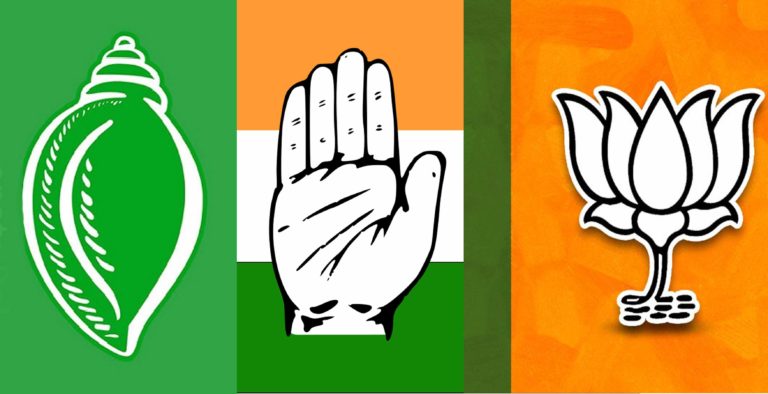
The ruling party of the state, BJD is eyeing to capture it after failing successively for last 3 times. Last time it was under BJD in 2000-2004. Since 2004 it loosed to Congress and could not retain though fielded heavyweight like Ex-Minister Prasanna Acharya.

In 2004 BJD & BJP jointly fielded Ashok Panigrahi and lost with a margin of 22,000 votes. He manages to pull 36.16 % of the total registered voters.  In 2009 Prabht Aditya Mishra (Piku) was the candidate of BJD from Bijepur and got 47,893 which were 34.45 % of the total registered voters. The winning candidate late Subal Sahu got 56, 864 votes (40.91 % ) in 2009.  In 2014, candidate of BJD was changed. The former district President was denied the party ticket, and Ex- Minister Prasanna Acharya was fielded from Bijepur. But BJD failed to capture the seat. Again Subal Sahu was victorious with a narrow margin of 458 votes. Percentage of votes of both Congress and BJD were getting minus.

In last 3 elections the winner was Congress and runners up was BJD. In 2004 BJD got 36.16 %, in 2009, 34.45% and in 2014, 31.88 %. There is a trend of decrease in votes for BJD. The reasons are many but majors are upper caste candidate, and outside candidate as Bijepur is a constituency affluent with OBC voters.

In comparison, percentage of votes of Congress has also declined, in 2004 it got 53.97%, in 2009, 40.91% and in 2014 it got 32.15% only.

The party has given charge to Minister Susant Singh for Bijepur by-poll. After the demise of Congress MLA Subal Sahu they managed to add his family in BJD and also the NAC Chairperson along with members of the Barpali NAC. Again they have declared Ritarani Sahu, wife of late Subal Sahu as BJD candidate. It may work in boosting up the morale for BJD which can help in pulling votes of late Subal Sahu and Congress. And it has certainly weakened the Congress up to a level. As per sources, BJD is eyeing to pull around 75, 000 votes in the by-poll.

Like BJP, internal conflict is there in BJD too. Former BJD district President and candidate from BIjepur (2009) Prabhat Aditya Mishra had rebelled in the recent past. Sources say the supremo of the party Naveen Patnaik managed to appease him. And now the party is saying there is no internal conflict in the party and they are going to fight the election under the leadership of their supremo Naveen Patnaik. But time will say whether the internal conflict will cost the party or it is actually diffused.

Saket Sreebhushan Sahu comments on Politics and Culture.

Equations for BJP in Bijepur

0

After the demise of standing MLA Subal Sahu on 22nd August the Bijepur seat is lying vacant. By-election is bound to fill up the vacant seat within 6 months from the date of demise. Though the election commission has yet not notified about the by-poll but political parties are gearing up. The seat was occupied by Congress but now all parties seem to give a tough fight for the post.

The saffron party recently organized a meeting at Barpali where around 5 thousand BJP cadres were gathered to witness heavy weight like Union Minister Dharmendra Pradhan, Jual Oram, State Prabhari Arun Singh, National Secretary Suresh Pujari, State President Basant Panda etc. Though no names were openly discussed in the meeting by anyone yet the joining of Ashok Panigrahi, former MLA Bijepur (2000-2004) has created a ripple. His name has been highlighted in the media as the probable candidate of BJP from Bijepur.

His joining in the party created discord in the party.  He was vehemently opposed by District President Narayan Sahu, State Krushak Morcha Vice President Gourahari Mishra, and State Krushak Morcha Secretary Halapani Majhi etc.

But BJP is projecting him as the MLA candidate from Bijepur. He was elected to 12th assembly (29/02/2000-06/02/2004) as the BJD MLA. In 2004, BJD-BJP (Naveen -Vajpayee) coalition fielded Ashok Panigrahi as BJD candidate again from Bijepur and Late Subal Sahu was contesting for the first time and defeated him with a margin of 22000 votes. Ashok Panigrahi was the standing MLA then.

In last general election (2014) he again pursued for the ticket but he was denied as Prasanna Acharya, Ex-Finance Minister was allotted the party ticket. But he fielded himself as an independent candidate and was discarded from the party. In 2014 he got about 18000 votes, which are considered as anti-Prasanna vote. His independent candidature cost the party heavily and BJD lost the election. Many stories surfaces in media about his independent candidature that he fielded himself to defeat Prasanna Acharya as Acharya was  opposing him since long.

Now, if BJP is considering him as the candidate then may be playing a risky job. As he was already defeated by Subal Sahu though he was a standing MLA with a margin of 22000 votes and the 18000 votes are not his pocket votes at all which he got in last general election. He was a BJD man, which belong to BJD only and the anti Prasanna votes. Which he gathered opposing Prasanna Achrya.

Now Prasanna Acharya is not the BJD candidate, it is Ritarani Sahu whose late husband defeated him with a margin of 22000 votes in his debut.

Again, Panigrahi’s major vote bank is the Teli caste voters of Gaisilat and Bijepur. Hold on, the Congress candidate is an OBC and the Gaisilat Teli Samaj President is also the Block Congress President. Apart from this Bijepur OBC vote will also tilting towards Congress only. So BJP may introspect.

Saket Sreebhushan Sahu comments on Politics and Culture.

Congress May Retain Bijepur Surprising All

0

The political scene of Bijepur is getting intense as well as clearer day-by-day as the by-poll is approaching nearer.

After the demise of standing Congress MLA Subal Sahu, his family opted to join BJD. Not only had his family, the NAC Chairperson along with all the members of the NAC joined BJD following his family. Earlier the NAC was under Congress. BJD has declared Ritarani Sahu, wife of late MLA Subal Sahu as the BJD candidate for Bijepur.

BJP has also blown the bigguel by staging a high profile meeting at Barpali featuring both cabinet ministers from Odisha, Dharmendra Pradhan and Jual Oram, BJP Odisha Prabhari and National General Secretary Arun Singh, National Secretary Suresh Pujari, State President Basant Panda where probable BJP candidate Ashok Panigrahi joined with his followers on October 2nd.

Congress party is also active and almost finalized its candidate for the by-poll. Congress is going to field Pranay Kumar Sahu, present Gaisilat block Vice-Chairman and son of Ex-MLA Birendra Kumar Sahu. Pranay is active in the grass root level politics since last 25 years and serving Gaisilat block. The District Vice President Congress has vast experience of grass root organization and politics of more than 2 decades.

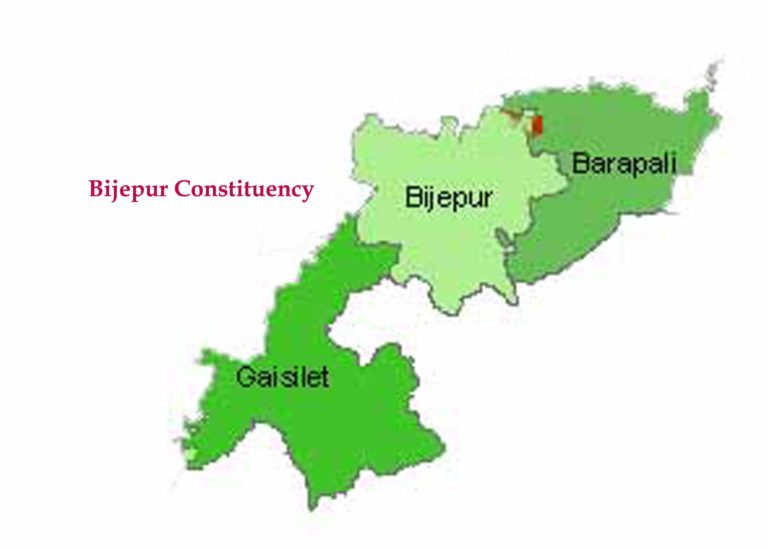
BJD is the ruling party of the state and BJP in the Centre. In the last few months gross percentage of vote of BJP has increased. But the candidate has been opposed vehemently by the karyakartas in the party. The District President Narayan Sahu from Gaisilet along with few senior leaders likes Gourahari Mishra, Vice President State Krushak Morcha from Barpali and Halapani Majhi, Secretary State Krushak Morcha from Bijepur is opposing the candidature of newly joined Ashok Panigrahi. The local karyakartas are of the view to select any Karyakarta from the 3 blocks as MLA candidate of BJP; Barpali, Bijepur and Gaisilet; and not to import a new person from any other party who never shared pain and pleasure with the grass root cadre of the party.

Sources are saying Ashok Panigrahi has been planted via Baijayanta Panda who is eyeing Bargarh parliament seat as Kendrapara is no safer to him.

The internal conflict is not less in BJD. The ruling party is facing same crisis like BJP with same issue of candidate importing. The ground workers are unhappy with the decision of the party supremo.

Both the BJD and BJP workers may cross vote. Bijepur is affluent with OBC voters around 70%. Dharmendra Pradhan appealed the Kuilta caste voters in the Barpali meeting, “this election is yours” but the party is fielding a Brahmin candidate. Again both the candidates of BJD and BJP belong to Barpali block, so votes of Barpali will get divided. But Congress candidate belongs to Gaisilet, so he may sweep votes from Gaisilet which is his strong hold. Apart from that he belongs to Kuilta (OBC) community and likely to pull party and caste votes from Barpali and Bijepur without any doubt.

Saket Sreebhushan Sahu comments on politics and culture.

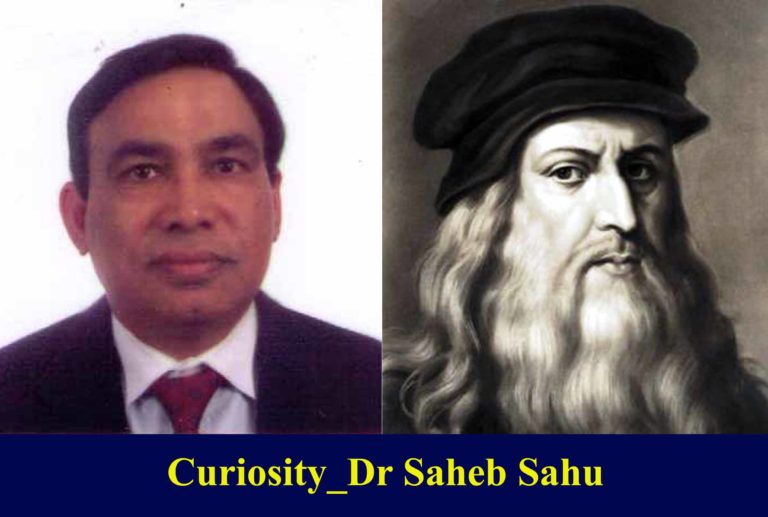
Curiosity_Dr Saheb Sahu

0

“The important thing is not to stop questioning. Curiosity has its own reason for existence.’’_Albert Einstein

Leonardo da Vinci (1452-1519 CE)

Leonardo da Vinci or simply Leonardo, was an Italian polymath (a person with knowledge of many subjects) whose areas of interest included invention, painting, sculpting, architecture, science, music, mathematics, engineering, anatomy, geology, astronomy, botany, history, and cartography(map making). Some historians also credit him with the inventions of parachute, helicopter and tank. Today Leonardo is widely considered one of the most diversely talented individuals ever to have lived (Wikipedia.org).

We will never be able to match Leonardo’s talent and curiosity, but we can try to cultivate, in ourselves and in our children at least a fraction of it.

Curiosity (from Latin curiositas) is a quality related to inquisitive thinking. It is a quality seen in humans and some animals including apes, cats and rodents. It is a strong desire to learn and know about anything. It is also a desire to know about people or things that do not concern one; nosiness and snoopiness.

Curiosity does not like rules. It assumes that all rules are provisional and there to be broken. Pursuing it is liable to bring you into conflict with authority at some point. It happened to Socrates, Galileo, Darwin and Steve Jobs (Co-founder of Apple) and many more. But without curiosity there can be no progress in our world.

How to Cultivate Curiosity?

1- Encourage Children to Be Curious About Everything

Leonardo’s most distinctive trait was his passionate, playful and occasional obsessive curiosity. He made lists in his note books of hundreds of subjects. According to Walter Isaacson (one of his biographers 2017) Leonardo instructed himself to investigate the placenta of the calf, the jaw of the crocodile, the muscle of the human face, the glow of the new moon and the edges of the shadow. His mind wondered merrily across the arts, sciences, engineering and humanities.

Children by nature are very curious. The curiosity of children disappears when it does not get fed by knowledge, imparted by parents and teachers. Children without adequate background knowledge of a subject tend to give up on learning about it, deciding that it’s just ‘‘not for me’’. Childhood curiosity is collaboration between child and adult. It is important that parents and teachers nurture it with appropriate knowledge. The surest way to kill a child’s curiosity is to ignore it.

Having a hungry mind has been shown to be more important than I.Q. for academic success. Curious learners make creative connections between different fields-leading to new ideas and inventions. Hence, all parents and teachers should encourage a child to ask questions, challenge the teacher or the parents and let him or her investigate things which seems dangerous to the parents.

2-Build a Database of Knowledge

Great ideas don’t just spring from great mental efforts. Their roots extend back months, years, decades into the person’s lifetime of knowledge and experience. Knowledge is more than a bundle of information or facts. It is an organized body of information. To have knowledge you need to build a database. You can build a database by reading, listening and seeing things with an inquisitive mind. It involves not taking other people’s opinion or ideas for granted but looking into them from all different angels.

We have all heard about the “eureka” moments, when ideas seem to drop unbidden into the curator’s head. In fact, eureka moment is very rare. Most good ideas arise from the gathering and the working over- the slow, deliberate, patient accumulation of knowledge. It is said that an invention is the result of 90% perspiration and 10% inspiration.

3- Forage Like a Fox-hog

In the words of Greek poet Archilochus (714-676 BCE) ‘The fox knows many things, but the hedgehog knows one big thing’. The English philosopher Isaiah Berlin proposed that all thinkers could be divided into one of those two categories- fox or hedgehog. There are thinkers who look at the world through the lens of one particular idea (specialist or the hedgehog) and those who revel in a variety of perspectives (generalist or fox). Steve Jobs (Co-founder of Apple) was a fox, but his Co-founder Steve Wozniak is a hedgehog which may explain why they worked so well together.

The thinkers or inventors best positioned to thrive today and in the future will be a hybrid of those two animals. In a highly competitive, high information today’s world, it’s important to know one or two big things (specialist).But to really ignite innovation or invention, you need the ability to think about it from variety of different perspectives. You should also be able to collaborate with people from different fields of specialization.

The discussion of the hedgehog and the fox often comes down to whether it’s better to be one or the other. At present, the world usually rewards the person, who is a specialist in a particular field. But a ground breaking insight (invention) usually comes from the collaboration of different fields. Hence these days a person should be both- a fox-hog.  Be a specialist in one or two fields but be somewhat knowledgeable about variety of other fields.

At the end of his 2005, Stanford University Graduation Speech, Steve Jobs’ advice to the students went like this:

“Your time is limited, so don’t waste it living someone else’s life. Don’t be trapped by dogma which is living with the results of other people’s thinking. Don’t let the noise of other people’s opinions drown out your inner voice. And most importantly, have the courage to follow your heart and intuition. They somehow already know what you truly want to become. Everything else is secondary. – Stay Hungry. Stay Foolish”.

To that I will add- Be curious, ask questions, observe attentively and indulge in daydreaming.

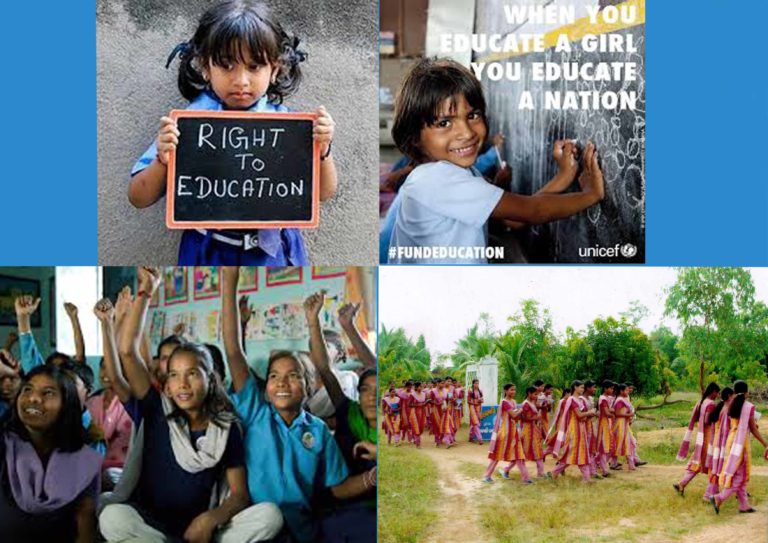
Importance of Girls’ Education_Dr Saheb Sahu

“An illiterate person is that much less equipped to defend herself in court, to obtain a bank loan, to enforce her inheritance rights, to take advantage of new technology, to compete for secure employment, to get the right bus, to take part in political activity, in short, to participate successfully in modern economy and society…Basic education is also a catalyst for social change.” _ Dre’ze and Sen, 1995

All developmental experts agree that no country can be developed without educating its girls. More than 573 million women worldwide are illiterate out of which 200 million are Indian. Out of 57 million children who are not at school worldwide 31 million of them are girls (World Bank Report)).

Advantages of Girls’ Education

  • It is said that if we educate a man, we educate a man only, but if we educate a woman, we educate the whole family. The advantages of girls’ education are many:
  • . The dividend for educational investment is higher for women than for men.
  • . Educated women marry later, use more contraceptives, have fewer children and space them better.  They also have less sexually transmitted disease like HIV/AIDS and hepatitis B.
  • . The child of a literate mother has 50% greater chance of survival past age 5 than that of an illiterate mother.
  • . Children of an educated mother have 50% more likely to go to school.
  • . Research shows that for every extra year of school for girls increases their life time income by 10% to 15%.
  • . Educated women have more say in their family affairs and face less domestic violence.
  • . Educated women have increase civic participation in voting and holding political office.
  • . An educated woman has the skills, knowledge, and self-confidence to be a better parent, worker and citizen (woman’s empowerment).

The History of Women’s Education in India

The history of female education in India has its roots in ancient Vedic age. During the Vedic age, more than 3,000 years ago, women were assigned high place in the society. They shared an equal standing with their men folk. The ancient Hindu philosophical concept of “shakti”, the feminine principle of energy, was also a product of this age. This took the form of worship of the female goddesses ( Durga, Laskhmi, Parvati). Even today in India,”Saraswati’ is worshipped as the Goddess of learning. Famous women Vedic scholars’ were, Ghosa, Lopamudra, Sulabha, Maitrey and Gargi. The Rig-Veda has a long conversation between the sage Agastha and his wife Lopamudra. Later on women were treated as second class citizens by all the major world religions (Judaism, Christain, Islam, Hinduism and Buddhism) and were not allowed to read and write.

British India

The first boarding school for girls was started by the Church Mission Society in Tirunelveli in Tamil Nadu, in 1821. Jyotiba Phule and his wife Savitri Bai started school for girls in 1848 in Pune. In 1878, the University of Calcutta became one of the first universities to admit female student to its degree programmes, before any of the British universities.

Independent India

In 1948, the female literacy rate in India was 8.9%. In 1958, a national committee on women’s education was appointed by the government, and most of its recommendations to promote women’s education were accepted. The cruxes of its recommendation were to bring female education on the same footing as offered for boys. In 1968, Government of India’s policy provided increased emphasis on female education. The 86th Constitutional Amendment Act, 2001 was passed. According to this act, elementary education is fundamental right for all children between the ages of 6 and 14. Right of Children to Free and Compulsory Education Act (RTE) was passed in 2009. The central government has been implementing this act under Sarva Shkisha Abhiyan(SSA).

Status of Girls’ Education in Odisha

According to Odisha Fact Sheet 2011-12, the total literacy rate of the state was 78.1%(Male 86.4%, Female 69.9%). Among the 30 districts, the female literacy rate was highest in Khordha with 85.7%. Some of the districts with very low female literacy rates were Nuapada (53%),Kandhamal (51.7%), Rayagada (49.3%), Kalahandi (48.9%), Koraput (45.1%), Nabarangpur (41.7%) and Malkangiri (40.6%).The same fact sheet shows that, children age 6-17, only 84.75% of them ( Boys 84.8%, Girls 83.7%) are in schools. It means close to 16% of children are not even attending school. According to CAG (Comptroller and Auditor General of India) report 3.06 lakh Oriya children left school after class V, and 3.09 lakh left school after class VII. The audit also found that 33,000 to 50,000 posts of teachers remained vacant during 2009-14.

Hopefully things may be better now in 2017. Who knows? It is very hard to trust all the statements made by the politicians and babus.

Right to primary education by all children was made a fundamental right in 2001. Inspite of that, multiple barriers to educating girls continues in India and especially in Odisha: poverty, cultural practices, lack of schools in walking distance, inadequate school infra structures, lack of qualified teachers, especially female teachers, absentee teachers and high student dropout rate at all levels of schooling. All the above factors are even worse for SC and ST boys and girls.

What Steps Government of Odisha Can Take to Improve Girls’ Education

1- Provide conditional cash transfer to the families for enrolling and keeping their children at school. Depositing few thousand rupees of cash in the bank accounts of the families whose children are attending school, every year will be a good start. This kind of conditional cash transfer has been quite successful in many countries including Brazil, Mexico, Turkey and many African countries.

2- Emphasize primary education and spend most of the State’s educational budget for primary and secondary education. Higher education may be left to the private sector.

3- Provide more girls’ hostels at all levels of schooling.

4- Train and hire more female teachers. They will be the role models for the girls.

5- Improve infrastructures of all the primary and secondary schools – electricity, toilets, safe drinking water, play ground, library and teaching tools.

6- Enforce existing child labour laws and see that all children under 17 attend school.

7- Provide vocational training to girl students in male dominated field like plumbing, electrical repair, operating machines etc.

8- Provide breakfast along with mid-day meals to all children. Odisha’s child stunting (under nutrition) rate is very high. Providing breakfast will reduce the high under nutrition rate over time and improve school attendance and learning.

9- Provide large number of scholarship, stipend and low interest loan to girls to pursue their higher education.

10- Encourage and help girls to pursue male dominated jobs like military, police, construction work, machine operator, priesthood and politics.

Conclusion

Odisha has one of the lowest female literacy rates among the major States in India. The female illiteracy rate among our ST and SC   Oriyas is unacceptably high. All experts now agree that without educating its women, no country or state can develop. The benefits of girls’ education are many: better health for the whole family, decreased fertility rate, reduction in poverty and gender equality. The government Odisha should take all possible steps to educate all girls, no matter which part of the state they live or who their parents happened to be. The time to it is NOW!

Stunted Growth in Children_Dr Saheb Sahu

‘We are guilty of many errors and many faults, but our worst crime is abandoning the children, rejecting the foundation of life. Many of the things we need can wait. The child cannot. Right now is the time his bones are being formed, his blood is being made and his senses are being developed. To him we cannot answer “Tomorrow”. His name is “Today”.

_ Gabriel Mistral, 1948

What is Malnutrition?

Malnutrition refers to the situation where there is an unbalanced diet in which some nutrients (carbohydrate, protein, fat, vitamins and minerals) are in excess, lacking or in wrong proportion.

The 2017 Global Hunger Index (GHI) Report ranked India 97th out of 118 countries with a serious hunger situation. More than one third of the world’s malnourished children live in India. Among these half of them are underweight and a third of children of the wealthy are overweight. One of the major causes for high incidence of malnutrition in India is economic inequality and the poor not being able to afford enough food for themselves and their children.

What is Stunting?

Stunting is a serious form of malnutrition or chronic under nutrition during the most critical periods of growth and development of a child – conception to 2 years of age. Stunting is characterized by low height for age. The World Health Organization (WHO) defines it as the ‘height for age” less than two standard deviation of the WHO Child Growth Standards median (who.in/nutgrowthdb/estimates).

Most of the brain growth of a child occurs from conception to first two years of life. Stunting can have serious consequences and can lead to long lasting harmful effects such as diminished mental ability and learning capacity and poor performance at school. This results in poor earning in adulthood. There are also increased risks of nutrition- related chronic diseases such as diabetes, hypertension and obesity.

Stunting In India and Odisha

India has the highest number of stunted children in the world. 40% of the Indian children under 5 are stunted, the highest rate in the world. Despite the good economic growth in last few decades, the stunted rate of Indian children has not come down that much. Among the Indian States (2011 Census) U.P. and Bihar have a rate of around 50%, Odisha 38% and Kerala with the lowest rate of 10% .In Odisha the districts with very high stunted rates are – Malkangiri, Nabarangpur, Rayagada, Balangir, Subarnapur, Boud, Keonjhar and Mayurbhanj.

What are the Causes of Stunting? 

The causes of stunting in children are very similar if not the same as the causes of malnutrition.  Most stunting happens during the 1,000 day period that spans from conception to a child second birthday. During these 1,000 days, almost all of a child’s brain growth happens.

The main causes of stunting are:

1- Feeding practices

Lack of adequate nutrition (enough calories, protein, fat, vitamins, and minerals) is the major cause of stunting. Children need to be fed diets which meet the minimum requirements for age, in terms of frequency and diversity in order to prevent under nutrition.

2 – Maternal Nutrition

Poor nutrition of the mother during pregnancy and breast feeding periods can lead to stunted growth in their children. Women who are underweight during pregnancy give birth to low birth weight babies. These babies have a higher chance of being stunted than normal birth weight babies. Undernourished mothers also produce less milk for their babies.

3 – Sanitation

There is clear link between stunted growth and household sanitation practices. Recurrent diarrhea and intestinal worm infestations are clearly linked to poor sanitation. Bacteria , viruses and worms infections can cause chronic diarrhea and mal-absorption leading to anemia, malnutrition and stunting. Lack of safe drinking water and toilet facility and proper hand washing will cause bacterial, viral and worm infections.

As high as quarter of the cases of stunting are linked to chronic diarrhea among children in the first two years of life. A number of studies have found the connection between poor sanitation and stunting. A 2016 study by Danaei et al of 137 developing countries found that poor sanitation is one of the most important factors causing stunting. It is second only to poor nutrition during pregnancy. Open defecation is an important factor influencing stunting in Indian children. 50% of Indians are still defecating in the open. Open defecation is close to 80% in Odisha.

How to Prevent Stunting?

  • Provide adequate calories (protein, fat, vitamins and minerals) to all pregnant mothers even before they get pregnant.
  • Provide adequate nutrition to all mothers and children under age 2. The first 1,000 days is considered crucial “window of opportunity” to prevent stunted growth.
  • To minimize the risk of getting diarrhea in infancy, all mothers should breast feed their babies at least first 12 months of life.
  • Improve sanitation- Provide toilet and safe drinking water to all. All children should wear shoes. Deworm the children once a year. Deworming is quite inexpensive and effective in getting rid of the worms from children bodies.
  • Educate the whole family on hygienic practices – hand washing, boiling water for drinking, avoiding street foods etc.

Conclusion

India has the highest number of stunted children in the world. Only one child among 10 in India gets adequate nutrition. Stunted growth is caused by chronic malnutrition (lack of adequate diet) and chronic diarrhea due to poor sanitation. Stunted children face a life time of missed opportunities in education and work. They are also more likely to die from preventable illnesses and diseases.

70 years after independence, the high stunted rate of India’s (the highest in the world) children is not acceptable. Both the central and the state governments should give utmost priority to reduce the stunted rate among Indian children to the level of the State of Kerala (10%). GDP growth is not enough. Children are our future. We should nurture them well when their brains are growing. As Gabriel Mistral wrote in 1948 ” To him we cannot answer ‘Tomorrow’. His name is’ Today’.” India should solve this stunted growth problem “Today”!

Sympathy Vote Vs Hawa Vote

0

Now it is final that the family of Subal Sahu is going to join BJD.  This was confirmed by Sumeet Sahu, son of Late Subal Sahu yesterday in a press conference. They are also demanding MLA ticket for Rita Sahu, wife of Late Subal Sahu from BJD.  They are going to join BJD at Naveen Nivas on 23rd September with a numbers of huge supporters.

The joining of Subal Sahu’s family in BJD will entirely change the political equation of Bijepure constituency. It is for sure that few of his followers from Congress will also join BJD and few present BJD will segregate them.

After the demise of Congress MLA Subal Sahu, position of Congress in the constituency is very measurable. Though there are many names who can lead it yet it seems a non-challenging party for the time being.

It seems BJD is going to field Rita Sahu as the BJD candidate from the constituency to capitalize the sympathy votes in the name of her husband Subal Sahu. The joining of Sahu family in BJD is a master stroke from Labour & Pension Minister Sushant Singh. All credits to his capability of persuasion and negotiation. Though BJP had negotiated but failed. Now days, Sushant Singh is considered the most powerful in Bargarh BJD. He has won the confidence of the CM many a times. This is another instance. In Bargarh BJD, the Acharya’s are not so strong. Prasanna Acharya has been kept outside of Bargarh politics and slowly lost the organizational network. His nephew Debesh Acharya is confine to his constituency, Bargarh. So the CM has expressed confidence on Sushant Singh who was gifted ministerial berth recently. This interprets many things, first, silencing the most mischievous Prasanna Acharya who once stated, he should be the CM of Odisha if Naveen would not been the son of Biju Patnaik.  So Naveen Patnaik is keeping him out of the corridor. Secondly, this will provide a fresh leadership to BJD in Bijepur when in fight in the constituency is high. Thirdly, it closed the doors for Ashok Panigrahi towards BJD.

But a big question arising here will the learned educated voters cast their vote for sympathy or development? Is Rita Sahu, a housewife capable of leading the people of Bijepur ? Or she will be another Tukuni Sahu ?

Now let’s discuss on the position of BJP a bit. BJP in overall gaining momentum in the state. Regularly mobilizing the cadre and posed a threat to the ruling party. In Bijepur the organizational set up is systematic but there is no acceptable leading figure. None of the names in the expectant list are any charismatic or mass leader who can pull a personal vote around 15-20 thousand. BJP may be looking someone who is having a credibility to pull that sum and add to the so called Modi Hawa to challenge the opponent.

Bijepur Political Warmth Breaking the Social Media

0

CBI has become active all of a sudden in Odisha again. MLA Prabhat Biswal has been arrested with link to chit fund case. The name of Prasanna Acharya, former Health Minister, has surfaced in electronics as well as print media linked with chit fund case.

Now Bijepur bye-election is on the corner after the demise of standing Congress MLA Subal Sahu. The two major parties, BJP and BJD have started their campaigning. Though the election commissioner has not declared any date for election neither notified about the bye-election. But the warmth of the bye-election can be felt on social media and on the ground and media.

Prasanna Acharya was the BJD candidate from Bijepur and loose to Subal Sahu with a very low margin of 458 votes. Now he is a Rajya Sabha MP.  Before coming to Bijepur he was an MLA from Rairakhol and prior to that MP of Sambalpur. As his elder brother was fielding himself from Bargarh he was fielding himself out of Bargarh. Though he was kept distance from the Bargarh politics yet he was regularly keeping information of Bargarh from his network.

Prasanna Acharya is a big figure than his elder brother Ananda Acharya and considers a major political character in Bargarh politics. But he never share a good rapport with many leaders of his party like former minister Bijay Ranjan Singh Bariha, Minister Snehangini Churia, Minister Sushant Singh, Rohit Pujari, AU Singh Deo etc and many more.

In last general election, sources say, he was engaged in to defeat many of his party leaders from Bargarh but he himself got defeated.

Again people discussed that he was instrumental in defeating standing MLA of Bijepur Ashok Panigrahi of his party BJD and made Subal Sahu won from Congress.  In fact Subal Sahu was an MP nominee of Prasanna Acharya and he joins Congress leaving BJD.

Keeping his political mischief in account BJP now don’t want to take risk.  BJP wants to neutralize him. And his involvement in the chit fund case has become a viable reason to give him a jerk.

Prasanna Acharya in chit fund

Bhagbat Padhan the octogenarian dance guru needs due recognition

0

Bhagbat Padhan, the octogenarian dance guru of Kumbhari village is waiting for the due recognition for his devotion in establishing a classical dance form ‘Sabdanrutya’.  Sabdanrutya has evolved and widely popular in Western Odisha. Sri Padhan started his career since a very small age of 5 and brought Sabdanrutya into the limelight. Today his dance troupe Brajeswari Nrutya Kala Sansad visit and perform in many places of the country. He has been felicitated by World Habitat Cultural Centre Delhi (2008) and East Zone Cultural Centre at Shantiniketan (2008).

Sri Padhan was born on 24th June 1938 at Kumbhari village near Barpali of Bargarh district. His parents were Late Banshidhar Padhan and Late Dhiraja Devi.

He studied up to Middle English (7th) standard. He learned the dance from his father since 1945. He devotes himself for this dance form and did research and gave his best to make it what it is today. The passionate Padhan gave up his teaching job to take Sabdanrutya as his everything. He was appointed as the Sabdanrutya Guru at Brajeswari Nrutyakala Parishad in 1974. He has taught 5 batches of Sabdarutya dancer, each batch continues for 6 years. Around 150 students have been trained by him as Sabdanrutya dancer.

His troupe and students have performed the classical dance form in many places of the country. And he has been felicitated by more than 60 institutions of state and national levels.

Saket Sreebhushan Sahu