Wednesday, April 29, 2026
Home Blog Page 38

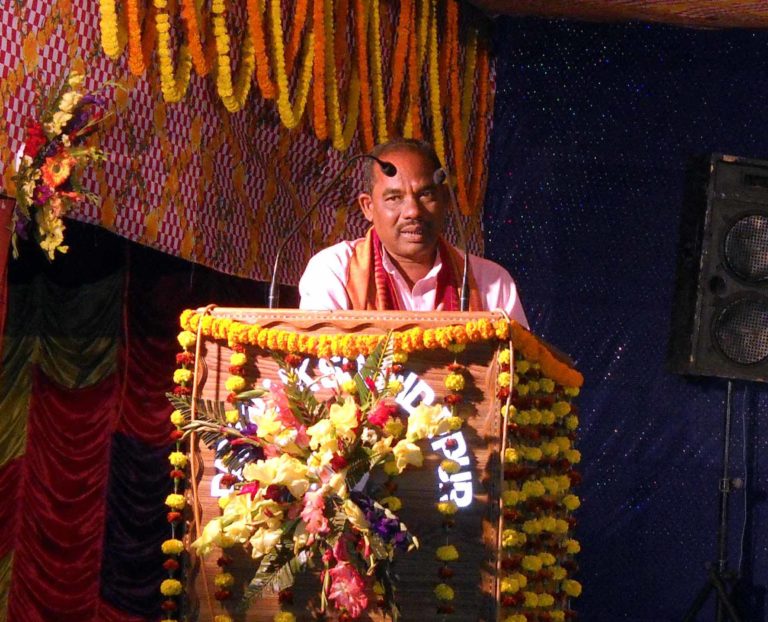
Congress Candidate Will Decide the Fate of BJP-BJD in Bijepur

0

The delay in declaration of the name of candidate of Congress party for the Bijepur by-poll has left all in lurch. The conflict in Congress arises when one committee was formed in October led by Naba Kishore Das to select the party candidate and with the recommendation of that committee the state unit unanimously recommended the name of Pranay Sahu as the Congress candidate for Bijepur by-poll and shown him green signal to move ahead.

Now another committee led by former CM Hemananda Biswal visited the constituency in the last of January and recommended 2 names; Pranay Sahu and Ripunath Seth. Earlier former MLA Ripunath Seth was unwilling to contest the election as he was away from the party organization since long. But all of a sudden he started showing his interest to fight the election.

The State Congress is divided known to all. One group is lobbying for Pranay and another is for Ripu. It is open now. And Both BJP, BJD are taking its advantages.

When Pranay Sahu was shown green signal in October, he worked hard to organize the party after the demise of MLA Subal Sahu and activated the workers throughout the constituency. And a favorable wave started blowing for him. People of Bijepur are rejecting both BJP and BJD candidates. BJP candidate is a failed leader when he was MLA for one term in 2000. His arrogant behavior and dealing with people in the past is the main reason of his unacceptability. And BJD candidate is a mere rubber stamp. Pranay Sahu has a proven track record of leadership. He is leading Gaisilat block since last 25 years. Pranay is standing tall in front of the BJP and BJD candidate. That’s why a foul play is going around in the power corridor to pull him down. Both BJP and BJD are not wanted to fight against Pranay as he also belongs to Kulata community which is affluent and decisive in the constituency.

If Pranay is given the ticket, there are chances of his win. And he will stage a good fight. If Ripunath is given, BJD will win the election and Congress will be in 3rd position.

Saket Sreebhushan Sahu comments on politics and culture

Congress Candidate Hold the Key in Bijepur By-poll

0

The mercury of the environment as well in the political environment is rising at Bijepur constituency as the by-poll date has been declared. By-poll is scheduled to be held on 24th and the counting is on 28th of February while last date of filing of nomination is on 6th of this month. BJP candidate Ashok Panigrahi has already filed nomination on 2nd and the BJD candidate Rita Sahu will file nomination on 5th. But Congress is yet to decide its candidate for the by-poll.

As per sources, with regard to the Bijepur by-poll a four- member committee was constituted headed by senior Congress leader Sri Naba Kishroe Das as Chief Coordinator consisting Kishor Patel, Prakash Chandra Debta and Sadhu Charan Nepak to find out the proper candidate for Congress Party. The committee visited the constituency as per the schedule and recommended the name of Pranaya Kumar Sahu in October 2017.

Again, in the same month a State level meeting was convened under the chairmanship State President Sri Prasad Harichandan. And the present members of the state committee recommended the name of Pranay Kumar Sahu unanimously on that meeting.

Further, another committee was constituted led by former Chief Minister Sri Hemananda Biswal, Jagannath Pattnaik,   Sharat Pattnaik, Naba Kishore Das, Bhakta Charan Das, and Bargarh District President Ananta Sayan Padhi. Few days ago the committee visited the constituency to select Congress candidate for Bijepur by-poll. And this committee has recommended 2 names; Pranay Kumar Sahu and Ripunath Seth.

As Pranay was shown green signal earlier by the state unit in October, he organized the party workers in the constituency which was in disarray after the demise of Congress MLA Subal Sahu. Now a positive response is there in favour of him in the constituency.  As he belongs to Kulata community and the whole community is supporting him irrespective of party-line. Again, he is active in the grass root since long holding many political portfolios. And he is associated with many NGOs, farmer’s organization and Co-operative movements which makes strong about his winning prospective.

As per as Ripunath Seth is concern, he was away from the party organization since long. Last time he was fielded as Congress candidate in 2000. Thereafter Subal Sahu was given the ticket in next election. Since then he is away from the active politics and party organization.  Ripunath Seth may not give a good fight to BJD and BJP candidate at this juncture.


Saket Sreebhushan Sahu comments on politics and culture.

Major World Religions(III)_ Dr Saheb Sahu

0

Christianity

Jesus and His world

Jesus (4BCE-30/33CE), also known as Jesus of Nazareth and Jesus Christ, was a Jewish preacher and religious leader, who is the central figure of Christianity. Christians believe him to be the Son of God and the awaited Messiah (Christ) prophesized in the Hebrew Bible or the Old Testament.

Jesus was a Galilean Jew, who began his ministry, preaching his message orally. Jesus debated fellow Jews on how to follow God, engaged in healing, taught in parables and gathered followers. Jesus taught with simplicity in Aramaic, the dialect spoken by ordinary Jews in those days.  He used stories, aphorism, similes and metaphors. The parable form that he used was customary in the East. His teachings were models of clarity, brevity and force. He was seen as a trouble maker and a rebel by the Jewish authority in Jerusalem. He was arrested and tried by the Jewish high priests and subsequently crucified by the Roman authority.

Christian doctrines include the belief that Jesus was born of a virgin named Mary, performed miracles, founded the Church, died by crucifixion as sacrifice to achieve atonement, rose from the dead, and ascended to heaven, from where he will return.

Judaism rejects the idea of Jesus being God or a mediator to God. It holds that Jesus is not the Messiah. In Islam, Jesus is considered to be a messenger of God (Allah) and a Messiah. While the Quran acknowledges the virgin birth of Jesus, he is considered to be neither the incarnation nor the son of God.

Christian Bible

A Christian Bible is a set of books that Christians regard as divinely inspired and thus constituting Scripture. The Christian Bible has two Bibles- the Old and the New Testament. The Old Testament is the first part, and is based primarily upon the Hebrew Bible.

The New Testament is the name given to the second and the final portion of the Christian Bible. Jesus is its central figure. The term “New Testament” came into use in the second century CE. The New Testament presupposes the inspiration of the Old Testament. It is a collection of 27 books.

Denominations of Christians

There are two main denominations among Christians-Catholic and Protestant. The Catholic are further divided into- The Roman Catholic Church, The Eastern Orthodox Church, and The Assyrian Church of the East etc. The Protestants are divided into more than fifty different churches like: Anglican, Methodist, Lutheran, Baptist, Evangelical, and Quakers etc.

Teachings of Jesus

The four canonical gospels of the New Testament (Mathew, Mark, Luke, and John) are the foremost sources for the life and teachings of Jesus. The Sermon on the Mount is a collection of sayings of Jesus which emphasizes his moral teachings found in the Gospel of Mathew. It is generally considered to contain the central tenets of Christian discipleship.

The Sermon on the Mount

And seeing the multitude, He (Jesus) went up on the mountain, and when He was seated, His disciples came to Him. Then He opened His mouth and taught them, saying:

Blessed are the poor in spirit,

For theirs is the kingdom of heaven.

Blessed are those who mourn,

For they shall be comforted.

Blessed are the meek,

For they shall inherit the earth.

Blessed are those who hunger and thirst for righteousness,

For they shall be filled.

Blessed are the merciful,

For they shall obtain mercy.

Blessed are the poor in heart,

For they shall see God.

Blessed are the peacemakers,

For they shall be called the sons of God.

Blessed are those who persecuted for righteousness sake,

For theirs is the kingdom of heaven.

Mathew 5:2-10

Love your enemies, bless them that curse you, do good to them that hate you, and pray for them which despitefully use you, and persecute you.

Mathew 5:44

You have heard that it was said, ‘An eye for an eye and a tooth for a tooth.” But I tell you not to resist an evil person. But whoever slaps you on your right cheek, turn on the other to him also.

Mathew 5:38-39

Blessed are the peacemakers: for they shall be called the children of God.

Mathew 5:9

Judge not, that ye be not judged.

Mathew 7:1

It is easier for a camel to go through the eye of a needle, than for a rich man to enter the kingdom of God.

Mathew 19:24


Thou shall love thy neighbor as thyself.

Mathew22:39

Forgive, and you shall be forgiven.

Luke 6:37



Major World Religions(II)_Dr Saheb Sahu

0

Brief Summary of Major Religions

Abrahamic Religions

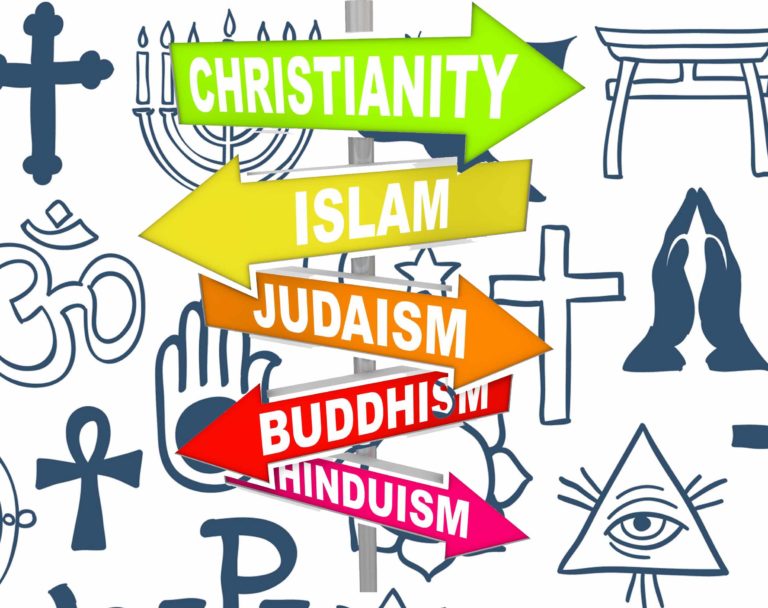
Judaism, Christianity and Islam, trace their lineage to the tribal patriarch Abraham, and are called Abrahamic religions or Abrahamnism. Judaism was founded around 7th century BCE, Christianity in the 1st century CE, in the area present day Israel. Islam was founded in the 7th century CE in the present day Saudi Arabia.

The civilization that developed in Mesopotamia influenced the Hebrew Bible and the book of Genesis in particular. Abraham is said to have originated in Mesopotamia. All Abrahamic religions claim to be monotheistic, worshipping one exclusive God, although one known by different names.

Judaism (Hebrew-Yehuda, Latin-Judah)

Judaism regards itself as the descendants of Jacob, a grandson of Abraham. The followers of Judaism are called Jews. In Jewish theology, God is strictly monotheistic. The Hebrew name of the God is YHWH (Jehovah). The sacred scriptures of Judaism are the Torah (Hebrew Bible). It was composed between 1400 BCE and 400 BCE. The text is considered holy down to the last letter. The practice of Judaism is guided by the interpretation of the Torah and the Talmud (legal ruling by the Rabbis). There are about 13 million Jews in the world and 82% of them are in Israel and the United States. Based on their practice, Jewish people are divided into; Orthodox, Conservative, Reform and Reconstructionist.

The Bible

The Bible (from Greek ta tiblia “the book”) is a collection of sacred texts or scriptures that both Jews and Christians considered to be inspired by God. The Bible is not just one book. It is a library of books, put together in one volume. The authors of these books are unknown. These books were composed at different times. All kinds of literary form: history, historical novels, parables, allegories, poems are intermingled.

Hebrew Bible

The first five books of the Hebrew Bible are called Pentateuch or Torah or the law by the Jews. It includes: Genesis, Exodus, Leviticus, Numbers and Deuteronomy. It contains the story of the formation of the people of God: Abraham and patriarchs, Moses and the oppressed Hebrews in Egypt, their migration from Egypt to the Promised Land and the discourses of Moses. The Hebrew Bible is not only law: it is history, poetry and philosophy of the highest order. The Hebrew Bible was greatly influenced by the Babylonian literature, going back to 3000 BCE. The Hebrew Bible has total of 39 books. Christians call it the Old Testaments.

Jewish Ethics

The Ten Commandments, also known as the Decalogue, are the set of biblical laws relating to the ethics and worship of Judaism. They play a fundamental role in Judaism, Christianity, and Islam. They were likely been influenced by Mesopotamian laws. Nobody knows when they were written or who wrote them. They are:

  1. Thou shalt have no other gods before me
  2. Thou shalt not make unto thee any graven image
  3. Thou shalt not take the name of the Lord thy God in vain
  4. Remember the Sabbath day to keep it holy
  5. Honour thy father and thy mother
  6. Thou shalt not kill
  7. Thou shalt not commit adultery
  8.  Thou shalt not steal
  9. Thou shalt not bear false witness against thy neighbor
  10. Thou shalt not covet neighbor’s house, neighbor’s wife, nor his male servant, nor his female servant, nor his ox, nor his donkey, nor anything that is your neighbor’s.

Hebrew Bible, Exodus20:2-17 and Deuteronomy 5:4-21

The Ten Commandments form the basis of Jewish laws. Most traditions of Christianity hold that the Ten Commandments have divine authority and continue to be valid. Judaism and Islam also share the central practices of fasting, almsgiving and dietary laws. Lawful food is called Kosher in Judaism and Halal in Islam. Both practice the circumcision of males.

Major World Religions_Dr Saheb Sahu (1)

0

Religion is a particular set of beliefs and practices.                                                                                                                                            World Council of Religion

Introduction

Fear as Lucretius said was the first mother of the Gods. Primitive life was beset with a thousand dangers and rarely ended with natural death. Early men attributed death to the operation of supernatural agencies.

One of the first objects to be worshipped was probably the moon. He was believed to cause the menstruation of women. We don’t know when the sun replaced the moon as the Lord of the sky in the primitive religion. Then the earth became a goddess, fertilized by the hot rays of the sun. Almost everywhere the earth was great mother-Ishtar, Cybil, Demeter, Aphrodite and Mata. The sky became a great god, worshipped as the holder and giver of rain.

All the ancient cultures were polytheistic (worshipper of many gods). In many parts of the world-Egypt, Judea, Persia, India, China, the priestly class with the warrior class has ruled the society. According to Will Durant the priest did not create religion, he merely used it. He wrote most of the religious Scriptures around the world. He became a broker between the supernatural god and the man.

All faiths claim their god is the only god and their Scriptures to be divinely revealed. However, most religious thoughts have evolved over times. The Scriptures are the products of their times and place. The authors have interpreted oral traditions considered appropriate for their times. Except for the Quran, most Scriptures have multiple authors of different times. They have been edited and re-edited. There is no proof that any of them were divinely revealed. The Mosaic codes of the Hebrew Bible came from the codes of Hammurabi. The idea of monotheism of the Hebrew Bible came from King Ikhnaton (1380 BCE) of Egypt and Zarathustra of Persia.

The Hebrew prophets were predecessors of Jesus and Muhammad. The Asceticism of the Christian monks and the Muslim Sufis came from the Hindu Ascetics. The Aryan gods of the Hindus came from Persia. Indian Buddhist thoughts influenced Chinese Confucianism and Taoism. Greek influence can be found in the Old and the New Testaments. It also influenced Indian thoughts and culture. Indian thoughts and culture influenced Greece, Persia and Judea.

The world’s principal religions and spiritual traditions may be classified into a small number of major groups. The modern meaning of the phrase “world religion” began with the 1893 Parliament of World’s Religions in Chicago. Swami Vivekananda of India represented as a delegate of Hinduism at the conference.

Classification:

Religious traditions fall into super-groups, arranged by historical origin and mutual influence.

  • Middle Eastern Religions:

Abrahamic religions are the largest group, and they are Judaism, Christianity, Islam, and the Baha’i Faith.

  • Iranian Religions:

They are Zoroastrianism, Yezidism, and Gnosticism.

  • Indian Religions:

They include Hinduism, Jainism, Buddhism and Sikhism.

  • East Asian Religions:

They are Confucianism and Taoism (Chinese), Shinto (Japanese and Korean).

  • African Religions:

The religions of the tribal people of Sub-Sahara Africa.

  • Indigenous Ethnic Religion:

These religions are found on every continent, now marginalized by the major organized faiths.

Size of Major Religious Groups in the World -2012

Christianity            31.5%

Islam                       23.2%

Unaffiliated            16.3%

Hinduism                 15%

Buddhism                7.1%

Folk Religion               5.9%

Other                           0.8%

Judaism                        0.2%

Koshali Bhasa Andolana Eka Charcha by Pritish Acharya

0

The article read at Kosali Convention organised by Kendra Sahitya Academy at Bhubaneswar by the author ritish Acharya. The full article  available for download here:

Koshali Bhasa Aandolana Eka Charcha_Pritish Acharya

Full Speech of Debi Patnaik at Kosali Convention

0

Speech of Debi Prasanna Patnaik at Kosali Convention organised by Kendra Sahitya Academy at Bhubaneswar.

Sitakanta Mohapatra Unaware About the Recent Development of Kosali

0

Full speech of Odia poet and Sahitya Academy Fellow Sitakanta Mohapatra at Kosali/Sambalpuri Convention organised by Kendra Sahitya Academy at Bhubaneswar. Apparently it seems from his speech that he is unaware about the recent development of the language and literature.


How Women Came to be Considered Inferior to Men?

0

by Dr Saheb Sahu

“To prove women’s inferiority, antifeminists began to draw not only, as before, on religion, philosophy and theology, but also on science, biology, experimental psychology and so forth.”

-Simone de Beauvoir, The Second Sex, 1949

Some Facts and Figures

  • Gender inequality is a major cause and effect of hunger and poverty: it is estimated that 60 percent of chronically hungry are women and girls.
  • Almost 70 percent of women in South Asia work in agriculture.
  • Less than 20 percent of the world’s landholders are women.
  • Women make up more than two-thirds of the world’s 796 million illiterate people.
  • Men’s average wages are higher (on average 24%) than women in both rural and urban areas.
  • A large gender gap remains in women’s access to decision-making and leadership all over the world. ( unwomen.org)

Ancient History

Sumer and Egypt

Sumer is the earliest known civilization in the modern-day Iraq. It is considered to be the first civilization in the world along with Ancient Egypt and the Indus Valley. Women in ancient Sumer (3000 BCE), could buy, own, sell and inherit property. They could engage in commerce and testify in courts as witnesses. Female deities, such as Inanna were widely worshipped, but majority of deities were male.

In ancient Egypt, women enjoyed the same rights under the law as men. Landed property descended in the female line from mother to daughter. Women could buy, sell, be a partner in legal contracts, bring court action, and adopt children.

India

In India, women during the early Vedic period enjoyed equal status with men in all aspects of life. Women were allowed to be educated in Vedas and other scriptures. Rigveda and Upanishads mention several sages and seers, notably Gargi and Maitreyi. Rigvedic verses suggest that women married at a mature age and probably were free to select their own husbands in a practice called swayamvar or live-in –relationship called Gandharva marriage. Later on several Dharmashastras, especially the Manusmriti (200-BCE-300CE) restricted the role of the women in the society.

China

Women throughout historical and ancient China were considered inferior to men. They had subordinate legal status based on Confucian laws. In Imperial China, the “Three Obediences” promoted daughter to obey their fathers, wives to obey their husbands, and widows to obey their sons. The Chinese society was predominantly patriarchal. Women could not inherit property or business.

Athens

Women in classical Athens had no legal personhood. Women were excluded from ancient Athenian democracy, both in principle and in practice. Male slaves could become citizens after being freed, but women were not allowed to be citizens. Athenian women received little education. According to Aristotle the labor of women added no value to the household. Contrary to these views, the Stoic philosophers argued for the equality of the sexes. In their views sexual inequality was contrary to the law of nature.

Roman

Rome was quite influenced by Athens. Roman law, similar to the Athenian law was created by men in favor of men. Women had no public voice, no public role. Women could not hold any public office. Roman society was patriarchal. However, girls had equal inheritance rights with boys if their father died without leaving a will.

Influence of Religions

Judaism

Judaism is an ancient monotheistic (belief in one god) religion with Torah as its foundational text. The history of Judaism spans more than 3,000 years. Judaism’s texts, traditions and values strongly influenced other two monotheistic religions- Christianity and Islam. Christianity was founded in the 1st century CE and Islam in 7th century CE. Many aspects of Judaism and Christianity have directly or indirectly influenced the Western civilization and western civil laws.

The role of women in Judaism is determined by the Hebrew Bible (The Torah), the Oral law and by custom. Relatively few women are mentioned in the Hebrew Bible by name and role.

Marriage and family law in biblical times favored men over women. For example, a husband could divorce a wife if he chooses to, but a wife could not divorce a husband without his consent. Women depended on men economically. Women generally did not own property except in the rare case of inheriting property from a father who did not have sons. Women were not allowed to study the Bible. During the time of worship, they were separated from men. The practice still continues to this day in Orthodox Judaism and Islam.

Christianity

Throughout Church’s history women have been considered inferior by nature and law. Women were not encouraged to study the Bible. Apostle Paul had forbidden women to preach in the church. Even today in the Catholic Church women are not allowed to be priest. Nevertheless, the Christian Bible gives rights to women to make contracts, own, sell, and inherit property.

Islam

The Qur’an introduced fundamental reforms to the existing customs and gave rights to women in marriage, divorce, and inheritance. It provides for the wife to receive a dowry from the husband which she could administer as her personal property. It makes woman a legal party to marriage contract. The Qur’an prohibits female infanticide. It recognizes woman’s full personhood. Women were not given such legal status in other cultures until many centuries later.

Hinduism

Like the Bible or the Qur’an Hinduism does not have a foundational text as ‘ the book’. Hindus have many texts which are considered sacred. They present diverse and conflicting views on the position of women. The Devi Sukta hymn of the Rigveda declares the feminine energy as the essence of the universe. The woman is celebrated as the most powerful and the empowering force in some Hindu Upanishads, Sastras and Puranas. In Smritis, such as the Manusmriti, the position is mixed. Manusmriti asserts that ” as a girl, she should obey and seek protection of her father, as a young woman her husband and as a widow her son”. However in other section, the same text asserts that “women must be honored and adored” and ” where women are revered, there the gods rejoice, but where they are not, no sacred rite bears any fruit”.  Records left by travelers to ancient and medieval India suggest that ancient and early Hindu society did not practice Dowry or Sati. These practices likely became widespread sometime in the 2nd millennium C.E.

In the Mahabharata, the main female character Draupadi is strong, opinionated and deals with five husbands. They listen to her advice. In the Ramayana, Sita is presented as the honest, obedient and the ideal wife to Rama. She even goes to the forest with him leaving the luxuries of the palace.

In approximately 500 BCE the status of women in India began to decline. Although reform movement such as Jainism allowed women to be admitted to religious orders, by and large women in India faced confinement and restrictions. The practice of the child marriage is believed to have started around the 6th century CE. The position of women further deteriorated during the medieval period. The Muslim conquest of parts of India brought purdah to Indian society. It also led to the practice of the Jauhar among the Rajputs of Rajastan. The practice of Devadasi, a form of sexual exploitation of women by the temple priests started around the same time in South India.

Gender of God in Hinduism

In Hinduism, the impersonal Absolute (Brahman) is genderless. Both male gods (Devas)) and powerful female gods (Devis) are found in Hinduism. But the most popular goddesses are the incarnations of Shakt-Devi-Mata (Mother). Ardhanariswara is a composite androgynous form of Hindu god Shiva and his consort Parvati (also known as Devi, Shakti and Uma). It is depicted as half male and half female, split down the middle. It represents the synthesis of masculine and feminine energies of the universe.

According to religious scholar Bryant-” Hinduism has the strongest presence of the divine feminine among major world religions, from ancient to the present. The goddess is viewed as central in Shakti and Saiva Hindu traditions”

 Science

In her book, Inferior; How Science Got Women Wrong (2017), the British journalist Angela Saini, has summarized most of the important scientific studies that have framed women as inferior to men. Most of the earlier studies have described women as gentle, caring and empathetic and men as strong, rational and dominant. They attribute the differences to biology and evolution. A striking pattern emerges: almost all of the prominent scientists behind these studies are men, whereas much of the growing, more recent research that disputes them is done by women.

Here are some findings discussed in more details in the book:

1- Studies from around the world show that boys have around 10 percent higher risk of dying than girls during the first month of life (p-32).

2- Pretty much at every age, women seem to survive better than men. Women live five to six years longer than men across almost every society, and that has been true for countries (p-34).

3-When it comes to intelligence it has been convincingly established that there are no difference between the average woman and man. In some countries, girls are now better at maths than boys (p-65).

4- It is true that men’s brains are 8-13% bigger than women’s. But reams of research have shown that differences between the sexes in cognitive abilities or motor skills are very small or non-existent. The brain like other organs is simply proportionate in size to men’s bigger bodies (p-78).

5-Research to date suggest that humans survived, thrived and spread across the globe through the efforts of everyone (both men and women) equally sharing the same work and responsibilities. For most of our history, we lived hand in hand. And our biology reflects this (p-180).

Conclusions

There has been total subordination of women throughout the recorded human history, in all cultures and all countries. The reasons are cultural, religious and poor science.  The religious scriptures were written by men from male prospective. In all the major religions of the world, God is masculine. Only ancient Hindus had some doubt about the actual gender of their God. Some of them had the concept of Ardhanariswara-half female and half male. What a great concept! There have been many female goddesses from the ancient times from Sumer-Athens-Rome to India. But all of them have been inferior to their male counterparts. Most of the interpreters of religious scriptures have been men. All the heads of the religious orders -Pope, Imam, Dalai Lama, Shankaracharya have been and still are male.

Scientific studies from Darwin to the recent times have reflected male prospective and biases. Only recently it has begun to change. Recent studies have clearly established that man may be physically larger than woman but not more intelligent. Women can do pretty much anything men can. They also live longer and give birth to babies.

According to Voice of America News Survey (2016) one in five people around the world believe women to be inferior to men and should stay at home. However, nearly all of them who were surveyed (18, 000 of them), also agreed that men and women should have equal rights. At least there is some hope.

The World Economic Forum said in its 2017 Global Gender Gap Report:

“While women worldwide are closing the gap in the critical areas such as health and education, significant gender inequality persists in the workforce and politics. Given the current rates of change it will be another 217 years before we achieve gender parity.”

It is culture, not biology which is keeping women down. Increasing the proportion of women in leadership positions in all fields-politics-education-science- industry is key to improving gender equality.

Sources: