Tuesday, April 28, 2026
Home Blog Page 53

Two Desires And A Dream to release shortly

0

The first ever quadriplegic actor in the cine world is going to debut with the Hindi film “Two Desires and a Dream”.  The film is an attempt to unravel the innate, unseen, unknown feelings and emotional aspects of a person with a serious disability.

The message of the film is people with disability are just like any other able-bodied/normal human being. They also have feelings, emotions, and desires and , it time our society reecognises and respect their reality.

The story unwinds through a real life quadriplegic Jitendra who is also playing the role of the main protagonist in the film. After months of online interaction a chance encounter with Swapna, a celebrity socialite, Jitendra develop unexplained feelings for her. And through their subsequent conversations reveals the loneliness, the agony the frustrations as well as the hope, the desire the passion…people with disabilities have in their lives. As the story progress, Jitendra start developing weakness for the girl leading to an interesting sequence of events that take the film towards a pulsating end.

The major roles are played by Jitendra Biswal in the lead, Swapna Pati Bijaya Jena, Preeti Jhigiani, Hemant Choudhary, Brijendra Kala, Aryan Vaid. It is produced by Rajinder Singh Bhatia and directed by Avinash Nanda.

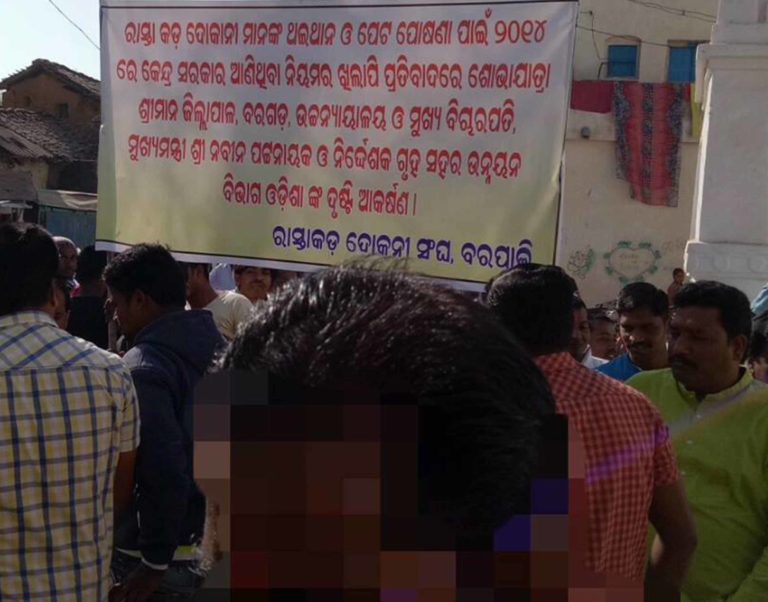
Street vendors demonstrate in Barpali

0

The street vendors in Barpali demonstrate against the law imposed by the Union Government in 2014.  They are trying to attract the attention of the District Collector, Bargarh, Chief Junstice and High Court, Chief Minister Naveen Patnaik, Director House and Urban Development Department Odisha.

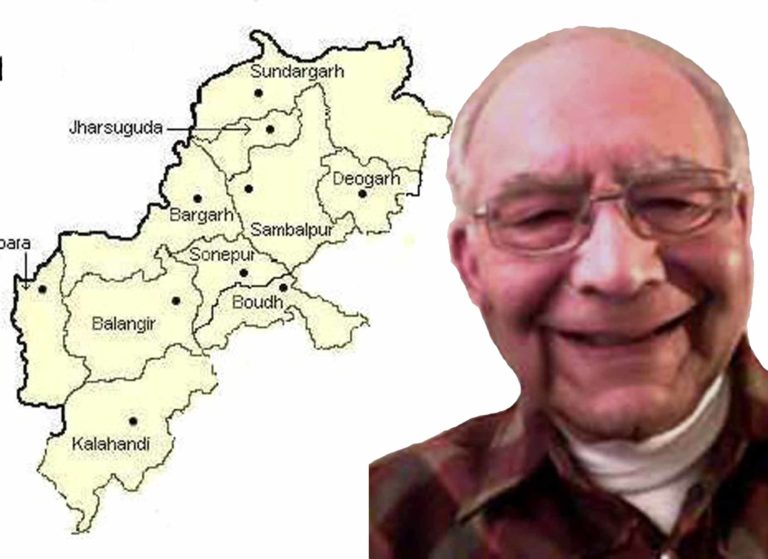
Koshal has to happen_Dr Arjun Purohit

0

Koshal has to happen simply because of evolutionary process. Odisha is becoming unmanageable and ungovernable. Twenty of thirty districts are under the sway of Naxalites! The evolutionary process is further accelerated by the de facto policy of the state: top down rather than down up development. This has led to over concentration of developmental resources in the sixty mile zone. This mantra of top down policy has resulted in the uneven developmental in the state. The recent struggle to establish IIM in Sambalpur is a stark reminder of this policy. (The predicted disastrous failure did not happen, did it!) Another example is the bizarre episode of lawyers in Cuttack having a strike to prevent even the possibility of a branch of High Court in Koshal area! And Naveen Babu makes an election promise to recognize Koshali under 8th schedule, the Odia intellectuals from the sixty mile zone under the leadership of Dr. Debi Prasanna Patnaik, who was honored for his effort for making Odia as a classical language, are mounting a spirited opposition! Now the members of same group are forcing the hand of the government to make Odia official language of the state, and to create an Odia university! This top down policy is taking away focus on the rural and tribal Odissa where most of the population lives, and promoting Smart city in the sixty mile zone, further deploying meagre state resources into already developed zone. These gentlemen forget that 22.5 of the population of Odisha are Adivashis, who rarely appear in the radar at all, except making them dance in the streets of Bhubaneswar in national events, and exhibiting their folk art in the Rajpath of the capital. Another instance of making them “cigar store Injuns” of North America !While I applaud the effort of KISS for doing something, anything at all, for Adivashi  kids, the policy of bringing these kids to capital for their education is wrong. How the communities of these Adivashis living in remote areas are going to improve by this is beyond me. Why can not the state take high quality education to these areas instead?

Fighting against formation of Koshal means delaying the inevitable, and delaying optimal development of the region. It will also take years to undo the damage the state government has done to the region. One can only hope that Odisha government looks at the enlightened outlook of the UP government. Uttarakhand, Jharkhand, Chhattisgarh, and more recently, Telangana – all are better off as separate entities. Status quo means perpetuating stagnation, and years of lost opportunities.

The Hybrid_Dr Saheb Sahu

0

It was December 1996 and ton of thousands of people were filling the avenues and city squares of Serbia’s capital. Student leaders at Belgrade University, a key centre of the demonstrations felt that their target was in sight. They were going to the take down Slobodan Milosevic, the strongman who ruled over Serbia since 1989 and was nicknamed as the “Butcher of the Balkans”.

The opposition groups own little victory but quickly split into warring factions, Milosevic was still in power. In 1998 the students recognized and found a group called Otpor or “resistance” in Serbian. Early on the organizers decided that Otpor should maintain a firm committee to using nonviolent tactics. Their reasoning was simple: Milosevic would slaughter them if they took up arms.

Optor created a structure that could allow for local terms of activist to act independently. They created branches throughout the country and made national calls for coordinated action. Every branch however was autonomous and would plan how to carry its own actions to fit local circumstances. Otpor’s appeal was as much cultural as political. Some of Otpor’s largest rallies doubled as rock concerts, with musician reading pamphlets from the stage between songs. By placing local grievance – whether lack of electricity or problems with corrupt officials – in the context of a broader fight, Otpor won the firm commitment of small town activists. Everyone started connecting local problems, which was in Milosevic regime.

Without any internal bureaucracy or centralized authority, Otpor succeeded in creating a cohesive movement identifies among thousands of Serbian. Two key tools it used to achieve this were front leading and mine training.

“Front Leading” was a means of creating defined norms and practices for the movement without direct, heavy-handed oversight typical of the hierarchical political parties or unions.

For Otpor’s member’s autonomy was the rule. Activists could form their own chapters in their communities they could call a rally, coat the town square with resistance posters or stage their own guerilla theater production. The possibilities seemed endless.

The influx of new participants presented a challenge for Optor. How could they train so many people? The answer was mass training to absorb all the new recruits.

On October 5, 2000 a massive rally was held in Belgrade. Some minor skirmishes occurred, but no mass bloodshed. Next day Milosevic recognized his defeat within a year. He would be sent to The Hague to face trial as war criminal. Later on he was found guilty.

Gandhi struggled throughout his life with creating a hybrid. He was famous for his campaigns of widespread civil disobedience or satyagraha. But he combined these with the grassroots reach of Indian National Congress. The Southern Christian Leadership Council (SCLC), Martin Luther King Jr was another example of an integrated model. Although SCLC specialized in mass mobilization, it built an organizational infrastructure that allowed it to engage in series of successive campaigns. Because of this King’s organization could move from Albany to Birmingham to Selma rather than disappear after a single successful mass demonstrations.

Mark Engler and Paul Engler in their book “This Is An Uprising” state that “The model that Optor developed has been studied by movements in dozens of other countries and adapted to local circumstances in widely varied parts of the world. What it represented was perhaps the most compelling example to that of hybrid between structure and mass protest – a powerful example of what can be called momentum driven organizing.

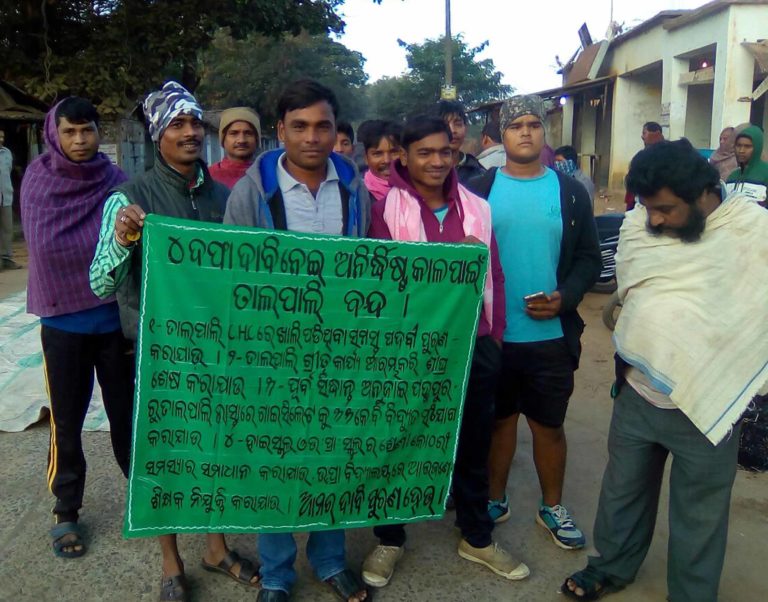
Talpali closed for sine day

0

The civil society of Talpali village under Gaisilat block of Bargarh district is on strike for sine day.  They have closed the shops and stalls since last evening and are sitting on dharna. They are demanding:

  • To fulfill all the vacant posts of Talpali CHC
  • To start the work of Grid at Talpali
  • As per earlier promise the 35 KV electricity connection from Padampur to Gaisilat via Talpali should be connected as early as possible
  • All the problems of classroom in Talpali High School and UP School should be diffused and one more teacher should be available to the UP School

Seed of Suicide

0

Seed is the foundation and a vital input in agricultural crop production. Absence of good quality seed and availability on time, the potential of farm growth cannot be realized. Over centuries, farmers, especially women identify, select, breed, cultivate, save and exchange seeds as of their community rituals – it’s of socio-cultural integrity and priority beyond economical functions.

Introduction of the formal seed industry began after the formation of National Seeds Corporation Limited in 1963. In late 1960s, Green Revolution Technology (GRT) was introduced in the agricultural sectors. Cultivation of high-yielding varieties (HYVs) came along with many external inputs. It has been estimated that during active period of GR, between 1970-71 to 1993-94, the percentage increase in output was 89% in food grains and 92% in all commodities while the increase in major inputs such as irrigation, chemical fertilizers, pesticides were 69, 616, 242 percent respectively; the use of electricity went up by 742% and institutional credit by a staggering 1128%[1].

In India, GRT was concentrated in Punjab, Haryana and Western Uttar Pradesh which had conducive conditions like irrigation facilities and infrastructure to support GR. Gradually, it spread over Eastern states. The high external input based GRT strategy, continued through Orissa State Agriculture Policy 2008, formulated increase in Seed Replacement Rate (SRR) with quality seed multiplication through Agricultural farms of the Department, Odisha State Seeds Corporation and Registered Seed Growers[2].The State achieved 14% SRR in paddy till 2008-09 and planned to achieve 25% by the end of the Eleventh Five Year Plan[3].

‘Seed replacement’ is being promoted as solution to hunger; however, the Economic Survey of Government of Odisha reveals increase in fertilizer consumption by 39%, pesticides by 66% and ground water for irrigation by 102% during the same period[4]. It simply reflects – changing the ‘seed’, asks more external inputs making agriculture expensive. The major damage was resulted in erosion of many traditional landraces. For example, the Koraput region, recognized as Globally Important Agricultural Heritage Systems[5] (GIAHS) is famous for its rich agricultural biodiversity – the genetic diversity of Asian cultivated rice and has been considered as the centre of origin of aus ecotype of rice[6]. During 1955-60, the CRRI, Cuttack collected about 1800 landraces of rice in Jeypore tract which has come down to only 350 landraces as recorded by M. S. Swaminathan Research Foundation (MSSRF) during 1995-96[7].

Linked to loss of eco-compatible seed diversity, there’re varieties of seed-input related problems confront the farmers today–quality of seed, on-time availability to crop failure due to not able to meet the higher expenses on other inputs. Still, the Govt. has planned to enhance the SRR for paddy to 35%, black gram and greengram to 20% each, groundnut to 33%and mustard to 33% by 2018-19 fiscal[8] planned under State Agriculture Policy 2013.

Changing the ‘seed’ changes the whole sum cropping practices and makes the skilled, self-driven farmers to highly dependent upon external agencies. Yields of HYVs are stagnating, despite increases in expensive external inputs like fertilizers, pesticides and investments on water as well. Farmers, today, are leading to increased cultivation costs without parallel increases in incomes – further -puts farmers in a never-ending debt trap, which ends with saga of suicide.

NSSO, in 2005, in ‘Situation Assessment Survey – Indebtedness of Farmer Households’, reports that 48% of farmer households in Odisha are indebted, of which nearly 70% have less than a hectare of land. The per capita debt is raised to INR 9316 in the state[9], but the actual figure estimates would be higher. A farmer generally mortgage or sell their land to repay the loan and in turn, leads to either migration (indicating the increase of current fallow by 158% and the net shown area reduced by 11% in last fifteen years, between 1992-93 to 2007-08[10]) or suicide.

A trend of debt bound farmer suicide cases has gradually emerged in Odisha. As per SCRB, between 2000-08, more than 250 farmers took extreme steps every year in the State except 2000. From 2002 to 2004, number of such suicides crossed 300 in a year. Agriculture Minister informs the assembly session on 15th Feb’11 that newspapers had covered as many as 64 alleged suicides by farmers during 2009-10 and till 10th Feb’11. The state also counts, altogether 2639 farmers had allegedly committed suicides from the year 2000. The State government, however, has not admitted a single such death of farmer to be due to crop loss or debt burden although it has admitted in the State Assembly a few days ago that 175 farmers had committed suicide in the State during 2015-16[11],[12].

Some of the reasons for farmer suicide are – all of them were small farmers, entirely dependent on monsoon for irrigation, sudden inflation had limited their access to expensive fertilizers and pesticides and all of them had borrowed from moneylenders between INR 10,000 to 25,000 at exorbitant rates, some as high as 25 per cent[13].But, the roots-to-crisis lies at strategic replacement of traditional cultivars that are harmonised with local eco-systems, but not the HYVs.

In recent years, conservation of indigenous seeds has been put ahead – the path is more rugged. Mainly on three fronts – the knowledge is associated with communities, but there’s no farmer consultations; second, the public-sector research mainly focused on developing HYBs and GM crops which farmers cannot multiply on their own; and thirdly, the new IPR laws in Seed Policies have already put restrictions on the informal seed systems on the faceof seed quality. The state also constitutes a ten-member committee to regulate registration of traditional cultivars[14] under PPV & FRA 2001. This implies that the ownership over the existing indigenous cultivars is at stake.

The history of agriculture is pre-historic. Agricultural patterns reflect – not limited to food production, but lead in socio-cultural beliefs harmonised with nature that reach to all sections. There’s need of reforming community seed banks, which select locally suitable open source seed, use, multiply and share with communities, on need.The state would facilitate an end-to-end framework inter-linking the sectors, systems and the farming citizens from grassroots as part of Farm-Farmer-Freedom process through Seed-to-Sovereign.


Pratap Chandra

pratap2016@gmail.com


[1] Saving Indian Agriculture and Agriculturists from Impending Total Subjugation by the Corporates by Prof. R. N. Basu; Ex-Khaira Professor of Agriculture & Ex-Vice-Chancellor, University of Calcutta

[2]http://agriodisha.nic.in/http_public/status%20of%20agriculture%20in%20orissa.aspx

[3] Status of Agriculture 2008, Government of Orissa

[4] Economic Survey 2009-10, Govt. of Orissa

[5]http://www.fao.org/fileadmin/templates/giahs/PDF/Koraput_Traditional_Agricultural_System_to_be_designated_as_GIAHS_site.pdf

[6] Rice cultivars (Oryza sativa L.) belonging to five ecotypes (aus, aman, boro, bulu and tjereh) are examined with respect to KClO3 resistance, phenol reaction and apiculus hair length. These characters have been used as available criteria to classify rice into two types’ indica and japonica, for the last thirty years.

[7] Sarangi, Devasis (2012). What does GIAHS status to Koraput mean to Odisha; Orissa Diary, 3rd January 2012. http://www.orissadiary.com/ShowOriyaColumn.asp?id=31194

[8]http://www.newindianexpress.com/states/odisha/Govt-Sets-Tall-Target-for-Seed-Replacement/2015/12/22/article3190050.ece

[9] As answered by the Finance Minister on 6th December 2010 in Assembly questionnaire session

[10] Economic Survey 2007-08, Directorate of Economics & Statistics, Bhubaneswar, Govt. of Orissa

[11]State finds no evidence of ‘farm failure’ behind farmers’ suicides: Satyasundar Barik; http://www.hindu.com/2011/02/16/stories/2011021661310300.htm

[12]http://www.thehindu.com/todays-paper/tp-national/four-more-farmers-commit-suicide-in-odisha/article8391223.ece

[13]https://en.wikipedia.org/wiki/Farmers%27_suicide_in_Western_Odisha

[14]State gears up to patent traditional plant varieties; http://www.hindu.com/2011/02/01/stories/2011020160240200.htm


Corruption in ASO selection by OPSC

0

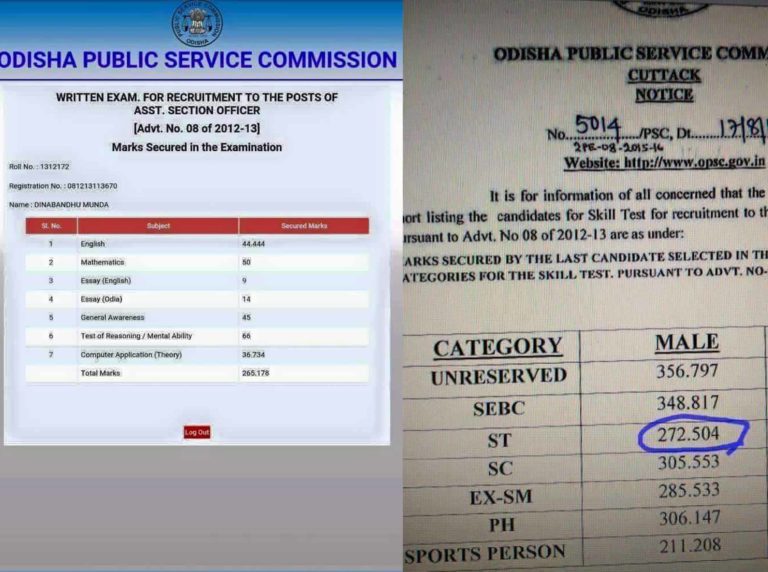
Complaint has been found in the Assistant Section Officer examination conducted by Odisha Public Service Commission.

According to the information, the cut off mark for ST male category was 272. 504. But a ST candidate named Dinabandhu Munda securing total 265. 178 have been selected for the post.  Now he is posted as ASO at the Home Department in the Secretariat of Odisha.

Government building without sign post in Gaisilat

0

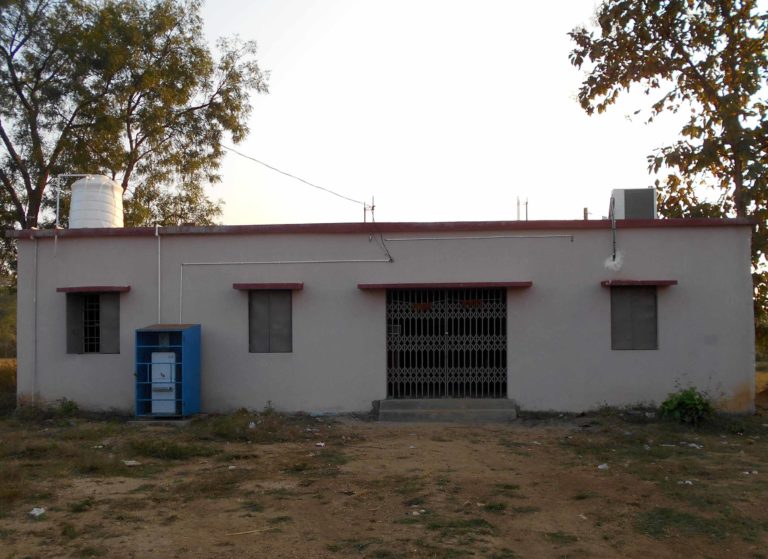
This building shown in the photo is situated on Padampur-Gaisilat road at Buromunda village. The construction of the building in the photo was completed in around October 2016. But the common man has been kept aside from the knowledge about the building. There is no sign post about the details of the projects like estimated budget, name of the project, name of the contractor, etc. Even there is no where mention about the name of the building.

As per the sources this building is a training centre. It is funded by WODC and estimated budget is 16 lakhs. It was inaugurated by the BDO in presence of the Chairperson and Vice-chairman in October last. As the BDO himself has inaugurated it he must know about it.

But question arising in the public, why there is no sign post and there is no name has been written anywhere about the building. The common man of the area is guessing corruption.  And as the BDO himself has inaugurated the building, people are guessing his involvement with the contractor.

MGNREGS labourer threatened to self immolation

0

A few day labourers of Jagalpat village under Gaisilat block of Bargarh district have warned the district administrations for self immolation on 20th December in front of the collectorate if they won’t get their due payment of MGNREGS work.

As per the report, Maharani Sahu, Lalita Sahu, Arnnapurna Sahu, Baikuntha Sahu, Nilakar Sahu and Menegar Sahu belong to Jagalpat village of Gaisilat block under Bargarh district. They had worked in the RD road work from Jagalpat to Maharpali in 2015. But yet they have not got their due payments. They have complained to the BDO and the Sarpanch about it. But nothing happened. Finally they complained the district collector on 22.1.2016.  Still nobody paid any attention to them.

Now they are saying to pay them the due amount within 7 days or else they will self immolate in front of the collectorate and the administration will be responsible for that.

AUPEOS sat in dharna at Bargarh

0

All Utkal Panchayat Executive Officer Sangha, Bargarh Branch is sitting on dharna in front of district collector office Bargarh from today to sine day. The sangha is demanding:

  • According to the high court and approval of the law department the RACP service of the EO after completions of 10, 20, and 30 grade pay of 4200, 4600, 5400 should be published within advertisement within 7 days
  • According to the decision of the Panchayatiraj Department the educational qualifications of the EOs should be considered up to graduation and the method of recruitment and conditions of service rules should be published as soon as possible.
  • According to the decision of the GPEO and DA posts should be promoted to 100 percent.
  • Pension should be given to promoted and newly appointed EO.