Monday, April 27, 2026
Home Blog Page 5

Being Muslim Today

0

Dr Saheb Sahu

Recently, I read a book titled “Being Muslim Today”by Saquib Iqbal Qureshi. Mr. Qureshi is bestselling author, film producer, and Fellow of London School of Economics and Political Science. The book is a compelling and courageous call to twenty-first century Muslims to assert their freedom to interpret Islam for themselves and for their generation.

Brief Introduction to Islam

What is Islam and who is a Muslim?

Islam is a monotheistic religion (like Judaism and Christianity) founded in the 7th century CE based on the teachings of the Prophet Muhammad. A Muslim is a person who follows Islam. Muslims believe in one God, Allah, and follow the Quran, which they consider the literal words of God as revealed to Muhammad. The Five pillars of Islam are: Faith, prayer, almsgiving, fasting during Ramadan, and pilgrimage to Mecca.

 Islam emphasizes submission to God’s will, compassion, and justice. It is the second- largest religion in the world, with 1.9 billion followers (Christianity 2.3 billions).

What is the Hadith?

The Hadith is a collection of traditions containing sayings, actions, and approvals of the Prophet Muhammad. These records are considered important texts in Islam, second only to the Quran. They were compiled by various scholars over several centuries after Muhammad’s death.

What is Sunnah?

Sunnah refers to the broader practice and example set by Prophet Muhammad, encompassing his sayings, actions, and tacit approvals. It represents the lived example of the Prophet and is consider a model for Muslims to follow.

What is Sariah or Sharia?

Sharia, also spelled Sariah, is the Islamic legal and moral code derived from the Quran, the Hadith, and other Islamic texts. Sharia is interpreted and applied differently across the Muslim world, often influenced by local customs and traditions.

 Quotes from the book “Being Muslim Today”

Chapter-1 – Hadith, Jurists, and Sariah

“Prophet Muhammad, like all of us, was human- he was not God”.

“The Quran refers to earlier prophets- Adam, Noah, Abraham, Moses, David, and Solomon (all from the Old Testament).”

“The Good news is that the Quran appears to have been compiled quite early. More than forty Quranic manuscripts, albeit in partial form, survive from Islam’s first century”.

“Most of Muhammad’s sayings and traditions, early Islamic rules and historical records simply do not exist in their original form. Not only that, the versions we have do have are hard to accept as accurate.”

 Chapter-2- The Quran- A Compendium of Messages

“All Muslims treat every word of the Quran as divine. Poetical, melodic, and lyrical, the Quran focuses on beliefs, ethics, and morality. Its messages are primarily concerned with vindicating its divine origin and persuading its audience to believe in God, the previous Revelations, and in the forthcoming Day of Judgement.

Beyond that, there are several recurrent themes in the Quran, sublimely summarized as “God is one. Injustice is bad. Charitableness is good. You’ll live, you’ll die, and you’ll live again- in heaven or in hell. Purify yourself if you want paradise. God is one.

 … Virtues include regular prayer to God and supporting orphans and society’s poor.

 It is also important to lay out what the Quran is not. It is not a legal manual or a synonym for Sharia or Islam. The three are very different. The Sharia is the path that Muslim scholars considered that we should take in life, while Islam is the name given to the religion, derived from various sources including the Quran. And even though it includes some of the same personalities as are in the Bible, such as Jesus, Mary and Moses, and portrays the “Day of Judgement” in strikingly similar fashion, the Quran is distinct from the Bible.”

 Chapter-4- The History of Hadith

Hadith are the reported sayings of Muhammad-and initially of the companions too (they got dropped in the eighth century”… The first post – Prophetic Muslim did not feel they needed the hadith to practice their religion.”

Chapter-6- Revolutionary Equality

“In fact, once you look closer, far from lowering women’s status, the Quran’s messages promote gender equality. Muhammad ensured women and men were treated equally, with identical rights to own property, seek employment, gain knowledge and divorce, epitomized in Sura 3:195 “ I will not allow deeds of any one of you to be lost, whether you are male or female, each is like the other ( in rewards)”

… No other religion had women play as central a role in its infancy as did in Islam. Early Judaism and Christianity did not let women learn or teach the Holy Scripture. In contrast, Aisha (one of prophet’s wife) was a source for about 15 percent of the Fiqh (Islamic Jurisprudence based on Sharia).”

Chapter7- Jihad

“One of the many commonalities between extremists Muslim and anti- Muslim is their take on Jihad.

Jihad is mentioned four times in the Quran and broadly means striving, struggling, or fighting. The messages to Muhammad while he was in Mecca suggest a non-fighting Jihad.

 In contrast, in Yathrib, jihad as physical fighting was introduced as a last resort and with strict limitations. In Sura 42:40-42, God approved fighting for self-defense or to stop oppression and injustice. In Sura 22: 39-40, that defense extended to places of worship including churches and synagogues”.

 Conclusion

“There’s an awful lot about Islam that we don’t know. But we know Mu’tazila, Rumi and al –Shaft thought about Islam in radically different ways- all while remaining Muslim. And we know that the hadith and Sunnah have been both rejected and re-crafted at some point by significant Muslim communities. And we know that, despite all the uncertainties, the messages of the Quran, hard as they are to make sense of, overwhelmingly tend to peace and instill a radical template for morality that remains as vibrant and modern as ever.

 Give yourself permission to ask questions. Because in those questions that you can develop a deeper, cleaner, and more robust faith”.

 Sources

1-Saquib Iqbal Qureshi. Being Muslim Today. Reclaiming the Faith from Orthodoxy and Islamophobia. Rowan and Littlefield; London, 2024

2-Chat-Gpt

Starting Palliative Care Sooner

0

Dr Saheb Sahu, FAAP, MPH

 “Death is an inevitable aspect of human condition. Dying badly is not” – Hasting Center Report, 2003.

What is Palliative Care?

Palliative care (from Latin palliare, to cloak) or comfort care is specialized medical approach focused on providing relief from the symptoms, pain, and stress of serious illnesses. Its goal is to improve the quality of life for both the patient and their family. This type of care is appropriate for patients at any stage of a serious illness and can be provided alongside curative treatments. It addresses physical, emotional, and spiritual needs through a multidisciplinary team approach, ensuring comprehensive support tailored to individual preferences and needs.

What is Hospice care?

Hospice care is a type of palliative care specifically for patients who are in the final stages of a terminal illness, typically with a life expectancy of six months or less (US Medicare Law). The primary goal of hospice care is to ensure comfort and quality of life rather than to cure the disease. Like palliative care, hospice care is provided by a team of professionals including doctors, nurses, social workers and chaplains. Hospice care can be viewed as a subset of palliative care with a specific focus on end-of –life.

Global prospective

The present status of palliative care around the world reveals significant disparities and unmet needs, especially in low and middle income countries. Globally, an estimated, 56.8 million people, including 25.7 million in their last year of life, require palliative care.  However, only 14% of those in need actually receive it (WHO).

 One of the main challenges is the lack of integration of palliative care into national health systems. Many countries do not have any adequate policies, programs, or resources dedicated to palliative care. Furthermore, there is a shortage of trained health professionals and lack of access to medicines like morphine for pain management, because of overly stringent regulations.

When can I start palliative care?

You can start palliative care at any stage of your illness, even as soon as you receive a diagnosis and begin treatment. You do not have wait until your disease has reached an advance stage or when you are in the final months of life. In fact earlier you start palliative care, the better. Anxiety, depression, fatigue, and pain can set in at the beginning of treatment for possibly fatal illness. Talk to your doctor about a referral for palliative care. In most cases, patients receive palliative care in a hospital setting, but services can be delivered in a patient’s home, a hospice, or a long-term care facility.

What diseases can be treated with palliative care?

Originally palliative care was developed for people with terminal illness. But today, patients with cancer, heart disease, chronic lung disease, dementia, multiple sclerosis (MS), and amyotrophic lateral sclerosis (ALS). Parkinson’s disease and many other serious illnesses are eligible for palliative care.

What kind of symptoms palliative care may address?

One of the primary goals of palliative care is symptom management. The disease itself may cause symptoms, but so can treatment. For example, chemotherapy drugs and radiation can cause nausea and vomiting. Narcotics can cause constipation. By providing relief to your symptoms, palliative care can improve your quality of life.

Here are some of the symptoms that palliative care may be able to address.

  • . Pain
  • .Constipation
  • . Nausea and vomiting
  • . Diarrhea
  • . Bowel and bladder problems
  • . Loss of appetite, weight loss, or wasting
  • . Shortness of breath or labored breathing
  • .Coughing
  • . Depression
  • . Delirium or mental confusion
  • . Weakness
  • . Sleep problems.

Conclusion

Starting palliative care earlier can significantly improve the quality of life for patients with serious illnesses. Palliative care can provide comprehensive symptom management including pain relief, emotional and spiritual support, and reduce unnecessary hospitalizations, invasive and sometimes unnecessary treatments. By integrating palliative care sooner, patients and their families gain more time to focus on meaningful activities and better manage the challenges of serious illness, ultimately leading to a better end-of-life experience (Denworth)        .

1- Lydia Denworth. Starting Palliative Care Sooner. Scientific American. June, 2024.

2- National Institute of Aging. https://www.nia.nih.gov/

3- https://getpalliativecare.org/

4– World Health Organization. Implementing World Health Assembly Resolution on Palliative care. 12 Oct, 2021

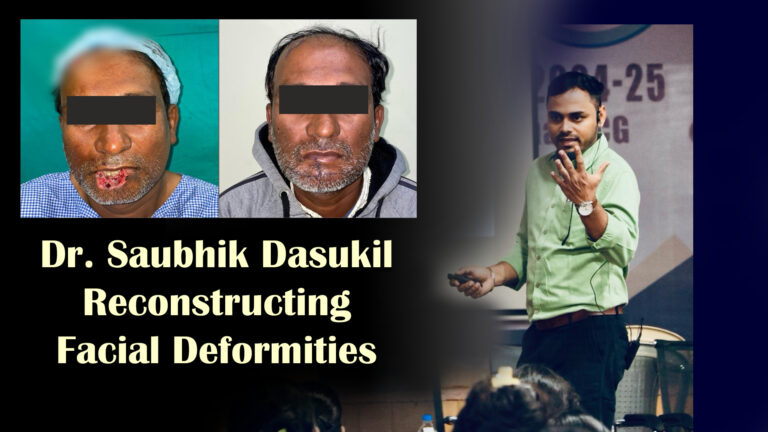
Dr. Saubhik Dasukil Reconstructing Facial Deformities

0

A 40-year-old male patient, a victim of interpersonal violence, sought emergency care at Vikash Multi-Speciality Hospital, Bargarh, with a near-total avulsion of the lower lip. Dr. Saubhik Dasukil, Chief Facial Surgeon at Face Clinic, assessed the patient’s condition and devised a plan for lower lip reconstruction surgery.

Dr. Dasukil successfully performed lower lip reconstruction using ‘The Karapandzic Flap Technique. Postoperatively, the patient is thriving with a competent and symmetrical lip. Expressing gratitude, the patient’s relative shared, ‘Initially planning to seek treatment at a higher center, Dr. Saubhik’s assurance and expertise delivered a magical surgical outcome, restoring my brother’s smile and allowing him to resume everyday life. We are indebted to Dr. Saubhik, Vikash Multi Speciality Hospital, Bargarh, and the Biju Swasthya Kalyan Yojana for this transformative journey.

Our ‘Face Clinic’ specializes in the comprehensive management of facial bone fractures, soft tissue injuries, and a spectrum of jaw and face tumors, addressing both benign and malignant pathological conditions. Additionally, we excel in correcting various facial deformities, encompassing cleft lip and palate, jaw deformities, nasal deformities, as well as orbit and eyelid deformities. Our expertise extends to performing facial aesthetic surgical procedures, such as Orthognathic surgery for jaw repositioning, Rhinoplasty for nose enhancement, Cheiloplasty for lip refinement, Blepharoplasty for eyelid rejuvenation, and Hair transplant surgery, ensuring a holistic approach to facial well-being.

Skepticism

0

Dr Saheb Sahu

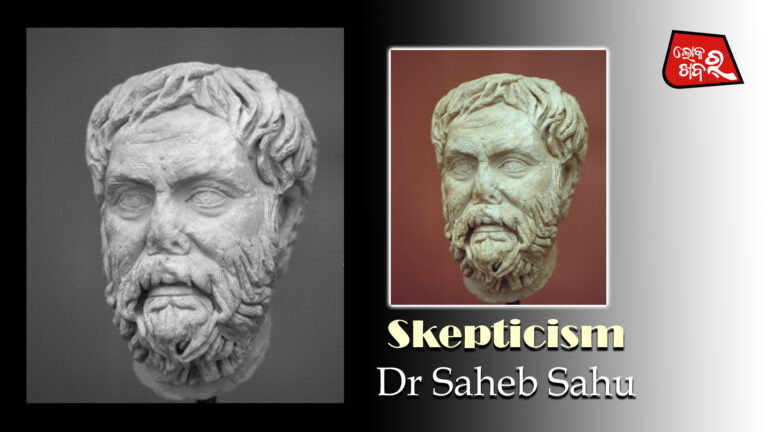
Skepticism, also spelled scepticism, is a questioning attitude or doubt toward knowledge claims that are seen as mere belief or dogma. Formally, skepticism is a topic of interest in philosophy. More informally, skepticism as an expression of questioning or doubt can be applied to any topic, such as politics, religion, or pseudoscience. Skepticism has been responsible for many important developments in science and philosophy. It has also inspired several contemporary social movements. Religious skepticism advocates for doubt concerning basic religious principles, such as immortality, providence, and revelation. Scientific skepticism advocates for testing beliefs for reliability, by subjecting them to systemic investigation using the scientific method to discover empirical evidence for them.

Philosophy

As a philosophical school or movement, skepticism arose both in ancient Greece and India. In India, the Ajnana School of philosophy espoused skepticism. It was a major early rival of Buddhism and Jainism, and a possibly major influence on Buddhism. A strong element of skepticism is found in Early Buddhism, most particularly in the Atthakavagga sutra. Since skepticism is a philosophical attitude and a style of philosophizing rather than a position, the Ajñanins may have influenced other skeptical thinkers of India such as Nagarjuna, Jayarasi Bhatta and Shriharsha.

In Greece philosophers as early as Xenophanes (c. 570– c. 475 BCE) expressed skeptical views, as did Democritus and a number of Sophists.  Socrates also had skeptical tendencies, claiming to know nothing worthwhile.

Pyrrhonism is an Ancient Greek school of philosophical skepticism which rejects dogma and advocates the suspension of judgement over the truth of all beliefs. It was founded by Anesidemus in the first century BCE, and said to have been inspired by the teachings of Pyrrho of Elis in the fourth century BCE.

Pyrrho was born at Elis about 360 BCE. He traveled to India with Alexander’s army, studied under the “Gymnosophists” there, and perhaps learned from them something of the skepticism for which his name became synonym. Returning to Elis, he lived in serene poverty as a teacher of philosophy. He was too modest to write books, but his pupil Timon of Phlius, sent Pyrrho’s opinions abroad into the world. These opinions are basically three: that certainty is unattainable, that a wise man will suspend judgment and seek tranquility rather than truth, and that, since all theories are probably false, one might as well accept the myths and conventions of his time and place. Neither senses nor reason can give us sure knowledge; the senses distort the object in perceiving it, and reason is merely the sophist servant of desire. For every reason has a corresponding reason opposed to it. It is foolish to take sides in dispute. All desires are delusion. Even life is an uncertain good, death is not a certain evil; one should have no prejudices against either of them. Best of all is calm acceptance. According to Durant, Pyrrho tried sincerely to live this half-Hindu philosophy. (Durant)

Pyrrhonism is best known today through the surviving works of Sextus Empiricus, writing in the late second century or early third century CE.The publication of Sextus’ works in the Renaissance ignited a revival of interest and played a major role in Reformation thought and the development of early modern philosophy.

Skepticism in Ancient India

Ajñāna (Sanskrit: अज्ञान) was one of the nastika or “heterodox” schools of ancient Indian philosophy, and the ancient school of radical Indian skepticism. It was a Sramana movement and a major rival of early Buddhism, Jainism and the Ajivika School. They have been recorded in Buddhist and Jain texts. They held that it was impossible to obtain knowledge of metaphysical nature or ascertain the truth value of philosophical propositions; and even if knowledge was possible, it was useless and disadvantageous for final salvation. They were specialized in refutation without propagating any positive doctrine of their own. Sanjaya Belatthiputta was one of the major proponents of this school of thought.

A number of similarities have been noted between the Pyrrhonist works of Sextus Empiricius and that of Nagarjuana, the Madhyamaka Buddhist philosopher from the 2nd or 3rd century CE. According to modern scholars, Ajnana, (Indian Philosophy) which upheld radical skepticism, may have been a more powerful influence on Pyrrho than Buddhism.

Religion

Religious skepticism generally refers to doubting given religious beliefs or claims. Historically, religious skepticism can be traced back to Xenophanes, who doubted many religious claims of his time. For example, a religious skeptic might believe that Jesus existed, while questioning claims that he was the messiah or performed miracles. Religious skepticism is not the same as atheism or agnosticism, though these often do involve skeptical attitudes toward religion and philosophical theology (for example, towards divine omnipotence). Religious people are generally skeptical about claims of other religions, at least when the two denominations conflict concerning some stated belief. Additionally, they may also be skeptical of the claims made by atheists.

Science

Scientific or empirical (based on observation or experience) skeptic is one who questions beliefs on the basis of scientific understanding and empirical evidence.

Scientific skepticism may discard beliefs pertaining to purported phenomena not subject to reliable observation and thus not systematic or testable empirically. Most scientists, being scientific skeptics, test the reliability of certain kinds of claims by subjecting them to a systematic investigation using some type of the scientific method. As a result, a number of claims are considered as “pseudoscience”, if they are found to improperly apply or ignore the fundamental aspects of the scientific method.

Skepticism during Enlightenment

Skepticism was common in Enlightenment philosophy. Being skeptical meant that a person was able to think critically and methodically. Be able to think methodically lead to the creation of science. Not only scientific thinking was created, philosophical thinking was more rationalized by the philosopher Rene Descartes. In his book Meditations on First Philosophy (1641), Descartes explores skepticism on a radical level that target ideas that were derived from learning and experiences of the Enlightenment.

Religion was often as the devil during the Enlightenment. Various features of religion were often deemed bizarre to the enlightenment thinkers. Religion aspects such as superstitions, religious fantasies and supernaturalism were condemned in the era. In fact, there were several attempts to purify religion and make it a clear and natural form of Religion. Voltaire, a critic of the Enlightenment period has made several comments pertaining to Christianity and its role with churches in this time period. Voltaire personally attacks the Catholic Church in France, and blames the church’s actions.

David Hume was among the most influential proponents of philosophical skepticism during the Age of Enlightenment and one of the most notable voices of the Scottish Enlightenment and British Empiricism.

Conclusion

Skepticism has been responsible for many important developments in science and philosophy. It has also inspired several contemporary social movements. Religious skepticism advocates for doubt concerning basic religious principles, such as immortality, providence, and revelation. Scientific skepticism advocates for testing beliefs for reliability, by subjecting them to systematic investigation using the scientific method, to discover empirical evidence for them. The internet is full of all kinds of bogus ideas on all sorts of topics. It is prudent to be a skeptic.

Sources

  1. Will Durant. The Story of Civilization, part- 11; The Life of Greece. Simon and Schuster, New York: 1939.
  2. 2- Wikipedia.org/skepticism

.

.

Voluntarily Stopping Eating and Drinking

0


Dr Saheb Sahu

VSED stands for “Voluntarily Stopping Eating and Drinking”. It refers to a conscious decision by an individual to cease food and fluid intake with the intention of hastening death. While it is not a new concept, VSED has gained attention in recent years as a discussion about end-of-life autonomy and assisted dying has become more prominent.

Indian Context

Prayopavesais a term from Hinduism and refers to the practice of a voluntary fast unto death. The term is derived from Sanskrit, where “prayas” means “effort’ or “striving” and “upavesa” means “sitting down” or “dwelling”. Combined together “prayovesa” can be understood as the act of sitting down in the effort of voluntarily giving up life through fasting. The practice is deeply rooted in Hindu religious and philosophical traditions.

Samadhi marana” (Sanskrit) is another concept in Hinduism, that involves achieving death through deep meditation or Samadhi. The term combines “Samadhi”, which refers to a state of intense concentration and spiritual absorption, and “marana’ which means “death”.

Sallekhana” (Prakit) consists of two words: “sala” meaning “instrument” and“lekhana” meaning to “thin out” or“destroy”. It is a supplementary vow in the ethical code of conduct of Jainism. It is the religious practice of voluntarily fasting to death by gradually reducing the intake of food and liquid.Sallekhana is also known as ‘samadhi-marana”or “sanyasana-marana”.

 British legal codes made all forms of suicide illegal in India, including the horrible practice of “sati”. In March, 2018, Indian Supreme Court made passive euthanasia (intentionally letting a patient die by withholding artificial life support such as respirator or tube feeding) legal under strict guidelines. The patient must consent through a living will (a legal document expressing the wishes), must be terminally ill or in a vegetative state. The same Supreme Court Judgement also directed the legislators for scrapping of code 309, which penalizes those who survive suicide-attempts.

 What would a good death look like?

The definition of a good death will vary from person to person. Some people will say that there is no such thing as “good death”- all deaths are unnecessary, unwanted and unwelcome. But ultimately there is no escape from death. The question is how to minimize the pain and suffering associated with the process of dying. There are some agreements that most dying persons will like to die at home and not in a hospital intensive care unit, with minimal pain and suffering, surrounded by family and friends, have an opportunity to say goodbye and not to have their lives prolonged pointlessly.

Palliative vs Hospice care

The best bet to ensure that your death is yours is access to hospice care. Palliative care involves comfort measures to relieve symptoms and improve quality of life, but you can continue the treatment for your disease. Palliative care can be utilized at any stage of a serious illness, whereas hospice care is just comfort measures at the end of life. There is a shift of focus from curing the disease to improving the quality of one’s last days.

Hospice is often framed as “giving up”, but, ironically, when researchers have compared hospice vs non-hospice patients’ survival, the patients in hospice live on average about a month longer than similar patients who do not choose hospice.

Physician- Aid in Dying

There are limits to palliative and hospice care. In spite of the best efforts by the healthcare team, some patients experience unbearable pain and suffering and request their doctors to end their lives. Physician assisted dying or medical aid in dying or physician assisted suicide (different interchangeable terms), allows the terminally ill to end his or her life through the voluntary self administration of a lethal dose of medication expressly prescribed by a physician for that purpose. But Physician aid in dying is legal only in few countries around the world. It is legal in Australia, Austria, Belgium, Canada, The Netherlands, New Zealand, Portugal, Spain, Switzerland and certain states in the United States.

The Benefits of VSED

VSED is a conscious decision by an individual to voluntarily and deliberately choose to stop eating and drinking with the primary intention of hastening death. The benefits of VSED are: dying at home, it’s legal everywhere, one does not need any one’s permission and one can change one’s mind anytime. Just knowing there is a “way out” can provide relief from feeling of desperation. It can also prevent people from contemplating a more violent way out.

What Is VSED Like?

There have been several independent studies to evaluate VSED. The average time of death after stopping eating and drinking any liquid is about seven days, though 8 percent lived for more than two weeks. The duration will vary based on a person’s ill ness, his or her nutritional status prior to VSED. A person may live little longer by not eating any solid food but if he/she does not drink any kind of liquid, death will come sooner because of dehydration.

 Hunger pangs and thirst may occur the first day or two, but these sensations are usually tolerable. These discomforts can be alleviated by mild sedation, lip balm and cool water rinse. Weakness will be natural. Some people may experience disorientation at the end stage.

 Some researchers now believe that the state of terminal dehydration may even have some analgesic (pain killing) effect, presumed to be due to the release of endorphins (body’s own pain killing hormone), which acts as natural pain blocker.

 There are some other side benefits to the dehydration process. There is less worry about incontinence, catheters or bed pans (because of less urine from dehydration) and less nausea and vomiting. There is also less coughing and choking because of less secretion in the mouth and throat. The death process is relatively painless but slow. The dying person has some time to say goodbye to his or her loved one’s in her or his own home.

Conclusion

Voluntarily stopping to eat and drink   to kill oneself can pose various challenges. Some of the concerns include potential discomfort for the person and the emotional impact on the family. Most of the discomforts are of short duration and can be easily treated. The bottom line is VSED appears to provide most terminally ill patients with a peaceful and gentle death. It is not a new concept. It goes back to 6th century BCE or earlier to India. Because of modern debate on “right to die”, “physician-assisted suicide”, and “euthanasia”, it has come to the forefront, as a prefer way to die.

 The understanding and acceptance of VSED continue to evolve, with ongoing discussion in medical, ethical and legal circles.

 The role of advance care planning is crucial in navigating end of life decisions.  Clear and documented communications about one’s preferences are critical. They should include: a properly executed “Will and Testament” to divide one’s assets, designating someone “With Durable Power of Attorney (DOPA) to make legal and financial decision, executing a “Living Will” or “Advance Health Care Directive” about the course of treatment( Respirator, Tube feeding, Cardio pulmonary Resuscitation(CPR) and do not resuscitate(DNR), VSED, and organs donation etc.). Most important of all, one should and must discuss one’s end of life wishes with his or her family members and physicians. The earlier the better, especially if one is of advanced age or suffering from a serious illness.

Sources

  1. Dr Saheb Sahu. Assisted Dying. www.Odishawatch.in, Dec 28, 2021
  2. Michael Greger, M.D., FACLM.How Not To Age. Flatiron Books, New York: 2023

Question Everything

0

Dr Saheb Sahu

I just read a book titled “Question Everything”, edited by a New York Times writer and a college professor of Philosophy. The book has 95 essays on the topic by philosophers, academicians and activists. Reading of the book let me to write this essay.

Hymn of Creation

Who really knows? Who will here proclaim it?

Whence was it produced?

Whence is this creation?

Gods came afterwards, with the creation of this universe.

Who then knows when it has arisen?

Whether God’s will create it, or whether He was mute;

 Perhaps it formed itself, or perhaps it did not,

 The Supreme Brahman of the world, all pervasive and all knowing,

He indeed knows, if not no one knows.

                                                                       -Rigveda 10; 129

 The Hymn of Creation is one of the earliest accounts of skeptical inquiry and agnosticism.

Questioning everything is the essence of intellectual curiosity and critical thinking. When we question everything, we embark ona journey of discovery and innovation.

 At its core, questioning everything is an acknowledgement that our understanding of the world is dynamic, subject to revision and expansion. This approach encourages individuals to probe the assumptions that underpin our beliefs in our institutions and social systems. When we question the information presented to us, we develop the ability to analyze, evaluate, and synthesize ideas. This skill is invaluable in our present information age, where an overflow of data demands a discerning mind capable of distinguishing between fact and fiction.

 Moreover, questioning everything serves as a catalyst for discovery and innovation. History has shown again and again that revolutionary breakthroughs often arise from individuals who dared to challenge established paradigm. From scientific discovery to societal advancement, the willingness to question assumptions has propelled humanity forward.

 The call to question everything extends beyond the personal realm into societal and political spheres. A vigilant citizenry that questions authority, challenges policies, and demands accountability is essential for the functioning of a robust democracy.

Some Examples

In Religion

Some people have questioned the existence of God, gods, goddesses, deities, angels, in every part of the world, from the very beginning of our human civilization. The Hymn of Creation is a prime example. According to a recent survey, 20 to 25% of people from around the world consider themselves as atheists or agnostics. An atheist is someone who doesn’t believe in a God or any god, while an agnostic is someone who doesn’t believe, it’s possible to know for sure that a god exists. Believing in the superiority of one own God or gods has led to perpetual wars since the beginning of our civilization and it continues till now.

In Science

In science people like Galileo and Copernicus questioned the prevailing belief that Earth was the center of the universe. Their skepticism led to the advancement of our understanding of astronomy and reshaped the foundation of science. Based on our current knowledge, our universe is but one in an unimaginably massive ocean of universes called multiverse.Our knowledge about our universe is constantly changing.

In Medicine

 Ignaz Philip Semmelweis, a Hungarian physician and scientist, in 19th century, questioned the existing medical practices and championed hand washing to prevent infections, significantly reducing death rates during child births.

In Education

In the realm of education, progressive educators questioned traditional teaching methods. Pioneer like Maria Montessori introduced alternative approaches emphasizing personal learning and self-discovery.

In Art

In art, innovators like Leonardo da Vinci’s focus on human anatomy led to the creation well known works like Mona Lisa (1503-19) and The Last Supper (1495-98). Other famous innovators in visual art were Cajal, Audubon, Picasso, Anna Atkins and many more.

In Human Rights

 Figures like Gandhi, Martin Luther King Jr, and Nelson Mandela questioned the oppressive system of discrimination and dedicated their lives to struggle for human rights and equality.

In Journalism

It is an old adage that “All governments lie.” Journalists are facing violence, intimidation, persecution and even death for questioning the authorities in power. In 2021, 117 journalists were killed around the world, for exercising their professional duty of questioning the authorities.

In Technology

In the field of technology, figures like Timnit Gebru, Joanna Bryson and many others are questioning the ethical implications of artificial intelligence (AI) and other digital technology.

Conclusion

All the above examples demonstrate that questioning everything is not confined to specific time or field but an ongoing process that propels humanity forward.. However, it’s crucial to strike a balance.as incessant questioning may lead to skepticism.

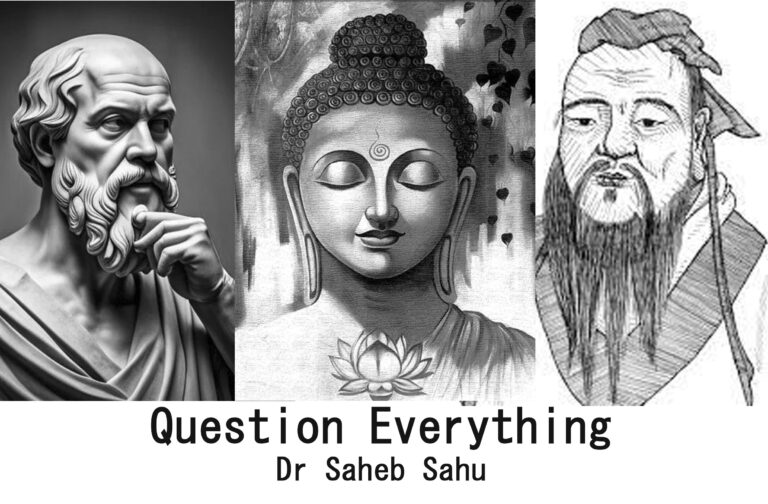
 I will conclude with the following quotations from Buddha, Confucius and Socrates.

‘Believe nothing, no matter where you read it, or who said it, no matter if I have said it, unless it agrees with your own common sense.” – Buddha

‘The one who knows all the answers has not been asked all the questions”—Confucius

“The only thing I know is that I know nothing, and Iam not quite sure that I know that”. – Socrates

Reference:

Peter Catapano and Simon Critchley (editors). Question Everything. Liveright Publishing Company, New York: 2022

PS: The first draft of this essay was done by Chat GPT.

Charvaka

0

Dr Saheb Sahu

Charvaka, (from Sanskrit charu and vak meaning “alluring speech”) originally known as Lokayata, is an ancient school of Indian philosophy founded by Brihaspati, although some scholars dispute this. Lokayata literally means, belonging to the world of senses. The exact dates of the founding of the system are unknown. Charvaka holds direct perception, experimental, and conditional inference as proper source of knowledge. It embraces philosophical skepticism and rejects Vedas, Vedic ritualism and supernaturalism. Most of the primary sources of Charvaka, the Barhaspatya sutra (c.600BCE) are lost. Its teachings have been compiled from historic secondary sources, such as those found in the shastras, sutras and the Indian Epic poetry as well as from Jain and Buddhist literature.

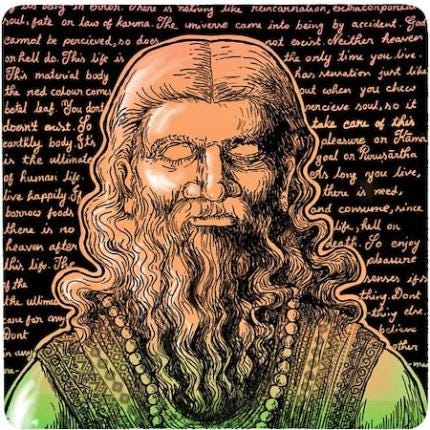
 Charvakas rejected many of the standard religious conceptions of Hindus, Buddhists and Jains, such as afterlife, reincarnation, samsara, karma, and religious rites. They were critical of the Vedas, as well as Buddhist scriptures. Charvakas believed that there was nothing wrong with sensual pleasure. Unlike many of the Indian philosophies of the time, Charvakas did not believe in austerities or rejecting pleasure out of fear of pain and held such reasoning to be foolish. They rejected the need for ethics or moral, and suggested that “while life remains, let man live happily let him feed on ghee (clarified butter) even though he runs into debt”.

The Sarvasiddhanta Samgraha states the Charvaka position as follows,

There is no other world other than this;
There is no heaven and no hell;
The realm of Shiva and like regions,
are fabricated by stupid imposters. — Sarvasiddhanta Samgraha, Verse 8

The enjoyment of heaven lies in eating delicious food, keeping company of young women, using fine clothes, perfumes, garlands, sandal paste… while moksha is death which is cessation of life-breath… the wise therefore ought not to take pains on account of moksha.

A fool wears himself out by penances and fasts. Chastity and other such ordinances are laid down by clever weaklings. — Sarvasiddhanta Samgraha, Verses 9-12

Buddhist, Jains, Advaita Vedantins and Nyaya philosophers considered the Charvakas as one of their opponent and tried to refute their views. These refutations (which have been preserved in writings) are the indirect sources of Charvaka philosophy. The arguments and reasoning approach Charvaka deployed were significant that they continued to be referred to, even after all the authentic Charvaka texts had been lost.

One of the widely studied references to the Charvaka philosophy is the Sarva-darśana-saṅgraha (etymologically all-philosophy-collection), a famous work of 14th century Advaita Vedanta philosopher Madhava Vidyranya from South India, which starts with a chapter on the Charvaka system. After invoking, in the Prologue of the book, the Hindu gods Shiva and Vishnu (“by whom the earth and rest were produced”), Vidyāraṇya asks, in the first chapter:

…but how can we attribute to the Divine Being the giving of supreme felicity, when such a notion has been utterly abolished by Charvaka, the crest-gem of the atheistic school, the follower of the doctrine of Brihaspati? The efforts of Charvaka are indeed hard to be eradicated, for the majority of living beings hold by the current refrain:

While life is yours, live joyously;
None can escape Death’s searching eye:
When once this frame of ours they burn,
How shall it ever again return?

 According to Amartya Sen (professor of economics and philosophy, at Harvard); “The active presence of atheism and materialism continued through the regimes of Muslim Kings. Indeed even in the late sixteenth century, when the Moghal emperor Akbar held his multi-religious dialogue encounters in Agra, the Charvaka school of atheism was well represented among the alternative positions that were selected for presentation as Akbar’s adviser Abul Fazl noted. In the philosophical discourses throughout Indian history atheists and skeptics make frequent appearances, even though in many cases, their points of view ultimately rejected, they get their say” (Sen)

Sources:

1-Wikipedia.org/Charvaka philosophy

2- Amartya Sen. The Argumentative Indian. Penguin Books, New York: 2005

Buddha

0

Dr Saheb Sahu

Indian Philosophy Around the time of Buddha

That there were doubters (of God), even in the days of Upanishads, appears from the Upanishads themselves. The Swasanved Upnishad announces that there is no god; no heaven, no hell, no reincarnation, and no world; the Vedas and Upanishads are the work of conceited fools.

 The Charvakas laughed at the notion that the Vedas were divinely revealed truth. They argued that truth can never be known except through senses. Even reason is not to be trusted, as it depends upon the assumption that future will behave like the past. They believed that the soul is a delusion, and Atman is humbug. Matter is one reality; the body is a combination of atoms, the mind is merely matter of thinking; the body, and not the soul, feels, sees, hears, thinks. There is no immortality, no rebirth. Religion is an aberration, a disease. Virtue is a mistake; the purpose of life is living, and the only wisdom is happiness.

The revolutionary philosophy of Charvakas put an end to the age of the Vedas and the Upanishads (Durant).

Before the birth of Buddha, we find a variety of persons who despised all priests, doubted all gods, and bore without trepidation the name of Nastiks, No –sayer and Nihilist. When Buddha grew to manhood he found the halls, the streets, the very woods of northern India ringing with philosophical disputation, mostly an atheistic (non-believer in god) and materialistic trend. The later Upanishad’s and the oldest Buddhists books are full of heretic (a person who holds religious opinion contrary to accepted beliefs). It was an amazing age of free thought in Indian philosophy.

 The Legend of Buddha

Indian tradition describes Buddha’s father, Shudhodhana, member of the Gautama clan of the Shakya tribe, and the king of Kapilavastu, at the foot of the Himalayan range (present Nepal). In truth, however we know nothing certain about Buddha. Scholars assign his birth to approximately 563BC. As a member of the Kshatriya caste, he received careful training in the military arts. He also sat at the feet of sages, and made himself master of all the philosophical theories current at his time. He married, became a father and lived in wealth.

 One day, says the pious tradition, he went forth from his palace into the streets among the people, and saw an old man; and on another day went forth and saw a sick man; and on a third day he went forth and saw a dead man.

 To Buddha these sights were the beginning of “enlightenment”. He suddenly resolved to leave his father (his mother had died in giving him birth), his wife and his newborn son and became an ascetic. During the night he stole into his wife’s room, and looked for the last time upon his son Rahula. In the dark of the morning he rode out of the city. He stopped at a beautiful place called Uruvela, in the forest. Here he devoted himself to the severest forms of asceticism. For six years he tried the ways of the Yogis. He lived on seeds and grass.

 But one day thought came to him that self-mortification was not the way.  He abandoned his asceticism, went to sit under a shade giving tree (the Buddhi- tree later Buddhist worshipped at Buddha Gaya). He remained there steadfast and motionless, resolving never to leave that seat until enlightenment came to him. What, he asked himself, was the source of human sorrow, suffering, sickness, old age, and death? Soddenly a vision came to him of the infinite succession of death and births in the stream of life. Birth, he told himself, is the origin of all evil.  If birth could be stopped… Why is Birth not stopped? Because of the law of karma demands new incarnation in which the soul may atone for evil done in past existences. Happiness is possible neither here, nor hereafter as many people think. Only peace is possible, only the cool quietude of craving ended, only Nirvana.

And so, after seven years of meditation, the Enlightened One (the Buddha), having learned the cause of human suffering went forth to the Holy City of Banaras, and there, in the deer-park at Saranath, preached Nirvana to men (Durant). 

The Teaching of Buddha

Like the teachers of his time, Buddha taught through conversation, lectures, and parables. He claimed “enlightenment” but not inspiration.  He never pretended that a god was speaking through him. He walked from town to town, accompanied by his disciples, and followed by as many as twelve hundred devotees.

 His favorite sutra was the “Four Noble Truths” in which he expounded his view that life is suffering, that suffering is due to desire, and wisdom lies in stilling all desires. The suffering can be alleviated by the Eightfold Way (Paths) namely: right view, right intention, right speech, right action, right living, right effort, right mindfulness, and right concentration. When his disciples asked him to define clearly his conception of right living, he formulated for their guidance “Five Moral Rules”, simple and brief, perhaps more comprehensive than the Ten Commandments.

1. Let no one kill any living being.

2. Let no one take what is not given to him.

3. Let no one speak falsely.

4. Let no one drink intoxicating drink.

5. Let no one be unchaste.

 Buddha’s conception of religion was purely ethical; he cared everything about conduct, nothing about ritual or worship or theology. He refused to be drawn into any discussion about eternity, immortality, or God. He scorns the assumption of the priests that the Vedas were inspired by the gods. He denounces the notion of sacrificing to the gods, and looks with horror upon the slaughter of animals for these rites. He rejects all cults and worship of supernatural beings, all mantras and incantations, prayers and all ascetics. Quietly, and without controversy he offers a religion absolutely free of dogma and priest craft (Durant).

The Last Days of Buddha

Towards the end of his life his followers bean to deify him, despite his challenge to them to doubt him and think for themselves.

 And to Ananda (his main disciple) he taught his greatest and noblest lesson: “And whosoever, Ananda, either now or after I am dead, shall be a lamp unto themselves, and refuge unto themselves, shall be take themselves to no external refuge, but, holding fast to the truth as their lamps,…shall not look for refuge to any one besides themselves, it is they … who shall reach the very top most height! But they must be anxious to learn” (Durant).

 He died in 483B.C, at the age of eighty. “Now then, O monks”, he said to them as his last words, “I address you. Subject to decay are compound things. Strive with earnestness” (Durant).

Mahavira

 Mahavira (c599-527or 425B.C, the 24th Tirthankara of Jainism) was an older contemporary of Buddha, and like Buddha, he abandoned worldly possessions at the age of 30 and left home in pursuit of spiritual awakening, becoming an ascetic. He taught that observance of the vows of ahimsa (non-violence), satya (truth), asteya (non-stealing), bramacharya (chastity), and aparigraha (non-attachment) are necessary for spiritual liberation. Mahavira is best remembered in the Indian traditions for his teaching that ahimsa is the supreme moral virtue, and it covers all living beings. He believed in the existence of the soul but not in a creator God. Enlightments for Mahavira, is the consequence of self -cultivation and self-restraint.

Sources

1- Will Durant. The Story of Civilization; part -1, Our Oriental Heritage. Simon and Schuster, New York: 1954

2- Wikipedia .org

Ten Moral Leaders in Thought and Life

0

Dr Saheb Sahu

Introduction

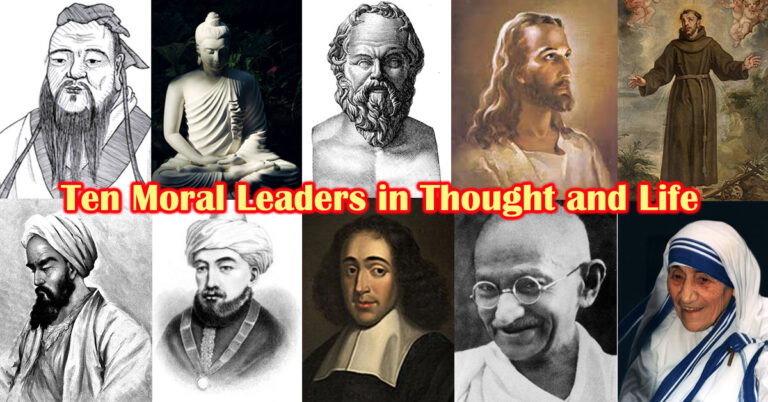
Will Durant (1885-1981) spent more than fifty years writing his critically acclaimed eleven volumes, The Story of Civilization, published by Simon and Schuster. He was awarded the Pulitzer (1968) and the US Presidential Medal of Freedom (1977). Durant was passionate in his quest to bring philosophy out of the ivory towers of academia and into the lives of everyday men and women. His last book; Fallen Leaves was published posthumously in 2014. On the topic of Religion and Morals, he listed Confucius, Buddha, Socrates, Jesus, St. Francis of Assisi, Maimonides, Spinoza, Florence Nightingale and Schweitzer as moral leaders in thought and life. For these series of articles I am dropping Florence Nightingale and Schweitzer from the list and adding al- Razi, Gandhi and Mother Teresa to it.

Definition of Morality

Morality can be defined as principles concerning distinction between right and wrong or good or bad behavior.

Confucius

Confucius (“Master Kong”; c. 551 – c. 479 BCE) was a Chinese philosopher and politician, who is traditionally considered the paragon of Chinese sages. Confucius’s teachings and philosophy underpin East Asian culture and society, remaining influential across China and East Asia to this day.

Confucius

Confucius was born in 551 BC, in Shantung province, in the kingdom of Lu, China. His father was seventy years old and died when the boy was three. He worked after school to help support his mother; nevertheless he had time to become skilled in archery and music. He married at nineteen and divorced his wife at twenty-three. At twenty-two he began his career as a teacher, using his home as school house and charging whatever modest fee his pupils could pay. He was a strong believer in education. He said,” It is not easy to find a man who has learned for three years without coming to be good”.

He at first had few pupils. But his name spread as a kind and good teacher. At one time, as many as 70 students lived with him. He strongly desired fame and position but he would make no dishonorable compromises to secure or retain them. Again and again he refused appointments to high office from whose government seemed to him unjust. The highest office he attained was the chief magistrate of the town of Chung-tu, which lasted only for three years.

 Confucius left behind five volumes apparently written or edited by his own hand and therefore known in China as “Five Ching” or Canonical Books. The Analects, the most known among the Chinese philosophical books, is composed of a large collection of sayings and ideas attributed to Confucius and his contemporaries. It is believed to have been compiled and written by Confucius’s followers. It reached its final form between 206 BC – 220 CE. It is the central text of Confucianism. In the Analects, Confucius presents himself as a “transmitter who invented nothing”. He puts the greatest emphasis on the importance of study. Far from trying to build a systematic or formalist theory, he wanted his disciples to master the older classics.

Confucius’s principles have commonality with Chinese tradition and belief. With filial piety, he championed strong family loyalty, ancestor veneration, and respect of elders by their children and of husbands by their wives, recommending family as a basis for ideal government. He espoused the Golden Rule, “Do not do unto others what you do not want done to yourself”.

 Confucianism

Although Confucianism is often followed in a religious manner by the Chinese, many argue that its values are secular and that it is, therefore, less a religion than a secular morality. Proponents argue, however, that despite the secular nature of Confucianism’s teachings, it is based on a worldview that is religious.

Confucian morality

Confucius was an agnostic (a person who believes that nothing can be known about the existence of God). He avoided theoretical questions like God, gods, heaven, hell, sin etc. His passion was morality.

This is the keynote and substance of the Confucian philosophy. Wisdom begins at home, and the foundation of society is a disciplined individual in a disciplined family. His disciple Tsze-loo asked him, “What constitutes the Higher Man?” he replied, “The cultivation of himself with reverential care”. The very basis of a Higher Man’s character is an overwhelming sympathy toward all men. He pays no attention to slander or violent speech. He courteous and affable to all, but does not gush forth indiscriminate praise. He treats his inferiors without contempt and his superiors without seeking to court their favor. He is slow in words and earnest in conduct. He is courteous even to his familiars, but maintains his reserve towards all, even his son. One of his teachings was a variant of the Golden Rule, sometimes called the “Silver Rule” owing to its negative form:

Zi Gong [a disciple] asked: “Is there any one word that could guide a person throughout life?” The Master replied: “How about ‘reciprocity’! Never impose on others what you would not choose for yourself.”

The Influence of Confucius

The influence of Confucius was posthumous, but complete. His philosophy had struck a practical note that endeared it to the Chinese people. Schools sprang up here and there for the teaching of the Master’s philosophy, as handed down by disciples, developed by Mencius. These schools became the intellectual centers of China and kept the civilization alive during centuries of political collapse, much as the monks did during the Dark Ages of Europe that followed the fall of Rome. (Durant)

Source

Will Durant, The Story Of Civilization, Vol -1, Our Oriental Heritage. Simon and Schuster, New York: 1954

 Wikipedia.org

This I Believe: Dr Saheb Sahu

0

Introduction

This I Believe was originally a five minute program, hosted by journalist Edward R. Murrow from 1951 to 1955 on CBS Radio Network in USA. The show encouraged both famous and everyday people to write short essays about their own personal motivation in life and read them on the air. This I Believe became a cultural phenomenon that stressed individual belief rather than religious dogma. In 1952, the first of the two volumes of This I believe essays were published. It went on to sell over 100,000 copies in hardcover. The Voice of America and BBC radio broadcasted the program throughout the world. The show ended in January 1955.

I am a 78 –year old Indian-American retired physician. This essay expresses what I  believe.

A- I believe in a loose-knit family

I grew up in a village, in the state of Odisha, India in a joint family consisting of my paternal grandmother (grandfather was dead), my parents, my uncle and aunt. I am the youngest of the three brothers. When I was about 7 years old, our parents and our uncle and aunt divided the house and property equally and started cooking separately. We became a nuclear family.

 As a child I received lots of love and affection from my parents, multiple uncles and aunts and two grandmothers. During my entire childhood, I was never physically punished by my parents or teachers. A stern look from my father was enough to correct my unruly behaviors.  As a pediatrician I have never believed in physical punishment. It does more harm than good.

 Our parents were small scale farmers (five acres of non-irrigated land) but somehow decided to educate all three of their children. They produced enough paddy, vegetables and sugarcane for our family’s need and some surplus to sell. But they never had enough cash, especially when all three of their children had to stay in hostels for studying. When I was in the 5th grade, my eldest brother got a job in the Indian Postal Department. After that, our family’s financial situation improved by our village standard. My eldest brother financed my education from the 5th grade until I graduated from the medical school. I also got merit scholarship from middle school through medical school. That was quite helpful.

 My parents and my brothers made sacrifices for me. Without the financial help from my brothers, I could not have afforded to attend AIIMS at New Delhi, an expensive city.  Later on, when I came to US for higher study and got a job and saved some money, I was able to help my brothers to expand their pharmacy business and help them build a nice house in Sambalpur, Odisha. We (my wife and I) have also been able to provide financial help to both sides of our extended families. 

 I don’t believe in the old style, conflict infested, patriarchal and mother-in-law dominated joint family. However I do believe in a loose-knit extended family, where brothers and sisters, parents and grandparents, uncle and aunts support each other in good times and bad times.

B- I believe in getting the highest level of education possible

Our village had an elementary school. My father had third grade education and knew how to read and sign his name. My mother was illiterate but quite smart. I had to stay in hostel starting from middle school and through High School, Premed and Medical College. I was a good student. Based on an all India exam, I was admitted to the AIIMS, New Delhi, the best Medical College in India then (1964) and now (2023). In 1970 I came to US for higher study and stayed. In USA, I became a pediatrician and neonatologist (specialist for premature babies) and an adjunct professor in a Medical College. In America, I did well professionally as wells as financially.  After my retirement from active practice, I went back to college (attended night and week-end classes) and got dual master degrees in Public Health (MPH) and Hospital Administration (MHA).

 Multiple studies have shown that in general, people with higher education have higher life- time earnings than people with less education. Based on my personal experience I am a strong believer in higher education, more the better.

 All developmental experts agree that the potential benefits of girls’ education is even greater than that of boys’ education. The benefits of girls’ education are many: decrease pregnancy rate, increase productivity, reduction of under- 5 mortality rates, gender equality in family decision making and many more. My wife and I are spending our limited surplus money in promoting education, especially girls’ education in Odisha, India, since 1990.

C- I believe in healthy life-style

 Health and diseases are due to our specific genes as well as our life-style. We have no control over our inherited genes but we do have some control on how we live. Recent studies are showing that some bad genes can even be modified with a healthy life-style.

 I don’t smoke or drink. Even though it is recommended that every adult should do 150 minutes of moderate exercise a week, I exercise almost every day- biking, swimming and doing muscle strengthening exercises. Usually we eat a diet of whole grains, plenty of vegetables and fruits, some eggs, fish, yogurt and occasional meat. I watch my portion size. I had gained 22lbs (9.9kg) over 32 years.  In 2004, I lost 20 lbs. (9kg) and have been able to keep it off so far. My BMI(Body Mass Index) is 22, which is normal.

Regular exercise (physical activity) has several health benefits: weight control, blood pressure control, prevention of type-2 diabetes, heart disease, stroke, arthritis, some cancers, and depression. It promotes better sleep and improves brain functions. One of the easiest and the best exercise is walking in nature, 30 minutes a day, especially for seniors.

D- I believe in reading books

I have been a reader all my life. I finished “The Complete Works of Sherlock Holmes” during my 10th grade summer vacation. After my retirement I have been able to read lot more books. I visit our public library about every two weeks and borrow 5-6 books at a time. I visit our Barnes and Noble Book store at least twice a week. I read all kinds of books: books on politics and current events, some history books, rarely biography and some novels. The best novel I have read was “War and Peace” by Tolstoy. It is a very thick book. I read it when I was 58 but enjoyed it very much.

 I read a lot, and I really like books. All kinds of books. With a book in hand I am never bored. When I am not busy doing other things, I read. Books have given me lots of pleasure, information, knowledge and hopefully some wisdom.

E- I believe in being kind to all

 I believe in modern science. Our universe is vast and mysterious as seen by NASA’s Hubble and James Webb telescopes. There are billions of stars in the universe. According to our present knowledge, our universe began with an explosion of space itself- the Big-Bang, about 13.8 billion years ago and not 7000 years ago as written in the Bible. I believe in Darwin’s theory of evolution that species of organisms including humans arise and develop through natural selection. I understand that each culture and civilization has its own story of creation of the universe and how human beings were created. But all of them are mythologies and not science.

Even though religions differ among themselves on the names of their gods, ritualistic practices, doctrines and dogmas, the core ethical teachings among them are similar. All religions emphasize ethical behaviors: truthfulness, taking care of the parents, not killing, not stealing, charity and kindness. I believe in the Golden Rule: treat others as you would like to be treated. The idea dates at least to the early Confucian times (551-479BCE). The concept appears prominently in Hinduism, Buddhism, Judaism, Christianity and Islam.

 I have read all the major scriptures: The Vedas, The Upanishads, The Dhammapada, The Analects, and Tao-te Ching, The Bible and The Koran (all in English). I have written a thick book on world religions titled, “Religious Thoughts, Scriptures and Quotations” (1996). Based on my readings and life experiences, I have come to this conclusion. You may or may not believe in religion, God or gods, scriptures, rituals, gurus, and swamis (I do not) but be kind to all, that include the animals. That is all the religion you need to know and practice.

F- I believe in community service

 Community service is something you do to benefit your community. For Bill and Melinda Gates it is the whole world. For most of us it, it is the community we live in. Size does not matter. We should do something for the betterment of our community in regular basis: volunteering, coaching a children sport team, tutoring a child, or feeding the hungry.  Giving money to charity is good but serving the community is even better. “For everyone to whom much is given, from him much will be required” (Luke12:48).

G- I believe in planting trees

We planted five trees in our backyard in USA, 44 years ago. Those trees have grown to be more than 150 feet (about 45 meters) high and provide plenty of shade to our house. When I seat and read in our deck, I feel like, I am in a Jungle. Trees are good for our environment. They provide us and other creatures with fruits and nuts. They produce oxygen and sequester carbon dioxide, prevent soil erosion, increase property value and make the community look beautiful. I am a big proponent of tree planting. Our family trust (S-B Trust) has been planting trees in Bhatli block in Bargarh district in Odisha, India, since 1988. So far we have planted more than 600,000 trees in schools and colleges in that area and the planting continues.

 Conclusion

I believe in a loose-knit extended family whose members care for each other and help each other out when needed. I believe that one should get the highest level education one can get. I am a strong advocate of girls’  education. I believe in eating a healthy diet, moderate in amount, not smoking or drinking and exercising daily.  I believe in reading books, all kinds of books. I believe that one may or not be religious but must be kind to all. I believe in community service. I am a great believer of planting tree, especially fruit trees.

PS- Dr Saheb Sahu is a retired pediatrician who was born in village Mulbar, Bhatli Block, District Bargarh, Odisha, India.  He was educated in Mulbar Elementary School, Kamgaon Middle School, C.S. Zila School, G.M. College (Sambalpur), and AIIMS (New Delhi). He and his wife migrated to US in 1970 and are settled there. They have two sons, two daughter-in-law and four grandchildren. Dr Sahu is an author of 16 books and booklets. His essays are published regularly in Odishawatch.in