by Saket Sreebhushan Sahu
INTRODUCTION
Kosali is an ancient, rich and sweet language. However, some recent research done at Sambalpur University claims Kosali as a distinct language as a result of which the university has introduced a One year Diploma course.[1] A few schools are also teaching in Kosali medium in primary level.[2]
Origin and Evolvement
Kosali is an Indo-Aryan language. Languages have travelled with Aryan towards east. The Original Shouraseni Prakrit was travelling towards east and before becoming Magadhi it stopped in Kosal region and evolved a form. As it evolved on the way to travelling to Magadh so it is known as “Ardha Magadhi”. And all the languages derived and evolved from this group are known as “Ardha-Magadhi Group”. Modern linguists are calling it Purbi-Hindi group too. As it is very distinguished from western Hindi so a few are naming it Kosali group as all the languages of this group are spoken in northern and southern Kosal region. The languages of Kosali group are, Awadhi, Baghelkhandi, Chattisgarhi and Kosali.[3]
Area Where Kosali is used
A large area encompassing the western part of Odisha popularly known as Kosal region; Sundargarh, Jharsuguda, Sambalpur, Bargarh, Deogarh, Balangir, Sonepur, Kalahandi, Nuapada, Boudh, Phulbani and Northern Koraput regions; parts of Chattisgarh; Bhatri region of Bastar district, and from eastern part of Debhog, Phuljhar, Raigarh, Sarangarh to Jashpur uses Kosali as its mother tongue. About 75 lakhs population uses Kosali according to 2011 census, but unofficially two crore population uses Kosali in their day-to-day life out of the total population of 4.2 crore of Odisha.
Kosali language is the identity and insignia of the people of western Odisha. For the people of western Odisha it is not just a language but a way of life that propel progresses and harmony in the region. But it is facing serious neglect in development and recognization, particularly evident in giving recognization to it in Odisha. Though it is an ancient language with a vast and rich literature yet it is vulnerable to extinction without government support for development and preservation. At present Kosali speakers are demanding:[4]
- The inclusion of Kosali in 8th Schedule of the Indian Constitution. So many Indian languages which are used by less population than Kosali are already enjoying the 8th Schedule status. But Kosali is still pending along with 38 other languages to get included.
- Affiliation of Kosali with Kendra Sahitya Academy. If English and Rajasthani can be affiliated with Kendra Sahitya Academy without inclusion in 8th Schedule of the Indian Constitution then why Kosali is not there after repeated demands ?
- Education in Kosali Medium. If the state Govt. can start education in as many as 19 Adivasi languages of the state then what is the problem with Kosali, the second largest language of the state?
- Formation of Kosali Sahitya Academy
Kosali language will be hugely benefiting the region if it included in the 8th Schedule of the Indian Constitution and fulfilled other legitimate demands of the Kosali speakers:
- Kosali as a medium of study and examination can be implemented from primary to University level. The Indian government is also promoting the mother tongue based multilingual education to reduce the school drop-out rates and to enhance communication using a mother tongue.
- Kosali Literary Academy, largely benefitting the writer, author, poet and academician, can be formed and financial aid can be avail from the centre as well as from the state. Further it will help in propagating and preserving Kosali language by publishing books, felicitation of authors, research work, seminar and meetings etc.
- Kosali as official language will ease governance in the region. Presently official works carried with Odia language in western Odisha; not very literates understand the full implications of these.
- Kosali films will be considered for National Awards (Regional Language) only when the language will be enlisted in 8th Schedule of the Indian Constitution.
Getting recognization in the context of Kosali, depend upon several factors at policy, implementation, and governance level as well as civil society and community levels in their ability to demand for this constitutional mandate of the government. Unless clarity and conscious recognition of the extent of problems and the complexities involved with giving recognization to Kosali by the state and institutions are brought out for a national debate and planning and utilizing the available resources to strengthen the movement for achieving the recognization would remain unfulfilled. The present paper, “Kosali Language Movement: A Reflection of Regional Disparity in Odisha” is written to further this national dialogue on behalf of Kosali language speakers.
BENI and Kosali Kriyanusthan Committee led by Saket Sreebhushan Sahu works for Kosali language and literature, particularly development, propagation, protection of rights of Kosali. As an editor of a Kosali magazine, organisor and activist we have witnessed several gaps in terms of policy and practice of the state and its institution. However, to build a concrete argument on these gaps and to lobby for focused interventions and policy by the State, the broader picture of Kosali with an analysis across States on giving recogization to Kosali was seen as a way forward to facilitate such a dialogue.
Primary Objectives of the Study
This paper will discuss to understand the present status, vulnerability, threats and gaps in fulfillment of demand for recognization of Kosali in Odisha. The study will progress with the following objectives:
- To understand the current status and delivery to give recognization to Kosali by the State
- To identify the gaps and challenges which currently exist for the state in giving recognization
- To enable to strengthening of a dialogue between the civil society and the state institution on policy and implementation with respect to providing recognization to Kosali.
THE LITERATURE
To study further the Kosali language movement let us examine its literatures. In Odisha, Kosali and Odia are the two major languages. Odia is getting all the patronization of the government but Kosali is not getting its due though people of western Odisha are paying tax. Rather in the history of language movement of Odisha a deliberate attempt to demolish Kosali is going on. Odia institutions and linguist are leveling Kosali as a dialect. This tradition is going on since many years even from the pre-independence era.
Paschim Odishar Geeti Kabita
To learn more about the trends of the literature and its history we will discuss Paschim Odishar Geeti Kabita edited by Sasanka Sekhar Panda, Published by Orissa Sahitya Akademi, 2004. This is a compilation of Kosali poetry from 1891 to 2000. Apart from giving an insight to the trends of Kosali poetry in pre-independence era and post-independence era this book also throw light on the historical backdrops of the literature. In the prefatory note he has mentioned that “Sambalpur Hiteishani” edited by Pt Nilamani Bidyaratna and patronized by the then Bamanda King, Sir Basudev Sudhal Dev, published a poem in 1891 by Madhusudan and the editor wrote a note that “Though the mother tongue of Sambalpur section is Odia but in very bad shape. At present the language of civil society has developed a bit true. But the language of lower class people is still in bad condition as before.”
Many a Kosali writers have been found writing in the pre-independence era. Though there were not plenty of platforms to publications and propagations. Some of them are: Jatan, Chaitan Das, Balaji Meher, Lakhman Pati, Ganga Prasad Panda, Moulana Mustakim Khan, Kapil Mahapatra, Parikshit Khandual, Dhaneswar Mahapatra, Mayadhar Seth, Sridhar Udgata, Bidhubhushan Guru, Indramani Sahu, Chintamani Sahu, Danei, Baidyanath, Nakphudi Panda, Satyanarayan Bohidar etc.
In the pre independence era, so many Odia Magazines like Jijnansu, Paarijaat, Patna Deepika, Sankha etc have published Kosali writings. In 1944 “Sankha” edited by Dr Mayadhar Mansingh published a Kosali poem of Nakaphudi Panda titiling “Paasri Debu Kaen Na” and he was heavily criticized for that. He was criticized that a secret attempt to publish spoken language of Sambalpur region is going on.
It is important to discuss those writings which have been created in the mother tongue of people of western Odisha and parts of Chattisgarh since more than one hundred year. The early writings like Bhulamana Chautisha by Jatan, Gundia Pasra by Balaji Meher, Bhulia Pasra, Kanra Pasra, Teli Pasra, Munus Baran, Maheji Baran by Lakhman Pati and Turi Pasra by Moulana Mustakim Khan were written to sing and perform in Samparda. All these poems start with “Sun sun re paaliaa bhaai”.
Jatan with his partner Ratan used to travel in Patna-Borasambar region and perform Kirtan while Balaji Meher, Lakhmana Pati and Moulana Mustakim Khan were cotemporary of noted Odia poet Gangadhar Meher. It may be noted that Gundia Pasra was recited by Balaji Meher in 1912 at Fraser Club Sambalpur to welcome Prince George Sixth while he was visiting Sambalpur.
Ganlia Ramayan written in between 1920 to 1930 by Kapil Mahapatra is considered as the first published Kosali book. Sri Mahapatra was the court poet of Sarangarh.
In 1942 Kosal Sahitya Sammilani was organized at Balangir and in the written poetry competition Parikshit Khandual won the Gold for the poem ‘Mor Ghar’.
Some more poems like Bhim Charit by Chaitanya Purohit, Bastar Haran by Dhaneswar Mahapatra, Bhakua by Mayadhar Seth, Chere Biha by Parshuram Jhara, Chadhei Chautisha by Chaitan Dash etc were written in pre independence era.
In the pre independence era, the socio political scenario of the country was changing rapidly. Printing presses were available in western Odisha. Writers were trying new theme. The naked reality of the society was flowing from their fountain pen. At that juncture “Paercha Sati” by Khageswar Seth appeared in 1949.
In 1950 Kurephul by Indramani Sahu was published. It is considered as the first Kosali poetry collection. Indramani Sahu is known as Kosal Balmiki as he is the author of Kosali Ramayan.
Sri Panchami by Satyanarayan Bohidar published in 1953. In 1959 Sashibhushan Mishra Sharma’s Rakh Ma Palsa Gucha appeared.
In 1974 Kosali magazine Jharan was released which was edited by Nrupati Dehury. In between 1961 to 1970, 10 poetry collections were published. From 1971 to 1980 18 collections, 1981-1990 40 collections and 1991 to 2000 66 Kosali poetry collections were published.
Modernity in Kosali poetry was introduced in around 1970. Prof Jayadev Dansana’s Ulysis Aur Salegram published in 1978 is considered as the first modern Kosali poetry collection.
Paschim Udisar Bhasar Na
This book is written by Prof Hrudamani Pradhan. This booklet was published in 2011 and distributed by Manohar Sanskrutik Sangha Bheden. It highlights the nomenclature issue.
Bargarh based Kosali linguist Prof. Hrudamani Pradhan in his book, Paschim Udisar Bhasar Na writes that “In 1987 an article of Pt. Prayagdutta Joshi titling “Swatantra Kosali Bhasa” published in Saptarshi created a huge uproar in literary and intellectual circle of western Odisha. Pt Joshi coined the name Kosali for the language of western Odisha. And it was opposed by Sambalpur based writer Dr Nilamadhab Panigrahi. The battle of Sambalpuri vs Kosali began. Dr Dolagobind Bishi wrote “Kosali Bhasa Sundari”(1984) and supported the name Kosali. He further edited a quarterly Kosali magazine “Kosal Sree” from 1988. Kosali Bhasa Sahitya Parishad the organization of Pt Joshi started publishing “Kosal Bharati”. But Dr Nilamadhab Panigrahi of Gulunda who is also famous for his epic “Mahabharat Katha” published Nishan magazine and its 4th issue was titled as “Paschim Odishar Bhasar Na Sambalpuri” and wrote an article “Samaleswari Banam Kosaleswari”. Finally to diffuse the conflict a meeting was held in Sambalpur on January 2nd and 3rd in 1993.”
Kosali Bhasara Samkhipta Parichaya
We can examine the original paper which was later on published as book titling “Kosali Bhasara Samkhipta Parichaya” by Pt. Prayagdutta Joshi. Originally it was a paper written to present at a seminar organized by Odisha Lekhak Sammukhya, at Bhubaneswar. But when Pt Joshi was presenting his paper a well known Odia writer present in the meeting stopped Pt Joshi from reading the paper and he leveled him separatist.
In this book Pt Joshi has elaborately given accounts proving Kosali as an ancient, independent and rich language. He has proved it is not a dialect of Odia and also cited instances of how Odia lobby is continuously opposing Kosali as a separate language and even he has narrated about the helplessness of leaders of western Odisha.
Institution like Odisha Sahitya Akademi also commissioning to write and publish books like “Odia Upabhasa” by Satyanarayan Rajguru (1982), “Paschim Odishara Kathita Odia Bhasa” by Gopabandhu Rath (1988), “Sambalpuri Odia Sabdakosh” by Prafulla Tripathy etc which are trying to describe Kosali as a dialect of Odia.
The geographical condition of Kosal is responsible for the torture it is receiving many a times. With an unavoidable historical situation the western part of South Kosal accepted Hindi and the eastern part accepted Odia as their medium of culture and literature. The situation was worst. Even after the acquisition by Britishers this region like a football has been once in Bengal, once in Madhya Paradesh again with Bengal and then Bihar-Odisha and finally settled with Odisha. And in this transaction what this region has beard has known to all. This happened only because we could not keep the independency of our language. And till today it is going on.
When “Koshli Bhasa Sundri” a grammar book of Kosali language was written and published by Dr Dolagobind Bishi in 1984 exhibiting the independency of Kosali language, it was opposed by Odia Journal Jhankar:
“If they will try other than this, Sambalpuri language gets recognized as an independent language, then it is unreal and separatist mentality there is no doubt.” xxx xxx xxx “We cannot support the cause of Sambalpuri language as an independent language.” (Jhankar Editorial July 1985)
In his book Pt Joshi has demonstrated that Kosali is not a dialect of Odia rather it is an independent language.
Kosali is a direct derivative of Sanskrit. Each and every word is enriched with deep meaning and full of life. The soulful representation of its culture and environment is its insignia and represents its independency. For example, let discuss the origin of few Kosali words:
- khaman means jungle. Khaman originates from Sanskrit word khaban. Khaban means sky touching jungle (AakAshaspaRshi baNa).
kh = AkAsh [sky]
According to the rule of Prakrit: Ba > Ma
Hence, Khaban = Khaman.
- khglA is a traditional ornament put on around neck by ladies.
Kh = AakAsh (sky) = sunya (blanks) = round shaped
So, khglA is ‘kh’ (round shaped) around ‘galA’ (neck)
- khpsA ( a kind of air breathing fish)
This fish is found moving up towards the sky through date tree so its name is derived or given from this unique feature. Please mark the formation of the word as below:
Kh = AakAsh (sky)
kasati gachhati iti > khakshh > khaksA (kas-kash gatou soutra dhatu)
The name of this fish in Odia is ‘gaDishA’ which means the fish which rolls. There is no such vast imagination as like as there it is found in Kosali language.
- kulihA (Jackal)
This animal is fond of crab and it search crab from holes in crop fields so ‘kulihA’ word forms as below from this activity:
kulirNg hanti iti kulirahA > kulihA
- karlA (Bitter Melon)
The formation of the word ‘karlA’ is a very strong example to prove that the claim of Odia scholars is vague that Kosali is not a dialect of Odia and words of Kosali are not formed simply by deforming Odia words rather it supports in favour of formations of Odia from Kosali.
Sanskrit > Prakrit > Hindi > Kosali > Odia
kArbell (Sanskrit) > kArell (Prakrit) > karelA (Hindi) > karlA (Kosali) > kaLarA (Odia)
Few more examples:
Sanskrit > Prakrit> Kosali
AtasI > AlasI > Alasi
AamRam >AmbNGa >Aam
AadRam > Aallam/AdhNGa > Ol, Uda
Genealogical analysis shows two different sources of origin of the two languages; Odia and Kosali. One is from the Magadhi Prakrit and another from Ardha-Magadhi Prakrit. So there are remarkable differences between the two in the sphere of phonology, morphology, semantics and syntax.
Kosali Sahitya Ra Saankur Itihas
In all the books/literature discussed above we have found discussion covering dialect & independent language, richness of Kosali language, nomenclature issue (Kosali Vs Sambalpuri), Opposition of coastal Odisha lobby, etc. But in “Kosali Sahitya Ra Itihas” apart from giving a chronological history of Kosali literature, author Saket Sreebhushan Sahu has claimed and added a few things new to Kosali language and literature. The claims are 1) Charyagiti as the first literature of Kosali 2) Juga Das is the first poet of Kosali.
Charyapada: First Written Literature of Kosali
It is very difficult to say when exactly the writing tradition of Kosali started and literature was created. But it is a startling fact that when we read Kosali, we found so many words as it is which are used in Charyagiti/Charyapada. Charyapada literature was found by Bengali Pandit Haraprasad Shastri in 1917 in Nepal. Research is saying that Doha and Bodhjnan of Charyagiti have been written in between 7 to 8th century. In present western Odisha at many places like Nrusinghnath, and Ganiapali (Gaisilat Block, Bargarh District) Buddisht relics have been found. The Buddhist “siddhas” used to write Charyapada with a metaphor called “saandhyabhaasaa”(twilight language). It used to be written for oral recitation. Charyapada describes the society of that time. Many characters like hunter, ferryman, potter, waiver; wood cutter etc has been mentioned in Charyapada. About prostitutes has been written but there is no mention of farmer. In charyapada literature name of poet or siddhas are written in first stanza and the piece used to be named according to the name of the poet like Kanhupada, Bhuskupada, Luipada, Sabarpada, Damapada etc are different charya literature. The language of Charyapada was local prakrit. Let us examine a few stanzas from different poets:
ekuso padumo chousathi paakhudi
tahin chadhi naacho dombi baapudi
Kanhupa
Charyapada Kosali English
Ekuso Ekus twenty one
Padumo Padam Lotus flower
Chousathi Chousathi sixty four
paakhudi paakhudaa petals
tahin tehin there
cadhi cadhi climbing
naacho nach dance
dombi dom lower caste female
baapudi bupri poor fellow
hali dombi tate puchhami sadbhaabe
esisi jasi dombi nabe
Kanhupa
Puchhami – Pachrami (will ask), Sadbhabe – sudbhabe (politely)
nagar baahaare dombi tohari kudiaa
choi choi jaha so brahmana naadiaa
Kanhupa
baahaare – baahaare (outside), so – se (he), jaha – jae (goes)
anghana gharapana suna bhi biaati
kaanet chore nila adharaati
Kukripaada
biaati – bihaari maaheji (maried lady)
heri se kanhi niaadai jinbhar battai
bhanai kanhu mohi ahi n paisai
Kanhupa
heri- dungi /dungbaar ( peeping)
unchaa unchaa paabata tahin basai sabari baali
Sarhapa
unchaa – unchaa (high)
chia dhaau khaata paadili sabaro mahasukha seji chaaili
sabaro bhujanga taairamani daari pekkhi raati pohaili
Sarhapa
khaata -khat (cort), chaaili – chianbaar (to cover), daari -besyaa (prostitute)
baama daahina chapi mili mili maanga
baata ta milila mahasukha sanga
Kambalamar
maanga – maagbar (begging/asking for), baat – baat (way)
naadi shakti didha dharia khatte
anahaa damaru baajai bira naade
Kanhupa
didha – barkash (strong), anaha-dekh (look), damru -damru (small drum )
baama dahina jo khaala bikhaala
saraha bhanai bapaa uja baata bhaila
Sarhapa
jo-jen (which), khal -khal (pit), uja – unjhyaa (other), bhailaa- fablaa,
kula laukhar sonte ujaao
sarah unhei ganne samaao
Sarhapa
lai – lahankibaar (to cros), ujao – ajei heba (prop up), samaao – pasa (insert)
As per the discussion above, so many Kosali words have been found in Charyapada which are even used today.
Juga Das: The First Poet of Kosali
Around 16th century writing system all over India was in Sanskrit. Sanskrit was the language of court, poetry and shastras and Prakrit languages of the locality was the lingua franca. But an exception occurred for Kosali literature. Tribal poet Juga Das was an exception. In an unknown time of 16th century Juga Das wrote “Nrusingha Carita” which was in prakrit of the region. And that prakrit was Kosali prakrit. He cites in Nrusingha Carita describing about the language:
paraakruta bhaasare mu karai lekhana
bho saadhu sugyan jane dosa mo na ghena (page 136)
parakruta bhaasaa re mu karai parakaasha (page 141)
The forefather of Juga Das was the tribal priest of Narsinghnath temple. The writing time of this epic has been found in between 1550 to 1650. The Kosali of 16th century was different from today’s Kosali. But so many words have been found in Nrusingha Carita which is still in use today. For example, Nuni, Mardi, dhuni, gaha gaha, khedi, nisat , chinu chinu, madiaa, hansa hunsi, khujamaari, haade, khal khal, alaar dhua, luti churi, etc. In this poetry some words like dhaamanta, juna, somendra, rahasi, nibhaakale, thokaye, ranchana, jethe, bharjana, mayesa, paaruse, anchebana, simashthane etc have been used which are also found in Sarala Das Mahabharat, so it proves that Juga Das and Sarala Das were contemporary. Here are a few lines from Nrusingha Carita where today’s Kosali words are found:
tate kole dhari bharijaa tor kandu (pg 23)
*** *** ***
bhumire paari bibasra kalaa aabharana (pg 23)
*** *** ***
chaadare paapistha mudha muhn tor pudu (pg 24)
*** *** ***
belabudi andhara hoila nisi puni (24)
*** *** ***
dekhili tahankar bhabisa je rupa ( 29)
*** *** ***
Aade trisi dirgha tara sarira badhilaa (32)
*** *** ***
Suni debataye je durgaku kale tusti ( 33)
*** *** ***
jibajantu dekhi maye jaanti aada hoi (36)
*** *** ***
dia ki na dia tate kahilire baai (37)
*** *** ***
daibara joga muje tate bhetilai ( 37)
*** *** ***
dekhina asura je hela achabuhaa (41)
*** *** ***
durgadvi boilere nuni mane jaao ( 41)
*** *** ***
kehi devi dhaina je galaare ulumile (42)
*** *** ***
kehu tate kala je ye bhabisa rupa ( 49)
*** *** ***
devi maanku bahana chalalo baile ( 49)
*** *** ***
dhika tor jibana re muhn tor pudu ( 53)
*** *** ***
gomaataa bandeni ki ishwara nele khedi
kataar gheni munda pakaile chedi (63)
*** *** ***
kshetrinkara putra hoi nisat ki hoi
maariba asuranku je bege chala bhai (64)
*** *** ***
paasara rajya rajyaa palaile chaadi (67)
*** *** ***
baahubale peli pakailaa nishachara (68)
*** *** ***
suni kari giribara helaa achabuhaa (71)
*** *** ***
apaalana guru jebe labhai ramana(78)
*** *** ***
dhara chinu chinu je sakala paapa gala(87)
*** *** ***
sityahing bolanti jaithili hatagoada dhoi (92)
*** *** ***
mina sange mina hoi paunruchi tale (93)
*** *** ***
duinki duijana hoile hansaahansi (94)
*** *** ***
nrunsigha debataku je bilaai manilu (96)
*** *** ***
benigoti rama dekhi hele achaabuhaa (96)
*** *** ***
daahuka panasa se je naanaa brukshya gota (98)
*** *** ***
sitayaa sundari je hulaahuli dele (98)
*** *** ***
godaavari kulare rahile jaaikari (99)
*** *** ***
somendra bhaaiki rajyu baahara karidele (99)
*** *** ***
bhimaraaba dei gangaa bahile khala khala (101)
*** *** ***
kandaa kandamula bhine sijhaai khaaibi (101)
*** *** ***
haaimaari bikodara uthina basilaa (103)
*** *** ***
taambire naapile heba nausasra pudaa (106)
*** *** ***
puni patharaku kala mahula bhaja chatu (106)
*** *** ***
sira luaina bhima bhitare pasai (108)
*** *** ***
haabudaa haabudi hoile beni jana (108)
*** *** ***
ulutaai asuraku basilaa bege maadi (109)
*** *** ***
bhima daabara maati gheni judhyaku se jiba (110)
*** *** ***
ariture aamba jebe baulina hela gaja (114)
*** *** ***
bhimara rupilaa brukshya helaa parbatara (114)
*** *** ***
dekhikari aasrij hoile brahmachari (117)
*** *** ***
khala khala hoi dudha hoila baahari (120)
*** *** ***
madiaa pare nei devataa ulaaile (123)
*** *** ***
phalahaara bihana tu rupibu bahana (124)
*** *** ***
rajara mukha chahina se ulugi hoilaa (125)
*** *** ***
deulaku padistaa je karina raajana (126)
*** *** ***
ghurun ghurun madiaa gunda helaa barakhandi (128)
*** *** ***
kichu kichu dhanaratna dele raanimaane (137)
*** *** ***
ranimaane basile udhunaa mana dei (138)
*** *** ***
baatare khunta pitina lutijuri nyanti (139)
*** *** ***
khuta kaati taasa kari kandara maatikale (139)
*** *** ***
ke bolai tohara maaku nie muhi (140)
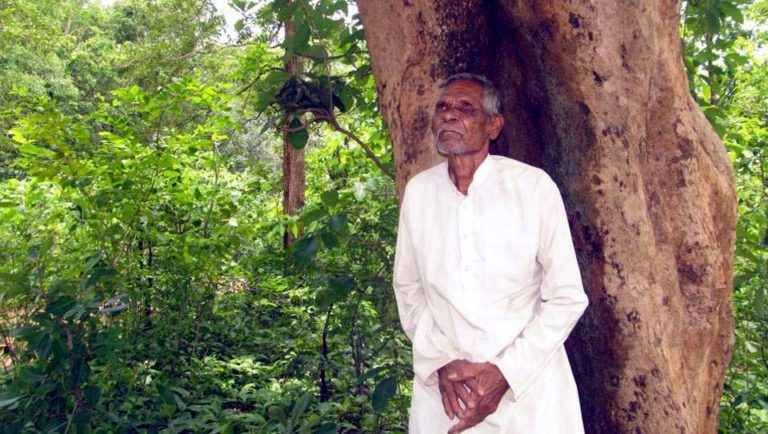
Around 1991 Haldhar Nag was introduced into Kosali literature. Hailing from a humble background and having schooling up to 3rd standard the gifted Kosali poet is dictating Kosali literature almost for 2 decades now. His poetries are compiled as Haldhar Granthavali and his short poems are published under the title Surut.
Today Kosali language is enriched with many great literatures like Ramayan, Mahabharata, Srimad Bhagabat Gita, Meghduta etc. About 5 thousands authors are regularly writing in different genre of prose, poetry, drama etc. Every day, regional radio stations and private television channels are broadcasting different Kosali programmees. From 2012 the Registrar of Newspapers for India also included Kosali in its language list (earlier it was Ori-Koshli). Around 80 unregistered and 6 registered magazines and periodicals have been published in last 3 decades in Kosali. Sambalpur University is providing a PG Diploma Course in Sambalpuri and Haldhar Avasik Vanabidyalaya, Kudopali has included 2 Kosali primers since 2012 in its curriculum.
TRENDS OF KOSALI LANGUAGE MOVEMENT
Provisions of Eighth Schedule of the Indian Constitution
The Constitutional provisions relating to the Eighth Schedule occur in articles 344(1) and 351 of the Constitution. Article 344(1) provides for the constitution of a Commission by the President on expiration of five years from the commencement of the Constitution and thereafter at the expiration of ten years from such commencement, which shall consist of a Chairman and such other members representing the different languages specified in the Eighth Schedule to make recommendations to the President for the progressive use of Hindi for official purposes of the Union. Article 351 of the Constitution provides that it shall be the duty of the Union to promote the spread of the Hindi language to develop it so that it may serve as a medium of expression for all the elements of the composite culture of India and to secure its enrichment by assimilating without interfering with its genius, the forms, style and expressions used in Hindustani and in the other languages of India specified in the Eighth Schedule, and by drawing, wherever necessary or desirable, for its vocabulary, primarily, on Sanskrit and secondarily on other languages. It would thus appear that the Eighth Schedule was intended to promote the progressing use of Hindi and for the enrichment and promotion of that language.
List of languages in the Eighth Schedule
The Eighth Schedule to the Constitution consists of the following 22 languages:
(1) Assamese, (2) Bengali, (3) Gujarati, (4) Hindi, (5) Kannada, (6) Kashmiri, (7) Konkani, (8) Malayalam, (9) Manipuri, (10) Marathi, (11) Nepali, (12) Oriya, (13) Punjabi, (14) Sanskrit, (15) Sindhi, (16) Tamil, (17) Telugu, (18) Urdu (19) Bodo, (20) Santhali, (21) Maithili and (22) Dogri.
Of these languages, 14 were initially included in the Constitution. Sindhi language was added in 1967. Thereafter three more languages viz., Konkani, Manipuri and Nepali were included in 1992. Subsequently Bodo, Dogri, Maithili and Santhali were added in 2004.
Demand for more languages for inclusion in the Eighth Schedule
At present, there are demands for inclusion of 38 more languages in the Eighth Schedule to the Constitution. These are:
(1) Angika, (2) Banjara, (3) Bazika, (4) Bhojpuri, (5) Bhoti, (6) Bhotia, (7) Bundelkhandi (8) Chhattisgarhi, (9) Dhatki, (10) English, (11) Garhwali (Pahari), (12) Gondi, (13) Gujjar/Gujjari (14) Ho, (15) Kachachhi, (16) Kamtapuri, (17) Karbi, (18) Khasi, (19) Kodava (Coorg), (20) Kok Barak, (21) Kumaoni (Pahari), (22) Kurak, (23) Kurmali, (24) Lepcha, (25) Limbu, (26) Mizo (Lushai), (27) Magahi, (28) Mundari, (29) Nagpuri, (30) Nicobarese, (31) Pahari (Himachali), (32) Pali, (33) Rajasthani, (34) Sambalpuri/Kosali, (35) Shaurseni (Prakrit), (36) Siraiki, (37) Tenyidi and (38) Tulu.
Procedural requirement for inclusion of languages in the Eighth Schedule
A Committee was set up in September, 2003 under the Chairmanship of Shri Sitakant Mohapatra to evolve a set of objective criteria for inclusion of more languages in the Eighth Schedule to the Constitution. The Committee submitted its report in 2004. The report of the Committee is under consideration in consultation with the concerned Minorities/Departments of the Central Government. A decision on the pending demand for inclusion of languages in the Eighth Schedule will be taken, inter-alia, in the light of the recommendations of the Committee and Government’s decision thereon. However, no time frame can be fixed for consideration of the demands for inclusion of more languages in Eighth Schedule to the Constitution of India.
Demands and Move for Kosali
The demand for 8th Schedule was first made by KDDF group in 2009. It submitted an online memorandum to the state as well as to the centre government demanding inclusion of Kosali in 8th schedule. KDDF is an online platform to discuss issues of western Odisha.
On 1st January 2010 Beni edited by Saket Sreebhushan Sahu was released as an e-magazine and later on in August 14, 2010 it was published from Bargarh. It created the network and provided the much needed platform for Kosali movement. It was quite popular in a very short period of time becomes the mouthpiece of the Kosali language movement. Its founder members like Dr Arjun Purohit and Dr Sanjib Karmee along with a few likeminded were constantly supporting the cause. Beni group and KDDF have common members.
On July 7th 2011 Dr Arjun Purohit called on Odia poet Sitakanta Mohapatra, the language commissioner appointed by the centre government in 2003 to recommend more languages to include in Eighth Schedule, to know whether he has listed Kosali in the probable list of languages to be included in the 8th schedule which are still pending and when Dr Purohit got confirmation from him, he wrote it in ORNET Google groups expressing his delight:
“Dear All,
I’m pleased to let you know that I was confirmed today that Koshali/Sambalpuri language has been recommended by language commission headed by Sitakanta Mohapatra to be included in the 8th Schedule. The central government has taken it under active consideration. XXX XXX XXX So it seems quite soon Odisha will have two recognized languages. About time reality is recognized!
Regards
Arjun Purohit”
This piece of news spread like a fire and sensitized the whole intelligentsia of western Odisha. This incident gave birth to the present Kosali language movement and to carry it forward vigorously.
On 22/7/2011 Dr Devi Prasanna Pattnaik wrote an OPED in Sambad opposing it in all aspects. His write up was more emotional than logical. If it is translated then it will be as follows:
“Why this happiness? To succeed in connecting Koshali-Sambalpuri at one place. To get recognization for Koshli-Sambalpuri as mother tongue? If recognized as an independent language to get the opportunity to create separate state. For separate literary awards?”
Further Dr Arjun Purohit wrote a rebuttal to Dr Pattnaik in series in around 3500 words. We contacted Sambad to publish the rebuttal of Dr Purohit but they did not responded and finally, I translated the whole text of Dr Arjun Purohit into Kosali and published in BENI magazine and distributed throughout western Odisha.
On 20/9/2011 Dr Sanjib Karmee again wrote letter to PMO to include Kosali in 8th schedule
In 4th September 2012 Two Kosali primers for Haldhar Avasik Banbidyalaya was released and there onwards both books are included in the curriculum of the same school.
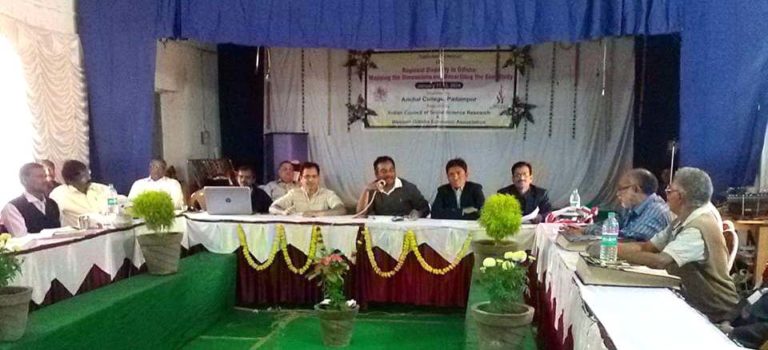
In 20th January 2013 Swabhiman Divas by BENI organization where writers and literature lovers gathered from all district of western Odisha and set the tone for the 8th schedule demand of Kosali.
On 21st Feb 2013 Matrubhasa Divas was celebrated by BENI
In September 6th 2013 Kosali Kriyanusthan Committee was formed and only a coordinator post was created and Saket Sreebhushan Sahu was appointed as the coordinator unanimously.
In September 17th to 19th2013 Kosali Kriyanusthan Committee met MPs of western Odisha at New Delhi demanding inclusion of Kosali in 8th schedule
On 5th October 2013 Saket Sreebhushan Sahu received reply letter from PMO stating an inter-ministerial committee has been constituted by the Centre Govt to look in to the gamut of the issue of languages of 8th schedule.
On December 8th 2013 Sambalpuri-Kosali Bhasa Parishad met the Governor of Odisha Sri HC Zamir regarding recognization of Kosali under the leadership of Late Shriballabha Panigrahi.
On December 27th 2013 Kosali Kriyanusthan Committee met the Chief Minister Shri Navin Pattnaik regarding Kosali.
On 21st February 2014 Matrubhasa Divas was celebrated by BENI
On 1/3/2014 the CM urged the Ministry of Home Affairs to include Kosali in the 8th Schedule vide letter No UM-5/2014
On 7th July 2014 Satrted Ghar Ghar Kosali Abhijan, a mass awareness programme by Kosali Kriyanusthan Committee for Kosali primary education
On July 11th 2014 – Kosali Kriyanusthan Committee met CM demanding Primary education in Kosali and formation of Kosali Sahitya Academy
In September and October 2014 All the MPs and MLAs wrote letter to Center government demanding affiliation of Kosali to Kendra Sahitya Academy
In August 2015 Kosali Kriyanusthan Committee submitted memorandum to Chief Minister demanding second language status to Kosali
In October 10th 2015 Kosali Kriyanusthan Committee launched signature campaign demanding primary education in Kosali
The able political representatives of the region have carried the movement forward to the apex house of law making in India and raised it in the parliament. Member of Parliaments like Late Sriballabh Panigrahi for the first time discussed it in parliament. Prasanna Acharya(2008 Dec 15), Bhakta Charan Das (2009, Zero Hour), Amarnath Pradhan (2013, Oct-Nov), and Prabhas Singh(2015, Zero Hour) etc of the region have raised the issue of Kosali language in the parliament from time to time in Question Hours as well as in Zero Hours.
PRESENT STATUS OF KOSALI LANGUAGE MOVEMENT
After the reawakening of Kosali language in western Odisha since 2010, a kind of awareness has been found amongst the language lovers. A sense of self pride in the mass and intelligentsia have been noted. People in the region have started relating themselves to the movement and identifying themselves. Especially writers of the young age group have increased. Despite of aggressive Odianization Kosali youths are relating themselves more to their mother tongue Kosali. Meetings, seminar and conferences have been organized and awareness programmes for mass are going on. The numbers of writers in Kosali have been increased to around 5000. Odia Newspapers have started Kosali tabloids. And Kosali poetry recitations have taken centre stage for propagating Kosali movement. Now days every cultural and private government functions are keeping a special recitation session for Kosali poems. The official status of Kosali is as below:
- In 2003 Sitakanta Mohapatra Committee constituted by the Govt. of India has recommended a list of 38 languages to be included in the 8th Schedule of the Constitution of India which is under active consideration and Kosali is one of them.
- In 2012 RNI (Registrar of Newspapers for India) an autonomous institution of central government enlisted Kosali in its language list. (http://rni.nic.in/rni_search_statelang.asp)
- In 2013 The Ministry of Home Affairs has constituted an inter-ministerial committee to make an in-depth study of the entire gamut of the issue.
- On 1/3/2014 the CM urged the Ministry of Home Affairs to include Kosali in the 8th Schedule vide letter No UM-5/2014
CONCLUSION AND POLICY SUGGESTIONS
Conclusion
Languages like Bodo, Dogri etc have lesser speakers than Kosali at present. The literature of Kosali has also evolved and developed to compete with the contemporary literatures. Kosali fulfills all criteria to be included in the 8th Schedule of the Indian Constitution. The story of inclusion of Bodo is interesting and a similar situation may occur in future for Kosali if Odisha government will keep widening the gap of regional disparities and will not fulfill demands of Kosali.
But a few things may be noted that the coastal Odisha lobby and government are only supporting Odia. Whenever there is a move in western Odisha for Kosali, the government has tried to sabotage it. From a reliable source we learned that the Odisha government was instrumental in funding the Odia as Classical Language movement where as for Kosali it has written a letter only and since then it is silent. Although repeatedly we are demanding for rights of Kosali but the State government is inactive. Apart from this whenever a movement for Kosali has been pitched, a parallel movement for Odia is carried on to overshadow the Kosali movement in media. Odia media is also reluctant to broadcast the movement though the local newspapers publish the news. The government and its instrument like The Culture Department are instrumental in sabotaging the movement. For instance in 2014 Kosali poet Haldhar Nag was awarded Odisha Sahitya Akademy award and in the felicitation certificate instead of “Kosali” it was mentioned he was awarded for the contribution to “Odia” literature whereas Sri Nag is an uneducated poet and never written any Odia poetry. A protest was staged and finally the Depratment of Culture admits the mistake and replaced the certificate of Sri Nag. The State government is hatching such kind of diplomatic strategy to leveled Kosali as the dialect of Odia. Further a group of writers and intellectuals are working behind the scene and supporting the State government for Odia just for a few awards and money. When Support of the local political will powers or representatives have been asked they have limited themselves to “oral promise”, “paper statement”, and maximum to “writing letters”.
Despite all these circumstances the Kosali language movement is inching. It is getting support from different corners. Regularly activities are going on in the grass-root level as well as in other platforms.
Suggestions
After studying the Kosali language movement thoroughly we can suggest that it would be prudence on the part of Indian government as well as different state governments being flexible in recognizing the complexity of linguistic diversity in India by recognizing all existing languages. A language is said to be carrier of a culture and region. A language is the insignia and identity of a race. So let all languages get their due recognizations. Kosali language movement need more support as suggested below:
- More awareness programme need to be organized for the common mass and the mass need to be sensitized about the benefits of recognization of Kosali
- Publications of more journal and books are needed teaching about the benefits of Kosali recognizations
- The lukewarm responding intelligentsia need to be reunited and sensitized over the issue
- A feeling of pride need to be inculcate in the opportunist political will powers and representatives of the region about their mother tongue Kosali
- The movement need more organized, more active to gain the desire goal
Suggestions for the State
- The state should grant the much required recognisation to Kosali and support it. The fear of separate Kosal state demand of western odisha people has hardly relevance today with language though Odisha is the first state in India created basing language. We apprehend that economic viability is more important today rather than linguistic identity of a region to bifurcate a new state.
REFERENCES
REFERENCES
[1] Sambalpur University website: suniv.ac.in>page=about-university
[2] Samaj, Sambalpur Edition 9/8/2012
[3] Kosali Bhasara Samkhipta Itihas by Pt Prayagdutta Joshi edited by Dr Dolagobinda Bishi published by BENI Publications, Second edition 2013 Page 24
[4] Kosali Bhasara Samkhipta Itihas by Pt Prayagdutta Joshi edited by Dr Dolagobinda Bishi published by BENI Publications, Second edition 2013 page
[5] Letter of CM to Home ministry
[6] www.kddfonline.in/ and www.kosalisahitya.in
[7] Paschim Odishar Geeti Kabita” edited by Sasanka Sekhar Panda, Published by Orissa Sahitya Akademi, 2004 page
[8] Paschim Odishar Geeti Kabita” edited by Sasanka Sekhar Panda, Published by Orissa Sahitya Akademi, 2004 page
[9] Paschim Odishar Geeti Kabita” edited by Sasanka Sekhar Panda, Published by Orissa Sahitya Akademi, 2004 page