Wednesday, April 29, 2026
Home Blog Page 31

International Opinion on Language Policy: Dr Joga Singh(VII)

VII. An appeal

This document is prepared from some parts of my forthcoming book on language policy. The book was taking some time but I realized that the issue required an immediate response. I thought that the international opinion on the language issue needs to be immediately brought to the notice of Indian citizens. Hence, I decided to publish this booklet. A lot of this booklet has already been published in Punjabi in the Punjabi media. It has also been presented by me in a number of lectures at various places in Punjab. This booklet is being published in Punjabi, Hindi, and English versions (and possibly other Indian languages too), so that it could reach wider audiences. Therefore, I request all Indian people who love their mother languages and who are convinced that India cannot make progress as a modern nation without the foundation of mother tongues, to bring this booklet to the notice of other Indians. An essential task is to translate this document into various Indian languages.  Whoever can do this for whichever language, please do this. I shall be thankful to the core of my heart. Since some persons have already taken the responsibility for some languages, please get in touch with me before you translate it. Along with the reasons described behind, the wisdom of thousands of years preserved in our mother tongues needs to be imbibed and passed on to the coming generations. This is our utmost moral responsibility. A little late can result in civilizational losses.

I have added a relatively longer bibliographic section here so that anybody anyone interested in a further investigation on the issue could make use of it.

Acknowledgement: A large number of citations from the research work of numerous scholars have been used in this document. I express my heartiest thanks for all of them. Their hard labour and commitment only has provided the strong ideological support for the mother tongues.

Web Link: This document is available in Punjabi (in Gurmukhi and Shahmukhi/Urdu scripts), Hindi, Tamil, Telugu, Kannada, Dogri and Maithili and can be accessed at: http://punjabiuniversity.academia.edu/JogaSingh/papers

An 18 minute English video providing a gist of this document can be watched at: https://www.youtube.com/watch?v=Xaio_TyWAAY&feature=youtu.be

Victory to the Mother Tongues!

Joga Singh, Ph.D. (York, U.K.), Mobile: +91-9915709582; E-mail: jogasinghvirk@yahoo.co

ବରଗଡ଼ ଜିଲ୍ଲାପାଳଙ୍କ ରାଜବୋଡାସମ୍ବର ବ୍ଳକର ବିଭିନ୍ନ ପ୍ରକଳ୍ପ ପରିଦର୍ଶନ ଓ ସମୀକ୍ଷା

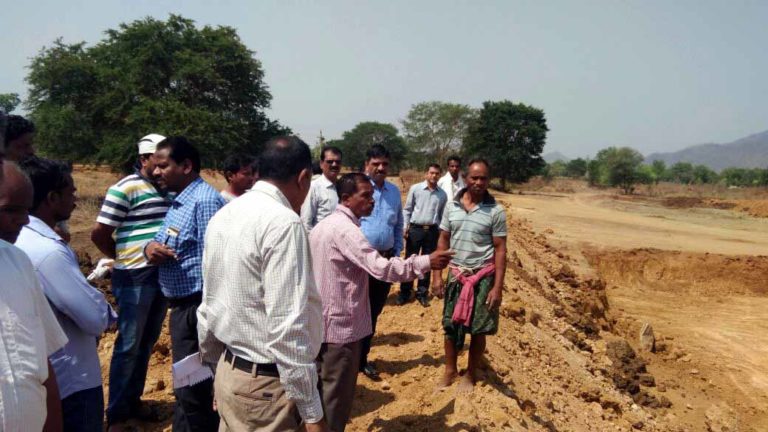
ପଦ୍ମପୁର-ବରଗଡ଼ ଜିଲ୍ଲାପାଳ ଶ୍ରୀଯୁକ୍ତ ଇନ୍ଦ୍ରମଣି ତ୍ରୀପାଠୀ ଆଜି ରାଜବୋଡାସମ୍ବର ବ୍ଳକ ପରିଦର୍ଶନରେ ଆସି ବିଭିନ୍ନ ପଞ୍ଚାୟତ ଅନ୍ତର୍ଗତ ଗ୍ରାମଗୁଡିକରେ ସରକାରୀ ସ୍ତରରେ କାର୍ଯ୍ୟକାରୀ କରାଯାଉଥିବା ବିଭିନ୍ନ ପ୍ରକଳ୍ପ ଗୁଡିକ ପରିଦର୍ଶନ କରିବା ସହିତ ହିତାଧିକାରୀ ତଥା ଗ୍ରାମବାସୀମାନଙ୍କ ଠାରୁ ପ୍ରକଳ୍ପର ଅଗ୍ରଗତି,କାର୍ଯ୍ୟକାରିତା ତଥା ପାଣ୍ଠିଆବଣ୍ଟନ ଉପରେ ପଚାରି ବୁଝିଥିଲେ ।ପ୍ରାପ୍ତ ସୂଚନା ଅନୁଯାୟୀ ଜିଲ୍ଲାପାଳ ଗନିଆପାଲି ଗ୍ରାମରେ ନିର୍ମାଣଧିନ ଖଲିଆବନ୍ଧ ପରିଦର୍ଶନ କରିବା ସହିତ ଏହାର ଅଗ୍ରଗତି ସମ୍ପର୍କରେ ବିଭାଗୀୟ ଅଧିକାରୀଙ୍କ ଠାରୁ ପଚାରି ବୁଝିବା ସହ ନିର୍ଦ୍ଦିଷ୍ଟ ସମୟସିମା ମଧ୍ୟରେ କାର୍ଯ୍ୟ ସମ୍ପୂର୍ଣ୍ଣ କରିବା ପାଇଁ ନିର୍ଦ୍ଦେଶ ଦେଇଥିଲେ ।

ଗଇଲଗୁଡା ଠାରେ ଗ୍ରାମବାସୀ ତଥା ମହିଳା ସ୍ବୟଂସହାୟକ ସଦସ୍ୟାମାନେ ପାନୀୟ ଜଳ ଯୋଗାଣ,ବାର୍ଦ୍ଧକ୍ୟ ଭତ୍ତା,ବିଧବା ଭତ୍ତାପ୍ରଦାନ, ଓ ଅନ୍ୟାନ୍ୟ ଅସୁବିଧା ଉପରେ ଜିଲ୍ଲାପାଳଙ ଦୄଷ୍ଟିଆକର୍ଷଣ କରିଥିଲେ ।

ଏହାପରେ ଜିଲ୍ଲାପାଳ ଖଲିଆପାଲି ଗ୍ରାମପାଞ୍ଚାୟତ ଅନର୍ଗତ ଚକମକଯୋରୀ ଗ୍ରାମକୁ ଯାଇ ପ୍ରଧାନମନ୍ତ୍ରୀ ଆବାସ ଯୋଜନା ତରଫରୁ କୀର୍ତ୍ତି ସୁନା ଓ ବିଶିକେଶନ ସୁନାଙ୍କ ନିର୍ମାଣଧିନ ଘର ବୁଲି ଦେଖିବା ସହିତ ହିତାଧିକାରୀଙ୍କୁ ସୁବିଧା ଅସୁବିଧା ପଚାରି ବୁଝିଥିଲେ ।ସେହିପରି ଜଳବିଭାଜିକା ତରଫରୁ ମହାତ୍ମାଗାନ୍ଧୀ ନିଶ୍ଚିତ କର୍ମ ନିଯୁକ୍ତି ଯୋଜନା ମାଧ୍ୟମରେ ଖୋଳାଯାଇଥିବା ସୀତାରାମ ମଲ୍ଲିକ ଓ ମକରଧ୍ବଜ ମଲ୍ଲିକଙ୍କ କୂପ ପରିଦର୍ଶନ କରିବା ସହିତ ହିତାଧିକାରୀଙ୍କୁ ସୁବିଧା ଅସୁବିଧା ବିଷୟରେ ବୁଝିଥିଲେ ।ତାପରେ ଦହିତା ଗ୍ରାମରେ ହିତାଧିକାରୀ ପଞ୍ଚାନନ କାମାତି ଓ ଦୁଆରୁ ବରିହାଙ୍କ ଦ୍ବାରା ପ୍ରାୟ ୬ ଏକର ଚାଷ ଜମିରେ ଉଦ୍ୟାନ ବିଭାଗ ଅନୁଦାନରୁ ନିର୍ମିତ ଆମ୍ବବଗିଚାର ପରିଦର୍ଶନ କରିଥିଲେ ।ଜମରତଲା ଗ୍ରାମପାୟତ ଅନ୍ତର୍ଗତ କଣ୍ଠେଶ୍ବରପୁର ଝରନନାଲା ଉପରେ ନିର୍ମିତ ଚେକଡ୍ୟାମ ପରିଦର୍ଶନ କରିବା ସହିତ ଯଥାଶୀଘ୍ର ପ୍ରକଳ୍ପ କାମ ଶେଷ କରିବା ପାଇଁ ନିର୍ଦ୍ଦେଶ ଦେଇଥିଲେ ।ବିଭିନ୍ନ କ୍ଷେତ୍ର ପରିଦର୍ଶନ କରିବା ପରେ ବ୍ଳକ ସମ୍ମିଳନୀ କକ୍ଷରେ ଏକ ସମୀକ୍ଷା ବୈଠକ ଜିଲ୍ଲାପାଳଙ୍କ ଅଧ୍ୟକ୍ଷତାରେ ହୋଇଥିଲା ।ଏହି ସଭାରେ ବ୍ଳକରେ କାର୍ଯ୍ୟକାରୀ ହେଉଥିବା ଗ୍ରାମୀଣ ଆବାସ ଯୋଜନାର କାର୍ଯ୍ୟକାରିତା ଉପରେ ପଞ୍ଚାୟତୱ।ରୀ ସମୀକ୍ଷା କରାଯାଇ ନିର୍ଦ୍ଦିଷ୍ଟ ସମୟସୀମା ମଧ୍ୟରେ କାର୍ଯ୍ୟ ଶେଷ କରିବା ପାଇଁ ଜିଲ୍ଲାପାଳ ନିର୍ଦ୍ଦେଶ ଦେଇଥିଲେ ।ଏତଦ ବ୍ୟତୀତ ବ୍ଳକ ସ୍ତରରେ ହେଉଥିବା ଅନ୍ୟାନ୍ୟ ଯୋଜନାର ସଫଲରୁପାୟନ ତଥା ପ୍ରକୃତ ହିତାଧିକାରୀ ଚିହ୍ନଟ ଉପରେ ଗୁରୁତ୍ୱରୋପ କରିଥିଲେ ।ଜିଲ୍ଲାପାଳଙ୍କ କ୍ଷେତ୍ର ପରିଦର୍ଶନ ତଥା ସମୀକ୍ଷା ବୈଠକରେ ଜିଲ୍ଲା ଉନ୍ନୟନ ପ୍ରକଳ୍ପ ନିର୍ଦ୍ଦେଶକ ଶ୍ରୀଯୁକ୍ତ ଅଭିରାମ କେର୍କେଟା,ପଦ୍ମପୁର ଉପଜିଲ୍ଲାପାଳ ଶ୍ରୀଯୁକ୍ତ ଦୈଲତ ଚନ୍ଦ୍ରକାର,ଗୋଷ୍ଠୀଉନ୍ନୟନ ଅଧିକାରୀ ଶ୍ରୀମତୀ ମଧୁଛନ୍ଦା ସାହୁ,ରାଜବୋଡାସମ୍ବର ବ୍ଳକର ସହକାରୀ ନିର୍ବାହୀଯନ୍ତ୍ରୀ,କନିଷ୍ଠ ଯନ୍ତ୍ରୀ,ବ୍ଳକ ସାମାଜିକ ସୁରକ୍ଷା ଅଧିକାରୀ,ବିଭିନ୍ନ ପଞ୍ଚାୟତର ସରପଞ୍ଚ,ନିର୍ବାହୀ ଅଧିକାରୀ,ଉପଖଣ୍ଡ ସୂଚନା ଓ ଲୋକସମ୍ପର୍କ ଅଧିକାରୀ ଶ୍ରୀଯୁକ୍ତ ପୂର୍ଣ୍ଣଚନ୍ଦ୍ର ପାଣିଗ୍ରାହୀ ପ୍ରମୁଖ ଉପସ୍ଥିତ ଥିଲେ ।

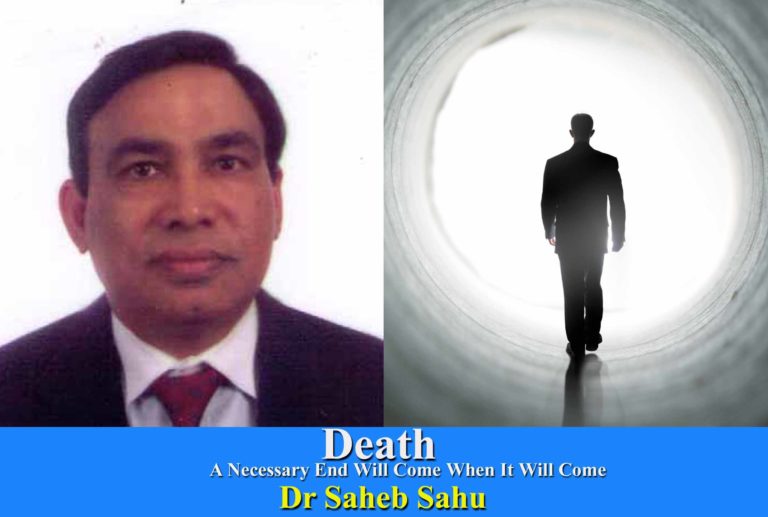
Death: A Necessary End Will Come When It Will Come:Dr Saheb Sahu (7)

0

Chapter-7 

A GOOD DEATH 

Francis Bacon in 17th century used the term euthanasia (Greek Eu-good, thantos death) or good death referring to an easy, painless, happy death. There is no single definition of what constitutes a good death. The definition of a good death will vary for each person.

What is a “good death”?

Poets, philosophers, religious scholars and plain folks all have spoken and written about what makes a “good death”. Some people would say there is no such thing as a “good death” – all deaths, are unnecessarily unwanted and unwelcome. That may well be true when you are young, health, physically and mentally intact or, if not all the above, at least still able to enjoy the good things and people in your life.

But what if you are very old and sick and no longer able to care for yourself? What if you have a incurable and painful illness? What if you have become demented and no longer able to recognize your family and friends? At such points, death might be a welcome exit to some. Each person is unique and so is his or her death. As Dr. Nuland points out in his book “How We Die” : “deaths are nearly as unique as the lives that come before them –shaped by attitudes, physical conditions, medical treatment and mixed of people involved.”

Still, many have pointed to a few common factors that can help a death seem good – and even inspiring – as opposed to frightening, tortuous, and sad. By most standards, a good death is one in which a person dies on his own terms, relatively free from pain, in a supported and dignified setting, surrounded by family and friends.

In 1997, The Institute of Medicine (IOM) of America defined a good death as: “free from avoidable distress and suffering for patients, families, and care givers; in general accord with patient’s family’s wishes; and reasonably consistent with clinical, cultural and ethical standards.” According Institute of Medicine, factors important for a good death include:

  • Control of symptoms
  • Preparing for death
  • Opportunity for closure or “sense of completion” of life
  • Good relationship with caregivers.

A central concept to a “good death” is one that allows a person to die on his / her own terms relatively pain free with dignity. An appropriate death is often considered to be one that occurs naturally and in old age, one that follows the natural order of things e.g. older members die before younger ones. Perhaps the best definition of an appropriate death is a death that someone might choose for himself or herself if he/she had the choice. Annals of Internal Medicine’s study (May 16, 2000) identified six components of a good death:

  • Pain and symptom management

Patients are afraid of pain and do not want a painful death. A patient with AIDS described how he relieved his anxiety about painful death: “I don’t want to be in pain, and I’ve discussed it with my doctor. He said, “Oh, don’t worry about pain. We’ll put you on a morphine drip.” That sort of eased my mind.”

There are plenty of medicines to ease pain. Doctors are being trainees to treat pain aggressively. With the help of his/her caregivers, a terminal patient can expect a reasonably pain-free death. However, too much pain medicines will make the dying person drowsy or even unconscious, so that is a choice the patient and his family have to make in advance.

  • Clear decision making

Patients want to have a say in his/her treatment decisions. The patient wants to have a say on whether he wants to continue painful chemo or radiation or other medical or surgical treatments for few more months of living. He wants to have inputs on all his medical care and caregivers should honor his wishes.

  • Preparation for death

Too often, physicians and family members avoid talking about the end of life with people who are dying because they are afraid it will destroy their hope. Yet most patients who are dying want to know the truth and not the sugar coated truth.

  • Completion

When patients recognize that the end is near, the time has come for many of them to tie all loose end. Resolving conflicts, spending time with family and friends, and saying good-bye become important. Spirituality also becomes important to some at the end of their life.

  • Contribution to others

This can take the form of material or spiritual gifts or transmission of wisdom. For some, it means to give their organs to others whose lives depend on a transplant. Some donate their bodies to science. Many people want to share their wisdom with others-especially with the younger generation. Many of them try to mend their relationship with others prior to their death.

  • Affirmation of the whole person

No patient, and especially someone who is dying, wants to be treated as “ a disease” or “the patient in room 101”. The dying person wants to be treated like a unique and whole person and being understood in the context of his life, value and preferences.

The Annal’s research team reported that descriptions of bad deaths “frequently included scenarios in which treatment preferences were unclear. Patients felt disregarded, family members felt perplexed and concerned about suffering. Decisions that had not previously been discussed usually had to be made during a crisis, when emotional reserves were very low.”

The researchers’ bottom line, “There is no single formula for a good death. Rather, they concluded, most of the time people choose to die the way they lived, “in character.” They may be angry, critical or mellow, dignified, at war, or at peace. (Brady).

Dr. Nuland in the Epilogue of his book “How we die” put it this way: “Life is dappled with periods of pain, and for some of us is suffused with it. In the course of ordinary living, the pain is mitigated by periods of peace and times of joy. In dying, however, there is only affliction. Its brief respites and ebbs are known always to be fleeting and soon succeed by a recurrence of the travail. The peace and sometimes the joy, that many come occurs with the release. In this sense, there is often a serenity – sometimes even a dignity-in the act of death, but rarely in the process of dying. The dignity that we seek in dying must be found in the dignity with which we have lived our lives. Ars moriendi is ars Vivendi. “The art of dying is the art of living”. One cannot express it any better!

International Opinion on Language Policy: Dr Joga Singh(VI)

VI. The Death of a Language

In a recent article (Joga Singh, 2013), I had stated that even language like Punjabi, which has a literary history older (and perhaps richer too) than English ,  is the 10th largest spoken language of the world and is first official language of India’s Punjab state, has entered the process which ultimately leads to the death of a language. The condition of other scheduled Indian languages is almost the same. Hindi too can be included in this list. Less said the better about the non-scheduled languages. A number of them are on verge of extinction. I request the readers to read UNESCO (2003) document `Language Vitality and Endangerment’ to make assessment of Indian languages themselves. I will not go into more details on this. The following statements will, however, provide an indication of the direction Indian languages are moving into.

“This mirrors the typical process of language death; people become ashamed of their own language and abandon it in favour of a more prestigious one. Eventually, they no longer pass on their native tongue to their children so that ‘[t]he minority language is then effectively deserted by its speakers, becoming appropriate for use in fewer and fewer contexts, until it is entirely supplanted by the incoming language’ (McMahon,1994:285)”. @ (Eckert, T et al, 2006)

“However language loss… is also due to the absence of local languages in educational system. Schools play key role in preserving minority languages and consequently their culture. @  (Eckert. T et al, 2006). The Indian elite would close all mother tongue medium schools tomorrow, if they could. The Indian Knowledge Commission (a la Monek Singh Ahluwalia) is the most ignorant agency in this regard. To find the truth, you please read the Knowledge Commission’s recommendations on English language yourself.

Joga Singh, Ph.D. (York, U.K.), Mobile: +91-9915709582; E-mail: jogasinghvirk@yahoo.co

Death: A Necessary End Will Come When It Will Come: Dr Saheb Sahu

0

Chapter – 6 

HOW WE DIE 

…… death hath ten thousand several doors

For men to take their exits.

                                                                          -John Webster, The Duchess of Malfi, 1612

In 2011, according to World Health Organization (WHO), 55 million people died worldwide. Non communicable diseases (-NCD, – those that cannot be passed from one person to another) are responsible for two-thirds of all global death.

The top five causes of non communicable diseases are heart disease, stroke, cancer, diabetes and chronic obstructive lung disease (COPD). Diseases caused by infections, death related to pregnancy and birth and malnutrition, collectively were responsible for a quarter of global death. 9% of all deaths were from injuries. In high-income countries, 7 in every 10 deaths are among people aged 70 or elder and 1 in 100 deaths is among children under 15 years. The picture is much different in low-income (poorer) countries. Nearly 4 in every 10 deaths are among children under 15 years and only 2 in every 10 deaths are among people aged 70 and older. Thus, in poorer countries more young people, especially children under 15 die, and in richer countries mostly old people die. Infectious diseases, malaria, tuberculosis collectively account for almost one third of all deaths in these countries. Complication of child birth due to prematurity and birth asphyxia (lack of oxygen during the birth place) and birth trauma claim the lives of many newborns and infants.

Dr. Sherwin B. Nuland in his powerful and sensitive, Pulitzer Prize winning book “How We die” writes in 1993 : “Poet, essayist, chroniclers, wagss, and wise men write often about death but have rarely seen it. Physicians and nurses, who see it often, rarely write about it. Most people see it once or twice in lifetime, in situations where they are too entangled in its emotional significance to retain dependable memories.” He goes on to say in his introduction to the book: “Every life is different from any that has gone before it, and so is every death. The uniqueness of each of us extends to the way we die. … Not death but disease is the real enemy, disease the malign force that requires confrontation.”  

Top Causes of Death World Wide 

In 2011, 55 million people died worldwide. The top ten causes of death were: heart disease, stroke, lower respiratory infection, chronic obstructive lung disease (COPD), diarrhea, HIV/AIDS tracheal and bronchial disease, diabetes, road injury and hypertensive.

Ischemic Heart Disease (IHD) or Coronary Artery Disease (CAD)

In 2011, 7million people worldwide died from heart disease. It is the number one cause of death in all countries – developed and developing. Ischemia is a term chosen by Rudolf Virchow (1821-1902), a professor of pathology at the University of Berlin. The world Ischaimos meaning holding in check of the flow of blood. Limitation of the blood flow to the heart causes Ischemia. Ischemia of the heart muscle causes a heart attack or myocardial infarction (MI). Untreated or even treated heart attack can lead to death, if one is little lucky to the scarring of the heart muscle. The normal heart which is an efficient pump, becomes a weaker pump leading to congestive heart failure (CHF). Chronic high-grade narrowing of the arteries supplying blood to the heart muscle, leading to ventricular arrhythmic (-Irregular and inefficient very rapid beating of the heart) and death.

The most common risk factors for heart disease are –smoking, family history of heart attack, high blood pressure, obesity, diabetes, high alcohol use, lack of exercise, stress and high level of blood cholesterol.

Typically, ischemic heart disease occurs when part of the smooth, elastic lining inside a coronary artery (-the arteries that supply blood to the heart muscle) develops atherosclerosis. With atherosclerosis, the artery’s lining becomes hardened, stiffened, and swollen with all sorts of “gunge” – including calcium deposits, fat deposits, and inflamed cells to form a plaque. Plaques protrude into the channel of an artery, causing partial obstruction to the blood flow. The final stoppage is caused by a dislodged blood clot which plugs the arteries and starving the heart muscle of blood and oxygen. Without oxygen, the normal rhythm of the heart contraction becomes chaotic, sending the heart into ventricular fibrillation (-very high heart rate) and then complete stoppage. When the heart stops completely, unless restarted quickly, (CPR) the person dies.

The onset of heart attack is often sudden and severe. There is a crushing pressure on the chest, radiating down the left arm or up to into the neck and jaw. The sufferer is likely break out into cold sweat, feel nauseated or even vomit. There is often shortness of breath. The sensation is frightening even to those who had experienced it before. Some 20 percent of the sufferers will die during such a heart attack if prompt medical care is not provided to restore the blood flow.

Eventually about 50 to 60 percent of people with ischemic heart disease will die within an hour of one of their heart attacks. Those who survive their heart attack or attacks will eventually die from the gradual weakening of their heart ability to pump blood (congestive heart failure) because of heart muscle’s death and scarring. The failing heart continues to fail. Heart failure begets heart failure and the owner of that heart is beginning to die.

Patients with heart failure become increasingly short of breath even with minimal exertion. They can hardly breathe. Heart failure leads to kidneys, lungs and liver failure. Half of the patients with congestive heart failure die from abnormal rhythm of the heart (-ventricular fibrillation). It is not a pleasant death (Nuland).

Stroke 

It takes a great deal of energy to keep the brain’s engine running efficiently. A stroke, sometime referred to as a cerebral vascular accident (CVA), is the rapid loss of brain function due to disturbance in the blood supply to the brain. This can be due to lack of blood flow (ischemia) caused by blockage or a bleeding (- hemorrhage). As a result, the affected area of the brain cannot function. That might result in an inability to move one or more limbs on one side of the body, inability to speak clearly or an inability to see on one side of the visual field. The onset of a stroke is abrupt. It is a medical emergency and can cause permanent brain and nerves damage and even death.

Risk factors for stroke are very similar to the risk factors for ischemic heart disease: old age, high blood-pressure, diabetes, high cholesterol, tobacco smoking and atrial fibrillation (-abnormal heart rhythm). A previous stroke makes an individual more susceptible to additional stroke. A silent stroke is a stroke that does not have any outward symptoms and the patients are typically unaware that they have suffered a stroke. Despite not causing identifiable symptoms, a silent stroke still causes damage to the brain. People with silent stroke are at much greater risk of having a major stroke. High blood pressure is the most modifiable risk factor of stroke.

Stroke is the second leading cause of death worldwide, taking 6.2 million lives in 2011. High blood pressure accounts for 35-50% of stroke risk. Blood pressure reduction of 10mmHg systolic or 5 mmHg diastolic reduces the risk of stroke by 40%. Lowering the blood pressure has been conclusively shown to prevent stroke. Diabetes increases the risk of stroke by 2 to 3 times. Well control blood sugar in diabetic patients reduces the risk of stroke.

Large stroke often results in coma. If brain damage is massive enough, all kinds of normal bodily controls go away. Pre-existing diabetes can go out of control. Lungs do not work well because of paralysis of chest muscles. Patients with stroke easily get pneumonia and die from it. Whether the terminal event is pneumonia, heart failure or uncontrolled diabetes or massive blood infection, stroke kills. And it kills large number of people worldwide-especially older people.

Patients with COPD complain of excessive chronic cough (-cough lasting years), excessive sputum and shortness of breath. The condition progresses with time. Pneumonia, pulmonary hypertension (high pressure in the blood vessels of the lungs), heart failure and breathing failure characterize the late stage of COPD. Death usually occurs during an exacerbation of illness in association with breathing failure.

Worldwide, COPD affects 330 million people or nearly 5% of the population. The number of death from COPD is projected to increase due to higher smoking rates and aging population – especially in developing countries. Most cases of COPD are potentially preventable through decreasing exposure to smoke and improving air quality. Keeping people from starting smoking is key to preventing COPD.

Diarrheal Diseases 

Diarrhea is the condition of having three or more loose or liquid stools per day. Acute diarrhea is defined by WHO, as diarrhea lasting less than 14 days. Diarrhea lasting for more than 14 days is termed “chronic diarrhea.” Diarrhea is the second most common cause of death in developing countries, and number 5 causes of death, worldwide.

Diarrhea is most commonly due to a viral infection called the rotavirus, which accounts for 40% of cases in children. Other causes of diarrhea are bacterial infections: typhoid, cholera, dysentery and E.coli. Chronic diarrhea (lasting more than 14 days) is caused by parasites, and medical conditions like-irritable bowel syndrome, colitis and celiac disease.

In many cases of acute diarrhea, replacing lost bodily fluids and salts is the only treatment needed. This is usually by mouth-oral rehydration solution (ORS) – or in severe cases by intravenously.

Worldwide 2.5 billion cases of diarrhea occurred in 2011, resulting in 1.9 million deaths. Diarrhea remains the second leading cause of death among children under five, after pneumonia. Most of these deaths can be prevented by provision of prolonged breast feeding, provision of safe drinking water, food rotavirus vaccination, homemade ORS, and timely treatment of severe dehydration in children.

HIV / AIDS 

Human immune deficiency virus (HIV)/acquired immune deficiency syndrome (AIDS) is a disease of the human immune system caused by infection with human immune deficiency virus (HIV). Human immune cells are responsible for fighting infections. When they are infected with HIV virus, their fighting ability is compromised. With immunity compromised AIDS patient suffer from various forms of infections. In 2011, HIV/AIDS was the sixth most common cause of death, killing 1.6 million people worldwide.

HIV is transmitted by three main routes: sexual contact with an infected person, exposure to infected body fluids or tissues (needles) and from mother to child during pregnancy, delivery or breast feeding (vertical transmission). There is no risk of acquiring HIV if exposed to feces, nasal secretions, saliva, sputum sweat, tear, urine or vomit.

There are three main stages of HIV infection: acute infection, clinical latency and AIDS. In the acute infection stage, many individuals develop an influenza like illness which can last 2-11 weeks, while others have no symptoms. The symptoms include fever, sore throat, enlarged and painful lymphnodes, skin rash, headache and/or sores of the mouth and genitalias. Symptoms occur in 40-90% of cases and usually last for one to two weeks.

The initial symptoms are followed by a stage of clinical latency, asymptomatic HIV, or chronic HIV. Without treatment this stage can last from 3 to 20 years (average 8 years). While typically there are few symptoms at first, near the end of this stage many people experience fever, weight loss, bowel problems and muscle pains.

In absence of specific treatment, around half the people infected with HIV develop AIDS within ten years. The most common initial conditions that alert to the presence of AIDS are pneumocystics pneumonia (40%), cachexia (-extreme weight loss) and fungal infection of the food pipe and recurrent respiratory tract infections. Other opportunistic infections may be caused by bacteria, viruses, fungi and parasites that are normally controlled by body’s immune system.

The primary cause of death from HIV/AIDS are opportunistic infections and cancer (Kaposis sarcoma), both of which are frequently the result of immune system failure. Tuberculosis co-infection is one of the leading causes of sickness and death in those with HIV/AIDS.

HIV/AIDS is considered a pandemic – a disease outbreak which is present over a large part of the world. As of 2012, approximately 35 million people have HIV worldwide. At present (2014), there is no effective vaccine for HIV/AIDS. Consistent condom use reduces the risk of HIV transmission by 80% over long term. Programs to prevent mothers to children transmission (-vertical transmission) can reduce the rate of transmission by 92 to 99%.

Diabetes 

There are two types of diabetes – type 1, seen in children and type 2 seen in adults. Type-2 diabetes accounts for 90% of all diabetes. It ranks as number 8 as the cause of death, killing 1.4 million people worldwide.

The classic symptoms of diabetes are frequent urination (polyuria), increased thirst (polydipsia), increased hunger (polyphasia), and weight loss. Other symptoms that are commonly present at diagnosis include: a history of blurred vision, itchiness, recurrent vaginal infection, poor wound healing, peripheral numbness, and fatigue. Many people, however have no symptoms during first few years and are diagnosed only during a routine testing of blood sugar.

Type-2 diabetes is caused by a combination of lifestyle and genetic factors. The life style factors those are known to be important to the development of diabetes are, lack of physical activity, obesity (BMI-greater than 30), poor diet, and excessive body fat around the abdomen. Most cases of diabetes involve many genes. As of 2011, more 36 genes have been found that contribute to the risk of type-2 diabetes. Diabetes is common in both developed and developing countries.

Globally, it is estimated that close to 300 million people suffer from diabetes. This is equivalent to about 6% of the world’s adult population. The number is definitely high than present estimation, as many people who have it, do not know that they have it.

Type-2 diabetes is a classic chronic disease associated with a ten-year shorter lifespan. This is partly due to a number of complications with which it is associated including; two to four times risk of heart attack and stroke; a 20 fold increase in lower limp amputation (because gangrene) and increased rates of hospitalizations. It is the largest cause of blindness and kidney failure. It is also associated with significant increase in the risk of dementia (cognitive impairment) sexual dysfunction and general infections.

Onset of type-2 diabetes can be delayed or prevented through proper nutrition, regular exercise and weight control. Intensive life style measures may reduce the risk by over half. The benefit of exercise occurs regardless of the person’s initial weight or subsequent weight loss. Many of the complications of diabetes can also be reduced by exercise, control of blood sugar, blood pressure, cholesterol and timely medical care.

Road Injuries 

Road injuries rank no. 9 among the top ten causes of death worldwide. In 2011, 1.3 million people died from road injuries. It is predicted by WHO that, by 2020 road traffic deaths and injuries will exceed HIV/AIDS as burden of death and disability worldwide. Over 90% of the world’s fatalities on the roads occur in low-income and middle-income countries, which have only 50% of the world’s registered vehicles.

A number of factors contribute to the risk of collision, including driver’s skill and / or impairment, vehicle design, speed of operation, road design and road environment. Studies have found that 57% of crashes were due solely to driver factors. Driver error, intoxication and other human factors contribute wholly or partly to about 93% of the crashes. A large body of knowledge has been amassed to prevent car crashes, and reduce severity of those that do occur. Some of them are drivers’ training and licensing, restrictions on driving under the influence of alcohol and drugs, compulsory use of seat belts, restriction on cell phone use while driving and compulsory use of helmet by all motorcyclists. Helmets use can reduce death by almost 40%.

Prematurity (Premature Birth)

Every year 15 million babies are born premature (preterm) around the world, accounting for one in 10 births. A baby is considered premature, if he or she is born before 37 weeks of pregnancy. In 2011, 1.2 million premature babies died, ranking it as the 10th common cause of death worldwide.

In normal human fetus, several human organ systems mature between 34 and 37 weeks of pregnancy. One of the main organs greatly affected by premature birth is the lungs. The lungs are one of the last organs to mature in the womb: because of this, many premature babies develop breathing difficulties soon after birth. Without proper medical care, they are likely to die. Premature babies are also at risk of developing bleeding into the brain, pneumonia, blood infection, rupture of the bowels and die from it.

The exact cause of premature birth is unsolved at present. In fact, the cause of 50% of premature birth is never determined. A number of factors have been identified that are linked to a higher risk of premature birth: mother age more than 35 and less than 18, poor nutrition and multiple pregnancies (twins, triples etc). Infections play a major role and may account for 25 to 40% of preterm birth.

In developing countries, maternal deaths, and under-five childhood mortality are also major problems. In 2011, approximately 300,000 mothers died from childbirth complications worldwide. Most of these deaths are preventable. All women need is access to antenatal care (care during pregnancy), skilled care during childbirth, and care and support in the weeks after childbirth.

Globally, 10 millions infants and children die each year before their fifth birthday. 99% of these deaths occur in developing countries. Most of these deaths are preventable. Seven out of ten childhood deaths are due to infectious diseases – acute respiratory infection, diarrhea, measles and malaria. Malnutrition makes these children more susceptible to death.

Cancer

Cancer is a broad group of diseases involving unregulated cell growth. In cancer, cells divide and grow uncontrollably, forming malignant tumors, and invading nearby parts. The cancer may also spread to the distance parts of the body through the lymphatic system or the blood stream (metastasis).

The causes of cancer are diverse, complex, and only partially understood. Many things are known to increase the risk of cancer, including tobacco use, exposure to radiation, environmental pollutants, dietary factors, lack of physical activity, obesity and certain infections. Approximately 5-10% of the cancer can be traced directly to inherited genes. When cancer begins it invariably produces no symptoms, only appearing later when the mass continues to grow. The findings (signs and symptoms) depend on the type and location of cancer.

Cancer is called the “great imitator”. Oncologist and author Dr. Mukharjee calls it “Emperor of melodies”. Initially it grows unsuspected and painless. Mass may be felt in the breast or in the testicles or little bit of blood may be passed in the stool (colon cancer) without any pain. General symptoms occur due to distant effects of the cancer. These may include weight loss, fever, being excessively tired and changes to the skin (jaundice or yellow discoloration of the skin). Most cancers are initially recognized when patients see a doctor because of their symptoms. Some cancers are diagnosed during routine screening like – mammography and prostate exams. People with suspected cancer are investigated with medical tests. These commonly include – blood tests, x-rays, MRI and CT scans, endoscopy and tissue biopsy. Cancer has a reputation as a deadly disease. But all cancers are not deadly. There are many treatment options for cancer including: surgery, radiation and chemotherapy. Which treatments are to be used depends upon the type location and grade of the cancer as well as the person’s health and wishes. Taken as a whole, about half of patients receiving treatment for invasive cancer die from cancer or its complications. Survival is much worse in developing countries. In developed countries, patients with terminal cancer can get palliative or comfort care.

The most significant risk factor for developing cancer is old age. According to cancer researcher Robert Weinberg, “If we lived long enough sooner or later we all would get cancer.” The most common cancers in adults are – lung cancer, liver cancer, stomach cancer, colorectal cancer, prostate cancer in men and breast cancer mostly in women. The three most common cancers in children are – leukemia (blood cancer), brain tumor, and lymphoma (lymph node cancer). Though many diseases (such as heart failure) may have worse outlook than most cases of cancer, cancer is the subject of widespread fear and taboos. Most people view diagnosis of cancer as a death sentence even though many cancers if diagnosis and treated early are curable. Cancer is regarded as a disease that must be “fought” to the end.

By the twin forces of local invasion and distant metastasis (spread), a cancer gradually interferes with the functioning of the various organs of the body. Nutritional depletion is common. Cancer patients in advance stages have poor appetite, weight loss, wasting of the muscle and general mental debilitation (cancer cachexia). Since most people with cancer are in older age group, they may also suffer from heart failure, diabetes and stroke. Because most of the chemo medicines suppress the infection fighting immune systems, most cancer patients die of pneumonia and blood infection (sepsis) at the end.

International Opinion on Language Policy: Dr Joga Singh (V)

0

Other Serious Losses Due to Keeping all Eggs in the English Basket

Due to the impelling commercial necessities, almost all countries of the world are presently engaged in learning the languages of other countries. But, we keep moon walking in the English cemetery, day and night. We are not paying any attention to need for learning of other languages. Due to this, we are suffering great economic and commercial losses. We will be left in complete isolation in the near future if we didn’t learn the languages of other countries. Today, Chinese and Spanish should be more important to us than English. But we are completely blind not only to the near future but to the present as well. The English is being phased out throughout the world of all the mother tongue domains, which it had occupied earlier. But we are increasingly handing over all our education, culture and communication spaces to the English language. A cursory look at the decreasing Indian share in the world trade should be enough to know how much it has benefitted us. In 1950, the Indian share in world trade was 1.78 per cent. It has now come down to 1.50 per cent. The increase in the spread of English in India during these years is pretty obvious to all ones. This constant decrease in India’s share in the world trade tells that the Indian policy makers’ English ride is a fine children’s story of ‘one eyed mare and the blind rider’ (kaani ghoRi andha svaar). A few days back, the honourable minister Mr. Shashi Tharoor, of  UNO fame, had stated that English was the key to India’s progress. Had he read some UNO document on language, while he was at the UNO at least, he would have never said that. But why should an Indian minister read when illiteracy pays better dividends!

Less said the better about the cultural losses the English language has caused us and still continues to cause increasingly. A farmyard generation is being raised, a generation who neither have any intimate connection with their language, literature, culture, history, religion, knowledge or even science and nor they can have any deep sensibility for higher artistic creation or appreciation. The Indian elite who flirted with the Persian language were called ‘malechhas’ (the fallen one) by Baba Nanak at that time. Now, when the present Indian elite had buried even Baba Nanak’s message deep, who will listen to Gandhi Mahatma. He wore ‘dhoti’ only. The things would have been different had he pronounced Bye-Bye to Indian culture and worn tie-vie.

Joga Singh, Ph.D. (York, U.K.), Mobile: +91-9915709582; E-mail: jogasinghvirk@yahoo.co

Oral Narrative and Hindu Method of Assimilation: A Case of Marjarakesari in Narsinghnath(10)

According to the oral narrative, once upon a time a certain Rishi was performing Tapasya (religious austerity or penance) on the bank of the river Godavari in the Ramayana or Satya-Yuga. He had an attractive daughter named Malati. During this period, Ravana was the king of Lanka. On one occasion, Malati happened to be out when Ravana came to visit that place and saw her. He was smitten with the charm of Malati and could not resist his sexual urge. He ravished her and she became unconscious. Subsequently, Ravana threw Malati into the river Godavari. She was in danger of losing her life. However, Godavari protected her as if a mother naturally feels protective towards her child and brought her back safely to the bank.

When Malati regained her consciousnes, she was dumbfounded finding herself in a strange place. She did not find her father and started weeping helplessly. At that time, Musika (mouse), the Vahana (vehicle) of Lord Ganapati heard the moans of offended Malati. He came up to her and asked what she was moaning about. Malati narrated her misfortune. Musika consoled her with the thought that it might have been worse. He promised to help her also. Consequently, face of Malati radiated with joy and hope. She was now at the mercy of Musiaka. But the irony of her fate or circumstance was that Malati was deceived into believing that Musika would help her. Finally, Musika also enjoyed her. As a consequence, from Ravana and Musika was born of her a male child called Musika-datta.

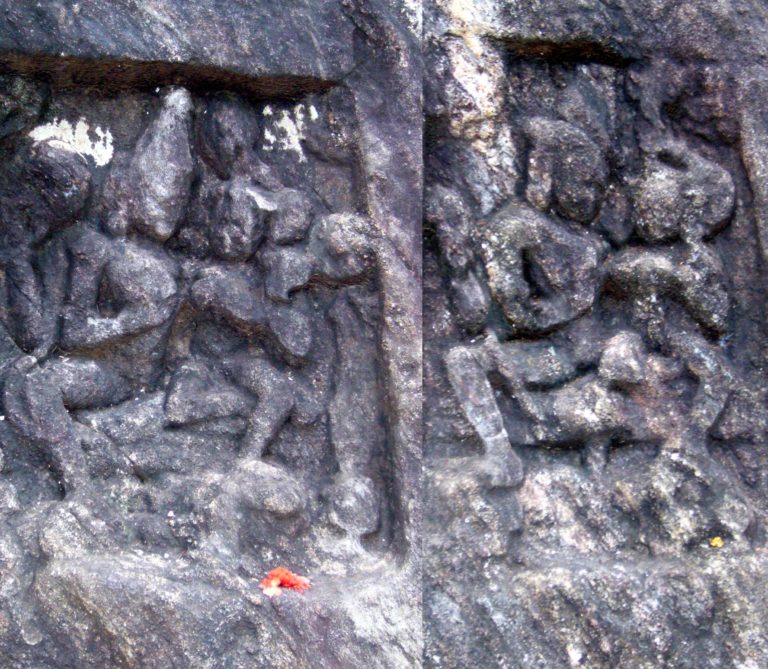
When the child grew up, he became a threat to his own mother. He devoured his mother mercilessly. After that, he performed Tapasya rigorously and pleased Lord Siva. The deity conferred on him Bara (boon) that he would have cause for fear from none but Narasingha of the Satya-Yuga. This narrative informs us the occurrence of Saivism in this site. In other words, this indicates that the prevailing society believed in or required the synthesis between Saivism and Vaisnavism in this area. However, Musika-datta became most powerful and a source of trouble and discontentment to the deities of Swarga (heaven). The helpless deities surrendered to Ramachandra and threw themselves on his mercy. Assuming the appearance of Lord Narasingha, Ramachandra came to annihilate Musika-datta who fled in fear of his life. Narasingha also followed him. Musika-datta arrived at Gandhagiri in fear and trembling. He approached the Gandhagiri to give him protection. When the refuge was granted, Musika-datta assumed the form of Musika (mouse) and entered the mountain Gandhagiri. So, Lord Narasingha also assumed the form of a Marjara (cat) and pursued him. But Gandhagiri and other deities interceded and requested Lord Visnu to establish himself there in that feline form i.e. Marjara-Kesari so that he could devour Musika-datta when he came out. This narrative also informs us the existence of Ganapati cult in this site. Ganapati-Ghat and rock-cut sculpture available in Narsinghnath site establish this fact.

A significant feature of this Tirtha is Hari-Hara-Pangat, which undoubtedly confirms that Vaisnavism and Saivism headed towards a synthesis in this site. In reality, however, it was a synthesis between Buddhism, Vaisnavism (Hari) and Saivism (Hara) in the Narasingha Pitha. Both the low caste as well as high caste people sit on the floor together and eat Anna Prasad cooked in the house of this popular deity. Hari-Hara-Pangat stands for the casteless, classless and secular aspect of this Tirtha. People never dare to abstain from Hari-Hara- Pangat or Hari-Hara-Bhoga on caste point of view. They acknowledge Prasad without hesitation. In other words, while taking or sharing of cooked food among various castes and communities is stringently forbidden under traditional Hindu caste system, eating of Bhoga at Hari-Hara-Pangat is not at all forbidden. The eradication of caste rules in regard to the Hari-Hara-Bhoga i.e. the sacred food cooked in the temple reminds us one of the important protests of Buddhism against caste prejudices. Also, the typical catlike form of the deity with the head of a cat and body of a lion is a terrific idol, which recommends some influence of or connection with Tantra. It is a fact that this place was some time a seat of Tantrik Buddhism. Scholars strongly advocate that the Gandhagiri or Gandhamardana hill has to be explored for ancient Buddhist relics. This has led the world by founding Vajrayana Buddhism in the eighth century A.D. In view of the above, nonappearance of caste restriction in Hari-Hara-Pangat and the typical feline form of Marjara-Kesari may be attributed to the Buddhist Tantrik tradition, which some time ago flourished here.

Moreover, this also equates with the Mahaprasad Sevana at Ananda Bazar of the Lord Jagannath Temple, Puri, which for some scholars represents the coalition of Brahmin and Buddhist doctrines. It is believed that originally the image of Lord Jagannath was the image of Lord Buddha containing his relics and Buddhist mode of worship are traced in the rituals of Lord Jagannath (O’Malley, 1908:90). It may be understood here that Narsinghanath Pitha powerfully emerged as a Vaisnava Pitha during Chauhan rule. Vaisnavism triumphed over Buddhism as well as Saivism in this Pitha and Buddhism absolutely lost its identity. As it has been said earlier, from about fourteenth century Borasambar area came under the Chauhan reign of Patnagarh. The finish of the Buddhist and Saiva faiths in Narsinghnath site may tentatively be traced to this period.

It may be suggested to consider that the aboriginal people who were the original worshippers of this deity earlier richly inhabited this region. The catlike form of deity was probably a non-Hindu deity, which does not match with any of the form of Devi or Devata icon of the Hindu iconography. Further, the image does not resemble any other deity found in Orissa. The antiquity of Marjara-Kesari cannot be pushed back to the Vedic period. During the Vedic period, the four Vedas do not refer to the worship of Marjara-Kesari. What’s more, Marjara-Kesari does not find a place in the congregation of Vedic deities. Most probably, Marjara-Kesari was initiated into the Brahminical pantheon in Narsinghnath Tirtha at a later period during the Chauhan rule. The non-Hindu image of Marjara-Kesari is probably a Buddhist one, worshipped in the beginning by the ancient tribal people of this area. The original name of this deity was obscured by the Sanskritik / Hindu name of Marjara-Kesari conferred on him. This name was befitting to the image of the deity with the head of a cat and body of a lion. It was easier to recognize Marjara-Kesari with the Hindu deity Nara-Singha with the head of a lion and body of a male human being. This was established by manufacturing a narrative of Malati and Musika-datta involving Ravana, Musika, the vehicle of Lord Ganesa and Ramachandra. Subsequently, this story was accepted far and wide by both the Hindus and non-Hindus of this area. In addition, the myth helped to incorporate the deity as a form of incarnation of Lord Visnu into the Hindu fold.

In all probability, this process of Sanskritisation or Hinduisation of the aboriginal deity took place in the medieval period during the State formation in Patnagarh. It was essentially required to integrate the indigenous communities into one fold under the umbrella of Hinduism in the process of the building of a unified Patna Rajya. So, Marjara-Kesari was accepted and exalted as Lord Visnu in order to appease the local subjects so that the ruling class could consolidate their power over the natives and exercise their authority over this area. In this context, it would not be out of place to mention here that the Binjhals are a primitive race, which appears to have been among the earliest inhabitants of this area. The entire area was a part of the Borasambar zamindari belonging to the Binjhal family. As discussed elsewhere, they were a hunting and martial tribe. But they were converted into settled agriculturists during the Chauhan reigns. Even today, majority of them are cultivators and rests are farm servants or field labourers. Those who are settled in the plains have taken to improved methods of rice cultivation (Senapati and Sahu, 1968:103). From the military point of view i.e. security of the State and political point of view, the Binjhals / Bhinjawal zamindar of Borasambar held an important position. His lands were situated alone on the north side of the Gandhagiri, which form part of the northern frontier of Patna, and accordingly he could hold the approaches through these hills to Patna for or against any hostile force (5). The zamindar of Borasambar enjoyed the most privileged position like right of affixing the Ticca to the Rajas of Patnagarh on their accession. Conspicuously, the more advanced Binjhals boast of an alliance with Rajputs and call themselves Barihas, which is a title originally borne by small hill chiefs. But the common Binjhals do not claim such Rajput / Kshatriya status and descent. Nonetheless, it may be noted here that the management of the Narasinghanath temple has been directly or indirectly controlled by the Padampur / Borasambar zamindar family since time immemorial.


Chitrasen Pasayat is an OAS comments on culture

Kosal Vyasha Dr Nila Madhab Panigrahi: A Rebel Genius

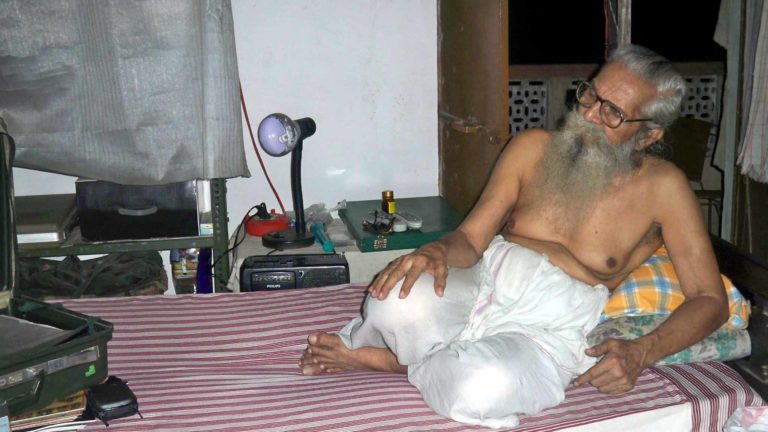
Dr. Nila Madhab Panigrahi born on 14 November 1919 at Gulunda near Sambalpur is the most eminent vatary of the Kosali/Sambalpuri language; an essayist, literateur, poet-author of many books, editor of ‘Nishan’ & many other literary works. Designated as ‘Kosal-Vyasha’ for having single-handedly composed the epic ‘Mahabharatar Katha’, published by Sambalpur University, he was in the pursuit of literature till his last breath.

He received ‘D. Litt’ from Sambalpur University for his lifetime works in the field of literature. He floated an honour & reward of Rs. 10,000 which is given by Sambalpur University every year for translation of any Sanskrit work into the Kosali/Sambalpuri language. He co-authored the ‘Sambalpuri-Kosali Grammar’ book with Dr. Prafulla Tripathy, which was also published by Sambalpur University. He is honoured by many cultural & literary organisations, but because of his intense love for Sambalpuri/Kosali language, he refused the ‘Sarala Samman’ which was to be given by IMFA Group, because it was awarded by an Odia-lover. He was the convenor of the ‘Kosal Sammellan’, along with Mr. P.R. Dubey & Pandit Prayag Datta Joshi, which spearheaded the socio-linguistic movement in the Kosal region. He sat on a hunger strike, demanding primers (primary school books), for a literacy campaign, be made in the ‘Sambalpuri/Kosali’ language. He is an erstwhile Sanskrit & Odia scholar who has abandoned writing in the Oriya language for about three decades. He is also a prominent personality in India in the field of Indian classical music and was the principal of ‘Gandharva Viswa-Vidyalaya’, U.P.

He breathed his last on 28th November 2012 at his native Gulunda village.

Saket Sreebhushan Sahu comments on culture and politics

Oral Narrative and Hindu Method of Assimilation: A Case of Marjarakesari in Narsinghnath(9)

In this context, it would not be out of place to mention here that the aboriginal inhabitants of the Gandhagiri area of Borasambar give special regards to Narsinghnath Tirtha. For instance, if the dead body is burnt by the Binjhals, then the ashes and bones are by and large taken to Panch-Pandava-Ghat in the stream near the Narsinghnath temple, where they immersed the ashes. It is believed that the deceased would attain heaven in so doing (Senapati and Mahanti, 1971:122-123). In addition, many other people of the neighbouring areas also immerse the ashes of their forefathers in this pool called Harana-papa with the same belief (Senapati and Mahanti, 1971:14).

As discussed previously, the-then existing religious site at Narsinghnath received royal sponsorship by the first Chauhan ruler Ramai Dev of Patnagarh sometime in the fourteenth century. It was perhaps in a decaying condition when the fourth Chauhan Raja Vaijala Dev, son of Vatsaraja Dev came into power. He extended stately patronage and rebuilt or renovated this religious shrine, which was then emerging as a Vaisnava Pitha. He arranged and granted revenue of the village Luhasingha or present Loisinga for the worship of Lord Narasingha and maintenance of this temple (Senapati and Mahanti, 1971:534-535). Vaijala Dev was succeeded by Bhojaraja Dev (1430-1455 A.D.) who is said to have built a fort on the Gandhamardan hills near Narsinghnath temple. This fortification was recognized after him as Bhojagarh. Bhupal Dev (1480-1500A.D.) of this dynasty is identified to have improved the construction of Bhojagarh close to which he established a township and encouraged people to inhabit there by providing lands free of rent (Senapati and Sahu, 1968:51).

It is understood from Deo’s (2003) examination that in the new hierarchical political structure at some stage in the Chauhan rule, the tribal chief of Borasambar was recognised as a zamindar under the Patna Raja. Borasambar zamindar enjoyed greater status in his area. This recognition resulted in a hierarchical arrangement. The tribal chief was permitted to run his Borasambar zamindari and was most probably required to pay a periodical tribute, Bheti and also to assist the Patna Raja or overlord in an emergency. He used to keep the income from a part of a territory for his own maintenance. Likewise, there were several villages within the zamindari and most of the village headmen were most likely tribals. Village headman was also recognized as hereditary chief of the village called Gahatia or Gaotia or Gantia or Gartia. The village headman was also required to supply military aid during an emergency to Borasambar zamindar /zamidar as well as Patna Raja. For that, the Gaotia enjoyed the land attached to his village or a cluster of villages under his jurisdiction or authority. The revenue from this provided for his maintenance and that of his soldiers.

In the process of formation of a larger Hindu kingdom and society, the autochthonous groups and their religious Pitha like Narsinghnath (Little Tradition) were wrapped up in the wider Hindu society and culture (Great Tradition). In other words, these autochthonous groups and their religiouscultural tradition (Little Tradition) played significant role in the process of state formation in the regional level i.e. in the erstwhile Patnagarh or Patna Rajya during the medieval period. In turn, these little religious traditions have received royal aid and patronage for its popularity, prosperity and growth. The Papa-Harni-Nala is a tributary of the river Ang. Its water accumulates at five different places into five pools known as Kund. These Kunds popularly recognized as Sita-Kund, Pancha-Pandava-Kund and Gan-Kund in the bed of the Papa-Harni-Nala are considered efficacious in washing away sins. In fact, Papa- Harni-Nala is formed by the natural springs at Narsinghnath. The water-falls are popularly identified as Kapil-dhar, Bhim-dhar, Gada-dhar, Gupta-dhar and Chaldhar, which are regarded as very sacred and sacrosanct.

The Kapil-dhar, Bhim-dhar and Gada-dhar put up with the sacred recollection of Kapila Rishi and Bhima, the second Pandava respectively. There is an oral narrative that while wandering in the jungles during their Banabasa (exile) Pandava brothers with wife Draupadi arrived at Gandhagiri. They built a hut and lived there. On one occasion, Bhima wanted to have his bath. But for a pleasant bath the available water was insufficient. Consequently, he struck his Gada (club) on the mountain Gandhagiri and out of the blue another Ganga emerged. Goddess Ganga Devi named these two falls as Bhim-dhar and Gadadhar after Bhima.

Narsinghnath is also fabled and well-known for different valiant and supernatural deeds of Bhim such as killing a demon, falling in love with local girls, constructing a stone house called Bhim-Madua, playing with Bati (stone balls). A cave in this mountain is popularly branded as Panchu-Pandav-Khol wherein Nakula, the fourth Pandava carved the figures of five brothers on the wall with his Kunta (weapon). A mango tree called Sati-Amba is supposed to bear mangoes all through the year. It is coupled with a beautiful fable that the five Pandava brothers including Draupadi disclosed their undisclosed reality and the ripe mangoes sprouted up through which they all appeased a guest sent by Duryodhana to destroy the virtue of Yudhisthira.

Gandhagiri is also fabled to be the place where Ramachandra, Laksmana and Sita in Satya Yuga have spent some time during their Banabasa. Sita-Kunda of this religious site is fabled to be the spot where Sita took her bath and washed her soiled clothes. Ramachandra blamed her because she polluted the stream. Further, a narrative runs that the mountain Gandhagiri was a part of or adjacent to mountain Vindhyanchala. Hanumana carried Gandhagiri to Lanka in order to save the life of Laksmana and while returning he left the mountain here. There is no denying the fact that the Gandhagiri is a treasure of medicinal plants and the State Government has established an Ayurvedic college and research centre in this place.

All the same, the oral narratives discussed above are the restricted or localized versions of the Hindu religious scriptures like the Mahabharata and the Ramayana connected with this sacred centre Narsinghnath. Moreover, as discussed somewhere else, many people of neighbouring areas of Orissa and Chhattisgarh immerse the ashes of their fore-fathers in this Tirtha believing that they would attain heaven thereby. This equates the Narsinghnath Tirtha with the Triveni at Prayag (Allahabad) and Biraja Pitha at Jajpur in Orissa. This indicates the extent of reverence shown to this Tirtha, which occupies a pivotal position in the religious life of the common people of this area or sacred zone. The pilgrims who use to visit this Tirtha take holy bath in this water. In other words, religious beliefs of Hindu Great Tradition have been localized here. The above discussion informs that the Narsinghnath Tirtha has shown lenience to foremost religious faiths specifically Buddhism, Tantrism, Saivism and Vaisnavism. Though the Tirtha is famous as Narsinghnath, the principal image in the Garbhagriha of the temple is called Marjarakesari who is assumed to be a form of Lord Visnu with the head of a cat and body of a lion. It would not be out of place to mention here that Nrusingha / Narsingha (Nara+Singha) is one of the Avataras (incarnations) of Lord Visnu, which is extensively narrated in various Hindu Puranas. If we delve for information into the Nrusimha Mahatmya, we locate that the source of Marjarakesari as an Avatara of Lord Visnu has been set forth only in the Nrusimha Mahatmya, an Oriya creation of Chauhan reign. Most probably, by this time Vaisnavism became the leading form of religion in this site and Buddhism and Saivism receded to the background.


Chitrasen Pasayat is an OAS comments on culture

Oral Narrative and Hindu Method of Assimilation: A Case of Marjarakesari in Narsinghnath(8)

When the Asta-Malliks asked Ramai Dev to prostrate himself before the deity, he asked them to demonstrate how to do it. When the Asta-Malliks were prostrating themselves, Ramai Dev killed all of them with the sword kept besides the deity and came out of the temple alone and alive. As it became clear from this that the deity approved Ramai Dev, the people hailed him, as their ruler and thus, he became the first Chauhan Raja of Patna. The Binjhal chief of Borasambar, the overlord of Patna endorsed his claim to the principality, came to Patna and put the Ticca of a Raja on his forehead. Thus, in Patna / Patnagarh, the Binjhals occupied a honoured and privileged position or status in the sense that it was the custom until very recently for the Binjhal chief and each of his descendants to exercise the same right, also placing a Pagri or Pat of silk on the head of the Raja of Patnagarh at the time of accession (Senapati and Mahanti, 1971:516-517).

Deo (2003:97) strongly claims that there is no historical support for Chauhan immigration to Kosala region i.e. modern west Orissa. It is more probable that one of the local tribal chiefs emerged powerful enough to assert his independence and seeking the Brahmin’s help and advice, claimed Chauhan rank and status. It may be understood in this specific circumstance why the Binjhals have such an exaggerated sense of their weight and importance in relation to the Patna Rajya. The way in which Ramai Dev has asserted his position and influence within the power structure suggests us to consider that Binjhals have extended all support to Ramai Dev. In other words, the termination of rule of Asta-Malliks was accompanied by the Binjhals who have played significant role in the emergence and expansion of the Chauhan Rajya in Patnagarh. This is why they have enjoyed much reputation and standing.

The most salient point about the contributions made by various groups is that tribal people or aboriginal groups have been a key factor in the development and progress of societies, in breaking up ethnic boundaries and other cultural limits and identities towards the emergence of Patna state or nation as we understood it today. Ramai Dev eventually succeeded in capturing power from Asta-Malliks and became the exclusive ruler of Patna. In this heroic myth, the man of action Ramai Dev and a Brahmin script the extinction of system of Asta-Malliks. This reflects the familiar competition and jealousy among Asta-Malliks who represents various interest groups about their status and position within the then existing political structure.

In this context, Deo (2003:97) writes that there was a type of oligarchy or Government by a group of eight powerful persons recognized as Asta-Malliks, and one of these eight chiefs emerged as the Garhpati of Patnagarh. Ramai Dev distorted the egalitarian system of rule (Asta-Sodara rule) and acknowledged the other seven as Garhpatis or Malliks of diverse areas, who enjoyed superior status in their respective areas. It is understood from the narrative that Ramai Dev was himself endowed with some extra-ordinary qualities and commensurate good will. But he could hardly have destroyed the Asta-Malliks or the system of oligarchy in Patnagarh without the support and guidance of the Brahmin, which marks the commencement of a process of Hinduisation or Brahminisation or Aryanisation. Thus, their union brings the heroic destiny of Ramai Dev to a fitting close to sanskritisation and also formation of a new hierarchical political structure.

Deo (2003:97) has rightly mentioned that in these circumstances, it is not difficult to believe in the emergence of a Brahmin-Kshatriya ruling coalition in Patnagarh. In order to sustain a separate and independent Chauhan kingdom, most probably, the Chauhan rulers had to depend upon the Bhogas and Bhagas. They had to persuade the local tribal people to become settled agriculturists so that production would increase; because tribal economy based on hunting and shifting cultivation cannot sustain a Rajya as analysed in a different place by Deo (2003:96). In order to legitimize their rank and status as Rajas and to their share of the produce i.e. Bhaga, the Chauhan rulers granted lands to Brahmins and temples which contributed to the changing the agrarian situation, configuration of hierarchical social order and Brahminisation or Sanskritisation or Hinduisation of society in this area. In course of development, the successive

Chauhan rulers of Patnagarh extended their influence over the neighboring territories including Sambalpur and the adjoining States.


Chitrasen Pasayat is an OAs comments on culture