Monday, May 18, 2026
Home Blog Page 68

Useless MIP, organized corruption in Gaisilat

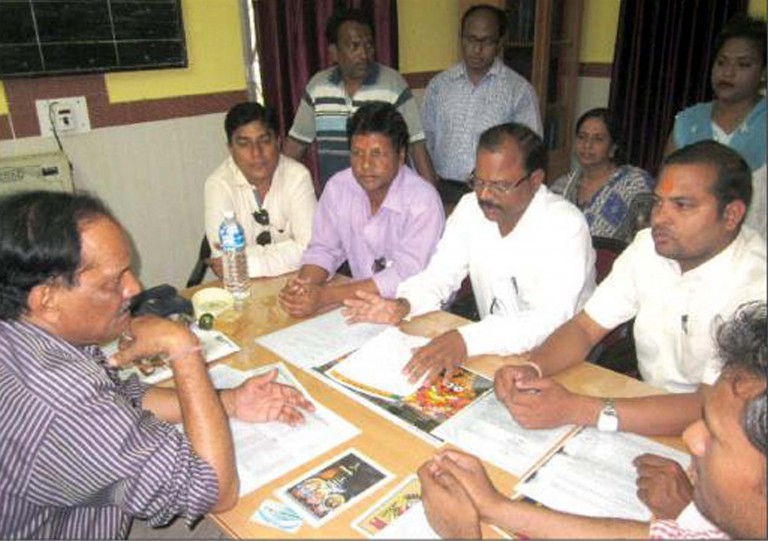
Useless and defunct minor irrigation project at Tengnapali village, block Gaisilat, district Bargarh is another example of organized corruption at block level. The villagers complaint to the engineer of the concern department. The concern engineer also admits the irregularities. Now it can be assess what kind of work has been done.

The minor irrigation project at Tengnapali was proposed to irrigate 100 hectare lands in the village.  The project was proposed to construct within 6.50 square kilometer area. The government sanctioned rupees 86.40 lakh grant to build the project.

The villagers compliant about the irregularities to the authority of the department but they didn’t get any success. Finally they meet the collector. The Junior Engineer of the department expressed his helplessness. The contractors are not working according to his technical advice.

Now the villagers are questioning if the contractors are not obeying the guidelines and technical advice of the Junior Engineer then how the bills were cleared for payment?

Though people have drawn the attention of the Executive Engineer of the department yet no action has been taken against anybody. It is very clear that there is illegal agreement between Water Resource Department and the contractors.

Silent Witness_Dr Arjun Purohit

735

I have known for years that there are all kinds of interesting features in the reservoir of Hirakud Dam, among these are some of the submerged temples often creating problems for the boaters but some of them are visible over the water. So when Dr.Tarini Panda, my old student by proxy, suggested to me to have a look at them when I visited Sambalpur couple of years ago, I jumped at the chance.So he took me behind his scooter to the Jamadar Pali Ghat from where we took a boat which took us across the reservoir to the other side, which is known as Lakhan Pur Block. It was a motor boat capable of taking about 40 people but had no roof or no proper seats. I managed to find a place to sit near a little girl of about five years old on the flat bar, one of many along the width of the boat. Tarini had to stand for the whole trip which took about an hour. About fifteen motor cycles and scooters as well about thirty of us boarded the boat. Apparently there was some kind of Adivashi festival going on Gunja Parbat, a rather tall hill with a majestic triangular top which you could see across the water. The crowd was in a festive mood with lots of chatter and laughter in anticipation of lot of merry making in the festivals.

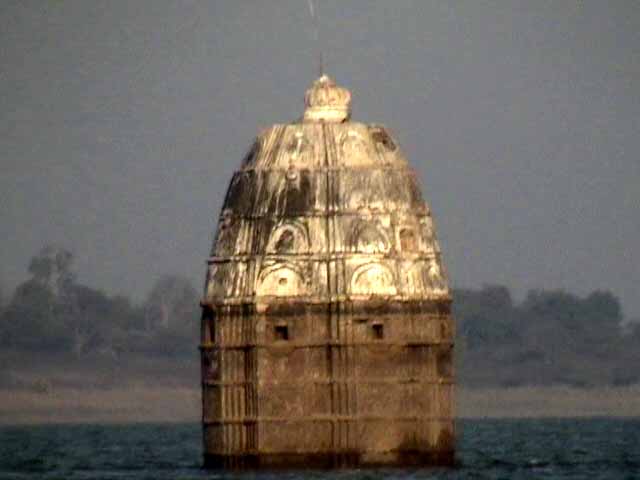
Some twenty minutes after we started, the anticipated temple came to our sight. Suddenly, the chatter and laughter ceased, and the eyes of the whole crowd except the eyes of the five year old on my side were turned on the temple, which I would estimate to be about twenty five feet over the water. The mood was reverent and some folded their hands in Juhar. I simply could not control my tears to the curious amazement of the five year old who kept on staring at me. I must confess that I am given to tears rather easily. I cry at the movies and when I watch mythologies like Ramayan and Mahabharat. When Sita gets abducted I cry. When Duhsasana tries to disrobe Draupadi in front of all the Pandava and Kaurava elders, I cry. But this sight of half submerged temple was something really special and kicked up all kinds of memories which have been lying dormant for years like sediments at the bottom of the lake.

This was the temple of Rampella after all! This is where my cousin Nagara Nani went as a bride. This was where my Badkhama(wife of the elder brother of my father) came from. I knew of a host of my relatives from this large prosperous village. Rampella was one of the 294 villages which went under the water of Hirakud Dam. These were very prosperous villages and were known to be the Bhata Handi(rice bowl) of the district because of the fertility of the land. The old royalties of Sambalpur came from the area. Surendra Sai fought with the British around the area. Though our family never lived in the Budi Anchal(submerged land), we had lands in a village called Basantpur which went under, for which we never got compensated.

The submerged temple began to flood my mind with all kinds of associated memories. First time I was aware of Hirakud Dam was when I was a seventh grader in Borasambar Padampur, where my father was working as a minor civil servant. I saw Harekrushna Mahatab first time ever and probably for the last time, except in photographs. He along with Ranjit Singh Bariha, cousin of the then Jamindar of Padampur and a fresh returnee from England, giving lectures to people of the town on the steps of the local temple regarding good stuff about the future Hirakud Dam. I also saw lot of folks protesting against the dam. When I came back home, I found my house swarming with people from Sambalpur and my mother hastily cooking dinner for all these folks. Couple of months later when I came to my Mamughar in Sambalpur, found the whole town in turmoil. Thousands of people were shouting all kinds of slogans and were marching on the main road. There were large meetings near the Mahanadi bank, and police were everywhere. Later that evening, I learnt that Dr. Janardan Pujari and his wife were arrested and taken to jail. Dr. Janardan Pujari was a revered person of Sambalpur, and was literally worshipped as a saintly figure because of his social service and medical expertise. Next day there was another march; this time ladies including my grandmother joined in. It was an awesome thing to see the ladies in the march because these ladies would not even venture outside unescorted and their heads were always covered with Odhana. And guess what. My grandmother was taken to the jail for a while! For a young boy of my age, this was incomprehensible. I remember of teasing my grandmother for months afterwards about her becoming a kaidi. “What did they feed you in jail, Badkhama ?” I would ask. All I knew was that something really big was happening, and I never knew the full import of the event.

Later when I came to Sambalpur to study in G.M.College, slowly I began to understand the enormity of the issues. We saw huge earth-movers which we never saw before these were manned by Sardarjis, many of them were fresh refugees from Pakistan. We also went on our bikes to see how huge machines were hauling cement to a great height to build the dam. During the summer vacation of 1952, four of us including Rajendra Supakar, who currently lives in Chicago, went on a bike tour to have a look at some of the villages to go under water. Among the villages, we saw Samplahara of Rajendra, where we were treated with PaNA after being thoroughly and lovingly reprimanded by Rajendra’s folks for biking all that distance under hot sun risking heat stroke. I also remembered meeting Ayodhya Khosla, the mani artitect of the Dam and Issac Santra, the local hero, who established a leper colony in Hatibari, who came to our Jharuapara one evening in 1951 looking for Sradhakar Supakar, Rajendra’s father and the M.L.A. from Sambalpur. I did not know the importance of Mr.Khosla but I knew of Dr. Santra but had never seen him before. They asked me to take them to Sradhakar Babu’s house who lived in our gully but we did not find him home. Both of them then tried to impress me on the importance of Hirakud Dam for the next one hour!

So the memories kept flooding in. The little girl beside me looked at me with her big eyes and asked,” Why are you crying? Are you alright?” I wiped my tears and smiled and patted lovingly on her head and gave her a chewing gum. She looked at her mother for permission to accept, and after getting the nod; she took it and smiled back. The boat kept going, and back came all the chatters as the temple receded from our view. After a few more minutes, we saw another temple. It must have been a small one because we could see only the very top, the Chuda. This time, the sight of the temple did not evoke as much emotional response as before.I really do not know what kind of temples were they. Were they Vaishnavite or Saivite? As you can see from the picture, the Chuda of the temple has lost its crown. Saivites have Trishul and Vaishnavites have Chakras as crown. My hunch is that the Rampella one is Saivite judging from experience in other Koshalite villages. Almost always they have a Saivite temple especially near a bathing ghat but we do have Vaishnavite temples as well but not very often, and they are of recent vintage when they occur.

As we approached the other shore, I found lot of thick vegetation through which a path for the boat has been cut out to reach the shore. Tarini explained that this was because of the silt accumulating in the reservoir. Apparently 27% of capacity of the reservoir has been used up by the silt. When we reached the other shore, Tarini took out his scooter and we toured some of the villages including his own Kumharbandh. It was so close to the reservoir that I suggested that ground water would be available only a few feet in well and would be great for agriculture. Tarini told me that there is coal only five feet down, not water. Apparently sponge iron companies are already buying up land for future expansion of their enterprises. On our return trip we went to another spot to catch a boat to go back to Sambalpur via Rengali. While waiting for the boat, I asked Tarini whether Bikram Khol was not very far from that spot since we were in Lakhanpur block as is Bikram Khol, which I visited few years back. He confirmed that indeed it was close but behind the Dugree( hills are called Dungree in Koshali) on our left. In order to go there we had to go to Jharsuguda and then we would have to take the road on the other side of the Dungree to take us to Bikram Khol. That meant going back to Sambalpur by late evening. So we decided not to take the trip to Bikram Khol. Incidentally, Bikram Khol is very interesting site which has large flat stone wall on top of a small hill and has inscriptions in Brahmi and Mahenjodaro scripts. Apparently, it is about 4000 years old, and the writings are yet to be deciphered.

Tarini also told me about another interesting site within the reservoir which our boat did not go by. It was Cattle Island. Apparently, because the confiscated villages were ordered to be vacated at gun point the villagers could not take some of their cattle with them these animals found shelter in an island in the reservoir, and have become wild after a few generations. When the locals try to capture them they become very aggressive, and hence are left alone.

Finally the boat to take us to Rengali came. This time boat trip was much shorter. As we scooted towards Sambalpur on Jharsuguda-Sambalpur road, which is part of very busy National Highway, I noticed the chains of sponge iron factories. One could not but notice the thick haze of smoke coming out of the chimneys of these plants which are made worse by the fly ash coming out of coal fire power plants of Jharsuguda. Apparently, Pollution Control Board has already declared the whole corridor as an ecological disaster. Sitting behind Tarini’s scooter as he drove towards Sambalpur which took us about half an hour, I was still thinking about Rampella Temple. I wondered what this half submerged temple, which still stands as a silent witness, is a symbol of what? Is it a symbol of sacrifice of well settled vibrant community for the protection of coastal area of Odisha from floods? Or of utter callous and contemptuous treatment of the Odisha government towards the ousted families, 7000 of them yet to be compensated even after more than half a century? Or of beginning of industrial age for the region? Or of loss of innocence and simplicity of a bi-gone era? To me it is all of the above.


Lakh rupees manipulated in Titilagarh MARKFED

Lakh rupees has been manipulated in Titilagarh MARKFED (Odisha State Co-operative Marketing Federation Ltd.) while audit.  The person in charge has been suspended. A letter has been written to vigilance regarding this. The Titilagarh police did not file the complaint.

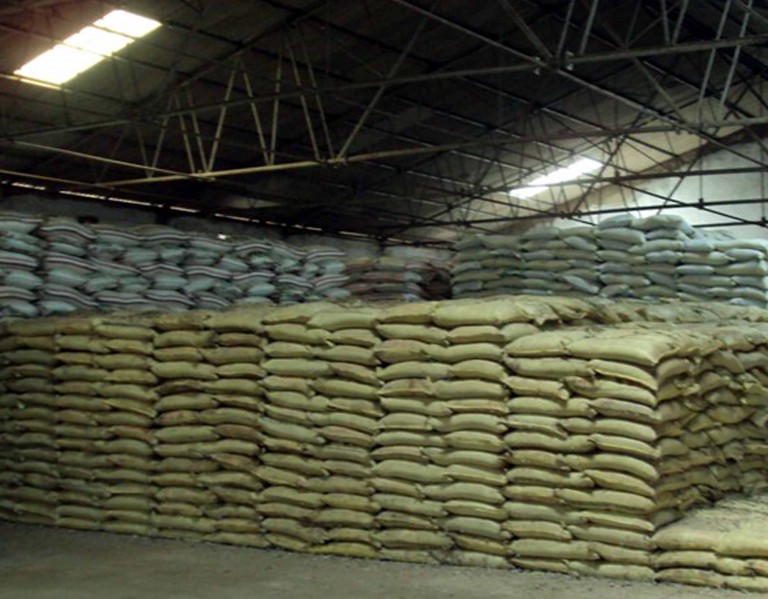
As per the information, the government audit team inspected stock and accounts of MARKFED. At the time of inspection, the audit team found extensive manipulation from April 1st 2014 to June 29th 2015. According to the report of the audit team, there is huge irregularity in stock record of fertilizers. The departmental record and the stock in the godown were not matching. Likewise, the same situation was found in the account. The real facts have been destroyed and forgery papers have been planted, reports the audit team. After receiving the report, the Titilagarh MARKFED godown in charge junior assistant Loknath Bishi has been suspended.

Further, suspended Sri Bishi has not deposit the cash memo from 687512 to 688000. The manipulation can be traced clearly after inspecting the cash memo. In between April 1st 2014 to June2015, 36 lakh 45 thousand 809 rupees have been grabbed.

The Managing Director of MARKFED has written to vigilance Sambalpur division regarding the manipulation and requested for investigation of the matter.  Yet the step taken from the vigilance is unclear.

Sixteen thousands crore returned from the State

Sixteen thousands crore grant from the Union Government has been returned by various departments of the Odisha State Government. The State government has not shown any reason that why the funds have not been utilized.  But the irony is BJD led state government is blaming the centre repeatedly for its neglect.

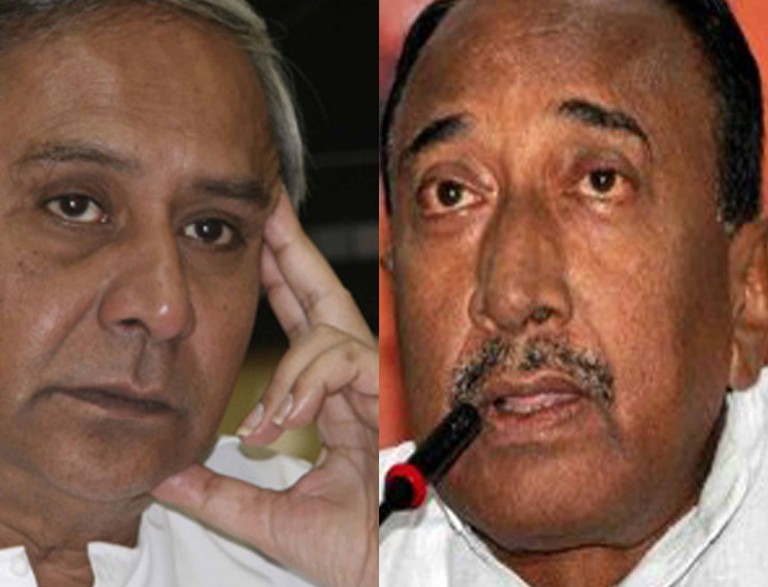
As per the information, senior BJP leader Bijoy Mohapatra in a press release criticized the state government. Sri Mohapatra says, in the year 2014-15the State government has utilized only 54% allocated fund in AIBP.  In Biju Krushak Yojana only 11% fund is utilized.  The Cooperative Ministry has returned 150 crore in one year. Whereas the ministry is regularly shouting that there is no godown to storage onion and potato.  The Agriculture Department has returned 341 crore.

Further, Sri Mohapatra stated that the government has spent 25 crore in the year 2014-15 and 2015-16. The government report says, they have connected pipe water to 1% house hold.  In rural area pipe water connection is 8%. They have returned 128 crore 23 lakh of the union government fund.

The state government has returned 16 thousand 105 crore and 27 lakh in total.

BJP demands to bring dist hospital in order

BJP town unit has demanded to bring the district headquarter hospital at Bargarh in to order. Thousands of patients from rural area visits and depend on the district hospital. But the district head quarter hospital is not up-to-date to cater the health service as per the demand. The district headquarter hospital at Bargarh is provided with equipment and staff.  But due to mismanagement, maximum equipment is lying defunct. This situation is forcing the hundreds of patient to visit private hospitals regularly.  The town BJP unit led by Akrura Mallik met the Chief District Medical Officer, Prakash Pradhan and demanded to utilize the provided infrastructure to facilitate good medical service.

The construction of proposed ICU is finished yet it is not functioning. The patient visiting for surgery are forced to lie at the veranda. The BJP unit questioned why the ICU is not functioning though technicians and equipment are available?

The unit further questioned why the Digital X-Ray machine is not in use? Likewise the available ultrasound machine is also not in usage.

The BJP unit draw the attention of the Chief District Medical Officer that, some doctors are regularly staying absent at the Out Patient Department in the checking hour. The hospital authority is not taking any step to fill up the vacant posts of doctors. There is problem of water supply in the hospital premises.

The BJP unit further demanded to establish a CT scan machine unit inside the premise and increase the number of bed to 200.  All the 3rd and 4th grade employee positions of the hospital should be filled by the district candidate.

The Chief District Medical Officer Prakash Pradhan promised the BJP unit to take positive action regarding the demands in future.

The BJP unit was accompanied by District General Secreatry, Ravinarayan Dash, Himashu Sekhar Meher, Nabakishor Panigrahi, Subrat Hota, Ajanta Shubhadarshini, Jaykishan Vesra, Deepali Patra, Lalit Kathar, Nalini Singh, Puja Mahapatr, Kishor Dash, and others.

Phalsapadar in Sonpeur demands immediate water supply

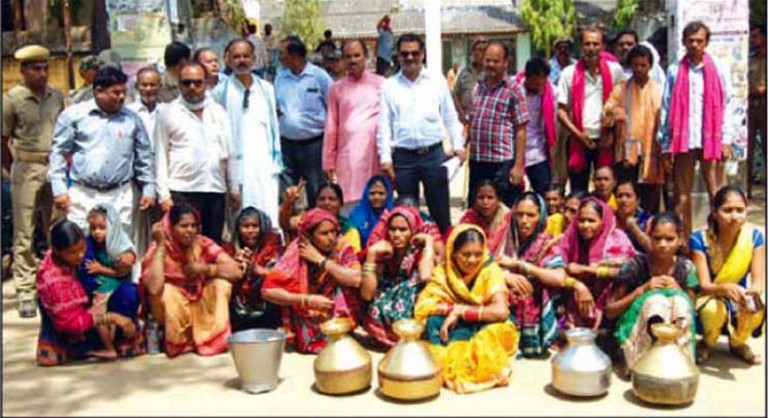
Phalsapadar, panchayat Dubula under Tarabha block in Sonepur district is facing severe water crisis. The ladies of the village reached the block office carrying empty bucket and pitcher and demonstrated in front of the BDO office. The village is facing water crisis since February.

The ladies of the villages had already met the local MLA Niranjan Pujhari in presence of the district collector and BDO. They had appealed to solve the water problem of the village.  The local leader Sri Pujahri had promised to supply water by tanker within 7days to the village.

One month has passed but no water by any tanker has been supplied to Phalsapadar village. The women sat in protest demanding supply of water for a long time at the block office.  They submitted a memorandum with 5 demands. In the memorandum it is mentioned that Phalsapadar villager demand immediate supply of water by tanker, supply of water through pipe, digging deep bore well in the village, Excavation of the ponds of the village, and immediate repair of the only bore well in the village.

The demonstrator submitted the memorandum to the Collector through the ABDO Jadav Kishor Karna in the absence of the BDO. The women demonstrator demanded the ABDO that immediate repair of the bore well and supply of water by tanker to Phalsapadar otherwise they will continue their strike. The ABDO talked with the BDO telephonically and promised to supply water from the next day by tanker and repair the bore-well within one hour.

The agitators withdraw the agitation with a threatening that if the promised is not executed then they will block the Tarbha-Charbhati road.

The agitation was led by Pushpa Bhue of Maa Bhabani SHG, and supported by Lata Bag, Pramodini Kheti, Prabhati Pradhan, Tilottama Kheti, Deeparita Bag etc. The agitation was supported by Ramnarayan Bel, Suresh Mahal, Bhabani Panda, Rajkishor Mendli, Santosh Meher, and Balmukund Mishra.

Nalichuan in Bargarh facing water crisis

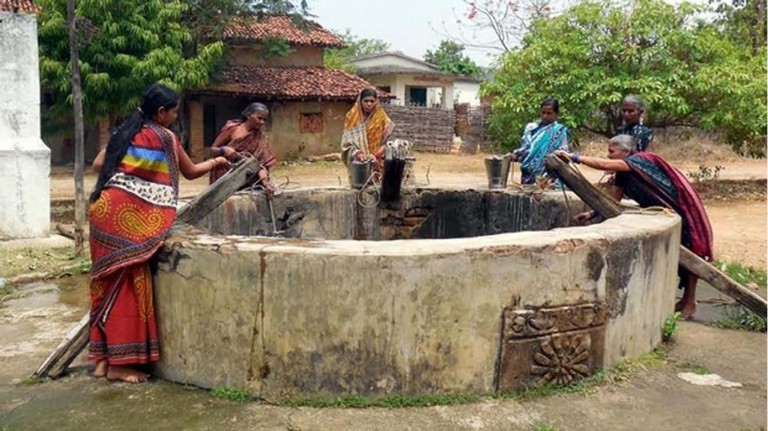
Nalichuan village, panchayat Sukuda, block Bhatli of Bargarh district is not having a good road. The total population of the village is around 600. Still today people are solely dependent on open dug well for their water requirement.

Though there are 6 tube-wells in the village but the water quality is not good for consumption.  Now, folks of the village are forced to use the water of open dug well.

A youth Club of the village had constructed a water tank near the well but the pump got defunct.  The villagers have appealed the district authority many a time regarding the water crisis of the village. But no fruit has bear till date neither any action has been taken by the district authority.

Haldhar at Harvard

767

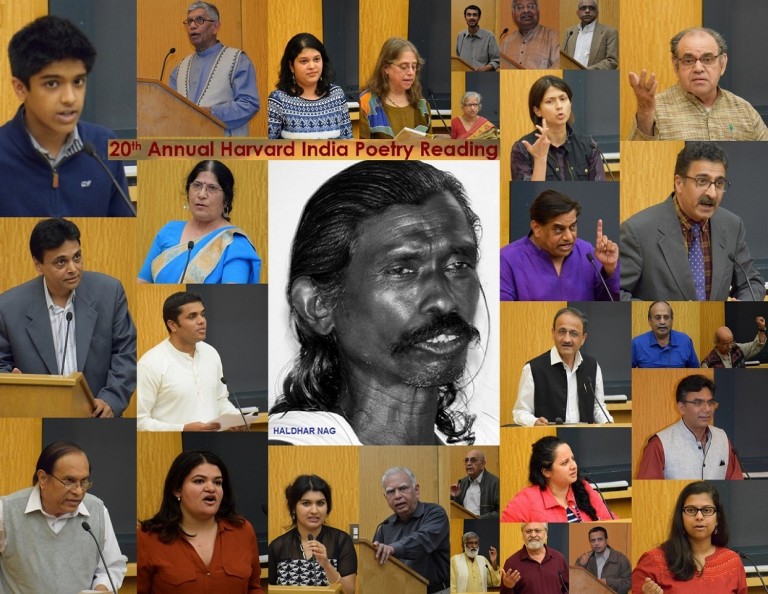
Haldhar Nag’s poem Dhadho Bargach was translated into English and recited at Harvard University, department of South Asian Studies and South Asia Institute in association with South Asian Poets of New England at the 20th Annual India Poetry Reading.

On May 15, Sunday, thirty two poets of South Asian origin talked about the interpretation of the environment and dabbled with the various aspects of it through poetry and songs. This year marked the 20th year since the India Poetry Reading group was formed. This event was hosted by the South Asia Institute and the Department of South Asian Studies of Harvard University.  The program started at 2:30 PM.

Dr. Bijoy Misra, an Associate in the Department of South Asian Studies and the Convener for the Group gave a short history of the program since 1997.  He acknowledged the support of late Catherine Galbraith and Swami Sarvagatananda who helped generate support for the original event on the occasion of the Golden Jubilee of India’s independence from the foreign rule.  He acknowledged the support from Sajed Kamal, Rosie Kamal, Alok De, Maya De, Jaspal Singh and Hardeep Mann through the years.  South Asian Poets of New England was formed in 2008 and hosts the quarterly poetry reading events in the local area.  It is merged with the newly formed India Discovery Center, Inc., a new nonprofit group dedicated for scholarly research on India. Dr. Misra presented a short review of the arrangement of the poems for the afternoon to weave through the grandeur of the nature to the pollution and destruction, marching on to water scarcity, economic deprivation and suicide.  He said the conclusion was focused on human duty towards environment through a special poem in Sanskrit dispatched from India.

Dr. Misra chose to start the meet with the recitation of a poem by a poet in Koshali language who was rewarded with a Padmasri award last January by the Government of India.  Haldhar Nag had to drop out of school at 3rd Grade because of family difficulties. He supported his family by working as a manual labor. He got familiar with literature by interacting with High School students when he worked as a cook in the dormitory.  He started composing at the age of forty and at sixty five is the most popular poet in the region.   Dhodho Baragach“That Old Banyan Tree” narrates the lone tree standing at the entrance to the village and is the witness to the life in the village.  “Sees everything, knows everything, checks each, and hears all,

Never speaks a word, never talks, never opens to tall or small!” said the poet.

Bargarh Cement Works polluting the area

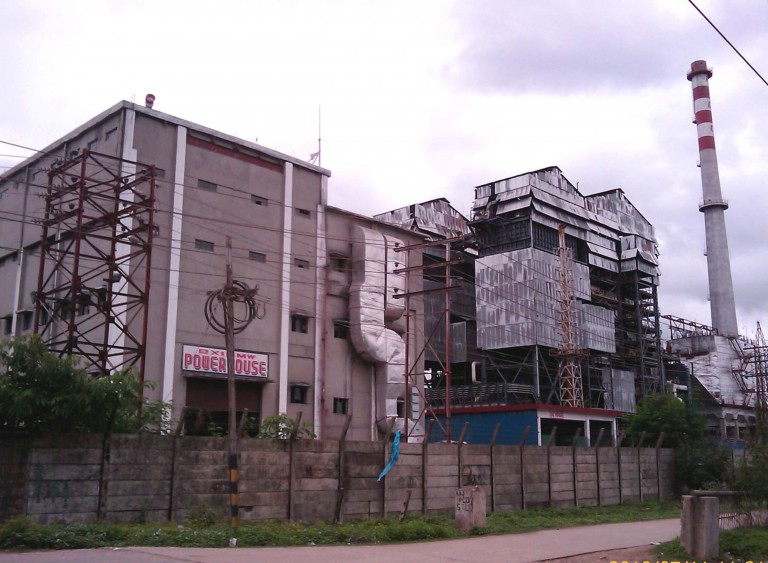
Bargarh Cement Works is polluting the premises as well as the nearby area complaining the locals. The Bargarh Cement Works managed by ACC is breaking agreement from time to time. In the night time they are closing the electrostatic precipitator which controlled the air pollution, and directly leaving the air to the atmosphere.

Recently Khaliapali villagers gheraoed the factory authority regarding this.  The factory authority promised the villager through the Sarpanch in written that the mistake will not be repeated. The Odisha State Pollution Control Board (OSPCB) also has similar complaint regarding the factory authority. OSPCB has issued a show-cause notice to the factory authority vide letter no 8493 on Dated 21 May 2016. And OSPCB has asked to reply within 10 days.  In the letter it is mentioned that ACC Cement has been allowed to produce 30 Megawat thermal electricity, 2.5 MTPA cement production, and to establish 100 TPCH coal washery. All these agreement are expiring on 31st March 2017.  According to the direction no 1175 issued by OSPCB on Dated 19/1/2007 the power plant of the cement factory can use coal as fuel only. But the factory authority has mentioned in letter no ACC/BCW/ENV/558 Dated 31/3/2016 that pet coke is used as fuel in the power plant of Bargarh Cement Works. The OSPCB has issued show-cause notice as the factory authority has not taken any prior permission to use pet coke as fuel instead of coal. The OPSCB may take action if the factory authority will not provide any satisfactory reply within 10 days.

Generally pet coke is used as the alternate fuel of coal in cement and different power plants.  Pet coke is cheaper than coal but there is high risk of creating pollution in the local environment of the factory.

The delegation of OPSCB is regularly inspecting the factory. But they haven’t noticed and report about the use of pet coke instead of coal in the power plant. Further, the MCL provides a quota of coal to the plant. If the Bargarh Cement Works power plant is using pet coke and not using coal then where is the quota amount of coal provided by MCL?

Investors in chit fund should get justice

771

Investors in chit fund companies should get justice from the Chit fund operator says, BJP MLA, Dillip Ray. The judicial panel set up to probe the Chit fund scam has submitted its interim report. The report is said to have been based on the affidavits of only 26.976 persons whereas 8 lakh people have filed affidavits. Whatever may be the findings of the report, it should be ensured that the investors who were duped by the Chit fund operators get justice. The lengthy process of investigation and a perception amongst the public about the government’s reluctance to widen the scope of the probe to bring under its purview-the role of politicians and bureaucrats-may reduce the confidence of the people.

The commission was set up in 2013 with a mandate to probe role of influential persons protecting and promoting chit fund activities and to recommend how investors could get back their money. But after three years only the case of a small fraction of investors has been taken into consideration. It was the responsibility of the government to provide adequate staff and infrastructure to the commission so that investigation could be completed in due time. But despite frequent requests by the commission, adequate facilities were not provided. It is not certain if the interim report contains name of any influential persons who were complicit or patronized the scam. Recommendations to safeguard the interests of the public are good, and it depends upon how seriously the government wants to prevent further recurrence of such incidences. However it has to be equally ensured that the persons who pivoted the massive scam are brought to justice. I hope the government will take up all measures to enable presentation of the full report after taking all the affidavits into consideration, punish the guilty and ensure refund of money to the investors.