Monday, May 18, 2026
Home Blog Page 60

DALKHAI_Dilip Kumar Padhi VU2DPI

0

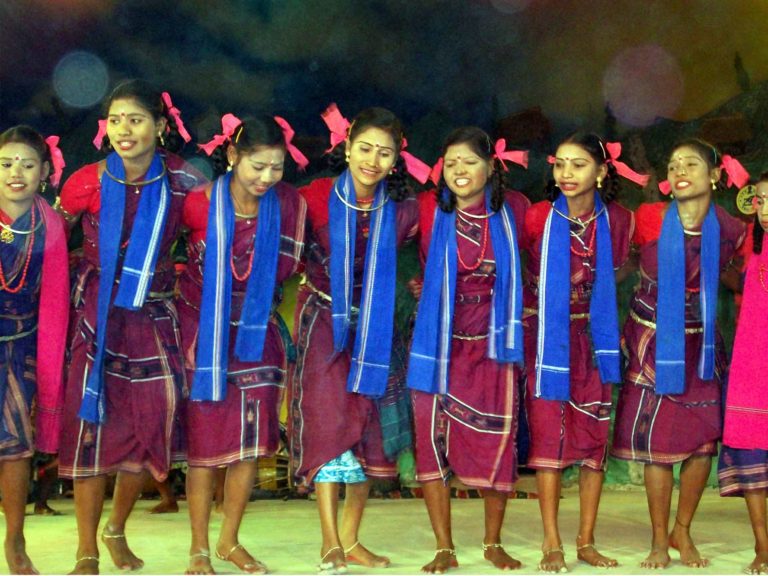
In the month of Aswina, on the Mahaastami day of Durga Puja, people of Western Orissa celebrate Bhai Juntia. A total fasting is observed by young girls and women for the entire day and night to seek the blessings of Goddess Durga for amelioration and long life of their brothers. In villages young girls usually dance in small groups during this celebration which is known as Dalkhai dance. Dalkhai is a ritual-based folk dance which is accompanied by several musical instruments as well.

Dalkhai is basically a folk deity. Her abode is known as Dalkhai kuthi. The name Dalkhai is derived from the name of the deity as the dance is performed in her name. In the past, people worshipped the jungle deity to protect themselves from the wild animals and other dangers. Afterwards the deity became synonymous with Durga or Bana Durga. Usually through this dance they pray for the general happiness of the family and the village as a whole.

On the Durga Astami day young girls assemble on the bank of a river or a pond to take bath. One of them brings seven palm-full of sands and built a small platform for worship, they put four mango leaf and place burning wicks on them. This ritual is repeated seven times as seven girls bring palm-full of water and follow the same ritual. Thereafter prayers are offered to goddess Dalkhai for the well-being of their brothers. This is followed by songs and dances, where all the people – young or old – participate with equal enthusiasm. Earlier during the dance, young girls and boys join together in a question answer session.

In the afternoon, at Pantibela, all the girls assemble near the Dalkhai Kuthi with their baskets containing sand and other materials for worship. Some of them get dressed like Parvati and Iswara, while the rest of them carry umbrella, a stick and a water jug (Kalsi). In a procession they move to seven houses and come back to the Dalkhai Kuthi. Inside the Dalkhai Kuthi they perform several acts of the mythology. One of them acts as Bhima and some other act as Kubera. Bhima brings paddy from Kubera and sows it in the field. Songs and dances enacting various scenes from the mythology are essential part of Dalkhai.

Returning home the girls prepare for further rituals. They prepare leaf cups containing piece of sugarcane, yellow thread called ita?, 108 pieces of duba (evergreen grass), 108 pieces of unbroken rice; along with it small branches of Amla and Dahana (a sweet smelling leaf), puffed rice and dhup are placed. Separate leaf cups are arranged for each brother.

After taking bath in the river bank they prepare platform for worship. Fruits like ladies finger, frankincense (Kunduru) etc. are placed as offerings to the goddess Dalkhai. Then they change their clothes and carry their baskets and assemble near the Dalkhai Kuthi. They collect seven clay statues of Parvati, Iswara, Ganesha, Tortoise and Bull are placed inside the Dalkhai Kuthi. The ritual starts with Dhunkel and Bharni beat of the dhol. It is often seen that a person becomes possessed by a spirit of one of the deities. The villagers ask several questions regarding the wellbeing of the village. The ritual then comes to an end.

On the ninth day, all the girls again assemble near the Dalkhai Kuthi. After collecting all the articles used for the ritual on the previous day, they move in a procession accompanied by drumming of dhol and nissan to seven houses and then to the river bank to immerse all the articles. After taking bath they return home, and the 108 dub, 108 rice and yellow thread are offered to their brothers. Till the end of the tenth day of Dasahara, they are engrossed in Dalkhai dance. The entire village plunges into an energetic mood by the intoxicating effect of the melodious song and dance.

Dalkhai is performed as a ritual, whereas dance and song remains its principal interest. The dancers stand in a semi-circular formation during the dance. One after another they sing a couplet and at the end of it they dance in a particular way by bending at the waist level and move their feet rhythmically accompanied by musical instruments.

During the song dhol is played and subsequently other musical instruments like Nishan, Tasha, Jhanj and Muhari are accompanied.

The songs are composed from couplets to sixteen lines. The singer begins the song uttering “Dalkahi Re, Dalkahi Re” (twice) and finishes the lines with another pronouncement of “Dalkahi Re”. Mostly the songs are of romantic themes. At times one can find the description of nature, seasons, gods and goddesses; sometimes satire and teasing also. The singers have to depend entirely on their memory while rendering the songs – presence of mind comes handy.

During rendering Dalkhai usually Raserkeli, Mailajada, Jaiphul are also rendered. The lyrical depiction of Rasarkeli, MaelaJada and Jaiphula may look similar with Dalkhai. However, the song and rhythm of drums has different beats and style.
No road to Bangali Sahi, Bhadrak

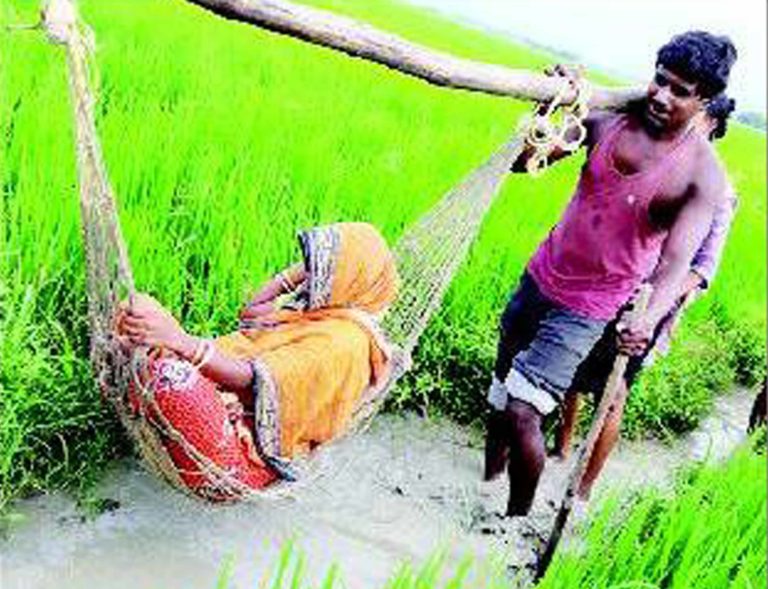
Bangali sahi village of Basudevpur block under Bhadrak district has no road. Patient, kids and pregnant women are carried by people up to 1 km mud road. Now a very bad thing has been found in the village. Sabita Mandal wife of Surjyamani Mandal was carried on by a bamboo made carrier up to one kilo meter.  Then she was carried to Basudevpur hospital.

As the village is not having any proper road, 11 families are facing severe trouble. Kids of the villages cross that troublesome road to attend their Anganwari, and school. The village has no government road. The road used by the villagers belongs to a villager.  They are using this road since more than last 80 years.

The villagers are regularly appealing at the administrations but they are deprived and ignored.

Children participates in special Gram Sabha

0

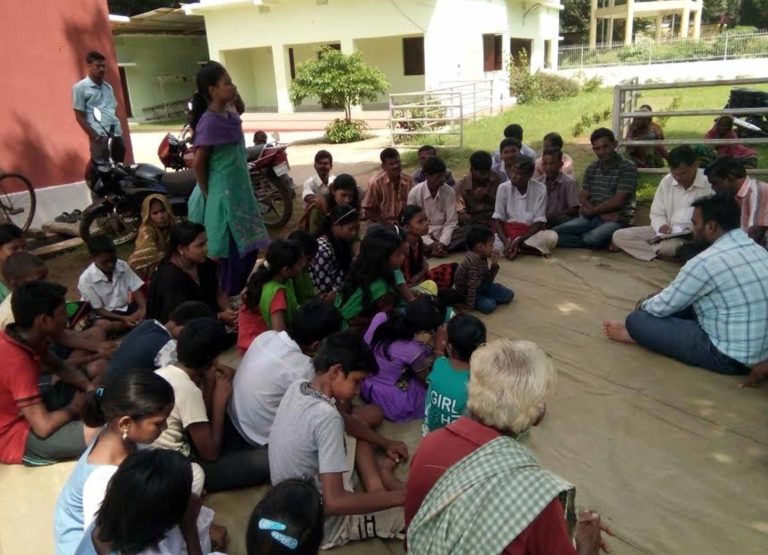
For the first time children’s officially participate in the gram sabha to discuss their issues, entitlements and rights on the occasion of ‘special gram sabha’ organised on 2nd October, 2016 here in Khandapada, the model child friendly constituency of Odisha. In the occasion of ‘Gandhi Jayanti’ the special gram sabha has been organised across the country to promote and ensure people’s participation in the development of their village. Children here in Khandapda didn’t miss the opportunity to keep their demands in front of the people and their representatives.


The members of ‘children and adolescent collectives’ in Benagadia, Ranipada, Jogiapalli, Ranichhelli and Banamalipur, gram panchayats of Khandapada block participated and presented a  ‘GP fact sheet’ contains issues related to five child development programmes like anganwadi centre (integrated child development scheme), integrated child protection scheme (ICPS) , education (SSA), health (NHM) and sanitation (SBM-G). They highlighted major issues related to poor infrastructure available in their schools like boundary wall that protect from all kinds of external dangers, non-availability of water in the toilet discourages to usage of the same, an attached kitchen make smoke environment and poor availability of sport equipments, books for library and equipments for the laboratory make their reading miserable.


Most of the anganwadi centres (child care centre under ICDS) don’t have own building, so children lack space to read, play and dine and also there are no space for toilet and kitchen. Along with they raised the insufficient and poor quality of nutritional food given in the AWCs. Most importantly children raised the issues of child marriage prevalent in their areas and also issues of child labour, school dropout and also the gender disparity where child sex ratio is alarming and female foeticide a way to gender inequality.


Open defecation in these gram panchayats are pervasiveness due to only 20-25% coverage of Swachha Bharat Mission-Gramin toilets which is also worrisome and affects the health consequences of families. They also highlighted facilities for children in health care institutions and coverage of regular immunisation to remote locations in the constituency.

In these historic moments children, people of the gram panchayat and their representatives feel happy to get children onboard to work on their rights and ensure their participation in decision making at the grass root. In most of the gram panchayats the elected representatives received the agenda prepared/ by the children and listened to the genuine demands by the children on the issues. On an important move in Jogiapalli and Benagadia Gram Panchayat the ‘gram sabha’ passed resolution to construct school boundary, provide pipe water connection to school, and immediate construction of toilets remain households under SBM-G. In Ranichheli gram panchayat the gram sabha resolved for a regular debate on children’s issues and resolve those one by one.


Youth for Social Development (YSD) has been working to make Khandapada a child friendly constituency since 2015 with the support from UNICEF and district administration Nayagarh under the guidance of Khandapada MLA Sri. Anubhav Pattnaik. More than 4204 children in 40 gram panchayats organised 125 ‘children and adolescent collectives’ to make their identity as a citizen and voices heard in all decision making that affects them. Aasha, a local NGO support for the ground work and Kalinga Kusum Foundation shared role as a dissemination partner to this initiative.

Admission closed in Sambalpur Homeopathy College

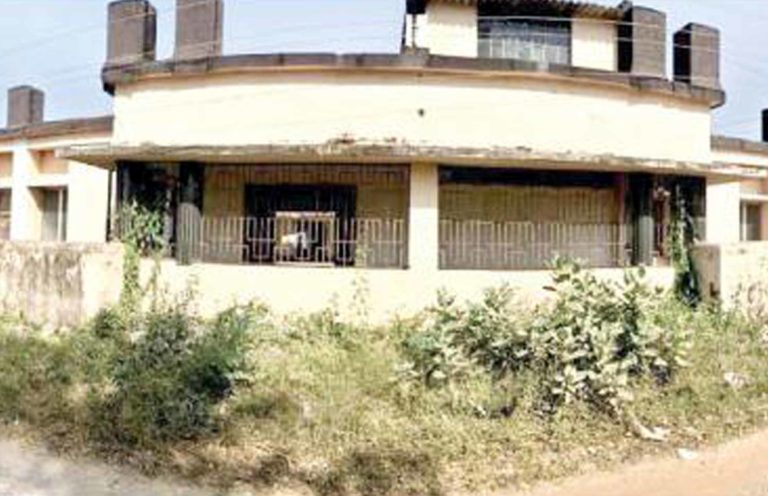
Admission from the session 2016-17 has been stopped at Homeopathy College Sambalpur. The Homeopathy College situated at Majhipali, Sambalpur is in bad condition.  The Central Council of Homeopathy (CCH) has written letter to the college authority to stop admission from the season 2016-2017.  The CCH has mentioned that if the vacant post of professors and problem of infrastructure is not diffused then admission will be stopped.

A survey was conducted in 2014, and considering the report of the survey the Central Government has ordered to the CCH to stop admission from 2016-2017. The CCH has forwarded the message to the college authority.

A few years ago the college authority had written to the State government to appoint teaching posts for the college. But the state government has not taken any appropriate step to diffuse it.  Rather the state government is silently watching the degradation of this institution. All the 15 sanctioned teaching posts of the college are lying vacant.   The OPSC has stopped recruiting teaching post for the college since last 10 years.  The government is arguing that due to unavailable of post graduate candidates; the recruitment process has been stopped. To avoid financial stress, the government is not filling up the teaching post of the homeopathy colleges in the state including Sambalpur.

There are 24 professors, 55 readers, and 35 lectures posts are lying vacant in 4 homeopathy colleges of the state. The Rourkela Homeopathy College is also facing the same problem and received same type of letter to stop admission from this session.

The Sambalpur College has no SMO room, no Registration room, no room for doctors and nurses, and no green room for surgery, no recovery room, no labour room, no Surgeon room, no Psychotherapy room, and no separate room for yoga.

Apart from the above the generator purchased for the college is defunct.  The computer laboratory is also not in use. Computers are available but other facilities are not available.  The students have also complaint about water scarcity in the campus.

Teaching posts lying vacant in Anchal College Padampur

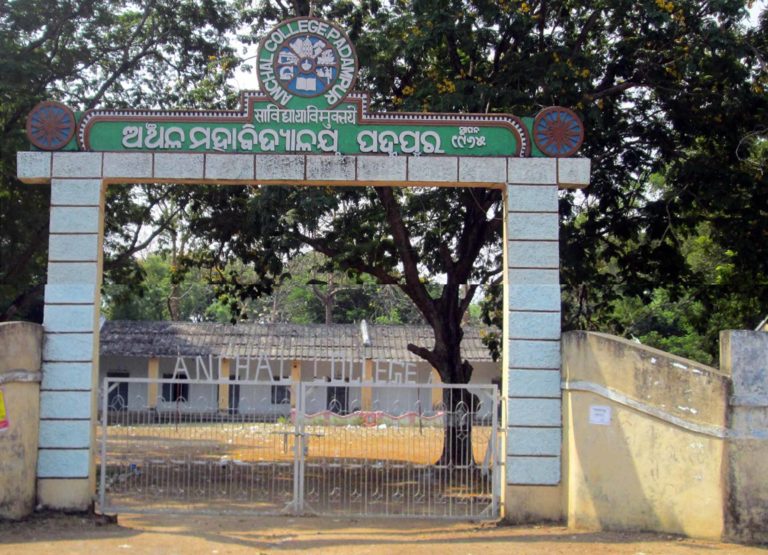
Teaching posts are lying vacant in Anchal College Padamapur.  The college is facing many problems along with shortage of teaching posts and class rooms.

Anchal College Padampur was established in 1965 to cater education to students of the region.  But the college has failed to provide the service it is meant for.  Many teaching posts are lying vacant in the +2 and +3 colleges. There are only 14 professors out of 43 sanctioned professor posts.  English, Mathematics, and Psychology departments are running without any pedagogue.  Political Science, Education, Physics, Chemistry, and Botany are having one lecturer each.  The college authority is managing the college with contract lecturers now.

The college is also facing problems with infrastructure. Many a class rooms are in dilapidated conditions. There are 1025 students in +2 college and 1072 students in +3 colleges.  But the college lack class rooms for the numbers of student.  In many class rooms the concrete of the sealing is damaged, in few water is dropping from sealing.

The principal of the college Sri Prabhulal Dash says, due to lack of political will power the college is facing such problems.  He has already informed the higher authorities regarding the problems of the college but the higher authorities are not taking any steps regarding the same.  The college is preparing for the celebration of Golden Jubilee.

BSNL down with corruption

The services of Bharat Sanchar Nigam Limited (BSNL) are very poor since last few months. The government telecom and broadband service provider’s respond to its consumer is also very poor. It is the largest provider of landline and broadband service in India. Especially BSNL has a strong network in rural Odisha. BSNL broadband has no alternate in Odisha though there are many private players in the market. But unfortunately due to irresponsible and unprofessional management the largest telecom network’s credibility is in question.

The service of BSNL broadband is annoying its customer since last few months. It is going down and there is no effective management to restore the service. Customers are opting for other available services like AirTel etc. We investigated about it.

The AGM of Bargarh says, in Sambalpur Telecom circle, total 10 telephone exchanges are not functioning properly since last June. Out of the 10 telephone exchanges 3 are from Bargarh district and remaining 7 are from Sambalpur and Deogarh. In Bargarh, Gaisilat, Katapali and Jharbandh exchanges are defunct due to damage of ARC card. The ARC card of the motherboard has got damaged in these exchanges. According to the AGM, they have sent those to Bhubaneswar for repairing. Now 4 months have passed but the ARC cards have not been repaired and fixed. Due to this technical problem, landlines are totally not functioning. The broadband service is partially functioning but sometime it is not available for many days. The connectivity problem is persistently irritating the consumers. Apart from this, the speed of the broadband has also decreased.

Further, the AGM was inquired about when the service will be restored and he says, it will be fixed within 7 days. But 15 days have passed and yet the services are not available. We further contacted the SDO Padampur and he informed us very contradictory way that the AGM is not reliable. Again we talked with some other low level workers in BSNL, they say, the senior officers at Sambalpur and Bhubneswar are knowingly doing this. They are taking bribe from the private players and responsible for the down of BSNL.

In the mean time the Government of India has announced many lucrative plans for the customer to compete the private players in the market but all are in the vein due to corruption.

75000 students haven’t learn letters in 3 blocks

A survey was conducted in Turekela, Muribahal and Bangomunda blocks of Balangir district to find out the basic knowledge of the student from class one to class eighth.  The survey was conducted to find out how many students donot know A to Z letters of English alphabet, counting from 1 to 100, and letters of Odia from “A” to “Kshya”.

In the survey conducted in Turekela block it is reported that around 25000 students have no knowledge of letters out of total 35000 students of the block but the education department is hiding the information and saying only 5000 students haven’t learn the letters.

Same situation is prevailing in Muribahal and Bangomunda.  About 1 lakh 5 thousands students in 3 blocks have no knowledge of letters and numbers.  The teachers of these students have been instructed to teach at least the letters and numbers to these students since August.   But the teachers are complaining that this programmee should be conducted in the summer vacation in April. Now regular classes are going on and in this scenario it is not possible to conduct any special classes for these students.  Now the teachers are in panic. When they will teach them letters and when the students will learn the course according to the syllabus.

The books published by the Department according to the Sarba Sikhya Abhijan are full with errors. The Sarba Sikhya Yojana started in 1997 and in the last 19 years, the syllabus has been changed 10 times.  Though the syllabuses have been changed 10 times yet there are errors. Even the NCERT of Delhi conducted training for group of teachers from Odisha. But still there is no change in the books. And so students have failed to learn the letters.

Only 50 rich in Western Odisha

Only 50 super rich people have been identified in western Odisha. The income tax circle constituted with all the ten districts surprisingly has only 50 super rich people. The income tax department leveled super rich to all those people who have earning of more than 50 lakh per annum. According to a report published by the income tax department this super rich category consist 24 industries of western Odisha.

The income Tax Department has notified to declare income according to the new income plan and pay the taxes till September 30th.

As per the sources, in the whole country, around 1.5 lakh persons are earning more than 50 lakhs which is quite surprising.

In the Sambalpur circle, industrial district like Jharsuguda and Deogarh are there. Balangir and Bargarh too have a few big industries.

There are 23 thousands 468 income tax payers in the first range of the Sambalpur circle. 654 income tax payers from these have shown their income more than 10 lakhs. 12 IT payers have shown their income more than 50 lakhs. In this range, number of corporate tax payers are 173. 109 organistaion have annual income of more than 10 lakh.  13 organisations have annual income of more than 50 lakhs. In this range, part of Sambalpur, and part of Jharsuguda and Sudergarh are there.

In the 2nd range numbers of income tax payers are less.  In this range numbers of non-corporate tax payers is 21,336. Out of this 468 tax payers have more than 10 lakh. 14 people have more than 50 lakh annual incomes. In the industrial category,   119 organisations are paying taxes. Out of the 119 organisations, 73 organisations have more than 10 lakh incomes. Only 11 organisations have shown their income more than 50 lakhs in this range. This range consist of Part of Sambalpur, Burla, Hirakud, Rourkela, Balangir and Bargarh. It is a doubtful report that how such less numbers of tax payers under the rich category of more than 50 lakhs are there. The income tax commissioner has coordinated a meeting of rich IT payers and requested them to declare their assets truthfully.

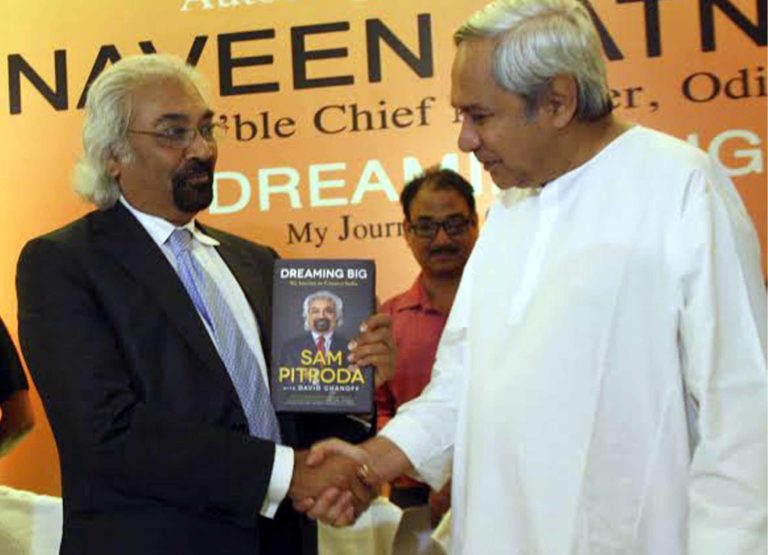
Dr. Sam Pitroda exposed through RTI

Amidst huge propaganda and media hype, Dr. Sam Pitroda was appointed as Technology Advisor with Cabinet Minister status in January 2016. The State Government left no stone unturned taking credit by appointing Dr. Pitroda, a man of international repute, as Technology Advisor. It  generated  much enthusiasm  and expectation   among  different  section of the people believing  that   his expertise  and long  experience  in the field of communication and IT  will give a lot of benefit to the state.   Out of curiosity  to know  about  his performance  and  contribution  in the field of IT  for the state  since last eight months, one Pradip Pradhan has filed two RTI Application to the Department of  Electronics and Information Technology seeking information about   details of appointment, Terms of Reference with Dr. Pitroda  and   any report/ advice  given by him to State Government etc. The details of information provided by the PIO on 19.8.2016 and  26.9.16  is as follows:

  1. The Justification given by the State Government in respect of Dr. Pitroda’s appointment as Technology Advisor is that In view of his domain expertise and long association  in the field  of communication and IT, the State Govt.  took  this decision  as it  will be beneficial  for the state  (  reference-  copy of file noting).


  1. Terms of Reference signed with Dr. Pitroda are as follows:
  2. He has been appointed for three years and will be extended subsequently.
  3. He will advise the Government for formulation of the strategies and policies to be adopted for development of IT/IES/ESDM sector in the state.
  4. He will review the progress achieved in development of IT sector in the state.
  5. Resource on advocacy to attract national and foreign investment shall be considered by Government of Odisha.
  6. No salary, insurance and remuneration  shall be paid  to Sri Pitroda  during his period of  service
  7. The expenses  towards  travel and  accommodation  for his visit  to Odisha  from New Delhi  shall be borne  by Government of Odisha
  8. On query  about  any  report  or document produced  by Dr. Pitroda,  the PIO  has  provided  just a copy of power point presentation ( 15 slide) about  his proposed programme  which was  made  in January  at the time of his appointment.  Within last 8 months, Dr. Pitroda has not provided any report to the State Govt. about his intervention or work assigned as per TOR.
  9. Dr. Pitroda has not visited Odisha since his joining as Technology Advisor.  That’s why he has not produced his travel Bill for reimbursement.

Comments


  1. Dr. Pitroda might be satisfied with cabinet minister status and getting benefit using   this status without contributing anything for our beloved state within 8 months.
  2. It will be advisable   on part of State Government to fix remuneration and price for him against the work assigned to him as per the TOR. So that accountability will be fixed and the State Government can monitor his performance.
  3. If this practice continues, it will no way give any benefit to the IT sector of the state.


Pradip Pradhan

Mob: 9937843482

Nuakhai: festival of worship of food grain

0

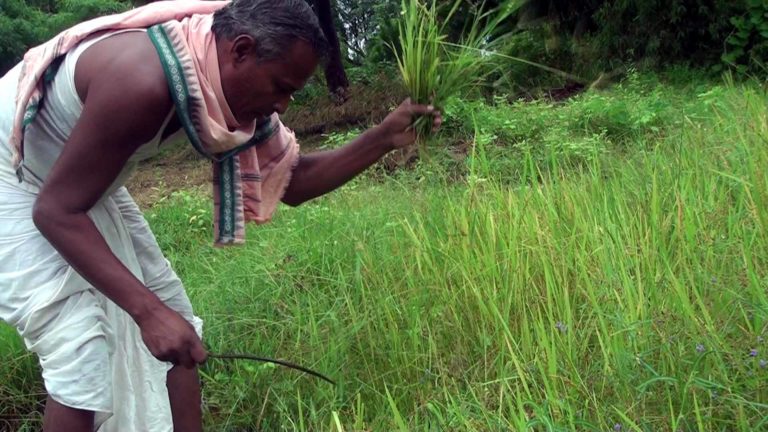
Nuakhai/Nuankhai/Nuankhei is the festival of worship of food grain involving cutting of the first crop and reverent offering of the same to the mother goddess. The literary meaning of Nuankhai celebration is ‘eating of new rice’. It is an agrarian festival.

Generally Nuankahi is celebrated on the Panchami Tithi of Krishna Paksha of Bhadrav month of Hindu calendar. People starts preparing for the celebration of Nuankhai before a fortnight. The preparation includes cleaning houses (lipa pucha) and buying of new clothes.

lipa
Cleaning house before the festival

The people of western Odisha prepares special sweets from rice powder like Mada (sandwhich), and sweet cake like Aersha etc before one day.

chuna
preparing rice powder called Chuna
Mada
sandwhich and cakes prepared from Chuna (rice powder)

On the day of Nuankhai, early in the morning people worship the cattle, and equipments, tools, machines and all helpful aides relating to farming, showing obligation towards them. Afterwards follows ritualistic puja for the local deities. For example, the Kuilta caste people perform puja at the handisal for kalapat, kumptipat etc; and they use mahul leaf plate ( khali ) and leaf cup (dana) to serve food and other purpose.

puja
worship place

Nuanchara (new food) is eaten in different leaves by people of different castes. After the ritualistic puja at their presiding deities, all the family members sit together and eat the nuanchara and take the blessings of elders. After eating the nuanchara, the younger member of the family took blessings of the elders doing Juhar.

The non-resident person of western Odisha residing in different metro cities and out of the country also celebrates Nunakhai organizing get-together. That is called Nuankhai Bhetghat.

Recently Nuakhai has got national attention. This year it was trending in twitter and even the Prime Minister of India including several cabinet ministers and Chief Ministers of other states along with the Chief Mnister of Odisha have extended their wishes on Nuakhai to the people.

pm
message of the Prime Minister and worldwide trend in twitter


Nuankhai in other Tribes

According to various researchers, evidences can be found of Nuankhai been observed more or less by the entire major tribes in central and eastern India, of course, with a minor difference in their nomenclature. In this context, instances can be given of Jeth Nawakhai among the Dudh Kharia and Pahari Kharia, Nawakhani amongst the Oraon and Birjia, Jom Nawa among the Munda and Birjia,Janther or Baihar-Horo Nawai by the Santal, Gondli Nawakhani by the tribal people of Ranchi district, Nawa by the Birjia, Nawa-Jom by the Birhor, Dhan Nawakhani by Korwa and so on.

Also, researchers have mentioned about the Nawakhani festival of the Paraja, a small tribe found in the Bastar region and Odisha. Santals in Santal Pargana term it as Jom Nawa. Also there are evidences that Nuakhai is also celebrated in Tripura and named as Mikatal where Mi stands for paddy and Katal refers to new.


Saket Sreebhushan Sahu

saket.sahu@gmail.com