Monday, May 18, 2026
Home Blog Page 4

Study Debunks Claims of Alcohol’s Benefits

0

Dr Saheb Sahu, FAAP, MPH. 

Drinking a small amount of strong alcohol here and there probably won’t kill you. But it won’t help you live longer either.

 According to a study published in the JAMA (Journal of American Medical Association) Network open on March, 31st, 2023, researchers set out to make sense of years of conflicting evidence on alcohol’s effect on health. The researchers analyzed 107 studies on the effect of alcoholic nearly five million (fifty lakhs) people. The findings of the study were as follows:

  1. They found that no amount of alcohol consumption led to longer life than among people who never drank.
  2. People who drank 45 grams (about 45ml) of alcohol or more a day (about 3 glasses of wine) increased their risk of dying sooner by about 33 percent. Among women, anything more than 25 grams (more than 2 glasses of wine) increased their risk of dying sooner by about 25 percent.
  3. For men who drink 3-5 drinks a day, their mortality increases by 15-25 percent and those who drink 5 or more drinks a day by 30-35 percent. For women who drink 2-3 drinks a day, their mortality increases by 20-30percent, with 3-5 drinks 20-40 percent and 5 or more drinks a day by 45-80 percent.
  4. The findings suggest that the average man can drink up to about 3 drinks a day and expect to live as long as non-drinkers. For women it is two drinks a day. They may not die early but they will likely to have other problems.

Conclusions:

Alcohol consumption is linked to more than 200 diseases like, high blood pressure, heart disease, stroke, liver disease, many digestive problems, cancer of the breast, mouth, throat, voice box, esophagus (food pipe), liver, pancreas, colon and rectum and many more, death from accidents and suicides. This new study joins a large body of evidence that alcohol consumption does more harm than good. Many of the older studies which had touted the benefits of moderate drinking were found to be faulty. The message from all public health authorities are clear, if you are drinking now, quit, and if you cannot quit, if you are a man limit your drink to 2-3 drinks a day and if you are a woman, limit to 1-2 drinks a day.

 Sources-1- Jamanetwork.com/March 31, 2023. 2- The Wall Street Journal, 4-1-23 p.A1, A6

Prediabetes

0

Dr Saheb Sahu, FAAP, MPH

Type 2 diabetes does not always arrive with a bang. It can develop slowly but eventually lead to side effects and complications if not well managed. When the body fails to properly make or use the hormone insulin, blood sugar rises, and sustained levels can damage organs from the heart to the kidneys. Common symptoms of type 2 diabetes include: frequent urination, increased thirst and hunger, fatigue, blurred vision, slow healing of cuts and infections, tingling pain or numbness in hands or feet. Long term complications include higher risk of heart attack, high blood pressure, stroke, kidney and eye damage and bacterial or fungal infections.

Indian Context

As of recent estimates, over 77 million people in India have type 2 diabetes. A significant number of people in India with diabetes remain undiagnosed. It is estimated that this number will reach 125 million by 2045. According to recent studies, approximately 70 million people in India are estimated to have prediabetes. Because of poor public health service and recordkeeping, the real number is hard to know.  Because of recent lifestyle changes in India, the number of people with diabetes is increasing.

Prediabetes

Prediabetes is a condition where blood sugar levels are higher than normal but not high enough to be diagnosed as diabetes.

 Blood sugar or Hemoglobin A1C levels

Normal – Fasting blood sugar level less than 100 mg /dl or A1C – less than 5.6%

Prediabetes – Fasting blood sugar= 100-125mg/dl or A1C=5.7 to 6.4%.

Diabetes – Fasting blood sugar above 126mg/dl or A1C more than 6.5%.

 Prediabetes usually has no noticeable symptoms, but some people may experience increased thirst, frequent urination or darken areas of skin, often under the armpits, elbow or in the neck.

Risk Factors

  • Being overweight, especially excessive belly fat = waist circumference (WC) morethan 78 cm for Indian men and more than 72cm for women.
  • Family history of diabetes
  • A sedentary lifestyle
  • An unhealthy diet
  • Age over 45
  • Ethnic background – Asians, Africans, Hispanic and Pacific Islander

Prevention and Management

80 % of the people in USA with prediabetes do not know that they have it. This number will be more than 95% in India. People with prediabetes become diabetic 70% of the time, if they do not make necessary lifestyle changes. The good news is, with lifestyle changes this percentage can be significantly reduced.

Preventive majors that can be taken are:

1- Weight loss– Research suggest that people with prediabetes who lose at least 7% of their body weight, improve their chance of insulin functions and not developing diabetes by almost 60%.

Newer anti-obesity drugs (GLP-1) such as Wegovy, Ozempic, Mounjaro and Saxenda are helping people lose weight. Right now these drugs are quite expensive. These drugs are not specifically approved for diabetes, but recent research suggests that they will cut the diabetic risk by more than 90%.

2- Regular Physical Activity- Regular physical activities help in weight control. They boosts metabolism, reduce blood sugar levels, reduce inflammation, and lower the risk of high blood pressure and heart disease. Physical activities should include 150 minutes of moderate aerobic (walking, running, swimming) exercise per week and at least two days a week of muscle strengthening exercise.

3- A Heart Healthy Diet- For everybody, a balanced, nutrient rich diet can help regulate blood sugar levels, improve insulin sensitivity and support weight control. A healthy diet should consist of whole grains (brown rice and whole wheat), legumes and beans, fish and shrimps, some eggs, low fat dairy products, all kinds of colorful vegetables and fruits. Limit saturated fats, sweets, sugary drinks and ultra-processed foods. Control your portion size.

Conclusion

If you have the risk of developing prediabetes, and are above the age of 40, taking proactive steps now will help you to prevent or delay the onset of type 2 diabetes. Type 2 diabetes is a bad disease. It is a chronic disease which affects multiple organs. You should do everything in your power to prevent it.  Get a fasting blood sugar or A1C done now. If the tests show that you are prediabetic, make the necessary lifestyle changes now. Studies have shown that 60 to 70% of people with prediabetes can prevent or significantly delay the progression to type 2 diabetes by above mentioned lifestyle changes.

 Programs like the Diabetes Prevention Program (DPP) in US demonstrated that losing just 5-7% of body weight and engaging in 150 minutes of physical activities per week can reduce the risk of developing diabetes about 58% over three years. For individuals over the age of 60, the risk reduction was even higher, around 71%.

Sources:

  • CDC.Gov/ Diabetes Prevention Program
  • Chat-GPT

The Way to Wealth | Dr Saheb Sahu

0


‘The Way to Wealth” is an essay by Benjamin Franklin, first published in America in 1758. Compiled from Franklin’s Poor Richard Almanack, the essay draws together his wit, wisdom, and practical observations on wealth-building, offering a roadmap to financial security and independence that resonate across generations.

 I am the youngest of three sons, of farmer parents, who farmed about 5 acres of non-irrigated land, in the district of Bargarh, in the state of Odisha, India. I was a good and hardworking student throughout my student days. My education was financed by our parents, both of my elder brothers, and merit scholarship from 5th grade through medical college. I also obtained student loan from government of Odisha, during my four and half years of medical college in New Delhi. After graduating from AIIMS (New Delhi) in 1969, I came to the United States for further medical training in June 1970 with eight dollars and stayed. While in India, I had no knowledge about money management (there was never any surplus money to manage) or stock market investment. While I was a pediatric intern in USA, I subscribed to a free (free to doctors and medical students) magazine titled “Medical Economics”. The main aim of the monthly magazine was to educate doctors and medical students about finance, bank loan, life and disability insurance, and practice management. That was the beginning of my financial education which continues till today. This article is a brief summary of my understanding of “The Way to Wealth”.

1- Invest in Yourself

 Invest in someone you know yourself. Get the maximum education you can get in the field of your choosing. Multiple studies have shown that in general, people with higher level of education, have higher amount of life time earnings than people with lesser degree of education. Students who graduate in STEM fields (Science, Technology, Engineering and Math) have better job opportunities and higher amount of life time earning than students who graduate in liberal arts (English, Social Sciences etc.). While in your present job continue to learn newer skills which can lead you to promotions and higher salary.

 Studies have shown that in general, educated people smoke and drink less, eat a healthier diet, exercise more, can afford better healthcare and live a longer and happier life.

2- Live Within Your Means

Income and Happiness

“Annual income twenty pounds,

Annual expenditure nineteen nineteen and six,

Result happiness.

 Annual income twenty pounds,

 Annual expenditure twenty pounds ought and six,

 Result misery.

  • Charles Dickens, David Copperfield.( 1849)

This is one of my favorite quotations on debt and happiness.  Live within your means. Do not gamble, do not womanize, and do not do drugs including alcohol. If you do, ultimately you will be on the street. There is an old German saying; “young gambler, old beggar.”

3- Learn About Money Management

Educate yourself about money management and keep learning. Delay getting married and having children until you have financial stability. Know the difference between “need” and “want”. Avoid credit cards debts. They come with very high interest if you do not pay them on time. Save at least 10-15 % of your income every month. Build an emergency fund to cover 6-12 months of your living expenses, in case you get laid off or you plan to change job. Fully match your employer’s retirement plan. Make it auto deduction from your salary. Invest your retirement and other savings in an index fund. Take advantage of various government saving plans and minimize your taxes.

4- Insurance

Insurance is an effective tool in reducing unforeseen financial risks. Buy health (if your employer does not provide it), disability, property and liability insurance (for auto, home, apartment). Buy term life insurance if you have family to support. Disability insurance is more important than life insurance. Your chance of being disable is many times more than your chance of dying. The insurance policy should be guaranteedrenewable policy feature. A guaranteed renewable policy is an insurance policy feature that ensures that an insurer is obligated to continue coverage as long as premiums are paid on the policy.

5- The Magic of Compounding

‘The most powerful force in the universe is compound interest.”—Albert Einstein

In simple term, compound interest means you earn interest not only on the initial amount invested (principal) but also on the interest that accumulates every month. This compounding effect creates exponential growth. For example, as a new parent you invest $1000.0( or 1000 rupees) in an index fund to pay for your child college education and the index fund  grows by 10% a year, at age 18, the value will be $5,560 (or rupees). Now you assume that, you do not withdraw the money and keep it invested until his retirement at age 65. The value of the original $1000.0 onetime investment will be $490,371, or nearly a half a million dollars (or rupees). The moral of the example is; when saving for retirement, start early, do not withdraw the gain or interest and let it compound.

Know the Rule of 72

No of years it takes to double the principal amount = 72/ annual interest rate

 For example; If you invested $1000(or rupees) and earn a return of 8% a year, your money will double to $2000 in (72/8) 9 years.

6- Where to Invest

“A low cost index fund is the most sensible equity (stock) investment for the great majority of investors.”—Warren Buffett (considered to be one of the great investors of all time).

 Multiple academic studies have concluded that in the long run, you will be better off investing in a low cost index funds than buying hot shot individual stock.

What is an Index Fund?

 John Bogle (1929 – 2019), the late chairman of the Vanguard Group is widely regarded as the ‘father of index fund’. He made it available to public in 1976. The academic foundation for the index fund was laid in 1960s by economists Paul Samuelson and Eugene Fama.

An index fund is a type of investment fund, often structured as a mutual fund or an exchange –traded fund (ETF), that aims to mirror the performance of a specific market index, like the S&P 500( New York stock exchange) or Nifty 50 or Nifty 100( India’s Sensex index). Instead of being actively managed by a fund manager picking individual stock and charging high fee, an index fund passively holds a portfolio of stocks or bonds that closely matches the components of its target index. The key advantages of an index funds are: great diversification, low cost and superior long-term returns. The index fund eliminates the risks of individual stock and selection biases of mutual fund manager. However, the stock market risks remains. If the general overall market goes up, the value of the index fund will go up and if the overall market goes down, the value of the index fund will go down.

 The annualized return of Nifty 50 index in India, over the past 20 years has been 16%. and S&P 500 index (USA) has been 14%.

7- Honor Your Financial Commitment

Honoring financial commitments is a fundamental aspect of personal responsibility. Financial commitments range from paying bills on time, repaying your debts to your family and friends, banks or credit card companies or local vendors. Not paying your debts to your bank or credit card companies will affect your credit score. Higher the credit score lower the interest rate for the borrower. Try to pay all your debts on time.

8 – Help Others Financially If You Can

Whether financially helping loved ones, contributing to charitable causes or investing in community projects, is our moral responsibility. Financially helping others, not only benefit the recipient, it also provides personal fulfillment and happiness to the giver. The Bible says: “To whom much is given, much is expected”. (Luke 12:48). It means, individuals who have benefited from privileges such as supportive family, quality education, or career success, should “pay it forward” by helping others in similar ways. This might include financial help like scholarship or mentoring.

Conclusion

To conclude, get the maximum education you can get, be a lifelong learner, be financially educated, live within your means, save minimum of 10-15 % of your income, have an emergency fund, have proper insurances appropriate for your individual situation, invest your retirement money and surpluses in a low –cost index fund. Resist the temptation of buying individual stock. Keep in mind that any investment that seems too good to be true is likely to be a fraud.  Make yourself financially solid and help your loved ones and others if you can.

Sources:

1- John C. Bogle. The Little Book of Common Sense Investing. 10TH Ed. Wiley, New York; 2017

2- Www. bogleheads.org

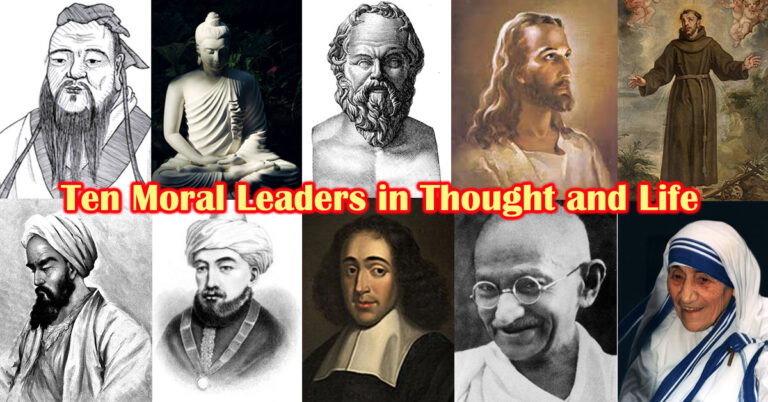
Ten Moral Leaders: Jesus

0

Dr Saheb Sahu

Jesus (c4BC-30 or 33CE), also referred to as Jesus Christ or Jesus of Nazareth is the central figure of Christianity. Did Jesus exist? Virtually all modern scholars of antiquity agree that Jesus existed historically. Jesus was a Galilean Jew who was baptized by John the Baptist, began his own ministry, and was referred to as “rabbi” (a Jewish scholar or teacher). Jesus debated with fellow Jews on how to best follow God, engaged in healing, taught in parables, and gathered followers.

 He was arrested and tried by Jewish authorities, turned over to the Roman government, and crucified on the order of Pontius Pilate, the Roman prefect of Jerusalem. After his death, his followers believed he rose from the dead, and the community they formed eventually became the early Christian Church. Accounts of his teachings and life were initially conserved by oral transmission, which was the source of the written Gospels in the Christian Bible. The word “Gospel” means “good news” or “good telling”. There are four Gospels in the New Testament-Mathew, Mark, Luke, and John. The four Gospels tell the story of Jesus with slight variations.

Teachings of Jesus

Jesus taught with simplicity, required by his audiences, with interesting stories, with similes and metaphors. The parables form that he used was customary in the East. Some of his sayings are obscure, some are sharp with sarcasm and bitterness; nearly all of them are models of brevity, clarity, and force.

 The Kingdom of Heaven was at hand he said; soon God would put an end to the reign of wickedness on earth. What did he meant by Kingdom? Many have interpreted the Kingdom as a communist utopia, and seen in Jesus a social revolutionist. The Gospels provide some evidence for this view. Jesus scorned the man whose chief purpose in life is to mass money and luxuries. He promised hunger and woe to the rich and comforted the poor with Beatitudes (the blessings listed by Jesus in the Sermon on the Mount) that pledged them the Kingdom. To the rich youth who asked what he should so besides keeping the commandments, Jesus answered: “Sell your property, give your money to the poor and … follow me”.

Jesus does not seem to have thought of ending poverty; “the poor ye have always with you”. He takes for granted, like all the people of the era, that a slave’s duty is to serve his master well. He is not concerned to attack existing political or economic institution. The revolution he sought was a far deeper one. If he could cleanse the human heart of selfish desire, cruelty, lust, utopia would come of itself and the consequent need for law would disappear. Jesus was in this sense the greatest revolutionist in history (Durant).

 His achievement lay not in a new state, but outlining an ideal morality. Hence the Beatitudes, with their unprecedented exaltation of humility, poverty, gentleness, and peace; the counsel to turn the other cheek, be as little children; the indifference to economic provision, property, government; the preference of celibacy to marriage; the command to abandon all family ties. It was an ethics limited in purpose but universal in scope. It applied the conception of brotherhood and the Golden Rule to foreigners and enemies as to neighbors and friends.

 Were these moral ideas new? Nothing is new except the arrangements, says Durant. All of Jesus’s ideas came from Jewish teachings. ‘Thou shalt love thy neighbor as thyself” said Leviticus (a book in Jewish Torah). Hillel (a Jewish rabbi) like Confucius had phrased the Golden Rule. Nonetheless, Jesus transformed everything by the force of his character and his feelings (Durant).

The Beatitudes (the statement of Blessedness) also Known as Sermon on the Mount)

Now when he saw the crowds, he went up on a mountainside and sat down. His disciples came to Him, and He began to teach them, saying:

Blessed are the poor in spirit, for theirs is the kingdom of heaven.

Blessed are those who mourn, for they will be comforted.

Blessed are the meek, for they will inherit the earth.

Blessed are those who hunger and thirst after righteousness,

For they will be filled.

Blessed are the merciful, for they shall be shown mercy.

Blessed are the pure in heart, for they will see God.

Blessed are the peacemakers, for they will be called the sons of God.

Blessed are those who are persecuted because of righteousness, for theirs is the kingdom of heaven.

Blessed are you when people insult you, persecute you and falsely say all kinds of evil against you because of me. 12Rejoice and be glad, because great is your reward in heaven, for in the same way they persecuted the prophets who were before you.

                                                  Mathew, 5:1-12

Love for Enemies

“You have heard that it was said, “You shall love your neighbor and hate your enemy. But I say to you, Love your enemies and pray for those who persecute you, so that you may be children of your Father in heaven…”

Mathew, 5:43-45

Serving Two Masters

“No one can serve two masters; for a slave will either hate one and love the other, or be devoted to one and despise the other. You cannot serve God and wealth”.

                                                   Mathew6:24

Judging Others

“Do not judge, so that you may not be judged”.

                                                   Mathew7:1

The Golden Rule

“In everything you do to others as you would have them do to you; for this the law and the prophets”.

                                                   Mathew7:12

Sources

Will Durant. The Story of Civilization, Vol-111, Caesar and Christ. Simon and Schuster, New York: 1944

2-The Holy Bible, New Revised Standard Version. Holman Bible Publishers. Nashville, Tennessee: 1989

Ten Moral Leaders: Socrates Dr Saheb Sahu

0

Socrates (c. 470–399 BC) was a Greek philosopher from Athens who is credited as the founder of Western philosophy and ethical tradition. An enigmatic figure, Socrates authored no texts and is known mainly through the posthumous accounts of classical writers, particularly his students Plato and Xenophon. These accounts are written as dialogues. Plato’s dialogues are among the most comprehensive accounts of Socrates to survive from antiquity. The Socrates’s method of questioning, takes shape in dialogues using short questions and answers.

Socrates exerted a strong influence on later philosophers and has continued to do so in the modern era. He was studied by medieval and Islamic scholars and played an important role in the thought of Italian Renaissance, particularly in the humanist movement. Depictions of Socrates in art, literature, and popular culture have made him a widely known figure in the West.

 Socrates was born in 470 or 469 B.C. to a stone worker and a midwife. He inherited his father’s estate, securing a life reasonably free of financial concerns. He learned the basic skills of reading and writing, poetry and music, like most wealthy Athenians. He was married thrice and had three sons. He made a reputation for himself as soldier during the Peloponnese war. He was indifferent to material pleasures, including his own appearance and comfort. He walked barefoot and owned only one ragged coat. He moderated his eating, drinking, and sex, although he did not practiced full abstention.

 Socrates died in Athens in 399 B.C. after a trial for impiety (lack of respect, especially for God or religion) and corruption of the young. The trial lasted for only one day and he was found guilty. He spent his last day in prison among friends and followers who offered him a route to escape, which he refused. He died next morning, accordance with his sentence, after drinking poison hemlock (hemlock is plant all part of which is poisonous). Plato put it, with moving simplicity: “He was truly the wisest, and the justest, and the best of all the men whom I have ever known”.

The Philosophy of Socrates

Socrates turned his attention from science to ethics. He went prowling among men’s’ beliefs, prodding them with questions, demanding precise answers and consistent view, and making himself a terror to all who could not think clearly. He said; he knew nothing, he knew all the questions, but none of the answers. He modestly called himself an “amateur in philosophy”.

 Socrates said “of the gods we know nothing”. Philosophy was for Socrates neither theology nor metaphysics (abstract concept such as being, time and space), but ethics and politics. To him it was knowledge which was important. Without proper knowledge right action is impossible; with proper knowledge right action is inevitable. Men never do that which they know to be wrong. The highest good is happiness; the highest means to it is knowledge.

Socrates argues that aristocracy (government by small privilege class) is the best form of government, and democracy is nonsense. He believes in government by knowledge and ability. He believes that tyranny and plutocracy (government by the wealthy) are as bad as democracy. Despite this criticism of Athenian democracy, Socrates recognized its advantages, and the opportunities it gave him. Nevertheless the majority of Athenians looked upon him with irritated suspicion. The orthodox in religion considered him to be the dangerous of the Sophists (moral skeptics).

Legacy

The dialectic (the art of investigating or discussing the truth of opinion) of Socrates was passed down from Zeno through Plato to Aristotle. Aristotle turned it into a system of logic so complete that it remained unaltered for nineteen hundred years. Socrates’s emphasis on conscience as above law became one of the cardinal tenets of Christianity. The most powerful element of Socrates’s influence was the example of his life and character. He became for the Greek history a martyr (a person who is killed because of their religious or other beliefs) and saint. Xenophon said of Socrates,’ I find it beyond my power to forget him or, in remembering him, to refrain from praising him”.

Famous Quotes of Socrates

  • “The only true wisdom is in knowing you know nothing.”
  • “The unexamined life is not worth living.”
  • “I cannot teach anybody anything.”
  • “There is only one good, knowledge, and one evil, ignorance”.
  • “Be kind, for everyone you meet is fighting a hard battle.”

Sources

  • Will Durant. The Story of Civilization; part 11, The Life of Greece. Simon and Schuster, New York; 1939
  • Wikipedia.org

5 Metrics You Should Know About Your Health and 5 Lifestyle Changes to Promote Good Health

0

Dr Saheb Sahu, FAAP, MPH

1-Waist Circumference (WC): Excessive abdominal fat (belly fat) places you at greater risk of developing type-2 diabetes, heart disease, high blood pressure, and stroke. For Indian men the WC should be less than 78cm (30.7 inches) and for women less than 72cm (28.3 inches). To measure your WC, stand up, exhale, and wrap a measuring tape around your belly button.

2-Blood Pressure (BP): High blood pressure raises your risk for heart disease, stroke and kidney disease.

Normal BP –        Systolic = 120mmHg, Diastolic = 80 mm Hg.

Prehypertensive – Systolic = 121-139 mm Hg, Diastolic = 81-89 mm Hg.

Hypertensive – Systolic = Over 140 mm Hg, and Diastolic = over 90 mm Hg.

3- Blood Sugar (or Hemoglobin A1c): Type-2 Diabetes is very common in India. Diabetes can lead to heart disease, high blood pressure, stroke, kidney failure, blindness, nerve damage, frequent infections and delayed in wound healing. Hemoglobin A1C (Simply A1C) is a better measure than fasting blood sugar. It reflects average blood sugar levels over 3-4 months, and is not affected by the food you ate the night before your blood test.

Normal – Blood sugar less than 100 mg/dl, A1C- less than 5.6%.

Prediabetic – Blood sugar=100-125mg/dl, A1C= 5.7 to 6.4%.

Diabetic – Blood sugar above 126mg/dl A1C more than 6.5%.

4- Cholesterol: Excess cholesterol leads to plaque formation in arteries and increase the risk of heart disease, high blood pressure, stroke and peripheral arterial disease (PAD). PAD can lead to pain and numbness and damage to limbs, due to inadequate blood supply. There are two kinds of cholesterol; high density lipoprotein (HDL), the good cholesterol, and the low density lipoprotein (LDL), the bad cholesterol. Your total cholesterol number (HDL+ LDL) should be less than 200 mg/dl. Ideally your HDL cholesterol should be above 60mg/dl.

5- Resting Heart Rate: A normal resting heartrate for adults is between 60 and 100 beats per minute (bpm). A lower resting heart rate is often an indicator of good cardiovascular (heart and blood vessels) health, especially in people who are physically fit. A physically fit adult can have a resting heart rate of less than 60 per minute. Endurance athletes can have a resting heart rate as low as 40 to 50 bpm. While a low resting heart rate is generally a good sign, extremely low rates, below 40 bpm in a non-athlete may indicate underlying health issue, and should be evaluated by a doctor. VO2 Max is the gold standard for measuring cardiovascular fitness. Higher values indicate better aerobic capacity. You can calculate your VO2 Max  by using an online calculator (www. NTNU.edu).

5 Key Lifestyle Changes to Promote Good Health

1- Eat a Balanced Diet: Eat a heart healthy diet with plenty of colorful fruits and vegetables, whole grains (brownrice, whole wheat), beans and legumes, fish and shrimps, lean meats, some eggs, low fat dairy products and all kinds of nuts. Limit saturated fats, sugar and ultra- processed foods. Ultra-processed food is often pre-packaged with lots of ingredients designed to be ready to eat or heat quickly. Control your portion size.

Do not smoke, do not use tobacco products, and do not drink. No amount of drink is good for your health. Among Indian men, lung cancer and oral cancers are more common, largely due to tobacco use in various forms.

2-Get Regular Exercise: Center for disease control (CDC-USA)and WHO (World Health Organization), recommend 150 minutes of moderate exercise (e.g.brisk walking, cycling, or swimming), or 75 minutes of vigorous activity (e.g. running, lap swimming) per week. Incorporate at least 2 days of muscle strengthening exercise (weight lifting, resistance training) per week. Muscle strengthening and balance exercises are more important for seniors.

3- Prioritize Sleep: Aim for 7-9 hours of sleep per night. Adequate amount of sleep is important for both physical and mental health.

4- Maintain Social Connections: Build and maintain close connections with friends and family.  Harvard Health Publishing/summarized research showing that positive family, friends, religious and community connections are as beneficial to your health as sufficient sleep, a healthy diet, and being a non-smoker. Other studies have come to similar conclusions. Friends and family provide support, companionship, a sense of belonging and contribute to overall happiness and even longevity. Interestingly, research shows that friends have a more powerful effect on longevity than family.

5-Get All the Vaccinations Recommended for Your Age: All adults should get Influenza (flu), Covid, Tdap (Tetanus, Diphtheria, Pertussis), Shingles (Herpes Zoster), Pneumococcal, Hepatitis A and B and Human Papillomavirus (HPV) vaccines. All children should get all the age appropriate vaccines.  Generally, it is advised to have physical exam every 2 to 3 years if you are healthy, and not at high risk for chronic diseases, and have no specific medical concerns.

Conclusion

Most scientists feel that about 30% of our lifespan is inherited (genetic), but around 70% of our health span somewhat under our control. Life span focuses on longevity or how long a person lives, regardless of his quality of life. Health span on the other hand refers to the length of time a person is healthy, active and free from serious diseases. Our aim in life should be to increase our health span and not the life span.

 A study that followed more than 100,000 health professional over 30 years in the Unites States is telling. The researchers looked into several desirable behaviors: being a nonsmoker, maintaining a healthy weight, moderate alcohol intake, regular exercise, and healthy eating pattern. Subjects in the study who practiced most of those healthy behaviors at age 50 tended to live 10 years longer and were healthier too than those who did not.

Bottom line; know your health related numbers: waist circumference, blood pressure, blood sugar, cholesterol, and resting heart rate. Make the necessary lifestyle changes to bring those numbers to normal. Earlier the better. We cannot change our genes, but we can influence the behavior of our genes. It is called “epigenetics”. Research about epigenetics, telomeres, and mitochondria are showing that our genes do not have to be our destiny. We have more control over our health and longevity than we think.

The Roman Poet Virgil (70-19BC) got it right when he said,” The greatest wealth is health”.

Sources:

  1. Center for Disease Control and Prevention (USA). www.cdc.gov
  2. National Institute of Health (USA) www. nih.gov
  3. Mayo Clinic(USA) www. mayoclinic.com
  4. Harvard Health Publishing. “The Health Benefits of Strong Relationship.” www.health.harvard.edu/staying- healthy/the- health -benefits-of- strong- relationship.

The Instructions of Ptahhotep

0

Dr Saheb Sahu

Papyrus Prisse, (2375-2350BCE), Manuscript, discovered in 1847 by Egyptologist M. Parisee d’Avennes. Biblioth’eque national de France, Paris.

 The Hindus believe that they invented philosophy. The Chinese believe that they perfected it. The Westerners believe that philosophy began with the Greek. But the oldest work of philosophy known to us as the ‘Instructions (or Maxims) of Ptahhotep goes back to 2375-2350 BCE, almost two thousands before Buddha, Confucius and Socrates.

Ptahhotep was Governor of Memphis, and Prime Minister (Vizier) to the Pharaoh of Egypt, during the Fifth Dynasty. It is believed that Ptahhotep was even set to succeed the Pharaoh as ruler of Egypt. But he turned down the offer. Instead, he chose to retire from public life. Retiring from office, he decided to leave his son a manual of everlasting wisdom. The Text was discovered in Thebes in 1847 by French Egyptologist M. Prisse d’ Avennes. There are four copies of the book in fragments, and the only completed version, Papyrus Prisse, is located in the Biblioth’eque National in Paris.

 Ptahhoep’s book was read not only by his son, but people across Egyptian society and throughout the world’s history. His adviceon how to live well with others is as relevant and practical today as when the book was written nearly forty-five hundred years ago.

 The book is a collection of maxims (maxim is a short, pithy statement expressing a general truth or rule of conduct) or guidelines on ethical or moral behavior, offering advice on how to live a good life, maintain societal harmony and navigate relationships with others, including subordinates, peers and supporters. The teachings are intended to help one to gain wisdom and to lead a balanced life.

Some Quotations from the Book:

  • Be not proud because you are learned; but discourse with ignorant man as with sage. For no limit can be set to skill, neither is there any craftsman that possesses full advantages. Fair speech is more important than emerald that is found by slave-maidens on the pebbles.
  • All conduct should be so straight that you can measure it with a plumb-line.
  • Injustice exists in abundance, but will never succeed in the long run.
  • Punish with principle, teach meaningfully. The act of stopping evil leads to the lasting establishment of virtue.
  • Follow your heart all your life, do not commit excess with respect to what has been ordained.
  • If you work hard, and if growth takes place as it should be in the fields, it is because God has placed abundance in hands.
  • Do not gossip in your neighborhood, because people respect silent.
  • Listening benefits the listener.
  • God loves him who listens. He hates those who do not listen.
  • Love your wife with passion.
  • How wonderful is a son who obeys his father.
  • Do not blame those who are childless, do not criticize them for not having any, and do not boast about having them yourself.
  • May your heart never be vain because what you know? Take counsel from the ignorant as well as the wise.
  • Do not repeat slanderous rumor, do not listen to it.
  • Silence is more profitable than abundance of speech.
  • It is foolish thing to speak on every kind of work.
  • Beware of making enmity by your words.
  • Wherever you go, beware of consorting with women.
  • Live, therefore, in the house of kindness, and men shall come and give gifts of them.
  • Make yourself to be honored for knowledge and for gentleness.

Legacy

The Instructions of Ptahhotep has had significant influence on later Egyptian literature. It offers values and social norms of ancient Egypt. It has been admired for its timeless wisdom. It is continued to be studied for its philosophical and ethical teachings. It is often compared to other ancient wisdom literature like: Upanishads and Bhagavad Gita (Hindu), Dhammapada (Buddhist), Tao te Ching and the Analects (Chinese), and books of Proverb, Job, and Ecclesiastes of the Bible (Jewish). However, all of them came many centuries later.

 Sources

1- Will Durant. The Story of Civilization; Part -1. Our Oriental Heritage. Simon and Schuster; New York, 1954

2-Ass G. Hilliand et al. The Teachings of Ptahhotep; the Oldest Book in the World. Blackwood Press: Edinburg, 2012

3- Wikipedia.org/ the Maxims of Ptahhotep

Sickle Cell Disease

0

Dr Saheb Sahu, FAAP, MPH

Introduction

Sickle cell disease (SCD) is an inherited blood disorder, passed down when both the parents carry the sickle cell gene. In such cases, there is a 25% chance that a child will inherit the disease.

 The oldest known evidence of sickle cell disease has been traced back to more than 7,000 years.  Researchers at National Institute of Health (NIH-USA) estimate that the sickle cell gene mutation (mutation is a change in the DNA sequence of an organism’s genome) first arose in the Sahara approximately 7,300 years ago and subsequently carried through African continent and outside by migration. At the time the mutation appeared, the Sahara was not a desert; it was green and wet and full of malaria causing mosquitoes. A type of malaria parasite has been identified in a fossil that dates back to 2 million years. The disease of malaria has been infecting humanity from our first emergence. A single copy of the gene effectively, having a sickle cell trait, conferred protection against severe malaria. Hence a muted gene which started as a protection against malaria, later on became the cause of sickle cell disease, when people migrated out of Africa.

 The illness was first described in medical literature more than a century ago.  It was the first molecular disease to be understood, a single mutation in a single gene that causes a heritable illness. When someone has one copy of the gene, that person is often asymptomatic. But when someone inherits a copy from each parent, the disease can be excruciating. The mutation results in an abnormal hemoglobin, which causes the red blood cells to curve into a characteristic sickle shape and becomes stiff and sticky. Ultimately the sickled red blood cells fail to deliver oxygen efficiently to the tissues throughout the body. Untreated the disease can cause sepsis (blood infection), pneumonia, stroke, heart attack and punishing pain during a vaso-occlusive episodes or crises.

The disease affects as many as 20 million people around the world.  Countries with the largest number of people with sickle cell disease are in Nigeria, The Republic of Congo and India. In the low-income countries where sickle cell disease is most prevalent and newborn screening for the disease is limited or nonexistent, too many children with sickle cell disease do not live past five years of age.

Prevalence of SCD in India

SCD has a significant presence in India, particularly among its tribal and scheduled casts population. SCD is more commonly found in the states of Maharashtra, Gujrat, Madhya Pradesh, Chhatisgarh, Odisha, Jharkhand, and parts of Andhra Pradesh and Telangana. The prevalence of sickle cell trait can range from 10% to 30% in different SC and ST population.

Signs and Symptoms of Sickle Cell Disease

The signs and symptoms of sickle cell disease (SCD) can vary widely and may range from mild to severe. They often begin to appear in infancy, typically around 5 months of age. Key signs and symptoms include:

1Anemia: Since sickle cells break down prematurely, it leads to shortage of red blood cells, causing chronic anemia (low hemoglobin). This leads to symptoms such as fatigue, paleness, and shortness of breath.

2-Episodes of Pain (Pain crisis): These episodes occur when sickled red blood cells block blood flow through small blood vessels to the chest, abdomen, and joints. The pain can vary in intensity and duration, sometimes requiring hospitalization.

3- Swelling of Hands and Feet: Known as dactylitis, swelling of the hands and feet is often one of the first symptoms seen in infants with SCD.

4- Frequent Infections:  Sickled cells can damage the spleen, an organ that helps fight infection, making individual with SCD more susceptible to infections early in life.

5- Delayed Growth and Puberty: Due to shortage of healthy red blood cells, children with SCD may experience slower growth and delayed puberty.

6- Acute Chest Syndrome: This is a severe condition similar to pneumonia, characterized by chest pain, fever, and difficulty in breathing. It can be life threatening.

Diagnosis of Sickle Cell Disease

 The diagnosis of SCD is typically confirmed through blood tests that identify the presence of abnormal hemoglobin known as hemoglobin S (HbS). Here are the primary methods used for diagnosis:

1- Newborn Screening: In many countries, newborns are routinely screened for SCD shortly after birth, just by a heel stick. Early diagnosis leads to early intervention and better outcome.

2-Hemoglobin Electrophoresis: It is the most confirmatory test for SC D. This test can distinguish between having sickle cell trait, different forms of SCD, such as HbSS, HbSC, or HbS beta thalassemia.

3-Complete Blood Count (CBC) and Blood Smear: A CBC and blood smear can diagnose the severity of anemia and look  into the sickle cell shape of the red blood cells.

4- Prenatal Testing: A pregnant woman can opt for prenatal testing to determine if the fetus she is carrying has SCD. This test is especially relevant for couples at risk of passing the disease to their children (e.g. when both parents are carrier of sickle cell trait).

New Therapies

Chemist Linus Pauling, later on a two-time winner of Nobel Prize, identified the hemoglobin of SCD as mutant molecule in 1949. Pauling dubbed sickle cell anemia as a “molecular disease”. That framing effectively launched the biomedical era of newly powerful laboratory research. 

One of the first drugs to meaningfully help patients was penicillin, which was available in US in 1945. Sickling makes children more vulnerable to a variety of infections. Antibiotics made it possible to cure those infections. Twice daily doses of antibiotics are still routinely prescribed for children younger than five years who have sickle cell disease.

 The first drug that made an impact on the disease process of sickle cell was a compound called hydroxyurea. It was originally a cancer drug, but it was approved for sickle cell disease by US Food and Drug Administration (FDA)until the 1990s.

 In 1997 researchers established that periodic blood transfusions could reduce the risk of stroke in children diagnosed with sickle cell disease.

 In 2007, researchers in France demonstrated that children with sickle cell could be cured with a bone marrow transplant from a donor who was an exact immunological match, such as a full sibling.

A burst of innovations in the past decade brought three new drugs into sickle cell care: L-glutamine approved in 2017, and Crizanlizumab and Voxelotor, both approved in 2019. The drugs are expensive and their uses have been slow.

The new gene therapies are extraordinary scientific achievement, but they are very expensive and difficult to obtain. Two patients in USA have recently been cured of the disease by gene therapy with an average cost of 3 million dollars each.

Prevention

Prevention of SCD focuses mainly on genetic counseling and screening of the newborns in the high-risk communities.

1-Genetic counselling: Individuals, especially those with family history of the disease or who belong to communities with higher prevalence rate (SC and ST in India and black people around the world) should get tested and get genetic counseling before they get married. Two persons with sickle cell trait should not marry each other.

2- Educational Awareness: Increasing awareness about SCD and implications of being a carrier is crucial in high prevalence communities. Individuals with the sickle cell trait usually do not have symptoms of disease but can pass the genetic trait and disease to their children.

 Sickle cell disease is a chronic and debilitating disease. The present treatments are not that good. They mostly help to reduce the symptoms. Possibility of cure with gene therapy is in the distant future but we are not there yet.  The best course for now is prevention; know your genetic status and if you are a carrier, do not marry someone who is also a carrier. FULL STOPP.

Reference

1- Scientific American. Innovation in Sickle Cell Disease. October, 2024, p- 81

2- Chat Gpt

3- CDC.GOV/sickle cell disease

4- Sickle Cell Institute, VIMSAR, Burla https://www.vimsar.ac.in/departments/sickle-cell-clinic.php

About the Author

Dr Sahu is a pediatrician and 1969 graduate of AIIMS. He saw his first case of sickle cell disease in 1970 during his pediatric training in US.

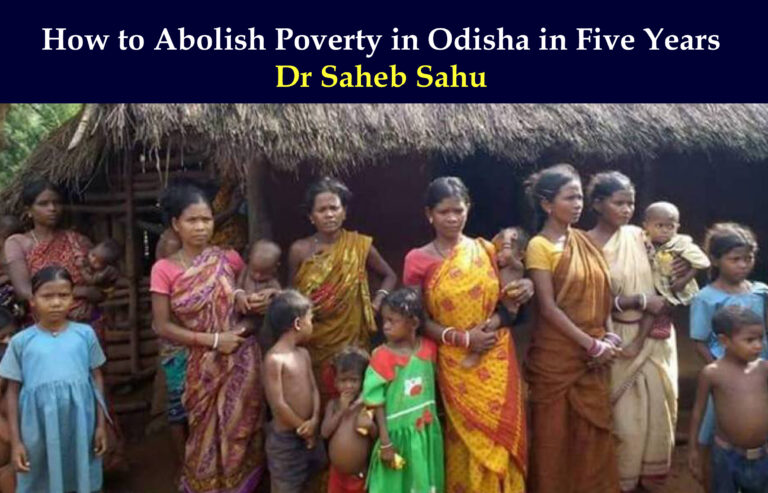
How to Abolish Poverty in Odisha in Five Years?

0

Answer – Guaranteed Income

Dr Saheb Sahu

Introduction

According to the recent report by NITI Aayog, India’s multidimensional poverty rate has declined to approximately 11.28% as of 2023. The multidimensional poverty index (MPI), has total of 10 indicators: 2 for education, 2 for healthcare and 6 for living standards. In 2023, Odisha’s MPI was reported at 15.68%, down from 29.34% in 2015-16. At the state level, Uttar Pradesh, Bihar and Madya Pradesh saw the largest decline. Himachal Pradesh, Punjab, Tamil Nadu and Kerala had poverty rate of less than 5%. The MPI for Kerala was 0.55%, the lowest in the nation.

What is Guaranteed Income?

Guaranteed income, often refers to as a Universal Basic Income (UBI), is a policy proposal where a government provides its citizens with regular sum of money without any condition. This concept has gained significant attention in recent years as a potential solution to economic inequality and poverty.

The Rational Behind Guaranteed Income

The idea behind guaranteed income stem from the belief that all individuals should have a basic level of economic security. The idea goes back to the 18th century to people like Thomas Paine (1737-1809) and John Stuart Mill (186-1873). According to the experts, a guaranteed income could act as a safety net, ensuring that everyone has enough resources to meet their basic needs, regardless of their employment status. Advocates argue that this financial stability would allow people to pursue education, entrepreneurship, or other endeavors without the constant pressure of lack of money. Additionally, a guaranteed income could simplify multiple existing welfare programs, reducing bureaucratic costs and inefficiencies by replacing various forms of social assistance with a single monthly payment. However, critics point out that implementing such a program on a national scale (or state) would be expensive, and would require significant tax increase.

Research on Guaranteed Income

The results of the biggest study on guaranteed income was published in the National Bureau of Economic Research on July 23, 2024. The study was undertaken by Center for Guaranteed Income Research (GIR) of University of Pennsylvania, USA.

 For three years, 1,000 people in the state of Texas and Illinois in USA, ages 21 to 40, were given $1,000 per month without any strings attached. The group had an average household income of $30,000 per year, creating representative sample of young low-income Americans. The median household income in USA in 2024 was $ 70,780 in USA, a family of four considered impoverished if they earn $30,000 or less per year.

The Result

The data clearly showed that cash helped people to spend more on their basic needs. They spent $67 per month more on food, $52 more on rent and $50 more on transportation. They also spent 26 percent more financially helping other family members, especially children. Some recipients went back to school. Others started opening businesses.

 According to the researchers, the extra money, “gave them head space to dream, to believe, to hope, to imagine a future, they could not imagine before”. Multiple other researches around the world have shown similar outcome. Contrary to popular belief, people did not spend their gift money on drinking or gambling.

What Steps the New BJP Government Should Take to Eliminate Poverty in Odisha?

According to the World Bank, and other independent studies, 30% to 40% of allocated funds for various welfare schemes in India, reaches the intended recipients because of  leakage ( a new word for corruption) or percentage taken by the middle men and women, ( politicians,  various officials, contractors). Most Indians know that the real percentage is even higher. Aadhar linked payment and the JAM (Jan-Dhan Aadhar Mobile) trinity has reduced leakage in India in recent years.

1- Guaranteed Income

All poor Odias, young adult or old, male or female should be given a guaranteed income for at least five years. The amount should be decided by the government of Odisha, but it should be at least Rs 30, 000 (thirty thousand rupees) per year or more. The amount has to be sufficient enough to pull the poor out of poverty.

The Subhadra Yojana, recently announced by the new Government is a good start (The New Indian Express, Aug23, 2024). According to the SOP (standard operating procedures), women between 21 years and 60 years of age will be paid Rs 10,000 (ten thousands rupees) per annum in two installments of Rs 5,000. The duration of the scheme will be for five years 2024-25 to 2028-29. It is an excellent start but it is not good enough. The amount is too little and it will exclude all poor men, young and old. They are half the population of the poor people. What is the justification of excluding them? To eradicate poverty from Odisha, the new government has to find the ways and means to include all poor people in the state, regardless of their sex, and place of residence, rural or urban. Subhadra Yojana is a halfhearted measure. It will help but it will not reduce poverty in Odisha to below 5 %.  The New Government should try to match the poverty rate of Kerala, which is 0.55%.

2- Improve Education

The state with the highest literacy rate and the lowest poverty rate is Kerala. Kerala has literacy rate of 96.2 %( male 97.4% and female 95.2%). The literacy rate for Odisha is 72.87 %( male 81.59%, female 64.01%). Quality of public education is a core stagey in fighting poverty. No country has succeeded in reducing poverty if it has not educated its people. Educating girls is even more important than educating boys. Of course, both the sexes should be equally educated. All the developmental experts agree that the benefits of girls’ education are many: delayed marriage, decrease pregnancy rate, increase productivity, reduction of under-five mortality rates, gender equality in family decision making and many more. Women who are educated are more likely to work outside the home. Women who have independent income have higher social standing and more likely to run for political, office.

The secondary school dropout rate in Odisha in 2023 for boys was 29.2% and for girls it was 25.2%. The National average was 12.6%. Odisha’s higher secondary school dropout rate is unacceptably high. The teacher’s absentee rate in Odisha typically ranges from 20% to 25%. This figure is even higher in rural and more remote areas of the state. The government has to take strong actions to reduce both the dropout and absentee rates.

Every student is not a college material. Students who cannot attend college should be provided with vocational education (plumbing, electrician, fitter, mechanic etc.) with minimal cost or at no cost.

The infrastructures of all schools should be improved. Many schools do not have toilets. Every school should have safe-drinking water and sanitation. Every school should have computers and connected to internet. It should have a library. It should also provide remedial education to those who need it.

The under-five stunted rate of Odisha’s, children is 36%. Stunted growth is a sign of chronic malnutrition. The rate is too high.  Besides providing mid-day meal, the new government should provide a nutritious breakfast to all children irrespective of income. Hungry children do not learn well.  The addition of free breakfast will reduce the malnutrition rate in few years.

Besides providing safe drinking water and toilet, breakfast and lunch, each student should be given de-worming medicine, Vitamin A, and Iron tablets. All the children should get the recommended vaccinations at school.

3 – Facilitate Migration

Education and migration are two of the oldest actions against poverty. People who leave their villages and move (migrate) to a nearby or distant town or city, or even to a foreign country, escape the grinding poverty of their village. The late Harvard Economist John Galbraith said many years ago – “There is nothing great about blue sky and clean air when you are starving”. The quality of education in rural schools and colleges in India, including Odisha, is not that great. Rural students have very hard time getting into good educational institutions and compete in the job market. When people migrate to a town or city, their children get better education and escape the poverty of their parents.

 As of 2023, it is estimated that around 1.8 crores (18 million) Indians are working and living abroad( USA, Canada, Gulf States, Saudi Arabia, U.K., Australia and other European countries). In 2023, India received 125 billion dollars in remittance from its overseas Indians. It is estimated that around 22 lakhs (2.2 million)Keralites are working overseas, majority of them in the Gulf counties. They have been migrating to the Gulf countries since 1970s. In 2023, an average Malayali sent 2.23 lakhs rupees to his/her family back home.

 The Government of Odisha has no real figure on how many Odias are working outside the state. The government does not want to know as it reflects on the poverty status of the state. It is estimated that 15% to 20% Odias are working outside the state mostly in Southern and Western states, mostly in brick manufacturing and construction industries. Instead of denying that migration is happening, the government of Odisha should do everything possible to facilitate migration to other states and especially to the Gulf Countries. In the Gulf Countries they will earn 10 to 15 times more than they will earn with in India.

Conclusion

I have been interested in developmental economy since 1997. I have kept up with the literature on the subject of poverty alleviation. I have written four books and many articles on the subject. In this article, I have suggested 3 steps for the new BJP government to implement.

1- Provide direct unconditional cash grant of thirty thousand rupees or more per year, to all the poor people in Odisha, irrespective of sex, for a period of five years. With that amount of money most poor people (notall) will get out of poverty and Odisha’s poverty rate will fall below 5 percent.

2- Improve education by providing better school and college infrastructures (internet connection, libraries, toilet and hostels), decrease dropout rate of secondary school students and improve the teacher’s absentee rate.

3- Facilitate migration from rural areas to urban areas inside and outside the state and to the Gulf counties.

Poverty is inter-generational. There is no simple and easy solution to eradicate poverty but it can be done. China has got people out of poverty in large numbers. India is doing it but not fast enough. Odisha has done it to some extent but it has been too slow and not good enough. Ten districts in Odisha have done well, ten districts have done so, so, and ten districts are among the 100 poorest districts in India. To me as an Odia, Odisha’s poverty ranking in spite of its mineral wealth is not acceptable. The new BJP government has an opportunity to take bold steps to significantly reduce Odisha’s poverty rate to match that of Kerala.

 The responsibility of reducing Odisha’s poverty is all ours politicians, government officials, NGOs and all citizens of Odisha. Those of us, who are fortunate enough not to be poor or have moved out of poverty, we should do our part to help others. We can start with helping one person or one family at a time. After all the good book (The Bible) says,” We are all our brothers’ keeper”. As Nobel Laureate Amartya Sen has said:” TO END POVERTY IS TO WIN FREEDOM.’

 Sources:

1- NITI Aayog- niti.gov.in

2- Chat Gpt- Aug 28, 2024

3- Saheb Sahu, How to eliminate poverty in Odisha, 2018

 About the Author

Dr Saheb Sahu is a village boy from Bargarh district of Odisha. He is a graduate of AIIMS (New Delhi). He is a pediatrician settled in USA since 1970.  He was an appointed expert member of WODC for six years and that is when he learned about PC (percentage) in developmental grants. He also served as Managing Director Kalinga Hospital, Bhubaneswar for four years. He has visited 24 out of 30 districts in Odisha. He has written four books on India’s and Odisha’s poverty. His  personal interest are promotion of girls education and tree planting.

Almost 50% Global Dementia Cases May Be Preventable

0

Dr Saheb Sahu, FAAP, MPH.

What is Dementia?

Dementia is a general term used to describe a decline in cognitive function severe enough to interfere with daily life. It is not a specific disease but rather a syndrome, a group of related symptoms associated with a decline in memory, reasoning, or other thinking skills. Alzheimer’s disease is the most common cause of dementia, but there are other types as well, including vascular dementia, Lewy body dementia, and frontotemporal dementia. Common symptoms of dementia include:

1. Memory Loss: Difficulty in remembering recent events or information.

2. Difficulty with Communication: Trouble finding right words or understanding language.

3. Impaired Reasoning or judgment: Difficulty making decisions or solving problems.

4. Disorientation: Confusion about time, place, or identity.

5.  Changes in Mood or Behavior: Unexpected mood swings, irritability, or apathy.

 Dementia is progressive, meaning symptoms start out mild and gradually worsen over time. It is most common in older adults, but it is not a normal part of aging. Diagnosis and management involve a combination of medical evaluations, cognitive tests, blood tests, and sometimes brain imaging like- MRI, CT scan or PET scan. Currently there is no cure for dementia. Multiple drugs are under trials. Treatments and lifestyle changes can help manage symptoms and improve quality of life.

Preventive Measures

In 2020, the Lancet Commission on Demetria (published in the medical journal Lancet) determined 12 modifiable risk factors that are known to put people at higher risk of developing dementia. These are:

1. Physical inactivity

2. Smoking

3. Excessive alcohol consumption

4. Air pollution

5. Head injury

6. Infrequent social contact

7.  Less education

8. Obesity

9.  High blood pressure

10.  Diabetes

11.  Depression

12. Hearing loss

In 2024, the same commission added two more factors to the list.

13. High bad cholesterol (LDL) after age 40

14.  Untreated vision loss

According to the report, these 14 factors account for 49% of dementia cases across the world.

How can you lower your dementia risks?

You should choose a primary care doctor who understands your health and is willing to share pertinent information with other specialists like cardiologist (heart specialist) and neurologist (brain and nerve specialist). He or she will help you to stay on the top of any issues putting your well-being at stake. Your primary care doctor should be proactively working to help you control the above mentioned risk factors. You and your doctor should focus on these lifestyle changes as early as possible, at least in midlife, not when dementia starts to show up. There are also some tests that can detect early signs of dementia and genetic markers of some brain diseases causing dementia.

It is never too late to make changes and correction in your lifestyle (not smoking, not drinking, exercising, being socially active, using hearing aid and glasses if needed, treating high blood pressure, high cholesterol, diabetes, depression etc.), whether you are young, seemingly healthy person, in your 80s or 90s or someone who has already been diagnose with dementia. Recent studies have clearly established that, our brains are highly malleable. So if you decide to make healthy lifestyle changes at any point, your brain will respond and be healthier for it. SO START TODAY.

Sources:

1 – Medscape Medical News.  Almost 50% Global Dementia Cases May Be Preventable. July 31, 2024

2 – Jullian Wilson. Researchers Have Discovered 2 new Dementia Risk Factors. Huffpost, Aug12, 2024