Monday, May 18, 2026
Home Blog Page 2

Proto-Indo-European: The Mother of Many Tongues

0

Dr Saheb Sahu

The word “proto”comes from the Greek word protos, meaning “first” or “earliest”. In modern usage “proto” is prefix used to indicate something that is original, primitive, or an early form of something else.

Proto-Indo-European (PIE) is hypothetical, reconstructed ancestor of the Indo-European language family, which includes languages spoken by nearly half of the world’s population today. They include:

1- Indo-Iranian (Indo-Aryan):

. Ancient: Sanskrit and Prakrits

.Modern: Hindi, Bengali, Urdu, Punjabi, Marathi, Gujarati, Odia, Nepali, Sinhala, etc.

.Iranian

.Ancient: Avestan, Old Persian

.Modern: Persian (Farsi), Kurdish, Pasto, Balochi, Tajik

2- Hellenic

Greek

Ancient and Modern Greek

3- Italic

Latin- Modern descendants: Italian, French, Spanish, Portuguese, Romanian, Catalan, etc.

4- Celtic

.Ancient: Gaulish, Old Irish

.Modern: Irish, Scottish, Gaelic, Welsh, Breton, Cornish, Manx

5- Germanic

.Ancient: Gothic, Old Norse, Old English, Old High German

. Modern: English, German, Dutch, Danish, Swedish, Norwegian, Icelandic, Faroese

6- Balto-Slavic

Baltic: Lithuanian, Latvian,

Slavic: Russian, Ukrainian, Belarusian, Polish, Czech, Slovak, Bulgarian, Macedonian

No written record of PIE exists. Scholars believe that PIE was likely spoken between 4500 BCE, and 2500 BCE on the Eurasian steppes, possibly near present-day Ukraine or Southern Russia.

While it is not clear precisely why PIE was able to establish such a wide domain, Ms.Spinney, the author of “Proto”suggests that commerce likely played a role. By 4500 BCE, commodities such as gold, copper and salt were moving among the vast track of network centered on the Black Sea. PIE may have spread thanks to its association with these valuable luxuries.

By 3500 BCE, however, cooler temperature, long periods of draughts and endemic warfare, led to large scale migration. PIE evolved and fragmented into 12 interrelated branches across Europe, Central Asia and India. The study of ancient DNA has confirmed this migration pattern.

Thinkers from Dante (1265-1321) to Leibniz (1646 -1716) had long noticed peculiar similarities among languages from far flung places. But it was not until 1786, when William Jones, a British judge stationed in India, proposed the link among Latin, Greek and Sanskrit that the idea of a common lingual ancestor was taken seriously. Since then, researchers have developed a hypothetical vocabulary for PIE that consists of 1,600 word stems, which form the basis of our most common words. For example, the English word “father”, the Latin “pater” and the Sanskrit “pitr”, all reflect a common PIE root “pater”.

Some other examples of PIE roots

.PIE- mehter (mother)

.English – mother

. Sanskrit-matr

. Greek – meter

PIE root: dekmt (ten)

.English: ten

. Latin: decem

.Greek: deka

. Sanskrit: dasa

. Russian: desya

PIE root: word (water)

.English; water

.German: wasser

. Sanskrit: udaka, jala, nira

. Russian: voda

In conclusion, Proto-Indo European is not just a language but a key to understanding a significant portion of the world’s linguistic and cultural heritage. Scholars continue to uncover the story of PIE and its enduring legacy in the modern world. We are all inter-connected.

Sources

1- Laura Spinney. Proto. Bloomsbury, New York; 2025

2- Chat GPT

“Race” Is Not A Valid Scientific Concept

0

Dr Saheb Sahu

                                 I find the term “race” pretty useless.

                                                             Luca Cavalli-Sforza, Population Genetist at Stanford University

Introduction

The concept of “race” has long been a powerful and controversial concept in human society. Often used to categorize people based on physical characteristics such as skin color, facial features, or hair texture, race has historically been treated as a scientific reality. However, contemporary research in genetics, anthropology, and sociology has made it increasingly clear that race is not a biological or scientific concept but rather a social construct with no firm basis in science. Biologically the use of race is no longer a valid scientific concept, according to University of Pennsylvania physical anthropologist Soloman Katz (1996). “Pure races” do not exist now and probably never did.”- American Association of Physical Anthropologists.

Scientific Understanding of Human Variation

Modern genetic has demonstrated that all human beings share more than 99.9% of their genetic materials (DNA). The slight variations that do exist are not significant enough to divide humanity into distinct biological races. Genetic differences among individuals of the so called “race” can be greater than those between individual of different “races”. For instance, two people from Africa may be more genetically different from each other than either is from someone in Europe or Asia.

Race is Only Skin Deep

Evidence from multiple studies has shown that “race” is only skin-deep. Below the surface liesa range of genetic variability that shows no link to skin color or other superficial physical traits.

 For example, the sickle cell anemia trait, long viewed (In America) as something found in black people has also been found among some southern Europeans but not found in some South African tribes. The Rh- negative blood type is found most often in the Basque people of France and Spain, also surfaces among North Africans but not among South Africans.

 There are some superficial traits like skin color and body builds, they are striking, and we notice them. That is what misleads us. It makes us thinks races are different. They are not when we look under the skin. For example, scientists have found biggest differences between African and Australian aboriginal people. Yet most Australian aboriginal people have skin color as black as Africans.

 Skin color or facial features of Asian people, for example, have developed overtime as a response to climate.  Darker skin protects against the harmful effects (like skin cancer) of strong sunlight. A flat nose and eyelid skin fold seen in people of Mongolian descends (Mongolia, China, Korea, and Japan) are adaptations to freezing weather of Siberian populations. But none of these superficial adaptations show a link to other underlying genetic traits.

Historical Origins of the Concept of Race

The concept of race emerged during the colonial era as a tool for justifying slavery, imperialism, and social hierarchy. European colonizers used pseudo-scientific theories to argue that non –European people were inherently inferior, have low IQ, uncivilized, non-Christians and thus suited to be conquered, ruled, converted and enslaved.

 Notably such ideas were used to support eugenics movement. The eugenics movement was a social and pseudo-scientific movement, most influential in the late 19th and early 20th centuries that aimed to improve the genetic quality of the human population. It had two key factors: Positive Eugenic and Negative Eugenics. Positive Eugenics promoted reproduction of people considered intelligent, healthy, or morally upright. Negative Eugenics – promoted sterilizations or even euthanasia for those with disabilities, mental illness, or criminal records. Hitler’s concept of superior Aryan race was based on the Eugenics Movement, then prevalent in Europe and America. The Nazis used this idea to justify anti-Semitism, and racism and ultimately the Holocaust. The total number of people killed during the Holocaust is estimated to be between 11 and 17 million.

Ironically, actual linguistic and DNA evidence shows that ancient Indo- Aryan came from regions in Central and Southern part of Asia- not from Northern Europe and had no connection to modern Germans. The word “Aryan” comes from the ancient Indo-Iranian root. In Sanskrit it means “noble” or “respectable”. In Old Persian “ariya” refers to the people of the Iranian plateau. In the 19th century, European linguists used “Aryan” to describe the group of people who spoke the early Indo-European languages. The Nazis further distorted the term to promote the idea of a superior race, typically identified with Northern Europeans.  This usage has no linguistic, historical, or scientific basis and is widely discredited today.

Aryan vs. Dravidian

Modern genetic and archeology studies have shown that the Aryan invasion of North India, theory is completely false. It is true that people from southern steppe migrated to India as pastoralists (animal herders). They were not invaders. They were mostly men. Genetic studies show that all Indians, whether from the north or south, share a complex ancestry with both Ancestral North Indians (ANI) and Ancestral South Indians (ASI) genes. Despite being discredited scientifically, the Aryan-Dravidian theory still influences Indian politics, identity, and caste debates.

Race as a Social Construct

Although the concept of race lakes scientific legitimacy, it remains as powerful social reality. Society continues to treat people differently based on perceived racial categories. These categories are deeply embedded in institutions, culture, and law. As a result, racial identities shape people’s experiences, opportunities, and treatment in the world.

 Sociologists and anthropologists emphasize that while race is not a biological fact, it has real consequences. Racial discrimination, systemic inequality, and cultural identity are all influenced by how race is socially constructed and maintained.

Conclusion

Race is not a scientific concept grounded in biology or genetics, but a social construct, propagated by the colonizers. Scientific research has shown conclusively that human genetic diversity does not support the classification of people into biologically distinct races. Yet the idea of race continues to shape societies in powerful ways. Understanding race as a social, rather than scientific, phenomenon is essential to addressing the injustices and inequalities that stem from the present thinking about race. We are all African-Asian-European and American!

P.S. If you substitute the word “caste” in place of “race”, all the points made in the article for race will apply to caste. There is no genetic basis for caste.

Sources

1- Chat-Gpt May, 26, 2025

2- ‘Race’ Is Not A Valid Scientific Concept by Donna Alvarado in Genetic And Influence. Greenhaven Press: San Diego, 1996, p- 148

                                                                       The End

From East to English: Contributions of Indian, Chinese, Persian and Arabic Languages to English

0

Dr Saheb Sahu

Over 1 million words exist in English, including scientific and technical terms. The Oxford English Dictionary (OED) lists about 600,000 in active or historical use. The average educated native English speaker knows about 20,000-35,000 words. Roughly 1,000 new words enter the English language each year.

Indian (Indic) Contributions (700-900)

Most Indian origin words entered English during the British colonial period (1600-1900s) through Hindi, Urdu, Sanskrit, Tamil, and other Indian regional languages. Some of them are:

Food and Spices- curry, chutney, mango, banana, pepper, bamboo, ginger, punch, and rice

Animals and Nature- cheetah, panther, cobra, python, mongoose, mugger, gazelle, jungle, banyan, and teak

Religion and Philosophy- Karma, yoga, guru, Brahmin, mantra, nirvana

Administrative- pundit, raj, maharaja, sahib, coolie

Everyday Terms – shampoo (from champo), pajamas, bungalow, verandah, loot, thug, cashmere, dingy, cot, jute, polo, Zen (through Japan) and juggernaut (from massive chariot of Jagannath of Puri)

 It is estimated that over 700-900 Indian origin words are recognized in English dictionary.

Chinese Contributions (150-200)

Food- tea, ketchup (from ke-tsiap) chow, chop suey, tofu, dim sum

Culture- kowtow, typhoon (from Tai fung), gung-ho, Feng shui, yin-yang

Objects and Trade – silk, china (porcelain), junk

It is estimated that about 150-200 Chinese origin words are recorded in major English dictionary.

Persian Contributions (150-200)

Words of luxury- bazar, shawl, taffeta, chess, checkmate, checkers, shah, vizier, serdar, azure, khaki, muslin, van (from caravan), ruby, divan, and turquoise

Scientific and Botanical – spinach, lemon, orange, lilac, roc, mummy, and tiger

 Many of the Persian words reached English indirectly through other languages. It is estimated that there are about 200 words in English of Persian origin.

Arabic Contributions (400-500)

Science and Math – algebra, (al-jabr), algorithm, zero, alchemy, alcohol, elixir, alkali, almanac, camphor, antimony

Geography and Culture – admiral, arsenal, mosque, safari, and tariff

Everyday Terms – coffee, café, sherbet, cotton, sugar, syrup, saffron, sofa, mattress, emir, fakir, harem, jihad, minaret, genie, ghoul and candy

It is estimated that around 400-500 Arabic origin words are in modern English.

Conclusion

The English language is often described as “living museum” of words. Unlike languages that evolved in relative isolation, English has grown trough contribution of hundreds of other languages. This borrowing has made English one of the most expressive and adaptable languages in the world.

 Modern English continues to borrow freely in the globalized world. This openness to foreign influences is one of English’s greatest strength. Cambridge Dictionary added more than 3,200 words, terms and phrases in 2024.

Sources

1- Robert Henderson. Words and Phrase Origins (Revised Ed), Checkmark Books, New York; 1997   

2- Chat GPT- Oct 28, 2025

Important Literary Terms

0

Dr Saheb Sahu

Allegory: An allegory is a story, poem, picture, or other works of art in which the characters, events, and settings symbolize deeper moral, spiritual, political, philosophical meanings.

Example:  George Orwell’s novel “Animal Farm”, where the animals and their society symbolize the events of the Russian Revolution and the rise of Soviet Communism.

Allusion: A figure of speech that makes reference, either directly or indirectly, to another work, event, myth, person, or so on.

Example:  “He met his Waterloo”. It refers to Napoleon’s final defeat at Waterloo, meaning he met his ultimate Downfall.

Cannon: The body of literature, music, art, and other significant endeavors that scholars point to as the most influential in the development of a culture.

Example: The Shakespearian cannon – all the plays and poems written by William Shakespeare.

Beethoven’s symphonies belong to the cannon of Western music.

Climax: The most intense or exciting part, or culmination, of a literacy work. Generally, the climax marks a point of no return, in which the character, plot, or setting have been irrevocably changed.

Genre: A type of literary work, romance, mystery, horror, fiction and non-fiction, science fiction etc.

Irony: Irony is a literal device or figure of speech in which there is a strong contrast between appearance and reality or between what is expected and what actually happens.

Example:  A police officer gets arrested for breaking the law.

Narrator: The person who tells the story. Sometime the narrator is the main character of the literary work, often giving us “first person point of view”. Often, however, the narrator is not part of the story, nor is the narrator the same as the author. Instead, the narrator may be the voice the author assumes in order to convey the story.

Plot: The plot is everything that happens, and can usually be described as having a beginning, middle, and an end.

Protagonist: The main character or the hero of the story. Sometimes the protagonist is also the narrator. While most novels have only one protagonist, some focus on two or more characters equally.

Satire:A literary genre that seek to ridicule or expose the folly of a particular aspect of society, a government, or an institution. Satires often employ irony.

Symbol: A symbol is a person, object, place or event that represents a deeper meaning, often an idea. The modern emoji are symbols.

 Example:

 Picture of a heart is symbol of love, affection or emotion.

 Dove – a symbol of peace, purity.

 Serpent – a symbol of temptation, and will.

 Scales – symbol of justice, fairness and balance.

Theme: Theme is the central idea, message, or underlying meaning of a story, poem, play, or any other literary works. It tells us what the work is really about. A work may have more than one theme. Themes are often universal meaning they apply to many people or situations.

 Example: Love and sacrifice, good vs. evil, man vs. nature etc.

Tone: Tone is the attitude a character, narrator, or writer takes. Tone is conveyed through words, dialogue, rhetorical style, figurative language, and description.

 Example: Positive, negative, humorous, playful, reflective, etc.

Conclusion

 If you understand the meanings of above mentioned terms, you will be a better reader and you will get more out reading any kind of literature.

Happy Reading!

 Source

The Book of Books. PBS – The Great American Read. Black Dog and Leventhal Publishers, New York; 2018

Social Health

0

Dr Saheb Sahu, FAAP, MPH.

What is Social Health?

Social health is a dimension of overall health that refers to how well a person interacts with others and functions within society. It is about the quality of your relationships, your sense of belonging and your ability to adapt to social situations in a healthy way.

Examples of good social health:

. Having supportive family ties, friendships and community connections

. Having people you can rely on in times of need

. Maintaining long-term relationships

. Feeling connected to others rather than being lonely

Research shows that strong social ties:

. Reduce risk of heart disease and stroke

. Lower rates of anxiety and depression

. Slow memory decline and dementia

. Improve sleep and immunity

. Increase longevity

Some important studies that support the benefits of social health

In 1938, researchers at Harvard University launched an ambitious study to understand what makes some people thrive and others struggle. The study, which eventually became known as the Harvard Study of Adult Development, started with two distinct groups. The researchers first enrolled 268, second year undergraduate students. These were the presumed to be the leaders of tomorrow in America. One of them was future president John F. Kennedy. The Harvard group was supplemented with 456 boys of similar age, who came from some of the Boston’s (where Harvard is located) troubled and disadvantaged neighborhoods. Ultimately they expanded the study group to include some 1300 spouses and descendants. Closing in on its ninth decades, the Harvard Study of Adult Development is now the longest-run longitudinal health study in American history. Every year the researchers collect a treasure trove of data on each participant including blood tests, EKG reports, and brain scans and DNA samples. They also collect employment data, voting records, and behavioral information such as smoking and drinking.

 After analyzing eighty-five years of data, the researchers have concluded that there is a formula for a healthy and happy life. It is the quality of relationships, the social fitness you might say, of the people involved. It all boils down to the idea- as Robert Waldinger; the current director of study has said-of “being engaged in activities I care about with people I care about”. If you want to know how to live a healthy and rewarding life, you start with social health.

 In 1979, two researchers from Harvard and Berkley- published the result of nine-year study of almost seven thousand adults and found that loneliness increased mortality, independent of condition, socioeconomic status, or behavior like drinking or smoking. Hundreds of studies since have confirmed the close connection between social connection and healthy aging. Loneliness kills.“People who were more socially connected had less risk of dying at any age.”

These findings have been duplicated countless times throughout the intervening decades. Researcher, Julianne Holter-Lumstad, a professor at Bingham Young University, has concluded that loneliness is of greater health consequence than obesity and equivalent to smoking fifteen cigarettes a day. Other researchers have found that the effect of social health is equal to or greater than everything, from physical inactivity to high blood pressure, high cholesterol and air pollution. In 2018, U.K. created the position of minister of loneliness, a move Japan followed three years later. The U.S. surgeon general in 2023 declared a “loneliness crisis”.

Social connection and social fitness are particularly important for older people, when we are more vulnerable to the loss of social network. The only difference, researchers have been able to identify between super-agers (people older than 80) and their normally aging counterparts is that super-agers had higher rates of social connection and lower rates of loneliness.

Conclusion

Emotionally humans are social creatures. Throughout our history, the ability of human to rely on one another for food, shelter and common protection has been critical to our survival and flourishing. Our brains have adapted to expect and need proximity to our fellow human beings. Our body responds to feeling of loneliness and chronic isolation by flooding our biological system with stress signals. Our bodies respond to stress with increased inflammation. Chronic stress and inflammation has negative effect on everything from heart health, high blood pressure, diabetes, cancer, anxiety, depression and dementia.

 There is a correlation between social connection and health. At its most basic level, social connection gets people out of the house and moving, a basic sign of healthy aging. People with better social health are more likely to adapt better healthy behaviors, from not smoking and drinking, to exercising more and following medical advice.

After tracking people for more than 80 years, Robert Waldinger’s (Director of Harvard Study of Adult Development) central conclusion is remarkably simple: “Good relationships keep us happier and healthier. Period. One or two reliable, emotionally supportive relationships are enough”.

Sources

1- Waldinger Robert and Sculz Marc. The Good Life: Lessons from World’s Longest Study of Happiness, Simon and Schuster, New York: 2023 

2- What Makes Good Life. TED Talk, Y-Tube

3- Stern Ken. Healthy To 100: How Strong Social Ties Lead to Long Lives. Public Affairs, New York; 2025

                                                                          The End

The Joy of Words – Dr Saheb Sahu

0

                                               WORDS are things, and a small drop of ink,

                                               Falling like dew upon a thought produces

                                               That which makes thousands, perhaps millions,

                                               think.  – Lord  Byron

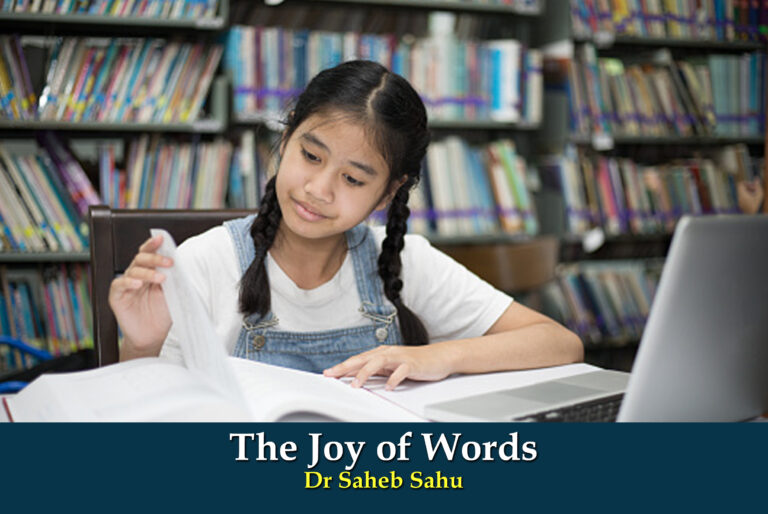
 I have been a life-long reader. I enjoy reading. Even as a senior citizen, I read 6-8 books each month. Recently, I re read a book titled-“The Joy of Reading”, which was published in 1960. That book gave me the idea to write this article. Hope you will enjoy it and learn from it.

Be Your Own Lamp

“Therefore, Ananda, be lamp unto yourself, be a refuge to yourself. Take yourself into no external refuge. Hold fast to the Truth as a lamp; hold fast to the Truth as refuge.” – Buddha (c 563-483 BCE)

 Context – The Buddha gave this advice as his final words to his disciple, Ananda, when asked who would be their teacher after his death.

Rules of Life

The rule of life is to be found within you,

Ask yourself constantly, “What is the right thing to do?”.

Beware of doing that which you likely, sooner or later, to repent of having done.

It is better to live in peace than bitterness and strife.

It is better to believe your neighbors than to fear and distrust them.

 The superior man does not wrangle. He is firm but not quarrelsome. He is sociable but not clannish.

The superior man sets a good example to his neighbors. He is considerate of their feelings and their property.

Consideration for others is the basis of a good life, a good society.

 Feel kindly toward everyone. Be friendly and pleasant among yourselves. Be generous and fair. –  Confucius ( c 551 – 479 BCE)

The Unexamined Life Is Not Worth Living

“ The unexamined life is not worth living”, and “To find yourself, think for yourself”.

“The only true wisdom is, knowing that you know nothing”.

“Wonder is the beginning of wisdom”.

“Know yourself”.

“Strong minds discuss ideas, average minds discuss events, and weak minds discuss people”.

“By all means, marry. If you get a good wife, you’ll become happy; if not, you’ll become a philosopher”. – Socrates (470-399 BCE)

Context – The time of the Buddha, Confucius, and Socrates is called the Axial Age, a period from about 800-200 BCE, when transformative philosophical and religious ideas emerged in different parts of the world. The Term was coined by German Philosopher Karl Jasper.

 A Smile

A SMILE costs nothing, but gives much. It enriches those who receive, without making poorer those who give. It takes but a moment, but the memory of it sometimes lasts forever. None is so rich or mighty that he can get along without it, and none is so poor but that he can be made rich by it. A smile creates happiness in the home, fosters goodwill in business, and is the countersign of friendship. It brings rest to the weary, cheer to the discouraged, sunshine to the sad, and it is nature’s bad antidote for trouble. Yet it cannot be bought, begged, borrowed, or stolen, for it is something that is of no value to anyone until it is given away. Some people are too tired to give you a smile. Give them one of yours, as none needs a smile as much as he who has no more to give.  – Author Unknown

Success

If I can stop one heart from breaking,

I shall not live in vain:

If I can ease one life the aching,

 Or cool one pain,

Or help one fainting robin

Unto his nest again,

I shall not live in vain; – Emily Dickinson (1830-1886)

Ps. Emily Dickinson was a reclusive American poet who wrote nearly 1,800 poems, though only a few were published during her lifetime.

Avoid Deception by Word or Silence

A lie  may be told by silence, by equivocation, by the accent on a syllable, by a glance of the eye attaching a peculiar significance to a sentence; and all these kinds of lies are worse and baser by many degrees than lie plainly worded; so that no form of blind conscience is so far sunk as that which comforts itself for having deceived, because the deception was gesture or silence, instead of utterance; and, finally, according to Tennyson’s deep and trenchant line, “A lie  which is half  a truth is ever the worst of lie.” – John Ruskin ( 1819-1900)

Ps. John Ruskin was an English polymath- a writer, lecturer, art historian, art critic and philanthropist of Victorian age.

 The Way to Wealth

In short, the way to wealth, if you desire it, is as plain as the way to market. It depends chiefly on two words, industry and frugality; that is, waste neither time nor money, but make the best use of both. Without industry and frugality nothing will do, and with them everything. He that gets all he can honestly, and saves all he gets, (except necessary expenses) will certainly be rich. –  An Old Tradesman

Thomas Jefferson’s Rules of Living

Never put off till tomorrow what you can do today.

Never trouble another for what you can do yourself.

Never spend your money before you have it.

Never buy what you do not want because it is cheap.

Pride costs us more than hunger, thirst, and cold.

We seldom repent having eaten too little.

Nothing is troublesome that we do willingly.

How much pain the evils have cost us that have never happened!

Take things always by the smooth handle.

When angry, count ten before you speak: if very angry, a hundred. – Thomas Jefferson ( 1743-1826)

PS. Thomas Jefferson was an American Founding Father and the third president of The United States from 1801-to 1809. He was the primary author of the Declaration of Independence.

Death, a Necessary End

Cowards die many times before their deaths;

 The valiant never taste of death but once.

 Of all the wonders that I have heard,

 It seems to me most strange that men should fear;

 Seeing that death, a necessary end,

Will come when it will come.

                                              Julius Caesar, Act 11, Scene 11, William Shakespeare

It’s the Little Things

It’s the little things we do and say

 That mean so much as we go our way.

 A kindly deed can lift up a load

From worry shoulders on the road,

Or a gentle word, like summer rain,

 May smooth some heart and banish pain.

What joy or sadness often springs

 From just the simple little things   – Willa Hoey (Canadian Poet)

 The Simple Way

Love without ceasing, 

Give without measure-

Who can exhaust

God’s limitless treasure?  – Malcolm Schloss

Sources

1- The Joy of Words, J. G. Ferguson Publishing Company; Chicago; 1960

2- Wikepedia.org                   

The Sermon on the Mount: A Blueprint for Living

0

                                                           Dr Saheb Sahu

Definition of Sermon: A sermon is a religious talk, or speech on a moral or spiritual subject, typically delivered by a clergy during a church service, often based on scripture, to instruct or persuade the listeners.

The Sermon on the Mount-(Mathew 5-7)

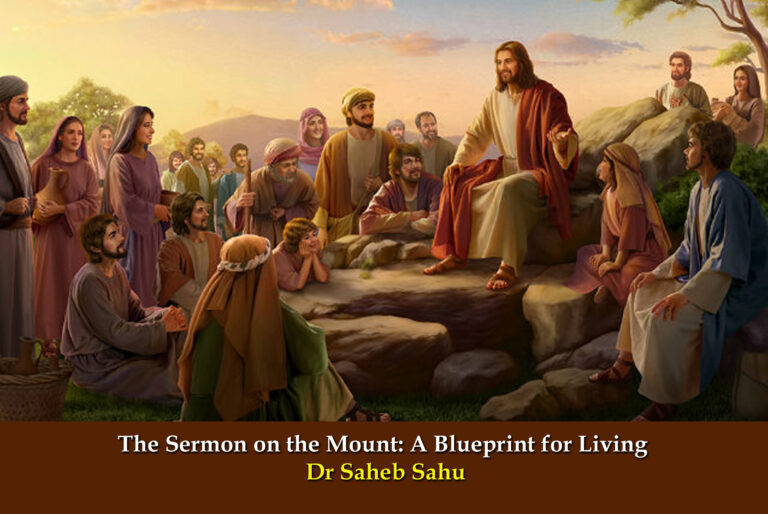
The Gospel, according to Mathew (a book in the Bible – the New Testament) places the sermon shortly after Jesus begins preaching in Galilee (Northern Israel), gathering followers and healing the sick. Seeing the multitudes, he ascends a hillside and begins to preach them. The setting evokes a powerful image: just as Moses (of the Hebrew Bible) delivers the Ten Commandments from Mount Sinai, Jesus delivers his teachings from a mountain in Galilee. It represents not merely a sermon but a complete ethical vision – a blueprint for living. The Sermon covers chapter 5 -7 in the Gospel of Mathew.

 Across the centuries the Sermon has inspired theologians, philosophers, reformers, and political leaders from St. Augustine to Tolstoy, from St. Francis to Mahatma Gandhi and Martin Luther King Jr.

Some Selected Quotes from the Sermon

The Beatitude (from the Latin word beatus meaning “blessed’)

. Blessed are those who mourn, for they will be comforted.

.Blessed are the merciful, for they will receive mercy.

. Blessed are the peace makers, for they will be called children of God.

Concerning Adultery

“You have heard that it was said,’ you shall not commit adultery’. But I say to you that everyone who looks at a woman with lust has already committed adultery with her in his heart”.

Concerning Retaliation

 “You have heard that it was said, ‘An eye for an eye and a tooth for a tooth. But I say to you. Do not resist an evildoer. But if anyone strikes you on the right cheek, turn the other also… Give to everyone who begs from you, and do not refuse anyone who wants to borrow from you”.

Love for Enemies

“You have heard that it was said, ‘you shall love your neighbor. But I say to you, Love your enemies and pray for those who persecute you”

Concerning Alms giving

But when you give alms, do not let your left hand know what your right hand is doing, so that your alms may be done in secret: and your Father who sees in secret will reward you.

Forgiveness

For if you forgive others their trespasses, your heavenly Father will also forgive you; but if you do not forgive others, neither will your Father forgive give your trespasses.

Serving Two Masters

“No one can serve two masters; for a slave will either hate the one and love the other, or be devoted to the one and despise the other. You cannot serve God and wealth”.

Do Not Worry

“Therefore I tell you, do not worry about your life, what you will eat or what you will drink, or about your body, what you will wear. Is not life more than food and body more than clothing?”

“So do not worry about tomorrow, for tomorrow will bring worries of its own. Today’s trouble is enough for today”.

Judging Others

“Do not judge, so that you may not be judged”.

Ask, Search, Knock

“Ask and it will be given you; search and you will find: knock and the door will be opened for you”.

The Golden Rule

“In everything, do to others as you would have them do to you; for this is the law and the prophets”.

Beware of False Prophets

“Beware of false prophets, who come to you in sheep’s clothing but inwardly are ravenous wolves. You will know them by their fruits.”

“A good tree cannot bear bad fruit, nor can a bad tree bear good fruit.”

The Legacy of the Sermon on the Mount

The Sermon on the Mount is the moral heart of Christianity. It defines what it means to follow Jesus not just in belief but in daily living. Throughout history countless saints and reformers have drawn their inspiration from this Sermon. Its influence extends far beyond Christianity. Mahatma Gandhi studied it deeply and said, “If I had to face only the Sermon on the Mount and my interpretation of it, I should not hesitate to call myself a Christian.” Gandhi drew from its principles of nonviolence and love of enemies for his movement of civil disobedience. Martin Luther King Jr. cited the Sermon’s vision of love of peace as the spiritual basis for the American civil rights movement. The Sermon has inspired nonviolent revolutions and social justice movements around the world. Its enduring power lies in its simplicity:

“Blessed are the merciful, for they shall obtain mercy”.

“Do to others as you would have them do to you”.

“Love your enemies and pray for those who persecute you”.

Conclusion

 I am not a religious person or a religious scholar. Prior to writing of my book “Religious Thoughts, Scriptures and Quotations (published in 1996), I had the opportunity to read the scriptures of all the major religions of the world (Vedas and Upanishads, Gita, Jain cannons, Dhammapada, Analects (Confucius) and Tao-te-Ching (Lao-tzu) Bible and the Koran. All faiths claim their scriptures to be divinely revealed (words of God). Their God is the only God or the superior God. Their religion is the best. Except for the Koran, most scriptures have multiple authors of different times. They have been edited and re-edited.  I do believe that all religions advocate good conduct. It is well said by Lao-tzu, that “the way to Heaven has no favorites. It’s always with good men”. The problem with all religions is their followers.  Followers of all religions believe that, their religion is the true and superior one. This attitude has created all the religious conflicts in the world.

Based on my reading, I agree with most religious scholars that, The Sermon on the Mount is the simplest and one of the best moral teachings among all  religions. It is a blueprint for life. It is only four pages long (in Gospel According to Mathew). I strongly recommend you to read it. My personal philosophy is – BE KIND AND HELPFUL TO OTHERS!

Sources

1- The Holy Bible, Containing the Old and New Testament. New Revised Standard Version. Holman Bible Publishers: Nashville, Tennessee, 1989

2- ChatGpt 9-10-25

3- Saheb Sahu. Religious Thoughts, Scriptures and Quotations. 1996

Odisha Needs Guaranteed Basic Income For The Poor

0

                                                                            Dr Saheb Sahu

“Economists worry that a ‘universal basic income’ would make recipients lazier. Programs around the world find the opposite is true”.

Abhijit Banerjee and Esther Duflo, Professors of Economics (MIT) and Co-recipients of Nobel Prize in Economics, 2019

On September 13-14, 2025, The Wall Street Journal published a review of the book, “Poor Economics: A Radical Rethinking of the Way to Fight Poverty” by Abhijit Banerjee and Esther Duflo (Revised edition).

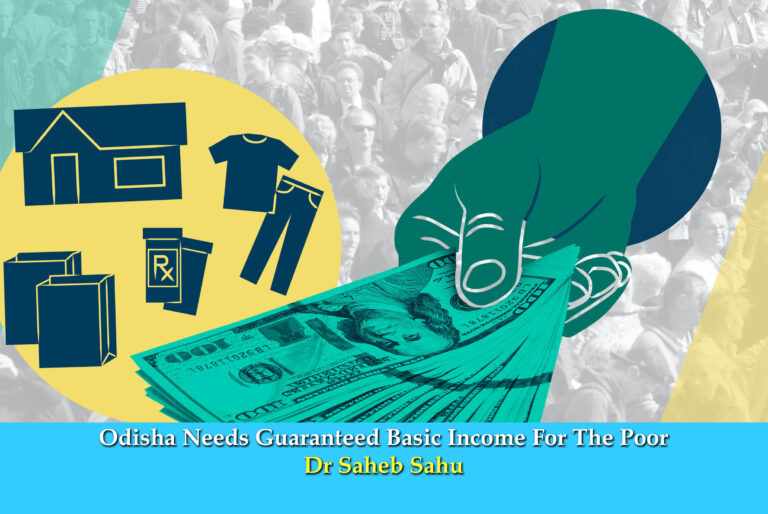
 According to Banerjee and Duflo, in recent years, a number of countries have introduced conditional cash transfer (CCT) programs, making it possible for economists to study the effect of simply giving people money. In 2010, 27 low and middle income countries had a CCT program; by 2016, the number had reached 64. These programs had no work requirement, although they had other requirements, such as sending children to school or requiring pregnant mothers to have their babies in a hospital.

 One critical question is whether an inflow of unearned cash would cause people to become lazy and stop working altogether. Study of data from seven programs in six continents found no evidence that it does.  A study published in National Bureau of Economic Research (2024) looked at cash transfer in middle and low income countries. The conclusion:  On average, cash transfers actually lead to increase in labor-force participation and days of work.

 All these studies tell an important story. There is lot of involuntary unemployment or underemployment in rural areas in poor countries and this unused capacity ca be unlocked when resources (meaning CCT) transfer are poured in. According to Banerjee and Duflo, cash transfer programs have the potential to have large multiplier effects. Not only people don’t work less when they are guaranteed an income, they might actually put more effort at work. And the fact that they have more money to spend leads to the creation of more jobs in the community (multiplier effect).

 Their conclusion: We don’t need to worry so much about the typical economist’s concern that a guaranteed income will make people lazy. Instead, we need to start thinking about how to satisfy the human need for meaningful work in a future where more and more jobs are done by AI.

Definition of Multidimensional Poverty Index (MPI)

MPI goes beyond income. It measures three main dimensions: 1- Health (nutrition, and child mortality) 2- Education (years of schooling and school attendance), 3- Living standard (access to cooking fuel, sanitation, drinking water, electricity, housing and assets).

 A household is considered “MPI Poor” if it is deprived in at least one third of these weighted indicators.

Present Status of Poverty in Odisha

NITI Aayog National Multidimensional Poverty Index (MPI) – Progressive Review (2023) shows Odisha’s MPI head count at 16.68% for 2019-21 (rural 17.7%, urban-2.3%). This is a significant drop compared to 2015-16 (29.34%). Odisha’s own Economic Survey (2024-25) cites these improvements while also acknowledging on going gaps in housing, services and some human development indicators. Despite the state level improvement, poverty is uneven in Odisha; several southern and western districts are poorer. Poverty rate in the district of Malkangiri is 45%, compared to 3.29% of Puri.  The district-wise data makes it clear that Odisha has made good progress, but southern and western districts like Malkangiri, Nabarangpur, Koraput, Rayagada, Mayurbhanj, are still quite poor. 10 of the 200 poorest districts of India are in Odisha.

What steps the present government can take to bring poverty rate to less than five percent?

There is no easy and quick solution to eradicate poverty. It is a shame that in spite of rich mineral resources, long coast line, low population density, reasonably stable governments since independence (Congress, BJD and now BJP), Odisha is still one among the poorer states in India.

Education and Migrations

Education and migration are two of the proven strategies to escape poverty in one generation. It has worked all over the world. Education is one area where government of Odisha, should spend more of it resources to improve infrastructures of schools and colleges (hostels, toilets, libraries, and computers), reduce school dropout rate and improve teacher’s absentee rate, especially in rural schools.

 Oriyas who have migrated to Surat, Bangalore, Hyderabad, Delhi, and Pune are prospering. Even seasonal laborers who migrate to southern states earn more money in few months than they do in a year in Odisha. Government of Odisha, instead of denying that poor people are migrating in large number, it should facilitate migration and see that these people are not taken advantage of by the middle-men. In India the prime example of poverty reduction is the state of Kerala-education and migration. Kerala has no mineral wealth and almost no major industries, and much higher population density but its MPI is the lowest in India (0.55%).

Guaranteed Basic Income for the Poor

There are multiple poverty reduction schemes (Yojanas) at present in Odisha. Some of them are: Subhadra Yojana, Madhubabu Pension scheme, Swayam Scheme, KALIA, Mission Shakti, BSKY, Biju Pucca Ghar Yojana, MGNREGA (Central scheme, started during Congress rule at the center) and few more. The problems with all these schemes are leakage (new word for corruption), improper implementation and the amount of money given are not sufficient enough to get a poor Oriya out of poverty.

 The present government has started the Subhadra Scheme. Under this scheme, each eligible Oriyawoman between the ages of 21-60, receives a payment of 5000 rupees, twice a year for five years. The money is deposited directly into their bank accounts.

The present Subhadra Scheme is a good start but the amount of money being transfer is not enough to get the recipients out of poverty.  The government of Odisha should fold all the poverty related schemes to one and transfer enough cash to each eligible poor Oriya to get him or her out of poverty. Every poor Oriya regardless caste, sex, age, religion, or place of birth should receive the direct deposit in to her/his bank account, every month or even better, once every six months. This way the amount may be sufficient enough for her/him to start a small business.

The Government of Odisha should take the advice of  prominent economists like Abhijit Banerjee, Esther Duflo, Amartya Sen, Angus Deaton,  Philip Van Parijs, Thomas Piketty and many others and expand the Subhadra like scheme (direct cash grant) to  cover all poor Oriyas. The amount of money should be sufficient enough to get one out of poverty.  The cash transfer should last minimum of five years.

 The question is where will the money be found? It is not a question of money but a question of will. If the present government wants to match the poverty rate of Kerala (which it should aspire to), it need to find the money and transfer to the poor for at least five years, without any pre-condition. As the saying goes – “Where there is a will, there is a way”.

 If the present government can lift Odisha from the bottom rug of poorer states to match close to that of Kerala, it will make every Oriya proud and definitely win the next election (just my personal prediction).

PS. Dr Saheb Sahu is a son of farmer’s parents from Bargarh district of Odisha. He was educated at Mulbar Elementary School, Kamgaon Middle School, C. S. Zila School, G. M. College and AIIMS (New Delhi). He migrated to USA in 1970. He was an expert member of WODC for six years. He has written two books and many articles about Odisha’s poverty. His previous articles have been published in Odishawatch.in

Sources:

 1- Abhijit Banerjee and Esther Duflo: Poor Economics: A Radical Rethinking of the Way to Fight Poverty. The Wall Street Journal, Sept 13-14, 2025.

2-Chat Gpt, Sept, 24, 2025.

Suicide and Aging: Examining End-of-Life Choices for Older Adults

0

Dr Saheb Sahu

“There is only one serious philosophical question that is suicide.”

  • Albert Camus, The Myth of Sisyphus

“The thought of suicide is a great consolation: by means of it one gets through many a dark nights.”

  • Friedrich Nietzsche, Philosopher

The Wall Street Journal published an article on March 15-16, 2025, by Jason Zweig titled- “The Last Decision by the World’s Leading Thinker on Decisions”. The article is about Professor and Nobel Laureate, Daniel Kahneman’s decision to end his life in Switzerland by physician assisted suicide.

 Daniel Kahneman (1934-2024) was an Israeli-American psychologist best known for his works on the psychology of judgment and decision-making as well as behavioral economics, for which he was awarded the 2007 Nobel Memorial Prize in Economic Sciences together with Veron L. Smith. Kahneman became the grandfather of behavioral economics. His book (2011), Thinking Fast and Slow, became an international best seller.

 Kahneman died by assisted suicide on March 27, 2024, three weeks after his 90th birthday in Switzerland, though the manner of his death was only revealed in March 2025. Around March 22, 2024, he started emailing a personal message to several dozen of the people he was close to. On March 26, Kahneman left his family in Paris and flew to Switzerland. His email explained why:

“This is a goodbye letter I am sending friendsto tell them that I am on my way to Switzerland, where my life will end on March 27. I have believed since I was a teenager that the miseries and indignities of the last years of life are superfluous, and I am acting on that belief.

 I am still active, enjoying many things in life (except daily news) and will die a happy man. But my kidneys are on their last legs, the frequency of mental lapses is increasing, and I am ninety years old. It is time to go.

 Not surprisingly, some of those who love me would have preferred for me to wait until it is obvious that my life is not worth extending. But I made my decision precisely because I wanted to avoid that state, so it had to appear premature. I am grateful to the few with whom I shared early, who all reluctantly came around to support me.

 I am not embarrassed by my choice, but I am also not interested in making it a public statement. The family will avoid details about the cause of death to the extent possible, because no one wants it to be the focus of the obits. Please avoid talking about it for few days.

 I discovered after making the decision that I am not afraid of not existing, and I think of death as going to sleep and not waking up. The last period has truly not been hard, except for witnessing the pain I caused others. So if you are inclined to be sorry for me, don’t be.

 Thank you for helping make my life a good one.”

Kahneman’s wife Anne had died of stroke in 2018 after several years of suffering from vascular dementia. Her illness was acutely painful to Kahneman; as he emailed to his friend Jason Zweig in July 2015,” I am very preoccupied by Anne’s health and am not functioning altogether well.” Phillip E. Tetlock, a friend and Professor at University of Pennsylvania adds, “I have never seen a better planned death than the one Danny designed.” (WSJ, March 15-16, 2025, C1).

Evolution of Attitude Towards Suicide

Hinduism accepts a man’s right to end one’s life, through the practice of fasting. It is called Pryopavesa in Sanskrit meaning “the act of sitting down to death”, signifying a voluntary, gradual process of fasting until death. The Jains are the strict believers of non-violence. The only life a Jain can take his own. Jainism approves suicide, especially by slow starvation, known as Sallekhana or Samadhi-maran. A central tenet of Buddhism is captured in the word mujo, meaning impermanence.  Life is impermanence. For Buddhists, suicide is seen as a negative act but not a sin. Buddhist traditions help to explain the acceptance of suicide in Japan and other S.E. Asian countries where Buddhism prevails.

 Most Greek and Roman Philosophers had mixed feeling about suicide. Pythagoreans opposed it, but the Epicureans and Stoics welcome it. Plato accepted suicide for painful and incurable illnesses. Aristotle considered suicide counter to virtue and an act of cowardice.

 The Old Testament (the Jewish Bible) offers a neutral account of several voluntary suicides like that of King Saul. Suicide is sometimes acceptable in Jewish laws. There is simply no evidence in either the Old Testament or the New Testament (Christian Bible) to sustain any moral condemnation of suicide. St. Augustine (354-430AD), the greatest of the Latin Church Fathers, considered suicide as a sin. His ideas have influenced the present stand of the Roman Catholic Church, which considers suicide as a sin. Despite recognizing suicide as a sin, many Protestants denominations emphasize God’s grace and the possibility of forgiveness.

Suicide is considered a cardinal sin in Islam. In general, suicide is viewed by Muslims as taking away the gift of life given by God.

 Starting from around 10th century England, suicide became increasingly viewed as a sin and a crime. With the spread of Christianity by the colonial powers (England, Spain, Portugal, Denmark, Belgium and others), suicide became a crime in many countries colonized by them. Those laws are still on the books in many countries around the world including India.

Palliative and Hospice Care

Palliative and hospice care, both focus on improving the quality of life for the people with serious illnesses, but they differ in certain ways:

Palliative Care:

. Available at any stage of a serious illness, including alongside curative treatments,

. Aims to relieve symptoms (e.g. pain, fatigue, nausea etc.) and improve overall well-being,

.Care can be provided in hospitals, outpatient clinics, or at home,

. Patients may still be receiving treatments intended to cure or manage their diseases.

Hospice Care:

. Specifically meant for patients who are terminally ill (typically with a life expectancy of six months or less, in US)

. Focuses entirely on comfort care, no active treatment for the main disease

. Care can be provided at home, in hospice facilities, or nursing homes

. Usually covered by most health insurance.

 In short, palliative care can be provided at any stage of illness, while hospice care is reserved for end-of-life care when curative treatment is no longer pursued.

While the distinction between palliative and hospice care exists globally, the definitions and implementations differ. Palliative care services are limited in many poor countries especially in the rural areas.

What is physician-assisted suicide?

 Physician-assisted suicide (PAS) or Physician-assisted dying (PAD), is suicide undertaken with the aid of a physician. The eligibility criteria vary from jurisdiction to jurisdiction. The patient should meet following criteria:

. Should be suffering from a terminal illness

. Be mentally competent

.Submit a written request to the physician

.The physician confirms the diagnosis and prognosis

 After a mandatory waiting period after the request, the physician prescribes life-ending medications, which is self-administered by the patient. The overdose of the drugs depress the central nervous system, and the patient falls asleep within 3-5 minutes, and usually die within 30-40 minutes after the ingestion. Usually an antiemetic drug is given 30-60 minutes before the lethal drug to prevent vomiting. The death is painless and quick.

As of March 2025, physician-assisted suicide is legal in several countries including: Austria, Belgium, Germany, Luxemburg, Switzerland, Netherlands, Portugal, Spain, Australia, New Zealand, Colombia, Ecuador, Canada, and 10 out of the 50 states in the United States.PAS is illegal in India but allowing the withdrawal of life-sustaining treatment for terminally ill patients or those with vegetative state is legal.

 Although assisted suicide remains illegal in most countries, it is on the rise. A recent Gallop survey asked whether it should be legal for doctors to assist terminally ill patients in severe pain to commit suicide; 60 percent of Americans said yes.

What is VSED?

Voluntarily Stopping Eating and Drinking (VSED) is an old choice rooted in Hinduism and Jainism, going back to more than 2500 years or more. Suicide by starvation was regarded as particularly meritorious by both Hindus and Jains. It is a choice now being advocated by palliative care professionals and organization like Compassion and Choices.

 In VSED, an adult makes a conscious decision to refuse foods and fluids of any kind, including artificial nutrition and /or hydration, in order to advance the time of her /his death. In the first few days of the fast, some people may remain as active as before but many soon will become weak, fatigued and increasingly sleepy.

 Death from VSED is a natural process. It is difficult to predict exactly when the end will come. This depends on the person’s: physical condition, nutritional status, age, illnesses, fluid retention and perhaps a readiness to let go. For a terminally ill person in poor nutrition, the process may take several days to 2-3 weeks. Individuals and loved ones who may consider this option should understand the importance of stopping all fluids, including ice chips. Intake of even small amounts of food or water can prolong the dying process. The most frequently reported adverse side effects are: thirst and dry mouth, and occasional hunger. Good oral care (glycerin wipes) can ease the symptoms. Some people may experience increased confusion, delirium and agitation as the body organs shut down. These symptoms can be managed by doctors or hospice workers.

 Problems of Old Age

The definition of “being considered old”varies across cultures. Traditionally many developed countries have associated old age with the retirement age, typically around 65 years. The United Nations consider individuals aged 60 and above as older persons.  In some African countries old age is recognized at 50, reflecting the different life expectancy and social roles.

 As individuals age, they often encounter a range of health challenges that can impact heir quality of life. Common health problems among older adults include:

. Cardiovascular diseases- high blood pressure, heart disease and strokes

. Diabetes and its multiple complications- kidney failure, heart disease, memory loss (dementia)

. Joint pains (arthritis), muscle weakness and balance problems, frailty, falls and broken bones

. Vision and hearing loss

. Cognitive decline- Alzheimer’s disease and other dementias

. Chronic Obstructive Pulmonary Disease (COPD)

. Loneliness and depression

“As we advance in life, the circle of our pain enlarges, while that of our pleasure contracts” said Sophie Swetchine.

How can older people have a peaceful and quick death?

As we get older, discussion about end-of-life choices become increasingly pertinent. Older people, like everyone else wish for a peaceful and relatively quick death, free from pain and suffering. Respecting an individual’s autonomy is a fundamental ethical principle. Older adults, having lived full lives, like Professor Kahneman, may wish to exert control over their final moments, especially when facing a terminal illness. Legal avenues such as physician-assisted dying (PAD) exist in certain jurisdictions, allowing competent adults to end their lives. These practices are often accompanied by stringent safeguards to ensure that the choice is voluntary.

 Before considering options like PAD or VSED, older adults suffering from terminal illness, should seek the services of palliative and hospice care. These services provide relief from pain and stress of serious illness both for the patients and their families.

Conclusion

 Why don’t we die the way we want to die? Advances in medicine have eased the line between saving life and prolonging dying. Everybody wants to have a “good death”.  A “good death” is a deeply personal concept, based on individual values, beliefs, and cultural practices. However common themes often include: minimal pain and distress, dyingat home surrounded by loved ones, resolving conflicts, expressing final wishes and getting support from one’s religious practices. However in real life, “dying is painful, messy and imperfect” said Dr Sherwin Nuland in his bestselling book: How We Die: Reflections on life’s Final Chapter. It can also be expensive.

 We have no control when we will die. However we have some control over where and how we will die. To achieve the twin goals, it will take some advance planning on our parts. When we are old or suffering from a terminal illness or illnesses, we should discuss with our loved ones, our end-of-life wishes. Do we want to die at home or in a hospital? Do we want unnecessary and costly treatments just to live few more months?   Do we want physician-assisted dying if it is available to us? Do we want VSED? The final decision is ours but we must let our family members and doctors know our wishes.

 Steps we can take in preparing for our death are:

Designating an individual to make medical decisions on our behalf in case we become incapacitated. It is called Healthcare Proxy.

. Executing a Living-Will or Advance Health-Care Directive– stating our end-of life wishes like- CPR or no CPR, organ and body donation.

.To have a properly executed Will and Testament (estate planning) – so that our heirs know how our assets will be distributed.

I will conclude this article with a quote from the Panchatantra (200BCE?)

 Aging

 When the body is shriveled

And another step falters;

When the teeth are decayed

 And the face smeared with slobber,

 When the sight fails

And the figure is no longer trim;

The kinsfolk find no time for conversation

 Even the son despises the man

 Overcome by old age, alas!

As some body has said, the only way to have a good death is to lead a good life, a life full of curiosity, compassion, and generosity.

Ps- Dr Sahu is a graduate of AIIMS (New Delhi) and a retired children and premature baby’s physician in USA. He has taught and written about death and dying for more than 45 years. He has written two books on the subject: 1- End of Life Care Issues (2011) and 2- Death, A Necessary End Will Come When It Will Come (2014). He tries to keep up with the literature on the topic of death and dying.

 Sources

1- Jason Zweig. The Last Decision by the World’s Leading Thinker on Decision. The Wall Street Journal, March15-16, 2025, P-C1

2-Chat GPT

3-Compassion and choices- compassionchoices.org

4- Death with Dignity- deathwithdignity.org

5- Nuland Sherwin B. “How We Die: Reflection on Life’s Final Chapter. Alfred A. Knopf; New York: 1993

6– Saheb Sahu. Death, A Necessary End Will Come When It Will Come. S.B. Trust; Sambalpur, Odisha, 2014


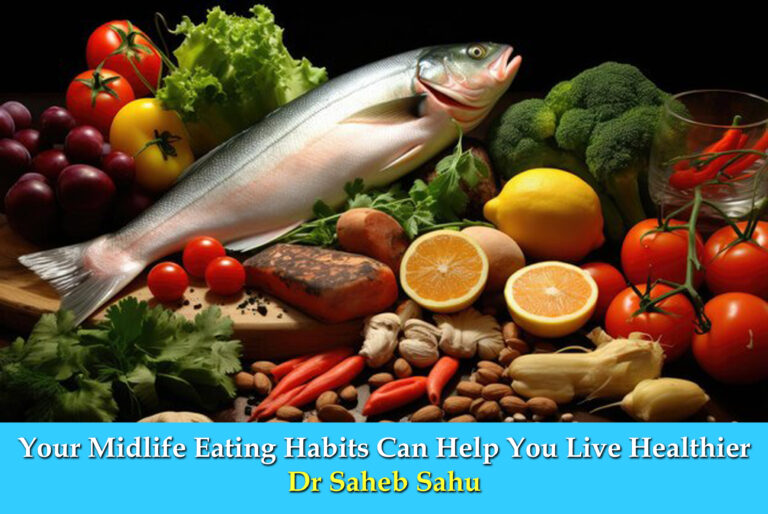
Your Midlife Eating Habits Can Help You Live Healthier

0

Dr Saheb Sahu

If you reach 70 years old healthy and disease-free, you may have your diet to thank, new research suggests.

 The study which analyzed health data of more than 100,000 people over 30 years is the first of its kind to examine how dietary patterns affect not only your lifespan (how long you live) but how well people age (health span). The study was published in Nature Medicine (March 24, 2025) and led by researchers at Harvard University, and University of Copenhagen, and the University of Montreal.

 The result: A diet emphasizing vegetables, fruits, healthy fats and some animal products like fish and diary over the long term was the most likely to make a difference in aging in good health.

What is Healthy Aging?

The researchers defined healthy aging as reaching 70 in good cognitive, physical and mental health and without developing a major chronic disease such as diabetes, heart disease, or cancer. Just under 10 % of the population tracked for 30 year period met the criteria.

 The data came from two well known long-term research projects in the world, the Nurse Health Study and the Health Professional Follow-up Study, which started at Harvard in the 1970s and 1980s.

 People who scored high in adhering to the so called “Alternative Healthy Eating Index”, a plant-rich diet plus proteins like diary and fish, had an  86% higher chance of healthy aging than those whose diet scored low for that diet.

 Diets high in transfats, salt, sugarydrinks, and red or processed meats, like steak, ham and sausages were linked to worse healthy-aging results.

 Other studies have looked at whether specific diets help people live longer. One published in 2023 found that sticking to similarly healthy diets was linked to a lower risk of premature death. Keep in mind that robust nutrition research is notoriously hard to conduct.

 Conclusion

The above mentioned long-term studies were done in middle class professionals in developed countries. Repeating the research in more diverse populations will help determine whether the results will apply more broadly. It is important to remember that there is no diet which will fit people from all background and cultures. A balanced and sensible approach is the best.

However, there is a strong consensus among experts that you take the following steps for healthy aging as well as for longevity:

1-Stay Physically Active: Aim for 150 minutes per week of moderate intensity exercise (walking, running, swimming, playing games, etc.). Include strength training (2-3m per week) and balance and flexibility training (yoga, tai-chi, stretching).

2.- Eat a Balanced, Nutritious Diet- Prioritize fruits, vegetables ( of all colors), whole grains, beans and legumes, fish, diary and eggs, low in fat, sugar and sugary drinks and ultra-processed foods. Eat in moderation. Maintain a healthy body weight.

3- Get 7-8 hours of Sleep Per Night.

4- Stay Socially Connected- Family, friends, co-workers.

5- Get Regular Health Check-ups. Monitor your blood pressure, blood sugar, cholesterol levels. Keep your vaccinations up-to-date (e.g. Flu, Corvid, shingles, hepatitis, pneumonia, tetanus and others).

6- Avoid Risky Behaviors- Do not smoke, do not drink alcohol (no amount of alcohol is good for health), wear seat belts and helmet.

7- Keep Your Mind Engaged- Learn new things. Be a life-long learner.

Take the above steps now. Do not wait until you are old.

Sources:

1- The Wall Street Journal. April 21, 2025.

2- Chat Gpt