Tuesday, April 28, 2026
Home Blog Page 44

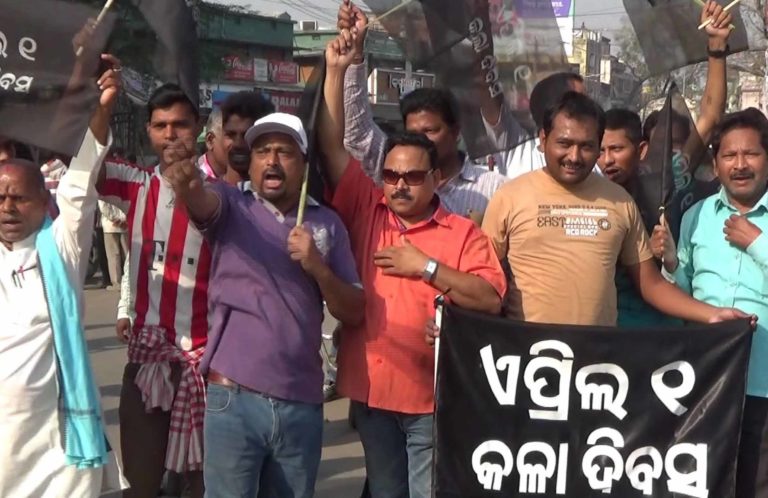
Western Odisha observed black day on Utkal Dibas

When the eastern part of Odisha is merge in the celebration of Utkal Divas, the western part of the state is observing black day demanding separate Kosal state.

In many towns, like Padampur, Bargarh, Sonepur, Sambalpur, Titilagarh, Balangir, etc separate Kosal state supporters came out to road in support to observe black day.

The activist were quoting the reasons as negligence towards western part of Odisha in development. And their language and culture is not presented equally with in Odisha, the way Odia culture is propagated.

Further the Kosal state supporters have been found protesting online in social media like Facebook by changing their profile photos to black.

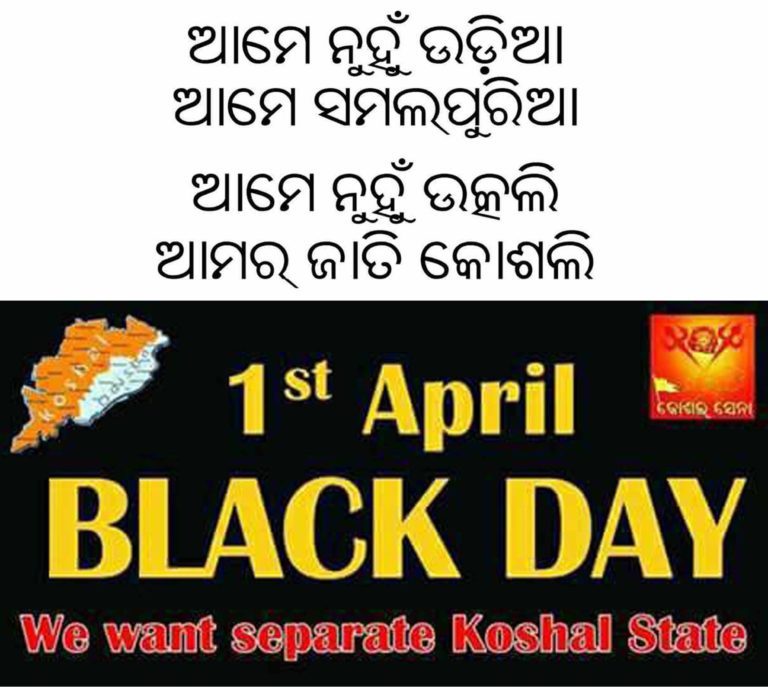
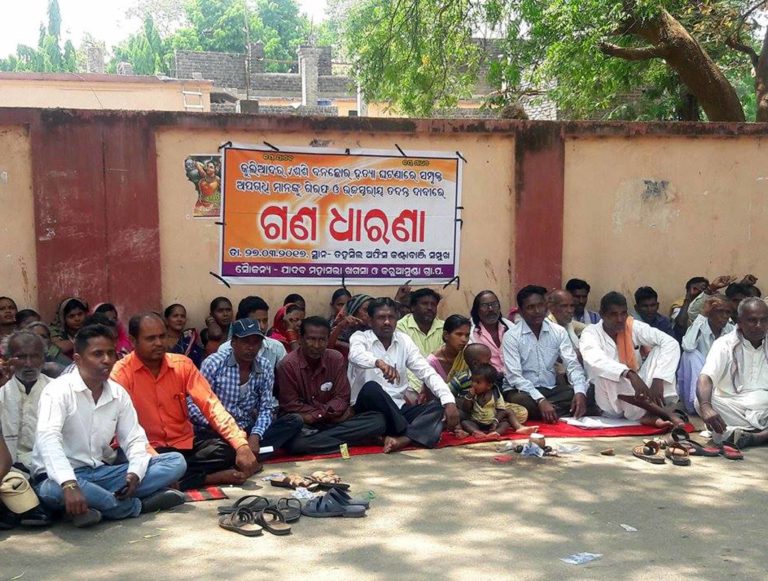
Koshal Sena calls to observe black day on 1st April

The Koshal Sena, an outfit fighting for the separate Koshal state in Odisha has called on to observe black day on April 1st opposing the celebration of Odisha Divas or Utkal Divas. Odisha Divas is celebrated in memory of formation of separate Odisha state on 1st April 1936.

The protestors are alleging that the State Government has been neglecting the western region since formation of Odisha state. The activist are demanding a separate state as ‘Koshal’.

Padampur boy own bronze in Asian Chess Championship

0

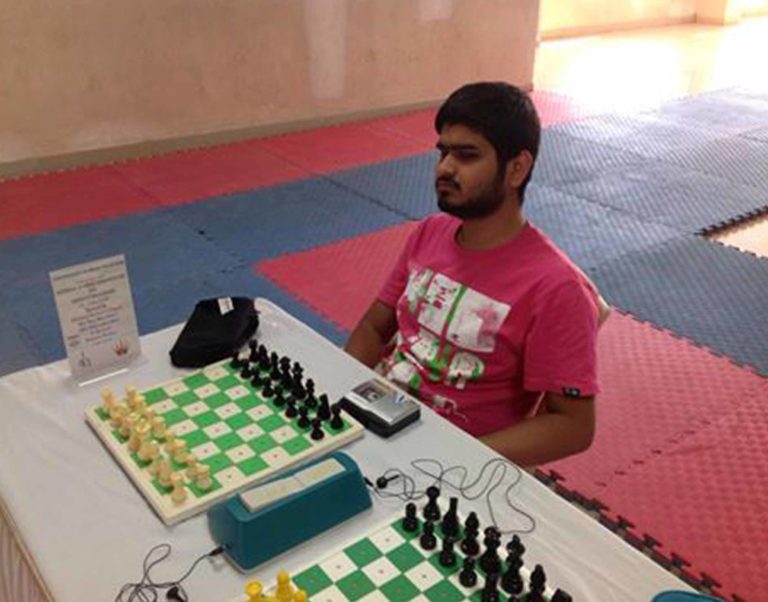
Soundarya Pradhan of Padampur, Odisha won Bronze in Asian Chess Championship for the visually challenged 2017 organised by IBCA (International Braille Chess Association) in collaboration with AICFB at Manipal University campus from 23rd to 31st March.

The Indian players were on top in the 8 round championships as Kishan Ganguli of Karnataka scored 7 points to win Gold. Aswin Makwana of Gujrat and Soundarya Kumar Pradhan of Odisha had 6 points each but Aswin bagged the silver with a better tie breaker.

Soundarya, recently, had made us proud by making it to the National team for the forthcoming World Olympiad to be held in Macedonia says his uncle Prof Kesha Ranjan Pradhan on his Facebook post.

The medal is special. All your blessings and best wishes have given it a special shape, he added.

Women’s Rights in India and Odisha_Dr Saheb Sahu

CEDAW

The Convention on the Elimination of all Forms of Discrimination Against Women (cedaw) is international treaty adopted in 1979 by the United Nation General Assembly. The treaty has been ratified by 189 countries, including India. Article 1 defines discrimination against women in the following terms:

“Any discrimination, exclusion or restriction made on the basis of sex which has the effect or  purpose of impairing or nullifying the recognition, enjoyment or exercise by women, irrespective of their marital status, on a basis of equality of men and women, of human rights and fundamental freedoms in the political, economic, social, cultural, civil or any other filed .“

Women’s rights are secured under the Constitution of India- mainly, equality, dignity, and freedom from discrimination. India also has various statues governing the rights of women. However India’s Gender Equality Index (0.530, in 2015) ranks 125th out of 188 countries in the world.

In this article I will discuss some the rights which are most important to Indian women.

Life and Health

Women’s lives are unequally at risk in many parts of the world, including India. Statistics continue to show that women suffer unequally from hunger, malnutrition and from unequal access to basic health care. Religions and cultures have contributed to this state of affairs. It is difficult to distinguish between a religion and the cultural traditions that surround it. All religions have denigrated the value of female life. In India even though dowry is illegal, many married women are abused, burnt and killed, because their parents could not pay the dowry.

Multiple studies have shown that when food supply is limited, boys are given priorities over girls. Same is true of healthcare and education. Girls fetch water, work in the kitchen while boys are allowed to play or attend school.

Right to Bodily Integrity

Women suffer many abuses that violate their bodies. These include domestic violence, sexual abuse, molestation, rape, and in certain Islamic culture genital mutilation. Rape is an underreported and under punished crime world over including India. In both the Hindu and Islamic communities, unequal access to property rights and divorce and poverty frequently forces married women to stay in an abusive relationship. The very concept of marital rape is foreign to many religions, which give a husband unlimited access to the wife. Female genital mutilation is frequently defended on the basis of Islam. Some punishment sanctioned by the Koran and the Sharia laws are “cruel, inhuman, or degrading” to women.

There can be no doubt that the control of women’s bodies has been central preoccupation of many, if not most, religions of the world. In a wide range of cases, they violate some of the most basic right of a human being.

Education and JOBS

Nothing is more important to women’s life chances than education. With education a woman may consider her options and to some extent shape her future. With education she may get a job, start a business, do her own accounts, read an important notice that comes to her in the mail. She may question traditions and discover how women in other parts of the world are managing to live better.

Women‘s educational opportunities and achievements are dramatically limited in many nations including India. As per 2011 census, India’s overall literacy rate was 74.04 %( China-96.4%) but women’s literacy rate was only 65.5%. Kerala has the highest female literacy rate (92%) among the Indian states followed by Mizoram (89%).In Odisha the, the male literacy rate was 73.5% but the female literacy rate was only 50.97%. Among the Oriya women the lowest literacy level was in Nabarangpur district (21%) and in Malkangiri(21%).

According to 2015 statistics only 35.3% of India’s female population over 25 has some form of secondary education. Based on 2013 statistics, the percentage female students enrolled in undergraduate degree programs were 46%.The percentage female students were, 51% in medicine, 40% in IT, 35% in management, 32% in law and 28.5% in engineering. All these are hopeful numbers.

However the overall labor participation of women in India is only 29%.  The share of central government jobs held by women in India is only 10%. Only 15.45% of IAS officers were  women. Out of 323 top CEOS of Indian companies only 8(2.5%) are women.   Women earn 56% of what their male colleague earn for performing the same job.

Rights of Property and Family Law

Artcle 15 of the women’s convention (cedaw) insists on women’s equality before the law. Women are to have equal rights to enter into contracts,equal property rights, and have equal treatment before courts and tribunals. This is simply not the case in many countries of the world, including India.Under traditional Islamic law, women are explicitly unequal.In india and Bangladesh , there are some laws governed by religious norms and some by secular laws. In both situations women are treated unequally with men. In India secular marriage is available as an option, but secular divorce is not. Acouple must appeal for divorce to the religion of their birth.

Reproductive Rights

International human right activists agree that women’s access to contraceptions is extremely important women’s right. It gives women reproductive control and protection against some sexually transmitted diseases(condom and diaphagram). Islam and Catholic Church oppose birth control abd abortion. Fortunately, In India women have legal right to birth control and abortion evnthough many of them do not have access to these services, especially in rural areas.

Rights of Political Participation and Speech

Even though women have held high offices including that of the President, Prime Minister, and Speaker of the LokSabha, Leader of the Opposition, many Governors and Chief Ministers only 12% of the Indian members of the Parliament are women. Out of 4896 MPS/MLAS across the country, only 418 or 9%are women. This is very sad statistic, 70 years after independence. In Odisha, out of 147 MLAs only 11(7%) are women.

Even though India does not officially suppress women’s speech, but the fear of offending the religious and the political authorities does at times pose a threat to free speech.

Conclusion

The Indian Constitution (1950) in its enumerated Fundamental Rights include a right for all persons to equal protection of the laws and also a right to nondiscrimination on the ground of  “religion, caste, sex or place of birth”. The Constitution (Article17) also abolished “untouchability”. Unfortunately 67 years later, discrimination based on caste, sex, and religion continues in India.

While the educated urban middle class women’s rights continue to improve, it is not the case for vast majority of women in India. India’s maternal deaths from child birth and infant mortality rates are unacceptably high. Female infanticide is common. Women’s access to healthcare is limited. Women’s literacy rate and labor force participation rate is lower than that of men. Percentage of women in political office and high power jobs are very low. Women are also paid less than men for similar jobs. On the whole in Indian culture women are valued less than men.

No nation can claim to be free and prosperous, where half of its people are being oppressed and neglected. All developmental experts agree on at least one point-that sustainable and long-term development is not possible without the full participation and empowerment of women. We should remember Pandit Nehru’s observation that “you can tell the condition of a Nation by looking at the status of its women”. If we apply Pandit Nehru’s criterion, India Gender Equity Index ranking of 125 among 188 countries in the world is nothing but shameful after 70 years of independence. India has a long way to go make life better for her women citizen. It is time all of us work at it.

To rectify the present situation India should reserve certain percentage of all the political offices (from panchayat to MlAs, MPs) for women until their numbers come close to that of men.


Multi-lingual Education in Odisha( II)_Arjun Purohit

0

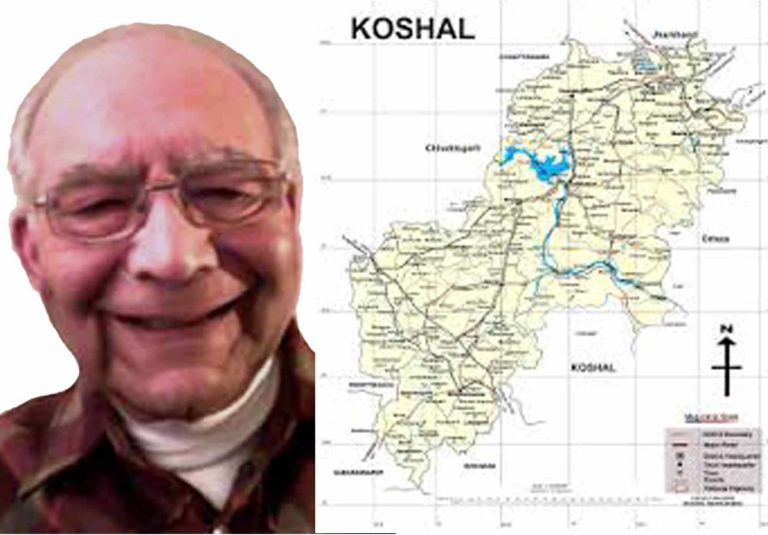
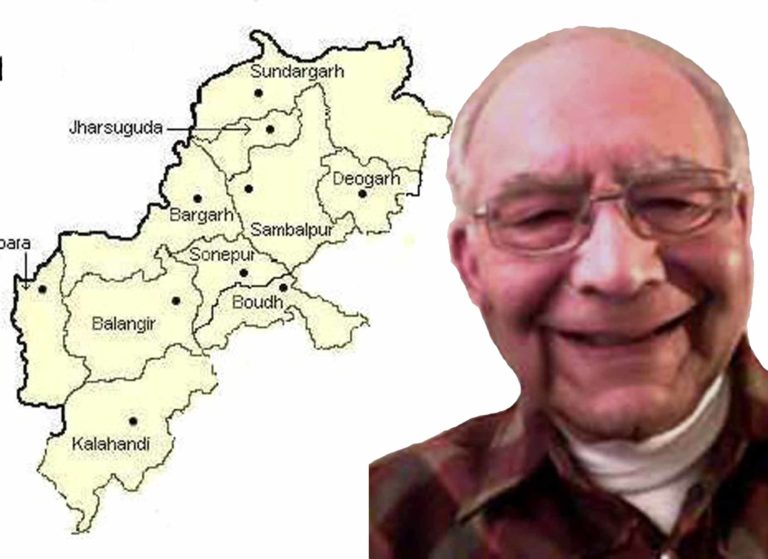
Dr. Patnaik writes in his article: “Odisha is the meeting place of Ashtrik (Austroloid ?),Dravidian and Aryan languages.” I presume he means Adivashi languages as Ashtrik or Austroloid languages. True, but it can be said the same for all central Indian languages, which may differ significantly from Odia. Since Ramayana period Aryan language and culture has been spreading from northern India to the tip of southern India including Sri Lanka. Legend has it that it was Agastya rishi who was the first significant Aryan to cross the Vindhyas to establish his hermitage in the south. Nevertheless, all languages evolve in specific context of geography with its idiosyncratic features, unique experiences, historical dynamics, adjacent languages, religious nomenclature, and even climate among other things. I will try to provide a contrast between evolution of Odia and Koshali, though they are contiguous in geography.

As a lay man with passing interest in history let me try to give a brief snapshot of major influences on the evolution of Odia as a language. Coastal Odisha, primarily parts of old Kalinga, parts of old Utkala, Udra and Kangoda is in the temperate zone facing the sea to the east and Koshal to the west. It has been subjected to floods and usual turbulences associated with being near the sea. Original inhabitants were different tribes, with their own languages. According to Sarat Behera, chronicler of Kongoda (Rise and Fall of Sailodbhabas), significant Aryanisation of central coastal area, especially Kongoda area happened during Sailodbhaba period. Nevertheless, Brahmins always acted as intellectual mercenaries serving different kings; therefore they must have entered the territories at various times even before that. Most of the coastal area was entered by various armies primarily through the north to south route along the coast line, such as, Nandas, Mauryas, Bhaumas, Gangas, Afgans, Moguls and British etc. except perhaps, Meghvahana and Somavanshis from Koshal in the west. Marathas entered by Mahanadi. In the wake of these invasions, languages, religions, fashions, customs and what not were brought in and these had significant transformative influence on the language. One of the most significant impacts on Odia language is Arrival of 10,000 Brahmins by Jajati Keshari, the Somavanshi king. These Brahmins were responsible in Sanskrising Odia language like never before. During Somavanshi’s regime, Odia’s Script which was called Bartula Devanagari evolved. For a long time, it was considered a sacrilege to write anything in non-Sanskrit; but once this taboo was broken by Sarala Das, Odia literature flourished. Today Odia is great language with a rich vocabulary mostly of Sanskrit origin but it also has footprints of many non-Sanskrit influences. Khan in his Muslim Administration of Orissa says that nearly 2000 Arab/Persian/Urdu words embellish Odia language. Even the short presence of Portuguese had a little mark, for instance, the word ChAbi came from them (Source, B.C.Ray: Orissa Under The Moguls). The influence of English is too obvious to merit discussion. Odia language speakers are justifiably proud of their language. It has truly evolved into beautiful one. It also has developed great and unique musical styles rivaling other great musical traditions of India. Although I am a Koshali, I am in love with Odia language and literature, though with a distinct accent.

I am no historian, nor I can claim to be linguist, but from my personal experience, I find no little semblance between the Odia which might have been in vogue centuries ago and the one in present use. During my travel in Bali in Indonesia, where I met descendants of Kalingans who settled there more than a thousand years ago, I found very little similarity between their language and Odia as spoken now. They use the same legends (Ramayana,for instance), the same deities, like Jagannath,Vishnu,Garuda, etc. but with rituals very different from that of Odisha now. In conclusion,Odia is not a static language; it continues to evolve; and hopefully will continue to be richer. However beyond Odisha’s border, be it Sadeikela/Kharsuan or Medinipur, Odia is slowly getting atrophied because of its lack of relevance in day to day life. Some fifty years ago, I have met descendants of Odias (originally of Puri) who had settled in a few villages near Darbhanga(Mathili speaking part of North Bihar) because one of the kings of Mithila brought them to settle there centuries ago. They claim to speak Odia but it was hard for me to understand them. Thus, modern Odia has morphed into a very different and elegant form since the days of meeting of Dravidian, Aryan and Ashtric languages.

Child Protection team of Unicef-India visited Khandapada

0

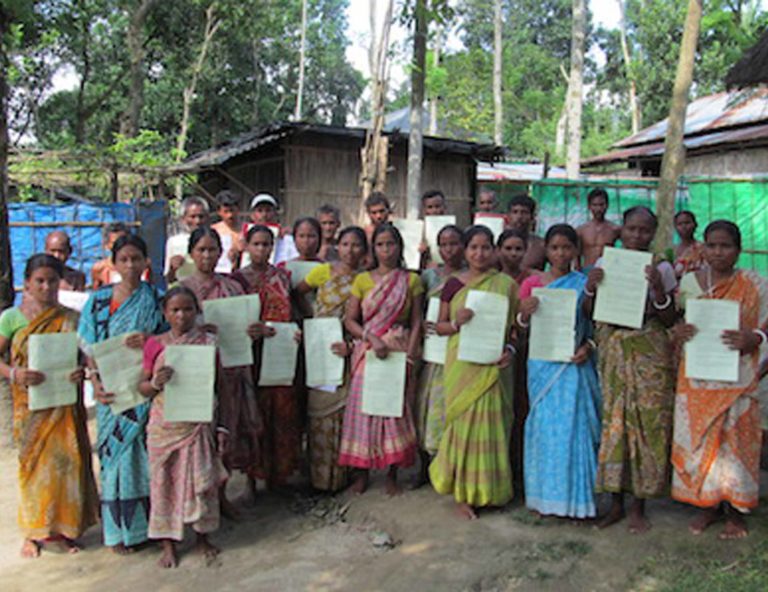
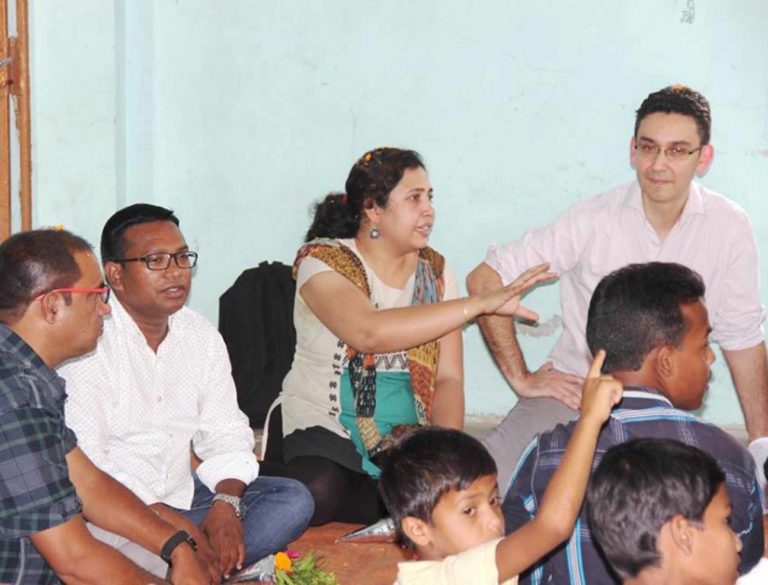
Child Protection chief of Unicef-India visited Child Friendly Constituency-Khandapada to learn the idea of ‘child friendly constituency’, the process, results achieved and the possibilities for its replication various parts of Odisha. Mr. Aguilar Javier, Chief, Child Protection Program, UNICEF India along with Child Protection Specialist Mr. Laxmi Narayan Nanda visited Dhanchangada gram panchayat and interacted with child leaders, change makers GPRPs (gram panchayat resource person) and various other stakeholders like parents, youth groups, service providers and local elected representatives of Khandapada.

They tried to understand how this initiative has been different from other development programme where elected officials take leadership to protect the rights of the children and children able to interact with them with their plan of action and agenda at gram panchayat level.

Team Youth for Social Development who implemented the initiative with the support from Unicef has narrated how tools such as fact sheet, planning, score card, constituency profile analysis have helped to identify ad prioritise children’s issues and present those before the officials and elected representatives at the highest decision making body i.e. in Gram Sabha of the lowest tire of government in India. On the other hand they learned how the convergence and coordination mechanism created at GP, block and district level to improve services in the five flagship programmes focused on children’s development and protection. They impressed with the programmes design, information gathered through participatory tools and the formal mechanism for children’s participation in gram sabha, bloc k and district level meetings. He also happy with the active participation of children and their parents in this initiative.

This will help them to understand the current situation of child protection and participation in Odisha to design a robust programme for the protection of children. Team YSD consists of Ratneswar Sahu, Subhasis, Bibhuti, Bikash, Chandan and Abhiram along with secretary, Bibhu Prasad Sahu and team members from AASHA, local supporting NGO were present in this occasion and facilitate the process.

Hindu New Year celebrated at Kantabanji

0

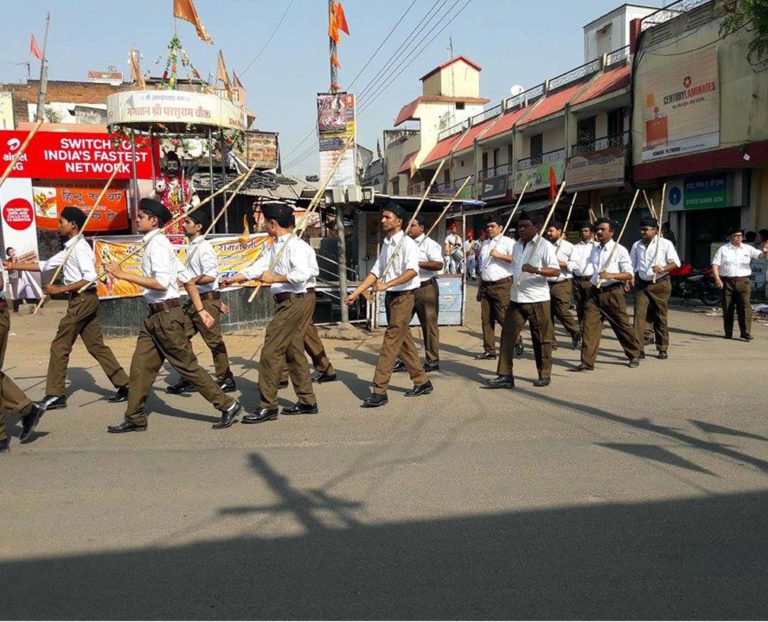
Hindu New Year has been celebrated at Kantabanji of Balangir district. On this occasion the local unit of RSS organized pathasanchalan programmee. The members of RSS took their rally on the main road up to the Ram temple of Kantabanji.  The entire Hindu household welcomes the rally on the way. The RSS members sent the message of brotherhood on this occasion.

Yadav Mahasabha demand to arrest the mastermind

On 13th of this month Sashi Banchor, village Kuliadadar of Kantabaji police station was killed due to previous enmity. Police arrested 3 people in this connection. But the   Yadav Mahasabha of kantabanji claims more people are involved along with mastermind Lalsai Tandi, a local BJD leader. The Yadav Mahasangha demonstrated in front of the Kantabanji Tehsil office demanding the arrest of those.

The Mahasangha threatened to to the administration to act within 7 days or else face the protest. The Mahasangha has also submitted a memorandum to the Tehsildar Subas Chandra.

Multi-lingual education in Odisha_Dr Arjun Purohit

0

As a preamble to what I going to comment, please read Dr.Debi Patnaik’s article in Sambad which appeared in Sambad around December 9, 2011, which can be translated:*Multi-lingual education in Odisha :Plenty of opportunities taking leadership in bi-lingual/multi-lingual education in Odisha”. Earlier Dr.Patnaik vehemently argued about unilateral linguistic character of Odisha, and was opposed to recognising relevance and identity of Koshali language as a separate language. This was in response to our posting (Purohit and Karmee) in this forum about the advisability and possibility of inclusion of Koshali in the 8th schedule. I wrote a four part series as rebuttal to Dr.Patnaik’s assertion. So here is my response to Dr.Patnaik’s posting under question.

First of all, I heartily appreciate Dr.Patnaik’s main themes in this article (1)Odisha is multi-lingual state, with two major languages, Odia and Koshali, and (2) Odisha should provide education through the languages prevalent in the state. I also applaud Odisha government’s recent announcement re provision of instruction through some of the Adivashi languages. This is good. I hope Dr.Patnaik will join me and fellow Koshalis in our quest for inclusion of Koshali in 8th schedule as soon as possible. I understand that recently Odisha government has recommended Ho to be included in the 8th schedule. As to why Odisha government is reticent in recognition of Koshali as a language in its own right is beyond me. This as you can imagine has caused severe bitterness in Koshal or Western Odisha region.As you know when in 1993 High level Commission was established, Indian government specifically asked the commission to exclude Bodo from deliberation because it had already promised Bodo people that Bodo would be included in the 8th schedule to quell the agitation of the students of the area.In the words of the Parliamentary committee,”3.2 However, in the light of the Bodo Accord signed between the Government of India on the one hand and All Bodo Students Union and Bodo People’s Action Committee on the other on 20 February, 1993, the Government decided to delink the matter of inclusion of Bodo language in the Eighth Schedule from the issue of setting up of High Powered Body for evolving criteria for inclusion of more languages in the Eighth Schedule”. Eventually Bodo along with Maithili,Dogri and Santhali were included in the 8 th schedule.So what one expects the Koshalis to do ? Become militant? violent? Rasta Roko,Rail Roko? Learn a few pointers from Naxalites ? Is that the only way? In what way,claims of these languages are any better than Koshali ? Is not the government indirectly encouraging Koshalis to go the way Bodo people took? So far Koshalis are going through all the civil channels,such as, writing memorandums, providing documents of authenticity of our claim,producing literature, making movies,conducting seminars, engaging in debates, launching newspapers and periodicals and everything imaginable but to no effect. Odisha government should listen to Dr.Patnaik and act on his advice to have a dialogue with Koshalis re use of Koshali in primary and secondary education. or democracy to survive in India, population needs to be literate and all the impediments must be eliminated. The primary goal of education must be to prepare the population for the 21st century. As it stands now, aggressive Odianisation with a missionary zeal has resulted in putting huge part of population in a disadvantage in education and consequent huge drop-out rate in schools.Many provinces have more than one recognised language, and such measures enhances the cultural mix because of mutual respect between the language groups. Behind the opposition to recognition of Koshali, there is an oft repeated assertion that Koshali is nothing but a dialect of Odia. This is patently not true, and worse, it is paternalistic. Most coastal Odishans can’t speak Koshali, nor are they familiar with any Koshali literature. They are much more familiar with Bengali in northern coastal area and with Telegu in southern area. So why this pretence ? Why not celebrate the linguistic diversity in Odisha instead ?

Committee urges to diffuse electric problem

In villages like Khaira, (Bagmud) Telipadar, Pipalmuda etc of Bangomunda block have been collectively met the Kantabanji Electrical Engineer under the leadership of Rastrapati Behera. They have submitted a memorandum regarding the problem of electric supply.

In these villages, people are facing problem of drinking water, water for agriculture field, students are facing problem in examination time due to lack of electricity supply to the household. The committee has threatened to agitate if the problems are not diffused immediately by the administrations.