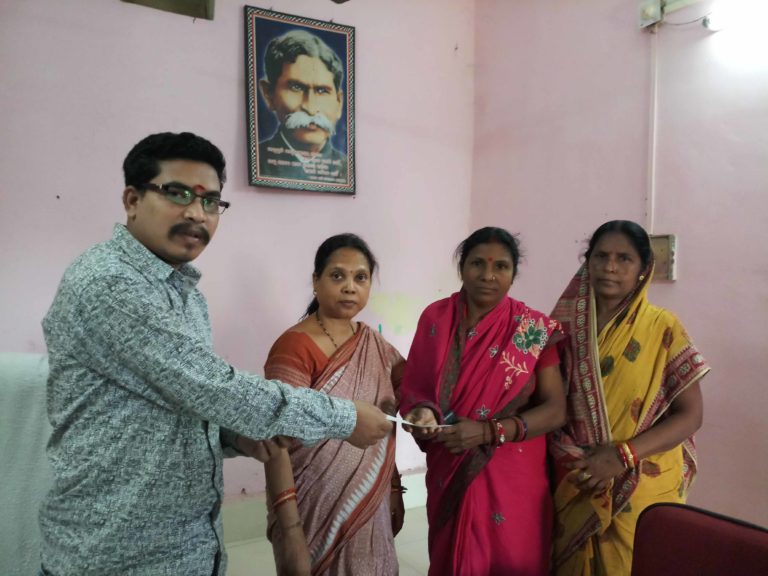
ପଦ୍ମପୁର ବିଞାପିତ ଅଞ୍ଚଳ ପରିଷଦ କାର୍ଯ୍ୟାଳୟ ପରିସର ମଧ୍ୟରେ ଅଧ୍ୟକ୍ଷ ଶ୍ରୀ ସିଦ୍ଧାର୍ଥ ସିଂ ବରିହା, କାର୍ଯ୍ୟ ନିର୍ବାହୀ ଅଧିକାରୀ ଶ୍ରୀ ଅଶୋକ କୁମାର ପାତ୍ର,ଗୋଷ୍ଠୀ ସଂଗଠିକା ଶ୍ରୀମତୀ ଚିତ୍ରୋତ୍ପୋଲା ମେହେରଙ୍କ ଉପସ୍ଥିତିରେ ଦିନଦୟାଲ ଜାତୀୟ ସହରାଞ୍ଚଳ ଜୀବିକା ମିଶନ ଯୋଜନାରେ ପଦ୍ମପୁର ବିଞାପିତ ଅଞ୍ଚଳ ପରିଷଦର ସମସ୍ତ ସ୍ବୟଂ ସହାୟକ ଗୋଷ୍ଠୀ ମାନଙ୍କୁ ଘୄନୟମାନ ପାଣ୍ଠି ବାବଦକୁ ଦଶ ହଜାର ଟଙ୍କା ଲେଖାଏଁ ଚେକ ଆକାରରେ ପ୍ରଦାନ କରାଯାଇଛି ।
୧୬ତମ ଏକ ଦିବସୀୟ କାହ୍ନୁଚରଣ ମେମୋରିଆଲ କ୍ୟାରମ ଟୁର୍ଣ୍ଣାମେଣ୍ଟ ଅନୁଷ୍ଠିତ
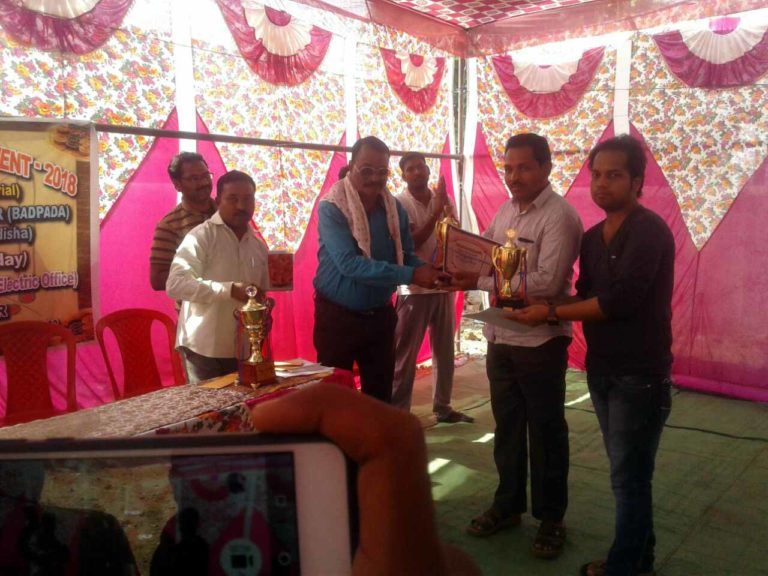
ପଦ୍ମପୁର ସହରର ବଡ଼ପଡା ଯୁବଜ୍ୟୋତି କ୍ଳବ ଆନୁକୂଲ୍ୟରେ ସପ୍ନେଶ୍ବର କଲ୍ୟାଣ ମଣ୍ଡପ ଠାରେ ୧୬ତମ ଏକ ଦିବସୀୟ କାହ୍ନୁଚରଣ ମେମୋରିଆଲ କ୍ୟାରମ ଟୁର୍ଣ୍ଣାମେଣ୍ଟ ରବିବାର ଦିନ ଅନୁଷ୍ଠିତ ହୋଇଯାଇଛି ।ଉଦଘାଟନୀ ଉତ୍ସବରେ ମୁଖ୍ୟ ଅତିଥି ଭାବରେ ପଦ୍ମପୁର ଏନ.ଏ.ସି ଅଧ୍ୟକ୍ଷ ସିଦ୍ଧାର୍ଥ ସିଂ ବରିହା ଓ ସମ୍ମାନୀତ ଅତିଥି ଭାବରେ ବେଣୁମାଧବ ଦୋରା ଯୋଗ ଦେଇ ଖେଲାଲି ମାନଙ୍କୁ ଉତ୍ସାହିତ କରିଥିଲେ ।ଏହି ଟୁର୍ଣ୍ଣାମେଣ୍ଟରେ ୩୬ ଗୋଟି ଦଳ ଅଂଶଗ୍ରହଣ କରିଥିଲେ ।ଉଦଯାପନୀ ଉତ୍ସବରେ ପୂର୍ବତନ ମନ୍ତ୍ରୀ ଶ୍ରୀଯୁକ୍ତ ବିଜୟ ରଞ୍ଜନ ସିଂ ବରିହା ମୁଖ୍ୟ ଅତିଥି ଭାବରେ ଏବଂ ପୁରନ୍ଦର ପ୍ରଧାନ ଓ ବେଣୁମାଧବ ଦୋରା ସମ୍ନାନିତ ଅତିଥି ଭାବରେ ଯୋଗଦେଇ ଝାରସୁଗୁଡାର ଗୁଡ୍ଡୁ ଓ ସମ୍ପଦଙ୍କୁ ବିଜେତା ଏବଂ ଲାଉମୁଣ୍ଡାର ପିଣ୍ଟୁ ଓ ହୄଷିକେଶଙ୍କୁ ଉପବିଜେତା ଏବଂ ଲାଉମୁଣ୍ଡାର ପିଣ୍ଟୁଙ୍କୁ ଶ୍ରେଷ୍ଠ ଖେଲାଲି ପୁରସ୍କାର ରାଶି ସହ ଟ୍ରଫି ପ୍ରଦାନ କରିଥିଲେ ।କମଳ,ଅଚ୍ୟୁତା,ନରେଣ,ଜିତେନ,ଚୁଡା,
Drinking Water Shed Launched by BJYM Padampur
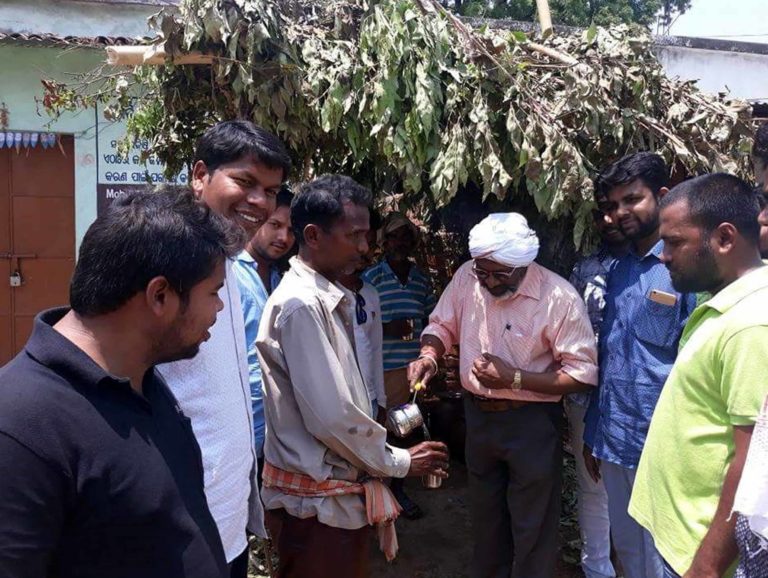
A drinking water shed for market goers in summer has been launched today at Padmpur daily bazaar. The drinking water shed was launched by Bharatiya Janata Youva Morcha unit of Padampur for public. The launcing ceremony was attended by senior BJP leader Pratap Keshari Singh Bariha, Pritesh Bohidar, Sunil Agrawall, Subash Patra, Ashok Mishra, Kishor Sahu, Pali Singh, Saroj Mishra, Arbinda Panigrahi, Pramod Meher, Sebak Meher, Naresh Chandra Sahu, Amit Garg, Kunal Panigrahi, Hitesh Agrawall, Naba Kanta, Naba Kishor Meher, Abhiprit Pattnaik, Siddheswar Maharana, Dinesh Barik etc.
Sirjina Parav 2018 Celebrated
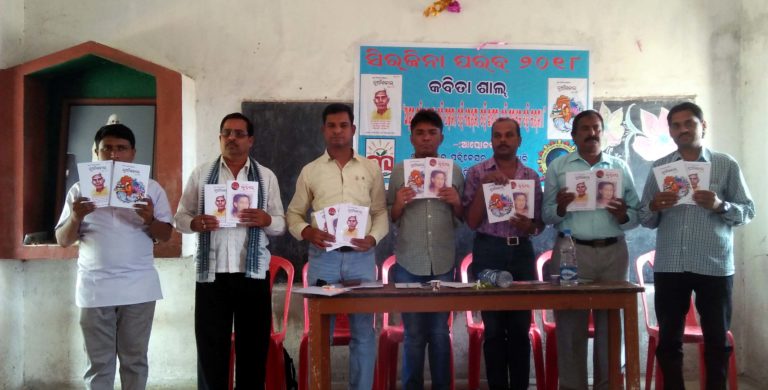
Sirjina Parav 2018 was celebrated at Diptipur, Bargarh by Nuansakal Publication. Juhar and Nuansakal magazine in Kosali language were released and the function was attended by Novelist Tejru Barik, Language activist Saket Sreebhushan Sahu, Lecturer Sushanta Mishra, writer Narendra Mohanty, dramatist Rajkumar Sahu and Gouranga Pandey, Editor Nuansakal.
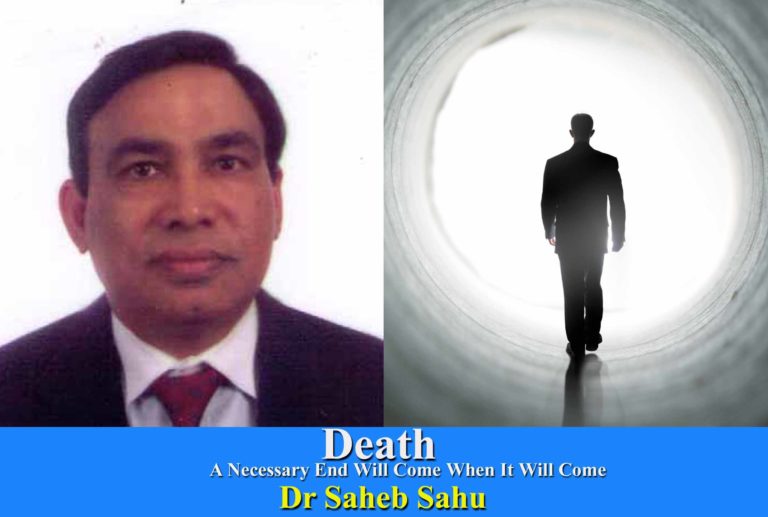
Death: A Necessary End Will Come When It Will Come:Dr Saheb Sahu
Chapter – 5
AGING
When the body is shriveled
And another steps falter;
When the teeth are decayed
And the face smeared with slobber,
When sight fails
And the figure is no longer trim;
The Kinsfolk find no time for conversation
Even the son despises the man
Overcome by old age, alas!
– The Panchatantra 200 B.C?
The long habits of living indispose us from dying.
– Thomas Broune, 1643
Ageing (British English) or aging (American) is the accumulation of changes in a person over time. Aging in human refers to a multidimensional process of physical, psychological and social change. Some dimensions of ageing grow and expand overtime, while others decline. Reaction time, for example, may slow with age, while knowledge and wisdom may expand. Age is usually measured chronologically, (time keeping age) and a person’s birthday is often an important event. Time related aging (chronological) may be distinguished from “social aging” (cultural age – expectations of how people should act as they grow older) and “biological aging” (an organism’s physical state as it ages). For example if you are in excellent health and not overweight, if your chronological age is 70, your biological age may be 65 and your heart age may be 60.
Senescence
In biology, the word, senescence means the state or the process of aging. Cellular senescence is a phenomenon where isolated cells show a limited ability to divide in culture. It was discovered by scientist Leonard Hayflick in 1961, and is known as Hayflick Limit. After a period of near perfect renewal (in humans, between 20 and 35 years)., human being face increasing risk of disease. This currently irreversible series of changes inevitably ends in death.
Some scientists claim aging is an avoidable property of life, that it is the result of a genetic program. Numerous species show very slow signs of aging or negligible senescence. Some of them are sturgeon and rock fish, invetebrate (not having a backbone) like the quahog and sea anemone and lobster.
Theories of Aging
At present, the biological basis of aging is unknown. Even in the relatively simple and short-lived organisms, the mechanism of aging is not known. Much less is known about aging in humans. Theories of aging, are numerous and no one theory has been accepted. Regardless of theory, there is no disagreement that people age, and functions of the body decline.
Wear and Tear Theory
Wear and tear theories suggest that as individual ages, body parts such as cells and organs wear out from continued use. Wearing of the body can be due to internal and external causes, surpassing the capacity of the body to repair. Due to many internal and external insults, cells and organs lose their ability to repair and regenerate. Some of these insults include chemicals in the air, sunlight, smoke, free radicals in foods, trauma and bacteria and viruses.
Genetic Theory
Genetic theories of aging propose that aging is programmed within each individual genes. According to this theory, genes dictate cellular longevity. Programmed cell death (known as apoptosis), is determined by a “biological clock” via genetic information in the nucleus of the cell. An increase in cellular death may corrdate with aging, but is not a cause of death. A number of genetically based diseases show accelerated aging. One of them is progeria, a very rare disease. Children with progeria look old and die as young as thirteen years of age. Just one gene is involved.
DNA Damage Theory
DNA damage has been one of many causes in disease related to aging. DNA damage causes cell to stop dividing or induce cell death. DNA damage is thought to be the common pathway causing both cancer and aging.
General Imbalance Theory
General imbalance theories of aging suggest that body systems, such as the endocrine, nervous, and immune system (system that fights infection), gradually decline and ultimately fail to function. The rate of failure varies system to system.
The Free Radical Theory
The free radical theory of aging argues that aging results from the damage generated by reactive oxygen species (ROS). ROS are small, highly reactive, oxygen – containing molecules that are naturally generated in small amounts during the body’s metabolic reactions. ROS cause disease related aging, such as dementia, cancer and heart disease. The Free Radical Theory of Aging is not accepted by everyone.
Social Theories of Aging
According to Dannefer, aging is an interactive process where the individual is affected by the environment. Several theories of aging have been proposed by social scientist.
Activity Theory
Activity theory implies that the more active elderly people are the more likely they are to be satisfied with life. Activity is preferable to inactivity because it helps well-being in multiple levels. The view that elderly adults should maintain well-being but keeping active has a considerable history. Active older adults have less chronic diseases like – diabetes, hypertension, heart disease, stroke, arthritis and dizzy spells.
There are many other social theories of aging like – Disengagement theory, Selective theory, Continuity theory etc, but all of them have their weaknesses and are not based on sound scientific principles.
Healthy Aging
Older people are more likely to have chronic diseases and associated disability. The most frequently reported conditions in elder population are arthritis (48%), hypertension (36%), hearing problem (32%), heart disease (32%), bone and joint disease (19%), cataract (17%) (opacity of lenses), sinusitis (16%), diabetes (11%) and ringing in the ears (9%). Many of these chronic conditions are not life threatening, but have impact on quality of the person’s life.
We all age differently. Genetics, life style, and disease processes affect the rate of aging between and within all individuals. The National Institute on Aging (NIA), part of National Institute of Health (NIH-USA), investigates ways to support healthy aging and present or delay the onset of age-related disease and decline.
Lessons from the Baltimore Longituding Study on Aging (BLSA)
The BLSA study began in 1958 – at National Institute on Aging (NIA) at Baltimore, USA. The study is ongoing. Following are some of the recommendations of NIA (based on BLSA and other studies) for healthy aging.
1 – Get Moving
Exercise and physical activity are the corner stone of healthy aging. People who exercise regularly not only live longer, they live better. And, being physically active – doing everyday activities that keep your body moving, walking, taking the stairs instead of the elevator (Lift), gardening, and doing household works.
Regular exercise and physical activity can reduce the risk of diseases and disabilities that often occur with age. For instance balance exercises help prevent falls and breaking bones. Strength exercises build muscle and reduce the risk of osteoporosis (thinning of the bones) and prevent breakage of the bones. People with high blood pressure, arthritis and diabetes can benefit a great deal from regular exercise. Endurance exercises (-activities that increases your heart rate)
– such as walking, swimming bicycling, and dancing can increase your stamina and improve the health of your lungs and heart. The best is to mix your exercise routine – aerobic, strength, and balancing.
2 – Pay Attention to Weight and Shape
People who are overweight (BMI-Body Mass Index 25 to 29.0) or obese (a BMI greater than 30) are at greater risk for Type 2 diabetes, high blood pressure, heart disease, stroke, some types of cancer, sleep apnea (forgetting breath during sleep), osteoarthritis (the wearing away of joints). But data show that for older people, thinner is not always healthier, either. Older men and women who are thinner (BMI – less than 19) have higher death rate. People with “pear” shape, with fat deposit around the hips and thighs, are generally healthier than people with the “apple” shape, with fat deposit mostly around the waist. Belly fat increase the risk of heart disease. The best is to maintain an ideal body weight and avoid belly fat.
3 – Healthy Food: Think About What You Eat
A diet rich in colored fruits and vegetables, whole grains, low saturated fat, low fat milk products and lean meat and fish is good for all age group. Diet for older people should be:
- Whole enriched and fortified grains and cereals such as brown rice and 100% whole wheat bread.
- Bright colored fruits and vegetables of all kinds.
- Low fat diary products such as yogurt and milk.
- Dry beans and nuts, fish, poultry, egg; and unprocessed lean meet.
- Liquid vegetable oils – avoid butter and saturated fat.
- Low trans fats salt. Two of the best sources for unbiased information on diet are – www.choosemyplate.gov and www.nihseniorhealth.gov
4 – Participate in Activities You Enjoy
According BLSA data and other studies, people who are sociable, generous, and goal-oriented report higher level of happiness and lower levels of depression than other people. Hence stay involved with your friends, family and community.
5 – Get Regular Health Screening
See your physician on regular basis and get some age – appropriate screening tests like – mammography (for defection of breast cancer), colonoscopy (for detection of colon cancer), pap smear (for cervical cancer), rectal examination (for defection of prostate cancer), fasting blood sugar or HbA1 C for the detection of diabetes, and blood pressure check for hypertension. Get yearly flu shot and other vaccines to prevent some diseases. Prevention and early detection of a disease is always better than an expensive cure. Many cancers (colon cancer, breast cancer) if detected early enough can be completely cured.
Can We Prevent Aging?
People are living longer. Views on aging are also changing. Disease and disability were once considered an inevitable part of growing older but that is no longer true. While aging does put us at greater risk for health issues, many older adults can be healthy and active well into their advancing years.
We already know that healthy eating and exercise and physical activity help promote healthy aging. Are there other interventions that can help? National Institute on Aging (NIA-USA) supported and other studies are taking look at the possible benefit and risks of a number of approach including antioxidants, Caloric restriction, and hormone supplements. According NIA, until we have a better understanding it is a good idea to be skeptical of claims that any supplements can solve your age-related problem.
Antioxidants
Antioxidants protect the body from the harmful effects of by-products known as free radicals, made normally when the body changes oxygen into energy. The discovery of antioxidants raised hopes that people could slow aging simply by adding to the diet. So far, studies of the antioxidant-laden foods and supplements in humans have yielded little support for this conclusion. For now, although the effectiveness of dietary antioxidant supplementation remains controversial, there is positive evidence for the health benefits of fruits and vegetables.
Caloric Restriction
Scientists are discovering that what you eat, how frequently, and how much may have an effect on quality and years of life. Of particular interest has been Calorie restriction. Research in some animals has shown Calorie restriction of up to 40 percent fewer calories than normal to have impressive positive effect on disease, markers of aging, and perhaps, life span. Calorie restriction has been found to extend the life span of protozoa (very small one-celled organism), yeast, fruit flies and certain strain of mice and rats. Studies in apes and monkeys have shown conflicting results. Calorie restriction studies with humans and other primates are ongoing. Scientists do not yet know if long term calorie restriction is safe, beneficial, or practical for humans. We have to wait for the final verdict.
Many other potential agents to reverse the aging processes are being studied including human growth hormone; sex hormone like estrogen. So far there is no proof that any of them delay aging.
According to National Institute of Aging – Finding a “fountain of youth” is a captivating story. The truth is that, to date, no research has shown that hormone therapies add years to life or prevent age related frailty-NIA does not recommend taking any supplement touted as “anti-aging” remedy because there is no proof of effectiveness and the health risks of short-term and long-term use are largely unknown.
Until more is known about antioxidants, resveratrol, and hormone supplements, people should view these types of supplements with a good deal of caution and doubt. ….. Some harmful side effects already have been discovered; additional research may uncover others.” (NIA – 1/24/14).
Sources
- Wikipedia.org/Immortality 12/27/2013
- Wikipedia.org/Ageing 12/30/2013
- Wikipedia.org/Gerontology 12/30/2013
- National Institute of Aging, www.nia.nih.gov / aging-longevity 1/1/2014
- National Institute of Aging, www.nia.nih.gov / can-we-prevent aging. 111/2014.
- NIA Senior Health www.nih seniorhealth.gov
Death: a Necessary End Will Come When It Will Come: Dr Saheb Sahu
Chapter-4
IN SEARCH OF IMMORTALITY
Because I could not stop for Death
He kindly stopped for me –
The carriage held but just Ourselves,
And immortality.
– Emily Dickinson, “Because I could not stop for Death.”
The Epic of Gilgamesh
“Western civilization originated from the place between the Tigris and the Euphrates (Iraq), where Hammurabi created his legal code and where Gilgamesh was written – the oldest story in the world, a thousand years older than the Iliad or the Bible. Its hero was a historical king Gilgamesh, who reigned in the Mesopotamian city of Uruk in about 2750 BCE. In the epic, he has an intimate friend, Enkidu, a naked wild man who has been civilized through the erotic arts of temple priestess. With him Gilgamesh battles monsters, and when Enkidu dies, he is inconsolable. He sets out on a desperate journey to find the one man who can tell him how to escape death.
…When Gilgamesh leaves his city and goes into unchanted territory in search of a way beyond death, he is looking for something that is impossible to find …… The quest proves the futility of the quest. There is no way to overcome death; there is no way to control reality.” When I argue with reality, I lose,” Byron Katie writes, “-but only 100 percent of the time.”
From Introduction – Gilgamesh,
A new English Version by Stephen Mitchel 2004.
I love the 4500 years old story of Gilgamesh. It’s hero, Gilgamesh goes in search of eternal life and does not find it.
Siduri (the wiseman) said,
“Gilgamesh, where are you roaming?
You will never find the eternal life that you seek.
When the gods created mankind, they also created death,
and they held eternal life for themselves back alone.
Human are born, they live, they die,
this is the order that gods have decreed.
But until the ends comes, enjoy your life,
spend it in happiness, not despair.
Savor your food, make each of your days a delight,
bathe and anoit yourself,
wear bright clothes that are sparkling clean,
let music and dancing fill your house,
love the child who holds you by the hand and
give your wife pleasure in your embrace.
That is the best way for a man to live.
– Translated by Stephen Mitchell
What a great advice! Wiseman Siduri’s advice would be good even today. Don’t waste your time searching for immortality. Live your life.
Religious Beliefs of After Life
The belief in an afterlife is a fundamental tenet of most religions, including Zoroastrianism, Hinduism, Judiasm and Islam, however, the concept of an immortal soul is not. The “soul” itself has different meanings and is not used in the same way in different religions. The world’s major religions hold a number of perspectives on spiritual immortality. They believe that physical body dies, but the “soul” or the “spirit” lives on.
Hinduism and Buddhism
Hinduism and Buddhism postulate that every living being, be it a human or animal has a body and a soul (consciousness) and the bridge between is the mind. “Death” as we know it, is the ceasing of the body to function. The soul (Atman) which is immortal migrates to another body and occupies some-other mind thereby creating consciousness there. The migration of the soul into a human or animal depends upon the “Karma” or “Past deeds” done in the previous physical life or lives.
Hindus and Buddhists believe in an immortal soul which is reincarnated after death. People repeat a process of life, death, and rebirth in a cycle called samsara. If they live their life well, their Karma improves and their station in next life will be higher, and conversely lower if they live their life poorly. Eventually, after many life times of perfecting its Karma, the soul is freed from the cycle and lives in perpetual bliss.
Know this Atman (Soul or Spirit)
Unborn, undying,
Never ceasing,
Never beginning,
Deathless, birthless,
Unchanging forever,
How can it die
The death of the body
Bhagavad – Gita, Hindu Scripture.
Ancient Greek Religion
In ancient Greek religion, immortality always included an eternal union of body and soul, as can been seen in Homer, Hesiod, and various other ancient tests. The soul was considered to have an eternal existence in Hades, but without the body the soul was considered dead. A number of men and women were considered to have gained physical immortality. Asclepius was killed by Zeus only to be resurrected and transformed into a major deity. Achilles, after being killed, was snatched from his funeral pyre by his divine mother Thetis, resurrected and brought to an immortal existence. According to Herodotus’ Histories, the 7th century BC sage Aristeas of Proconnesus was first found dead after which his body disappeared from a locked room. Later on he was found not only to have been resurrected but to have gain immortality.
The philosophical idea of an immortal soul was advocated by Plato and his followers. This, however never became the general norm in Hellenistic thought. However, many or perhaps most Greeks maintained the conviction that certain individuals were resurrected from the dead and made physically immortal. The parallel between these traditional beliefs and the later resurrection of Jesus was not lost on the early Christians. (Dag Osteen)
Judaism
In both Judaism and Christianity, there is no biblical support of “soul immortality.” The focus is on attaining resurrection life after death on the part of the believers. Judaism claims that the righteous dead will be resurrected in the Messianic age with the coming of the messiah (any deliverer). They will then be granted immortality in a perfect world. The wicked dead, on the other hand, will not be resurrected at all. However this is not the only Jewish belief about the afterlife. The Tanakh is not specific about the afterlife, so there are wide differences in views and explanations among the believers.
Christianity
Christian theology holds that Adam and Eve lost physical immortality and all their descendants in the Fall of Man. Christians who profess the Nicene Creed believe that every dead person (whether they believed in Christ or not) will be resurrected from dead. This belief is known as Universal resurrection.
Contrary to common belief, there is no biblical support of “soul immortality” as such in the New Testament. The theme in the Bible is “resurrection life” which imparts immortality, and not about “soul” remaining after birth. Luther and others rejected Calvin’s idea of “soul immortality.”
Islam
Muslims believe that everyone will be resurrected after death. Those who believed in Islam and led an evil life will undergo correction in Jahannam (Hell) but once this correction is over, they are admitted to Jannat (Paradise) and attain immortality.
Say, “Allah causes you to life, then causes you to die; then he will assemble you for the Day of Resurrection, about which there is no doubt,” but most of the people do not know.
Quran, 45:24-26
The doctrine of immortality is essential to many of the world’s religions. There are numerous symbols representing immortality. The “ankh” is an Egyptian symbol of life that holds connotations of immortality. Other examples include the Ouroboros, the Chinese fungus of longevity, the phoenix, the peacock in Christianity, and the color amaranth in Western culture and peach (in Chinese culture).
Compounds Credited for Immortality
| Time | Place | Means
|
| C-1500 B.C | India | Soma in the Rig Veda. “Sweet drink of life.” A Plant juice that causes drinkers to feel immortal.
|
| C-470 B.C | Greece | Nectar and Ambrosia Tantalus stole from the god “the nectar and ambrosia that made him immortal.” |
| C-1320 | England | The philosopher stone “makes and old Man Young and drives out all sickness of the body.”
|
| C-1891 | Plains American Indian | “Ghost dance” Continuous dance for five days, every six weeks. “The dead are alive again.
|
| C-1964 | Detroit, USA | “Cryonic” Keeping dead people Frozen indefinitely with the hope that science will find a way to revive the dead body.
|
- Lampham’s Quaterly, Vol.VI. Fall, 2013.
Arguing about whether there is an afterlife or not is not important. It is up to you to believe in it or not. What others also think about is not relevant. As Robert G. Ingersoll said – “The only evidence, so far as I know, about another life is, first, we have no evidence; secondly, that we are rather sorry that we have not, and we wish we had.”
Sources
- Mitchel, Stephen. “Gilgamesh, A New English Version.” New York: Free Press, 2004
- Translated by Prabhananda Swami and Isherwood Christopher, “Bhagavad- Gita” New York : Barnes and Noble Books, 1995
- Dag Oistein Endsjo, “Greek Resurrection Beliefs and the Success of Christionity”. New York: Palgrave Macmillan, 2009
- Wikipedia,org/Immortality 12/27/2013
Death: a Necessary End Will Come When It Will Come: Dr Saheb Sahu
Chapter-3
DENIAL OF DEATH
Yaksha asks King Yudhistira, “What is the most amazing thing in the world?” Yudhistira replied, “Everyday we hear of people dying. Sometimes these people are known to us. Sometimes we go and attend their funerals. But we have this unshakable belief that death is not going to happen to us. This is the most amazing thing I have observed in my life.”
-Mahabharata, Hindu epic – 800 B.C?
“It is not a question of the appendix, not a question of the kidney, but of life and death. Yes, life has been and now it is going away, and I cannot stop it. Why deceive myself? Isn’t obvious to everyone except me, that I am dying and it’s question of weeks, of days – at once perhaps. There was light, and now there is darkness. I was here, and now I am going. Where…. Death, yes, death. And they – all of them – don’t understand, and don’t want to understand, and feel no pity…. They do not care, but they will die too. Fools! Me sooner than later, but it will be same for them. And they are merry. The beasts!”
– Leo Tolstoy – “the Death of Ivanllych” 1882
The cultural anthropologist Ernest Becker Published his Pulitzer Prize – winning book Denial of Death in 1973, three years before his death. While the book received considerable attention at that time, his work never received the amount of consideration and follow-up research it deserved. Its truth – like his chosen subject – having fallen victim to denial, says Dr. Michael Murphy, the author of The Wisdom of Dying. According to Becker, denial of death is a way in which most cultures deal with the anxiety of death. It’s an unnerving story to most of us, who move through our lives acting as though we are immortal.
Medicine and the Denial of Death
“The living enters through the front door of the hospital while the dead are discreetly rushed down to the basement and out through the back door. Whenever death is thwarted – the exploits of the physician and the hospital are proudly reported by the T.Vs and newspapers. Physicians and nurses are trained to see death as a defeat and failure of their skills. In this high-tech biomedical era, when tantalizing possibility of miraculous new cures is daily dangled before our eyes, the temptation to see therapeutic hope is great, even in those situations when commonsense would demand otherwise. To hold out this kind of hope is too frequently a deception, which in the long run far more often to be disservice than the promised victory it seems at first”, writes Dr. Nuland in “How we die” (1993).
The word cancer is synonymous with death to most people. The whole approach in medicine toward cancer is belligerent. We have declared war on cancer. We will fight it and beat it. Cancer specialists are our fighters. They never give up. They have endless supply of toxic drugs (chemos) to fight cancer. The patient is urged to fight and never give up. When traditional medicine does not work, patients seek alternate, unproven medicines in desperation. Same is true of many others terminal diseases doctors do not want to give up. Most patients and families do not want to give up. It is a form of denial of the inevitability of death.
The Funeral Home and the Denial of Death
In previous centuries, and even now in poorer countries, life expectancy was much shorter. Infant mortality and child birth mortality was high. Plague and pestilence were everywhere. Most people died in their homes. The waking ceremony (death watch) was left in the hands of the family and friends. Going through the each step was important in the ritual of remembering and settings go. Washing, preparing the body, viewing it in the home, telling stories, weeping, laughing – all were part of saying good-bye.
In our modern-day death rituals, especially in Western Countries, the funeral home personnel take the dead body from the hospital or nursing home in a sanitized black plastic bag to the funeral home. The body is prepared. It is laid out in an expensive casket for viewing. Family members are not involved in the process except for setting know of their preferences and paying the bills. According to Dr. Michel Murphy, the author of “The Wisdom of Dying (1999) – “sanitizing death the funeral home removes it from everyday life, dampen and deadens mourning, and allow us to get on with our lives as rapidly as possible immersed once again in our denial.”
The Family and the Denial of Death
Just as the knowledge of impending death looms over the individual who spends great deal of energy in its denial, so also the family. A family may experience the death of its elders as the first assault on its safety, and togetherness. Later, as children scatter and parents age, many adult children begin to fear the deaths of their parents. When an elder family member is sick and likely to die soon, many times younger family members try to hide the seriousness of the illness from the elderly person. This kind of hiding or a form of lying is more common when the illness involves cancer. Parents and many times the doctors and nurses, lie to terminals ill children. Many cancers are deadly and some are curable. Family members tend to believe that their love one is special and will beat the odds. Of course, to be hopeful is human.
Denial of Death
Denial of death runs rampan through our culture. We are woefully unprepared when it is our time to die, or our time to help others die. We are not often available for those who need us, paralyzed as we are by anxiety and resistance – nor are we available for ourselves. But the denial has to give way to acceptance – sometimes in the future, sooner the better, says Becker. Of course we don’t want to die. But there is only one certainty in life, and that is sooner or later it will end. No matter how good a person you are, no matter how healthfully you eat and exercise, you will not live forever. Despite the best that modern medicine can offer, there is no cure for mortality, at least not yet.
Sources
- Becker, Ernest, “The Denial of Death”, New York: The Free Press, 1973
- Murphy, N. Michel, M.D. “The Wisdom of Dying, Practices for Living”. Boston, MA: Element, 1999
- Nuland, Sherwin, B. “How We Die, Reflect ions on Life’s Final Chapter”. New York: Alfred A. Knopt 1993.
Death: a Necessary End Will Come When It Will Come: Dr Saheb Sahu
Chapter-2
FEAR OF DEATH
Some waste away for statues and name.
And often from fear of dying man will be seized with disgust for life,
will hate the light,
So with sorrowing hearts they pass their sentence, death,
Forgetting that all their cares spring from this fear.
– Lucretius C-58 B.c. Rome.
“On the Nature of Things”
The idea of death, the fear of it, haunts the human animal like nothing else; it is a mainspring of human activity – activity designed largely to avoid the fatality of death, to overcome it by denying in some way that is the final destiny of man.
– Ernest Becker, Professor of Sociology and Anthropology.
“The Denial of Death” 1973
Death Anxiety or Fear of Death
It is believed that humans became aware of their deaths around 150,000 years ago. In that extremely short span of evolutionary time, humans have fashioned multiple forms of denial to deal with the death anxieties.
According to psychologists, death anxiety (fear of death) is the abnormal or persistent fear of one owns death or the process of his/her dying. There are two kinds of death anxiety – Predatory death anxiety and Existential death anxiety. Predatory death anxiety arises from the fear of being harmed – for example bitten by a snake, or attacked by a tiger. It is the most basic and the oldest form of death anxiety. It is a form of self-protective adaptative response seen in all organisms, animals and men. In many animals and men, it leads to fight or flight response, to escape the life threatening situation.
Existential death anxiety is the basic knowledge and awareness that natural life must end one day. Existential death anxiety is the most powerful form of anxiety. We defend against this type of death anxiety by denial. Limited amount of denial is helpful in dealing with unpleasant things in life. It is a way for us to cope. But excessive amount of denial in the long run is harmful. For example, if you are diagnosed with a deadly form of cancer, you deny it and don’t seek treatment, you will ultimately die. It is a matter of time.
Various Theories
Sigmund Freud believed that people express a fear of death. He called it thanatophobia (thanato-death, phobia-fear). According to Freud, people who express death-related fears actually are trying to deal with unresolved childhood conflicts. Now nobody believes in Freud’s theory.
Developmental Psychologist, Erik Erikson, formulated the psychological theory that people progress through a series of crises as they grow elder. Once an individual reaches the latest stages of life, they reach a level, what Erikson titled as “ego integrity.” Ego integrity is when one comes to terms with his or her life and accepts it. When one can find meaning or purpose in his or her life, he/she has reached the ego integrity stage. In contrast, when an individual views his or her life as a series of failed and missed opportunities, he/she has not reached the ego integrity stage. Elders that have attained this stage of ego integrity, are believed to have less of death anxiety. Erikson’s work was influenced by the Hindus and the Buddhists concepts of stages of life – pupil (Bramachaya), householder (Grahastha), the departure to the forest (Vanaprastha), and the wondering holy beggar (Sannyasi). People in the sannyasi stage of life, are no longer afraid to die. They are detached from the usual worldly activity and wait for death to come.
Paul T. P. Wong’s works indicate that human reaction to death are complex, multifaceted and dynamic. Some people are neutral about it, some accept it and others want to escape from it. According to Ernest Becker, Professor Sociology and Anthropology, death anxiety is not only real, but also it is people’s most profound source of concern. Many people’s daily behavior consists of attempts to deny death and to keep their death anxiety under strict control. The method of suppression usually depends upon one’s cultural beliefs.
Other theories on death anxiety were introduced in the late part of the twentieth century – by Rollo May, victor Frankle and others. Adrian Tomer introduced the regret theory. According to this theory, the possibility of death usually make people more anxious if they feel that they have not and cannot accomplish any positive in the life they are living.
Personal Meaning of Death
According to V. G. Cicirelli (1998), people tend to develop personal meanings to death. Those meanings could be positive or negative. If they are positive; then the consequences of those meanings can be comforting to the individual. In other words if they accept death as salvation or moskha, they are not afraid of death. On the other hand, if their attitude towards death is negative when they face death, they are emotionally tormented by it.
Religiosity’s Effect
A 2013 study involving people from U.S., Turkey and Malaysia found that religiosity is positively correlated with increase fear of death, meaning more religious individuals fear death more (Ellis). It has also been shown that death anxiety tends to be lower in individuals who regularly attend religious services or gatherings (Wen). This may be so, because many religions see death as an end of one life and beginning of another like – reincarnation or transmigration of the soul. Bottom-line, religion can have both positive and negative effect depending upon the individual.
Age and Death Anxiety
The earliest documentation of the fear of death has been found in children as young as 5. Death is the most commonly feared item throughout adolescence (Griffith). However, studies have shown that teaching children about death (in a biological sense) decreases their fear of death (Slaughter). It is during the years of young adulthood (20 to 40 years of age) that fear of death begins to become prevalent. However, during the next phase of life, the middle age adult years (40 – 64 years of age), death anxiety peaks at its highest levels. Surprisingly levels of death anxiety drops off in the old age years (65 and older years). This is in contrast with most people’s expectation of the elderly and the aging process (Kurlycheck and Trenner).
Michel de Montaigne, wrote in his essay Aquitaine (C-1573) : “Nothing can be grievous that happens only once. Is it reasonable to fear so long a thing so short? Long life and short life are made all by death. For there is no long or short for things that are no more. Aristotle says that there are little animals by the river Hyparis that live only a day. The one that dies at eight O’ clock in the morning dies in its youth, the one that dies at five in the afternoon dies in its decrepitude……Your death is a part of the order of the universe; it is a part of the life of the world.” Montaigne died at the age of fifty nine in 1592.
Sources
- Wikipedia.org/ Death-anxiety 12/26/13
- Langs, R.. “Three Forms of Death Anxiety.” Retrieved from www.escp.org/death-anxiety,2004
- Castano Emanuel, “Ideology, Fear of Death and Death Anxiety: Political Psychology, 2011, P- 617
- Langs, R. “Adaptive insight into death anxiety”. The Psychoanalytic Review, 2003, P-575
- Cicerell; V.G. “Personal meaning of death in relation to fear of death.” Death Studies, 22(8)713-732 1998
- Ellis, L. et.all. “Religiosity and fear of death: A three-nation comparison”. Mental Health, Religion and Culture 16(2): 179.2011
- Wen,Y. “Religiosity and death anxiety.” The Journal of Human Resource and Adult Learning. 6(2), 31-37, 2010
- Slaughter, V., Griffith, M. “Death Understanding and Fear of Death in Young Children.”Clinical Child Psychology and Psychiatry. 12(4) 525-535, 2007
Police Poet Ranjeet Pradhan
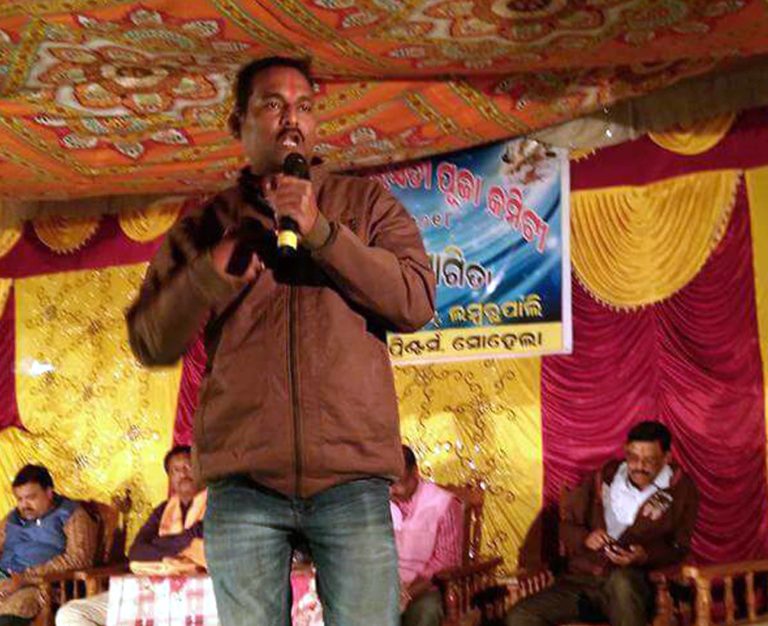
Ranjeet Pradhan, police by profession and poet by passion. He is famous with the title “Police Poet”. He started writing since 2013 and rise to fame with in a very short period.
Ranjeet was born in 1974 at Kuruan, Bargarh and joined police department in 1997. His father is Biswambar Pradhan and his mother Late Dukha Pradhan. At present he resides at Bargarh. He has been felicitated with “Koshal Sipahi” title. Apart from this he has been felicitated by more than 80 institutions and organization on different occasions.


Ranjeet publish his first poetry collection Ban Munush in 2015. And his second anthology “Ghat” is in press. Ghat has given him satisfactions he reveled. He added; he took 6 to 7 months to compose one poem.

Ranjet is one of the busiest performing poets. He regularly attends various stages along with other poets of his contemporary like Nitish Acharya, Debendra Sahu and Harilal Sahu. After Haldhar Nag these 5 poets including Late Sanjib Bania are considered as the most demanded to present poems at various functions.
He says, Kosali/Sambalpuri language needs more prose, essays travelogue etc to enrich it. At present maximum writings are poems. And unless and until we will not fill up our literature with prose, it will be incomplete.
Further he comments, our language is widely spoken in western part of Odisha but we lack readership and patrons. We have to write such poems that the sweetness of our language which is the insignia of it, need to be acknowledged by the audience.
Dr Arjun Purohit blast on coastal based Odia intelligentsia referring ‘Utkal Divas’
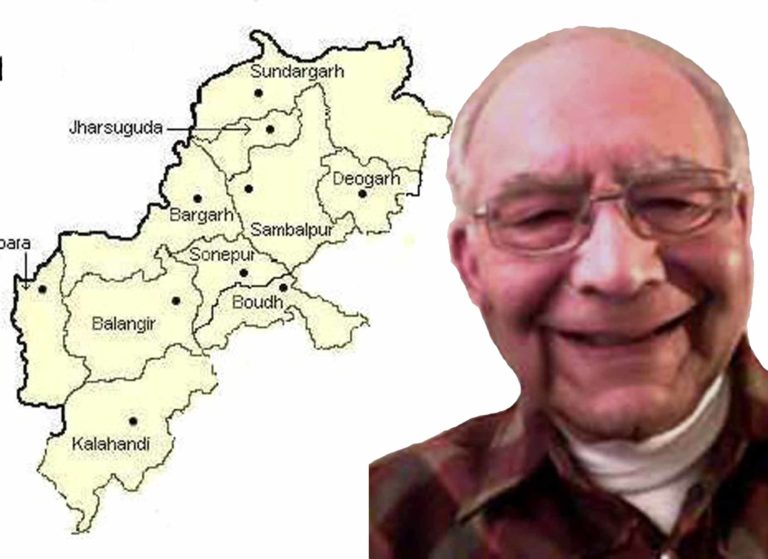
Earlier today, a group of Kosalis living in and around Raipur of Chattisgarh assembled in Raipur today and demonstrated demanding separate Kosal state. Most of the folks are Kosalis who are migrated from Kosal region to Raipur area. This support of NRK (Non-Resident-Kosalis) has fueled fire in the separate state demand on the celebration eve of Utkal Divas or Odisha Pradesh constitution day.
Dr Arjun Purohit, a Canada based NRK says in an e-mail exchange, “Interesting! It had to happen. Huge chunk of Koshali speaking population live in Chhattisgarh. This is the predictable consequence of not having Whole-Odisha-centric, rather than just BBSR-centric mindset of mandarins and coastal based Odia intelligentsia. This has been the de facto Mantra which has shaped Odisha as it currently is. It has taken 72 years for Koshalis to shift their identity away from Odia Jati. If the state continues to observe Utkala Divas instead of Odisha Divas, the shift in identity will be complete and inevitable political consequence will follow.”