Sunday, April 26, 2026
Home Blog Page 3

Farming Is Not Going To Make You Rich

0

Dr Saheb Sahu

$1(US) = 87 Indian Rupees

1 Bushel= 14.5 Kg

1 Acre= 0.40 hectare

Introduction

The Midwest in America, often referred to as America’s “bread basket”, has been central to America’s agricultural output. It is a vast fertile plains consisting of 12 out of 50 states. The states are: Illinois, Indiana, Iowa, Kansas, Michigan, Minnesota, Missouri, Nebraska, North Dakota, South Dakota, and Wisconsin. These states mostly produce corn, wheat, soybean, and few other crops. They also raise livestock like: cattle, dairy cows, hog (pig), chicken, and turkey.

According to the US Department of Agriculture (USDA), 3.4 million people work in farms in the United States. That is about 1% of the population of 340 million.

After graduating from AIIMS (New Delhi), I moved to Des Moines, Iowa in 1970. After finishing my pediatric training, I went into private practice, did well, and stayed.  I have been in the state of Iowa for more than 54 years. I know the economy of the state reasonably well. My parents were farmers in Odisha, India. I have reasonably good knowledge about life struggle of an Oriya farm family. In this article I will compare the economic state of an Iowa farmer family with that of a farmer family in Odisha.

 Iowa is considered one of the most fertile states among the Midwestern states. The land mass of Iowa is about 56,000 square miles. 85% of its land is used for farming. Iowa’s population is 3.4 million out of which 158,000 are farmers, both men and women. That is 4.6% of the population. The average size of an Iowa farm is 345 acres. Iowa farmers raise about 3.4 million cattle and calves, 25 million hogs (pigs), 225,000 sheep and goats, and 54 million poultry. In 2023, Iowa farmers harvested 2.5 billion bushels of corn and 570 million bushels of soybean. They export their farm products to all over the world, especially to China. In 2022, the total farm receipt was approximately 29 billion dollars.

Recent data indicate a troubling trend in the number of farms in the Midwest. Between 2017 and 2022, 30,000 farms ceased operation. Consolidation has led to a large farms becoming more dominant, squeezing out mid-sized operations and making it increasingly difficult for new farmers to enter the industry. Yes, in America farms operate like small scale industries. Iowa famers need big machineries and lots of capital to stay in business. They take big loan to finance their purchases and when farm income is down (during the farm crises), they cannot afford to pay those loans and lose their farms. It happens every few years. For example, despite record harvest, in 2024, the average Iowa farm faced projected loss of $30, 00.0, making it the lowest farm income year since 1980.

In 2018, the average Iowa farm household income was $126,000.0, well above national average. But, 40% of this income came from non-farm related activities like one spouse working outside the farm, selling seeds and fertilizers. In 2023, the farm household income dropped to $65,000.0. By contrast, the nonfarm household income in Iowa was $96,000.0. Thus farming is a risky business.

Many American farm families hold great wealth in the form of land that is increasingly becoming more valuable. Foreigners like Saudis and Chinese are buying American farm lands. However, like farmers everywhere in the world, American farmers are having harder time to make a living on it.They are land rich, cash poor.

India and Odisha Context

My parents were farmers in the state of Odisha from 1940s to 1970s. They farmed about 5 acres of non-irrigated land. They grew paddy, sugar cane, jute, potatoes, onions and some vegetables. As a child I have helped my dad in irrigating the vegetable field. Even though our family has left the village since 1970, we still, own the land. Today, my first cousin (uncle’s son) farms our ancestral land. No other Sahu is into farming now. They are all well-educated and working in urban areas. I visit my birth village every 3-4 years and keep in touch with my old classmates and their children who are farmers.

 According to 2015-16 Agriculture Census, the average size of a farm in India was 1.08 hectares (2.66acres) a decrease of 1.41 hectares from 195-96. The average monthly income (according to NABARD) of an Indian farmer household in 2021-22 was 13,660.0.rupees compared to 11,450 rupees for a non-farm household.

Odisha

 The state of Odisha covers approximately 60,000 square miles. 40% of it is farming land. Odisha’s population is about 46 million. 76% of Odisha’s population is engaged in agriculture. In Odisha, the average income for a farm house-hold was 5,112rupees (National Bank for Agriculture and Rural Development survey 2021-22), compared to 26,700 rupees in Punjab. Odisha’s farmers had the second lowest income among all the Indian states. Agriculture in Odisha is characterized by low productivity, inadequate irrigation facilities, small size of the land holding and low capital investment. 62% of the cultivable land is rain fed and exposed to the vagaries of monsoon. Farmers face draught, flood, pest, inadequate storage facilities, low crop price and many other hurdles. It is not easy to make living as a farmer in Odisha. Large numbers of them are migrating to southern states to work as laborers.

My Personal Take on Farming

I have been in the State of Iowa for 54 years and going. My elder son’s college roommate is a farmer in Iowa. He farms about 1600 acres of fertile land that needs no irrigation. He rents the farm from his father and uncle. His wife, a college graduate, works full time as an assistant museum director in a nearby city.  His brother is an engineer who works outside Iowa. I see my son’s friend at least once a year and we talk about farming. Besides farming, he also sells seeds. He and his wife live a middle class American life but by no means they will be considered rich.  The average net worth (USDA’s 2022) of an American farmer is $3.2 million. It is more than most Americans. But farmers are land rich and cash poor. They will get that amount of money if only they sell their land. Most farmers don’t want to sell their land to an outside buyer. They want to pass it on to the next generation. But most of the next generations of Americans don’t want to be farmers. After getting an education, they are moving into urban areas for higher income and better quality of life.

 As a general rule farmers in India are not in good shape. The farmers in Odisha are in much worse shape than their counterparts in other states. Their monthly income is one of the lowest among the states. They are earning less than unskilled laborers. They are at the mercy of the weather, pest, bankers, insurance agents and the politicians. They live in rural areas with poor infrastructures, education and health care. Their life-span is shorter.

Based on my personal observations of farming life in India and America, I will advise young people in Odisha, not to aspire to be a farmer. Get the maximum education you can get, especially in STEM (Science, Technology, Engineering, and Math) fields. Move to a nearby town or city or even overseas for better career opportunities. For a short time you will miss your village life but in the long run, you will be richer, healthier and live a better life. Your children may even do better than you did.

Sources:

1-Brian Reisinger. Land Rich, Cash Poor. Skyhorse Publishing: New York, 2024

2-USDepartment of Agriculture. www. usda.gov

3- Odisha economic Survey 2023-24. PC.Odisha.gov.in

4- Chat-Gpt. 2-2-25

5- Wikipedia. Wikipedia.org. 2-2-25

The Algebra of Wealth |Dr Saheb Sahu

0

I just read a book titled: The Algebra of Wealth, A Simple Formula for Financial Security,by Scott Galloway. Mr. Galloway is a professor of marketing at NYU Stern School of Business and a serial entrepreneur. In this article I am summarizing the main points expressed in this book.

How do we get economic security? The answer is slowly. Wealth is a means to an end: economic security. Put another way, wealth is the absence of economic anxiety. The first lesson of the book: economic security isn’t a function of what you earn but what you keep and knowing how much is enough for you. Economic security is acquiring sufficient assets, not income, but assets such that the passive income they generate exceeds the level of spending you choose for yourself, your burn rate. Passive income is money your money makes: interest you make on your saving accounts, dividend paid by stocks you hold, rent paid by your tenet (after expenses) if you own real estate.

1- Economic Security = Passive Income > Burn rate.

2- Happiness Research – If money is the goal, you will never have enough. Research into happiness ((at least as of 2023) shows that higher incomes are associated with greater happiness, but happiness increases lag income increases, and for some people, there is no correlation at higher income. It means lot more money does not make you lot happier. Research suggests that genetics predetermine as much as 50% of our happiness level. But 50% genetic predisposition leaves 50% under your control.

3 – Sweat it out

One of the most important advices I can offer has no direct correlation with finance: get plenty of exercise. It might be the single most effective thing you can do for across the-board improvement in your quality of life, short and long term.

4- The Importance of Relationship

The most important economic decision you’ll make in your life is not what you major in, where you work, what stock you buy, or where you live. It is who you partner with. Your relationship with your spouse is the most critical relationship in your life; it will have a huge impact on your economic trajectory. Married individuals (in USA) are 77% wealthier than single people. Lack of money is one of the greatest, if not the greatest strains on relationship.

5 – Hard Work

Go to a city, go to the office and find a mentor. Be around people. Expand your network. Talent and desire, matched to the right career, are a good start. What turns these into economic security is years of hard work. There is no secret, no shortcut; it takes hard work to achieve it.

6 – Know When to Quit

Don’t quit because it is hard, it’s supposed to be hard. Quit because the data, or a member you trust, or multiple external signs, indicate your time would be better invested elsewhere. There is no shame in this.

 Successful, wealth-generating employment careers (as opposed to entrepreneurship) typically include strategic job changes that produce jump in responsibilities and compensation.

 Be on LinkedIn, maintain your profile, and talk to your friends, former classmates, and colleagues about their jobs. In USA, job switchers increased their compensation by 7.7% compared to their previous jobs.

7 – The Power of Time: Compounding

Albert Einstein supposedly remarked that compound interest is the eighth wonder of the world. It is that, but it’s also simple math.

 Future Value = Present V (1+ Interest rate) Number of periods

 Example: If you invest $12,000 per year at 8% rate of return for ten years, and then stop and watch your returns compound. If you invest this way from age 25 to 35, then you will have $2.5 million when you turn 65, whereas if you start 45, you’ll have only $500,000 by 65.

 Investment is like planting oak trees. The best time to start is ten years ago. The second best time is right now.

8 – Budget Your Head Above Water

When you are not making much money, budgeting is about being careful-spending with intention and feeling the weight. Your budget must include a line item for “savings”. You should allocate your income into three buckets: 1- Day to day spending, 2- Intermediate spending, and 3-Long-term investment.

 Build an emergency fund. Keep the money in an interest earning saving account with your broker or bank.

9- Take the Match

The highest priority for you is to match your employer’s retirement plans like: 401(K), Regular IRA, and Roth IRA. You will never get a better investment than an immediate, tax-deferred 100% return. Fund this up to the maximum matching contribution level under almost any circumstance.

10- Debt

Long-term debt used to finance long-term assets like buying a home is sensible. Debt can give you leverage, but can be dangerous. Avoid high- interest credit card debt by all means.

11- Investing

  • Do not trust your emotion
  • Don’t day trade

 Invest your personal and retirement savings in  low-cost stock index fund like S&P 500 index fund or Exchange Traded Fund (ETF) (For Indian readers, it will  be Nifty 50 ). Numerous companies offer these funds. Choose a fund with the lowest expense ratio.  This ratio should be less than 0.5%. Unless you are close to retirement age, invest 100 % of your saving in stock index fund or ETF. Avoid fixed deposits or bond funds as they don’t keep up with inflation.

Source

Scott Galloway. The Algebra of Wealth. A Simple Formula for Financial Security. Portfolio/Penguin, New York: 2024

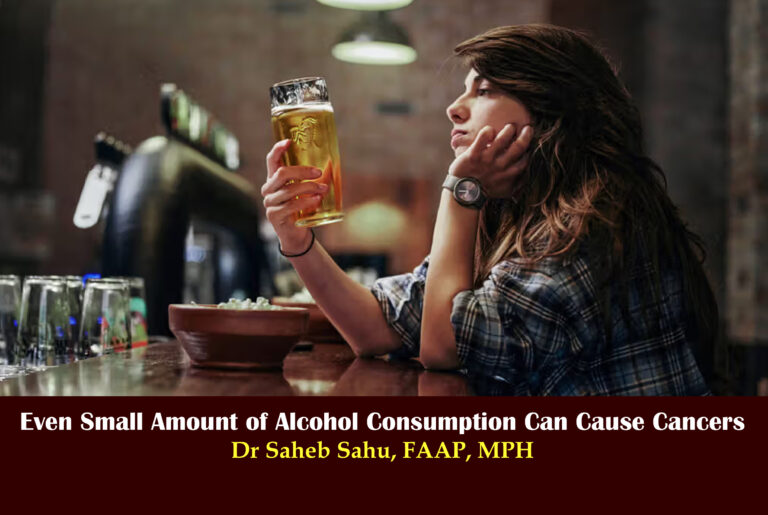
Even Small Amount of Alcohol Consumption Can Cause Cancers

0

Dr Saheb Sahu, FAAP, MPH.

Current Dietary Guidelines for Americans allow up to two drinks a day for men and one drink a day for women. The verdict on heavier drinking has been clear for a long time: Hangover and injuries, addiction, liver damage, heart failure and stroke, increased cancer risk, fetal alcohol spectrum disorder, brain damage in adolescents and premature death. According to the World Health Organization (WHO), globally, alcohol consumption contributes to approximately 2.6 million deaths annually accounting for 4.7% of all deaths. The majority of these deaths are among men.

On January 3, 2025, U.S. Surgeon General (the top public health officer in US) Dr Vivek Murthy issued an advisory report highlighting the established link between alcohol consumption and increased risk of various cancers. He suggested updating the existing labels on alcoholic beverages to include information about this cancer risk noting that alcohol is associated with seven types of cancer. He also noted that alcohol is responsible for approximately 100,000 cancer cases and 20,000 cancer related deaths annually in the United Sates.

One expert committee of American Scientists reported on the second week of January, 2025, that “even one drink a day for both men and women raises the risk of death from several alcoholic- related illnesses and injuries”.

The scientific findings released in January were stark: Men and women in the U.S have one in 1,000 risk of dying from alcohol use if they consume more than seven drinks a week. This risk increases to ten in 1,000 if they consume more than nine drinks a week.

 Having one drink a day was linked with an increased risk of liver cirrhosis (scaring of the liver leading to liver failure), esophageal cancer (cancer of the food pipe) and cancer of the mouth. While moderate consumption of alcohol (especially red wine) has been framed as safe, the new evidence increasingly shows that even low level of alcohol consumption can contribute to adverse health conditions and even deaths.

 Even causal drinkers could see adverse effects: The risk of developing several types of cancer- including colorectal, breast, and esophagus- begins with any alcohol use. Cancer risk was particularly acute for women, according to the committee’s report. “There is no evidence supporting the idea of drinking for health reasons”, said one of the study’s lead authors.

Conclusion

Alcohol consumption is a deeply embedded cultural, social, and economic phenomenon (governments collect taxes) worldwide. Different cultures have developed different attitudes toward alcohol ranging from strict prohibition to its integration into daily life. It has been known for a long time that excessive alcohol use is associated with severe health consequences, including liver disease, cardiovascular disorders, and mental health issues like addiction, depression and suicide. Moreover, alcohol is a known carcinogen (agent that causes cancer) linked to at least seven types of cancers. While alcohol can serve as a source of enjoyment, its potential harms outweigh any benefits by many folds. The US Surgeon General and the Expert Committee of American Scientists have come to the same conclusions. The World Health Organization has consistently emphasized that: “No amount of alcohol consumption is safe for health.”

Bottom line, do not smoke. Don’t drink. If you drink, quit. No amount of alcohol is safe for your overall health. Exercise at least 150 minutes a week. Eat a balanced diet and control your portion size. Socialize with friends and family. All the above lifestyle changes will lead to better physical and mental health and will add years to your life.

                    “First you take a drink, then the drink takes a drink, then the drink takes you”. – F. Scott Fitzgerald

Sources

1- US Surgeon General Report. HHS.gov

2- World Health Organization. www.who.int

3- The Wall Street Journal, Jan 24, 2025.

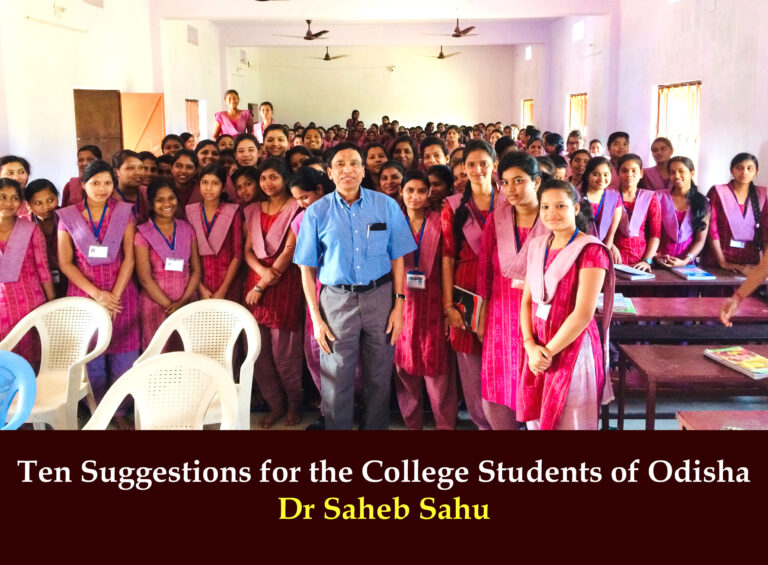
Ten Suggestions for the College Students of Odisha

0

Dr Saheb Sahu

Advice is easily given but hard to follow. In spite of knowing that, in this article I will make some suggestions for the college students of Odisha.

1- Get the Maximum Education You Can Get

Multiple studies from all over the world show that in general people with higher level of education have higher life-time earning than people with lesser degree of education. Students graduating in the STEM (Science, Technology, Engineering, and Mathematics) fields in general are more likely to get better paying jobs than graduates of non-STEM fields. But graduates of Arts and Commerce also have job prospects even though they are usually not as well-paying as jobs in STEM Fields.

 All developmental experts agree that the benefits of girls’ education are many: delaying marriage, decrease pregnancy rate, increase personal income, and gender equality in family decision making. Women who are educated are more likely to work outside the home. Women who have independent income have higher social standing and more likely to run for political office. With political power women can create more opportunities for other women.

 In Odisha, every student, even a good student, cannot be an IAS officer, doctor or a computer engineer.But most graduates in the STEM  fields with advance degrees, can have other relatively well paying jobs like- biologist, chemist, agricultural scientist, physicist, mathematician, statistician, pilot, military officer, college professor, and research scientist in their field of study. With advance degree in STEM subjects they will get opportunities to migrate overseas. Even if you are not a graduate of STEM field you will have better job opportunities with a Master or PhD degree than being just a graduate. Even if you graduate in arts and commerce subjects, your job prospect will be better if you get a higher degree. Hence, try to get the highest level of education in your field of study. But before you enroll in postgraduate education and spend your parents’ money, do some research and be judicious in choosing your field of study whether in India or in a foreign country.  With an American post graduate degree, your chance of getting a job in America is high but cost of studying is extremely high compare to Canada or U.K. Before you jump, do your research.

2- Maintain Your Physical and Mental Health

There is an old saying: Health is wealth. The state of our physical and mental health depends upon our inherited genes as well as our life-style. We have no control over our genes but we do have quite a bit of control over how we live. Recent studies are showing that some bad genes can be modified into good genes with a healthy life-style. The process is called epigenetic. It means that parents’ experiences (not just their DNAs), in the form of epigenetic tags can be passed down to future generations.

 To maintain your physical health you have to be:

  1. Be physically active for 120 minute a week – walking, running, playing games, bicycling, and swimming and do atleast two days a week of strength training- squats, bench press, weight lifting and push-up.
  2. Eat a heart-brain healthy diet- whole grains, fruits and vegetables, legumes and lentils, some eggs (3-4 a week), milk and yogurt, fish, occasional low-fat meat and avoid  processed food, too much salt and sugar.
  3. Get 7-8 hours of sleep. A short nap of 20-30 minutes is also good.
  4. Stay socially connected with your family, friends and colleagues.
  5. Do not drink alcohol or use tobacco products of any kind.
  6. Maintain the ideal body weight. (BMI (body mass index) – less than 22.9).
  7. Get all the vaccinations appropriate for your age and sex.

If you stay physically active and not overweight, you are likely to avoid getting diabetes, heart disease, stroke, arthritis and some cancers and even live longer.

Mental Health

For good mental health do not use illegal drug of any kind, exercise out door when you can, socialize with your friends, meditate, and seek counselling if you are depressed or  have suicidal thoughts. Anxiety during examinations is common but if you cannot function because excessive anxiety seek psychological help. Confide your problems to your parents and physician and do not be ashamed of seeking proper help.  In United States 20 percent of people have mental health issues. In India it will be similar. India has one of the highest suicide rates in the world especially among students.

3- Delaying Gratification

In the famous Stanford University marshmallow experiments (google it), children were offered a choice between one small but immediate reward (a marshmallow) or two small rewards, if they waited for about 15 minutes. The children were followed for more than 40 years. In the follow-up studies, the researchers found that children who were able to wait longer for the two rewards tended to have better life-outcomes as measured by SAT (a high school exam) score, educational attainment, body mass index and other life measures. A growing body of literature has linked the ability to delay gratification to a host of positive outcomes, including academic success, physical health, psychological health, and social competence. The best part is you can teach yourself how to delay gratification in your day to day life.

 Success in life in nearly every field requires you not doing something easier (delaying gratification) in favor of doing something harder (doing the hard work). As a student you study rather than partying. Graduate, rather than drop out. Delay having sex (especially unprotected sex), delay getting married and if you marry delay having children. Later on in life when you earn some money, save minimum of ten to fifteen percent, instead of spending it all by buying stuffs. In the long run you will be happier and healthier.

4-Migrate to a Better Place

Migration and education are two of the oldest actions against poverty. People have been migrating to the United States for more than four hundred years.  The children of migrants almost always do better than their parents. Indians have been migrating to many parts of the world for at least two hundred years and have prospered. There are 32millions (320 lakhs) Indians are residing overseas. Every year 2.5 million (25 lakhs) Indians migrate to other countries for better opportunities.

 Odisha is one of the poorest states in India. Job opportunities in Odisha are limited and it is not going to get better soon. In 1940s, people from coastal Odisha migrated to Kolkata for work but their children were able to get an education and did well. People from Western Odisha and Northern Odisha went to Jamshedpur for work. These days, large numbers of Oriyas are migrating to Andhra Pradesh, Tamil Nadu, Kerala and Gujrat for work. Educated Oriyas are migrating to Bengaluru, Chennai, Hyderabad, Pune, Delhi and other cities in India and some to foreign countries. Multiple international studies have shown that people, who migrate to a better place for job, increase their earnings by three to ten folds. Their remittance helps their families who are left behind.

 If you have a graduate or higher degree in STEM field, your chance of getting a work visa and migrate to Canada, Australia, New Zealand, Germany, Sweden and Singapore is easier.  In the United States you will earn more but getting a work visa is not easy. If you can earn a post graduate degree from any university in the United States, your chance of getting a work visa (H1-B) will be easier. But the cost of education is extremely high. Do some researches before you decide on the country to which to go for higher study or work.  Migrating to one of the Gulf counties may be the easiest. After earning some money there you may be able to migrate later to more developed countries in the West.

5- Don’t Try To Be Great. Just Be Good

Being great in any field involves luck, unique circumstances, and lots of other forces beyond your control. Instead of trying to be great, try to be good. Being good at study, at sport, or at work, or at social relationship, is usually under your control. You do not need luck, or social connection. You don’t have to be a scientist who owns the Nobel Prize, but you can be a good scientist who contributes to human knowledge. In Indian context, you don’t have to be an IAS officer but you can be a BDO and make a good living. There is nothing wrong in aiming high, but be realistic in your goal.

6- To Be Happy in Life Maintain Social Connections

The Harvard Study of Adult Development (HSAD) is the longest study of happiness (85 years of follow up) ever conducted- supported by many other similar studies show strong relationship makes for a good life. Good relationships keep us healthier and happier. What kind of relationship? All kinds. Marriage and long-term relationship: families, friends, co-workers, community gathering, place of worship. “Social fitness” as the Harvard researchers put it, is the key to mental, physical health and overall happiness in life. Hence, stay in touch with your families and friends and try to have few close friends, not just the face book acquaintances.

7- Think of Your Life as a Journey and Not a Destination

If you think of life as a journey and not a destination, then every setback you face will ultimately help you to succeed. The Japanese proverb “Nana korobi, ya oki” means “fall down seven times, stand up eight”. It means choosing to never give up hope, and to always strive for more. You have to persevere. Perseverance is defined as “the continued effort to do or achieve something despite difficulties, failure or opposition”.  Ninety percent of candidates, who clear India’s UPSC Civil Services Examinations, do so after multiple trials,average of three to four. In most field of endeavor success in the first trial is very rare. History is full of names of successful people who failed few times and ultimately succeeded.One of the best examples is Steve Job, the founder of Apple’s I-Phone.

8- Explore the World

You attend college to prepare for a better life. You learn how to think more critically. You get a better appreciation for everything from history to the physical environment around you. Your education should provide you with information, knowledge and hopefully some wisdom. Travelling is a great way to learn. Travel for an extended period in India and overseas if you can. After our final MBBS exam in AIIMS (New Delhi) twenty of us students with one teacher, went on a three week excursion by train to South India in Dec, 1968. We stayed in hostels of other medical colleges in South. It was just a fantastic trip. We learned a lot about South India people, culture, food, tourist places and nature. Go on group excursion with your classmates by train to different parts of India. It is affordable and enjoyable. You will also learn a lot.

9- Read Books

Books offer consolation, nourishment and care, said Machiavelli. Besides giving us pleasure, reading of books has multiple other benefits. Some of them are:

  • Improves our brain‘s connectivity and makes us smarter,
  • Improves our general knowledge and hopefully makes us wiser,
  • Reduces stress and improves our sleep,
  • Increases our empathy,
  • Slows down the development of dementia (memory loss).

Reading is good for you, no matter how old you are. Be a life-long reader. Just be a little skeptical. Don’t believe everything you read in the internet, in a newspaper or in a magazine or even in books.

10- Do Some Community Service

Community service is something you do to benefit your community. For Bill and Melinda Gates their community is the whole world. For most of us it is the community we live in. Size is not important. As a college student you have limited financial resources to do big thing but you can certainly help your community tutoring some students, coaching some sports, planting trees in your village or anything else you choose. Do something for others. As the Bible says: “For everyone to whom much is given, much will be required.”(Luke12:48)

Bonus Point

Be kind to all!

PS – Dr Saheb Sahu is a retired pediatrician, settled in USA since 1970. He was educated at Mulbar, Primary School, Kamgaon Middle School, C. S. Zila School, and G.M College, Sambalpur. He graduated from AIIMS (New Delhi) and migrated to US in 1970. He is author of 17 books and booklets. His articles regularly appears in https://odishawatch.in/

Sources:

  1. Charles Wheelan. Ten and Half Things No Commencement speaker has ever said. W. W. Norton Company, New York: 2012
  2. Wikipedia.org

The Pleasure of Reading Books

0

                                                                                Dr Saheb Sahu

The pleasantest of all diversion, is to sit still alone under the lamp, a book spread out before you, and to make friends with people of a distant past you have never known. – Kenko (1283-1350), Japanese Buddhist Monk and Essayist

Books offer consolation, nourishment and care. – Machiavelli

 If the aim of a reasonable person is to live a life of meaning and purpose, serious books can provide the concentrate of the examined life. – Professor Jack Cella

 I have friends whose society is delightful to me; they are persons of all countries and of all ages; distinguished in war, in council, and in letters; easy to live with, always at my command. They come at my call, and return when I desire them: they are never out of humor, and they answer all my questions with readiness. Some present in review before me the events of past ages; others reveal to me the secret of Nature: these teach me how to live, and how to die: these dispel my melancholy by their mirth, and amuse me by their sallies of wit: and some there are those who prepare my soul to suffer everything, to desire nothing, and become thoroughly acquainted with itself. In a word, they open the door to all the arts and sciences. – Petrarch, (1304-1374CE), Italian scholar and poet

 Top Ten Benefits of Reading

Besides giving us pleasure, reading of books has multiple other benefits. Some of them are:

  1. Reading improves our brain connectivity and makes us smarter.
  2. Reading improves concentration and the ability to focus.
  3. Reading improves literacy.
  4. Reading increases general knowledge.
  5. Reading reduces stress.
  6. Reading improves sleep.
  7. Reading increases empathy.
  8. Reading slows down the development of age-related memory loss (dementia).
  9. Reading lengthens lifespan.
  10. Reading aloud to children has lasting impact on their future interest in reading.

Free Online Libraries

Project Gutenberg- https://www.gutenberg.org/

Google Books – https://books.google.co.in/

The online Book Page – https://onlinebooks.library.upenn.edu/

International Children Digital Libray – http://www.childrenslibrary.org/

Digital Library of India – https://ndl.iitkgp.ac.in/

Conclusion

Reading books gives us both pleasure and profit. Books transport us to a different world and make us forget, at least temporarily, the daily concerns of the world. Reading of fiction and novel has its own distinct joy. Travel books take us to a different world those are much different than that of ours. Reading such books instill on us a sense of adventure. Many of us enjoy reading books on religion and philosophy. They teach us lessons on morals and ethics: how to live a good life and how to accept death. Reading has multiple benefits for our health: reduces stress, improves sleep, delays age-related memory loss (dementia) and even prolongs life.  Reading aloud to children helps in developing in them a life-long reading habit. Visit your local library and book stores (new and old book stores) and take your children with you when you can. Get them a library card. Browse inside the library and the book store. Browsing has its own pleasure of discovering something unexpected. But Read. Reading will provide you with information, knowledge and hopefully some wisdom. Happy Reading!

Source:

  1. Jeff Deutsch, In Praise of Good Bookstores. Princeton University Press, Princeton: 2022

Wikipedia.org

Some Sayings from Panchatantra

0

Collected by Dr Saheb Sahu

The Panchatantra (“Five Treatises”) is an ancient Indian collection of interrelated animal fables in Sanskrit verse and prose, arranged within a frame. The surviving work is dated to about 200 BCE, but the fables are likely much more ancient.  The text’s author is unknown, but it has been attributed to Vishnu Sharma in some recessions and Vasubhaga in others, both of which may be fictitious pen names. 

It is “certainly the most frequently translated literary product of India”, and these stories are among the most widely known in the world. It goes by many names in many cultures. There is a version of Panchatantra in nearly every major language of India, and in addition there are 200 versions of the text in more than 50 languages around the world. One version reached Europe in the 11th century. 

In the Indian tradition, The Panchatantra is an nītiśāstraNīti can be roughly translated as “the wise conduct of life” and a śāstra is a technical or scientific treatise; thus it is considered a treatise on political science and human conduct. It draws from the Dharma and Artha śāstras, quoting them extensively. The central theme of the Panchatantra is; the harmonious development of the power of a man, a life in which security, prosperity, resolute action, friendship, and good learning are so combined as to produce lasting joy. This noble theme is presented in five books of wise and witty stories, in most of which the actors are animals.

Book-1

The Loss of Friends

There is no toy

Called easy toy;

But man must strain

To body’s pain.

 It is better to be dead than be poor.

If loving kindness be not shown

To friends and souls in pain,

To teachers, servants, and one-self,

 What use in life, what gain?

 No man reaps a harvest by ploughing barren soil.

Something a man should tell his wife,

Something to friend and some to son;

 All these are trusted. He should not

Tell everything to everyone.

 Whoever saw or heard

A gambler’s truthful word.

Money! Money!
A trouble to acquire; a trouble to protect;
a trouble if it is lost; a trouble if it is spent;
money is nothing but trouble,
alas! From beginning to end.

First mind, then body ages

 In case of holy sages;

The body ages first,

Mind never, in the worst.

Intelligence is power.

Truth is seldom flattering.

Where wealth is very much the same,

And similar the family fame, Marriage or friendship is secure;

 But not between the rich and poor.

For lost and dead and past

The wise have no laments;

Between the wise and the fools

Is just the difference.

A friend in need is a friend indeed;

 Fathers indeed are those who feed.

A merely striking beauty

Is not so hard to find;

A rarer gem is wisdom,

Far-reaching power of mind.

Whoever is friendly in adversity, is indeed a true friend.

In prosperity, even a wicked person wants to be a friend.

There is no gathering of the rose without being pricked by the thorns.

If a man be self-controlled, truthful, wise, and resolute, is there a task that can stay out of reach of such a man?

Knowledge is the true organ of sight, not the eyes.

When a man begins a task, after consultation with his elders and his friends, who wish him well, He will never face any hindrance.

Even in bad times, a man should not lose hope, for by making an effort,

He can certainly find a solution.

What cannot be achieved by force?

 Can be achieved through deceit.

Suppress your enemy and diseases at the very beginning, or they will become strong and destroy you.

Only a real friend will say something unpalatable for your own good, the rest are friends only in name.

Even soft water drops, falling persistently on a rock, wear it away:

So too, continuous complaints against someone else poison a man’s mind.

Never give advice, unless you are asked for it.

Rulers live off their lands,
physicians off the sick;
merchants live off consumers
the learned off fools.

Hospitality:
A stranger at dusk must not turn back unwelcomed
householders who honour and serve a guest
brought by the setting sun, themselves
take on an aura of divinity.

Health:
There is no friend like good health;
there is no foe like sickness;
no joy equals that of children;
no pain equals that of hunger.

BOOK –II

The Winning of Friends

Six things are done by friends:

To take, and give again;

To listen, and to talk;

To dine, to entertain.

No friendship ever comes

Without some kindly deed.

You have mouthful only? Give

A half to the needy:

Will any ever own the wealth?

For which his soul is greedy?

When a man is crushed by poverty

And stricken down by fate,

His best friends become his foes,

 And tried affection, hate.

 Better let your tongue be tied

Than to know that you have lied.

 The wealthy, though of meanest birth,

 Are much respected on the earth;

The poor whose lineage is prized

Like clearest moon light, are despised.

No treasure equals charity;

No gem compares with character,

No wish fulfilled, with health.

 You cannot clap a single hand;

Nor, effortless, do what you planned.

 Make friends, make friends, however strong

Or weak they be:

Recall the captive elephant,

Those mice set free.

 When life is near an end

 The presence of a friend

Bring happiness, allying

The living with the dying.

BOOK – III

Crows and Owls

If you permit disease or foe

Tom march unheeded, you may know

 That waits you, sure if slow.

Make your peace with powerful, foes

Who are rich and good and wise?

To help you neighbor -this is good:

 To injure him is devil hood.

 Be generous to all that lives;

Receive the needy guest:

If not, your own life fades away

Like swans from lotus nest.

Three things have unrestricted course:

Famine, and death, and fear.

 Aim at seven things in marriage;

All the rest disparage:

 Get money, good looks,

And knowledge of books,

Good family, youth,

Position and truth.

BOOK- IV

Loss of Gains

 Never strike a hermit mild,

Woman, clergyman, or child;

Give your life, if needs you must-

 Do not falsify their trust.

BOOK-V

Ill – Considered Action

Man’s effort (sufficiently great)

Is just what a dullard calls fate?

 Scholarship is less than sense;

Therefore seek intelligence.

 The educated and the rich,

 Be fooled by greed,

 Plunge into wickedness, then feel

The pinch of need.

Source:

Panchatantra, translated from the Sanskrit by Arthur W. Ryder. Jaico Publishing House: Delhi, 2010(32nd Jaico edition) First published in 1949.

Think Twice About Hospitalization When You Are Old

0

Dr Saheb Sahu

Hospitals exist for the acutely ill. And it goes without saying that hospitals should house intensive care units for the care of the critically ill. But what about the old people who are mildly sick or the definitely dying?

 The question is, at what point old people should stop going to the hospital? Doctors increasingly turn to frailty assessments to help them determine who will benefit from a particular surgery or drug therapy and who might be harmed by or even die from it. A frail person is one who does not bounce back easily from a minor illness like urinary tract infection or bronchitis or flu.

 How to judge frailty? Criteria developed by geriatrician (a doctor who specializes in elder care) Linda Fried and colleagues is most widely used in the United States. It consists of five components. Individuals are classified as “frail” if they are over sixty-five years of age and meet three or more of the following criteria:

  1. Unintentional weight loss of ten pounds (4.5kg) or more during the last year
  2. Feelings of exhaustion
  3. Physical weakness, measured by checking hand grip strength with a dynamo meter
  4. Slow walking speed, measured as requiring six or seven seconds to walk fifteen feet( 4.5 m )
  5. Low physical activity.

 Studies show that many factors besides old age put a person at risk of frailty. They include: lack of physical activity, smoking, depression, lower educational achievement and mental disability.

Futile Treatments

The first step in determining whether a treatment is futile is to take stock of frailty. A high degree of frailty should prompt some caution with regard to accepting new treatments. The next step is to press the doctor for meaningful answers to the tough question: ‘How much is this treatment is going to help me?’, and “what are the downsides of the treatments?’ You can be even more specific: “What is the likelihood that the treatment will make me so sick that I won’t be able to enjoy things that bring meaning to my life?” What will be the total cost?” How much of it will be covered by my health insurance if you have one? Keep it in mind that doctors in general are adept at offering general statistics. They tend to be more optimistic in general, but you must press them to be more specific about your case.

Palliative and Hospice Care (Comfort Care)

Non-small cell lung cancer (a form of lung cancer) is a bad cancer, and patients with this type of lung cancer survive less than a year. Doctors at Massachusetts General Hospital (USA) wanted to see if they could do something to ease the suffering of their patients. So they randomly assigned those with newly diagnosed non-small –cell lung cancer patients to one of two groups. One group received standard cancer treatment for the lung cancer. The other group received standard cancer treatment plus early palliative care.

 The result of the study shocked the medical profession. What really shocked doctors was that patients who received early palliative care lived about two months longer and reported greater quality of life and better moods than those received standard care. Even more impressive, however, is that those who received early palliative care opted for less aggressive medical care as they were dying. This meant that they generally received less chemotherapy and more comfort-focused care in the weeks prior to their deaths. What this Massachusetts General Study showed is that even when the prognosis (outlook for a disease) is grim and the patients are dying, they might live longer when they opt for less aggressive medical care and choose instead to prepare for dying. Other subsequent studies have come to similar conclusions.

Reconsidering Cardiopulmonary Resuscitation-(CPR)-

Most people have misguided belief that CPR is mostly successful.  But the reality is much different. In the hospital settings (if your heart stops while you are in the hospital), the success rate for CPR is 24 to 40 %, and it is around 10 to 12 % outside the hospital (USA). However, a report from 115 studies showed a survival to discharge rate (those who survive the initial CPR, but died subsequently before discharge) is 15% in USA, 16% in Canada, 17% In UK and 14% in EU countries. The CPR survival to discharge rates will be much worse in developing countries including India.

 Most people also do not quite realize what CPR entails. Effective chest compression can cause fractures of ribs, especially in a frail person. It requires the insertion of breathing tube and mechanical ventilation (respirator). It also requires insertion of catheters in to major blood vessels for the administration of multiple medications to jump start the heart and keep it going. Intravenous catheters become a source of infection. And only around 15% of patients, who receive CPR, survive to go home.

Conclusion

 As we become older (65 and over), the prospect of frequent hospitalization looms large. While hospitals play a crucial role in acute and other serious illnesses like heart attack, stroke, cancer and broken bones, there are compelling reasons to avoid them in one’s older years.

 Firstly, hospitals can be breeding ground for infections, posing significant risks to seniors with weakened immune system. Additionally, the impersonal nature of hospital environments can lead to feelings of isolation, anxiety, and in some cases depression in elderly individuals. The bustling sterile wards and corridors often lack warmth and familiarity of home, potentially exacerbating existing health conditions. Moreover the financial burden of hospital stays can be overwhelming for most families. For seniors with no health insurance or high deductible health insurance, co-pays and uncovered charges can create undue stress, impacting both financial stability and overall health.

Old age is a continuous series of losses. Our goal at the end-of life should be how to make life worth living when we are weakened and frail and can’t fend for ourselves anymore. Most of us are unprepared for the final phase of our lives. We should take steps, to be prepared. We should ask ourselves:

1- Do we want aggressive treatments such as chemotherapy, radiation, CPR and respirator?

2- Do we want to be resuscitated if our heart stops?

3– Do we want tube feeding or intravenous feeding if we can’t eat on our own?

4– Do we want to die at home or in an intensive care unit of a hospital?

 These are kind of questions we must discuss with our family, friends and doctors. We must make our wishes known to them, preferably in writing.

 At the end-stage of life most people like to be free of pain or experience minimal pain and be with family and friends. They want to share memories, settle relationship, establish their legacies and make peace with their Maker (if they believe in one). They will like to die at home and not in a hospital. Death is an event we cannot avoid. Let us be prepared and not surprised by it. I will conclude this essay with a quote from Shakespeare:

“Of all wonders that I have heard;

It seems to me most strange that man should fear;

Seeking that death, a necessary end

Will come when it will come.”

  • William Shakespeare. Julius Caesar

Ps- Dr Sahu is a retired pediatrician, settled in USA. He has been writing about end of life care issues for mora than 20years.

 Sources

1-L. S. Dugdale, MD.The Last ART OF Dying. Harper One, New York: 2020

2-Atul Gawande. Being Mortal, Medicine and What Matters in the End. Metropolitans Books, New York: 2014

Life’s Essential 8 For Better Health and Longevity

0

Dr Saheb Sahu, FAAP, MPH.

The American Heart Association (AHA) has identified 8 lifestyle factors; calling it Life’s Essential 8; metric and its association with both life expectancy and health span free of chronic diseases such as cardiovascular diseases (CVD), cancer, diabetes and dementia.

 The recommendation was based on a study which leveraged the UK Biobank and included more than 135,000 UK adults with a mean age of 55. The AHA metric was defined as including the following lifestyle behavioral factors:

1- Not smoking

2-Regular physical activity (150 minutes of moderate activity or 75 minutes of vigorous activity per week)

3-Halthy weight (BMI less than 25 or23 for Asians and waist circumference of less than 78cm for Indian men and 72cm for women)

4-Healthy diet( an heart healthy diet consisting of whole grains, plenty of vegetables and fruits, low fat milk products, a variety of protein foods including beans and legumes, sea foods, lean meat, eggs, nuts and soy products, and vegetable oils.Limit saturated fat, trans fat, sugar and salt and alcohol)

5-Healthy sleep (defined as 7-9 hours nightly)

6- Blood pressure in a healthy range (normal- systolic less than 120 and diastolic 80, pre-hypertensive, systolic-121-139 and diastolic 80-89; hypertensive- systolic over 140 and diastolic over 90)

7-Blood sugar in healthy range ( normal- fasting blood sugar less than 100mg/dl or HbA1c less than5.7, prediabetes- blood sugar 100-125mg/dl or HbA1c5.7-6.5, and diabetic- fasting blood sugar more than 125mg/dl or HbA1c over 6.5)

8-LDL (low density lipoprotein-bad cholesterol) should be below 100mg/dl. Ideally your HDL (high density lipoprotein– good cholesterol) should be 60 or higher and your total cholesterol should be less than 200 mg/dl.

Summary

Overall, the findings of the study make a compelling case for the importance of life style factors in extending longevity, free of chronic diseases like diabetes, heart disease, stroke, cancer and dementia (memory failure). Do not smoke. Exercise regularly.  Maintain an ideal body weight. Eat a heart healthy diet. Know your blood pressure, blood sugar, and cholesterol numbers. Get treated if they are abnormal. Stay in touch with your family and friends for better mental health. Both physical and mental health is important for a good life.

Source:

www.ahajournals.org, 29th June, 2022

Study Debunks Claims of Alcohol’s Benefits

0

Dr Saheb Sahu, FAAP, MPH. 

Drinking a small amount of strong alcohol here and there probably won’t kill you. But it won’t help you live longer either.

 According to a study published in the JAMA (Journal of American Medical Association) Network open on March, 31st, 2023, researchers set out to make sense of years of conflicting evidence on alcohol’s effect on health. The researchers analyzed 107 studies on the effect of alcoholic nearly five million (fifty lakhs) people. The findings of the study were as follows:

  1. They found that no amount of alcohol consumption led to longer life than among people who never drank.
  2. People who drank 45 grams (about 45ml) of alcohol or more a day (about 3 glasses of wine) increased their risk of dying sooner by about 33 percent. Among women, anything more than 25 grams (more than 2 glasses of wine) increased their risk of dying sooner by about 25 percent.
  3. For men who drink 3-5 drinks a day, their mortality increases by 15-25 percent and those who drink 5 or more drinks a day by 30-35 percent. For women who drink 2-3 drinks a day, their mortality increases by 20-30percent, with 3-5 drinks 20-40 percent and 5 or more drinks a day by 45-80 percent.
  4. The findings suggest that the average man can drink up to about 3 drinks a day and expect to live as long as non-drinkers. For women it is two drinks a day. They may not die early but they will likely to have other problems.

Conclusions:

Alcohol consumption is linked to more than 200 diseases like, high blood pressure, heart disease, stroke, liver disease, many digestive problems, cancer of the breast, mouth, throat, voice box, esophagus (food pipe), liver, pancreas, colon and rectum and many more, death from accidents and suicides. This new study joins a large body of evidence that alcohol consumption does more harm than good. Many of the older studies which had touted the benefits of moderate drinking were found to be faulty. The message from all public health authorities are clear, if you are drinking now, quit, and if you cannot quit, if you are a man limit your drink to 2-3 drinks a day and if you are a woman, limit to 1-2 drinks a day.

 Sources-1- Jamanetwork.com/March 31, 2023. 2- The Wall Street Journal, 4-1-23 p.A1, A6

Prediabetes

0

Dr Saheb Sahu, FAAP, MPH

Type 2 diabetes does not always arrive with a bang. It can develop slowly but eventually lead to side effects and complications if not well managed. When the body fails to properly make or use the hormone insulin, blood sugar rises, and sustained levels can damage organs from the heart to the kidneys. Common symptoms of type 2 diabetes include: frequent urination, increased thirst and hunger, fatigue, blurred vision, slow healing of cuts and infections, tingling pain or numbness in hands or feet. Long term complications include higher risk of heart attack, high blood pressure, stroke, kidney and eye damage and bacterial or fungal infections.

Indian Context

As of recent estimates, over 77 million people in India have type 2 diabetes. A significant number of people in India with diabetes remain undiagnosed. It is estimated that this number will reach 125 million by 2045. According to recent studies, approximately 70 million people in India are estimated to have prediabetes. Because of poor public health service and recordkeeping, the real number is hard to know.  Because of recent lifestyle changes in India, the number of people with diabetes is increasing.

Prediabetes

Prediabetes is a condition where blood sugar levels are higher than normal but not high enough to be diagnosed as diabetes.

 Blood sugar or Hemoglobin A1C levels

Normal – Fasting blood sugar level less than 100 mg /dl or A1C – less than 5.6%

Prediabetes – Fasting blood sugar= 100-125mg/dl or A1C=5.7 to 6.4%.

Diabetes – Fasting blood sugar above 126mg/dl or A1C more than 6.5%.

 Prediabetes usually has no noticeable symptoms, but some people may experience increased thirst, frequent urination or darken areas of skin, often under the armpits, elbow or in the neck.

Risk Factors

  • Being overweight, especially excessive belly fat = waist circumference (WC) morethan 78 cm for Indian men and more than 72cm for women.
  • Family history of diabetes
  • A sedentary lifestyle
  • An unhealthy diet
  • Age over 45
  • Ethnic background – Asians, Africans, Hispanic and Pacific Islander

Prevention and Management

80 % of the people in USA with prediabetes do not know that they have it. This number will be more than 95% in India. People with prediabetes become diabetic 70% of the time, if they do not make necessary lifestyle changes. The good news is, with lifestyle changes this percentage can be significantly reduced.

Preventive majors that can be taken are:

1- Weight loss– Research suggest that people with prediabetes who lose at least 7% of their body weight, improve their chance of insulin functions and not developing diabetes by almost 60%.

Newer anti-obesity drugs (GLP-1) such as Wegovy, Ozempic, Mounjaro and Saxenda are helping people lose weight. Right now these drugs are quite expensive. These drugs are not specifically approved for diabetes, but recent research suggests that they will cut the diabetic risk by more than 90%.

2- Regular Physical Activity- Regular physical activities help in weight control. They boosts metabolism, reduce blood sugar levels, reduce inflammation, and lower the risk of high blood pressure and heart disease. Physical activities should include 150 minutes of moderate aerobic (walking, running, swimming) exercise per week and at least two days a week of muscle strengthening exercise.

3- A Heart Healthy Diet- For everybody, a balanced, nutrient rich diet can help regulate blood sugar levels, improve insulin sensitivity and support weight control. A healthy diet should consist of whole grains (brown rice and whole wheat), legumes and beans, fish and shrimps, some eggs, low fat dairy products, all kinds of colorful vegetables and fruits. Limit saturated fats, sweets, sugary drinks and ultra-processed foods. Control your portion size.

Conclusion

If you have the risk of developing prediabetes, and are above the age of 40, taking proactive steps now will help you to prevent or delay the onset of type 2 diabetes. Type 2 diabetes is a bad disease. It is a chronic disease which affects multiple organs. You should do everything in your power to prevent it.  Get a fasting blood sugar or A1C done now. If the tests show that you are prediabetic, make the necessary lifestyle changes now. Studies have shown that 60 to 70% of people with prediabetes can prevent or significantly delay the progression to type 2 diabetes by above mentioned lifestyle changes.

 Programs like the Diabetes Prevention Program (DPP) in US demonstrated that losing just 5-7% of body weight and engaging in 150 minutes of physical activities per week can reduce the risk of developing diabetes about 58% over three years. For individuals over the age of 60, the risk reduction was even higher, around 71%.

Sources:

  • CDC.Gov/ Diabetes Prevention Program
  • Chat-GPT