Dr Saheb Sahu, FAAP
CPR stands for cardiopulmonary resuscitation.
Death Has Two Stages
The first stage of death is clinical death, when the heart stops beating and breathing stops entirely. 4-6 minutes later, brain cells begin to die due to lack of oxygen, leading to biological death, which is when the brain dies and with it, the person. It’s important to understand this, because during the first stage and shortly after, it is still possible to save the person through CPR. However, if the brain has already entered the second stage of death, it is unlikely that CPR will succeed, as dead brain cells cannot be revived.
Cardiopulmonary Resuscitation (CPR)
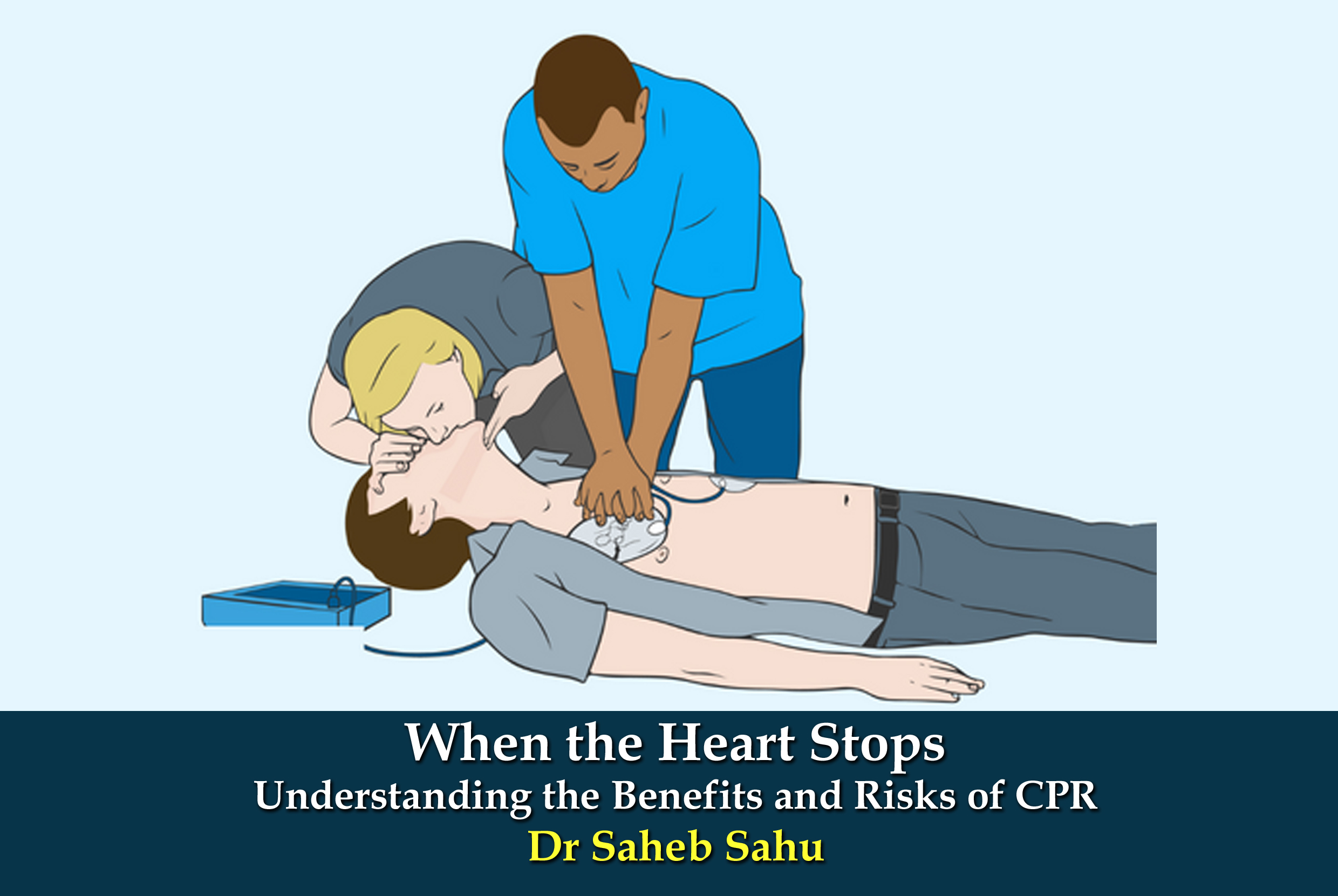
CPR is one of the most widely recognized emergency medical interventions in the world. It is endorsed by organizations such as the American Heart Association. CPR combines chest compressions and rescue breathing (or compression only technique) to maintain blood circulation and oxygen delivery when the heart stops beating. While CPR has saved countless lives, it also raises complex medical, ethical, and practical concerns- particularly in elderly or terminally ill patients. Understanding both the benefits and limitations of CPR is essential for informed decision making.
Pros of CPR
The most compelling advantage of CPR is the ability to save lives. When the heart stops beating (cardiac arrest), brain cells begin to die within 4-6 minutes because of lack of oxygen. Prompt CPR can maintain partial blood flow to the brain and other vital organs until advanced care (such as defibrillation) arrives.
In public settings where trained bystanders can provide CPR, survival rates are higher. This has led to widespread CPR training programs in schools, workplaces, and communities. CPR is relatively simple to learn. Even hands-only CPR (chest compression without rescue breathing) can be effective in adult cardiac arrest. It does not require sophisticated equipment, and can be performed anywhere. CPR does not usually “restart’ the heart. Rather it buys time.
Cons of CPR
1-Low success rates in certain populations
Public perception- often shaped by television dramas-overestimates CPR success rate. In reality, overall survival to hospital discharge after in-hospital cardiac arrest ranges roughly between 15-25%. The success rate is only 10-15% when CPR is performed outside the hospital. The rate is even lower in frail elderly individuals or those with advanced chronic illness. For patients with metastatic cancer, end-stage organ failure (heart failure, liver failure, kidney failure), or dementia (memory failure), successful resuscitation is uncommon and often short-lived.
2- Risk of Physical Injuries
CPR is forceful. Effective chest compressions require significant pressure; often leading to rib fractures, fracture of sternum bone (the bone middle of the chest), lung contusion and internal bleeding. There can also be complications like injuries to the mouth, teeth, throat, vocal cord, and respiratory infections (like pneumonia) when breathing tube has to be inserted as a part of CPR. Additionally, depending on how long the brain was deprived of oxygen, the brain may not function as well as it did before.
In younger and healthier patients, these injuries are acceptable risks. In frail elderly individuals, however, such injuries may result in prolonged suffering if the patient survives.
3-Possible Poor Quality of Life After Survival
Not all survivors regain meaningful brain functions after CPR. If CPR is delayed or prolonged, the brain may suffer hypoxic (lack of oxygen) injury. Some survivors remain in persistent vegetative states or live with severe mental impairment. For some individuals who value independence and mental clarity, this outcome may be worse than death.
4- Emotional and Ethical Burden
In terminal illness, aggressive resuscitation may prolong the dying process rather than restore meaningful life. This has led to the development of “Do Not Resuscitate” (DNR) orders and advance directives, allowing patients to decline CPR in advance.
For elderly adults in otherwise stable but fragile health- the question becomes deeply personal: Is the goal longevity at any cost, or quality of life?
5- Financial and Social Consideration
In hospital setting, CPR often triggers admission to the Intensive Care Unit (ICU) leading to
mechanical ventilation, use of antibiotics, blood transfusion and prolonged hospitalization. These interventions impose significant financial and emotional burden on the family.
Conclusion
CPR can save lives, and offer second chance after sudden cardiac arrest, especially in younger individuals. But it has its limitations- low success rate, especially outside hospital setting, physical injuries to many body parts, and potential cognitive impairment. In frail and elderly, and individuals with multiple medical conditions, its benefits are questionable.
The decision about CPR should be individualized. Advance care planning and honest conversations with physicians and family members are essential. If you do not want CPR done, convey your wishes to your treating doctors. An order will be written in your medical record so that CPR will not be attempted if your heart stops beating. The order is called DNR order. The hospital and doctors are obligated to follow your wish. The choice is yours.
Sources
1- American Heart Association- CPR.heart.org 2- Mayo Clinic- Mayoclinic.org/cpr